饿了么

Search documents
养老有新帮手!工信部民政部推机器人助力,未来这市场要达千亿规模
Bei Jing Shang Bao· 2025-09-15 14:09
Group 1: Industry Overview - The Ministry of Industry and Information Technology and the Ministry of Civil Affairs are jointly promoting the empowerment of elderly care through robotics, with the intelligent service robot market expected to reach between 50 billion to 100 billion yuan from 2025 to 2027 [3][4] - The silver economy, covering areas such as smart elderly care, elderly education, and health management, is projected to reach approximately 7 trillion yuan in 2023, accounting for 6% of GDP, and is expected to exceed 30 trillion yuan by 2035, representing 10% of GDP [3][4] - The penetration rate of smart elderly care products is currently only 3.8%, indicating both challenges and opportunities within the industry [3] Group 2: Technological Innovation - The establishment of the "Deep Blue Think Tank Elderly Care Industry Research Institute" marks a new phase in promoting innovation and development in the elderly care industry [2] - Key technological innovations include the use of AI for assisted diagnosis, smart health monitoring devices, and the construction of integrated service systems for elderly care [3][7] - The integration of new information technologies is creating a "boundary-less" infrastructure for elderly care, enabling real-time health data monitoring and AI-driven risk alerts [7] Group 3: Collaborative Ecosystem - The concept of "full-domain collaboration" is emphasized as crucial for breaking through existing challenges in the elderly care industry, requiring integration of financial support, technological innovation, and medical services [4] - Various companies are collaborating to build a comprehensive elderly care service network, addressing needs from living environments to community support [9][10] - The elderly care dining service has seen innovations such as the "Elderly Assistance Meal" project, which focuses on safe and nutritious meal delivery for seniors [9][10] Group 4: Market Demand and Consumer Trends - There is a growing multi-dimensional focus on health among consumers, with 84% of people concerned about their weight and 81% about mental health, expanding the market for functional foods [11] - The elderly care market is evolving to meet not only the basic needs of seniors but also to create new consumption demands by integrating various sectors such as culture, finance, and education [7][11] - The development of age-friendly furniture is being approached through redesigning new products and adapting existing ones to meet the needs of older adults [12]

阿里云、美团、蚂蚁等50余家企业提供1500个岗位,外滩大会招聘会吸引1万科技人才
Huan Qiu Wang· 2025-09-15 13:10
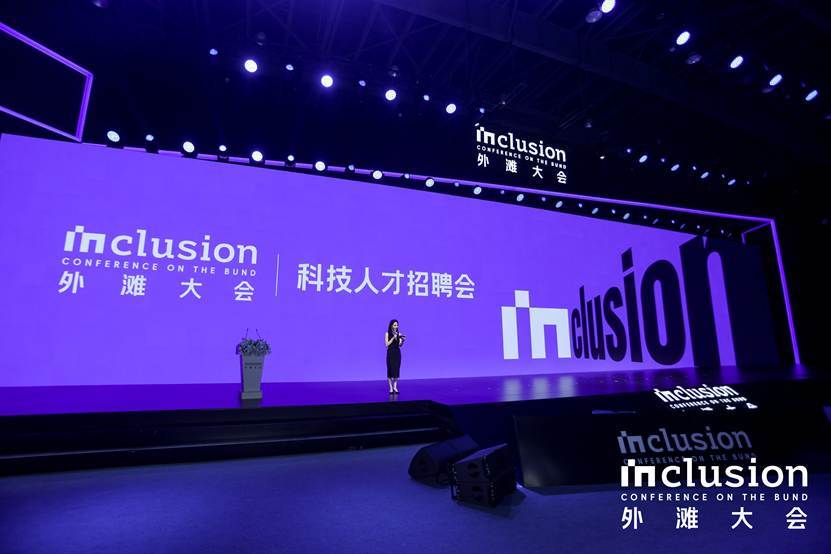
Core Insights - The 2025 Inclusion Bund Conference Technology Talent Recruitment Fair was held in Shanghai, featuring over 50 companies offering more than 1,500 job positions focused on AI, internet, and finance sectors [1][3] - This year's recruitment positions increased by 50% compared to last year, with over 60% of companies posting AI job demands, marking a continuous growth in recruitment positions for three consecutive years [3] Group 1: Event Overview - The recruitment fair was guided by the Shanghai Human Resources and Social Security Bureau and organized by the Bund Conference Organizing Committee, with Ant Group co-hosting [3] - More than 10,000 job seekers attended the event, engaging directly with employers and submitting over 6,500 resumes [1] Group 2: Industry Trends - The fair included discussions on "Employment and Job Trends in the AI Era," providing insights to help job seekers understand industry trends and seize employment opportunities [7] - The demand for positions such as data scientists, robotics engineers, and algorithm engineers has seen a year-on-year increase of over 50% in the first half of this year due to the impact of AI [8] Group 3: Globalization and Talent Acquisition - The CEO of Intelliprop Group emphasized the need for Chinese companies to adopt a global mindset, highlighting that the essence of global competition is a deep contest for talent acquisition [10] - The average recruitment salary for overseas positions has been steadily increasing in recent years [10] Group 4: Collaboration and Talent Development - Ant Group and Chuan Zhi Education announced a partnership at the fair to enhance the cultivation of digital talent and support the development of the AI industry [14] - The recruitment fair offered AI interview experiences, career assessments, and development services, providing a comprehensive suite of intelligent services for job seekers [15] Group 5: Company Participation - Ant Group, as a co-host and participating company, provided over 500 technical job openings, with 84.7% of new graduate recruits in 2024 being technical talents [15] - Ant Group's research and development investment reached 23.45 billion yuan, consistently accounting for over 10% of total revenue for three consecutive years [15]


中新网评:多平台竞争激活外卖生态,百万新就业“蓄水池”效应凸显
Zhong Guo Xin Wen Wang· 2025-09-15 10:52
中新网评:多平台竞争激活外卖生态,百万新就业"蓄水池"效应凸显 近日,全国总工会平台算法和劳动规则协商工作现场交流会在上海召开。当天,调研组走访调研饿了么 等企业,深入了解新就业形态劳动者权益保障、平台算法应用和劳动规则向善透明举措、平台骑士就业 及发展等情况,对平台在进一步加强骑士保障、新增百万就业和促进收入增长等方面取得的成效,调研 组表示肯定。 最近几个月,多平台参与了外卖市场竞争,一定程度上促进了就业。平台数据显示,淘宝闪购的日均活 跃骑手已经超过200万人的规模,对比四月增长3倍。这意味着,淘宝闪购创造了超百万个新就业。 就业增加、从业者收入提升,前提是市场蛋糕做大、行业健康可持续发展。 外卖市场近期的迅速增长有目共睹,相比5月,日订单数翻倍增长至2亿单以上。早前,中国新就业形态 研究中心主任、首都经贸大学劳动经济学院副教授张成刚测算,在主要外卖平台日订单突破1亿单时, 估算活跃骑手数量预计翻一倍,如果放到整个外卖市场上,预计拉动骑手人数约为150万人。 数据分析机构QuestMobile的调研数据显示,今年7月外卖员的数量同比去年增加了74.8%。 这再次证明了服务消费吸纳就业的巨大潜力。 数据还 ...
【界面访谈】外卖大战不能简单定义为“内卷式竞争”,专家呼吁包容审慎监管
Xin Lang Cai Jing· 2025-09-15 06:18
Core Viewpoint - The ongoing food delivery competition is not simply a case of "involution" but rather contributes to social welfare by increasing consumption habits in previously underserved areas [1][6][16] Group 1: Competition and Market Dynamics - The competition in the food delivery sector has led to an increase in social welfare, as it has encouraged new consumption habits among previously low-penetration demographics [1][6] - Non-price competition has shown signs of "involution," but price competition does not meet the criteria for being classified as "malicious" competition [1][6] - The recent political discourse has shifted from "low-price" competition to a broader focus on "disorderly competition," indicating that price remains a critical competitive factor [2][7] Group 2: Regulatory Approach - Experts advocate for a "tolerant and prudent" regulatory approach towards the emerging instant economy, aligning with the central government's emphasis on accommodating new technologies and business models [1][4][20] - Regulatory measures should be based on solid theoretical foundations and evidence, avoiding being swayed by public sentiment or specific interest groups [8][20] - There is a need to address unfair competition behaviors, particularly those that compromise safety or spread misinformation [6][8] Group 3: Economic Impact - The instant economy is expected to evolve towards more immediate and scenario-based consumption, significantly impacting macroeconomic growth by promoting consumption and employment [4][16] - The food delivery sector has shown remarkable growth, especially in western regions, with some areas experiencing a 300% increase in delivery scale [4][16] - The shift from tangible goods to intangible services in the instant economy reflects a broader change in consumer behavior and market dynamics [17][20] Group 4: Employment Effects - The rise of the instant economy has created a significant number of jobs, particularly for marginalized groups, including those facing employment challenges [19][21] - The flexibility of gig work allows individuals to engage in multiple roles, contributing to a trend of "slash youth" who juggle various jobs [19][21] - The growth of delivery personnel has implications for urban integration, as many riders find stable employment and opportunities for advancement [19][21] Group 5: Future Directions - The future of the instant economy should focus on new market increments, including scenario-based consumption and online services, while integrating technological advancements [20] - There is a call for more attention to the social security and labor rights of gig workers, ensuring their protection and well-being [20][21] - Platforms are encouraged to balance support for large merchants with assistance for small businesses to foster a more equitable market environment [12][21]

淘宝闪购与饿了么启动“明厨亮灶创业帮扶计划”,为大学生、残疾人提供千元开店礼包
Huan Qiu Wang Zi Xun· 2025-09-15 05:05
Core Viewpoint - The "Mingchu Liangzao Entrepreneurship Support Plan" was launched to assist college students, disabled entrepreneurs, and "special quality" individual businesses by providing over 1,000 yuan worth of support packages, marking a shift from industry advocacy to a systematic public welfare initiative [1][3]. Group 1: Program Overview - The plan is a collaboration between Taobao Flash Sale, Ele.me, and various organizations, aiming to enhance food safety and support entrepreneurship among specific groups [1][3]. - The initiative will last for three years with no budget cap, providing free "Mingchu Liangzao" support packages to eligible entrepreneurs [1][3]. Group 2: Support Measures - Eligible entrepreneurs will receive a free package that includes a 4G version of the Mingchu Liangzao camera, a 64GB storage card, the first year of 4G data, and AI inspection services for food safety [3][4]. - The plan also includes promotional support through traffic assistance, online exposure optimization, and marketing tools to help reduce startup costs and enhance market competitiveness [4][5]. Group 3: Target Audience - The program specifically targets college students (including current students and 2025 graduates), disabled entrepreneurs, and "special quality" individual businesses [3][4]. - Applications can be submitted through organized or social channels, requiring relevant documentation for verification [6]. Group 4: Industry Impact - Ele.me has been a pioneer in promoting "Mingchu Liangzao" since 2017, evolving from a food safety regulatory tool to a business support tool with the introduction of AI and digital management features [5][6]. - The collaboration with partners like China Telecom aims to create a sustainable model that combines government guidance, corporate collaboration, and social participation [5][6].



“算法公示”不是逃避责任的挡箭牌|外卖大战,战而不休为哪般?
Xin Hua Wang· 2025-09-15 03:23
Core Insights - Recent initiatives by Meituan, Ele.me, and JD.com to disclose algorithms aim to enhance transparency and reduce information asymmetry in platform operations [1][2] - Despite these efforts, the complexity and ambiguity of algorithms still leave merchants with limited bargaining power, often resulting in unclear profitability and increased operational costs [1] - The purpose of algorithm disclosure should be to promote healthy industry development, rather than allowing companies to shift operational costs and evade social responsibilities [1] Summary by Sections Algorithm Transparency - Meituan has established an algorithm disclosure area, while Ele.me has engaged in discussions about algorithm transparency and thematic research [1] - JD.com has committed to creating a simple and transparent subsidy mechanism [1] Merchant Challenges - Many platforms have opaque fee structures and traffic mechanisms, leaving merchants in a passive position regarding cost analysis and business decisions [1] - Complex algorithms often transfer costs, such as shipping, that should be borne by the platforms onto merchants, further squeezing their profit margins [1] - Merchants face a dilemma: accept the rules and potentially increase revenue without profit, or refuse participation and risk a significant drop in orders [1] Call for Fairness - The industry must recognize that algorithm disclosure should lead to fair and reasonable rules, not serve as a shield for companies to pass on costs [1] - Platforms are urged to establish a more open and diverse governance mechanism to facilitate effective communication among merchants, delivery personnel, and consumers [1] - The ultimate goal is to create fair, reasonable, and empathetic algorithm rules that benefit all parties involved [1][2]
盘点餐饮小店的生存账
Xin Hua Wang· 2025-09-15 02:28
Core Viewpoint - The article discusses the challenges faced by small and medium-sized restaurant businesses in the context of aggressive subsidy strategies by food delivery platforms, leading to reduced profit margins and difficult choices regarding participation in these subsidy programs [1][2][3][4][5] Group 1: Impact of Subsidies on Profit Margins - Many restaurants are experiencing significantly reduced profit margins due to the high costs associated with participating in subsidy programs, with one example showing a gross profit of only 1 yuan on a dish that costs 10 yuan to make [1] - The burden of subsidies is largely borne by the merchants, with one restaurant owner indicating that they cover 7 yuan of the 11 yuan subsidy offered to consumers, while the platform only covers 4 yuan [1] - Service fees charged by platforms further erode profits, with one restaurant owner paying 5.47 yuan in service fees on a 28.8 yuan order [1] Group 2: Order Volume vs. Profitability - Restaurant owners face a dilemma where opting out of subsidy programs leads to a drastic drop in order volume, as evidenced by one owner noting a decrease from 30 orders to just a few when subsidies were removed [2] - Despite an increase in order volume for some restaurants, the overall revenue has not improved, leading to frustration among owners who feel overwhelmed by the increased workload without corresponding financial benefits [3] - The competitive landscape is shifting, with some owners expressing hope that as platforms compete for consumers, they may eventually also compete for merchants, potentially improving conditions for restaurant owners [2] Group 3: Strategic Shifts in Business Models - Some restaurant owners are choosing to focus on dine-in services rather than delivery, as the costs associated with delivery are unsustainable, with one owner stating that they had to close their online store due to losses [4] - The trend of moving away from delivery services is also seen in the decision of some owners to invest in creating a loyal customer base through dine-in experiences rather than relying on delivery platforms [4][5] - The competitive environment has led to increased commission rates from platforms, with one owner noting that their commission has risen from 5% to nearly 10% for self-delivery, and others facing rates above 20% for platform delivery [5]
多家平台算法协议逐步取消“超时扣款”
Ren Min Ri Bao· 2025-09-14 22:03
Group 1 - The core viewpoint of the articles highlights the proactive measures taken by labor unions in China to promote algorithm negotiations with platform companies, aiming to cover over 20 million new employment form workers this year [1][2] - The national trade union system has initiated a concentrated action for collective negotiations in 2025, focusing on algorithm negotiations with major platform companies, with 15 leading companies already included in the initiative [1] - Seven companies, including T3 Travel, Jitu, and Didi, have successfully signed special agreements on algorithms and labor rules, with all remaining companies expected to complete negotiations by the end of September [1] Group 2 - The algorithm negotiations focus on labor rights such as remuneration, rest, labor safety, and transparency in algorithmic processes, leading to clearer understanding of labor conditions for workers [2] - In the ride-hailing industry, there are agreements to publicly disclose pricing rules and reduce commission rates, alongside enhancements in fatigue prevention measures and features for intercepting abnormal orders [2] - Several platforms have established regular negotiation systems with labor unions and workers, committing to hold periodic algorithm negotiation meetings and provide advance notice of algorithm changes [2]
各级工会推进平台算法和劳动规则协商 多家平台算法协议逐步取消“超时扣款”
Ren Min Ri Bao· 2025-09-14 22:01
Group 1 - The core viewpoint of the articles highlights the proactive measures taken by labor unions in China to promote algorithm negotiations within platform companies, aiming to cover over 20 million new employment form workers this year [2][3] - The national labor union has initiated a concentrated action for collective negotiations in 2025, focusing on algorithm negotiations with major platform companies, with 15 leading companies already included in the initiative [2] - Seven companies, including T3 Travel, Jitu, and Didi, have successfully signed special agreements on algorithms and labor rules, with all remaining companies expected to complete negotiations by the end of September [2] Group 2 - The algorithm negotiations focus on workers' rights related to labor remuneration, rest periods, labor safety, and transparency in algorithmic processes, leading to clearer understanding of earnings for workers [3] - In the ride-hailing industry, there are agreements to publicly disclose pricing rules and reduce commission rates, alongside enhancements to fatigue prevention measures and features for intercepting abnormal orders [3] - Several platforms have established regular negotiation systems with labor unions and workers, committing to hold periodic algorithm negotiation meetings and provide advance notice of algorithm changes [3]
智慧康养领航 银发经济驶入新航道
Bei Jing Shang Bao· 2025-09-14 16:57
Group 1 - The 2025 Smart Health and Elderly Care Forum was successfully held in Shougang Park, focusing on the theme of "New Pattern of Silver Economy and All-domain Health and Elderly Care Ecosystem" [1] - The forum aims to explore new paths, models, and mechanisms for the development of health and elderly care that align with China's national conditions [1] - The establishment of the "Deep Blue Think Tank Elderly Care Industry Research Institute" marks a new phase for the Smart Health and Elderly Care Forum, aiming to drive innovation in the elderly care industry [1] Group 2 - The rapid aging of the population in China has become a national strategy, with nearly 100 special policies and implementation plans launched in Beijing [3] - The silver economy is projected to reach approximately 7 trillion yuan in 2023, accounting for 6% of GDP, and is expected to exceed 30 trillion yuan by 2035, representing 10% of GDP [3] - The penetration rate of smart elderly care products is only 3.8%, indicating both challenges and opportunities within the industry [3] Group 3 - The concept of "all-domain collaboration" is essential for breaking through challenges in the smart elderly care industry, integrating financial support, technological innovation, and medical services [4] - The Beijing Business Daily aims to continue being an observer, connector, and promoter of the industry, facilitating the transition from policy vision to practical implementation [5] Group 4 - The development path for the elderly care industry includes leveraging trustworthy data spaces to drive digital transformation and high-quality development [6] - The integration of technology in the elderly care ecosystem is seen as a market advantage, meeting the rigid demands of the elderly while creating new consumption needs [7] Group 5 - Various companies are collaborating to build a comprehensive elderly care service network, addressing aspects from living environments to community support [9] - The "Elderly Care Meal" project by Ele.me aims to provide safe and reliable meal delivery services to the elderly, addressing funding challenges through collaboration with government and enterprises [9] - The introduction of self-service dining models for elderly care by Huafang Catering addresses dietary needs, with standards established to promote industry development [10] Group 6 - There is a growing multi-dimensional focus on health, with 84% of people concerned about physical health and 81% about mental health, expanding the functional food consumer base [11] - Companies are innovating in product forms and expanding channels to enhance competitiveness in the functional food market [11] - The development of elderly-friendly furniture involves redesigning new products and adapting existing ones to meet the needs of elderly consumers [11]