宝马

Search documents
环球直击美国CES展:更少和更强大的中国企业正在重新定义AI竞争的规则
Huan Qiu Wang Zi Xun· 2026-01-10 05:33
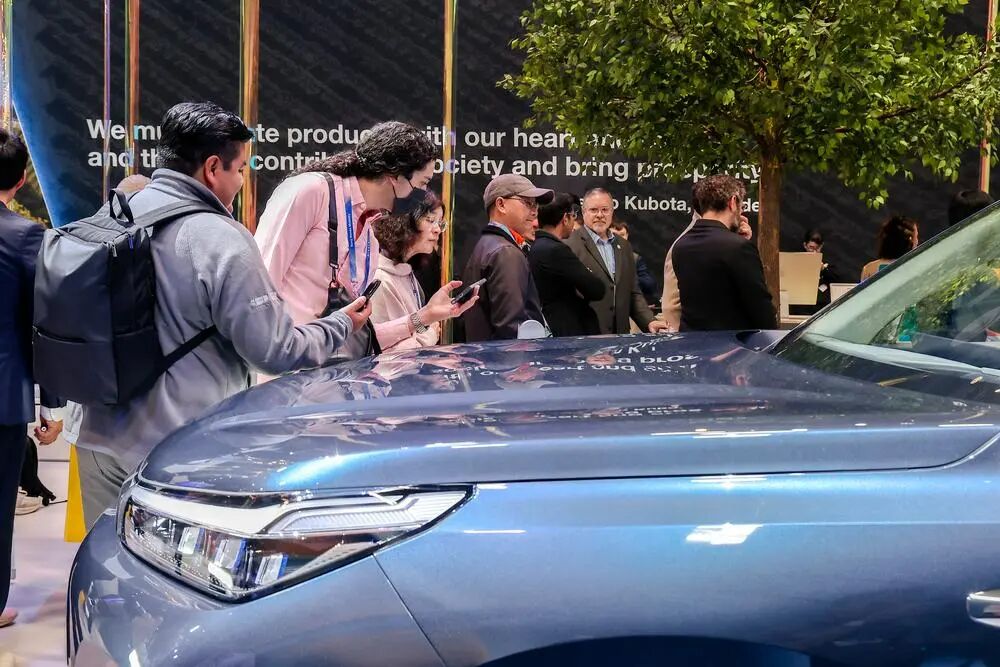
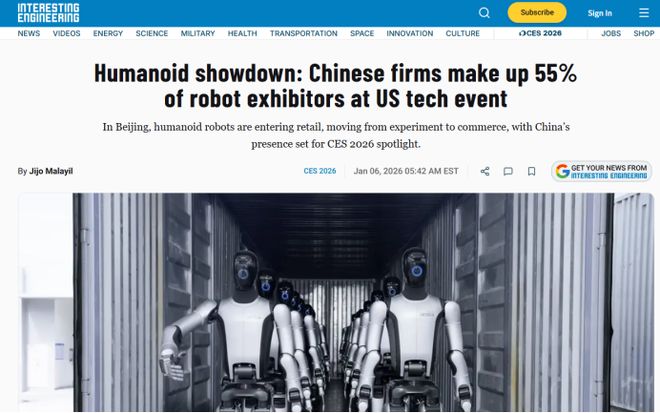
Core Insights - The CES 2026 showcased AI as the central theme, emphasizing human-centric applications and the integration of AI into various sectors [1][3][6] - The competition in the chip industry was highlighted, with major players like NVIDIA, AMD, Intel, and Qualcomm presenting their advancements in AI infrastructure [3][9] - The exhibition marked a shift from hardware-centric displays to a focus on ecosystem definition and strategic collaboration among companies [4][16] AI and Robotics - CES 2026 introduced a dedicated area for AI and quantum innovation, showcasing practical applications of embodied intelligence and advancements in autonomous driving [3][4] - The event demonstrated a transition from conceptual robot designs to practical solutions addressing real-world challenges in home services and industrial logistics [3][11] - Chinese companies showcased significant advancements in robotics, with a focus on self-developed core components and solutions for logistics and manufacturing [11][13] Chinese Companies' Participation - The number of Chinese exhibitors in the core professional pavilion decreased to 207 from 1,475 in 2025, indicating a structural adjustment in participation [4][5] - The remaining Chinese companies at CES were required to demonstrate AI-related functionalities, reflecting a shift towards more innovative and integrated product offerings [5][6] - Major Chinese firms like Lenovo showcased their global influence by hosting large-scale events, indicating a strategic focus on ecosystem development [6][16] Competitive Landscape - The competition is evolving from hardware specifications to a comprehensive narrative that includes both foundational technology and application capabilities [7][16] - The contrasting approaches of Chinese and American tech companies in building AI ecosystems highlight differences in strategic thinking and resource allocation [8][15] - Chinese automotive companies emphasize full-stack self-research and vertical integration, while Western firms focus on open software ecosystems and long-term evolution [15][16] Future Implications - The CES 2026 signals a shift in global tech competition towards defining future technology ecosystems and industry standards [16][17] - Companies that can navigate the complexities of AI and contribute to ecosystem building are likely to remain at the forefront of technological advancement [17]




超20家车企卷入降价促销潮:特斯拉0息购 比亚迪杀入8万区间
Di Yi Cai Jing· 2026-01-10 02:52
Core Insights - The Chinese automotive market is experiencing a new round of competition in 2026, characterized by aggressive promotions and the introduction of updated models without price increases [1][6] - Major brands, including BMW and BYD, have initiated significant price cuts and promotional offers, leading to a broader trend among both joint venture and domestic brands [1][3] Group 1: Price Cuts and Promotions - BMW announced price reductions on 31 models, with discounts reaching up to 300,000 yuan, prompting other brands like FAW-Volkswagen and FAW-Toyota to follow suit with discounts ranging from 10,000 to 50,000 yuan [1][3] - Over 20 automakers have launched promotional activities since January 1, with more than 75 models involved, utilizing various strategies such as cash subsidies, fixed pricing, and interest-free financing options [1][3] - BYD has also reduced the starting price of its new Qin L plug-in hybrid model from 119,800 yuan to 116,800 yuan while increasing its electric range from 120 km to 210 km [1][6] Group 2: Market Dynamics and Expert Opinions - Industry experts suggest that the current price reductions are not indicative of a price war but rather a rational adjustment to alleviate dealer cash flow pressures and respond to increased costs from new tax policies [2][4] - The automotive market is expected to see continued price cuts throughout 2026, with a potential stabilization in sales volume compared to the previous year [2][5] - The introduction of new models and the early implementation of national subsidies are anticipated to positively impact market performance in January 2026 [4][5] Group 3: Competitive Strategies - The competition in 2026 is marked by a shift towards "adding features without increasing prices" for new models, contrasting with the direct price-cutting strategies seen in previous years [6][7] - Several traditional and new energy vehicle manufacturers are launching updated models with enhanced features while maintaining competitive pricing to attract consumers [6][7] - The automotive industry is also adapting to regulatory guidelines aimed at ensuring fair pricing practices and preventing market disruption through improper pricing strategies [7]

超20家车企卷入降价促销潮:特斯拉0息购,比亚迪杀入8万区间
Di Yi Cai Jing· 2026-01-10 02:22
Core Viewpoint - The Chinese automotive market is experiencing a new round of competition in 2026, characterized by aggressive promotions and model updates without price increases, with a notable early onset of competition compared to previous years [1][2]. Group 1: Price Reductions and Promotions - BMW announced price cuts on 31 models, with reductions up to 300,000 yuan, prompting over five joint venture brands to follow suit with promotional offers ranging from 10,000 to 50,000 yuan [1][3]. - BYD, the leading electric vehicle manufacturer, has also reduced the starting price of its new Qin L plug-in hybrid model from 119,800 yuan to 116,800 yuan while increasing its electric range from 120 km to 210 km [1][6]. - More than 20 automakers have launched limited-time promotional activities, with over 75 models participating, employing various strategies such as cash subsidies, fixed-price sales, and interest-free financing options [1][3]. Group 2: Market Dynamics and Expert Opinions - Industry experts suggest that the current price reductions are not indicative of a price war but rather a rational return to reasonable pricing, with expectations of continued price cuts throughout 2026 [2][4]. - The increase in the new energy vehicle purchase tax has raised costs for consumers, influencing promotional strategies among automakers to mitigate these impacts [4]. - Predictions indicate that the automotive market may experience a year-on-year stabilization in Q1 2026, despite a projected quarter-on-quarter decline of 25% compared to Q4 2025 [5]. Group 3: New Model Launches and Competitive Strategies - The competition in the automotive market is intensifying, with numerous new models being launched, primarily focusing on upgrades without price increases [6][7]. - BYD has introduced four new models, enhancing electric range and reducing prices, while other brands like Xpeng are also launching updated models with added features at unchanged prices [6][7]. - The transition between old and new models is marked by significant cash discounts on older models, aimed at clearing inventory to make way for new releases [7].
王腾回应新公司不招应届生;阿里千问模型累计下载量达7亿;苹果CEO库克2025年总薪酬为7429.48万美元丨邦早报
Sou Hu Cai Jing· 2026-01-10 01:22
Group 1 - Wang Teng's new company will not hire fresh graduates initially, focusing on building a product development team first [1] - The company will offer competitive salaries and benefits, with an emphasis on stock incentives [1] - Employees will have the flexibility to rest at work, promoting a non-competitive work environment [1] Group 2 - Apple's CEO Tim Cook's total compensation for 2025 is reported to be $74.29 million, with a significant portion coming from stock awards [1] - The company plans to hold its annual shareholder meeting online on February 24, 2026 [1] Group 3 - Bosideng faced criticism for a down jacket priced at 2,099 yuan with only 86 grams of down filling, raising questions about brand premium [2] - The company stated that the down filling meets national standards and pricing is based on various factors beyond just filling weight [2] Group 4 - Alibaba's Qianwen model has achieved a cumulative download of 700 million, marking significant growth in the AI open-source community [5] - The model's download rate surpassed that of several major competitors, indicating its rapid adoption [5] Group 5 - OpenAI acquired the core team of Convogo, a platform for executive coaching, to enhance its AI cloud business [7] - The acquisition was a stock transaction, and Convogo's existing products will cease operations [7] Group 6 - General Motors plans to take an additional charge of approximately $6 billion due to adjustments in its electric vehicle business [11] - This decision follows a broader reassessment of EV production capacity and investment in response to market demands [11] Group 7 - Nvidia appointed a Google Cloud executive as its Chief Marketing Officer to enhance brand visibility [7] - This move indicates Nvidia's strategy to strengthen its market presence as it enters a new growth phase [7] Group 8 - The global humanoid robot market is expected to see shipments reach approximately 13,000 units by 2025, with ZhiYuan holding a 39% market share [15] - The report predicts significant growth in the humanoid robot market, with shipments projected to reach 260 million units by 2035 [15] Group 9 - The global semiconductor sales are forecasted to reach $75.3 billion in November 2025, marking a 29.8% increase from the previous year [15] - This growth is attributed to rising demand across all major product categories [15] Group 10 - The Chinese large language model market is expected to exceed 100 billion yuan by 2030, with a compound annual growth rate of 63.5% from 2024 to 2030 [15] - Recent IPOs of domestic AI model companies indicate a shift towards commercial viability in the sector [15]


王腾回应新公司不招应届生;阿里千问模型累计下载量达7亿;苹果CEO库克2025年总薪酬为7429.48万美元丨邦早报
创业邦· 2026-01-10 01:09
Group 1 - Wang Teng's new company will not hire fresh graduates initially, focusing on building a product development team with experienced professionals [2] - The company plans to establish branches in Shenzhen and Hangzhou after a year of operation in Beijing, with salaries and benefits comparable to major tech firms, emphasizing stock incentives [2] - Employees are encouraged to take breaks as needed, promoting a non-competitive work environment [2] Group 2 - Apple's CEO Tim Cook's total compensation for 2025 is reported to be $74.29 million, with significant portions coming from stock awards and non-equity incentives [3] - The company is set to hold its annual shareholder meeting online on February 24, 2026 [3] Group 3 - Bosideng faced criticism for a down jacket priced at 2099 yuan with only 86 grams of down filling, raising questions about brand premium [4][7] - The company stated that the down filling meets national standards and that pricing is influenced by various factors beyond just filling weight [4] Group 4 - Alibaba's Qianwen model has achieved a cumulative download of 700 million, marking a significant growth in the AI model sector [8] - The model's download rate surpassed that of other major AI models, indicating its rapid adoption [8] Group 5 - General Motors announced an additional charge of approximately $6 billion due to adjustments in its electric vehicle business, reflecting ongoing evaluations of production capacity and investment [15] - The company previously reported a $1.6 billion charge related to its electric vehicle strategy [15] Group 6 - The global humanoid robot market is projected to ship nearly 13,000 units by 2025, with ZhiYuan holding a 39% market share [21] - The semiconductor industry is expected to reach a record sales figure of $75.3 billion in November 2025, a 29.8% increase from the previous year [21] Group 7 - The Chinese large language model market is anticipated to exceed 100 billion yuan by 2030, with a compound annual growth rate of 63.5% from 2024 to 2030 [22] - Recent IPOs of domestic AI model companies signify a shift towards clearer business models and commercialization in the industry [22]




展望2026:车市到了需要大火收汁的时候
Xi Niu Cai Jing· 2026-01-09 06:35
Group 1 - BYD has surpassed Tesla to become the sales champion in the new energy vehicle market, marking a significant achievement for the brand since the rise of new car manufacturers began in 2015 [1] - The luxury car market is experiencing a contraction, making it difficult for established brands to return to previous high sales volumes and profit margins [1][2] - The automotive market is becoming increasingly complex, with a proliferation of brands and models leading to consumer confusion [3][4] Group 2 - The automotive industry is witnessing a trend of inventory clearance and brand consolidation as companies adapt to changing market dynamics [2] - Companies like Geely and GAC are restructuring their brand and product lines to focus on more market-accepted models, resulting in significant sales growth and improved financial performance [5][6] - The integration of resources and partnerships, such as Leap Motor's collaboration with FAW, is aimed at enhancing capabilities and achieving growth targets [7][8] Group 3 - A larger scale of consolidation in the automotive industry is anticipated, driven by the need for efficiency and resource optimization [9] - The market is expected to face a decline in domestic passenger car sales by approximately 7% in 2026, prompting brands to concentrate on developing high-quality products [9][10] - The current automotive landscape necessitates a strategic approach to brand and product management, as excessive brand proliferation has diluted consumer demand [10]

比亚迪2025年在日本卖出3870辆
3 6 Ke· 2026-01-09 05:50
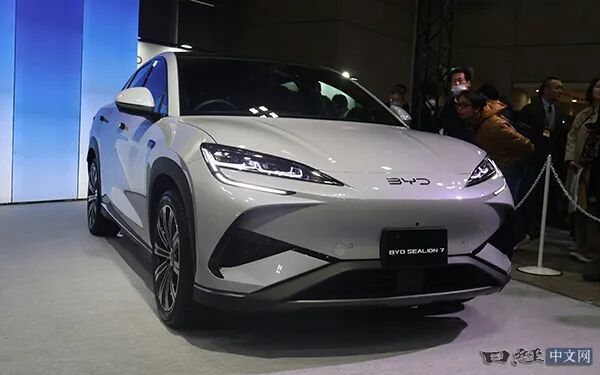
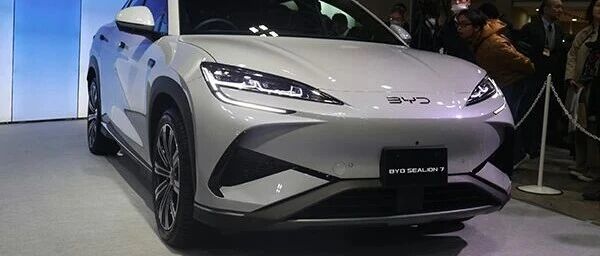
Group 1 - In 2025, Japan's imported car sales (excluding domestic manufacturers) increased by 7% year-on-year, reaching 243,129 units, marking the first positive growth in two years [1] - Electric vehicle (EV) sales grew by 26% to 30,513 units, achieving a record high, with Tesla and other EV manufacturers contributing to this increase [1] - EVs accounted for 13% of total sales in 2025, up 2 percentage points from the previous year, indicating a continuous growth trend for EVs in Japan over the past seven years [1] Group 2 - Tesla's sales in Japan, although not officially disclosed, saw an 88% increase in the "other" category, reaching 10,693 units, marking the first time Tesla's sales exceeded 10,000 units in Japan, moving up from 10th to 7th place in brand rankings [1] - BYD's sales in Japan surged by 62% to 3,870 units, driven by the strong performance of the SUV "Hai Lion 7," which was launched in April 2025 [1] - Hyundai's sales increased by 89% to 1,169 units, supported by the strong sales of the small EV "INSTER," which is well-suited for Japan's narrow roads and is competitively priced [3] Group 3 - In terms of brand performance, Mercedes-Benz saw a 4% decrease in sales, dropping to 50,857 units, while BMW's sales grew by 1% to 35,729 units, and Volkswagen's sales increased by 36% to 31,031 units [3] - The overall sales of imported cars in December 2025 showed a slight increase of 0.3% year-on-year, reaching 23,551 units, although EV sales decreased by 14% to 2,549 units during the same period [5] - The Japanese government announced an increase in the subsidy cap for purchasing EVs starting January 1, 2026, which may have temporarily affected consumer purchasing behavior [5]
车主抱怨:没出险没违章,还涨价,有猫腻?车险定价调查
Nan Fang Du Shi Bao· 2026-01-09 05:30
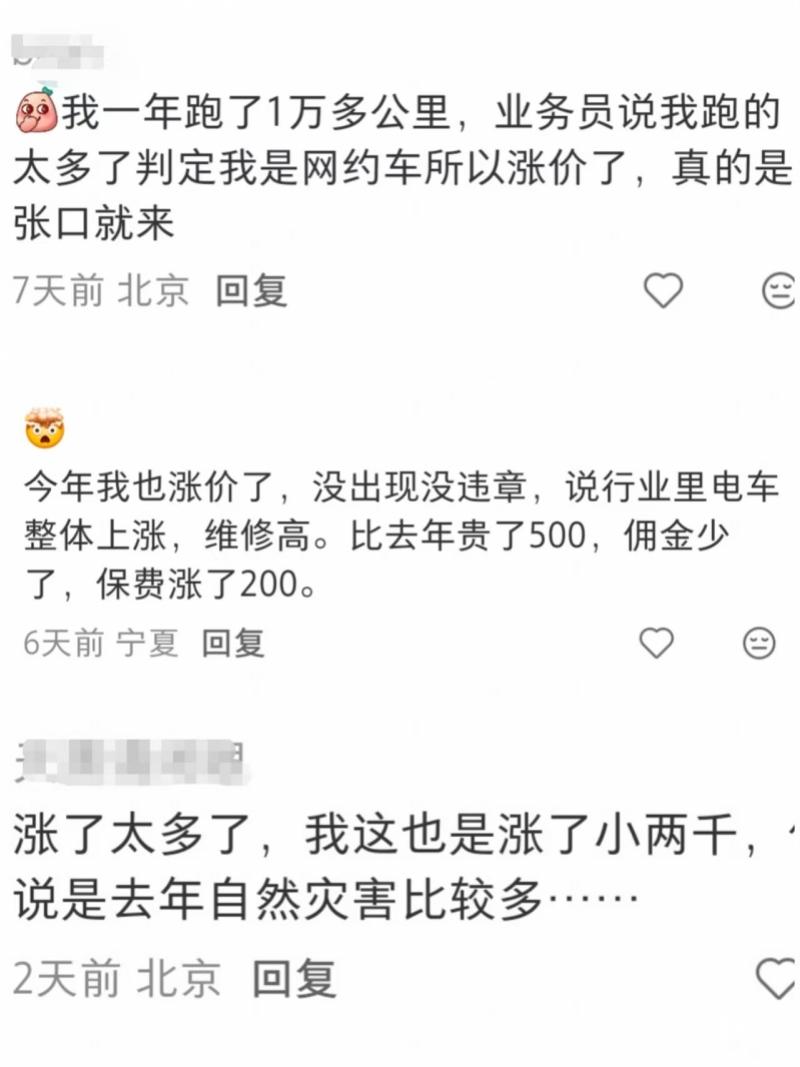
岁末年初是车险续保高峰期,关于车险续保"逆向涨价"的讨论持续升温。多位车主在社交平台反馈车险续保费用 上涨,即便自身无出险、无违章记录,保费仍有明显上调。 南都·湾财社记者通过市场调查与采访发现,车险市场呈现"分化定价"的特征。有专家表示,在"报行合一"监管深 化与行业风险结构变化的双重作用下,车险价格并非简单普涨,而是出现显著的差异化调整态势。车辆型号、年 限、行驶情况、历史出险记录乃至投保渠道等多重因素,共同决定了最终保费的涨跌走向。 续保遭遇"逆向涨价" 车主吐槽原因各异 "原本以为没出险能享最大折扣,结果报价比去年还高。"近期,不少车主在社交媒体上吐槽车险续保费用上涨, 且涨价原因五花八门。 一名北京车主表示,2025年底续保保费较上一年增加近2000元,业务员解释这与自然灾害频发推高行业赔付率有 关;一名宁夏新能源车车主则称,自己没出险也没违章,保费却"逆势上涨",原因是"新能源车维修成本高企带动 行业整体定价上调";还有一位北京车主透露,因去年车辆行驶里程超1万公里,"被保险公司判定为疑似网约车用 途,所以保费涨价了。" 对外经济贸易大学保险学院教授王国军对南都·湾财社记者表示,市场有涨有跌才是正 ...
比亚迪2025年在日本卖出3870辆
日经中文网· 2026-01-09 02:36
Core Insights - Japan's imported car sales (excluding domestic manufacturers) increased by 7% in 2025, reaching 243,129 units, marking the first positive growth in two years [1] - Electric vehicle (EV) sales grew by 26%, totaling 30,513 units, setting a new historical record, driven by increased sales from manufacturers like Tesla [1][3] - Tesla's sales in Japan saw an 88% increase, surpassing 10,000 units for the first time, while BYD's sales rose by 62% to 3,870 units, supported by the strong performance of the "海狮7" SUV [3][5] Group 1: EV Market Performance - EVs accounted for 13% of total car sales in Japan in 2025, up 2 percentage points from the previous year [3] - BYD's "海狮7" SUV, launched in April 2025, significantly boosted its sales, and the company plans to introduce the "Racco" model in summer 2026 to further increase market share [3] - Hyundai's EV sales increased by 89% to 1,169 units, driven by the strong performance of the "INSTER" model [5] Group 2: Brand Performance - Mercedes-Benz saw a 4% decline in sales, dropping to 50,857 units, while BMW's sales grew by 1% to 35,729 units, and Volkswagen's sales increased by 36% to 31,031 units [6] - The price segment analysis showed a 3% increase in sales for vehicles priced over 10 million yen, reaching 40,602 units, while the segment below 4 million yen saw a 7% increase to 42,789 units [8] Group 3: Market Trends and Government Policy - In December 2025, imported car sales in Japan grew by 0.3% year-on-year to 23,551 units, but EV sales decreased by 14% to 2,549 units due to a temporary purchasing slowdown caused by changes in government subsidies [8]
AI语音大模型上车
3 6 Ke· 2026-01-09 02:19
Core Insights - The automotive industry is increasingly embracing AI and smart technologies, with CES being a significant platform for showcasing innovations, leading to its nickname as "America's second-largest auto show" [1] - Major companies like Nvidia, LG Electronics, and Bosch are presenting advanced automotive models and AI cockpit platforms, indicating a shift towards intelligent vehicle systems [1][4] - The introduction of end-to-end voice models in vehicles is expected to revolutionize user interaction, with 2025 marking the beginning of significant advancements in this area [5] Group 1: Industry Trends - The competition in the automotive market has shifted towards intelligence, with 2026 expected to focus on the smart reconfiguration of vehicles as multifunctional spaces [4][5] - The collaboration between major automotive brands and AI model companies, such as the partnership between ByteDance and various car manufacturers, is driving innovation in smart cockpit solutions [4][5] - The Geely Galaxy M9, equipped with advanced AI capabilities, has already sold 40,000 units within four months of its launch, showcasing market demand for intelligent vehicles [4] Group 2: Technological Developments - The integration of AI into vehicle operating systems is seen as essential for enhancing the overall driving experience, with a focus on deepening the collaboration between edge and cloud computing [6] - The emergence of intelligent agents in vehicles is anticipated to transform service delivery and consumer experiences, potentially reshaping business models in the automotive sector [7][9] - The development of a mature distribution network for AI-driven systems is crucial for advancing automotive intelligence and fostering new commercial opportunities [9]