英飞凌

Search documents
哪些品牌的呆料最好卖?卖几折成交最多?
芯世相· 2025-07-17 05:58
Core Viewpoint - The article discusses the challenges and strategies related to the sale of excess inventory (obsolete materials) in the semiconductor industry, highlighting the performance and market dynamics of various brands such as ADI, NXP, TI, Infineon, and ON. Group 1: Brand Performance - ADI has maintained high market interest and stable prices, avoiding drastic price drops, making it a reliable choice for transactions [2] - NXP is primarily focused on automotive-grade materials, which are scarcer than TI's offerings, leading to significant discounts during sales [3] - TI's consumer chips have reached historical low prices, with common chips like the TPS series being more sellable at around 80-90% of market price, while less common chips face liquidity issues [4] - Infineon's demand is driven by its classic SAK series MCUs, with popular items rarely discounted, while less sought-after materials can see steep discounts [5] - ON has a diverse range of materials, with many clients seeking items within a two-year timeframe, allowing for gradual sales and potential profit [6] Group 2: Market Dynamics - The article emphasizes the importance of reasonable pricing strategies when dealing with obsolete materials, as clients often seek better deals than market prices [2][3] - The platform mentioned has successfully served 20,000 users since its inception, facilitating quick transactions and inventory turnover [6][13] - The service aims to address three main issues: selling unsold inventory quickly, finding better prices for purchases, and locating hard-to-find materials [9][10]


阿斯麦Q2订单额55.4亿欧元超预期,环比增长41%,管理层警告2026年增长或无法实现 | 财报见闻
news flash· 2025-07-16 14:09
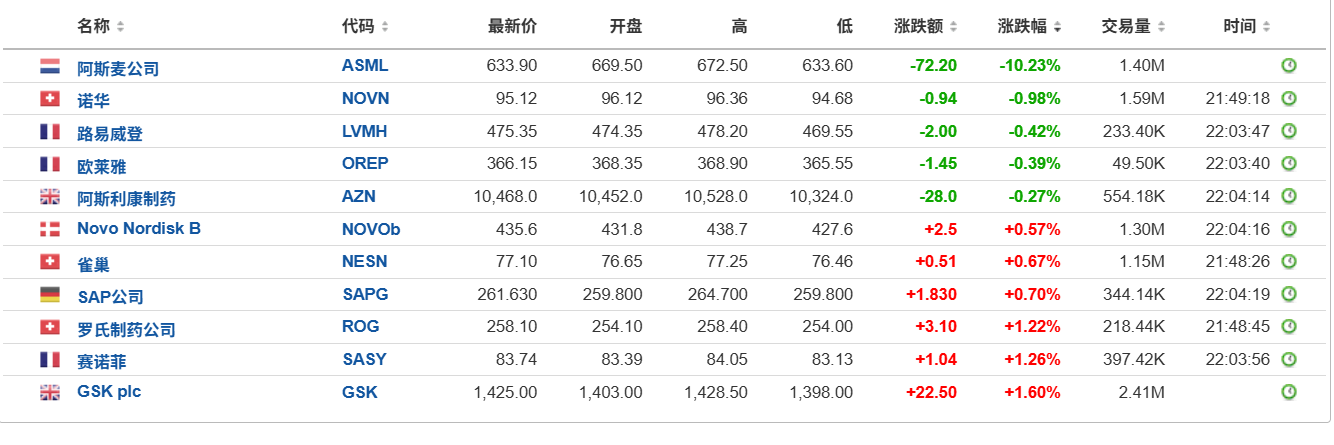
Group 1 - ASML Holdings experienced a decline of over 10%, leading the drop in European stocks and the semiconductor sector [1] - The latest stock price for ASML is 633.90, down from an opening price of 669.50, marking a decrease of 72.20 or 10.23% [2] - Other notable companies in the European market, such as Novartis and LVMH, also saw minor declines, but ASML's drop was significantly larger [2] Group 2 - ASML's stock performance is indicative of broader trends affecting the semiconductor industry in Europe, with several companies in the sector also reporting declines [2] - ASM International NV and BE Semiconductor Industries reported decreases of 4.59% and 3.44% respectively, reflecting a challenging environment for semiconductor stocks [2]

事关氮化镓,三大灵魂拷问
半导体芯闻· 2025-07-15 10:04
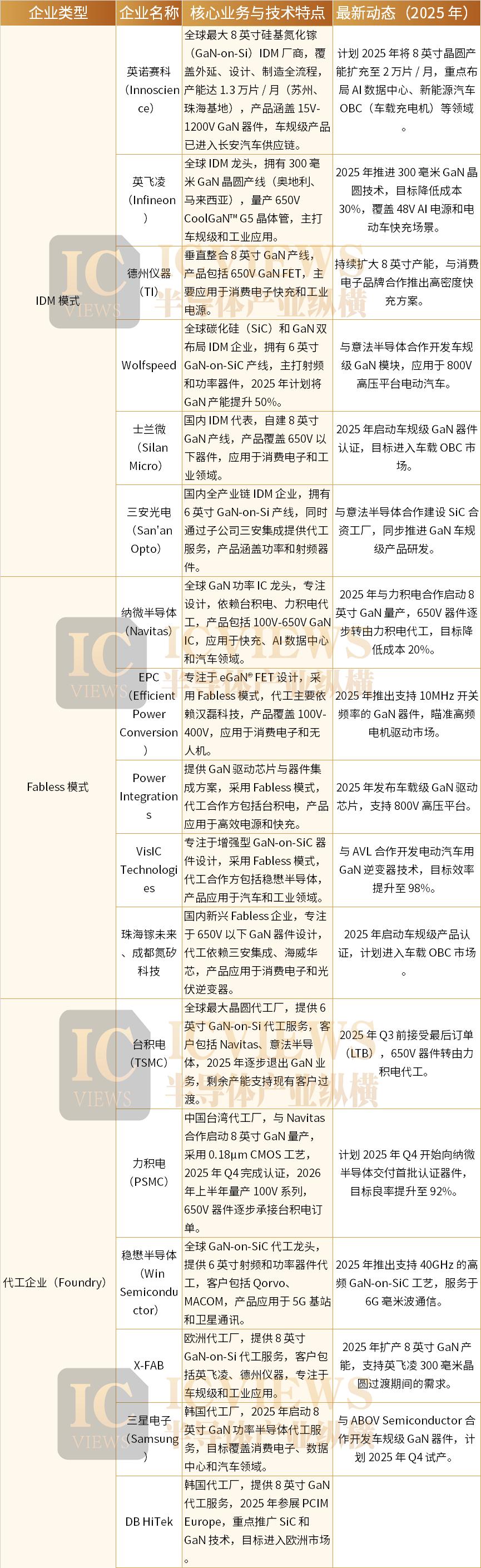
Core Viewpoint - The article highlights the rising prominence of Gallium Nitride (GaN) technology in various sectors, particularly in data centers and automotive applications, while Silicon Carbide (SiC) faces challenges. The power GaN market is projected to grow significantly, with a forecasted compound annual growth rate (CAGR) of 41% from 2023 to 2029, reaching over $2 billion [1]. Group 1: GaN Market Dynamics - NVIDIA is leading the transition to 800 V HVDC data center power infrastructure, which will significantly utilize GaN technology [1]. - Yole Group predicts that the power GaN market will grow tenfold from 2023 to 2029, driven by its higher switching frequency and power density, as well as reduced energy loss [1]. Group 2: TSMC's Shift in GaN Production - TSMC announced it will cease GaN foundry production by July 2027, citing low profit margins and a shift in focus towards advanced logic processes [6]. - This decision has forced existing customers to seek new partnerships, indicating a significant shift in the GaN foundry landscape [6]. Group 3: GaN Production Challenges and Opportunities - InnoScience, a leading domestic GaN manufacturer, emphasizes the importance of 8-inch wafer production for cost-effectiveness and scalability, arguing that 6-inch production is not viable for large-scale applications [7]. - The transition to 12-inch GaN production is seen as feasible but requires significant preparation and experience from 8-inch production [10][12]. Group 4: GaN Applications Beyond Consumer Electronics - GaN technology is not limited to consumer electronics; it has potential applications in electric vehicles (EVs) and data centers, with partnerships like that with CATL showcasing its capabilities [15][17]. - The article discusses the potential for GaN in smart and electric vehicles, highlighting its role in energy management and as part of distributed energy systems [16]. Group 5: Strategic Collaborations - InnoScience's collaboration with STMicroelectronics aims to enhance GaN power solutions across various sectors, leveraging each company's strengths to improve supply chain resilience [18]. - The partnership is expected to expand GaN product offerings and market capabilities, indicating a strategic move to solidify positions in the growing GaN market [18].
【财经分析】德国DAX指数面临下行风险 多重因素交织引发市场担忧
Xin Hua Cai Jing· 2025-07-15 03:15
Group 1 - The DAX index has seen a significant increase of nearly 23% since the beginning of 2025, reaching a peak of 24,639 points, outperforming major US indices for the first time this year [2] - Despite the positive performance, analysts indicate that the DAX index is facing downward pressure due to high valuations, corporate profit pressures, and escalating global trade tensions [1][2] - The current price-to-earnings ratio of the DAX index stands at 15.6, which, while lower than the S&P 500's 20.5, shows that price movements have outpaced fundamental performance [2] Group 2 - The total net debt of DAX component companies has risen to €227 billion, an 8% increase from the previous year, which may continue to erode corporate profit margins [2] - The upcoming earnings season is viewed as a critical risk release window, with expectations for S&P 500 companies' profits to grow only 2.5% in Q2 2025, the lowest since the end of 2023 [3] - The tightening of refinancing conditions, with corporate loan rates and bond yields remaining significantly higher than pre-2022 levels, poses medium-term risks for companies [2][3] Group 3 - The intensifying US-EU trade tensions, particularly the announcement of a 30% tariff on EU products, has introduced new uncertainties for the German market [4] - Alix Partners estimates that over €440 billion in German corporate debt will mature between 2025 and 2029, which may force companies to issue high-cost bonds to maintain operations [4] - Despite the challenges, there has been a notable increase in long-term foreign direct investment (FDI) in Germany, indicating continued international confidence in its high-end manufacturing capabilities [4] Group 4 - There has been a significant inflow of global funds into European equity funds, reaching $23.9 billion by the end of April, the highest level since 2022, although some large funds have begun to reduce their positions in European defense stocks [5] - The MDAX index, which includes medium-sized enterprises, is gaining attention as it offers more attractive valuations compared to the DAX index, with lower price-to-earnings and price-to-book ratios [6] - The German economy is gradually recovering, with business confidence rising for six consecutive months, which is expected to benefit medium-sized enterprises that rely more on the domestic market [6]
博通10亿美元芯片厂,放弃了
半导体行业观察· 2025-07-15 01:04
Core Viewpoint - Broadcom's cancellation of its $1 billion investment in an ATP factory in Spain highlights the challenges and shifting priorities in the European semiconductor landscape, reflecting a broader trend of reduced investment from major chip manufacturers in the region [3][4][5][19]. Investment Trends - Broadcom's decision to cancel the ATP factory project is indicative of a trend where leading chip manufacturers are revising and scaling back their investment plans in Europe [5]. - Intel has postponed its chip factory plans in Germany and other companies like Wolfspeed and ZF Friedrichshafen AG have also halted expansion plans in Germany [5]. - Despite setbacks, companies like TSMC and Infineon are still pursuing investments in Europe, with TSMC planning a chip design center in Munich and a $11 billion semiconductor manufacturing plant in Dresden [5]. European Semiconductor Strategy - The EU's ambitious Chip Act aims to double its global semiconductor market share to 20% by 2030, supported by over €43 billion in public and private funding [8][9]. - However, the European Court of Auditors has pointed out significant discrepancies in funding, with only about 5% of the announced total being directly managed by the EU Commission [10][12]. - The fragmented financial model has led to a lack of coordination among member states, making the EU's strategic goals difficult to achieve [12]. Spain's Semiconductor Initiatives - Spain launched the PERTE Chip project, a €12.25 billion public investment initiative aimed at enhancing its semiconductor value chain, primarily funded by EU pandemic recovery funds [15]. - While the project has made some progress in strengthening existing technological capabilities, it has struggled to attract large semiconductor manufacturing plants, with analysts describing the goal as "utopian" in the short term [16]. Geopolitical Influences - The failure of Broadcom's project in Spain underscores how external geopolitical factors, particularly U.S. trade policies, can disrupt European industrial initiatives [19]. - The U.S. CHIPS and Science Act has catalyzed over $500 billion in private investment domestically, creating a competitive environment for the EU's semiconductor ambitions [19]. North-South Investment Disparities - There is a clear north-south divide in European semiconductor investments, with capital-intensive projects predominantly flowing to established industrial centers in northern Europe, while southern Europe attracts smaller, targeted projects [21]. - Spain's experience illustrates the limitations of subsidy-driven industrial policies, as it has failed to secure major investments despite having one of the largest national subsidy funds in Europe [21][22].



金十图示:2025年07月14日(周一)全球主要科技与互联网公司市值变化


news flash· 2025-07-14 03:00
Core Insights - The article provides a snapshot of the market capitalization changes of major global technology and internet companies as of July 14, 2025, highlighting both increases and decreases in value across various firms [1]. Market Capitalization Changes - Tesla's market cap increased by 1.17%, reaching $100.98 billion [3]. - Alibaba saw a slight increase of 0.08%, with a market cap of $255.2 billion [3]. - AMD experienced a rise of 1.57%, bringing its market cap to $23.74 billion [3]. - Companies like Oracle and SAP reported declines of 1.89% and 1.75%, respectively, with market caps of $64.76 billion and $35.31 billion [3]. - Notable declines included Adobe, which fell by 2.18%, with a market cap of $15.41 billion [4]. Noteworthy Performers - PayPal showed a significant increase of 5.73%, with a market cap of $6.3 billion [6]. - SMIC reported a rise of 2.07%, reaching a market cap of $607 million [6]. - Circle Internet PNG Group had a notable increase of 7.67%, with a market cap of $463 million [7]. Overall Trends - The overall trend indicates mixed performance among technology companies, with some experiencing growth while others face declines in market capitalization [1][3].

Nvidia 定义电力电子的未来
半导体行业观察· 2025-07-14 01:16
Core Viewpoint - Nvidia is redefining the characteristics and functionalities of power electronic devices for AI data centers, despite not designing or manufacturing power devices itself [2][9]. Group 1: Nvidia's Influence on Power Electronics - Nvidia's push for AI data centers is creating momentum for Gallium Nitride (GaN) technology, similar to how Silicon Carbide (SiC) benefited from Tesla's early adoption [6]. - Nvidia is collaborating with various partners, including Infineon, MPS, Navitas, and others, to transition to an 800V High Voltage Direct Current (HVDC) power infrastructure for data centers [3][10]. - The company is moving away from traditional 54V rack power distribution technology due to its inability to meet the increasing power demands of large GPU clusters [8][9]. Group 2: Technical Requirements and Innovations - The new 800V HVDC architecture will necessitate a range of new power devices and semiconductors, with a focus on converting 800V to lower voltages for server motherboards [10]. - Infineon indicates that SiC is leading in high power and voltage solutions, while GaN is more suited for high-frequency applications due to space constraints [11]. - New semiconductor-based relays will be required for the high voltage DC AI data centers to ensure safe control of overcurrent and surge currents [12]. Group 3: Competitive Landscape and Market Dynamics - Nvidia's proactive approach in announcing its power infrastructure plans is driving industry dialogue and may render existing standards like the Open Compute Project (OCP) obsolete [16]. - The market for GaN is expected to grow faster than SiC, with GaN devices having higher voltage potential and applications in both DC/DC and AC/DC conversions [19].


台积电“退出”,谁来接棒?
3 6 Ke· 2025-07-11 10:42
Core Viewpoint - Navitas Semiconductor's recent collaboration document has caused significant disruption in the global GaN semiconductor industry, revealing TSMC's plan to exit GaN wafer production by July 2027, while Navitas partners with PSMC to advance 8-inch silicon-based GaN technology mass production [1] Group 1: TSMC's GaN Journey - TSMC has been a key player in the commercialization of GaN technology since 2011, leveraging its CMOS manufacturing experience to develop GaN-on-Si technology [2] - By 2015, TSMC achieved mass production of GaN-on-Si, establishing a comprehensive technology platform across various voltage levels, including 650V, 100V, and 40V [2][3] - TSMC captured 40% of the global GaN wafer foundry market by 2023, establishing a competitive landscape with X-Fab and Episil [3] Group 2: TSMC's Withdrawal - TSMC announced its decision to gradually exit the GaN business over the next two years, citing a reassessment of business priorities and a shift towards higher-margin sectors like AI chips [4][5] - The company’s GaN production capacity was relatively small, with a monthly output of only 3,000-4,000 6-inch wafers, leading to minimal revenue contribution [4] - Increased competition and price wars, particularly from Chinese IDM manufacturers like Innoscience, have pressured TSMC's profit margins in the GaN market [6] Group 3: Supply Chain Risks - Recent export controls on gallium and germanium by the Chinese government have introduced uncertainties in the supply chain, impacting costs for GaN production [7][8] Group 4: Industry Transition - Following TSMC's exit, Navitas Semiconductor plans to transition its production to PSMC, utilizing 8-inch lines to produce GaN-on-Si devices, targeting the 100V to 650V voltage range [12] - Infineon is advancing its 300mm GaN wafer IDM production strategy, aiming to capitalize on the growing demand for GaN semiconductors [13][14] - The shift in the industry landscape may accelerate the transition from "technological breakthroughs" to "scale implementation" in the GaN sector [15]
英伟达,主宰800V时代
半导体芯闻· 2025-07-11 10:29
Core Insights - Nvidia is redefining the characteristics and functionalities of future power electronic devices, particularly for AI data centers, by designing a new powertrain architecture [1][4] - The shift towards 800V high voltage direct current (HVDC) data center infrastructure is being supported by various semiconductor suppliers and power system component manufacturers [1][5] Group 1: Nvidia's Influence on Power Electronics - Nvidia's push for AI data centers is creating momentum for Gallium Nitride (GaN) technology, similar to the impact of Silicon Carbide (SiC) during Tesla's rise [2] - Nvidia is collaborating with multiple partners, including Infineon, MPS, Navitas, and others, to transition to 800V HVDC systems [1][4] Group 2: Technical Requirements and Innovations - The new 800V HVDC architecture will necessitate a range of new power devices and semiconductors to meet the demands of AI data centers [5] - Infineon is developing converters to demonstrate the advantages of 800V to lower voltages, focusing on power density and efficiency [6][8] Group 3: Competitive Landscape - Other companies, such as Navitas Semiconductor, are also capitalizing on Nvidia's drive for AI data centers by leveraging their expertise in GaN technology [13] - The competition is intensifying as companies like Infineon and Navitas seek to provide solutions for Nvidia's evolving power infrastructure needs [13][14] Group 4: Market Predictions - Yole Group predicts that GaN will experience faster growth than SiC in the AI data center market, with GaN devices having higher voltage potential [16] - The shift in Nvidia's power infrastructure strategy may render existing open computing projects obsolete, leading to a fragmented market [15]
AI大于互联网,英伟达大于AI
36氪· 2025-07-11 07:35
Core Viewpoint - The article discusses the significant growth potential of AI and robotics, emphasizing that NVIDIA's market value has surpassed $4 trillion, indicating its dominance in the tech industry and the broader implications for future business models [4][23][30]. Group 1: AI and Market Dynamics - AI is perceived as a larger opportunity than mobile internet, but currently, companies like Apple, Google, and Meta remain more profitable than AI-focused firms, with NVIDIA being a notable exception [4][5]. - As of July 9, NVIDIA's market value reached $4 trillion, surpassing some forecasts for the global generative AI market by 2025 [4][23]. - NVIDIA's revenue from automotive and robotics has exceeded $560 million, with a growth rate of over 70% [12]. Group 2: NVIDIA's Business Model and Ecosystem - NVIDIA is not just an AI company; it is a general computing power company, with applications spanning from cryptocurrency mining to AI and robotics [18][30]. - The company's edge computing platform, which includes various hardware and software solutions, is crucial for its growth in robotics and AI [10][12]. - The Jetson platform, a product of NVIDIA's pivot from mobile chips, has become a key player in machine vision and robotics, with significant market adoption [10][12]. Group 3: Historical Context and Future Implications - The article highlights the evolution of market valuations, noting that it took over 20 years for companies to reach a $1 trillion valuation, while it took only 9 years for the leap from $1 trillion to $4 trillion [20][24]. - The rise of NVIDIA reflects a broader revolution in business models driven by technological innovation, which has allowed for unprecedented profit margins and market expansion [28][30]. - The article suggests that NVIDIA's innovative business model may lead to further breakthroughs in market valuation, indicating that the potential for growth is not yet exhausted [31].