小米

Search documents
英伟达的汽车生意经
自动驾驶之心· 2026-01-24 02:55
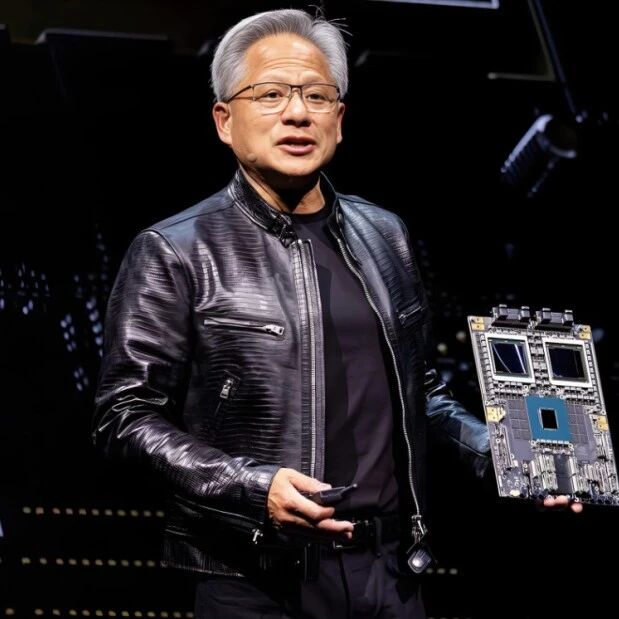
Core Viewpoint - NVIDIA is transitioning from a hardware supplier to a comprehensive provider of autonomous driving solutions, focusing on a full-stack approach that includes cloud training, simulation, and in-vehicle inference capabilities [4][7]. Group 1: Three Pillars of Full-Stack Solutions - NVIDIA's automotive strategy is built on three main components: DGX for AI model training, OVX for simulation, and AGX for in-vehicle inference [8][20]. - DGX serves as an AI model training factory, utilizing a supercomputing cluster of thousands of GPUs to process vast amounts of driving data [11][12]. - OVX creates a virtual world that mirrors real-world conditions, allowing for extensive testing of autonomous driving algorithms without the risks and costs associated with real-world testing [13][14][16]. - AGX represents NVIDIA's well-known in-vehicle computing chips, which have evolved to provide significantly higher processing power, becoming standard in various flagship models [18][20]. Group 2: Business Model Evolution - NVIDIA's revenue model has shifted from solely selling hardware to offering engineering services, which include deep involvement in automakers' production projects [21][23]. - The company charges a one-time engineering service fee, akin to a "coaching fee," to assist automakers in optimizing their algorithms on NVIDIA's platform [24][25]. - This service model fosters a win-win situation, enhancing automakers' capabilities while providing NVIDIA with valuable feedback for continuous product improvement [25]. Group 3: Open Source Strategy - In early 2025, NVIDIA announced the open-sourcing of its Alpamayo series, which includes a large-scale reasoning model and a comprehensive simulation framework [28][29][30]. - This strategic move aims to lower industry barriers, expand the ecosystem, and establish NVIDIA as a leader in defining the next generation of autonomous driving technology [34][35]. - The open-source approach also serves to mitigate geopolitical risks by transforming core technologies into global public assets [34]. Group 4: Demand from the Chinese Market - NVIDIA's accelerated pace in the automotive sector is largely driven by demand from the Chinese market, which is ahead of overseas automakers by two to three years in smart vehicle development [38][40]. - The rapid iteration and high expectations for functionality from Chinese automakers have prompted NVIDIA to develop specialized tools like TensorRT-LLM for Auto in record time [38][40]. Group 5: Competitive Landscape - NVIDIA maintains confidence against competitors by emphasizing that the ultimate competition in smart driving lies in systemic engineering capabilities and a continuously evolving ecosystem [41][42]. - The company has built a comprehensive stack that includes chips, safety certifications, operating systems, middleware, and development tools, creating a high barrier to entry for competitors [42][44].


李亚鹏直播带货成总榜第一;理想汽车:批量闭店、裁员均为不实信息;马斯克称特斯拉FSD中国获批最快下个月?特斯拉中国回应丨邦早报
创业邦· 2026-01-24 01:10
Group 1 - Tesla's Full Self-Driving (FSD) system is expected to be approved in China as early as next month, according to CEO Elon Musk, although Tesla China has not confirmed this information [3] - Li Auto has denied rumors of mass store closures and layoffs, stating that only a few low-efficiency stores will be shut down this year, with a total of 548 retail centers planned by the end of 2025 [5] - The "Did You Die?" app's developer has been listed in the business anomaly directory due to being unreachable at their registered address, which the founder attributed to remote work [8] Group 2 - Suzuki plans to sell its vehicle manufacturing plant in Thailand to Ford, with the sale amount undisclosed, as Suzuki is set to withdraw from local production by 2024 [12] - MTG, the parent company of ReFa, announced the dissolution of its subsidiary in China due to continuous losses, despite the brand's online presence remaining operational [13] - The global humanoid robot market is projected to see explosive growth, with an estimated shipment of 18,000 units by 2025, marking a 508% year-on-year increase [21]



「全球战略车型」正在退场
3 6 Ke· 2026-01-23 14:11
马斯克描绘的新全球战略车型构想是售价2.5万美元的Model 2,突然传出停止开发的消息,背后原因是中国车企的价格竞争力超出预期,利用全球供应链 并象征着自由贸易红利的"全球战略车型"正在消失…… 封面来源|unsplash 利用全球供应链并象征着自由贸易红利的"全球战略车型"正在消失。美国纯电动汽车(EV)巨头特斯拉已停止开发低价的全球战略车型。"碎片化"世界 正逐渐成为常态,这样的世界不存在引领创新和规则制定的主导权。汽车厂商正被迫重新构建商业模式。 特斯拉"Model 2"夭折 "我们希望把合同延长5年左右"。 进入2025年,与特斯拉存在业务往来关系的美国零部件厂商的高管开始收到特斯拉这样的要求。2020年上市的全球战略车型"Model Y"面临新的全面改 款,但特斯拉似乎已经决定短期内继续销售。 对于特斯拉首席执行官(CEO)埃隆·马斯克而言,这并不是一个积极的决定。特斯拉成立于2003年,之前一直保持稳步增长。原动力是Model Y。该车型 在中国的上海工厂以低成本实现大规模生产,截至2024年,一直稳居全球纯电动汽车销量第一。 作为Model Y的后续车型,马斯克描绘的新全球战略车型构想是售价2 ...

策略专题研究:需要担心本轮港股IPO的“虹吸效应”吗?
Guolian Minsheng Securities· 2026-01-23 14:07
Group 1 - The core viewpoint of the report is that the current wave of IPOs in the Hong Kong market is unlikely to cause significant liquidity concerns, despite the anticipated influx of listings in 2026 [1][4] - The report highlights that the number of IPOs in 2025 reached 117, raising a total of 286.33 billion HKD, which is a year-on-year increase of 224.8% [1][11] - The report indicates that the refinancing scale also increased to 326.37 billion HKD, marking a year-on-year growth of 272.9% [1][11] Group 2 - The report discusses that historically, the impact of IPOs and refinancing on the market is often felt in the medium term, particularly when financing exceeds 10 billion HKD, which can lead to market downturns [2][15] - It notes that large IPOs exceeding 15 billion HKD can boost short-term market sentiment, while refinancing tends to have a more immediate negative impact on market performance [2][19] - The report emphasizes that the market is more sensitive to refinancing than to IPOs, with significant refinancing amounts being better absorbed during bullish market conditions [2][24] Group 3 - The report suggests that the current macroeconomic environment, characterized by weak economic growth and high interest rates, can amplify market pressures [3][39] - It identifies that the current IPO wave is led by technology and manufacturing sectors, with a significant portion of the funds raised coming from AH shares, which is a notable shift from previous IPO trends dominated by Chinese concept stocks [3][11] - The report also highlights that the market response to new listings has been more positive, with new stocks receiving a premium compared to the broader market [3][4] Group 4 - The report concludes that the liquidity risks in the Hong Kong market for 2026 are manageable, with the IPOs themselves not being the core issue [4][39] - It mentions that there are over 300 IPO applications currently pending, indicating a continued interest in the market [4][11] - The report also points out that while there may be concerns about a wave of lock-up expirations later in the year, the overall market environment remains supportive for IPO activities [4][39]
一年血亏10万,二手小米SU7车价“腰斩”?记者探访济南二手车市场,有车商报价14.5万
Qi Lu Wan Bao· 2026-01-23 13:20
Core Viewpoint - The recent discussions about Xiaomi's used car market indicate a significant price drop, but the company's response highlights that their used car retention rate is at 80.1%, which is considered top-tier in the industry [1][3]. Group 1: Market Conditions - Reports from the Jinan used car market suggest that the depreciation of Xiaomi's SU7 model is within the normal range for electric vehicles, with a depreciation of about 30% after one and a half years of use [2]. - The current market price for Xiaomi's used cars is seen as a return to normal levels, as previous high prices were due to supply-demand imbalances and speculative buying [4]. - The introduction of the new Xiaomi SU7 models has contributed to the price adjustments in the used car market, as earlier buyers are now selling their vehicles at lower prices due to increased supply [4]. Group 2: Industry Trends - The used car market for electric vehicles has a typical depreciation pattern, with a 20%-30% drop in the first year and around 10% in subsequent years [5]. - The overall used car transaction volume in China exceeded 20 million units in 2025, reflecting a growth trend, but over 70% of used car dealers are facing losses, indicating a challenging environment for the industry [7]. - The average transaction price for used cars has decreased from 61,200 yuan to 53,700 yuan, representing a 12.3% decline, which highlights the pressure on margins for dealers [7]. Group 3: Consumer Behavior - Consumers are increasingly viewing used electric vehicles as high-value purchases due to significant depreciation, leading to better deals for buyers [8][9]. - The shift in consumer perception is influenced by the rapid turnover and low-profit strategies adopted by dealers, making used electric vehicles more accessible [8]. - The use of live streaming for selling used cars has become a prominent strategy, with some dealers reporting that 80% of their sales come from this channel, reflecting a change in how consumers engage with the market [8].
市场洞察:苹果全线产品焕新,供应链是否被重塑、端侧AI进展如何?
Tou Bao Yan Jiu Yuan· 2026-01-23 12:18
Product Launch Highlights - The iPhone 17 series includes four models: iPhone 17, iPhone 17 Air, iPhone 17 Pro, and iPhone 17 Pro Max, covering a price range from 6000 to over 10,000 yuan[2] - iPhone 17 targets the mass market with a focus on cost-effectiveness, while iPhone 17 Air emphasizes its ultra-thin design at 5.6mm[2] - The Pro models focus on imaging and computational power upgrades, catering to professional creators and high-end consumers[2] Apple Watch Series Update - Apple launched three new models: Apple Watch SE3, Series 11, and Ultra 3, enhancing health management and fitness tracking capabilities[4] - SE3 is positioned as an entry-level model, Series 11 targets mainstream health management, and Ultra 3 is aimed at high-end outdoor and extreme sports users[4] AirPods Pro 3 Enhancements - The new AirPods Pro 3 features a 67% improvement in noise cancellation and adds heart rate monitoring and hearing detection capabilities[6] Supply Chain Diversification - Apple is shifting towards a global distributed manufacturing model, with the iPhone 17 series being produced in India for the first time, marking a significant change in its supply chain strategy[9] - In Q2 2025, 44% of smartphones assembled in India were for the U.S. market, up from 13% year-on-year, with nearly 80% of U.S. iPhones produced in India[11] Manufacturing Cost and Infrastructure - Manufacturing costs in India are 5%-10% higher than in China, and challenges remain in infrastructure and supply chain stability[11] - China is transitioning to a high-value manufacturing hub, focusing on core components while India handles mid-range assembly[14] AI Functionality and Competitive Landscape - Apple introduced the Apple Intelligence system, integrating AI features across multiple devices, but the rollout is cautious and limited to specific models and regions[20] - Compared to competitors like Samsung and Huawei, Apple lags in the breadth of AI applications and ecosystem integration, which may impact user engagement[26] Supply Chain Impact from AI - The push for AI functionality necessitates upgrades in chip performance, storage, and sensor quality, creating new opportunities for suppliers[28] - Suppliers must meet higher technical standards to secure contracts, emphasizing the importance of privacy and data security in component design[28]

雷鸟、Rokid、阿里集体出击:中国AI眼镜天团决战放量前夜
3 6 Ke· 2026-01-23 11:12
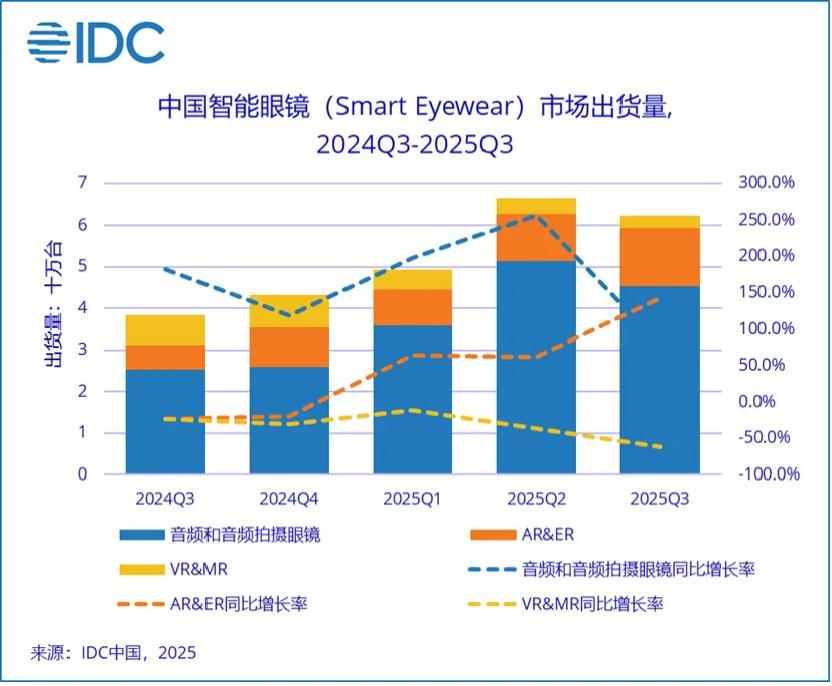
Core Insights - The AI glasses market is experiencing a significant transformation, similar to the early days of smartphones, with various Chinese manufacturers aiming to make AI glasses mainstream through diverse pricing and branding strategies [2][4][15]. Market Trends - According to IDC, global shipments of smart glasses are projected to reach 4.065 million units in the first half of 2025, marking a year-on-year growth of 64.2%, with China expected to surpass 1 million units, capturing 26.6% of the global market share [2][19]. - The AR smart glasses market is also growing, with China holding a 57.3% market share in the first half of 2025 [7]. Competitive Landscape - Meta currently dominates the smart glasses market with a 75.7% share, but Chinese companies like Xiaomi, RayBird, Xreal, and Viture are emerging as key players [5][19]. - The CES showcased numerous AI glasses from Chinese manufacturers, highlighting their technological advancements and market ambitions [9][12]. Technological Innovations - New AI glasses are focusing on lightweight designs and multi-modal AI interactions, with products like Rokid Style weighing only 38.5 grams and offering advanced features [9][10]. - Companies are developing products that integrate AR displays with AI assistants, aiming for a seamless user experience [14][15]. Industry Dynamics - The AI glasses sector is becoming a strategic battleground for various tech companies, with significant investments being made to capture market share [15][28]. - The supply chain for smart glasses is heavily concentrated in China, which produces about 80% of the necessary components, making it a critical hub for the industry [19][29]. Future Projections - The global smart glasses market is expected to see a compound annual growth rate (CAGR) of 55.6% in China, with projections of over 40 million units shipped by 2029 [31]. - By 2030, the AI glasses market could potentially reach 80 million units, representing a significant opportunity within the $150 billion traditional eyewear market [32][33].

“蜻蜓FM”运营方大量股权被冻结,曾获百度、优酷、小米等投资
Sou Hu Cai Jing· 2026-01-23 08:23
Group 1 - The core issue is that Shanghai Microphone Cultural Media Co., Ltd., the operator of the well-known online audio platform "Qingting FM," has recently experienced operational abnormalities, leading to a significant amount of its equity being frozen by the Shanghai Putuo District People's Court [1] - The frozen equity includes shares worth 7.1274 million yuan held by Zhang Qiang, the major shareholder and legal representative of Shanghai Microphone, as well as shares worth 250,000 yuan, 10 million yuan, and 140 million yuan held in its subsidiaries [1] - Zhang Qiang, who holds 23.76% of the company, has a background as a founder and general manager of Shanghai Hotline and co-founder of Ninth City, and he established Qingting FM in 2011 [1] Group 2 - Qingting FM, launched in September 2011, is the first online audio application in China, boasting over 450 million total users, with 100 million monthly active users and 25 million daily active users [2] - The platform features content from 1,500 radio stations and has over 350,000 certified hosts, indicating a robust ecosystem [2] - Shanghai Microphone has completed its G round of financing, with significant shareholders including Baidu's ChuanKe Computer System (8.38%) and Alibaba's Youku Information Technology (3.36%) [2] - Last year, Qingting FM faced public scrutiny due to subscription issues, with numerous users reporting unauthorized membership charges [2]

港股速报|港股高开反弹 阿里涨超3% 泡泡玛特大涨7%
Mei Ri Jing Ji Xin Wen· 2026-01-23 05:57
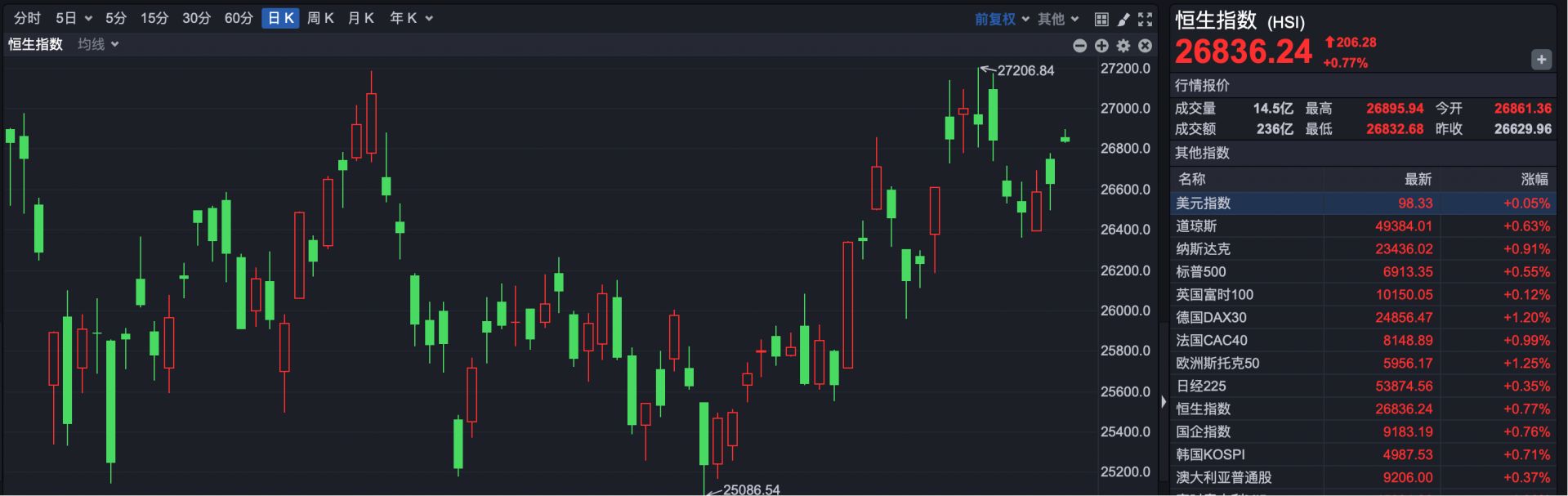
1月23日,港股市场延续反弹。 截至发稿,恒生指数开盘报26861.36点,上涨231.40点,涨幅0.87%。 | 分材 5日 = 5分 15分 30分 60分 日米 用K 月K 年K + | ■第8 · 其他 · ■ / : 恒生指數 (HSi) | 恒生版数 向线 · | 0000 | 120631 | 26836.24 | | | | --- | --- | --- | --- | --- | --- | --- | --- | | 27200.0 | -27206.84 | 行使相談 | 20161.36 | 27000.0 | 14.5亿 晶高 | 23855.14 今井 | 成交體 | | 成交接 | 236亿 最佳 | 2402118 10:00 | 26629.96 | 26800.0 | JOHN FE BE | | | | 無障- | 日本 | 0 00980 | +0.007 | 或共同性 | 13.37 | | | | 原草斯 | 26400.0 | 种新达克 | 20438.02 | +0.01% | | | | | 26200.0 | 85 管500 | 6013.35 | +0 ...

港股速报 | 港股高开反弹 阿里涨超3% 泡泡玛特大涨7%
Mei Ri Jing Ji Xin Wen· 2026-01-23 05:28
Group 1 - The Hong Kong stock market continued its rebound, with the Hang Seng Index opening at 26,861.36 points, up 231.40 points, a rise of 0.87% [1] - The Hang Seng Tech Index opened at 5,817.51 points, increasing by 55.07 points, a gain of 0.96% [2] - Alibaba Group's stock (HK09988) rose over 3% in early trading, while its subsidiary, Pingtouge, is set to support an independent listing, although the specific timeline is unclear [3][5] Group 2 - Other new consumer concept stocks showed strength, with Pop Mart (HK09992) rising over 7%, and Lao Pu Gold increasing by 6.60% [5][7] - The technology sector saw a general increase, with Xiaomi up over 3%, JD.com up over 2%, and Bilibili and Kuaishou both rising over 1% [7] - J.P. Morgan predicts that the upward trend in A-shares and Hong Kong stocks will continue until the Lunar New Year, with Hong Kong stocks expected to outperform A-shares [8]