
格林美

Search documents
镍价狂飙两周暴涨逾20%,概念股集体走强,兴业银锡年内涨超18%
2 1 Shi Ji Jing Ji Bao Dao· 2026-01-10 14:56
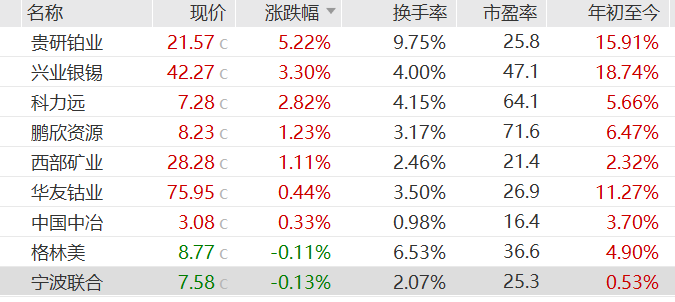
Core Viewpoint - Nickel prices have surged significantly since mid-December 2022, driven by supply concerns from Indonesia and increased investment in China's metal market, although signs of cooling have emerged recently [1][5]. Group 1: Nickel Price Movements - On January 6, 2023, three-month nickel futures in London surged by 10.5% to nearly $18,800 per ton, marking the largest single-day increase since late 2022 [1]. - As of January 9, 2023, the price fell to $17,155 per ton, reflecting a year-to-date increase of 3.3% [1]. - The recent nickel price rally has led to strong performances in related stocks, with Guiyan Platinum Industries up nearly 16% and Xingye Silver Tin up over 18% year-to-date [1]. Group 2: Supply Dynamics - Indonesia controls approximately 70% of global nickel production and plans to reduce production quotas by about 34% to 250 million tons by 2026 [6][10]. - The Indonesian government is also adjusting nickel pricing formulas and imposing taxes on by-products like cobalt, which could increase production costs [6][11]. - Analysts suggest that Indonesia's shift from expansion to active regulation aims to stabilize prices and address supply concerns [6][11]. Group 3: Market Sentiment and Future Outlook - Current market sentiment indicates limited downside for nickel prices, with predictions suggesting an average price of $15,250 per ton by 2026 if no significant production cuts occur [3]. - Despite recent price increases, analysts warn that the underlying oversupply situation has not changed, and prices may decline if demand does not significantly increase [14][15]. - The potential for structural changes in demand due to high nickel prices exists, but large-scale substitutions are unlikely in the short term [16].


镍价狂飙两周暴涨逾20%,概念股集体走强,兴业银锡年内涨超18%
21世纪经济报道· 2026-01-10 14:49
Core Viewpoint - Nickel prices have surged since mid-December 2022, driven by supply risks from Indonesia and a large-scale investment boom in China's metal market, although signs of cooling have emerged recently [1][3]. Group 1: Nickel Price Trends - On January 6, 2023, nickel futures prices soared by 10.5% to nearly $18,800 per ton, marking the largest single-day increase since late 2022 [1]. - By January 9, 2023, the three-month nickel futures price had dropped to $17,155 per ton, reflecting a year-to-date increase of 3.3% [1]. - The recent nickel price surge has been accompanied by a collective rise in nickel-related stocks, with Guiyan Platinum and Xingye Yinxin seeing increases of nearly 16% and over 18% respectively since the beginning of the year [1][2]. Group 2: Supply Dynamics - Indonesia controls nearly 70% of global nickel production and has announced plans to cut production quotas by approximately 34% in 2026, which could significantly impact global nickel pricing [5][6]. - The Indonesian government is also adjusting the pricing formula for nickel and imposing taxes on by-products like cobalt, which could increase production costs [6][11]. - Analysts suggest that Indonesia's shift from production expansion to active price support could ignite concerns about future supply shortages [6][11]. Group 3: Market Sentiment and Investment Trends - The recent volatility in nickel prices has been partly fueled by a surge in investment activity in the Chinese metal market, with trading volumes for nickel and other metals increasing significantly [7]. - Despite the recent price increases, analysts predict that without substantial demand recovery or coordinated production cuts, nickel prices may struggle to maintain high levels, with forecasts suggesting an average price of $15,250 per ton by 2026 [3][15]. - The current market sentiment indicates that while nickel prices have risen, the underlying supply-demand imbalance remains, with expectations of a surplus of 350,000 to 400,000 tons by 2026 [15].

年度榜单丨2025全球钠电池正极材料出货量TOP20排行榜!
起点锂电· 2026-01-10 10:43
Core Insights - The core viewpoint of the article is the significant growth forecast for the global sodium-ion battery industry, particularly in the production and shipment of cathode materials by 2025, as detailed in the "2026 Global Sodium Battery Industry White Paper" published by Qidian Research Institute SPIR [2]. Group 1: Industry Overview - By 2025, the global shipment of sodium-ion battery cathode materials is expected to reach approximately 20,000 tons, representing a year-on-year growth of 122.2% [2]. - Among the cathode materials, the shipment of polyanionic cathode materials is projected to exceed that of layered oxides, with an estimated shipment of 14,000 tons, marking a staggering year-on-year increase of 366.6%. In contrast, the shipment of layered oxide cathode materials is expected to be 5,000 tons, reflecting a year-on-year decline of 16.6% [2]. Group 2: Price Trends - The average price of layered oxide cathode materials in 2025 is forecasted to be 38,000 yuan per ton, which is a decrease of 26.3% compared to the previous year [3]. - The average price for polyanionic cathode materials is expected to be 28,000 yuan per ton, showing a decline of 22.2% year-on-year [3]. Group 3: Leading Companies - The top 10 companies in the global sodium-ion battery cathode materials shipment for 2025 include: 1. Qiana Energy 2. Rongbai Technology 3. Sodium Innovation Energy 4. Yingna New Energy 5. Wanrun New Energy 6. Sodium Science Energy 7. Dangseng Technology 8. Jiangsu Xiangying 9. Sodium Far New Materials 10. Jinguang Energy [7]. - The next tier, companies ranked 11-20, includes: 11. Ruiyang New Energy 12. Green Beauty 13. Zhenhua New Materials 14. Yangguang Technology 15. Tongxing Haosheng 16. Taihe Technology 17. Better Energy 18. Shengna Energy 19. Chaona New Energy 20. Xinna New Materials [7]. Group 4: Market Segmentation - The top 10 companies in the shipment of polyanionic cathode materials include: 1. Qiana Energy 2. Rongbai Technology 3. Yingna New Energy 4. Wanrun New Energy 5. Jinguang Energy 6. Sodium Science Energy 7. Sodium Far New Materials 8. Ruiyang New Energy 9. Tongxing Haosheng 10. Taihe Technology [9]. - The top 10 companies in the shipment of layered oxide cathode materials include: 1. Sodium Innovation Energy 2. Rongbai Technology 3. Dangseng Technology 4. Jiangsu Xiangying 5. Zhenhua New Materials 6. Sodium Science Energy 7. Green Beauty 8. Better Energy 9. Yangguang Technology 10. Changyuan Lithium Technology [9].


锂电回收行业迎来转机能源金属涨价推升“城市矿山”价值
Zheng Quan Shi Bao· 2026-01-09 23:02
Core Viewpoint - The lithium battery recycling industry is transitioning from extensive development to a new phase characterized by refinement, standardization, and globalization, driven by rising prices of lithium and cobalt, along with supportive policies [1][8]. Industry Overview - The lithium battery recycling sector is being recognized as a "urban mine," converting waste batteries into valuable, recyclable resources [1]. - A green circular market exceeding 100 billion yuan has emerged, reshaping the resource supply landscape in the new energy industry [1]. Profitability and Market Dynamics - The profitability of lithium battery recycling businesses has improved significantly due to increased retirement volumes and rising prices of lithium and cobalt [2]. - The price surge of energy metals has shifted the profit model from relying on subsidies to focusing on the intrinsic value of recycled materials, expanding profit margins for companies [2][3]. Policy Developments - New regulations have eased the import of recycled materials, allowing certain types of black powder to be imported without being classified as solid waste, thus facilitating the global resource allocation for China's battery recycling industry [2][3]. Capacity Expansion and Capital Operations - Leading companies are adopting a dual strategy of capacity expansion and capital operations to seize market opportunities, including new base construction and technology partnerships [4][6]. - Companies like Greeenme and Tianqi are actively pursuing acquisitions and financing to enhance their operational capabilities and market presence [4][5][6]. Technological Advancements and Industry Collaboration - The industry is evolving from merely end-of-life disposal to playing a crucial role in the entire battery lifecycle, with companies establishing comprehensive value chains [7]. - Greenme has achieved a lithium recovery rate exceeding 96.5% and has formed partnerships with over 1,000 automotive and battery manufacturers to create a closed-loop supply chain [7]. Market Outlook - The lithium battery recycling market is expected to grow at an annual rate exceeding 50% over the next 3 to 5 years, with the domestic market projected to surpass 100 billion yuan by 2030 [8].

锂电回收行业迎来转机 能源金属涨价推升“城市矿山”价值
Zheng Quan Shi Bao· 2026-01-09 17:44
Core Insights - The lithium battery recycling industry is evolving from a rough development phase to a more refined, standardized, and globalized stage, driven by rising prices of lithium and cobalt, along with supportive policies [1][7] - Major companies like Tianqi Co., Ltd. and Greeenme are expanding their capacities and capital operations to build competitive barriers through technological upgrades and industry chain extensions [1][2] Industry Trends - The prices of key metals such as lithium, cobalt, and nickel are expected to remain high due to global mining cycles and increased downstream energy storage demand, positively impacting cash flow and profitability for recycling companies [2][3] - The recycling business of Greeenme saw a significant increase in dismantling volume, reaching 36,000 tons in the first three quarters of 2025, a year-on-year surge of 59% [2] Policy Developments - In June 2025, the Ministry of Ecology and Environment, the Ministry of Industry and Information Technology, and the State Administration for Market Regulation announced that recycled black powder for lithium-ion batteries meeting national standards would not be classified as solid waste, facilitating imports [2][3] - The gradual relaxation of import policies for recycled resources reflects the government's emphasis on recycling and lithium battery recovery [3] Company Strategies - Greeenme is actively pursuing a dual strategy of capacity expansion and capital operation, including a planned acquisition of Henan Recycling Group to enhance its circular economy strategy [4][5] - Tianqi Co., Ltd. has established a processing capacity of 100,000 tons for waste lithium batteries, with plans for further expansion [5][6] Technological Advancements - Greeenme has developed a complete lifecycle value chain for battery recycling, achieving a lithium recovery rate exceeding 96.5% through innovative technologies [6] - The company collaborates with over 1,000 automotive and battery manufacturers to create a closed-loop supply chain, reducing risks associated with supply chain and metal price fluctuations [6] Market Outlook - The lithium battery recycling industry is expected to grow at an annual rate exceeding 50% over the next 3 to 5 years, with the market size projected to surpass 100 billion yuan by 2030 [7] - The industry is undergoing a transformation driven by price, demand, and policy changes, moving towards a more refined and standardized development phase [7]
格林美取得包覆掺杂双改性正极材料专利
Sou Hu Cai Jing· 2026-01-09 04:04
格林美股份有限公司,成立于2001年,位于深圳市,是一家以从事计算机、通信和其他电子设备制造业 为主的企业。企业注册资本512429.9057万人民币。通过天眼查大数据分析,格林美股份有限公司共对 外投资了27家企业,参与招投标项目29次,财产线索方面有商标信息237条,专利信息1434条,此外企 业还拥有行政许可22个。 声明:市场有风险,投资需谨慎。本文为AI基于第三方数据生成,仅供参考,不构成个人投资建议。 来源:市场资讯 国家知识产权局信息显示,荆门市格林美新材料有限公司、格林美股份有限公司取得一项名为"一种包 覆掺杂双改性的正极材料及其制备方法和应用"的专利,授权公告号CN119943915B,申请日期为2025年 1月。 天眼查资料显示,荆门市格林美新材料有限公司,成立于2003年,位于荆门市,是一家以从事有色金属 冶炼和压延加工业为主的企业。企业注册资本843963.754883万人民币。通过天眼查大数据分析,荆门 市格林美新材料有限公司共对外投资了26家企业,参与招投标项目202次,专利信息1534条,此外企业 还拥有行政许可460个。 ...
钠离子电池标准落地,电池ETF嘉实(562880)一键布局电池产业链投资机会
Xin Lang Cai Jing· 2026-01-09 03:11
Core Viewpoint - The sodium-ion battery technology is gaining traction in the energy storage and electric vehicle sectors, with significant potential for market growth driven by advancements in technology and increased industrialization [1]. Group 1: Market Performance - As of January 9, 2026, the China Securities Battery Theme Index rose by 1.70%, with key stocks such as Keda Technology increasing by 6.65%, Xinzhou Bang by 6.61%, and Keda Li by 5.18% [1]. - The top ten weighted stocks in the China Securities Battery Theme Index accounted for 51.77% of the index as of December 31, 2025, including major players like CATL and Sungrow Power [2]. Group 2: Industry Developments - The China Chemical and Physical Power Industry Association has approved the release of the group standard for sodium-ion battery technology requirements, covering definitions, testing methods, and storage guidelines [1]. - Wanlian Securities highlights the cost-effectiveness and low-temperature performance of sodium-ion batteries, suggesting a rapid increase in market penetration as the electric vehicle and energy storage sectors expand [1]. Group 3: Investment Opportunities - Huatai Securities emphasizes the importance of accelerating the construction of a new energy system, focusing on the development of new energy storage and smart grid construction, indicating ongoing benefits for companies in the energy storage, wind power, and grid sectors [1]. - The battery ETF by Harvest (562880) closely tracks the China Securities Battery Theme Index, providing a convenient tool for investors to access the battery theme sector [3]. - Investors without stock accounts can also utilize the battery ETF linked fund (016567) to gain exposure to investment opportunities within the battery industry chain [4].
银河期货每日早盘观察-20260109
Yin He Qi Huo· 2026-01-09 01:32
Report Industry Investment Rating There is no information provided in the report regarding industry investment ratings. Core Viewpoints of the Report - The stock index continues to show a differentiated pattern, with CSI 500 and CSI 1000 stock index futures expected to remain strong [19][20]. - The narrative of "re - inflation" in the domestic bond market has slightly changed, and there may be short - term long - trading opportunities in the bond market [23]. - In the agricultural products market, protein meal is expected to fluctuate, sugar prices are likely to oscillate, and the overall trend of the oil and fat sector is to move in a range [27][30][34]. - In the black metal market, steel prices will continue to oscillate, the coking coal and coke market should be cautious about callback risks, and iron ore prices are considered bearish at high levels [56][59][63]. - In the non - ferrous metal market, precious metals are experiencing wide - range fluctuations, copper prices are expected to rise in the long - term with short - term fluctuations, and the prices of other non - ferrous metals have their own characteristics and trends [69][78]. - In the shipping sector, the peak of spot freight rates for container shipping is gradually being established, and attention should be paid to the decline rate of spot prices [113]. - In the energy and chemical market, crude oil prices are expected to fluctuate widely, asphalt prices will oscillate at high levels, and the prices of other energy and chemical products also have their own trends [118][123]. Summary by Related Catalogs Financial Derivatives Stock Index Futures - **Core Viewpoint**: The stock index continues to be differentiated. The small - cap index performs prominently, and the CSI 500 and CSI 1000 stock index futures are expected to maintain a strong trend [19][20]. - **Trading Strategy**: Go long on IC and IM on dips; wait for the discount to widen for the cash - and - carry arbitrage of IM/IC long 2603 + short ETF; use a bull spread for options [20][21]. Bond Futures - **Core Viewpoint**: The narrative of "re - inflation" in the domestic bond market has slightly changed. Although there are factors restricting the strengthening of the bond market, there may be short - term long - trading opportunities [23]. - **Trading Strategy**: Go long on TF and T contracts on dips; stay on the sidelines for arbitrage [24]. Agricultural Products Protein Meal - **Core Viewpoint**: There is still supply pressure, and the overall price of the contract has declined. It is expected to move in a range [26][27]. - **Trading Strategy**: Stay on the sidelines for single - side trading; narrow the MRM spread for arbitrage; sell a wide - straddle strategy for options [27]. Sugar - **Core Viewpoint**: Commodity price fluctuations have increased, and both domestic and international sugar prices are oscillating. International sugar prices are expected to bottom - out and move in a range in the short term, while domestic sugar prices will face pressure near the upper oscillation platform [30]. - **Trading Strategy**: International sugar prices are expected to bottom - out and move in a range in the short term, and domestic sugar prices will oscillate. Stay on the sidelines for arbitrage; sell put options for options [31]. Oil and Fat Sector - **Core Viewpoint**: The overall trend is to move in a range. The inventory of palm oil is at a relatively high level, the inventory of soybean oil is gradually decreasing, and rapeseed oil is still greatly affected by policies [34]. - **Trading Strategy**: In the short term, the oil and fat market will move in a range with increased volatility. For palm oil, consider shorting at the upper edge of the range after a rebound, and soybean oil may follow the overall trend of the oil and fat market. Stay on the sidelines for arbitrage and options [34][35]. Corn/Corn Starch - **Core Viewpoint**: Wheat and corn are continuously being auctioned, and the spot price is stable. The U.S. corn price is at the bottom and oscillating, and the domestic corn price will face pressure in the later stage [38]. - **Trading Strategy**: For the foreign market, go long on the 03 corn contract on dips and stay on the sidelines for the 07 corn contract. Expand the spread between the 05 corn and starch contracts for arbitrage; stay on the sidelines for options [38]. Live Pigs - **Core Viewpoint**: There is still supply pressure, and the spot price is oscillating. The overall inventory of live pigs is relatively high, and the price is expected to face pressure [40]. - **Trading Strategy**: Adopt a short - selling strategy for single - side trading; stay on the sidelines for arbitrage; sell a wide - straddle strategy for options [40]. Peanuts - **Core Viewpoint**: The spot price of peanuts is stable, and the futures price is oscillating at the bottom. The supply of peanut kernels for oil is abundant, but the price is supported by factors such as cost [42]. - **Trading Strategy**: The 05 peanut contract is oscillating at the bottom. Go long on dips without chasing the rise. Stay on the sidelines for arbitrage; sell the pk603 - C - 8200 option for options [43][44]. Eggs - **Core Viewpoint**: Demand has improved, and the egg price has increased steadily. The supply pressure has been relieved, but the demand is average in the short term. The near - month contract is expected to oscillate weakly, and the May contract can be considered for long - position building on dips [47]. - **Trading Strategy**: The February contract is expected to oscillate in a range in the short term. Consider going long on the May contract on dips. Stay on the sidelines for arbitrage and options [47]. Apples - **Core Viewpoint**: The cold - storage inventory is low, and the fruit price is oscillating at a high level. The cost of apple warehouse receipts is high, and the demand is acceptable. If the demand remains normal, the May contract price is likely to rise [50]. - **Trading Strategy**: Hold the long position of the May contract and go short on the October contract on rallies. Long the May contract and short the October contract for arbitrage; stay on the sidelines for options [51]. Cotton - Cotton Yarn - **Core Viewpoint**: The planting area in the new year is expected to decline, and the cotton price is oscillating strongly. The sales progress of cotton is fast, and there are positive factors such as the expected expansion of textile factory capacity in Xinjiang [53]. - **Trading Strategy**: It is expected that the U.S. cotton will move in a range in the short term. Consider taking profits on the long position of the recent main contract of Zhengzhou cotton. Stay on the sidelines for arbitrage and options [54]. Black Metals Steel - **Core Viewpoint**: Steel has started to accumulate inventory, and the steel price will continue to oscillate. The supply of the five major steel products has increased, the inventory has started to accumulate, and the demand has weakened seasonally [56]. - **Trading Strategy**: Follow the coal and coke market and oscillate. Stay on the sidelines for single - side trading; short the hot - rolled coil to coal ratio on rallies and hold the short position of the hot - rolled coil to rebar spread; stay on the sidelines for options [57]. Coking Coal and Coke - **Core Viewpoint**: Market sentiment has cooled down, and attention should be paid to callback risks. The current supply and demand of coking coal are relatively balanced, and the price is mainly driven by macro - sentiment and funds [59]. - **Trading Strategy**: Be cautious about callback risks for single - side trading; stay on the sidelines for arbitrage and options [60]. Iron Ore - **Core Viewpoint**: Market expectations are fluctuating, and the iron ore price at a high level should be treated bearishly. The supply is abundant, and the domestic steel demand is expected to decline, limiting the upward space of the iron ore price [63]. - **Trading Strategy**: Go short on the iron ore contract at a high level with a light position [63]. Ferroalloys - **Core Viewpoint**: Market sentiment has generally cooled down, and it will move in a range in the short term. The supply and demand of ferrosilicon and ferromanganese silicon have their own characteristics, and the cost has a certain impact on the price [65][66]. - **Trading Strategy**: Move in a range in the short term for single - side trading; stay on the sidelines for arbitrage; sell out - of - the - money straddles for options [66]. Non - Ferrous Metals Gold and Silver - **Core Viewpoint**: The Bloomberg Index has started to adjust, and gold and silver are fluctuating widely. The adjustment of the Bloomberg Commodity Index has brought selling pressure to the gold and silver markets, and the impact on silver is more significant [69]. - **Trading Strategy**: Stay on the sidelines temporarily and wait for the market to stabilize. Stay on the sidelines for arbitrage and options [70]. Platinum and Palladium - **Core Viewpoint**: The BCOM has adjusted the weights, and precious metals are fluctuating widely. The supply and demand fundamentals of platinum and palladium are different, and the price is affected by factors such as index adjustment and macro - environment [73]. - **Trading Strategy**: Consider going long on platinum and short on palladium for arbitrage; stay on the sidelines for single - side trading and options [74]. Copper - **Core Viewpoint**: Short - term fluctuations have intensified. Buy after the price stabilizes after a callback. Trump's policies and factors such as supply - demand mismatch and financial attributes support the long - term rise of the copper price, but short - term fluctuations are affected by funds and sentiment [78]. - **Trading Strategy**: Pay attention to the support at 98000 - 99000 yuan/ton and buy in batches while controlling the position [78]. Alumina - **Core Viewpoint**: The expectation of an increase in warehouse receipts has led to a price callback. After the price increase, the import window has opened, and the expectation of an increase in warehouse receipts has put pressure on the price [81]. - **Trading Strategy**: The price will be under pressure [81]. Electrolytic Aluminum - **Core Viewpoint**: There is a short - term risk of a callback. After the price approaches the previous high, funds have taken profits, and the price has followed the sector to correct. However, the fundamentals still have support [83][86]. - **Trading Strategy**: After the price corrects due to capital outflows, maintain a bullish view after the price stabilizes. Stay on the sidelines for arbitrage and options [86]. Cast Aluminum Alloy - **Core Viewpoint**: It has corrected with the sector. The price has corrected with the non - ferrous metal sector, and the supply of scrap aluminum is tight, which supports the price, but the demand is weakening [87]. - **Trading Strategy**: The price will correct in the short term due to capital outflows and move with the sector. Stay on the sidelines for arbitrage and options [88]. Zinc - **Core Viewpoint**: Pay attention to the impact of the capital side. The shortage pattern of zinc ore is difficult to reverse, the supply of refined zinc may increase slightly, and the consumption has resilience. The price may be affected by capital withdrawal and inventory changes [91]. - **Trading Strategy**: Go short on the zinc contract at a high level with a light position and be vigilant about the pull - up of the zinc price by long - position funds. Stay on the sidelines for arbitrage and options [91]. Lead - **Core Viewpoint**: Buy on dips after the price stabilizes. The supply of lead ingots is difficult to increase significantly, the consumption has resilience, and low inventory and other factors may attract long - position funds [95]. - **Trading Strategy**: Maintain the idea of going long on dips after the price corrects. Stay on the sidelines for arbitrage; buy out - of - the - money call options in a timely manner for options [95]. Nickel - **Core Viewpoint**: After an over - rise and correction, it is ready to rise again. The supply of nickel is in surplus, but the price has risen due to factors such as geopolitical conflicts and inflation expectations. It is recommended to control the position and operate cautiously [97]. - **Trading Strategy**: Consider going long on dips after the price corrects and stabilizes. Stay on the sidelines for arbitrage and options [97][98]. Stainless Steel - **Core Viewpoint**: It moves following the nickel price. The price is supported by factors such as the expected reduction of nickel ore RKAB quotas, but the upward drive is weaker than that of nickel [100]. - **Trading Strategy**: Move following the nickel price. Stay on the sidelines for arbitrage [100]. Industrial Silicon - **Core Viewpoint**: Be bearish. The production of industrial silicon is difficult to reduce, the downstream demand may decline, and the inventory may continue to accumulate, so the price may fall [101]. - **Trading Strategy**: Hold existing short positions and go short on rallies for new strategies. There is no arbitrage opportunity; sell out - of - the - money call options for options [102]. Polysilicon - **Core Viewpoint**: The market trading of industry self - regulation falls short of expectations, and the futures price is weak. The futures price has fallen due to market rumors, and the industry needs to reach a new balance between "anti - involution" and "anti - monopoly" [104]. - **Trading Strategy**: The price is weak. Participate cautiously and control risks. There is no arbitrage and option strategy [105]. Lithium Carbonate - **Core Viewpoint**: A strong variety has corrected but is still running at a high level. Although there is a callback risk due to factors such as industry meetings, the long - term trend is good, and the price center will move up [107]. - **Trading Strategy**: Control the position and operate cautiously. Stay on the sidelines for arbitrage and options [107]. Tin - **Core Viewpoint**: Short - term fluctuations have intensified. Pay attention to the tariff ruling and non - farm payroll data. The import of tin concentrate has increased, the inventory has decreased, and the demand is in the off - season [109][110]. - **Trading Strategy**: Correct with the non - ferrous metal sector in the short term and pay attention to the non - farm payroll data on Friday. Stay on the sidelines for options [110]. Shipping Sector Container Shipping - **Core Viewpoint**: The peak of spot freight rates is gradually being established, and attention should be paid to the decline rate of spot prices. The demand growth has slowed down, and some shipping companies have started to lower their spot quotes [113]. - **Trading Strategy**: Stay on the sidelines and pay attention to the rate of shipping companies' price cuts. Look for opportunities to go long on the 6 - 10 spread on dips for arbitrage [114][115]. Energy and Chemicals Crude Oil - **Core Viewpoint**: Geopolitical risks in the Middle East have increased, and the oil price has rebounded significantly. The situation in Venezuela remains unchanged, and geopolitical risks in the Middle East have increased, leading to a significant rebound in the oil price. The oil price is expected to fluctuate widely [118]. - **Trading Strategy**: Fluctuate widely for single - side trading; the domestic gasoline is strong, the diesel is weak, and the crude oil calendar spread is strong for arbitrage; stay on the sidelines for options [118]. Asphalt - **Core Viewpoint**: The sharp rise in the crude oil price provides strong cost support. The cost support is obvious due to the rise in the crude oil price, and the asphalt price is expected to oscillate at a high level [123]. - **Trading Strategy**: Oscillate at a high level for single - side trading; stay on the sidelines for arbitrage and options [123]. Fuel Oil - **Core Viewpoint**: Geopolitical disturbances are frequent, and price fluctuations have intensified. The situation in Venezuela has an impact on fuel oil exports and production, and the supply and demand of high - sulfur and low - sulfur fuel oil have their own characteristics [127]. - **Trading Strategy**: Oscillate strongly in the short term and be vigilant about geopolitical risks for single - side trading; look for opportunities for the FU59 spread for arbitrage; stay on the sidelines for options [127]. Natural Gas - **Core Viewpoint**: TTF/JKM is oscillating at a low level, and HH is oscillating weakly. The demand in Europe and Asia is weak, and the supply in the United States is relatively loose. The price is expected to decline in the long term [130][131]. - **Trading Strategy**: Hold short positions in the third - quarter TTF or JKM contracts. Stay on the sidelines for arbitrage and options [131]. LPG - **Core Viewpoint**: There is a short - term geopolitical premium, but the expectation is still under pressure. The increase in the Saudi CP price provides support, but the continuous loss of PDH profits may lead to a decrease in the operating rate [135]. - **Trading Strategy**: Pay attention to the follow - up of the Iranian incident. Be bearish on the far - month contracts in the long term. Stay on the sidelines for arbitrage and options [135]. PX&PTA - **Core Viewpoint**: The news of polyester production cuts has fermented. The PX supply is relatively abundant, the PTA production rate has not changed much, and the downstream polyester production cuts have increased, but the cost is supported by the rise in the oil price [137]. - **Trading Strategy**: Oscillate
锂电产业链叩响价值回归之门
Zheng Quan Ri Bao· 2026-01-08 17:04
Core Insights - The lithium battery industry is entering a new development phase after two years of deep adjustments, driven by rising prices of battery-grade lithium carbonate, improved supply-demand dynamics in the materials sector, and sustained orders from battery manufacturers [1][2] Group 1: Recovery Signals - The lithium battery supply chain includes upstream lithium mining and raw materials, midstream key materials manufacturing, and downstream applications such as power batteries and energy storage [2] - Since December of last year, all segments of the supply chain have shown synchronized improvement, with lithium hexafluorophosphate leading the recovery, as many companies operate at full capacity and have ample orders [2] - The overall lithium battery industry has transitioned from a deep adjustment phase to an early recovery stage, marked by expanding orders in the energy storage market, rapid inventory depletion, and improved performance of leading companies [2][3] Group 2: Price Trends and Demand - Battery-grade lithium carbonate prices experienced a significant V-shaped rebound in 2025, with prices rising from below 60,000 yuan/ton to over 100,000 yuan/ton within six months, reflecting a more than 60% increase [3] - Leading companies predict a 30% increase in demand for battery-grade lithium carbonate by 2026, with potential price increases if demand exceeds expectations [3] - The global demand for lithium is expected to reach 2 million tons by 2026, driven by renewable energy integration and electrification of commercial heavy trucks [3] Group 3: Long-term Strategies - Rising material prices have led companies to seek solutions, including cost control through process optimization and raw material self-supply, while some leading firms have opted for direct price increases [4] - The industry is shifting from a "buyer-dominated" market to a "structural seller's market," with a focus on technological upgrades and supply chain resilience rather than mere capacity expansion [5] - Companies are increasingly adopting long-term strategies, emphasizing value creation and collaboration across the supply chain [5][6] Group 4: Profitability and Market Dynamics - The lithium battery industry is experiencing significant differentiation, with leading companies enjoying high order volumes and rising profits, while many mid-tier firms face challenges [7] - The ongoing demand for electric vehicles and energy storage is expected to accelerate the exit of low-quality capacities, concentrating resources and orders among leading and integrated companies [7][8] - Salt lake lithium extraction companies have a cost advantage over imported lithium ore processing, allowing them to achieve higher profit margins during price upswings [7] Group 5: Industry Evolution - The lithium battery industry is moving from a price-driven cycle to a value-driven cycle, with technological innovation becoming the core determinant of future profit distribution [8] - The recent meeting by the Ministry of Industry and Information Technology aims to regulate competition and promote high-quality development, indicating a shift towards quality improvement in the industry [8] - The industry's ability to achieve profitability in 2026 will depend on collective efforts towards value return, emphasizing long-termism and deep value creation as essential strategies for navigating cycles [8]



镍行业专家交流
2026-01-08 16:02
Summary of Nickel Industry Conference Call Industry Overview - The conference focused on the nickel industry in Indonesia, highlighting the government's strategic adjustments and long-term planning through various policies aimed at addressing resource scarcity, increasing fiscal revenue, enhancing foreign investment regulation, and protecting the environment [2][6]. Key Points and Arguments 1. **Government Policies**: - In 2025, Indonesia introduced several significant policy changes, including increasing the resource tax on nickel from 10% to a range of 14% to 19% [4]. - The government also shortened the submission cycle for mining plans from three years to one year, increasing the burden on mining companies [4]. - A special task force was established to inspect mining operations, affecting foreign investments [4]. 2. **Resource Scarcity**: - High-grade nickel ore resources are depleting, with current reserves expected to last only 6-7 years at the current consumption rate of approximately 250 million tons per year [2][7]. - The average grade of nickel ore has declined from 2.0% in 2006 to around 1.6% currently, impacting economic viability [7][8]. 3. **Impact on Exports**: - Nickel exports from Indonesia have been volatile due to policy changes, with a notable decrease in export volumes in early 2025 [2][10]. - The monthly export volume dropped from 1.4 million tons to 970,000 tons, indicating a potential long-term decline in total nickel product exports [10]. 4. **Market Dynamics**: - Current nickel prices are low, with costs for pyrometallurgical processing nearing breakeven points, particularly affecting small to medium enterprises [10][11]. - The introduction of by-product taxation could increase smelting costs by approximately 10%, potentially leading to dissatisfaction among private enterprises [3][20]. 5. **Illegal Mining**: - The Indonesian government has intensified efforts to combat illegal mining, which has historically accounted for about 30% of the supply [9][22]. - While these efforts may temporarily reduce illegal activities, the enforcement is less stringent compared to other countries, leading to concerns about long-term effectiveness [22]. 6. **Future Supply and Demand**: - The global demand for nickel remains relatively flat, with no significant growth drivers identified [16]. - The supply side is constrained, particularly for new capacity in the high furnace method, while hydrometallurgical processes are expanding but face challenges [17][16]. 7. **Investment Climate**: - The policies have created a challenging environment for Chinese companies investing in smelting plants in Indonesia, with potential production cuts or shutdowns for smaller operations [10][11]. - The government’s approach to policy implementation often involves gauging market reactions before finalizing decisions, leading to uncertainty [12][13]. 8. **Fiscal Contributions**: - The nickel industry significantly contributes to Indonesia's fiscal revenue, with resource tax indicators achieving about 90% of targets for 2025 [14]. - The government aims to enhance revenue through various means, including fines and increased taxation on nickel products [14]. 9. **Downstream Development**: - There is a tension between developing downstream industries and increasing mining costs, which could pressure midstream smelting operations [15][24]. - The government encourages local processing to add value, but the profitability of these ventures remains uncertain [24]. 10. **Electric Vehicle Market Impact**: - The global electric vehicle industry has varying demands, with Indonesia primarily producing lithium iron phosphate batteries that do not require high-grade nickel [28]. - The government seeks to attract investment from Western countries to enhance its international standing, but the effectiveness of these efforts is still uncertain [28]. Additional Important Content - The potential for new policies regarding by-product pricing and taxation is under discussion, which could have significant implications for the industry [5][20]. - The overall market dynamics suggest that while there are pressures on supply and pricing, the actual impact of policy changes may take time to materialize [12][13].