戴德梁行

Search documents
未来4年武汉甲级写字楼市场新增供应超百万方 精细化运营与差异化竞争成关键
Zhong Guo Jing Ying Bao· 2026-01-16 23:58
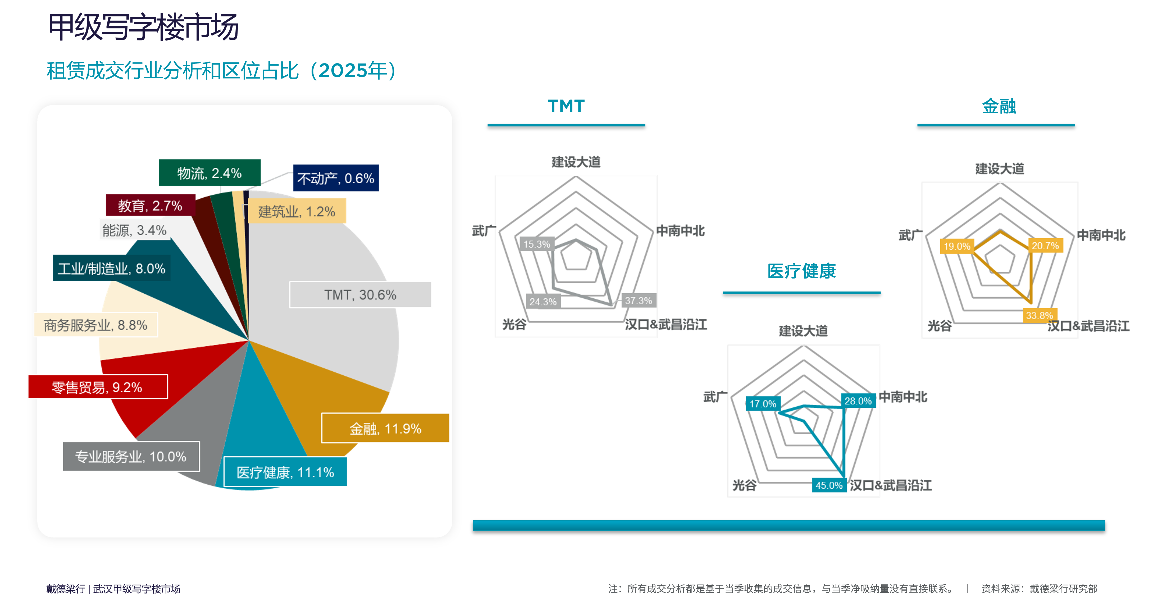
Core Insights - The Wuhan Grade A office market is expected to experience a significant increase in supply, with approximately 1.12 million square meters set to be added over the next four years, primarily concentrated in the Hankou and Wuchang riverside areas [1][4]. Grade A Office Market Overview - In 2025, the Wuhan Grade A office market will see an addition of about 230,000 square meters, raising the total stock in the core business district to 3.433 million square meters [4]. - The TMT (Technology, Media, and Telecommunications) sector is projected to be the main driver of leasing activity, accounting for 35.9% of the new space leased in 2025 [4][6]. - Average rental rates for Grade A offices in Wuhan fell to 73.3 yuan per square meter per month, a decrease of 11.2% year-on-year, while the vacancy rate rose to 39.1%, an increase of 2.7 percentage points compared to the previous year [5]. Market Dynamics and Trends - The overall demand for Grade A office space in Wuhan is undergoing a phase of contraction due to cautious expansion attitudes among companies, with a net absorption of 59,000 square meters in 2025, reflecting a year-on-year decline of 33.4% [5][6]. - Operators are adopting diversified leasing strategies, including co-working spaces and customized services, to attract tenants amid rising competition and increased vacancy rates [5][6]. Sector-Specific Demand - The main sectors supporting the Grade A office leasing market in 2025 are TMT, finance, and healthcare, contributing 30.6%, 11.9%, and 11.1% respectively to the leasing activity [6]. - Cost control remains a core driver for relocations, accounting for 58.3% of demand, while new demand remains limited [6]. Future Outlook - The competition in the Grade A office market is expected to intensify, particularly along the Yangtze and Han rivers, challenging landlords to enhance operational efficiency and differentiate their offerings [6].

去年北京写字楼租金价格累计跌幅超10%,高精尖产业或将带动市场修复
Sou Hu Cai Jing· 2026-01-16 13:47
Core Insights - The economic indicators for Beijing in 2025 show no significant improvement, with a vacancy rate of 19.1% in the office market and declining rental prices across various sectors [1][2] Office Market - The total new supply of office space in Beijing for 2025 was only 180,000 square meters, the lowest since 2015, which helped ease market de-stocking pressure [2] - The net absorption for the year reached 438,000 square meters, leading to a year-on-year decrease in vacancy rates by 1.9 percentage points [2] - Average rental prices in Beijing fell by 10.7% over the year, with the average price at 228.5 yuan per square meter per month [2] - Class A office projects are engaging in price competition to attract tenants, while Class B markets are experiencing more significant rental declines [2] Retail Market - The retail market in Beijing saw a supply peak in 2025, with 534,000 square meters of new retail space, all from urban renewal projects [5] - The "first store economy" is thriving, with various flagship stores opening across the city, indicating a shift towards new and differentiated retail offerings [5] - Despite the influx of new supply, a full recovery in consumer spending is expected to take time, with rental prices in secondary markets still under pressure [5] Warehouse and Logistics Market - The warehouse and logistics market faced severe challenges, with new supply reaching 1.4 million square meters and a vacancy rate soaring to 40.7%, both historical highs [7] - Demand has shifted to surrounding areas like Langfang and Tianjin, leading to a stark contrast in rental trends between Beijing and these regions [7] - Average rental prices in Beijing's warehouse market fell to 37.1 yuan per square meter per month, marking a 14.8% decline over the year [7]

2025年武汉零售市场提质,未来四年光谷将落地多个购物中心
2 1 Shi Ji Jing Ji Bao Dao· 2026-01-16 11:16
Core Insights - The retail market in Wuhan showed vitality in 2025, characterized by active adjustments from existing operators, impressive performance in new project leasing, and the restaurant industry becoming the main driver for new store openings [1][3]. Retail Market Overview - In 2025, three major projects opened in Wuhan's core commercial areas, adding approximately 328,000 square meters of quality retail space, increasing the total retail market stock to 4,839,000 square meters [1]. - The average rent for first-floor spaces was 389.6 yuan per square meter per month, a year-on-year decrease of 11.4%, while the vacancy rate decreased by 2 percentage points to 13.9% [3]. - The net absorption in the core commercial area reached 373,000 square meters, a year-on-year increase of 33.3%, indicating that existing operators were actively adjusting and filling vacancies [3]. Restaurant Industry Dynamics - The restaurant sector became the main force in new store openings, accounting for 41% of the total new openings in the core commercial area [3]. - Within the restaurant sector, specialty dining accounted for 44.9% of new openings, with strong expansion intentions from regional cuisine brands [3]. - The share of specialty dining has significantly decreased from 73.2% in 2021 to the current 44.9%, while the shares of snacks, desserts, and casual dining have rapidly increased, reflecting a shift towards more diverse consumer preferences [3]. Future Outlook - The structural transformation in the restaurant market reflects the broader upgrade in urban consumption, with a focus on enhancing consumer vitality as a key economic development strategy [4]. - Over the next four years, approximately 753,000 square meters of quality retail space is expected to be added in Wuhan, primarily in the Optics Valley area, which will enhance the regional commercial ecosystem [4]. - The ongoing release of new commercial supply and the deepening of the "Four First Economy" will further unlock consumer potential and optimize the commercial ecosystem in Wuhan [4].
去年成交近11万套商品住宅,武汉激活返乡置业需求
Di Yi Cai Jing· 2026-01-16 07:26
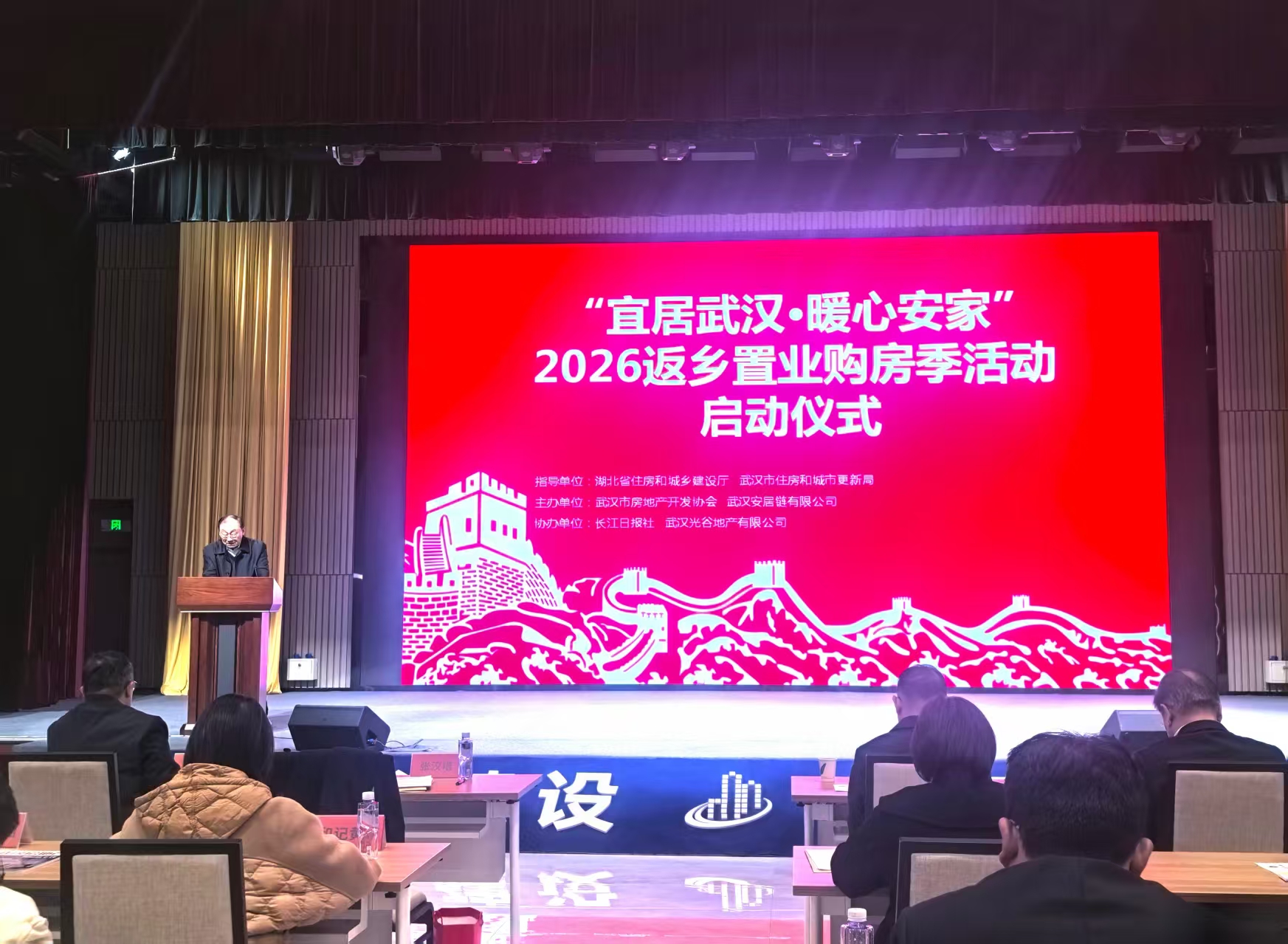
Core Viewpoint - The "good houses" have become a key factor in the stable development of the Wuhan real estate market, with various policies and initiatives aimed at boosting home purchases among returning youth and improving housing quality [1][4]. Group 1: Market Initiatives - The 2026 Wuhan home-buying season for returning residents was launched on January 15, attracting over 110 real estate companies and hundreds of projects, offering exclusive discounts [1]. - In 2025, Wuhan introduced two rounds of new policies to boost market confidence, including increasing the maximum personal housing provident fund loan limits and optimizing loan services for young people [3]. - The policies led to a growth in both transaction area and number of transactions, with a total transaction area of 15.8965 million square meters, up 2.75% year-on-year, and 136,738 transactions, up 1.18% year-on-year [3]. Group 2: Housing Market Dynamics - The city initiated a three-year urban renewal action plan in November, resulting in a significant increase in the sales of "good houses," with an average first-opening sales rate exceeding 70% for new projects [4]. - In 2025, the total land transaction area in Wuhan was 8.235 million square meters, a slight decrease of 0.5% year-on-year, while the average floor price rose by approximately 4.4% to 5,013.9 yuan per square meter [4]. - The average plot ratio for residential land has decreased from 2.89 in 2023 to 2.08 in 2025, indicating a shift towards higher-quality, lower-density housing products [4]. Group 3: Price and Inventory Trends - There is a significant regional price differentiation in the Wuhan real estate market, with central urban areas accounting for 43.5% of total transaction area and 50.9% of supply [5]. - Average transaction prices in Jianghan and Qiaokou districts increased by 2.6% and 0.2% respectively, while some districts experienced price declines exceeding 10% [5]. - As of November 2025, the overall clearing cycle for residential properties in Wuhan reached 27.9 months, indicating a high level of inventory, particularly in the outer districts [5]. Group 4: Strategic Shifts - The demand side of the real estate market is evolving, focusing on five key scenarios: returning residents, education, entrepreneurship, new citizens, and upgrades [5]. - The ongoing "Five Reforms and Four Goods" urban renewal initiative aims to innovate and improve service quality, transitioning the market from a focus on quantity to one on quality [5].
去年成交楼面均价同比上升4.4% 武汉土拍市场转向品质提升
Chang Jiang Ri Bao· 2026-01-16 00:41
Core Insights - The 2025 Wuhan real estate market report by DTZ indicates a shift from "scale expansion" to "quality improvement" in the land market, with an average floor price of 5013.9 yuan/square meter, reflecting a 4.4% increase compared to the same period in 2024 [1] Group 1: Land Market - Over 70% of the land market in Wuhan is residential land, with key transaction areas being Wuhan Economic Development Zone, Huangpi, Donghu High-tech Zone, and Xinzhou [1] - The average plot ratio for residential land has significantly decreased from 2.89 in 2023 to 2.08 in 2025, indicating a focus on creating higher quality living environments [1] - The participation of private enterprises in land acquisition is increasing, with a noticeable trend of "state-owned enterprises leading and a few private enterprises competing for quality land" [1] Group 2: Residential Market - The average transaction price for residential properties in Wuhan is expected to rise by 2% in 2025, indicating a market entering an adjustment and optimization phase [2] - The central urban area is the main supply and demand region, accounting for 43.5% of total transactions, with Jiang'an District and Hanyang District leading the way [2] - The market demand structure has shifted from being dominated by first-time buyers to a focus on upgrading and improving housing, with the proportion of 90-120 square meter units dropping from nearly 50% in 2021 to 34.1% [2]
2025年不动产资本化率调研:投资偏好分化 抗风险资产成焦点
Xin Hua Cai Jing· 2026-01-15 14:48
Core Insights - The report by CBRE highlights the evolving landscape of China's real estate investment market, focusing on capitalization rates and investor preferences for 2025 [1] Group 1: City Investment Preferences - First-tier cities like Beijing and Shanghai remain the top investment choices, reflecting strong investor confidence [2] - Non-first-tier cities such as Hangzhou, Chengdu, Suzhou, the Greater Bay Area (excluding Guangzhou and Shenzhen), and Nanjing are emerging as new focal points for investment due to economic growth and higher investment returns [2] Group 2: Asset Type Preferences - Long-term rental apartments and serviced apartments are gaining traction, with investment interest in Beijing and Shanghai at 61% and 64% respectively, significantly higher than in Guangzhou and Shenzhen [3] - Retail properties are seeing a resurgence in interest, particularly shopping centers, outlets, and community commercial spaces, driven by standardized operations and strong liquidity [3] - Industrial assets show a clear structural differentiation, with data centers and industrial plants gaining popularity, while warehouse logistics are experiencing a decline in interest [4] Group 3: Investment Strategies and Capitalization Rates - Different types of institutions exhibit varied strategy preferences, with private equity funds favoring high-risk, high-reward strategies, while insurance funds prefer stable investments [5] - Capitalization rates for most asset types are on the rise, indicating changing market risk expectations, with prime office capitalization rates in Beijing and Shanghai at 5.0%-6.0% [5] - Investors are cautious about future capitalization rate trends, anticipating an upward trajectory, but recognize the resilience of retail properties and long-term rental apartments [5] Group 4: Public REITs Market - As of December 2025, there are 78 publicly offered REITs in mainland China, totaling 210 billion yuan, making it the largest in Asia and second globally [6] - Investors prioritize operational management capabilities, policy direction, and secondary market liquidity when evaluating REITs [6] - The dynamic changes in capitalization rates are seen as a core pricing indicator for the real estate market, reflecting industry confidence and investment logic [6][7]
戴德梁行:REITs底层资产中零售物业关注度显著回升
Zhong Zheng Wang· 2026-01-15 13:03
Group 1 - The report highlights that Beijing and Shanghai are the top cities attracting investor interest, indicating a strong investment preference for these core cities [1] - Non-first-tier cities like Hangzhou, Chengdu, Suzhou, and Nanjing are emerging as new investment focal points due to their economic growth, industrial upgrades, and relatively high investment returns [1] - Long-term rental apartments and serviced apartments are becoming investment hotspots, with 61% and 64% of investors in Beijing and Shanghai considering these assets, significantly higher than in Guangzhou and Shenzhen [1] Group 2 - Retail property interest has notably rebounded, with shopping centers, outlets, and community commerce becoming core segments; shopping centers are favored for their high operational standardization and liquidity [2] - Industrial asset interest shows significant differentiation, with a decline in warehouse logistics attention, while data centers and industrial plants are rapidly gaining popularity due to increased demand from cloud computing and REITs development [2] - As of December 2025, 78 public REITs have been listed in China, with a total scale of 210 billion yuan, indicating a robust growth in the public REITs market [3]
2025年中国内地房地产大宗交易总成交规模1448亿
Zhong Guo Xin Wen Wang· 2026-01-13 00:28
Core Insights - The report by CBRE indicates that the total transaction volume of real estate in mainland China is projected to reach 144.8 billion yuan by 2025, with Beijing's real estate transaction volume expected to be 15 billion yuan, reflecting a phase of decline in the market [1] - The expansion of public REITs to include super-grade and grade A office buildings, as well as four-star and above hotel projects, marks a significant policy breakthrough that enhances the financialization of real estate in China [1] - The shift from a reliance on development sales to a full-cycle capability in investment, financing, management, and exit is becoming increasingly important, highlighting the need for professional services and value operations [1] Group 1 - The introduction of policies by the China Securities Regulatory Commission and the National Development and Reform Commission will broaden the scope of public REITs, indicating a new phase in the financialization of real estate [1] - The real estate sector's future growth will increasingly come from the refined operation of existing assets, quality upgrades in property services, and the regulated development of the leasing market, rather than solely from new developments [2] - The retail market in Beijing is set to see the opening of 13 quality projects, adding over 1.1 million square meters of premium retail space, emphasizing the importance of consumer experience and cultural integration in driving resilient growth [2] Group 2 - REITs are evolving from single-asset products to sustainable value operation platforms, creating a robust bridge between capital and the real economy [2] - The current market dynamics indicate a transition towards a focus on enhancing the quality of existing assets and services, rather than pursuing large-scale new developments [2] - The integration of cultural elements into commercial spaces and innovative scenarios is identified as a key factor for the next phase of growth in Beijing's commercial market [2]
新政迭出 房地产市场“稳”步开局
Xin Lang Cai Jing· 2026-01-12 21:04
商业贷款方面,5年期利率调整至3.5%,对于选择以1月1日作为重定价日的首套房贷客户来说,如果执 行的是LPR-30BP的贷款利率,那么重定价日贷款利率将调整为3.2%;如果执行的是LPR-45BP的贷款利 率,那么最新的房贷利率将降至3.05%。 58安居客研究院院长张波表示,从当前市场态势来看,购房成本已降至近五年新低。多重政策红利叠加 显著降低了购房者的置业成本。 (来源:经济参考报) 2026年以来,全国房地产市场稳步开新局。多地密集出台优化住房公积金、发放购房补贴、降低购房门 槛等新政,精准直击购房者"月供压力大""首付门槛高"等痛点,减负举措激活合理住房需求,促进市场 信心修复,为楼市平稳开局注入信心。 河南开年便发布《推动2026年第一季度经济发展实现良好开局若干政策措施》,在支持住房消费方面, 支持各地因地制宜发放购房补贴、契税补贴,组织住房促销活动200场(次)以上,支持各地加快发行 地方政府专项债券收购存量商品房用作保障性住房,加快推进城中村改造项目建设。 辽宁沈阳也于1月7日推出5项住房公积金贷款优化新政,包括将最低首付款比例15%的政策期限延长至 2026年12月31日,把"商转公"贷 ...
戴德梁行:以资产管理激活房地产发展新动能
Xin Hua Cai Jing· 2026-01-12 17:45
Core Insights - The event hosted by CBRE focused on the latest trends in the real estate market, with discussions on office buildings, commercial trends, bulk transactions, REITs, and asset management, aiming to provide insights into market dynamics and potential pathways for breakthroughs [1][4] Group 1: Real Estate Market Trends - The expansion of the public REITs pilot program to include office buildings and hotels marks a new phase in the financialization of real estate in China, providing standardized exit channels for existing assets and diverse investment options for institutional investors [1] - The future growth of the real estate industry will increasingly rely on the refined operation of existing assets, quality upgrades in property services, and the regulated development of the leasing market, rather than solely on new developments [1][4] Group 2: Office Market Outlook - The Beijing office market is expected to face multiple challenges in 2026, with a focus on enhancing core competitiveness and achieving breakthroughs in a competitive environment [4] - The projected scale of bulk transactions in Beijing's real estate market for 2025 is estimated at 15 billion yuan, indicating a phase of decline, with a shift in buyer structure towards self-use demand from enterprises [6] Group 3: Commercial Market Developments - In 2025, the Beijing retail market will see the opening of 13 quality projects, adding over 1.1 million square meters of premium retail space, alongside the renovation of several older commercial projects [5] - The retail market is characterized by a transformation from single consumption spaces to "urban living rooms," a shift in cultural and IP operations towards global and matrix layouts, and a transition in commercial operation philosophy from "traffic-oriented" to "long-termism" [5] Group 4: Asset Management Strategies - The core strategy of asset management at CBRE emphasizes "long-term resilience," with REITs evolving from single asset products to sustainable value operation platforms, connecting capital with the real economy [6] - The discussions highlighted the importance of capital layout and operational optimization in navigating market fluctuations and cycles [6]