
联电

Search documents
芯片互联,复杂性飙升
半导体芯闻· 2026-01-26 08:44
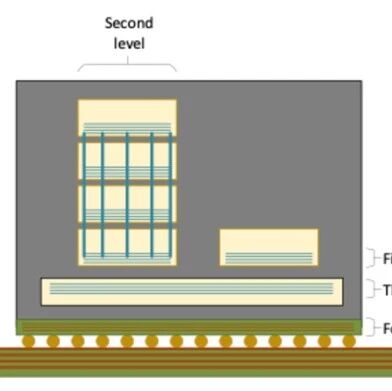
这种转变是渐进式的,而非革命性的。开发者们一步一步地寻找解决方案,克服遇到的障碍,逐步 推进。就像温水煮青蛙的故事一样,我们会逐渐适应每一次变化,以至于只有当我们回顾过去,对 比现在和过去,才能真正意识到累积变化的巨大影响。 如果您希望可以时常见面,欢迎标星收藏哦~ 几十年来,电子器件通常采用两级路由结构来管理集成电路中产生的或终止的信号。近年来,路由 层数增加到了五级。虽然这大大提高了电子设备的结构灵活性,但也带来了更大的复杂性,并增加 了完成项目所需的决策数量。 起点 就本文而言,布线"结构"或"平台"被定义为互连的所在位置。历史上,这两种平台分别是集成电路 (IC) 本身的金属布线和印刷电路板 (PCB) 上的金属布线。它们都提供多层布线,以最大限度地提 高连接性,同时兼顾增加布线层的成本。这里必须谨慎使用"层"和"级"这两个术语,因为 IC 和 PCB 是两个级别的互连,每个级别都可以包含多个布线层。 直到最近,芯片和PCB这两个层级之间的差异还足够大,可以分别讨论。芯片设计人员负责构建芯 片内部的布线,而PCB设计人员则负责构建连接集成电路与其他电路板组件的布线。 在这些层级以及所有其他层级上,线间 ...

台美半导体结盟新里程碑 英特尔、联电传世纪大合作
Jing Ji Ri Bao· 2026-01-25 23:09
英特尔与联电(2303)传将进行「世纪大合作」,英特尔要把独家用于下世代埃米级制程与先进封装关 键的独家技术「Super MIM」超级电容授权联电,联电技术能力将大跃进,双方并将携手抢攻AI世代大 商机,树立台美半导体合作新里程碑。 对于相关消息,联电表示,目前与英特尔的合作重心仍放在12奈米平台,持续强化制程竞争力与客户服 务,但未来不排除扩大合作范围,朝更多元技术领域发展。 该技术可在芯片内部即时提供瞬间电流支援、抑制电压下陷与电源杂讯,被视为18A等埃米级制程能否 顺利量产的关键电力基础模组之一。 消息人士透露,英特尔正规划优先将Super MIM超级电容技术向下导入与联电既有合作的12奈米/14奈 米制程平台,并延伸至先进封装相关应用。 业界分析,透过取得英特尔相关授权,联电在关键电力技术先行商品化与模组化再迈进大步,并建立其 成熟先进制程与先进封装领域差异化技术门槛。 若联电成功导入英特尔Super MIM超级电容技术,将不仅是单一制程优化,而是取得「先进电力模组」 这项跨世代关键能力,有助其切入AI加速器、高速运算、先进封装电源层等高附加价值应用,对联电 整体技术平台与客户结构具指标意义。 消息人 ...


又一晶圆厂,发力硅光
半导体行业观察· 2026-01-21 01:23
Core Viewpoint - The article highlights the strategic advancements of United Microelectronics Corporation (UMC) in the field of Silicon Photonics and Co-Packaged Optics (CPO), driven by the explosive growth in global AI and high-performance computing (HPC) demand [1][3]. Group 1: UMC's Strategic Initiatives - UMC is actively upgrading its mature process technology and has established its new Fab 12i P3 in Singapore as a core base for Silicon Photonics and CPO technology, aiming for mass production by 2027 [1]. - The company is enhancing the added value of its mature processes by focusing on special applications in the 22/28nm process, which will serve markets such as communications, automotive, IoT, and AI [1][3]. - UMC has confirmed that Silicon Photonics is a key technology in its special process advancement, with plans for risk production starting in 2026 [1][3]. Group 2: Collaboration and Technology Development - UMC has signed a technology licensing agreement with imec, a leading semiconductor research center, to adopt the validated iSiPP300 Silicon Photonics process platform, which will accelerate the development of UMC's 12-inch Silicon Photonics platform [2]. - This collaboration combines UMC's extensive experience in 8-inch Silicon Photonics mass production with imec's advanced technology, enabling UMC to offer photonic integrated circuits (PICs) for optical transceivers [2]. Group 3: Market Context and Future Outlook - The investment in Silicon Photonics is driven by the limitations of traditional copper interconnects, which face bandwidth and energy consumption challenges as AI data loads increase [3]. - CPO technology allows for the integration of optical engines with computing chips, significantly reducing signal transmission distances and improving efficiency, which is crucial for data centers [3]. - UMC's future plans include integrating advanced packaging technologies to enhance system architecture towards CPO and optical I/O solutions, providing high bandwidth, low energy consumption, and scalable optical interconnect applications [3].

中芯国际等巨头集体提价 8英寸芯片最高涨20%
Ge Long Hui· 2026-01-21 01:11
格隆汇1月21日|据21财经,集邦咨询报告显示,全球8英寸晶圆供需正步入失衡期。受台积电、三星电 子战略性削减产能影响,2026年全球8英寸代工总产能将萎缩2.4%。而AI驱动的电源管理芯片(Power IC)等产品需求维持强劲,正拉动行业平均产能利用率回升至90%的高位。在此背景下,中国大陆晶圆 代工厂正在崛起,成为满足8英寸芯片需求的替代方案。晶圆代工厂正提高报价,预计调价幅度在5%至 20%之间。 具体来看,目前台积电在中国台湾有4座8英寸晶圆厂和1座6英寸晶圆厂,若要在2027年全 面退出,2026年就需要持续削减产能。目前台积电的8英寸晶圆代工月产能约为52.8万片。 三星电子同 样于2025年下半年启动8英寸晶圆厂减产,且态度更为积极,希望将更多的资源投入到12英寸晶圆市场 的竞争当中。此前,三星为了应对持续亏损的晶圆代工业务以及8英寸晶圆厂的低产能利用率,就已经 计划削减8英寸晶圆厂规模,并传闻对8英寸代工制造和技术团队裁员30%以上。目前三星电子的8英寸 晶圆代工月产能亦约为52.8万片。 联电旗下8英寸晶圆月产能曾超36万片,现阶段产能利用率约70%。 展望后市,联电正向看待2026年营运有 ...

中芯国际等巨头集体提价,8英寸芯片最高涨20%
2 1 Shi Ji Jing Ji Bao Dao· 2026-01-21 00:59
记者丨彭新 在此背景下,中国大陆晶圆代工厂正在崛起,成为满足8英寸芯片需求的替代方案。同时,晶圆代工厂 正提高报价,预计调价幅度在5%至20%之间。 8英寸晶圆供需失衡 编辑丨骆一帆 8英寸晶圆主要用于生产电源管理芯片(PMIC)、驱动IC、微控制器(MCU)及功率器件(IGBT、 MOSFET)等。长期以来,该市场因工艺成熟、设备折旧完毕,被视为先进制程巨头资产组合中的"现 金奶牛",利润丰厚。 人工智能(AI)浪潮之下,先进制程芯片难求、身价飙升。与此同时,曾被晶圆厂加速剥离的8英寸晶 圆产线,正因国际巨头集体转向12英寸以及AI外围芯片需求的增长,上演了一场从产能过剩到提价满 载的结构性反转。在此变局下,中国大陆晶圆代工厂正承接这一全球产能真空,其角色变化引起市场瞩 目。 1月13日,市场调研机构集邦咨询(TrendForce)发布最新报告显示,全球8英寸晶圆供需正步入失衡 期。受台积电、三星电子战略性削减产能影响,2026年全球8英寸代工总产能将萎缩2.4%。与此同时, AI驱动的电源管理芯片(Power IC)等产品需求维持强劲,正拉动行业平均产能利用率回升至90%的高 位。 然而,随着制程节点向3 ...

中芯国际等巨头集体提价,8英寸芯片最高涨20%
21世纪经济报道· 2026-01-21 00:52
Core Viewpoint - The article discusses the structural shift in the 8-inch wafer market due to the increasing demand for AI-related chips and the strategic reduction of production capacity by major players like TSMC and Samsung, leading to a supply-demand imbalance and price increases in the industry [1][4]. Group 1: 8-inch Wafer Supply and Demand Dynamics - The global supply of 8-inch wafers is entering a period of imbalance, with a projected 2.4% decline in total production capacity by 2026 due to strategic capacity reductions by TSMC and Samsung [1][3]. - The demand for power management chips driven by AI applications is robust, pushing the average capacity utilization rate in the industry back up to 90% [1][4]. - The shift from overcapacity to price increases is evident, with wafer foundries expected to raise prices by 5% to 20% [1][4]. Group 2: Impact on Chinese Wafer Foundries - Chinese wafer foundries are emerging as key players to fill the global capacity void, benefiting from the structural changes in the market [5][6]. - Major Chinese companies like SMIC have reported significant increases in production capacity, with SMIC's monthly capacity reaching 1.023 million 8-inch equivalent wafers and a utilization rate of 95.8% [7]. - The price of 8-inch chips has increased by approximately 10%, with some orders seeing price hikes of up to 20% due to the tightening supply-demand situation [8]. Group 3: Long-term Trends and Future Outlook - Despite the current boom in 8-inch wafer production, there is a long-term trend of migrating power management and display driver chips to 12-inch nodes, which necessitates that Chinese manufacturers also accelerate their 12-inch specialty process layouts [8][9]. - The global semiconductor industry is expected to increase 12-inch wafer production capacity to a historical high of 9.6 million wafers per month by 2026, driven by strong demand [8][9].

全球大公司要闻 | 马斯克旗下X平台开源推荐算法
Wind万得· 2026-01-20 23:01
Group 1 - X platform, owned by Musk, has open-sourced a new recommendation algorithm driven entirely by AI, removing all manual rules and features [2] - Netflix projects Q4 2025 revenue of $12.05 billion, up from the previous estimate of $11.97 billion, with an expected EPS of $0.56 compared to $0.43 last year [2] - Samsung Electronics and SK Hynix plan to reduce NAND flash wafer production in 2026, with Samsung's output decreasing from 4.9 million to 4.68 million wafers, potentially exacerbating supply shortages [2] Group 2 - United Microelectronics Corporation (UMC) collaborates with Microchip Technology's subsidiary to produce fourth-generation SuperFlash technology, enhancing its position in the automotive chip market [4] - Tongfu Microelectronics expects a net profit growth of 62.34%-99.24% in 2025, driven by semiconductor industry recovery and price increases from major chip manufacturers [4] - Aoke shares have developed a leading technology for lithium battery additives, set to begin trial production in January 2024, with a conversion rate exceeding 99% [4] Group 3 - Northeast Securities anticipates a net profit increase of approximately 69.06% in 2025, benefiting from improved market activity in brokerage and investment banking [5] - Liou shares have completed self-inspection and will resume trading, with AI-related business applications still not significantly impacting overall revenue [5] - Huayin Technology signs a sales contract worth 328 million yuan for special functional materials used in aircraft engines, positively impacting future performance [6] Group 4 - Nvidia's bond rating has been upgraded to AA1 by Moody's, and the company is participating in a $300 million investment in AI startup Baseten [8] - Microsoft warns of potential AI technology bubble risks while committing millions to support UN initiatives [8] - Amazon's CEO indicates that U.S. tariffs are beginning to raise prices on certain goods, while a Canadian bank raises its target price for Amazon stock [8] Group 5 - SoftBank's SBI Holdings invests $50 million in Clear Street to establish a joint venture in Japan for asset management services [11] - Toyota aims for over 1.78 million sales in China by 2025, marking a return to growth after four years, despite challenges in its electric vehicle segment [11] - BHP raises its copper production guidance for FY2026 to 1.9-2 million tons, maintaining its focus on copper as a strategic priority [13]

闪德资讯存储市场洞察报告 2025年7月
闪德资讯· 2026-01-20 08:45
Investment Rating - The report does not explicitly state an investment rating for the industry Core Insights - The overall manufacturing sector is under pressure, with a global manufacturing PMI mostly in contraction territory, particularly affected by US-China tariff policies [6] - Major manufacturers are competing for high-end processes and AI memory market share, with companies like Samsung, Micron, and SK Hynix leading the charge in high-performance memory technologies [6] - Supply chain dynamics are tightening due to capacity concentration and rising material costs, particularly in the DDR4 and Flash memory markets [6] - The market is experiencing a shift towards high-end demand driven by AI applications, while low-end markets face pressure [6] Summary by Sections Macroeconomic Overview - The global manufacturing PMI indicates a contraction, with China's PMI at 49.3% in July, reflecting a slight decline [7][17] - Export structures are improving, with a notable increase in the export of high-value electronic products [6][22] Original Manufacturer Dynamics - Leading manufacturers are focusing on high-performance memory technologies, with South Asia becoming a key supplier for DDR4 [6][29] - Domestic manufacturers are accelerating the construction of independent production lines in response to sanctions [6][29] Supply Chain Movements - The concentration of DDR4 production is shifting to a few manufacturers, while Flash memory faces shortages in mid-to-low capacity chips [6][29] - The market is currently in a phase of inventory reduction, with DRAM prices experiencing fluctuations [6][29] Market Trends - The DRAM market has shifted from a surge in June to a period of adjustment, with DDR4 prices declining and DDR5 demand increasing [6][29] - The NAND market is seeing price increases for low-capacity chips, driven by supply constraints and rising demand [6][29] Application Changes - AI is driving demand for high-performance memory and SSDs, while low-end smartphone markets are under pressure due to supply chain issues [6][34] Upstream Market - The memory market is experiencing supply tightness due to the end-of-life plans for DDR4, with South Asia emerging as a dominant supplier [6][29] - The transition to DDR5 is accelerating, with expectations of increased market penetration in the coming quarters [6][32] Foundry Market - The demand for mature process nodes is declining, impacting the utilization rates of foundries [6][51] - Companies are focusing on niche markets to mitigate the impact of reduced demand in traditional sectors [6][52] Storage Controller Market - New products like the MonTitan SM8466 PCIe Gen6 SSD controller are being introduced, enhancing performance and capacity for enterprise storage [6][54] - The demand for high-end storage solutions is increasing, driven by the rise of AI applications [6][55]
闪德资讯存储市场洞察报告 2025年5月
闪德资讯· 2026-01-20 08:45
Investment Rating - The report indicates a positive outlook for the storage industry, particularly in DRAM and NAND sectors, with expectations of price increases and demand recovery in the coming quarters [6][20][44]. Core Insights - The report highlights a significant transition in the memory market, with major manufacturers like Samsung, SK Hynix, and Micron phasing out DDR4 production in favor of DDR5 and HBM technologies, which is expected to tighten supply and drive prices up [6][23][24]. - DRAM prices have surged, leading to increased activity in the spot market, while NAND prices have stabilized after a period of volatility [6][47]. - The rise of AI PCs is anticipated to boost demand for high-performance memory solutions, with projections indicating a 37% penetration rate by 2025 [6][21][22]. - ODM manufacturers are cautious about demand in the second half of the year, anticipating a slowdown due to earlier stockpiling and market uncertainties [6][20]. - Ongoing geopolitical tensions and tariff adjustments are influencing supply chain dynamics and market stability, with potential long-term implications for pricing and availability [6][7][20]. Summary by Sections Macro Economy - In May, China's manufacturing PMI rose to 49.5%, indicating improved manufacturing activity, while the U.S. PMI remained below expansion levels at 48.5% [7][9]. - The report notes a 10.8% year-on-year growth in China's electronic information manufacturing sector from January to April [12][13]. Upstream Market - Global laptop shipments are expected to increase by 5.8% in Q2, driven by preemptive stockpiling and seasonal demand [20][21]. - Major manufacturers are transitioning away from DDR4, with supply constraints expected to impact pricing significantly [23][24]. Storage Market Dynamics - The report details a notable increase in DRAM prices, with DDR4 prices rising from $2.4 to $3.95, a 64% increase [23]. - NAND flash market dynamics are shifting, with Samsung's exit from the MLC market expected to create supply shortages and price increases [28][29]. Application Market - The PC market is experiencing fluctuations, with major manufacturers reporting mixed results in shipments and revenues due to seasonal effects and tariff uncertainties [71][72]. - AI server-related revenues are projected to grow significantly, while traditional PC demand remains uncertain [72][74].





A股投资策略周报:近期资本市场资金面异动分析-20260118
CMS· 2026-01-18 11:33
Core Insights - The report indicates that the recent acceleration in net financing inflow has provided incremental capital to the market, driving individual stock performance while significantly increasing overall market leverage and potential volatility risks [5][30]. - To mitigate the rapid rise in leverage, regulatory measures have been intensified, including raising the margin requirement for financing from 80% to 100%, which aims to control new leverage without impacting existing contracts [7][17]. - The report anticipates that the A-share market is likely to shift to a volatile trend after reaching previous highs, with a focus on performance disclosures expected to intensify as the earnings forecast disclosure peak approaches on January 15 [2][30]. Market Analysis - The report highlights that the A-share market experienced a high trading volume, with total market turnover exceeding 3.9 trillion yuan in the first half of the week, followed by a drop below 3 trillion yuan after the margin policy announcement [32]. - The technology sector, particularly AI computing and semiconductor equipment, is identified as a key battleground for January, alongside resource products represented by industrial metals [5][30]. - The report notes that the net outflow from ETFs, amounting to 129.6 billion yuan, has contributed to cooling market enthusiasm, with significant withdrawals from major ETFs such as the CSI 300 ETF [12][15]. Sector Performance - The report indicates that sectors such as computing, electronics, and non-ferrous metals have seen positive valuation trends, while sectors like defense, real estate, and steel have experienced declines [30][33]. - The report emphasizes the importance of cyclical and technology sectors for investment strategies, recommending a focus on industries such as electric equipment, machinery, non-bank financials, electronics, and basic chemicals [6][31]. - The report also highlights the improvement in the semiconductor industry, with December exports of integrated circuits showing a year-on-year increase of 47.72%, indicating a positive trend in the tech sector [38][41]. Investment Strategy - The report suggests a preference for large-cap growth stocks in the current market environment, recommending index combinations including CSI 300, STAR Market 50, and quality indices [6][31]. - It advises that industry allocation should focus on spring market dynamics and forward-looking clues from annual reports, particularly in cyclical and technology sectors [6][31]. - The report underscores the significance of monitoring performance disclosures, especially for small-cap and thematic stocks, as they may face pressure from earnings forecasts [5][30].