赵一鸣零食

Search documents
拿糖当钱找零?开店怎能既不大方又不严谨
Nan Fang Du Shi Bao· 2025-10-27 19:58
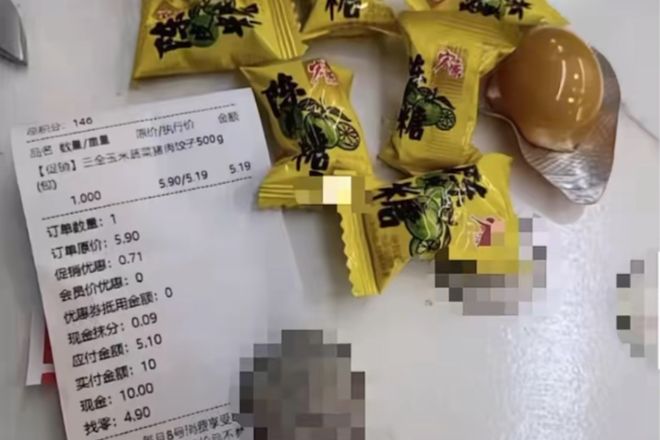
Core Points - The incident involving Zhao Yiming's snack store using candy as change has sparked significant public discussion, highlighting a deviation from standard business practices [2][3] - The company's official response clarified that while they do not support this practice, some stores may ask customers for consent to use candy as change if they lack sufficient coins [2][4] - The practice of using candy instead of cash violates consumer rights, including the right to informed consent and choice, and can be seen as a form of forced transaction [4][5] Summary by Sections Company Practices - Zhao Yiming's snack store has been criticized for using candy as change, which is not officially supported by the company [2] - The practice is perceived as an attempt to avoid losing small amounts of cash, which contradicts typical business strategies that focus on customer attraction and retention [3] Consumer Rights - According to consumer protection laws, customers have the right to fair trading conditions, including accurate pricing and the ability to refuse unwanted products [2][3] - The use of candy as change without explicit consent from customers infringes on their rights and can be classified as a deceptive practice [4] Market Implications - The incident raises concerns about the respect for market transaction rules and consumer rights, suggesting that such practices could lead to broader issues of consumer trust and business integrity [3][4] - The accumulation of such practices could result in significant financial gains for the business at the expense of consumer rights, highlighting the need for stricter adherence to ethical business conduct [4][5]

这届零食,越贵越高端?
投中网· 2025-10-11 09:08
Core Viewpoint - The article discusses the paradox of rising snack prices in China, where snacks that were once affordable are now perceived as luxury items, leading to a loss of "snack freedom" for consumers [5][10]. Group 1: Historical Context of Snack Consumption - In the past, consumers chose snacks based on taste and price, with little brand loyalty, often mixing various brands in their purchases [6]. - The rise of major snack brands like Liangpinpuzi and Three Squirrels around 2010 shifted consumer behavior towards brand recognition and loyalty, leading to a more concentrated market [6][7]. - Early competition among snack brands involved aggressive pricing strategies, including significant discounts and promotions to attract consumers [7]. Group 2: Shift to Premium Pricing - By 2019, Liangpinpuzi adopted a "high-end snack" positioning, linking product quality directly to pricing, which has led to significant price increases for similar products over the years [8]. - The change in pricing units from larger to smaller measurements has obscured consumers' perception of price increases, contributing to the feeling that snacks have become unaffordable [8][9]. - The emergence of high-priced snacks has resulted in a loss of the previously enjoyed "snack freedom," as consumers now feel priced out of the market [8][10]. Group 3: Market Response and New Trends - The rise of "white-label" snack stores offering high value for money has disrupted traditional snack brands, with the market for these stores growing from 211 billion yuan in 2019 to 809 billion yuan in 2023, reflecting a 40% compound annual growth rate [10]. - Traditional snack brands like Three Squirrels and Liangpinpuzi have faced declining revenues, with Three Squirrels' revenue dropping from over 10 billion yuan in 2019 to 7.1 billion yuan in 2023 [10][11]. - In response to market pressures, brands have attempted to lower prices, but these efforts have had limited success due to established negative perceptions of high pricing [11]. Group 4: Consumer Sentiment and Future Outlook - The article highlights a growing consumer sentiment against high prices that lack corresponding value, indicating a shift towards seeking better price-to-value ratios [14][15]. - Brands that fail to justify their high prices with tangible quality improvements risk losing consumer trust and market share [15][16]. - The future of the snack industry may depend on balancing premium offerings with consumer expectations for affordability and value, as the market moves away from a singular focus on high pricing [16].


这届零食,越贵越高端?
3 6 Ke· 2025-10-10 04:06
Core Insights - The rising prices of snacks, particularly in the context of "light luxury" experiences, have led to a perception that everyday snacks are becoming unaffordable, with brands like "薛记炒货" and "么凤士多" exemplifying this trend [1][11][19] - The shift from a focus on taste and value to brand recognition and high pricing has created a disconnect between consumer expectations and actual product value, leading to a decline in "snack freedom" [2][5][10] Industry Evolution - The snack market has evolved from a diverse selection of local and unbranded products to a more concentrated market dominated by well-known brands like 良品铺子 and 三只松鼠, which have changed consumer purchasing habits [2][4] - The initial price wars among snack brands led to significant consumer benefits, but as brands established themselves, they began to increase prices, often without clear justification [4][5] Consumer Behavior - Consumers have increasingly associated brand names with quality, leading to a willingness to pay more for branded snacks, but this has also resulted in a backlash as prices have escalated beyond reasonable limits [5][10][18] - The emergence of "平价白牌" snack stores has highlighted a shift back towards value-driven purchasing, with these stores rapidly gaining market share by offering competitive pricing [8][10] Financial Performance - The financial performance of traditional snack brands has declined, with 三只松鼠 and 良品铺子 experiencing significant revenue drops, indicating a potential market correction as consumers seek better value [10][11] - 良品铺子 has initiated a major price reduction strategy in response to declining sales, but the effectiveness of this strategy remains uncertain as consumer perceptions of high pricing linger [10][11] Market Trends - The snack industry is witnessing a trend where high pricing is often mistaken for high quality, leading to a "high-end disease" where brands fail to provide tangible value for their elevated prices [12][19] - The industry's focus on high pricing without corresponding value has led to a growing consumer demand for transparency and justification of costs, indicating a shift towards more rational purchasing behavior [18][19]
品牌运营:赵一鸣品牌多维度深度解析-数说故事
Sou Hu Cai Jing· 2025-10-08 14:25
Core Insights - The report analyzes the rapid growth and marketing strategies of Zhao Yiming, a leading brand in the bulk snack industry, highlighting its unique business model and expansion plans [4][5][9]. Brand Overview - Zhao Yiming was founded in 2019 in Yichun, Jiangxi, by Zhao Ding, and has grown from a small workshop to a national chain with over 20,000 stores by September 2025 [5][9]. - The brand focuses on a bulk sales model with over 2,000 SKUs, offering products at approximately one-third of market prices, targeting lower-tier cities [11][12]. Strategic Mergers and Expansion - In November 2023, Zhao Yiming merged with "Snacks Are Busy," forming the Mingming Busy Group, which became the first company in the industry to exceed 10,000 stores by June 2024 [9][10]. - The group aims to expand its store count to over 20,000 by September 2025, showcasing rapid growth [9][10]. Brand Positioning and Product Strategy - The brand's positioning emphasizes high cost-performance and targets consumers in lower-tier cities, with a monthly introduction of over 100 new products [11][12]. - Zhao Yiming has also launched "Zhao Yiming Savings Supermarket," expanding into household and daily necessities [11]. Financing and Capital Background - In February 2023, Zhao Yiming secured 150 million RMB in Series A funding, led by Black Ant Capital, which validated the market's confidence in the bulk snack sector [12]. Brand Tone and Values - The brand is characterized by a youthful and trendy image, with a slogan "No Tricks, Just Cheap" and a vision to "Achieve Snack Freedom for the Chinese People" [14][15]. - Zhao Yiming emphasizes a win-win logic of benefiting both franchisees and consumers, although there are concerns regarding franchisee profitability and employee treatment [17]. Marketing Activities and Social Media Performance - Zhao Yiming's marketing campaigns, such as the "6.1 Wish Come True Festival," achieved significant engagement, with Douyin interactions reaching over 11.24 million [20][26]. - The brand's social media sentiment saw fluctuations, with a peak NSR of 97% in May 2025, followed by a sharp decline due to negative events [29]. Content Strategy and User Engagement - The brand's content strategy focuses on visual and interactive elements, with lifestyle content accounting for 40.4% of engagement, and celebrity endorsements playing a crucial role in attracting attention [34][35]. - User-generated content (UGC) has proven effective, with significant interactions stemming from relatable themes and challenges [42]. Crisis Management and Reputation Challenges - Zhao Yiming faced significant reputation challenges, including the "Huai Ji Water Disaster" incident in June 2025, which severely impacted its social media sentiment [48][49]. - Ongoing issues related to product quality and service have been highlighted, with complaints about pricing integrity and employee conditions surfacing in September 2025 [54][55]. Summary and Recommendations - The brand has demonstrated strong market expansion and marketing capabilities but must address internal management, franchisee relations, and product quality to maintain consumer trust [53].
零食行业:赵一鸣品牌多维度深度解析-数说故事
Sou Hu Cai Jing· 2025-10-05 23:44
Core Insights - The report titled "In-depth Analysis of Zhao Yiming Brand" focuses on the development status, operational strategies, marketing performance, and potential risks of Zhao Yiming snacks from March to September 2025, highlighting its growth logic and challenges as a leading brand in the bulk snack sector [1][2]. Company Overview - Zhao Yiming Snacks was founded in 2019 by Zhao Ding in Yichun, Jiangxi, and merged with "Snacks Are Busy" in 2023, leading to the rebranding of the parent company to Mingming Busy Group in 2024. By September 2025, the number of stores exceeded 20,000, establishing it as a top player in the industry [1][11]. - The brand emphasizes a "bulk" model with over 2,000 SKUs, introducing more than 100 new products monthly, and offers prices as low as one-third of market rates, targeting lower-tier cities [1][14]. Financial and Capital Background - In 2023, Zhao Yiming Snacks completed a Series A financing round of 150 million yuan, led by Heiyi Capital and followed by Liangpinpuzi, which facilitated rapid expansion from 84 stores to over 2,500 [1][15]. Brand Positioning and Values - The brand's positioning is characterized by youthfulness, trendiness, and high cost-performance, with the slogan "No Tricks, Just Cheap" reflecting its commitment to low prices and sincerity. The vision is to "allow Chinese people to enjoy snack freedom" [1][17]. - The brand emphasizes a win-win logic of benefiting both franchisees and consumers, but there are contradictions in practice, such as complaints from franchisees about low margins and high operational intensity [1][19]. Marketing Strategies - Recent marketing efforts have been event-driven, with significant campaigns like the "6.1 Wish Come True Festival" in May, which generated 11.24 million interactions on Douyin, and the "Snack Music Festival" in July, which also saw high engagement [2][25]. - Negative public sentiment arose from incidents such as the "Huai Ji Water Disaster" in June and a "short weight" incident in September, highlighting issues in supply chain quality control and franchise management [2][21]. Recommendations - The report suggests that Zhao Yiming should strengthen quality control and service standards, optimize franchise and employee systems, and improve crisis management mechanisms. The focus should shift from "scale expansion" to "quality growth" to rebuild consumer trust [2][21].

双11红利在哪里?阿里妈妈将增长锚定全场景经营
36氪· 2025-09-12 14:11
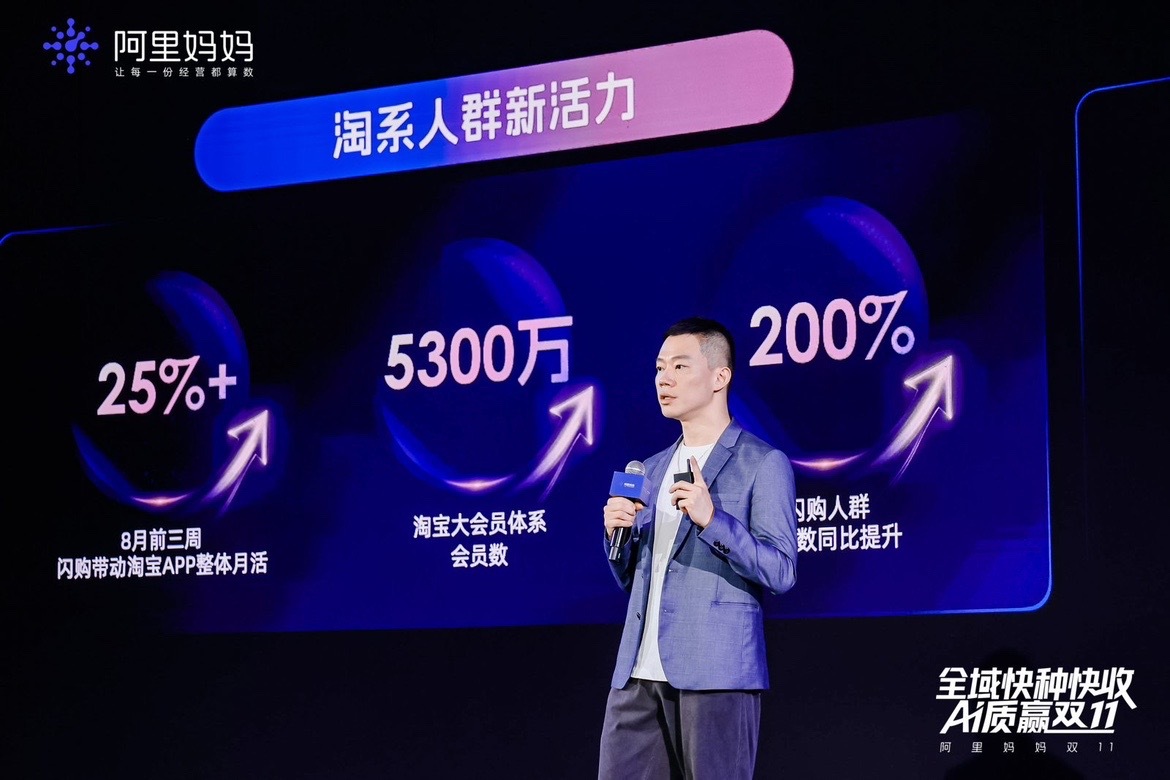
Core Insights - The article discusses Alibaba's new strategies for the Double 11 shopping festival, emphasizing the integration of instant retail and the restructuring of consumer demand [2][3][30] - It highlights the importance of AI in optimizing business operations and enhancing consumer engagement, ultimately aiming for sustainable growth [15][33] Group 1: New Market Dynamics - The rise of instant retail has opened new market opportunities, with Alibaba integrating Ele.me and Fliggy into its e-commerce ecosystem, covering various consumer needs [3][9] - The launch of Taobao Flash Sale has led to significant sales growth, with 66 brands achieving over 10 million in monthly sales and 395 brands exceeding 1 million [9][10] - Consumers are increasingly looking for a combination of low prices and fast delivery, prompting businesses to enhance their online and offline operations [10][12] Group 2: Business Opportunities and Challenges - Businesses are encouraged to adapt to new consumer behaviors, transforming impulsive purchases into long-term revenue streams [6][12] - The competition landscape has shifted from linear to a more complex, cross-category and cross-scenario competition, requiring businesses to understand and capture new consumer demands [12][13] - The integration of marketing channels, such as the "Red Cat Plan," allows for seamless consumer engagement from social media to e-commerce platforms [13][14] Group 3: AI Empowerment - AI is becoming essential for businesses to navigate the complexities of modern consumer behavior and optimize marketing strategies [15][17] - The introduction of the "Wang Xiang Tai AI" platform aims to address intricate operational challenges, enhancing targeting and conversion rates [17][18] - AI's role in understanding consumer language and preferences has led to significant improvements in conversion rates and return on investment for businesses [18][19] Group 4: Brand Building and Consumer Engagement - The article emphasizes the importance of brand presence in consumers' minds, suggesting that consistent exposure across various touchpoints can strengthen brand recognition [22][24] - Alibaba's Uni Desk platform facilitates comprehensive brand advertising, allowing businesses to manage their marketing efforts more effectively [24][25] - The concept of "brand mental construction" is highlighted, where businesses must focus on long-term brand value alongside immediate sales [25][26] Group 5: Future Outlook - The future of e-commerce competition will focus on deeper consumer engagement and operational efficiency, moving beyond mere traffic acquisition [32][33] - The integration of AI and new retail strategies is expected to reshape the industry, enabling businesses to capture growth more effectively [34][35] - The article concludes that success will belong to those who embrace new traffic, rhythms, and technologies in their business strategies [28][35]


闪购引发的全场景消费背后,今年双11的经营战场已变
晚点LatePost· 2025-09-12 13:35
Core Insights - The article emphasizes the shift from category competition to comprehensive consumption scenario competition in the retail industry [2] Group 1: Alibaba's Strategic Moves - Alibaba has expanded its traffic channels through initiatives like Taobao Flash Sale, which has increased daily active users to 419 million, a 16% growth since the beginning of the year [3] - The partnership between Xiaohongshu and Taobao has led to the "Red Cat Plan," allowing users to directly purchase products from Taobao through Xiaohongshu [3] - The launch of a membership system on Taobao has segmented users into six levels based on activity and spending, enhancing user engagement [3] Group 2: Traffic Conversion Strategies - The integration of near-field and far-field e-commerce through Flash Sale has significantly increased user engagement, with a 110% month-over-month growth in new brand entries [5] - Flash Sale has added over 12,000 new non-food brand stores, contributing to a monthly DAU increase of over 50 million [5] - Brands like Decathlon have successfully utilized Flash Sale for local fulfillment, doubling daily orders and achieving a 70% share of instant delivery orders [6] Group 3: Offline to Online Synergy - Brands with physical stores, such as Zhao Yiming Snacks, have seen a 240% increase in sales through Flash Sale, demonstrating the effectiveness of online traffic driving offline sales [7] - The "high-frequency driving low-frequency" model allows brands to capture potential demand through targeted advertising based on consumer behavior [8] Group 4: AI-Driven Marketing - AI has become a crucial tool for optimizing advertising strategies, allowing for more precise targeting based on user behavior data [9] - The AI capabilities of Alibaba's marketing platform have improved the efficiency of ad placements, leading to a more reliable return on investment [10] - AI's ability to analyze long-term consumer behavior has enhanced the prediction of purchasing intentions, allowing for timely marketing interventions [10] Group 5: Evolving E-commerce Landscape - The traditional single-event sales model is being replaced by a more dynamic and frequent marketing approach, as seen in the upcoming Double 11 sales event [14] - The introduction of multiple promotional events, such as Super 88, has increased user engagement and purchasing frequency [14] - The focus on long-term customer relationships and retention is becoming more critical as the industry evolves [17]
双11红利在哪里?阿里妈妈将增长锚定全场景经营
3 6 Ke· 2025-09-12 13:33
Core Insights - The rise of instant retail has opened new avenues for the e-commerce industry, with Alibaba integrating Ele.me and Fliggy into its Chinese e-commerce group to create a comprehensive ecosystem covering various consumer needs [1][3] - Instant retail is transforming consumer behavior, leading to impulsive purchases across multiple categories, indicating the emergence of a new incremental market [1][4] Group 1: Market Dynamics - Instant retail is not merely an extension of food delivery but a new business entry point, with Taobao Flash Sales driving significant sales across various categories [3][4] - In July, Taobao Flash Sales helped 66 brands achieve over 10 million in monthly sales, while 395 brands surpassed 1 million, showcasing a restructured flow of traffic in the e-commerce ecosystem [3][4] - The competition landscape has shifted from linear to a more complex, cross-category and cross-scenario rivalry, necessitating a deeper understanding of consumer needs [5][19] Group 2: Consumer Behavior - Consumers are increasingly seeking a combination of affordability and speed, prompting merchants to optimize their online and offline operations [4][19] - High-frequency consumption scenarios are paving the way for low-frequency products, allowing brands to capture new customers who may not have been targeted previously [4][5] Group 3: Technological Integration - The integration of AI is crucial for managing the complexities of modern retail, enabling merchants to optimize their operations and improve decision-making [9][10] - AI has demonstrated significant improvements in conversion rates and return on investment (ROI), with some brands reporting an 80% increase in conversion rates and a 32% growth in ROI [10][11] Group 4: Brand Positioning - Brands must focus on building long-term impressions through repeated consumer interactions, as each touchpoint contributes to brand recognition and loyalty [13][15] - The Uni Desk platform allows brands to manage advertising across various channels, enhancing the efficiency of brand exposure and consumer engagement [15][16] Group 5: Future Outlook - The future of e-commerce will revolve around embracing new traffic sources, rhythms, and technologies, as indicated by the evolving consumer purchasing patterns [17][19] - The shift from traditional promotional strategies to a more cyclical approach will define competitive success, emphasizing the importance of adapting to consumer behavior [19][20]
收购南京万优49%股权,万辰集团在打什么算盘
Bei Jing Shang Bao· 2025-08-12 13:56
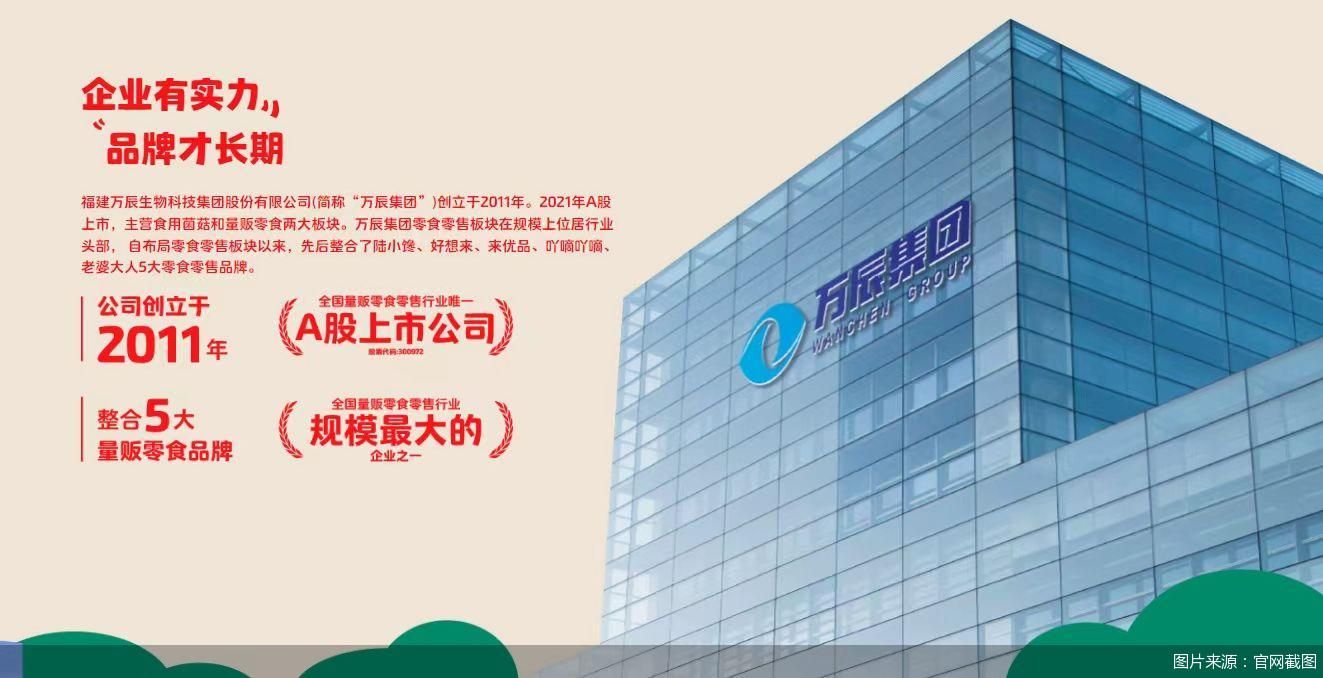
Group 1 - Wancheng Group announced a major asset acquisition plan, intending to spend 1.379 billion yuan to purchase 49% equity of Nanjing Wanyou Commercial Management Co., Ltd. from Huainan Shengyu and Huainan Huixiang [2][3] - After the acquisition, Wancheng Group's direct and indirect ownership of Nanjing Wanyou will increase to 75.01%, enhancing its position in the competitive snack retail industry [2][3] - The acquisition is seen as a strategic move to expand the company's market presence and stabilize its industry position amid fierce competition [2][4] Group 2 - The transaction includes performance commitment clauses, requiring Nanjing Wanyou to achieve net profits of no less than 320 million yuan, 330 million yuan, and 350 million yuan in 2025, 2026, and 2027 respectively [4] - Wancheng Group aims to strengthen the binding of core team members with the company and enhance the fulfillment of performance commitments through this acquisition [3][4] - The acquisition is expected to increase Wancheng Group's total assets by 828 million yuan to 7.235 billion yuan and boost net profit by 57 million yuan to 416 million yuan in the first five months of 2025 [4] Group 3 - Wancheng Group's rapid expansion in the snack retail sector has led to significant growth, with revenue reaching 32.329 billion yuan and net profit of 294 million yuan in 2024, primarily driven by the snack retail business [5][6] - The company has seen a dramatic increase in store numbers, surpassing 15,000 stores, making it one of the few companies in the industry to achieve this scale [5][6] - However, the company's asset-liability ratio reached 79.85% in 2024, indicating increased financial pressure due to rapid expansion and acquisitions [6][7] Group 4 - The snack retail industry is highly competitive, with major players like "Mingming Hen Mang" and regional brands posing significant challenges to Wancheng Group [9][10] - The industry has seen a rapid increase in the number of stores, with over 40,000 snack retail outlets in China, approaching saturation with a potential cap of 87,500 stores [10] - Wancheng Group is advised to focus on cost control and operational efficiency to maintain its competitive edge in a market characterized by low margins and high turnover [10]
55亿良品铺子「卖身」,零食江湖变天
36氪· 2025-07-14 09:49
Core Viewpoint - The article discusses the decline of the once-prominent snack brand, Good Products (良品铺子), highlighting its struggles against the rising trend of low-cost snack brands and the implications of a potential change in control among its major shareholders [4][6][33]. Company Overview - Good Products, once hailed as the "first high-end snack stock," is facing a significant downturn, with its market value plummeting over 80% from its peak of over 300 billion to 55 billion [4][10]. - The company announced a suspension of trading due to major shareholder Ningbo Hanyi's plans to change control, which has raised concerns about its future [4][6]. Financial Performance - In 2023, Good Products reported a revenue of 8.046 billion, a year-on-year decline of 14.77%, and a net profit of 180 million, down 46.27% [10]. - The situation worsened in 2024, with revenue dropping to 7.159 billion and a net loss of 46.1 million, marking the first annual loss since its listing [11]. - The first quarter of 2024 showed continued decline, with revenue of 1.732 billion, down 29.34%, and a net loss of 40.18 million, a 173.21% decrease year-on-year [11]. Shareholder Actions - Major investors, including Today's Capital and Hillhouse Capital, have been reducing their stakes in Good Products, indicating a lack of confidence in the company's future [13][14]. - The controlling shareholder, Ningbo Hanyi, has also been selling shares, further signaling potential distress within the company [13][14]. Market Dynamics - The rise of low-cost snack brands has significantly impacted Good Products, as these brands offer competitive pricing that appeals to consumers, undermining the high-end positioning of Good Products [17][21]. - The low-cost snack market has seen rapid growth, with brands like "Snack Busy" and "Zhao Yiming" gaining substantial market share by offering products at significantly lower prices [17][21]. Strategic Shifts - In response to market pressures, Good Products has initiated a large-scale price reduction strategy, with over 300 core products seeing an average price drop of 22% [14][18]. - The company has also attempted to invest in emerging low-cost brands, although this has not yielded the desired results, leading to legal disputes over its investments [23][24]. Industry Challenges - The snack industry is facing a fundamental challenge of low brand loyalty among consumers, leading to intense competition and price wars [30]. - The article suggests that the snack industry is entering a new phase where efficiency and pricing will be the key competitive factors, moving away from the previously successful high-end marketing strategies [33].