
速卖通

Search documents
年度盘点:跨境电商“卷”向欧洲?国际巨头、中国新贵、本土诸侯开启“三国杀”
3 6 Ke· 2025-12-25 11:21
Core Insights - The European market is becoming increasingly attractive for cross-border sellers, especially as U.S. tariffs and the removal of tax exemptions for small imports push companies to seek opportunities in Europe [1][2] - Chinese e-commerce platforms like Temu, SHEIN, and TikTok are rapidly expanding their presence in Europe, with significant increases in active users and localized strategies [1][3][4] Group 1: Market Dynamics - In 2024, China's exports to the EU reached $19.1 billion, surpassing exports to the U.S. which were $23.1 billion, indicating a shift in trade focus [1] - By June 2025, Temu's active users in Europe exceeded 120 million, while SHEIN's monthly users averaged 150 million, reflecting a growth of 11.6% year-on-year [1] - The competitive landscape in Europe is characterized by a mix of international giants and local players, with over 250-300 e-commerce platforms expected to operate by 2025, 45% of which will be from outside Europe [3][4] Group 2: Strategic Shifts - Temu and SHEIN have shifted their focus to Europe due to challenges in the U.S. market, with Temu's advertising spending in France and the UK increasing by 115% and 20% respectively [2] - Amazon is encouraging sellers to expand into Europe, offering incentives to reduce migration costs [2][4] - SHEIN's first permanent store opened in Paris, attracting over 50,000 customers shortly after launch, despite facing significant opposition [5][7] Group 3: Localized Strategies - Temu aims for 80% of its European orders to be fulfilled from local warehouses, reducing delivery times from two weeks to a few days [4] - TikTok Shop has expanded its presence in Europe, launching new sites and logistics services to enhance delivery efficiency [7][8] - SHEIN has established a logistics center in Poland to improve delivery times across Europe, aiming to cover major markets within 48 hours [13] Group 4: Regulatory Challenges - The European market is facing increased compliance requirements, with new regulations impacting cross-border e-commerce operations [11][12] - A new tax policy set to take effect in 2026 will eliminate tax exemptions for imports under €150, significantly affecting profit margins for sellers [13] - The regulatory environment is complex, with varying compliance standards across different European countries, adding to the challenges for e-commerce platforms [12]



日本电商新规倒计时!卖家不这样做,产品恐遭全面下架!
Sou Hu Cai Jing· 2025-12-24 11:28
Core Viewpoint - The new regulations from Japan's Ministry of Economy, Trade and Industry (METI) will significantly impact cross-border sellers, requiring them to appoint a "domestic manager" in Japan for compliance with product safety standards, effective December 25 [1][5]. Group 1: Regulatory Changes - The revised product safety regulations target overseas companies selling in Japan, covering popular categories such as baby products, home appliances, and gas equipment [1]. - Sellers must register a "designated importer" and appoint a domestic manager who has a physical office in Japan and is proficient in Japanese [4]. - Failure to comply will result in products being forcibly removed from e-commerce platforms [5]. Group 2: Market Context - Japan's e-commerce market is projected to exceed $200 billion by 2025, maintaining its position as the third-largest globally [10]. - The market has seen significant growth due to high internet penetration and evolving consumer shopping habits, attracting global giants like TikTok Shop, which achieved daily sales of over 100 million yen shortly after entering the market [10]. Group 3: Compliance and Future Outlook - The Japanese government is tightening regulations to combat counterfeit products and regulatory evasion, with potential changes to tax exemptions for low-value imports expected in 2026 [12]. - Cross-border sellers must prioritize compliance to avoid risks of product delisting and ensure sustainable operations in the Japanese market [15].

小鹏第三个海外本地化生产项目落地马来西亚;阿里云与爱诗科技达成全栈AI合作|36氪出海·要闻回顾
36氪· 2025-12-21 13:35
Group 1 - Xiaopeng Motors has launched its third overseas localized production project in Malaysia, following projects in Indonesia and Austria, with plans for mass production by 2026 to serve the ASEAN right-hand drive market [5] - Alibaba Cloud has signed a full-stack AI cooperation agreement with Aishi Technology to enhance AI video generation capabilities, leveraging Alibaba's cloud infrastructure and AI services [5] - SF Middle East has signed a cooperation agreement with Oman Asyad Group to enhance cross-border transportation and logistics collaboration [6] Group 2 - Li Auto has officially entered the markets of Egypt, Kazakhstan, and Azerbaijan, launching its L-series models to meet local luxury market demands [6] - The Singapore Land Transport Authority has awarded contracts for 660 electric buses, with Chinese companies like BYD and Yutong winning bids [8] - Temu is accelerating its expansion into the Swiss market, attracting dozens of local merchants to join its platform [7] Group 3 - The sales of Chinese television brands on AliExpress have surged by 300% over the past year, with Xiaomi leading in sales during overseas shopping events [9] - Dunhuang.com announced new regulations for shipping to Saudi Arabia, requiring compliance with new address labeling rules starting January 1, 2026 [9] - CATL has secured a 6.2 GWh energy storage order in Southeast Asia, with plans to supply a large-scale solar power project in Indonesia [10] Group 4 - Mixue Ice Cream has opened a store in Los Angeles and is expanding its overseas presence, with plans to increase its global store count to 53,014 by June 2025 [10] - The autonomous driving company Baixiniu has completed a new round of financing to accelerate its market expansion and technology development [11] - Galaxy General Robotics has raised over 3 billion yuan in a new financing round, enhancing its global market presence [11] Group 5 - Oculab has completed a $30 million Series B financing to advance its dual-specificity antibody eye drug into clinical trials in the US and China [12] - Chinese autonomous driving companies are increasingly focusing on emerging markets, particularly in the Middle East and Southeast Asia [13] - China's energy storage companies have seen a significant increase in overseas orders, with a 246% year-on-year growth in the first half of 2025 [14] Group 6 - Trade with Belt and Road Initiative countries has exceeded 21 trillion yuan, accounting for over half of China's total foreign trade, with a notable export growth rate of 11.3% [14] - Argentina has eliminated small import tariffs, leading to a 237% increase in online packages from Chinese e-commerce platforms [14]





小米、TCL、海信等集体加入速卖通,国产电视机出海转向新主场
Guan Cha Zhe Wang· 2025-12-18 14:02
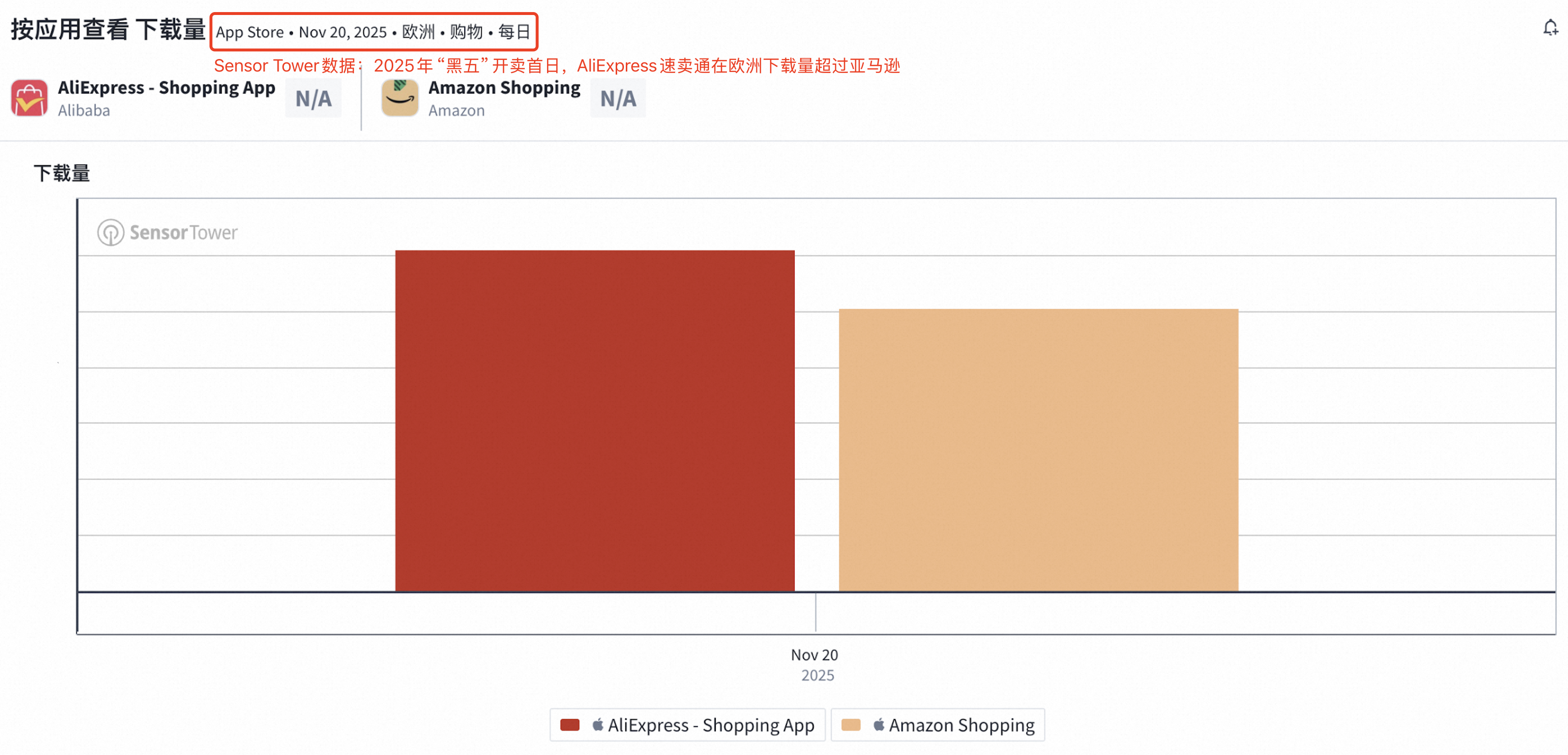
12月18日,一则来自跨境电商平台速卖通的数据引发关注:过去一年,国产电视机在该平台的销售额同 比激增300%,成为大家电品类中增速最快的"明星"。 小米、TCL、海信、创维、康佳这五大国产电视巨头,已集体将速卖通列为出海战略的核心阵地。其 中,小米电视更是在今年"海外双11 & 黑五"大促期间,一举登上速卖通欧洲市场电视品类销售额榜首 的宝座。 最具里程碑意义的信号出现在2025年"黑五"开卖首日。据知名应用分析平台Sensor Tower数据,当日, 速卖通在欧洲多国App下载量超过亚马逊。 2025"黑五"开卖首日,速卖通在欧洲下载量超过亚马逊 这并非偶然的销售脉冲,而是中国品牌依托跨境电商平台,系统性挑战全球电商巨头亚马逊、重塑海外 市场格局的一个缩影。其背后,是平台战略的升级、品牌诉求的转变与全球贸易环境的演变。 业内人士指出,作为"出海四小龙"中唯一能在品牌出海赛道与亚马逊正面竞争的平台,速卖通此次在亚 马逊核心市场实现下载量反超,标志着速卖通开始向亚马逊的核心主场发起挑战,也吸引了各大知名品 牌将速卖通视为新主场。 本文系观察者网独家稿件,未经授权,不得转载。 国产家电品牌出海并非新鲜事,但过去 ...



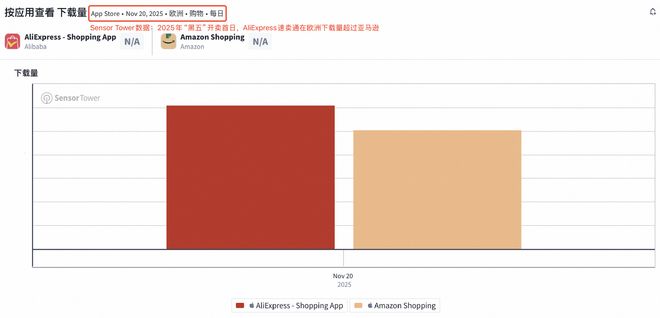
小米、TCL、海信等集体加入速卖通,销售额同比激增300%
Guan Cha Zhe Wang· 2025-12-18 13:47
12月18日,一则来自跨境电商平台速卖通的数据引发关注:过去一年,国产电视机在该平台的销售额同比激增300%,成为大家电品类中增速最快的"明 星"。 小米、TCL、海信、创维、康佳这五大国产电视巨头,已集体将速卖通列为出海战略的核心阵地。其中,小米电视更是在今年"海外双11 & 黑五"大促期 间,一举登上速卖通欧洲市场电视品类销售额榜首的宝座。 这并非偶然的销售脉冲,而是中国品牌依托跨境电商平台,系统性挑战全球电商巨头亚马逊、重塑海外市场格局的一个缩影。其背后,是平台战略的升级、 品牌诉求的转变与全球贸易环境的演变。 国产家电品牌出海并非新鲜事,但过去多以B2B贸易或为国际品牌代工为主,难以直接触达消费者并建立品牌认知。早期的跨境电商常与"低价""小商品"标 签绑定。 为了打破这一固有印象并争夺高价值市场,2025年,速卖通推出了"超级品牌出海计划",承诺用一半成本为品牌商家带来全新增量,吸引了一批天猫品牌与 亚马逊大卖加入。该计划可为品牌提供"Brand+"专属频道和商品标签、并通过网红合作等多种海外营销方式,帮助国产品牌在海外建立心智。 本文系观察者网独家稿件,未经授权,不得转载。 尤其针对电视机这类高客 ...
消费出海先锋,迈入跨境生态出海时代(下)
Sou Hu Cai Jing· 2025-12-18 10:26
Demand - The global e-commerce penetration rate is increasing, accelerated by the pandemic, with global e-commerce retail sales reaching $5.4 trillion in 2022 and expected to reach approximately $6 trillion in 2023. The penetration rate rose from 7% in 2015 to 19% in 2022, projected to reach 23% by 2026 [3][4] - The e-commerce market is concentrated in the Asia-Pacific and North America/Europe regions, which account for about 88% of the global market. Emerging markets like Southeast Asia, the Middle East, and Africa show strong growth potential [3][4] - The U.S. and Western Europe are key markets for consumer goods due to high GDP per capita and strong consumer willingness, while the Middle East offers a favorable trade environment and Southeast Asia has a large population with significant consumption potential [3][4] Supply - Amazon holds a dominant position in the e-commerce industry across North America, Western Europe, and other regions, with a global market share of approximately 15% in 2022. Over 50% of cross-border sellers prefer Amazon as their platform [5][7] - Temu has pioneered a fully managed operation model since September 2022, attracting domestic sellers and global buyers, leading to a trend among platforms to adopt similar models [7] - China has a strong supply chain advantage, providing a rich and high-quality product base for cross-border e-commerce, which also drives the digital transformation of its manufacturing sector [8] - The cross-border direct shipping and overseas warehouse model is currently mainstream, with over 2,000 overseas warehouses in China and a significant increase in the number of warehouses in emerging markets [9]

国产电视机五大品牌集体布局速卖通
Cai Jing Wang· 2025-12-18 03:32
Group 1 - The core viewpoint is that AliExpress has become a primary platform for Chinese television brands to expand internationally, with a 300% year-on-year increase in sales of Chinese TVs on the platform, making it the fastest-growing category among large appliances [1][3] - Major Chinese TV brands such as Xiaomi, TCL, Hisense, Skyworth, and Konka have established a presence on AliExpress, with Xiaomi TV achieving the top sales in the European market during the "Overseas Double 11 & Black Friday" promotions [1][5] - In 2025, AliExpress launched the "Super Brand Going Abroad Plan," which aims to provide brands with dedicated channels and marketing support, enhancing the competitiveness of large appliances like TVs in overseas markets [3][5] Group 2 - On the first day of the 2025 "Black Friday" sales, AliExpress surpassed Amazon in app downloads across multiple European countries, indicating its growing competitiveness in the international market [3][5] - The platform's ability to provide quick support for logistics and after-sales service is expected to significantly enhance local consumers' willingness to purchase large appliances [3]

茶叶浓缩液、枣阳鲜桃卖全球,襄阳跨境电商活跃店铺突破1400家
Sou Hu Cai Jing· 2025-12-17 17:20
Core Insights - Cross-border e-commerce is becoming a new engine for foreign trade development in Xiangyang, with 161 registered enterprises and over 1,400 active stores [1][3] - The city is implementing a strategy of "external introduction and internal cultivation" to enhance local service capabilities and support businesses [1][4] Group 1: Market Development - Xiangyang has attracted major platforms like Alibaba International, Dunhuang.com, eBay, and AliExpress to enhance local service capabilities [1][4] - Key manufacturing enterprises such as Tenglong Automotive and Yirong Technology have established their own international independent sites, transitioning from relying on third-party platforms to building their own channels [3][4] Group 2: Infrastructure and Support - The city is developing a "dual-platform" system that includes an online comprehensive service platform and offline industrial parks [4] - Nine cross-border e-commerce industrial parks have been established, with two being provincial-level demonstration parks [4] Group 3: Consumer Engagement - The "Laisigou" cross-border e-commerce shopping platform has launched offline experience stores in key commercial areas, enhancing consumer shopping experiences through a new retail model [4][5] - The platform has over 200 international brands and more than 100,000 members, with a 40% increase in user repurchase rates [5] Group 4: Logistics and Export - From January to November, the international logistics channel in Xiangyang shipped 5,187 boxes, a 59.9% increase year-on-year, with local goods accounting for 87% [5] - Local companies are successfully exporting products like office furniture to the U.S. and tea concentrates to Southeast Asia [5]

「史上最长」黑五和跨境电商这一年:野蛮生长的日子过去了
Sou Hu Cai Jing· 2025-12-16 14:09
Core Insights - The Black Friday shopping event has evolved significantly, with online sales reaching $11.8 billion in the U.S., a 9.1% increase from 2024, marking a historical high [2] - The promotional period has extended beyond the traditional 24 hours, now spanning several weeks, leading to consumer fatigue and a dilution of the event's significance [2][3] - Intense competition among e-commerce platforms, particularly from Chinese sellers, is reshaping consumer behavior and decision-making [2] Group 1: Promotional Strategies - Major platforms like Temu and TikTok Shop began their Black Friday promotions as early as October, extending the sales period to over a month [3][4] - Amazon announced its longest Black Friday event, lasting 12 days, to counteract the competition from Chinese platforms [4] - The extended promotional periods have resulted in record sales for platforms, with TikTok Shop achieving over $500 million in GMV within four days [4] Group 2: Seller Experiences - Many sellers reported disappointing sales during Black Friday, with some describing it as the "worst peak season ever" despite the overall increase in consumer spending [5][6] - Sellers are facing declining profit margins, as increased promotional activities lead to higher discount rates, with some discounts reaching between 40% to 99% [6][8] - The rising costs of advertising and compliance are squeezing smaller sellers, making it difficult for them to compete effectively [10][12] Group 3: Market Dynamics - The cross-border e-commerce industry is undergoing a significant reshuffle due to changes in tariffs, compliance requirements, and platform policies, leading to a more challenging environment for small and medium-sized sellers [10][21] - The disparity between large and small sellers is becoming more pronounced, with larger sellers benefiting from economies of scale while smaller sellers struggle to keep up [8][9] - The overall trend indicates a shift from rapid growth to a more mature market, where compliance and brand quality are becoming increasingly important [22][24]
“史上最长”黑五和跨境电商这一年:野蛮生长的日子过去了
3 6 Ke· 2025-12-16 10:28
Core Insights - The Black Friday shopping event has evolved significantly, with online sales reaching $11.8 billion in the U.S., marking a 9.1% increase from 2024 and setting a new record [1] - The promotional period has extended beyond a single day, lasting several weeks, leading to consumer fatigue and a dilution of the event's traditional significance [1] - Intense competition among e-commerce platforms, particularly from Chinese sellers, is reshaping consumer behavior and decision-making [1] Group 1: Promotional Strategies - The promotional period for Black Friday has been extended, with platforms like Temu and TikTok Shop starting their sales as early as October, resulting in a total promotional duration of up to 51 days [2] - Amazon has also adjusted its Black Friday schedule to compete, announcing a 12-day promotional period from November 20 to December 1, which is its longest ever [2] - The extended promotional periods have led to record sales for platforms, with TikTok Shop achieving over $500 million in GMV in just four days [2] Group 2: Seller Experiences - Despite the platforms' success, many sellers report disappointing sales, with some describing this season as the "worst ever" [3] - Sellers are experiencing fatigue due to the increased frequency and duration of promotions, leading to a decline in consumer engagement [3] - The profitability of sales is declining, with sellers having to offer deeper discounts, sometimes between 40% to 99%, to remain competitive [5] Group 3: Market Dynamics - The competitive landscape is shifting, with larger sellers benefiting from economies of scale while smaller sellers struggle to keep up [5][6] - The rising costs of advertising and compliance are squeezing profit margins, making it difficult for smaller sellers to sustain operations [8][9] - The overall investment-to-return ratio is deteriorating, with many sellers finding that their sales do not cover the increased costs associated with promotions and compliance [8][14] Group 4: Regulatory Environment - The cross-border e-commerce industry is facing increased regulatory scrutiny, with changes in tax compliance and customs regulations impacting operations [11][13] - Sellers are required to adapt to new compliance standards, which can significantly increase operational costs [12][13] - The evolving regulatory landscape is expected to lead to a consolidation in the industry, favoring compliant and well-capitalized sellers [14][16]