
TCL

Search documents
消费者尝鲜抢购AI手机,36款新品亮相“广货行天下”手机专场
2 1 Shi Ji Jing Ji Bao Dao· 2026-01-20 07:26
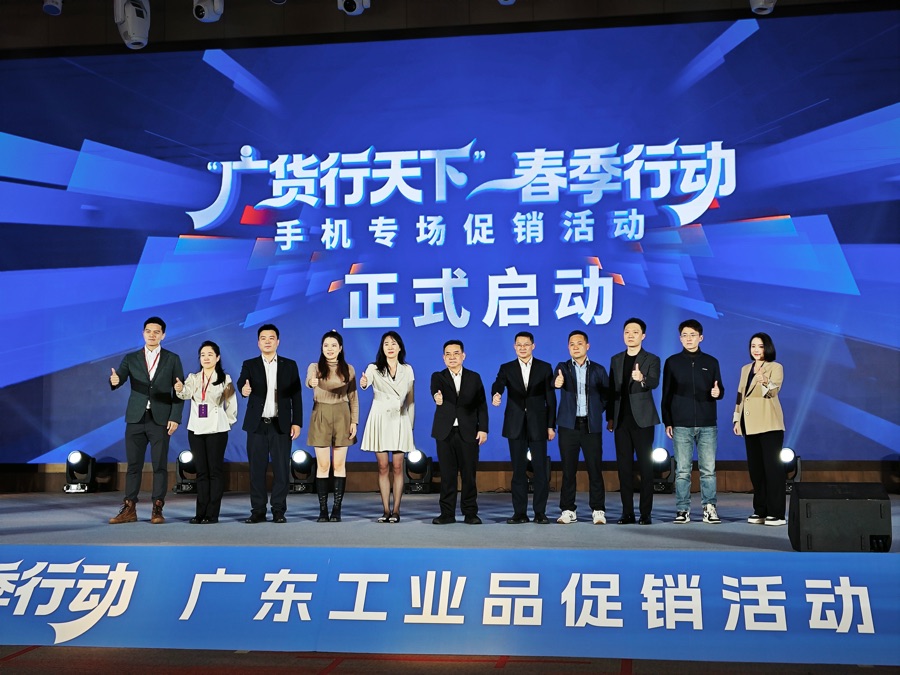
Core Insights - The "Guanghuo Goes Global" Spring Action mobile promotion event was held in Dongguan, showcasing 36 AI smartphones from six leading companies, aiming to boost short-term consumption and long-term brand building [1][3] Industry Overview - Guangdong is the most significant smartphone manufacturing hub in China and globally, with a production volume of 683 million units in 2024, accounting for 40.9% of the national total [1] - Dongguan contributes 28.6% of Guangdong's smartphone production, hosting major companies like Huawei, OPPO, and VIVO, with an industry support rate exceeding 90% [1] Market Dynamics - The combined market share of VIVO, Huawei, and OPPO reached 47% in the domestic market by Q3 2025, indicating strong market consolidation [1] - The event emphasized the quality and variety of Guangdong smartphones, with a focus on high-quality, cost-effective products [3] Promotional Strategies - The event featured a blend of online and offline marketing strategies, including live streaming and interactive experiences to enhance consumer engagement [4][5] - Discounts ranging from 60% to 90% were offered through various promotional methods, significantly increasing consumer interest and sales [5] Sales Performance - VIVO anticipates a 2-3 times increase in sales during the Spring Festival compared to regular periods, driven by promotional activities [3] - The event successfully elevated the visibility and market influence of Guangdong's consumer electronics, with many companies reporting record sales [5]

“新广货”彰显中国智造全球竞争力
2 1 Shi Ji Jing Ji Bao Dao· 2026-01-14 22:54
Group 1 - The core viewpoint of the articles highlights the significant growth of China's foreign trade, with a total import and export value reaching 45.47 trillion yuan in 2025, marking a 3.8% year-on-year increase, and maintaining its position as the world's largest goods trading nation [1] - Guangdong province plays a crucial role in China's foreign trade, consistently accounting for over 20% of the national total, showcasing its evolution from labor-intensive manufacturing to a competitive global brand cluster [1][2] - The participation of over 530 companies from Guangdong at the CES in Las Vegas illustrates the province's transformation from "manufacturing" to "intelligent manufacturing," emphasizing its strong competitive edge in the global market [1] Group 2 - The globalization of "Guangdong goods" reflects the province's deep integration into the global value chain, transitioning from imitation to independent research and brand development [2] - Major companies like OPPO and vivo have over 60% of their sales from overseas, while DJI holds approximately 70% of the global consumer drone market, indicating Guangdong's significant presence in international markets [2] - The export of industrial robots from China is projected to grow by 48.7% in 2025, with the Greater Bay Area contributing about one-third of the national export volume [2] Group 3 - Guangdong enterprises are leading the trend of establishing overseas production bases, with companies like BYD and Midea setting up factories in various countries, indicating a shift from being the "world's workshop" to becoming a "nurturing ground for multinational enterprises" [3] - The new "Guangdong goods" integrate advanced technology, sustainability, and cultural elements, resulting in high-value, intelligent products that compete on quality, technology, and brand rather than just price [3] - The story of Guangdong exemplifies China's transition towards becoming a "global innovation workshop," driven by innovation and efficiency honed in a large domestic market [3]


中国消费家电板块:家电中铝代铜的进展与潜在影响-China Consumer Appliances Sector _Aluminum replacing copper in ACs_ Progress and potential impact
2026-01-13 11:56
Summary of Conference Call on China Consumer Appliances Sector Industry Overview - **Sector**: China Consumer Appliances - **Focus**: Transition from copper to aluminum in air conditioning (AC) units, particularly in heat exchangers [2][8] Key Points and Arguments Technological Shift to Aluminum - **Popularity**: The use of aluminum in ACs has gained traction due to a recent rally in copper prices [2] - **Standardization**: In December 2025, the Chinese Association of Refrigeration issued a standard for aluminum heat exchangers, and major manufacturers signed a convention to promote consumer acceptance [2][8] Cost Savings Potential - **Copper Content Breakdown**: A typical 1.5HP household AC contains approximately 6-7 kg of copper, with the heat exchanger accounting for 53% of this [3][10] - **Replacement Potential**: It is estimated that 50-60% of copper in ACs can be replaced by aluminum, primarily in heat exchangers [3][12] - **Cost of Goods Sold (COGS)**: Copper constitutes 25-29% of an AC's COGS, and switching to aluminum could reduce COGS by 40%, leading to overall savings of 5-7% [3][12] Adoption Challenges in China - **Efficiency Concerns**: Aluminum has lower heat conductivity than copper, which may lead to increased electricity consumption [4][14] - **Corrosion Resistance**: Aluminum is less resistant to corrosion, posing a higher risk of leakage, especially in humid regions [4][14] - **Welding Difficulties**: The complexity of welding aluminum increases post-sales costs [4][14] - **Consumer Education**: There is a need for consumer education regarding the reliability of aluminum compared to copper [4][14] Gross Margin (GM) Impact - **Projected COGS Growth**: Blended AC COGS is expected to grow by 4% in 4Q25 and 1Q26, and by 5% in 2Q26, which could lower GM by 3-4% YoY [5][15] - **Mitigation Strategies**: Recent price hikes in ACs may help mitigate the cost pressures if raw material prices remain stable [5][15] Sector Implications - **Long-term Outlook**: While the shift to aluminum could benefit the industry's GM in the long run, immediate adoption is not expected due to existing challenges [6] - **Investment Recommendations**: Favorable outlook on industry leaders like Midea and Haier due to their ability to manage cost pressures and optimize operations [6] Additional Insights - **Product Launches**: Wanbao launched an AC made from a zinc-aluminum alloy, priced at Rmb999, which is over 20% cheaper than copper-based models [8] - **Market Dynamics**: The shift to aluminum has been more successful in countries like Japan and the US, where consumer acceptance is higher [11] Conclusion The transition from copper to aluminum in the Chinese AC market presents both opportunities for cost savings and challenges related to efficiency and consumer acceptance. The industry's leaders are well-positioned to navigate these changes, but significant hurdles remain before widespread adoption can occur.

董明珠拒绝空调材料“铝代铜”,格力站在新“十字路口”
Sou Hu Cai Jing· 2026-01-12 04:04
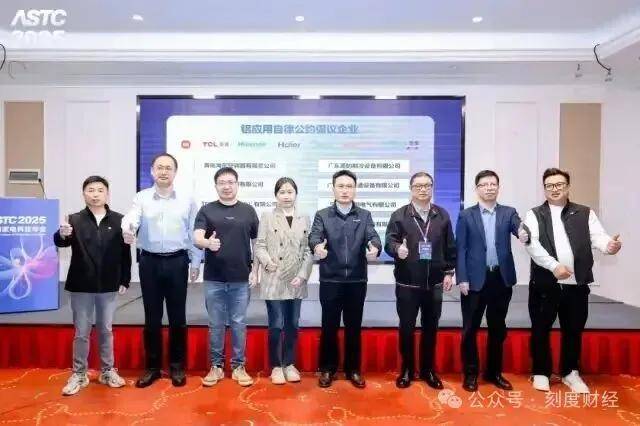
Core Viewpoint - The air conditioning industry is shifting towards aluminum as a substitute for copper, with many companies signing a self-regulatory agreement to promote this transition. However, Gree Electric Appliances, led by Chairman Dong Mingzhu, firmly opposes this shift, emphasizing the need for quality assurance before adopting aluminum technology [1][2][6]. Industry Trends - A self-regulatory agreement was signed by 19 air conditioning companies to promote the use of aluminum heat exchangers, aiming to enhance consumer trust in the technology [1][6]. - The aluminum substitution can reduce material costs by 20%-25%, with significant savings projected for manufacturers [7]. - The first domestic "aluminum substitute for copper" air conditioner is set to launch, priced approximately 20% lower than traditional copper models [7]. Gree's Position - Gree continues to prioritize copper in its products, with Dong Mingzhu stating that the technology for aluminum has not yet reached the reliability of copper [2][6]. - Gree's commitment to copper is seen as both a brand declaration and a potential strategic limitation, as the company faces increasing competition and market pressures [6][12]. Financial Performance - Gree reported a revenue of 137.18 billion yuan for the first three quarters of 2025, a decrease of 6.50% year-on-year, with a net profit of 21.46 billion yuan, down 2.27% [13][18]. - The air conditioning segment, which constitutes 78.38% of Gree's total revenue, has shown a decline, indicating a reliance on a single product line [13][18]. Competitive Landscape - Competitors like Xiaomi and Midea are adopting a more flexible approach, focusing on cost efficiency and appealing to price-sensitive consumers, which poses a threat to Gree's market share [12][20]. - Gree's average air conditioner price is significantly higher than that of competitors, limiting its competitiveness in the mid-range market [19][20]. Strategic Challenges - Gree's focus on high-quality products has led to a brand image that may be perceived as outdated by younger consumers, who prioritize smart features and design [26][27]. - The company's diversification efforts, such as the "Dong Mingzhu Health Home" initiative, have raised questions about brand identity and market positioning [30][31]. Future Outlook - The industry is moving towards aluminum technology, which may lead to Gree losing its influence in setting industry standards if it continues to resist this shift [25]. - The long-term viability of Gree's strategy of maintaining a copper-only approach is under scrutiny as market dynamics evolve [32].

机器人行业跟踪报告:CES 2026:定义 AI 物理边界,加速具身智能规模化落地
GUOTAI HAITONG SECURITIES· 2026-01-11 12:58
Investment Rating - The report assigns an "Accumulate" rating for the robotics industry [3][4]. Core Insights - The CES 2026 highlighted the trend of embodied intelligence scaling, showcasing the strength of Chinese enterprises in this field [2]. - The focus for future investments is on the application of embodied intelligence, particularly in the "perception-decision-execution" loop, which is expected to create new hardware demands [3]. - Human-shaped robots are identified as a key carrier of embodied intelligence, with companies achieving technological breakthroughs and domestic replacements poised for significant growth potential [3]. - The shift from "digital intelligence" to "embodied intelligence" emphasizes the tangible results of AI, with CES 2026 themed "AI Inside Every Hardware" indicating a transition towards physical AI applications [3]. - Major semiconductor companies like NVIDIA, AMD, and Intel showcased new products, indicating a competitive focus on the deployment of edge AI and large-scale AI infrastructure [3]. - The report notes that human-shaped robots have demonstrated operational capabilities in unstructured environments and are beginning to be utilized in factory settings [3]. - The competition landscape is evolving, with over 4,100 exhibitors at CES, including 1,141 from China, highlighting the significant role of Chinese tech companies [3]. - Key players in the human-shaped robot sector, such as Yushun and Zhiyuan, are focusing on self-research and commercialization of core components [3]. - The hardware pathway for embodied intelligence is becoming clearer, with core supply chain segments starting to benefit, although the industry remains in the early stages of commercialization [3]. Summary by Sections Investment Recommendations - The report recommends focusing on companies like Hengli Hydraulic and Changying Precision, which are expected to benefit from the trends in embodied intelligence [3][4]. Market Dynamics - The report emphasizes the importance of two key validation points: the mass production progress and cost control of human-shaped robots like Tesla's Optimus, and whether AI-enabled terminal products can drive consumer demand for upgrades [3]. Financial Projections - Financial forecasts for recommended companies include: - Changying Precision: EPS of 0.48 in 2025E, increasing to 1.22 in 2027E, with a PE ratio decreasing from 92.67 in 2025E to 36.46 in 2027E [4]. - Hengli Hydraulic: EPS of 2.09 in 2025E, increasing to 2.86 in 2027E, with a PE ratio decreasing from 55.12 in 2025E to 40.28 in 2027E [4].


CES 2026群雄逐鹿,海信首创玲珑4芯突围
Guan Cha Zhe Wang· 2026-01-08 02:51
Core Viewpoint - The CES 2026 showcases a competitive landscape in display technology, with major brands like Samsung, LG, Sony, TCL, and Hisense unveiling their latest innovations, particularly in RGB-MiniLED and OLED technologies [1][2]. Group 1: Display Technology Developments - The CES 2026 features a competitive environment characterized by the "explosion of RGB-MiniLED and continuous iteration of OLED" technologies [2]. - Samsung introduces its "Micro RGB" technology, offering a product range from 55 inches to 115 inches, achieving 100% BT.2020 color coverage with its Micro RGB AI Engine Pro chip for precise color temperature control [2]. - LG adopts a dual strategy by upgrading its OLED product line and entering the RGB-Mini LED market with its Micro RGB evo series, achieving near-OLED light control precision [2]. - Sony focuses on commercializing RGB-Mini LED technology with its Bravia 9 II and Bravia 7 II series, featuring "True RGB" backlight technology and peak brightness of 4000 nits [2]. - TCL emphasizes its Mini-LED offerings with the X11L SQD Mini-LED TV, achieving 100% BT.2020 color coverage and peak brightness of 10000 nits [3]. Group 2: Hisense's Innovations - Hisense's new RGB-Mini LED technology features a groundbreaking "玲珑4芯真彩背光" architecture, enhancing color gamut and achieving 110% BT.2020 color coverage, surpassing current QD-Mini LED and QD-OLED technologies [4][5]. - The introduction of the信芯AI画质芯片H7 enhances color precision to 134 bits, allowing for superior color performance across various brightness levels while reducing harmful blue light by 60% compared to QD-OLED [6][7]. - Hisense's RGB-Mini LED technology includes a comprehensive color management system, ensuring accurate color reproduction and enhancing the viewing experience for consumers [7]. Group 3: Market Positioning and Launch Plans - Major brands are adopting differentiated strategies for product positioning, with Samsung aiming to make Micro RGB TVs more accessible, while TCL has already launched its X11L model [9]. - Hisense plans to launch its UX series TV, featuring the new 玲珑4芯 technology, in March 2026, following its recognition at CES 2026 [9]. - The 116-inch version of Hisense's UX series has garnered significant attention, positioning it as a strong competitor in the high-end TV market [9].

铜价狂飙36%,格力回应空调涨价问题
Xin Lang Cai Jing· 2026-01-05 12:57
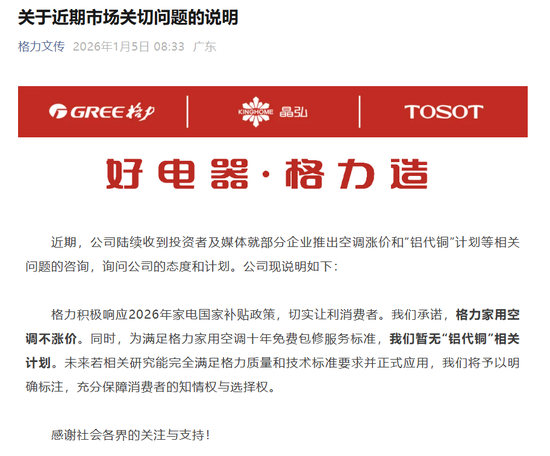
炒股就看金麒麟分析师研报,权威,专业,及时,全面,助您挖掘潜力主题机会! 记者丨翁榕涛 编辑丨骆一帆 近期,格力电器(000651.SZ)陆续收到投资者及媒体就部分企业推出空调涨价和"铝代铜"计划等相关 问题的咨询,询问公司的态度和计划。 1月5日,格力电器官方微信号发布通知表示,格力家用空调不涨价。同时,为满足格力家用空调十年免 费包修服务标准,暂无"铝代铜"相关计划。未来若相关研究能完全满足格力质量和技术标准要求并正式 应用,格力将予以明确标注,充分保障消费者的知情权与选择权。 2025年12月23日,格力电器也曾于投资者互动平台表示,铜是空调的核心原材料,占空调成本的20%左 右,尽管同等情况下,铝材成本约为铜材的1/12(价格约为1/4,密度约为1/3),但其在熔点、热传导 系数、电阻率、耐腐蚀等参数以及长期可靠性等方面,与铜存在较大差距,在其性能、质量和可靠性不 能完全保证的情况下,公司暂时没有"铝代铜"计划。公司重视"铝代铜"技术研究,并将持续关注行业动 态。 Wind数据显示,铜价在近日首次突破10万元关口,2026年1月5日,现货铜价报100620元/吨,这一价格 较2025年初的73830元 ...
铜价狂飙36%,格力回应空调涨价问题
21世纪经济报道· 2026-01-05 12:52
编辑丨 骆一帆 记者丨翁榕涛 近期,格力电器(000651.SZ)陆续收到投资者及媒体就部分企业推出空调涨价和"铝代铜"计 划等相关问题的咨询,询问公司的态度和计划。 1月5日,格力电器官方微信号发布通知表示,格力家用空调不涨价。同时,为满足格力家用空 调十年免费包修服务标准,暂无"铝代铜"相关计划。未来若相关研究能完全满足格力质量和技 术标准要求并正式应用,格力将予以明确标注,充分保障消费者的知情权与选择权。 Wind数据显示,铜价在近日首次突破10万元关口, 2026年1月5日,现货铜价报100620元/ 吨,这一价格较2025年初的73830元/吨上涨36.28%,较2015年的周期低点涨幅接近2倍。 若以铜原材料占据空调成本的20%计算,这意味着仅因为铜价上涨的因素,每台空调的成本就 上升7.26%左右。 因此,有投资者认为, 现在铜价上涨,很多空调公司都开始用"铝代铜"以降低成本,如果格 力坚持使用铜作为原材料,可能会导致价格上涨并且市场份额流失,失守低端市场。 格力电器市场总监朱磊认为,原材料上涨的成本压力,如果最终被转移分摊给了国家财政与消 费者,不仅削弱了国补政策的惠民实效,也违背了政策出台的 ...
铜价一年涨超36%!格力坚持空调不涨价,不用“铝代铜”
2 1 Shi Ji Jing Ji Bao Dao· 2026-01-05 12:00
2025年12月23日,格力电器也曾于投资者互动平台表示,铜是空调的核心原材料,占空调成本的20%左 右,尽管同等情况下,铝材成本约为铜材的1/12(价格约为1/4,密度约为1/3),但其在熔点、热传导 系数、电阻率、耐腐蚀等参数以及长期可靠性等方面,与铜存在较大差距,在其性能、质量和可靠性不 能完全保证的情况下,公司暂时没有"铝代铜"计划。公司重视"铝代铜"技术研究,并将持续关注行业动 态。 近期,格力电器(000651)(000651.SZ)陆续收到投资者及媒体就部分企业推出空调涨价和"铝代 铜"计划等相关问题的咨询,询问公司的态度和计划。 1月5日,格力电器官方微信号发布通知表示,格力家用空调不涨价。同时,为满足格力家用空调十年免 费包修服务标准,暂无"铝代铜"相关计划。未来若相关研究能完全满足格力质量和技术标准要求并正式 应用,格力将予以明确标注,充分保障消费者的知情权与选择权。 数据显示,铜价在近日首次突破10万元关口,2026年1月5日,现货铜价报100620元/吨,这一价格较 2025年初的73830元/吨上涨36.28%,较2015年的周期低点涨幅接近2倍。 若以铜原材料占据空调成本的20%计 ...
CES2026前瞻:关注AI端侧的升级与创新突破
Orient Securities· 2026-01-05 11:10
Investment Rating - The industry investment rating is maintained as "Positive" [5] Core Insights - The report emphasizes the importance of advancements and innovations in edge AI, predicting accelerated integration into various hardware products and industrial applications by 2026 [9][10] - Key players in the edge AI sector include chip manufacturers, terminal product manufacturers, and core component manufacturers, with specific companies highlighted for investment opportunities [3][10] Summary by Sections Investment Recommendations and Targets - Focus on the upgrade and innovation breakthroughs in edge AI, with recommended stocks including: - Edge AI main control chip manufacturers: Amlogic, Aojie Technology, Hengxuan Technology, Espressif Technology, Starshine Technology, Rockchip [3][10] - Terminal product manufacturers: Lenovo Group, Xiaomi Group, Luxshare Precision, Linying Intelligent Manufacturing, BYD Electronics, Lens Technology, Ezviz, Innosilicon [3][10] - Core component manufacturers: Huanxu Electronics, Sunny Optical Technology, Orbbec, SUTENG, STMicroelectronics, OmniVision, and Pegatron [3][10]


