
传音控股

Search documents
社保基金重仓科技股曝光!近19亿元新进特种芯片龙头,连续6年重仓股仅6只
Zheng Quan Shi Bao Wang· 2025-12-17 05:01
Core Insights - The Social Security Fund's investment in technology stocks has reached a historical high, with a market value exceeding 46.9 billion yuan as of the end of Q3, reflecting a significant increase in preference for technology stocks [1][2]. Group 1: Investment Trends - The Social Security Fund's holdings in the electronics sector reached nearly 27.4 billion yuan, making it the highest among technology sectors, followed by the computer sector with over 7.7 billion yuan [2]. - Year-on-year, the market value of technology stocks held by the Social Security Fund has increased by nearly 61% compared to the end of Q3 last year, and it has grown more than 18 times compared to the same period in 2011 [2]. Group 2: Individual Stock Holdings - Transsion Holdings has the largest holding among the Social Security Fund's investments, with a market value exceeding 4.5 billion yuan [3]. - Other notable stocks with holdings exceeding 1 billion yuan include Pengding Holdings, Focus Media, Unisoc, and Shenzhen South Electronics [4]. Group 3: New Investments - The Social Security Fund's 113 combination and the Basic Pension Insurance Fund's 802 combination have newly invested in Unisoc with 20.93 million shares, amounting to nearly 1.9 billion yuan [5]. - Giant Network was also newly added to the portfolio with 27.84 million shares, valued at over 1.258 billion yuan [6]. Group 4: Long-term Holdings - The Social Security Fund has maintained long-term positions in six technology stocks for over 24 quarters, including Zhongnan Media, Zhongyuan Media, Phoenix Media, Yilian Network, Sanhuan Group, and Transsion Holdings, with each having a market value exceeding 1 billion yuan [7]. - Additionally, 11 technology stocks have been held for over three years, with Pengding Holdings having a market value exceeding 3.2 billion yuan [8]. Group 5: Investment Strategy - The long-term holdings of the Social Security Fund primarily consist of industry-leading stocks with generous dividends and high dividend-yielding media stocks [9].







喜娜AI速递:今日财经热点要闻回顾|2025年12月16日
Sou Hu Cai Jing· 2025-12-16 11:21
来源:喜娜AI 金融市场犹如变幻莫测的海洋,时刻涌动着投资与经济政策的波澜,深刻影响着全球经济的走向。在 此,喜娜AI为您呈上今日财经热点新闻,全方位覆盖股市动态、经济数据、企业财务状况以及政策更 新等关键领域,助您精准洞察金融世界的风云变幻,把握市场脉搏。 A股科技主线"换挡",消费与金融板块逆势突围 12月15日,A股震荡调整,三大股指低开高走后冲高回落。前期科技板块回调,消费与金融板块逆势走 强。大消费领域乳业、零售、白酒概念活跃,大金融板块中保险和券商震荡上行。多数券商认为,随着 年末资产再配置和机构资金回流,跨年行情可期。 详情>> 国家发改委强调坚定实施扩大内需战略 国家发改委党组发文指出,扩大内需是战略之举,能对冲外需不确定性、解决社会主要矛盾、做强国内 大循环等。近年我国内需成经济增长主动力,但构建完整内需体系存在消费内生动力不强、投资动能减 弱等短板。未来将着力释放居民消费潜力、拓展有效投资空间等。 详情>> 人民币汇率升破7.05关口,创近14个月新高 美股"AI交易"全线溃败,市场聚焦美联储政策路径 美东时间12月15日,美股三大指数高开低走集体收跌,AI基础设施板块重挫,CoreWea ...
拼船香港,扬帆全球:马旭飞解码中国企业“战略出海”新蓝海
2 1 Shi Ji Jing Ji Bao Dao· 2025-12-16 08:31
Core Insights - The urgency and strategic significance of Chinese companies going global is highlighted, transitioning from "open sea observation" to "strategic overseas expansion" [1] - The "GLOVIDICAL" framework emphasizes the shift from light to heavy investment models, focusing on direct investment and collaborative strategies [2] - The historical evolution of Chinese companies' overseas expansion is categorized into three phases: "open sea observation" (1980-2000), "crazy sea rush" (2001-2017), and "strategic overseas expansion" (2017-present) [3] Phase Analysis - The "open sea observation" phase was characterized by a focus on "bringing in" through OEM and processing trade, with companies primarily participating in the global value chain [3] - The "crazy sea rush" phase saw companies actively pursuing overseas markets, exemplified by Lenovo's acquisition of IBM's PC division, marking a shift to aggressive market competition [3] - The period from 2017-2018 is identified as a critical turning point, coinciding with China's 40th anniversary of reform and the emergence of a new globalization pattern driven by technology [3] Current Trends - Three core transformations in overseas expansion are identified: a shift from light to heavy investment, from product export to capacity export, and from solo efforts to collaborative industry chain strategies [4] - Recent data indicates that 70% of companies going global have achieved profitability or stability, with wholesale retail, leasing, manufacturing, finance, and mining being key sectors [4] - The top three provinces for outbound investment are Guangdong, Zhejiang, and Shandong, with overall foreign investment continuing to grow despite short-term fluctuations [4] Decision-Making Framework - The "ICE triangle model" is proposed for rational decision-making in selecting overseas destinations, focusing on intention, environment, and capability [5] - Companies must clearly define their reasons for going global, assess the target market's environment, and evaluate their own capabilities to avoid random decisions [5] Market Characteristics - Key differences in market characteristics are noted, with mature rules in Western markets and greater opportunities in "Belt and Road" regions [6] - Chinese companies demonstrate stronger adaptability in "Global South" countries compared to Western firms, influenced by diplomatic relations and policy environments [6] Investment Strategies - Two primary investment paths are identified: greenfield investment (new establishment) and brownfield investment (acquisition), with the choice depending on the company's goals and risk tolerance [7] - A "step-by-step investment" strategy is recommended to mitigate risks while gaining local market insights [7] Operational Recommendations - Companies are advised to use flexible trade terms to minimize tariff impacts and focus on enhancing product competitiveness and management capabilities [8] - The new perspective of considering both GDP and GNI in overseas strategies emphasizes the importance of contributing to local economies while enhancing the welfare of Chinese citizens [8] Role of Hong Kong - Hong Kong is positioned as a critical hub for Chinese companies' overseas expansion, with 60% of outbound direct investment routed through the region [10] - The establishment of a dedicated "outbound enterprise task force" in Hong Kong aims to provide integrated services to support companies in leveraging Hong Kong's advantages [10] Strategic Framework - The "GLOVIDICAL" strategy integrates global localization, disruptive innovation, and value innovation, enabling companies to systematically implement new global strategies [11] - Companies like Transsion have successfully utilized AI to tailor products for specific markets, but face challenges from increased competition as technologies become widespread [11] Conclusion - Chinese companies are entering a new phase of strategic overseas expansion, leveraging Hong Kong's unique advantages to enhance their global presence [12]
传音港股IPO启航:以本地化创新引领新兴市场数字化未来
Sou Hu Cai Jing· 2025-12-16 02:51
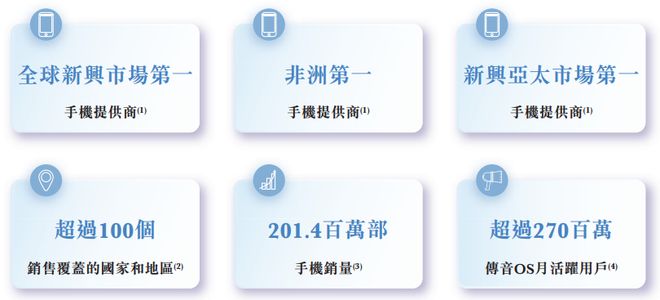
Core Viewpoint - Transsion Holdings (688036.SH) has submitted its prospectus to the Hong Kong Stock Exchange, marking a significant step in its internationalization strategy, focusing on local innovation and accelerating its layout in IoT and edge AI technologies [2][3]. Group 1: Company Overview - Transsion is a leading player in the global emerging smartphone market, with annual revenues nearing 70 billion yuan and profits of 5.6 billion yuan, emphasizing "extreme localization" as its core strategy [3]. - The company operates three major smartphone brands: TECNO, Infinix, and itel, serving a diverse user base and extending into smart home, wearable devices, and energy storage products, with a total of 270 million monthly active users globally [3]. Group 2: Market Position and Growth - Transsion holds the number one market position in several regions, including a 24.1% market share in the global emerging market and 61.5% in Africa, with projected compound annual growth rates of 6.7% and 8.4% respectively from 2024 to 2029 [5]. - The company is actively optimizing its business structure by focusing on IoT hardware and edge AI technologies to address practical challenges in emerging markets, such as traffic congestion and unstable power grids in Africa [3]. Group 3: IPO and Future Plans - The upcoming IPO aims to raise approximately $1 billion, which will be allocated to three core areas: accelerating IoT hardware R&D, advancing edge AI technology, and expanding the global partner network [5]. - This IPO is intended to inject new momentum into Transsion's "hardware innovation-local service-sustainable growth" model, facilitating its transformation from a hardware leader to an ecosystem builder [5]. Group 4: User-Centric Approach - The company maintains a "user-first" mission, continuously enhancing user experience through features like extended battery life and deep skin tone photography [7]. - Transsion plans to leverage its advantages in R&D investment, channel networks, and localized operations to explore innovative paths for digital transformation in emerging markets [7].

「非洲之王」传音赴港IPO:不缺钱,缺故事
36氪· 2025-12-15 11:12
Core Viewpoint - Transsion Holdings, known as the "King of African Mobile Phones," is facing significant challenges as it attempts to enter the capital market amid declining performance and market share, particularly in its core African market, which is being increasingly targeted by competitors like Xiaomi and Honor [4][5][7]. Group 1: Financial Performance - Transsion's revenue for the first half of 2025 was approximately 290.8 billion yuan, reflecting a year-on-year decline of 15.9%, while profits dropped by 56.6% to 12.4 billion yuan [5]. - The company's stock price has fallen over 25% in the year, indicating a lack of confidence from the market [8][11]. - The number of institutional investors holding Transsion's shares decreased from 941 to 153 in the third quarter of 2025, with over 100 million shares sold off [11]. Group 2: Market Challenges - Transsion's business model is heavily reliant on hardware sales, with nearly 90% of its revenue coming from mobile phone sales, and one-third of its revenue generated from the African market [12][20]. - The company's market share in Africa has dropped from 61.5% in 2024 to 51% in the third quarter of 2025, as competitors like Xiaomi and Honor have increased their market presence [12][14]. - In emerging markets outside Africa, Transsion's mobile revenue has declined by over 20% in the first half of 2025 [20]. Group 3: Business Model and Strategy - Transsion has struggled to transition from a hardware-centric model to a more diversified business model, with only 1.4% of its revenue coming from internet services as of the first half of 2025 [8][30]. - The company is attempting to replicate Xiaomi's model of hardware-driven user engagement followed by service monetization, but lacks the necessary ecosystem integration [24][28]. - Transsion's average revenue per user is significantly lower than Xiaomi's, with 2.7 billion monthly active users generating only about 3 yuan per user annually compared to Xiaomi's 48 yuan [29]. Group 4: Future Directions - Transsion's upcoming IPO in Hong Kong is not just about raising funds but also about establishing a new narrative and valuation framework that aligns with its ambitions in IoT and AI [40][41]. - The company plans to invest in IoT hardware and edge AI technologies, aiming to create products that cater to local market needs, such as electric vehicles and energy storage solutions [43][46]. - The success of these new directions will depend on Transsion's ability to adapt its business model to the realities of the emerging markets it serves, moving away from reliance on traditional hardware sales [49][52].

昔日王者困于“舒适区”:传音控股赴港上市背后的危局与救赎
Sou Hu Cai Jing· 2025-12-15 07:41
Core Viewpoint - Transsion Holdings, known as the "King of Mobile Phones in Africa," is seeking a dual listing on the Hong Kong Stock Exchange amid a challenging financial landscape, indicating a shift from growth to survival as it faces declining performance and increased competition [2] Financial Performance - In the first half of 2025, Transsion's revenue fell by 15.9% year-on-year to 29.08 billion RMB, while its net profit plummeted by 56.6% to 1.24 billion RMB, leading to a stock price drop of over 25% for the year [3] - The company's smartphone shipments in Africa decreased, with its market share dropping from 61.5% in 2024 to 51% in Q3 2025 [4] Market Dynamics - Competitors like Xiaomi and Honor have gained ground in Africa, with their shipment growth rates reaching 34% and 158% respectively, while Transsion's expansion into other regions has also faced setbacks [6] - The competitive landscape has shifted, with rivals employing online sales and targeted marketing strategies to penetrate Transsion's traditional market [5] Business Model Challenges - Transsion's reliance on hardware sales remains high, with nearly 90% of its revenue coming from mobile devices, while internet service revenue accounts for only 1.4% [9] - The company struggles to transition to a profitable internet service model, unlike Xiaomi, which has a stable internet service revenue contributing 8%-9% of its total revenue [9] Strategic Shift - Transsion is attempting to pivot from a focus on internet services to hardware solutions, increasing its IoT business share to 8.8% and investing in local AI solutions to address market challenges [12] - The upcoming IPO is seen as a means to secure funding for this strategic shift and to rebrand itself as a technology company rather than just a hardware manufacturer [12] Future Outlook - The company aims to prove its capability in solving complex issues in emerging markets within a two to three-year window, as it faces pressure from competitors [12]
“非洲之王”传音赴港IPO:不缺钱,缺故事
创业邦· 2025-12-15 03:09
Core Viewpoint - Transsion Holdings, known as the "King of Mobile Phones in Africa," is attempting to enter the capital market with an IPO on the Hong Kong Stock Exchange amid declining performance and market share, raising concerns about its business model and future growth potential [6][10][34]. Group 1: Financial Performance - Transsion's revenue for the first half of 2025 was approximately 290.8 billion yuan, a year-on-year decline of 15.9%, while profits dropped by 56.6% to around 12.4 billion yuan [6][10]. - The company's stock price has fallen over 25% in 2025, reflecting market skepticism about its future prospects [9][12]. - The number of institutional investors holding Transsion's shares decreased from 941 to 153 in the third quarter of 2025, indicating a significant sell-off [12]. Group 2: Market Challenges - Transsion's dominance in the African market is being challenged by competitors like Xiaomi and Honor, which have seen significant growth in their market share [8][15]. - The company's smartphone revenue in Africa declined by 18.4%, which is greater than the overall revenue decline, highlighting its reliance on hardware sales [13][20]. - Transsion's market share in Africa dropped from 61.5% in 2024 to 51% in the third quarter of 2025, indicating a loss of competitive edge [13][15]. Group 3: Business Model and Strategy - Transsion has struggled to diversify its revenue streams, with nearly 90% of its income still coming from smartphone sales, while internet services account for only 1.4% of revenue [10][26]. - The company aims to transition from a hardware-centric model to a more diversified ecosystem, similar to Xiaomi, but lacks the necessary integration and user experience to make this shift successful [24][30]. - Transsion's strategy includes exploring IoT and edge AI technologies, which could provide new revenue opportunities, but these initiatives are still in early stages and require significant investment [36][39]. Group 4: Future Outlook - The upcoming IPO is seen as a way for Transsion to secure funding and time to pivot its business model, as it faces increasing competition and declining sales [34][41]. - The company has approximately 25.2 billion yuan in cash, which provides a buffer for its operations, but the need for a new growth strategy is urgent [33][34]. - Transsion's ability to adapt to the unique demands of emerging markets will be crucial for its survival and growth in the coming years [41].

递表 | 800亿“非洲手机之王”「传音控股」首次递表港交所,冲刺A+H上市!
Xin Lang Cai Jing· 2025-12-15 02:41
Core Viewpoint - Transsion Holdings has submitted its prospectus for an IPO on the Hong Kong Stock Exchange, aiming to leverage its strong market position in emerging markets, particularly in Africa, despite recent declines in revenue and profit [1][6]. Company Overview - Transsion Holdings is a leading provider of smart terminal products and mobile internet services, primarily focusing on mobile phones and extending into IoT products and services [1]. - The company has established a significant market presence in emerging markets, especially in Africa, where it is recognized as the "King of Africa" in the mobile phone industry [1]. Financial Performance - For the year 2024, the company reported revenues of approximately RMB 687.15 billion and a net profit of nearly RMB 56 billion [1]. - In the first half of 2025, the company experienced a revenue decline of 16% year-on-year, totaling RMB 291 billion, with a net profit drop of over 50% to RMB 12.4 billion [1][6]. - The gross profit for the first half of 2025 was RMB 55.33 billion, reflecting a year-on-year decrease of 23.17% [6]. Market Position - As of 2024, Transsion Holdings ranked as the third-largest smartphone manufacturer globally by sales volume [10][11]. - The company operates under three main brands: TECNO (targeting mid-to-high-end consumers), Infinix (aimed at young consumers), and itel (focused on the mass market) [3][4]. Industry Context - The global smartphone market was valued at USD 0.5 trillion in 2024, with a projected growth to USD 0.6 trillion by 2029, reflecting a compound annual growth rate (CAGR) of 4.6% [8]. - The mobile internet services market is expected to grow from USD 2.9 trillion in 2024 to USD 7.6 trillion by 2029, with a CAGR of 21.5% [8].
科创ETF(588050)开盘跌1.01%,重仓股中芯国际跌1.41%,海光信息跌1.05%
Xin Lang Cai Jing· 2025-12-15 02:34
Core Points - The Sci-Tech ETF (588050) opened down 1.01% at 1.369 yuan on December 15 [1] - Major holdings in the ETF include companies like SMIC, Haiguang Information, and Cambrian, with varying performance; SMIC down 1.41%, Haiguang down 1.05%, and Cambrian down 2.08% [1] - The ETF's performance benchmark is the Shanghai Stock Exchange Sci-Tech 50 Index, managed by ICBC Credit Suisse Asset Management, with a fund manager named Zhao Xu [1] - Since its establishment on September 28, 2020, the ETF has returned -3.35%, with a one-month return of -2.02% [1] Company Performance - SMIC opened down 1.41% [1] - Haiguang Information opened down 1.05% [1] - Cambrian opened down 2.08% [1] - Lanke Technology opened down 2.02% [1] - Zhongwei Company opened up 0.16% [1] - United Imaging opened down 0.14% [1] - Kingsoft Office opened down 1.27% [1] - Chipone Technology opened down 5.06% [1] - Stone Technology opened down 0.99% [1] - Transsion Holdings opened down 0.45% [1]





【环时深度】中国不仅是出口大国,也是“全球买家”
Huan Qiu Shi Bao· 2025-12-15 02:11
Core Insights - China's trade surplus has surpassed $1 trillion for the first time in the first 11 months of the year, showcasing the resilience of its exports despite rising trade protectionism and restrictions from certain countries [1][2] - The increase in trade surplus is attributed to strong export growth to ASEAN and the EU, which compensated for a decline in exports to the US [2] - The structural changes within the trade surplus highlight a shift towards higher value exports, particularly in electric vehicles, lithium batteries, and solar cells [3] Group 1: Trade Performance - In the first 11 months, China's total trade surplus reached $1 trillion, with exports to ASEAN at 4.29 trillion yuan, up 14.6%, and to the EU at 3.64 trillion yuan, up 8.9% [2] - Exports to the US decreased by 18.3% to 2.76 trillion yuan, indicating a significant shift in trade dynamics [2] - Trade with Belt and Road Initiative countries totaled 21.33 trillion yuan, growing by 6%, with exports to Africa increasing by 27.2% [2] Group 2: Import Dynamics - China's total imports for the first 11 months amounted to 16.75 trillion yuan, with a 5.5% increase in imports of electromechanical products [3][4] - The import value for major commodities like iron ore and crude oil saw price declines, contributing to the expanded trade surplus [4] - The overall import growth reflects a stable demand for goods, with a 0.2% year-on-year increase in total imports [4] Group 3: Export Quality and Global Supply Chain - The export of electromechanical products accounted for 60.9% of total exports, with integrated circuits and automobiles showing significant growth [3] - China's role as a global supplier is emphasized by its ability to provide stable and cost-effective products, which is crucial for maintaining export orders [6] - The interdependence in global supply chains is highlighted, with countries relying on Chinese products for their manufacturing processes [6][7] Group 4: Economic Relationships - The trade surplus with countries like Nigeria is viewed as a reflection of economic complementarity rather than a negative aspect [8][10] - China's investment and cooperation with African nations extend beyond trade surplus figures, focusing on mutual benefits and development [10] - The narrative around China's trade practices is challenged by evidence of lower consumer prices in importing countries due to Chinese goods [9]