
蔚来

Search documents
市场最前沿|春节自驾出行,新能源车如何“满电”出发?
Xin Hua She· 2026-02-10 10:08
新华社北京2月10日电 题:春节自驾出行,新能源车如何"满电"出发?新华社记者唐诗凝、戴小河、吴 慧珺马年春节临近,自驾返乡、出游的热潮下,广大新能源汽车车主最关心的莫过于"路上的充电桩够 用吗""充电要不要排大长队"……记者从国家电网了解到,今年春节假期,新能源汽车充电量预计创历 史新高。据国家电网智慧车联网平台预测,平台服务的新能源汽车充电量单日峰值将超3400万千瓦时, 较去年同期增长17%;高速公路充电量单日峰值也将进一步提高。截至2025年底,全国新能源汽车保有 量已达4397万辆。新能源汽车特别是纯电动汽车的加速普及,对春节假期高速公路充电服务保障等提出 了更高的要求。近年来,随着新能源汽车产品性能持续进步,"续航焦虑"已明显缓解,但是面对春运期 间集中爆发的出行需求,车主们依然关注,路上的充电保障,到底跟不跟得上?首先看充电网络布局。 国家能源局最新数据显示,我国电动汽车充电设施数量已突破2000万个,建成全球最大电动汽车充电网 络,可支撑超4000万辆新能源汽车充电需求;全国超98%高速公路服务区建成充电桩7.15万个,19个省 份实现充电设施"乡乡全覆盖"。各地各部门提前部署充电保障措施,让 ...
蔚来汽车创始人李斌最新内部讲话:争取2026年实现Non-GAAP口径全年盈利
Jin Rong Jie· 2026-02-10 09:58
IT之家注意到,蔚来汽车CEO李斌上个月发表新年首次内部讲话时也提到了类似观点。他表示接下来3 至5年,蔚来汽车能够实现年均40%至50%的稳定增长。 李斌还分享了对公司2025年的总结和对2026年的展望,并表彰过去一年的优秀项目。和往年相比,今年 的表彰增加了"特别贡献奖",旨在表彰经营结果突出的团队和项目。全新ES8车型战队获得了全场唯一 的特等奖。乐道L90车型战队、Firefly萤火虫车型战队、自研芯片团队、供应链降本团队获得了一等 奖。基本经营单元(CBU)去年发挥了巨大作用,李斌要求接下来把CBU机制继续彻底跑通。"用车做 比方的话,去年我们只能算是做出了概念车,但我们还会持续推行,争取早一点到量产车,争取每年都 能够在经营水平上有进步。"李斌说道。 本文源自:IT之家 蔚来2月5日发布了其2025年四季度盈利预告,预计录得经调整经营利润7亿元至12亿元。 李斌表示,接下来要继续坚决在技术和产品研发方面进行投入,同时提高研发效率;持续布局充换电基 础设施和销售服务网络的建设;持续推行围绕用户价值创造的全员经营组织变革,争取在2026年实现 Non-GAAP口径下全年盈利。 昨日(9日)下午,蔚来 ...

蔚来李斌:争取2026年实现Non-GAAP口径全年盈利
Xin Lang Cai Jing· 2026-02-10 09:28
2月9日下午,蔚来内部召开了一场全员会,会上,蔚来创始人、董事长、CEO李斌表示,接下来要继续 坚决在技术和产品研发方面坚决进行投入,同时提高研发效率;持续布局充换电基础设施和销售服务网 络的建设;持续推行围绕用户价值创造的全员经营组织变革,争取在2026年实现Non-GAAP口径下全年 盈利。(第一财经) ...
崔东树:政策引导与市场驱动 预计2026年新能源乘用车将实现高质量发展
智通财经网· 2026-02-10 09:19
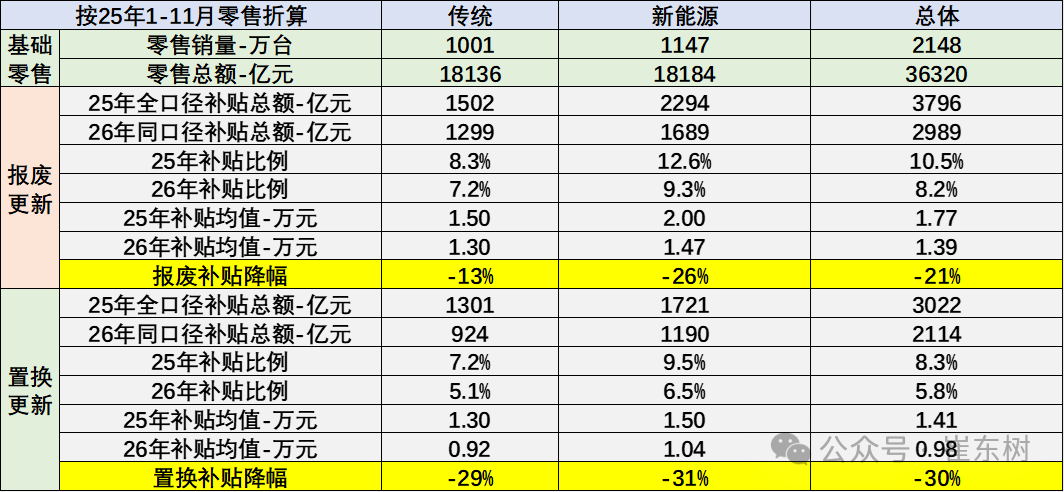
Core Insights - The 2026 vehicle replacement policy is a significant boost for the automotive market, promoting high-end development and enhancing fiscal efficiency through a shift from fixed subsidies to tiered subsidies based on vehicle value [1][3]. Group 1: Policy Impact - The new policy aims to stabilize large-scale consumption and release replacement potential, contributing to steady growth while promoting green and low-carbon initiatives [1][2]. - The average subsidy for passenger vehicle replacements is expected to decrease by approximately 30%, while the average subsidy for scrapping is projected to decline by about 20% [2][3]. - The transition to a tiered subsidy system is designed to improve fiscal efficiency, ensuring better allocation of funds and reducing waste from low-priced vehicles benefiting from subsidies [3][4]. Group 2: Market Trends - In 2025, over 11.5 million vehicles benefited from the replacement subsidy, with nearly 60% being new energy vehicles, indicating a strong market shift towards electrification [3]. - The commercial vehicle sector is expected to perform better in 2026 due to the continuity of favorable policies, while the passenger vehicle segment faces a decline in the number of new models [5][6]. - The number of new passenger vehicle models is decreasing from 92 in 2024 to 83 in 2026, reflecting a trend towards higher-end and larger vehicles [5][6]. Group 3: Product Development - New energy passenger vehicles are increasingly characterized by larger sizes and improved range, with a notable absence of small electric vehicles under 1090 kg in recent releases [8][10]. - The introduction of long-range electric vehicles, particularly those exceeding 700 km, is becoming more common, indicating a shift towards higher performance in the electric vehicle market [10][14]. - The energy density and efficiency of new energy vehicles are improving, with some models achieving a power consumption of around 10 kWh per 100 km [12][15]. Group 4: Tax and Subsidy Structure - The tax exemption directory for commercial vehicles shows growth in new models, particularly in trucks and buses, compared to the previous year [4][6]. - The structure of the subsidy system is evolving to favor higher-priced vehicles, ensuring that funds are allocated to more valuable replacements [3][4]. Group 5: Competitive Landscape - The competitive landscape is shifting as traditional fuel vehicles face increasing pressure from new energy vehicles, which are rapidly advancing in technology and market presence [1][3]. - The introduction of diverse new models in the narrow hybrid segment is establishing a solid foundation for future growth, with many new products featuring lower energy consumption [16].


因可能出现仪表及中控屏黑屏 蔚来召回24万余台纯电汽车
Huan Qiu Wang· 2026-02-10 09:10
据国家市场监督管理总局网站消息,日前,上海蔚来汽车有限公司根据《缺陷汽车产品召回管理条例》和《缺陷汽车产 品召回管理条例实施办法》的要求,受委托向国家市场监督管理总局备案了召回计划。 上海蔚来汽车有限公司将通过远程升级(OTA)技术,免费为召回范围内的车辆升级软件至Aspen 3.5.6、Alder 2.1.0或更高 版本,对于无法通过OTA技术升级的车辆,将通过蔚来服务中心联系相关用户实施召回,以消除安全隐患。因部分车辆 之前已升级优化后的软件,本次召回此部分车辆无需再次升级。 召回编号S2026M0017I:自即日起,召回2018年3月16日至2023年1月16日期间生产的ES8、ES6和EC6纯电动汽车,共计 246229辆。 本次召回范围内的部分车辆,由于软件问题,可能在特定条件下出现短时间的仪表及中控屏黑屏,期间无法为驾驶员提 供必要的车辆信息及功能(如车速信息、故障报警提示、除霜除雾功能等),存在安全隐患。 ...

汽车股普涨 比亚迪股份涨约4%
Zhong Guo Qi Che Bao Wang· 2026-02-10 09:09
港股汽车股集体上涨,其中,比亚迪股份涨约4%,奇瑞汽车涨超2%,零跑汽车、蔚来汽车、吉利 汽车涨超1%,小鹏汽车、长城汽车、赛力斯皆有涨幅。消息上,商务部日前召开汽车企业座谈会,研 究汽车流通消费有关工作。2026年,商务部将会同相关部门,坚持政策支持和改革创新并举,存量措施 和增量政策集成发力,优化实施汽车以旧换新,开展汽车流通消费改革试点,完善行业管理制度,多措 并举推动汽车消费扩容提质。 ...
换电模式能否走通?
Zhong Guo Qi Che Bao Wang· 2026-02-10 07:58
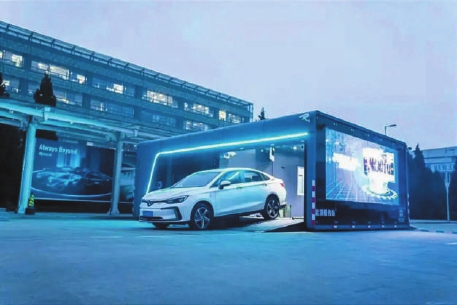
Core Viewpoint - The article discusses the challenges and potential of the battery swapping model in the electric vehicle (EV) industry, highlighting the investments made by companies like NIO and CATL, and the financial viability of this model. Investment and Cost Analysis - NIO's first-generation battery swapping station cost approximately 3 million yuan, while the second generation costs between 1.5 to 2 million yuan, with over 1,100 second-generation stations expected by December 2025 [3] - The initial investment for a battery swapping station includes equipment costs of 1.5 million yuan, line costs of 200,000 yuan, and battery costs of 620,000 yuan, with operational costs including a monthly salary of 5,000 yuan and annual rent and maintenance of 100,000 yuan [7] Profitability and Financial Outlook - NIO aims to achieve profitability by the end of 2025, with a forecasted adjusted operating profit of 700 million to 1.2 billion yuan for Q4 2025, marking its first quarterly adjusted operating profit since inception [3] - Long-term projections suggest that the battery swapping model could yield a return rate of 5.5%, potentially becoming a stable cash cow for companies once it reaches a steady state [6] Market Dynamics and Competitive Landscape - CATL has ambitious plans to establish 1,000 battery swapping stations by 2025, with a long-term goal of 30,000 stations, which would cover over 20 million vehicles [5] - The battery swapping model is closely related to the concept of battery separation, which can lower vehicle purchase costs and enhance battery longevity through standardized management [10] Industry Concerns and Challenges - Concerns exist regarding the high costs of building and operating battery swapping stations compared to charging stations, which may deter some automakers from adopting this model [13] - The rapid development of battery technology poses a risk that companies may become locked into outdated models if they heavily invest in battery swapping infrastructure [13] - The lack of standardized battery sizes and interfaces across different automakers complicates the implementation of a universal battery swapping system [13] Consumer Perception and Adoption - Some consumers express reluctance to accept used batteries from swapping stations, and the cost of battery swapping can be comparable to traditional fuel costs, which may hinder adoption [14] - The emergence of ultra-fast charging technologies is narrowing the performance gap between charging and swapping, potentially reducing the perceived value of battery swapping [14] Competitive Positioning - The report indicates that BYD is gaining market share in the 50,000 to 150,000 yuan segment, increasing from 25% in 2019-2020 to an expected 56-57% in 2023-2024, creating competitive pressure on other automakers [15] - For companies without in-house battery production, adopting the battery swapping model may be a viable strategy to remain competitive in the lower-priced vehicle market [16]

2026/2/2-2026/2/8汽车周报:理想、比亚迪均有技术催化,板块轮动+科技成长双轮驱动-20260210
Shenwan Hongyuan Securities· 2026-02-10 07:20
Investment Rating - The report maintains a positive outlook on the automotive industry, particularly on companies like Li Auto, Xpeng, BYD, and Great Wall Motors, driven by technological advancements and new product cycles [2]. Core Insights - The automotive market is experiencing a shift towards new technologies, with a focus on AI and smart vehicles, which is expected to drive growth in 2026 [2]. - The report highlights the importance of overseas market opportunities for companies like BYD and Geely, especially in light of domestic cost pressures [2]. - The report notes a significant decline in retail sales in January, with a year-on-year decrease of 22% and a month-on-month decrease of 31% [2]. - The report emphasizes the potential of the robot industry and the valuation flexibility within the supply chain, particularly with Tesla's Optimus V3 [2]. - The report identifies key players in the smart vehicle sector, including companies like Desay SV, Jingwei Hirain, and Bertel, which are expected to benefit from the growth in intelligent vehicles [2]. Industry Updates - The report indicates that the average daily retail sales of passenger vehicles in China were 50,000 units in the second week of January, marking a 22% decline compared to the same period last year [2]. - The report mentions a decrease in raw material prices for both traditional and new energy vehicles, with traditional vehicle raw material prices down by 2.8% week-on-week and 1.0% month-on-month, while new energy vehicle raw material prices fell by 6.7% week-on-week and 2.7% month-on-month [2]. - The total transaction value in the automotive industry for the week was 530.7 billion yuan, reflecting a 22.58% decrease compared to the previous week [2]. - The automotive industry index rose by 0.32% during the week, outperforming the Shanghai and Shenzhen 300 index, which fell by 1.33% [10]. Monthly Sales Updates - In January 2026, the sales of new energy vehicle companies showed a mixed trend, with BYD's sales at 210,510 units, down 30% year-on-year, while companies like Zeekr and NIO reported significant increases in sales [6][8]. - The report provides a detailed breakdown of sales figures for various new energy vehicle brands, highlighting the overall market contraction of 8% year-on-year and a 45% month-on-month decline [6][8]. Key Models Announced - The report lists several notable new vehicle models announced in the latest batch of vehicle approvals, including the Li Auto L9 Livis, Xpeng GX, and BYD Tang EV, among others [3][4][5].
中国资产爆发,热门中概股普涨,美联储官员再谈降息可能
Sou Hu Cai Jing· 2026-02-10 06:13
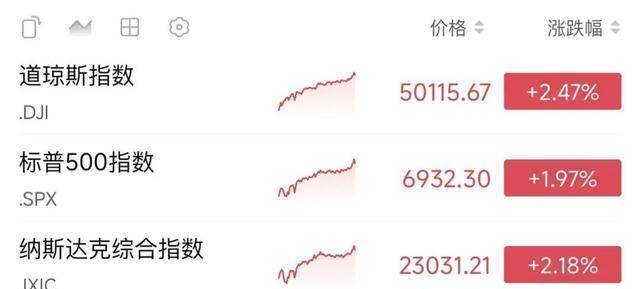
市场此刻的逻辑很简单——钱往有肉的地方跑,往能直接受益于算力需求的芯片、设备、代工上游跑,而对那些需要长期巨额投入、商业模式尚未见底的企 业,则保持谨慎,这种资金偏好,导致科技板块内部分化愈发明显,也决定了下一阶段行情的主线是谁兜里有"真金白银"的算力供应商, 中概股当日普涨,并非无源之水,比特数字涨近20%,第九城市涨超15%,蔚来、理想、百度、金山云、小鹏等纷纷上扬,这既是海外资金对中国相关成长 板块情绪的回温,也是一个信号——当全球市场流动性与风险偏好同时抬头,估值被修复的标的会率先受益, 当地时间2月6日,美股迎来一次看得见摸得着的集体醒来,三大股指齐刷刷上扬,纳斯达克中国金龙指数也不含糊,涨了3.71%,报7808.54点;富时A50期 指夜盘续涨1.03%,报14960点,这不是偶然,而是市场在完成一次力量重估的瞬间, 道指大涨2.47%,一次性跨过五万点门槛,报50115.67点,标普500创下自去年五月以来最大单日涨幅,纳指也有2.18%的亮眼表现,这种集体上攻背后,是 科技股的普涨,是资金对"谁能真正赚钱、谁只是故事"的再判断, 英伟达带头冲锋,涨近8%,博通、台积电、特斯拉、美光等紧随其后 ...
汽车周报:理想、比亚迪均有技术催化,板块轮动+科技成长双轮驱动-20260210
Shenwan Hongyuan Securities· 2026-02-10 03:43
Investment Rating - The report maintains a positive outlook on the automotive sector, highlighting the potential for growth driven by technological advancements and market dynamics [2]. Core Insights - The report emphasizes the importance of new vehicle announcements and the upcoming Q1-Q2 product cycles, particularly for companies like Li Auto, Xpeng, BYD, Great Wall Motors, and others, driven by enhanced product capabilities due to new technologies [2]. - Tesla's AI transformation is noted as a significant market expectation, with a focus on the valuation flexibility within the robotics supply chain [2]. - The report identifies smart technology as a key growth area for the year, with expectations for Full Self-Driving (FSD) technology to gain traction in China, benefiting companies like Desay SV, Jingwei Hirain, and others [2]. - Domestic cost pressures are acknowledged, leading to a cautious stance on annual profit forecasts, while overseas export opportunities for companies like BYD and Geely are viewed positively [2]. Industry Updates - According to the China Passenger Car Association, the average daily retail sales of passenger cars in the first week of January were 50,000 units, representing a 22% year-on-year decline and a 31% month-on-month decline [2]. - Recent weeks have seen a decrease in traditional and new energy raw material price indices, with traditional vehicle raw material prices down by 2.8% week-on-week and 1.0% month-on-month, and new energy vehicle raw material prices down by 6.7% week-on-week and 2.7% month-on-month [2]. - The total transaction value in the automotive sector for the week was 530.697 billion yuan, a 22.58% decrease from the previous week, while the automotive industry index rose by 0.32% [2][11]. Market Situation - The automotive industry index closed at 8023.01 points, outperforming the Shanghai Composite Index, which fell by 1.33% [11]. - A total of 141 automotive stocks rose, while 127 fell, with the largest gainers being Kailong High-Tech, Xingmin Zhitong, and Yinlun, which saw increases of 72.8%, 21.3%, and 17.1% respectively [16]. - Key events included the release of the 404th batch of new vehicle approvals by the Ministry of Industry and Information Technology, which included several notable models from various manufacturers [3][4]. Investment Analysis - The report suggests focusing on companies that are leveraging AI and smart technology, particularly new entrants like Xpeng and NIO, as well as established players with overseas business support like BYD and Geely [2]. - It highlights the potential for significant changes driven by state-owned enterprise reforms, with attention on SAIC and Dongfeng [2]. - In the components sector, companies involved in robotics and data center cooling are expected to transition from thematic investments to industry trends, with a focus on firms with strong performance and valuation potential [2].


