传音控股

Search documents
通信行业月报:豆包AI手机发布,Marvell收购CelestialAI-20251211
Zhongyuan Securities· 2025-12-11 07:49
分析师:李璐毅 登记编码:S0730524120001 lily2@ccnew.com 021-50586278 联系人:李智 电话: 0371-65585629 | | | 地址: 上海浦东新区世纪大道1788 号T1 座22 楼 投资要点: 豆包 AI 手机发布,Marvell 收购 Celestial AI ——通信行业月报 证券研究报告-行业月报 强于大市(维持) 通信相对沪深 300 指数表现 相关报告 ⚫ 维持行业"强于大市"投资评级。截至 2025 年 12 月 9 日,通信行 本报告版权属于中原证券股份有限公司 www.ccnew.com 请阅读最后一页各项声明 第1页 / 共42页 通信 发布日期:2025 年 12 月 11 日 -15% -1% 14% 28% 43% 58% 72% 87% 2024.12 2025.04 2025.08 2025.12 通信 沪深300 资料来源:中原证券研究所,聚源 《通信行业专题研究:高端光芯片供不应求, 国产替代加速》 2025-11-28 《通信行业年度策略:智启新质,算力互联破 浪前行》 2025-11-24 《通信行业月报:北美云厂商继续上 ...
外派非洲,是份好工作吗?
36氪· 2025-12-10 11:18
Core Viewpoint - The article discusses the complexities and realities of working in Africa, particularly for Chinese expatriates, highlighting both the financial incentives and the challenges faced in such roles [14][15][22]. Group 1: Historical Context - The trend of Chinese expatriates in Africa began in the 1960s, coinciding with the continent's independence movements and China's need for allies [25][30]. - The construction of the TAZARA Railway is a significant historical example of early Chinese involvement in Africa, with nearly 50,000 Chinese engineers sent to assist [35][36]. - By the 1980s, China's aid to Africa shifted from political to economic motivations, with state-owned enterprises leading the charge in infrastructure projects [37][39]. Group 2: Current Employment Landscape - There is a growing number of job postings for expatriate positions in Africa, with salaries often exceeding those in major Chinese cities by more than double [55][57]. - For example, expatriates in engineering roles can earn an average monthly salary that is over twice that of similar positions in Beijing [57]. - New graduates can expect total compensation packages of around 250,000 yuan per year, while those with more experience can earn between 350,000 to 500,000 yuan [58][59]. Group 3: Challenges Faced by Expatriates - Working in Africa is often characterized by high demands, with expatriates expected to work long hours and handle multiple responsibilities [84]. - Health risks are significant, as Africa is known for high rates of infectious diseases, and access to quality healthcare can be limited [88][90]. - Security concerns are prevalent, with reports of crime and violence against expatriates, particularly in countries like Nigeria and the Democratic Republic of the Congo [92][96]. Group 4: Economic Considerations - The high salaries offered to expatriates are a result of supply and demand dynamics in the labor market, where local labor may not meet the expectations of Chinese companies [78][80]. - Despite the financial benefits, expatriates often face a high cost of living in terms of personal sacrifices, including isolation and cultural barriers [98][100]. - The article notes that while expatriates can save money due to provided accommodations and limited spending options, the overall experience can be challenging [71][74]. Group 5: Future Outlook - The increasing interest in Africa as a market presents both opportunities and challenges for companies, with issues such as political instability and corruption affecting operations [109][110]. - The evolving landscape means that while some expatriates find success, others may struggle with the realities of working in such environments [111][112]. - Ultimately, the decision to work in Africa is a complex one, influenced by personal circumstances and broader economic trends [115][116].



电子行业2026年投资策略:AI创新与存储周期
GF SECURITIES· 2025-12-10 09:08
Core Insights - The report emphasizes the synergy between AI innovation and capital expenditure (CAPEX), highlighting that model innovation is the core driver of AI development, with CAPEX serving as the foundation for the AI cycle [12][14] - The AI industry chain includes AI hardware, CAPEX, and AI models and applications, which collectively support the computational needs for large model training and inference [12][14] - The report suggests that the AI storage cycle is driven by rising prices and simultaneous expansion and upgrades in production capacity, particularly in cloud and edge storage [4][34] Group 1: AI Innovation and CAPEX - Model innovation is identified as the key driver of AI development, with significant capital expenditures from cloud service providers and leading enterprises providing a stable cash flow to support upstream hardware sectors [14][24] - The report notes that major companies like Google and OpenAI are making substantial advancements in multi-modal models, which are expected to enhance user engagement and monetization opportunities [19][25] - The integration of AI capabilities into various applications is projected to create a closed loop of high computational demand leading to high-value content and increased user willingness to pay [24][25] Group 2: Storage Cycle - The report indicates that storage prices are on the rise, significantly boosting the gross margins of original manufacturers, with capital expenditures in the storage sector entering an upward phase [4][34] - It highlights that traditional DRAM and NAND production is being approached cautiously, while HBM production is prioritized, indicating a shift in focus within the storage industry [4][34] - The report discusses the emergence of new opportunities in the storage foundry model, driven by the evolving demands of AI applications [4][34] Group 3: Investment Recommendations - The report recommends focusing on companies within the AI ecosystem, particularly those involved in AI storage, PCB, and power supply sectors, as they are expected to experience sustained growth [4][34] - It suggests that the ongoing upgrades in DRAM and NAND architectures will create new equipment demand, presenting investment opportunities in related companies [4][34] - The report encourages attention to the storage industry chain, particularly in light of the anticipated price increases and margin improvements for original manufacturers [4][34]
深圳手机巨头冲刺港交所,年入687亿,销量全球第三
3 6 Ke· 2025-12-10 08:49
Core Viewpoint - Transsion Holdings, the world's third-largest mobile phone manufacturer, has officially submitted its IPO application to the Hong Kong Stock Exchange, aiming for a dual listing after its A-share listing in 2019. The company, known as the "King of Africa," has seen significant growth in mobile phone sales, particularly in Africa, where it sold over 100 million units last year, contributing to its position as a leading global player behind Apple and Samsung [2][3]. Group 1: Company Overview - Transsion Holdings was established in 2013 and has positioned itself as a major player in the African mobile phone market, achieving a market capitalization of approximately 76.784 billion RMB as of the latest closing [2]. - The company has reported mobile phone sales exceeding 200 million units globally in 2024, ranking third in the global market, following Apple and Samsung [16][3]. Group 2: Financial Performance - The revenue of Transsion Holdings for the years 2022, 2023, and the first half of 2024 was reported at 46.596 billion RMB, 62.295 billion RMB, and 34.558 billion RMB respectively, with net profits of 2.467 billion RMB, 5.587 billion RMB, and 1.242 billion RMB [5][9]. - The gross profit margins for the same periods were 19.9%, 23.2%, and 20.9%, indicating fluctuations primarily due to market dynamics and product pricing strategies [8][9]. Group 3: Market Position and Strategy - Transsion Holdings has a diverse product portfolio, including smartphones, feature phones, mobile internet services, and IoT products, with smartphones accounting for approximately 90% of its revenue [5][12]. - The company is focusing on AI technology development to enhance product iteration and market promotion, with plans to invest in mobile internet services and IoT products [4][30]. Group 4: Competitive Landscape - The company faces increasing competition from other manufacturers like Xiaomi and OPPO, which are also expanding into the African market, posing a threat to Transsion's market share [4][30]. - Despite the competitive pressures, Transsion has maintained a strong foothold in emerging markets, with a significant portion of its revenue derived from Africa and the emerging Asia-Pacific region [10][30]. Group 5: Leadership and Governance - The controlling shareholder of Transsion Holdings is Transsion Investment, holding 46.71% of the shares, with the actual controller being the company's chairman and CEO, Zhur Zhaojiang, who has a 20.68% stake [24][26]. - The board of directors consists of 10 members, including 6 executive directors and 4 independent non-executive directors, ensuring a balanced governance structure [28].
传音控股赴港IPO:控股股东递表前套现
Xin Lang Cai Jing· 2025-12-10 08:43
Core Viewpoint - Transsion Holdings, known as the "King of Mobile Phones in Africa," has submitted an IPO application to the Hong Kong Stock Exchange amid declining sales and revenue in its core African market and other regions, prompting the company to accelerate its high-end strategy and diversification efforts [1][14]. Group 1: Revenue Decline Across Regions - Despite holding over 50% market share, Transsion Holdings faces increasing competition from brands like realme, OPPO, and Honor, leading to a decline in its market share [2][15]. - In Q1 2025, Transsion's market share dropped by 5 percentage points to 47%, and although it regained a 51% share in Q3 2025, its growth rate of 25% lagged behind competitors like Xiaomi and Honor [2][15]. - For the first three quarters of 2025, Transsion reported revenue of 49.543 billion yuan, a year-on-year decrease of 3.33%, and a net profit of 2.148 billion yuan, down 44.97% [2][15]. Group 2: Performance in Key Markets - In Africa, Transsion's mobile sales are projected to decline by 1.58% in 2024 and 18.9% in the first half of 2025, with revenue growth slowing to 2.67% in 2024 compared to 5.96% in 2023 [3][16]. - The Asia-Pacific market also showed disappointing results, with revenues of 21 billion yuan, 24.442 billion yuan, and 10.41 billion yuan for 2023, 2024, and the first half of 2025, respectively, reflecting a year-on-year decline of 19.56% in the latter [5][18]. Group 3: High-End Strategy and Diversification - Transsion is rapidly developing its mobile internet, digital accessories, and home appliance businesses as part of its diversification strategy, but non-mobile revenue remains limited [7][19]. - The company aims to use funds from its IPO to expand its product categories and enhance its international marketing efforts, yet mobile business revenue still accounts for 89.8% of total revenue, with a decline of 18.41% year-on-year [7][19]. - The share of mid-to-high-end models priced over $200 has increased from 4.74% in 2017 to 14.04% in 2024, although the overall gross margin has not improved significantly [8][20]. Group 4: Shareholder Actions and Market Response - Transsion's controlling shareholder, Transsion Investment, has raised concerns by selling shares worth approximately 1.866 billion yuan before the IPO application, reducing its stake from 49.64% to 47.15% [9][21]. - The shareholder's previous sale in May 2022 at a higher price indicates a significant drop in market valuation, with the share price falling from 125.55 yuan to 81.81 yuan, a decrease of about 34.8% [11][23]. - Following a peak of 104.9 yuan per share, Transsion's stock has declined approximately 36.42% to 66.7 yuan as of December 9, 2025, raising questions about the necessity of the IPO given the company's strong cash position [13][23].

中国互联网大厂,在海外找到「利润黑马」
3 6 Ke· 2025-12-10 04:32
Group 1: Core Insights - The overseas business segments of major Chinese internet companies have become "profit dark horses," with Alibaba's international digital commerce turning profitable, Meituan's Keeta achieving monthly profitability in Hong Kong, and Tencent's overseas gaming revenue surging by 43% year-on-year [1] - As domestic internet traffic growth reaches diminishing returns, going overseas has become a necessary strategy for companies, evolving from "go overseas or go home" to "no core capabilities, no overseas expansion" [1] Group 2: Cross-Border E-commerce - Alibaba's international retail business reported revenue of 28.068 billion yuan, a 10% year-on-year increase, driven by growth from AliExpress and other international operations [2] - The international wholesale business generated 6.731 billion yuan, an 11% increase year-on-year, attributed to growth in value-added services related to cross-border business [2] - Temu's gross merchandise volume (GMV) growth is primarily due to rapid penetration in the European (30-40% share, 60-70% year-on-year growth) and Latin American markets (over 15% share), while growth in North America is slowing [2][3] Group 3: Local Lifestyle Services - Meituan's Keeta achieved its first monthly profitability in Hong Kong, marking a significant milestone in its overseas expansion [4] - Keeta is expanding in the Middle East and Brazil, utilizing AI algorithms and big data to optimize delivery routes and improve efficiency [4][5] - The competitive landscape in Brazil is intense, with Didi and Uber also expanding their food delivery services, indicating a battle for market share [6] Group 4: Entertainment Sector - Tencent's international gaming revenue reached 20.8 billion yuan, a 43% year-on-year increase, driven by successful titles like "Clash Royale" and "PUBG MOBILE" [7] - NetEase's overseas strategy is undergoing significant adjustments, with the closure of several overseas studios despite some successful game launches [8] Group 5: Mobile Phones - Xiaomi's smartphone revenue declined by 3.1% year-on-year to 46 billion yuan, attributed to a decrease in average selling price (ASP) [9] - Xiaomi's overseas internet service revenue reached a record high of 3.3 billion yuan, growing by 19.1% year-on-year, with a notable increase in the share of high-margin overseas market revenue [10] - The competition in the African market between Xiaomi and Transsion is intensifying, leading to price wars [10] Group 6: Conclusion - The third-quarter financial reports indicate a shift in Chinese internet companies' overseas strategies, moving from reliance on policy advantages and low prices to focusing on supply chain capabilities, AI technology, localization, and compliance management [12] - The transformation represents an upgrade from being participants in the global value chain to integrators, with challenges such as geopolitical compliance risks and cultural differences remaining significant [13]





深圳何以盛产“少年上市公司”?
Xin Lang Cai Jing· 2025-12-09 13:41
Core Insights - Shenzhen has successfully listed 121 companies within ten years of their establishment, outperforming the national average, highlighting the region's favorable business environment [1][9] - The article emphasizes Shenzhen's innovative policies and supportive ecosystem that facilitate startups in overcoming challenges and achieving growth [1][9] Group 1: Young Listed Companies - Shenzhen has produced a significant number of "young listed companies," with 121 firms achieving IPO status in under ten years, including notable names like BYD and Dazong Laser [1][3][10] - The majority of these companies are leaders in niche markets, with many being the first in their respective industries, such as the "first stock" in various sectors [3][11] Group 2: Innovation and Resource Transformation - The success of these young companies is attributed to Shenzhen's "20+8" industrial cluster, which focuses on strategic emerging industries and future industries [3][12] - Shenzhen has cultivated a large group of innovative enterprises, resulting in a robust pipeline of resources for public listings, with 347 new specialized "little giant" companies added this year [3][12] Group 3: Government Support and Policies - The Shenzhen government has implemented various supportive policies to encourage company listings, creating a nurturing environment for startups and growth-stage companies [5][13] - The city has established a comprehensive system to support businesses at different stages, from incubation to public listing, with a focus on private enterprises [5][13] Group 4: Financial Ecosystem - Shenzhen's financial ecosystem is characterized by a multi-layered and specialized capital structure, with over 1.5 trillion yuan in private equity and venture capital funds [7][15] - The city hosts regular events like "Shenzhen Venture Capital Day" to connect innovative companies with global capital, facilitating significant funding agreements [7][15] Group 5: Capital and Investment Strategies - The local government has established investment funds that have mobilized nearly 500 billion yuan, contributing to the listing of around 600 companies [8][16] - Shenzhen aims to create a "double ten thousand" framework by 2026, targeting a substantial increase in the number of investment funds and promoting early-stage investments in technology [8][16]




121家企业不满10岁即上市:深圳上市公司何以“少年感”十足?
Di Yi Cai Jing· 2025-12-09 10:07
Core Viewpoint - Shenzhen has seen a surge in young companies going public, with 121 companies listed within ten years of establishment, driven by innovation resources, supportive policies, and active financial capital [1][2][3] Group 1: Young Companies and Market Dynamics - Shenzhen has produced a significant number of "young listed companies," with 121 companies achieving this milestone, including notable firms like BYD and Dazong Laser [1][3] - Many of these companies are leaders in niche markets, with examples including BYD as the "first stock" in Chinese automotive and Dazong Laser as the "first stock" in domestic laser equipment [3] - The "20+8" industrial cluster in Shenzhen has been a primary source for new listings, reflecting both market trends favoring tech companies and Shenzhen's commitment to building an innovation ecosystem [3][4] Group 2: Innovation and Supply Chain Advantages - Shenzhen's focus on innovation has led to a large number of high-tech enterprises, with over 25,000 national high-tech companies as of 2024, the highest density in China [4] - The region's supply chain capabilities allow for rapid product development, with 90% of components available within a one-hour drive, facilitating quick transitions from design to production [4][5] - Companies like YingShi Innovation and YueJiang Robotics have relocated to Shenzhen to leverage its superior supply chain resources, significantly enhancing their operational efficiency [5][6] Group 3: Government Support and Policies - The Shenzhen government has implemented various supportive policies to foster company listings, including a comprehensive nurturing system for market entities [7][8] - As of now, Shenzhen has approximately 590 listed companies, with over 540 on A-share and Hong Kong markets, ranking among the top cities in China [7] - The government has established a one-stop service platform for companies seeking to go public, which has been emulated by other regions [8] Group 4: Financial Ecosystem and Capital Support - Shenzhen has developed a multi-layered financial ecosystem, with private equity and venture capital funds exceeding 1.5 trillion yuan, supporting around 14,000 companies [10][11] - Initiatives like "Shenzhen Venture Day" have facilitated connections between innovative companies and global capital, resulting in significant funding agreements [10][12] - The city aims to create a robust capital market that aligns with high-quality economic development, with a focus on technology-driven enterprises [12]
称霸非洲市场的“隐形王者”:估值790亿,冲刺港股 IPO
Sou Hu Cai Jing· 2025-12-09 00:18
Core Viewpoint - Transsion Holdings, known as the "King of African Mobile Phones," has submitted an IPO application to the Hong Kong Stock Exchange amid performance fluctuations and the need for new growth avenues, following its 2019 listing on the STAR Market in China [2] Financial Performance - In the first half of 2025, mobile revenue is expected to decline by 18.4% year-on-year to 26.093 billion yuan, with a gross margin dropping to 19.0% [2] - Revenue for the first three quarters decreased by 3.33% to 49.543 billion yuan, while net profit attributable to shareholders plummeted by 44.97% [2] - Despite a 22.6% year-on-year revenue surge in the third quarter, net profit still fell by 11.06% [2] - As of December 8, 2023, Transsion's A-share market capitalization is approximately 80 billion yuan [2] Market Position and Competition - Transsion's mobile phone shipments are projected to reach 201 million units in 2024, marking a historical high, with a global market share ranking third for five consecutive years [5] - In the African market, Transsion holds a 51% market share as of the third quarter of 2025, but its growth rate has slowed to 25% compared to competitors like Xiaomi and Honor, which have seen growth rates of 34% and 158%, respectively [6] - The competitive landscape in Africa has intensified, with rivals moving into the mid-range market segment, diminishing Transsion's previous advantages [6] Strategic Initiatives - Transsion is pursuing a dual listing to enhance its capital operations and expand into Southeast Asia and the "Belt and Road" markets [7] - The company is diversifying its business into energy storage, new energy vehicles, and smart home appliances, with significant R&D investments of 2.139 billion yuan in the first three quarters of 2025, a 17.26% increase [7] - The company aims to establish a dual-brand strategy in the energy storage sector and has launched personal and commercial electric vehicle brands [7] Transition Challenges - The mobile business still accounts for over 90% of revenue, and new business lines have yet to achieve scale [8] - Short-term efficiency improvements in the mobile segment through AI are unlikely, and the transition to new business areas will take time [8] - The upcoming IPO is seen as a means to raise funds and signal confidence in the company's transformation efforts [8]

iPhone Air,要凉?
3 6 Ke· 2025-12-08 23:27
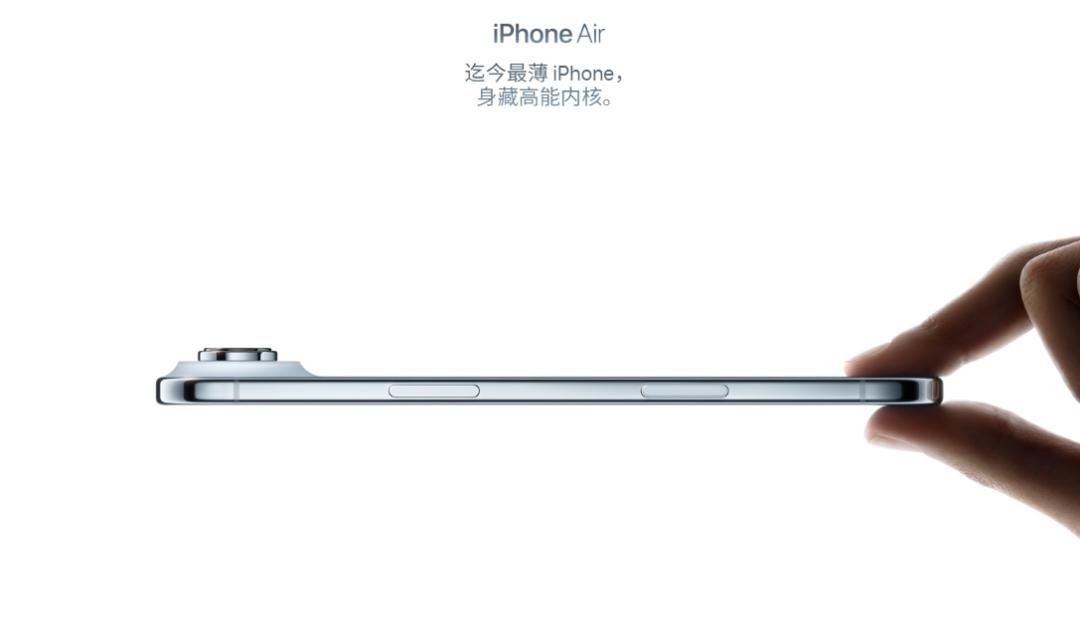
Core Viewpoint - The iPhone Air, despite being marketed as the "thinnest iPhone" at 5.6mm thick and weighing 165g, has underperformed in the market since its launch on October 22, 2025, leading to the dismantling of several production lines by Apple suppliers [1][3]. Market Performance - The iPhone Air has not met sales expectations, with reports indicating that Apple suppliers have removed multiple production lines dedicated to this model [3][8]. - In contrast, the iPhone 17 series has performed exceptionally well, dominating sales rankings during the recent "Double 11" shopping festival, while the iPhone Air was notably absent from the top lists [3][6]. Consumer Preferences - The iPhone Air caters to a niche market that values lightweight design, but this demographic is not representative of the broader consumer base, which prioritizes features such as performance and battery life over thinness [3][6]. - The device's specifications, including a 3149mAh battery and single-camera setup, have been perceived as compromises, leading consumers to view the iPhone Air as a "downgraded" option compared to other flagship models [4][6]. Pricing and Competition - Priced at 7999 yuan, the iPhone Air is more expensive than many Android flagship models, yet offers less storage capacity than the iPhone 17, which is available at the same price point [7][8]. - The high-end smartphone segment has seen significant growth, with models priced above 6000 yuan accounting for 50% of sales, indicating that consumers are willing to pay for premium features rather than just a lightweight design [7][8]. Industry Response - The lack of consumer interest in lightweight models has prompted both Apple and Android manufacturers to reconsider their strategies, with reports of Android brands like Xiaomi, OPPO, and vivo canceling their lightweight projects [8][9]. - Analysts suggest that while there is a demand for thinner devices, it is not a primary concern compared to performance and battery life, leading to a reevaluation of the lightweight smartphone market [8][9]. Future Outlook - The iPhone Air may not be positioned for annual updates, indicating that Apple might not prioritize this model for mass production, but rather use it as a testbed for future innovations, such as foldable devices [9][10]. - The overall trend in the smartphone industry suggests that while lightweight designs are appealing, the focus will likely shift back to performance and advanced features, including AI capabilities, in future product developments [17][18].