华润置地

Search documents
地产债趋稳信号及进攻型配置思路
Huachuang Securities· 2026-01-27 14:09
1. Report Industry Investment Rating No relevant content provided. 2. Core Viewpoints of the Report - The real - estate bond market has gone through stages of risk accumulation, concentrated outbreak, and current orderly resolution and yield gaming. The recent Vanke bond extension event has led to significant fluctuations in the real - estate sector's valuation, prompting a re - examination of the industry's credit boundaries and pricing logic. The report backtracks the adjustment and repair patterns of the real - estate bond sector, explores potential stabilization signals in the current market adjustment, and outlines investment strategies [2][12]. - Currently, the bottom of credit expectations has been initially established, and the easing of pessimistic sentiment in the bond market provides conditions for the valuation repair of real - estate bonds. However, the probability of a wide - range special support policy for central and local state - owned enterprise real - estate bonds in the short term is low, and the spreads of different issuers may diverge, with high - quality issuers having stronger valuation repair momentum [5][43]. - The investment strategy focuses on 1 - 2 - year central and local state - owned enterprise real - estate bonds to capitalize on valuation repair opportunities [6][44]. 3. Summary by Directory 3.1 Past: Review of the Adjustment Characteristics of the Real - Estate Bond Sector after Public Opinion Shocks - **Stage One (2020)**: Industry risks gradually accumulated, with a few real - estate enterprises defaulting. The excess spread of real - estate bonds did not widen significantly, and the industry's credit risk continued to build up. The spill - over effect of the Yongmei default on real - estate bonds was not immediately apparent [3][13]. - **Stage Two (2021 - 2023)**: The number of defaulting real - estate enterprises increased significantly, and at the same time, policies to stabilize the real - estate market were intensively introduced. The excess spread of AA - rated real - estate bonds fluctuated widely at high levels, with the widening and narrowing cycles often around 5 months [3][14]. - **Stage Three (Since 2024)**: The industry's credit risk is being cleared in an orderly manner, with occasional local risks. Real - estate bonds with high coupon rates are attractive, becoming a target for institutions to seek excess returns in an "asset shortage" environment. The excess spread of real - estate bonds significantly narrowed during the alpha market of spread compression from April to August in 2024 and 2025, but then the credit spread widened [3][16]. 3.2 Current: Significant Adjustment of the Real - Estate Sector's Valuation since Vanke Announced the Proposed Extension 3.2.1 Weak Trading Sentiment and Significant Valuation Increases of Multiple Issuers in the Sector - Since Vanke announced the proposed extension of its bond, the trading prices of many real - estate enterprise bonds have significantly deviated from their valuations, and the valuation yields of issuers have generally increased. Some issuers, including central enterprises, local state - owned enterprises, mixed - ownership enterprises, and private enterprises, have been particularly affected. There is a risk of further increases in valuation yields [4][17][18]. 3.2.2 Signals of Stabilization in the Adjustment: Trading Sentiment, Issuance Situation, and Negative Public Opinion - **Trading sentiment**: It is becoming more moderate, with the trading deviation of real - estate bonds narrowing, and the proportion of TKN transactions stabilizing or rising, showing an initial trend [20][21]. - **Issuance situation**: The primary - market issuance of real - estate bonds has recovered, with the subscription multiple increasing, especially in the recent week [24]. - **Negative public opinion**: The market has become more "insensitive" to negative information. The Vanke event has fully fermented, and the risk of further transmission has narrowed [31]. 3.3 Outlook: Offensive Allocation Strategy after the Adjustment Stabilizes 3.3.1 Conditions for the Offensive Window: Comprehensive Judgment Based on Policies, Credit Risk Expectations, and Bond - Market Sentiment - **Policy aspect**: In the short term, the probability of a wide - range special support policy for central and local state - owned enterprise real - estate bonds is low, but targeted relief policies for high - risk issuers can be expected. If favorable policies are introduced, the repair process of real - estate bonds may accelerate [5][35][43]. - **Credit risk expectation aspect**: The market's pessimistic sentiment towards the real - estate industry's credit risk has reached the bottom. The debt disposal process of Vanke is an important factor affecting market sentiment. With the confirmation of Vanke's disposal plan, the short - term credit expectation bottom of real - estate bonds may be established [37]. - **Bond - market sentiment aspect**: When the bond - market sentiment is good and institutions have a high demand for returns, the spread repair momentum of real - estate bonds is stronger; otherwise, there is greater pressure for spread widening [39]. 3.3.2 Investment Strategy: Focus on 1 - 2 - Year Central and Local State - Owned Enterprise Real - Estate Bonds to Capitalize on Valuation Repair - The core of the current strategy is to moderately extend from the previously conservative bonds with a maturity of less than 1 year to 1 - 2 - year medium - to high - grade central and local state - owned enterprise real - estate bonds, which can provide more attractive coupon yields with relatively controllable risks [44]. - **Central enterprises**: They have strong shareholder backgrounds, sound finances, and are mainly located in core cities. Representative issuers include Poly Developments and Holdings Group Co., Ltd. and China Resources Land Limited. The 1 - 2 - year yield ranges from 2.10% to 2.70%, and the average excess spread ranges from 35 to 85 BP [6][45]. - **Local state - owned enterprises**: They are located in regions with good economic development, have strong shareholder backgrounds, and perform well in terms of profitability and solvency. Representative issuers include Shanghai Lujiazui (Group) Co., Ltd. and Guangzhou Urban Construction and Development Co., Ltd. The 1 - 2 - year yield ranges from 1.95% to 2.0%, and the average excess spread ranges from 15 to 20 BP [6][45].



华源晨会精粹20260127-20260127
Hua Yuan Zheng Quan· 2026-01-27 13:56
资料来源:聚源,华源证券研究所,截至2026年01月27日 华源晨会精粹 20260127 金融工程 资金流向混债二级基金,周期和大金融占比提升——主动型公募基金 2025 年四季报分析:2025 年四季度公募基金总规模变动不大,但不同类别的基金 规模发生明显切换:投资者因追求稳健收益,资金从高波动的主动权益基金(较上 季度规模缩减 1823 亿元)和低风险的纯债基金(较上季度规模缩减 868 亿元)流出, 向中低风险的含权债基(较上季度规模增加 2398 亿元)迁移,与此同时,含权债基 的新发热度升高,发行数量创下 2020 年以来单季度新高。主动权益基金:对港股的 配置热情明显下降,显著增配周期板块。行业维度上,电子、通信、电新为重仓前 三,有色金属、基础化工和非银主动加仓最多。股债混合型基金:同样呈现出减仓 港股、加仓创业板的特征,2025 年四季度重仓股中占比最高的三个行业分别为电子、 有色和通信,主动加仓最多的行业为电子、通信和非银。含权债基:是承接资金向 中低风险迁移的重要方向,权益配置上向周期和大金融倾斜,对医药板块的减仓幅 度较大;债券方面,持续降低可转债仓位,转向利率债和信用债。纯债基金:是 ...
房地产行业2025年12月月报:12月新房成交同比降幅收窄,二手房降幅扩大,全年新房成交同比降幅收窄,二手房同比增速由正转负-20260127
Bank of China Securities· 2026-01-27 08:01
Investment Rating - The report rates the real estate industry as "Outperform" compared to the market [2] Core Insights - New home sales in December showed a month-on-month increase of 33.6%, with a year-on-year decline of 32.1%, indicating a narrowing of the decline compared to previous months [5] - The second-hand home sales saw a year-on-year decline of 30.7% in December, with a month-on-month increase of 12.7%, reflecting a worsening trend in the second-hand market [5] - The overall inventory of new homes decreased by 0.1% month-on-month and 8.3% year-on-year, with an average de-stocking period of 17.8 months [5] Summary by Sections New Home Sales - December new home sales area increased by 33.6% month-on-month, but decreased by 32.1% year-on-year, with the decline narrowing by 6.6 percentage points [5] - For the entire year of 2025, new home sales decreased by 14%, with a year-on-year decline of 13.7% across 40 cities [5] - First-tier cities experienced a year-on-year decline of 15.8%, while second-tier and third-fourth tier cities saw declines of 12.6% and 13.6% respectively [5] Second-Hand Home Sales - December saw a year-on-year decline in second-hand home sales of 30.7%, with a month-on-month increase of 12.7% [5] - The overall second-hand home sales for 2025 decreased by 4%, with first-tier cities still showing positive growth [5] Inventory and De-stocking - The inventory of new homes decreased by 0.1% month-on-month and 8.3% year-on-year, with a de-stocking period of 17.8 months [5] - Major cities like Shanghai and Hangzhou have de-stocking periods within 12 months [5] Land Market - The land market in December showed a month-on-month increase of 126.7%, but a year-on-year decline of 8.9% [5] - The average land price was 1392 RMB per square meter, with a year-on-year decrease of 10.3% [5] Real Estate Companies - The top 100 real estate companies saw a year-on-year sales decline of 20% in 2025, with December sales showing a narrowing decline of 26.7% [5] - The land acquisition amount for December decreased by 58.1% year-on-year, while the total acquisition amount for 2025 increased by 2.6% [5] Financing - The financing scale for the real estate industry decreased in December, but showed a year-on-year increase for the entire year [5] - The total issuance of domestic and foreign bonds and ABS in 2025 was 596.7 billion RMB, a 6% increase year-on-year [5] Policy - The central government emphasized stabilizing the real estate market and reducing the value-added tax on personal home sales to 3% [5] - Local policies have been adjusted to optimize purchase restrictions and loan policies in cities like Beijing [5] Sector Performance - The real estate sector underperformed compared to the Shanghai and Shenzhen 300 index in December, with an absolute return of -4.0% [5] Investment Recommendations - The report suggests focusing on companies with stable fundamentals in core cities, smaller firms showing significant breakthroughs, and commercial real estate companies exploring new consumption scenarios [5]



行业点评报告:2025Q4公募基金延续低配,持股集中度进一步提升
KAIYUAN SECURITIES· 2026-01-27 07:15
Investment Rating - The investment rating for the real estate industry is "Positive" (maintained) [1] Core Insights - The report highlights a continued adjustment in sales, with expectations for policy effectiveness and market stabilization [3] - The importance of the real estate industry has been reaffirmed due to a stronger supportive stance from policies, as indicated by multiple articles published in early 2026 [7] - The overall allocation of public funds to the A-share real estate sector has decreased to 0.43% as of Q4 2025, marking a decline of 0.19 percentage points from Q3 2025 [5][14] - The concentration of holdings in the top ten real estate stocks has increased to 80.0%, up by 7.9 percentage points from Q3 2025, indicating a focus on development-related stocks [6][20] Summary by Sections Public Fund Allocation - As of Q4 2025, public funds' allocation to the A-share real estate sector has dropped to 0.43%, with a standard allocation ratio of 1.10%, reflecting a decrease in market confidence [5][14] - The current holding ratio relative to the standard allocation is at 39%, the lowest since 2021 [5][14] Individual Stock Focus - The top ten real estate stocks held by public funds include Beike-W, China Resources Land, and China Overseas Development, with a focus on development-related stocks [6][20] - The concentration of these top holdings indicates a strategic shift towards fewer, more stable investments within the sector [6][20] Investment Recommendations - The report suggests investing in companies with strong credit ratings and good urban fundamentals, such as Greentown China and China Overseas Development [22] - It also recommends companies benefiting from both residential and commercial real estate recovery, like China Resources Land and Longfor Group [22] - Additionally, it highlights quality property management firms under the "Good House, Good Service" policy, such as China Resources Mixc Life and Greentown Service [22]
ETF盘中资讯|阿里最强模型亮相!自带“科技+红利”哑铃策略的——香港大盘30ETF(520560)盘中摸高0.86%
Sou Hu Cai Jing· 2026-01-27 02:30
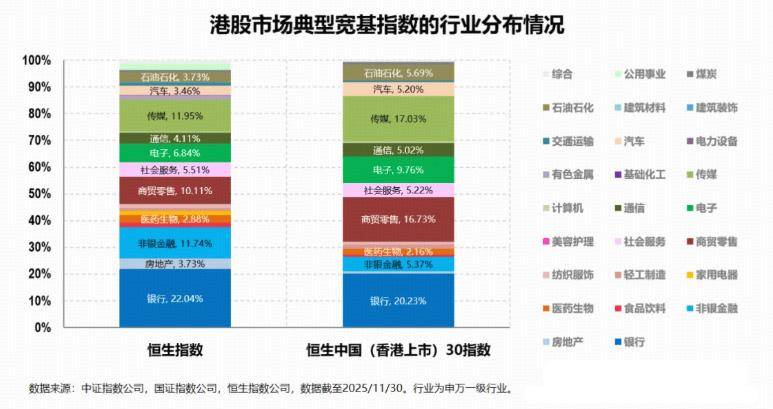
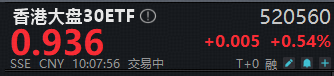
看好港股科技但又希望降低波动?关注全市场首只——香港大盘30ETF(520560)及其联接基金【联接A (LOF)501301;联接C006355】,自带"科技+红利"哑铃策略,一基荟萃30只港股通中资大盘股,重仓股既 有阿里巴巴、腾讯控股等高弹性科技股,又囊括了建设银行、中国平安等稳健高股息,支持"T+0"日内回转交 易,交易灵活,是港股长期配置的理想底仓工具。 相较于同样"两手抓"(一手抓科技,一手抓红利)的恒生指数而言,恒生中国(香港上市)30指数略偏向于 科技成长,这或是香港大盘30ETF标的指数近5年收益能够跑赢恒生指数的主要原因之一。 今日(1月27日)早盘,港股市场整体表现优于A股,自带"科技+红利"哑铃策略的——香港大盘30ETF (520560)场内涨幅盘中摸高0.86%,现涨0.54%。 成份股方面,港股红利相较港股科技更为活跃,具体来看,中国人寿领涨超2%,农业银行、安踏体育、工商 银行涨逾1%,华润置地、百胜中国、中国平安、农夫山泉、中信股份、阿里巴巴、小米集团、腾讯控股等个 股跟涨。 港股科技方面,阿里最强模型Qwen3-Max-Thinking亮相,性能媲美GPT-5.2、Gemi ...

阿里最强模型亮相!自带“科技+红利”哑铃策略的——香港大盘30ETF(520560)盘中摸高0.86%
Xin Lang Ji Jin· 2026-01-27 02:19
Group 1 - The Hong Kong stock market is outperforming the A-share market, with the Hong Kong Large Cap 30 ETF (520560) showing a gain of 0.54% [1] - In the dividend sector, China Life led with a rise of over 2%, while Agricultural Bank, Anta Sports, and Industrial and Commercial Bank increased by over 1% [1] - The technology sector is highlighted by Alibaba's new model Qwen3-Max-Thinking, which is comparable to GPT-5.2 and Gemini 3 Pro, indicating a strong potential for commercialization in high-frequency scenarios [2] Group 2 - The banking sector is expected to maintain its attractiveness due to high dividends and low valuations, with a stable recovery in performance anticipated for 2025 [2] - The Hong Kong stock market is projected to benefit from domestic "14th Five-Year Plan" initiatives and external economic policies, leading to a potential second round of valuation recovery and performance resurgence by 2026 [3] - The Hong Kong Large Cap 30 ETF (520560) is positioned as an ideal long-term investment tool, combining both technology and dividend strategies, featuring major stocks like Alibaba and Tencent [3] Group 3 - The Hang Seng China (Hong Kong-listed) 30 Index is slightly more focused on technology growth compared to the Hang Seng Index, which may explain the superior performance of the Hong Kong Large Cap 30 ETF over the past five years [4]
房地产行业周报(26/1/17-26/1/23):二手房成交回暖,《求是》发文提及城市更新-20260127
Hua Yuan Zheng Quan· 2026-01-27 02:05
Investment Rating - The investment rating for the real estate industry is "Positive" (maintained) [4] Core Viewpoints - The report highlights three major trends expected in 2026: 1) The adjustment in the real estate market is likely nearing its end, with current price adjustments being relatively sufficient compared to historical averages [6] 2) There are structural opportunities for "good housing" as the market enters a phase of differentiation, with a focus on high-quality residential developments [6] 3) The recovery of the Hong Kong property market is anticipated to continue, driven by multiple favorable factors [6] Market Performance - The Shanghai Composite Index rose by 0.8%, and the Shenzhen Component Index increased by 1.1% during the week, while the real estate sector (Shenwan) saw a rise of 5.2% [6][9] - In terms of individual stocks, the top five gainers included *ST Rongkong (+15.8%) and Shunfa Hengneng (+15.7%), while the bottom five included Chengjian Development (-6.0%) and Zhongzhou Holdings (-2.8%) [6][9] Data Tracking New Housing Transactions - For the week of January 17-23, new housing transactions in 42 key cities totaled 137 million square meters, a decrease of 6.0% from the previous week and a year-on-year decline of 41.0% [14] - Cumulatively, from January 1-23, new housing transactions reached 437 million square meters, reflecting a 37.4% decrease month-on-month and a 41.4% decrease year-on-year [18] Second-Hand Housing Transactions - During the same week, second-hand housing transactions in 21 key cities amounted to 224 million square meters, an increase of 3.6% from the previous week and a year-on-year increase of 11.9% [32] - For January 1-23, second-hand housing transactions totaled 654 million square meters, showing a 0.9% decrease month-on-month and a 10.9% decrease year-on-year [38] Industry News - The report notes that the Ministry of Housing and Urban-Rural Development is focusing on stabilizing the real estate market and supporting reasonable financing needs of real estate companies [50] - The National Bureau of Statistics reported a 17.2% year-on-year decline in real estate development investment for 2025, with new housing starts down 20.4% and completed projects down 18.1% [50] - The report also mentions that the minimum down payment ratio for commercial housing loans in Shenzhen and 20 cities in Guangdong is set at no less than 30% [50] Company Announcements - Poly Developments reported a revenue of 308.3 billion yuan for 2025, a year-on-year decrease of 1.1%, with a net profit of 1.03 billion yuan, down 79.5% [53] - China Resources Land plans to issue a bond of 2 billion yuan with a term of 3 years at an interest rate of 1.99% [53]


房地产行业第4周周报(2026年1月17日-2026年1月23日):新房成交同比降幅扩大,自然资源部、住建部联合发文进一步支持城市更新行动-20260127
Bank of China Securities· 2026-01-26 23:59
Investment Rating - The report rates the real estate industry as "Outperform" [3] Core Insights - New home transaction area has turned negative on a month-on-month basis, with a year-on-year decline expanding [3][13] - Second-hand home transaction area has increased month-on-month and turned positive year-on-year [3][13] - New home inventory area has decreased both month-on-month and year-on-year, while the de-stocking cycle has increased [3][13] Summary by Sections 1. New Home Market Tracking - In the week of January 17-23, 2026, new home transaction volume in 40 cities was 16,000 units, down 16.2% month-on-month and down 32.2% year-on-year [14][20] - The new home transaction area was 151.5 million square meters, down 9.7% month-on-month and down 39.6% year-on-year [22][39] - Transaction volume and area for first, second, third, and fourth-tier cities showed varying declines [14][19] 2. Second-Hand Home Market Tracking - In 18 cities, second-hand home transaction volume was 20,000 units, up 2.9% month-on-month and up 9.1% year-on-year [49][51] - The transaction area was 188.2 million square meters, up 4.4% month-on-month and up 18.1% year-on-year [51][52] - First, second, third, and fourth-tier cities exhibited different growth rates in transaction volume and area [45][49] 3. Inventory Situation - New home inventory in 12 cities was 1.373 million units, with a month-on-month decrease of 0.1% and a year-on-year decrease of 9.6% [35][38] - The de-stocking cycle for new home inventory was 17.7 months, increasing month-on-month and year-on-year [27][38] - Inventory levels and de-stocking cycles varied across city tiers [26][27] 4. Land Market Tracking - Total land transaction area in 100 cities was 1,044.9 million square meters, down 3.1% month-on-month but up 0.4% year-on-year [59][60] - Total land transaction value was 16.33 billion yuan, down 1.5% month-on-month and down 15.5% year-on-year [10][65] - The average land price per square meter was 1,562.8 yuan, up 1.7% month-on-month but down 15.8% year-on-year [10][61] 5. Policy Insights - The Ministry of Natural Resources and the Ministry of Housing and Urban-Rural Development issued measures to support urban renewal [3] - Emphasis on stabilizing housing prices and improving market confidence through various policy measures [3][11]




如何交易地产-小阳春
2026-01-26 15:54
如何交易地产"小阳春"20260126 摘要 一线城市二手房挂牌量下降与前期房价快速下跌有关,但京沪部分案例 显示成交价跳涨仅占小部分,大部分房源价格平稳,市场整体并非地产 见底信号。 当前地产股交易应基于短暂平台期判断,短期内成交量或价格平稳,但 长期走势取决于居民收入和经济好转等基本面因素,对"小阳春"及二 手房交易应保持谨慎。 二手房成交量反映换手率,受居民资产配置能力影响;新房成交量则来 自城市扩张和人口增加。收入压力下,房地产市场面临更大压力,需外 生变量移动总需求曲线。 对未来房地产市场走势持谨慎态度,目前"小阳春"是前期快速下跌后 的平台期,长期反转需经济好转推动总需求曲线,否则市场仍面临压力。 二手房市场量价关系仅决定短期趋势,长期变化复杂。挂牌数量下降不 代表未来不会增加,需早周期变量好转才能得出更强结论。 租金收益率并非判断房价走势的最佳指标,经济好转程度和居民收入感 知程度更重要,关注租金、收入和经济早周期变量拐点更具参考价值。 地产股更多交易政策而非基本面,政策效果预期不一致时表现较好。需 重视房企商业模式,即使房价止跌,盈利能力仍是关键,关注拿地精准 的公司。 Q&A 2026 年 ...
飞阅楼市第210期丨本土“三驾马车”领跑青岛楼市
Sou Hu Cai Jing· 2026-01-26 15:26
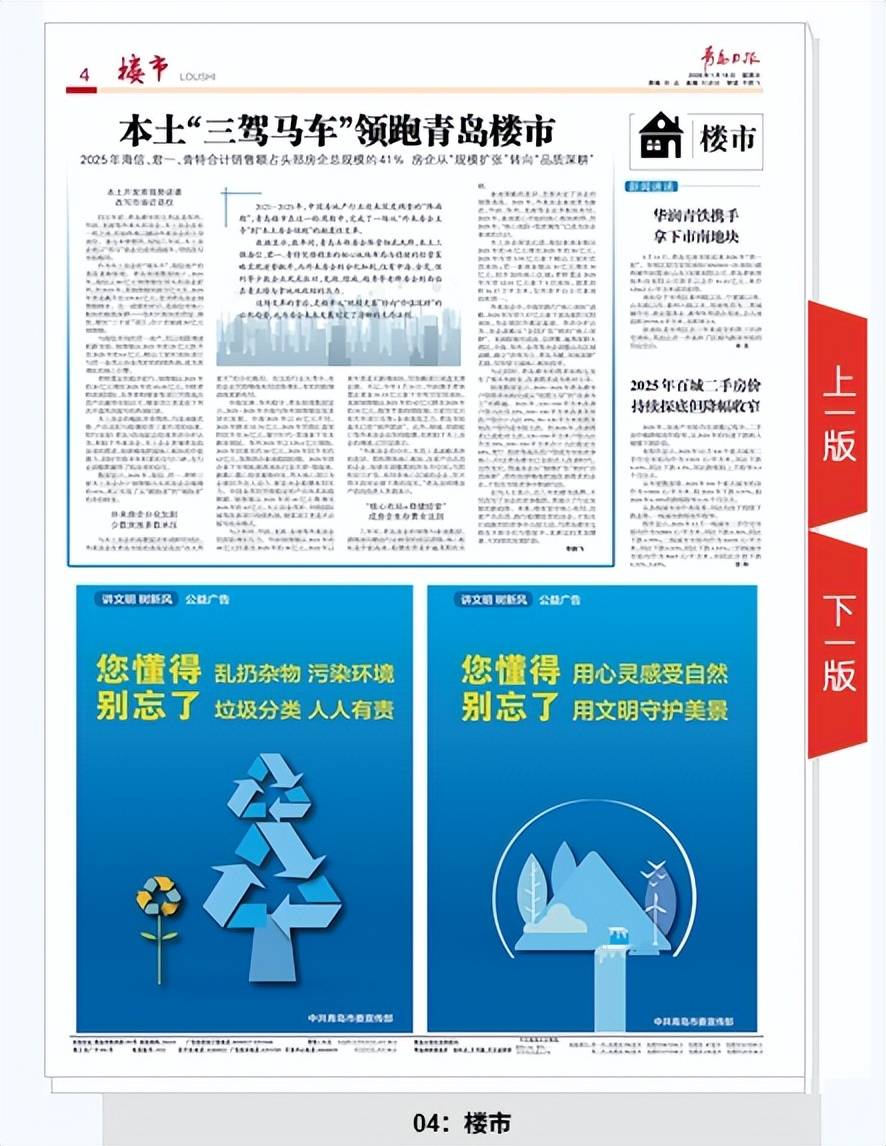
文/青岛日报李鹏飞 2021-2025年,中国房地产行业迎来深度调整的"阵痛期",青岛楼市在这一轮周期中,完成了一场从"外来房企主导"到"本土房企领跑"的颠覆性变革。 数据显示,数年间,青岛头部房企阵营彻底洗牌,本土三强海信、君一、青特凭借精准的核心板块布局与稳健的经营策略实现逆势飙升,而外来房企则分化 加剧,仅有中海、金茂、保利等少数企业风采依旧,龙湖、绿城、越秀等老牌房企则面临在青业绩与拿地双收缩的压力。 这场变革的背后,是楼市从"规模竞赛"转向"价值深耕"的必然趋势,也为房企未来发展划定了清晰的生存法则。 本土开发商强势逆袭 改写市场话语权 四五年前,青岛楼市的主角还是保利、华润、龙湖等外来头部房企,本土房企虽有一席之地,但始终难以撼动外来房企的主导地位。谁也未曾想到,短短几 年间,本土房企竟以"黑马"姿态完成弯道超车,彻底改写市场格局。 作为本土房企的"领头羊",海信地产的表现堪称惊艳。青岛锐理数据统计,2021年,海信以80亿元销售额位居头部房企前列,到2023年,其销售额突破百亿 大关,2025年更是飙升至139.81亿元,登顶青岛房企销售额榜首。这一成绩的背后,是海信对核心板块的极致深耕——张村 ...