娃哈哈

Search documents
农夫山泉20250927
2025-09-28 14:57
Summary of Nongfu Spring Conference Call Company Overview - **Company**: Nongfu Spring - **Industry**: Soft Beverage Industry Key Points and Arguments Performance and Valuation - From 2022 to 2023, Nongfu Spring stabilized its price-to-earnings (P/E) ratio between 40-50 times through performance digestion [2][3] - The company typically provides double-digit growth guidance at the beginning of the year, which is often revised upwards in mid-year reports [2][3] - Products like water and Dongfang Shuye have consistently doubled in growth since 2019, surprising the market [2][3] Impact of Public Relations Events - In March 2024, a public relations incident negatively affected both online and offline sales, leading to a significant decline across all channels [2][4][5] - Despite not damaging the company's product or operational barriers, the incident impacted market sentiment and consumer confidence [4][5] - The introduction of "Green Water" aimed to mitigate the crisis, capturing over 30% of the small packaged water market, but at a lower price point, which negatively affected overall profit margins [5][6] Strategic Adjustments for 2024 - To address challenges in 2024, the company emphasized industrial upgrades and increased fruit purchase prices to support farmers [6] - Plans for 2025 include aggressive promotion of "Hongshui" (洪水) and limiting "Green Water" to a 500ml version, with expectations that packaged water growth will exceed overall revenue growth [6] 2025 Performance - In early 2025, both packaged water and Dongfang Shuye achieved double-digit growth, with sugar-free tea also accelerating [7] - The stock price recovered from a low valuation of 20 times to around 30 times due to internal issues at Wahaha, enhancing Nongfu Spring's competitive position [7][8] Profitability and Market Position - The mid-2025 report indicated significant profit margin improvements across beverage divisions, with packaged water growing over 10%, Dongfang Shuye around 30%, and functional drinks and juices close to 20% [8] - Despite pressures in the consumer goods sector, Nongfu Spring demonstrated strong performance resilience [8] Future Growth Potential - Nongfu Spring is viewed as a potential leader in the Chinese soft drink market, akin to Coca-Cola, with a reasonable valuation of 35-40 times given the growth potential in the sector [4][9] - The company is expected to benefit from the growth of NFC juice and carbonated coffee products, as well as potential market gaps due to Wahaha's brand issues [12][13] Product Development and Market Trends - The company leverages its long-lifecycle products like water and Dongfang Shuye to support the development of new product lines [16] - The growth potential for Dongfang Shuye is significant, with current penetration in the ready-to-drink tea market in China being below 20%, compared to 70-80% in Japan and South Korea [14][15] Investment Outlook - Investors should focus on the stable growth of core products and the potential for new product development [17] - The market dynamics, including potential opportunities from competitors' challenges, present a favorable long-term outlook for Nongfu Spring [17]
娃小宗VS娃哈哈重现加多宝大战王老吉?高盛深度:农业山泉渔翁得利,上调目标价
Zhi Tong Cai Jing· 2025-09-28 13:14
宗馥莉计划启用娃小宗新品牌的消息在业内引发强烈震动。9月27日,高盛发布深度研究报告,详细分析了娃哈哈商标归属纠纷可能带来的影响。高盛预 测,娃小宗与娃哈哈品牌之争,堪比当年王老吉大战加多宝,这一事件或将重构中国瓶装水格局,农夫山泉有望成为最大受益者,而华润饮料、东鹏饮料 (605499)也将间接受益。在报告中,高盛将农夫山泉12个月目标价从之前的53.2港元上调至60.5港元。 Part.01 娃哈哈换标3000亿瓶装水市场生变 通过分析红牛、王老吉/加多宝等过往品牌纠纷案例,高盛研究发现,涉及商标/所有权纠纷的品牌,通常会受到长期负面影响,这将改变品类竞争格局, 并为主要竞争对手提供市占率提升机会。 2016年红牛(中国)因授权纠纷,全年销售额同比下降中双位数;2017年同比下降10%-20%;2017-2024年红牛(中国)的复合年增长率仅为低个位数。与之对 比,其直接竞争对手东鹏饮料展现出强劲市占率提升能力——市占率从2018年的约15%提升至2024年的超30%。 2016-2017年,加多宝与广州医药集团(王老吉商标所有者)就王老吉商标归属爆发纠纷,期间加多宝即饮茶业务销售额同比下降10%-20% ...


娃哈哈改名,宗馥莉太想进步了
36氪· 2025-09-28 13:00
Core Viewpoint - Wahaha is facing significant challenges in maintaining its market position and growth, with declining sales in key products and markets, particularly in the beverage sector, indicating a need for strategic transformation and innovation [4][5][6]. Group 1: Sales Performance and Market Position - Wahaha's sales growth has slowed, with a notable decline in key products like AD calcium milk and bottled water, particularly in the East China region, where sales dropped by 37% and market share fell from 18% to 12% [5][6]. - The company's revenue has remained relatively stagnant over the past eight years, fluctuating around 50 billion, with a brief spike to 70 billion in 2024 attributed to emotional consumer spending following the founder's passing [11][12]. - In comparison to competitors like Nongfu Spring, Wahaha's growth has been lackluster, with Nongfu Spring showing faster revenue growth and innovation in product offerings [15][16]. Group 2: Market Dynamics and Competition - The bottled water market is highly competitive, with Wahaha losing market share to brands like Nongfu Spring and Master Kong, which have adopted aggressive pricing and marketing strategies [17][27]. - The overall bottled water market in China is projected to grow significantly, with a market size expected to exceed 310 billion by 2025, indicating a lucrative opportunity for brands that can effectively capture market share [25][26]. - Wahaha's market share in bottled water remains stagnant at around 9.9%, with major competitors holding a combined market share of over 80% [29]. Group 3: Strategic Initiatives and Future Outlook - Under the leadership of Zong Fuli, Wahaha is focusing on expanding its bottled water and tea product lines, with a goal to revitalize the brand and achieve a revenue target of 100 billion [20][21]. - The introduction of new products, such as sugar-free tea, has not yet gained significant traction in the market, highlighting the challenges Wahaha faces in innovating and adapting to consumer preferences [34][39]. - The launch of the new brand "Wah Xiaozong" aims to streamline decision-making and enhance market responsiveness, potentially positioning Wahaha for a more agile transformation in the beverage industry [41][42].

喜娜AI速递:今日财经热点要闻回顾|2025年9月28日
Sou Hu Cai Jing· 2025-09-28 11:19
Group 1 - The Ministry of Industry and Information Technology and seven other departments issued a plan for the non-ferrous metals industry, aiming for an average annual value-added growth of around 5% and an average annual production growth of about 1.5% from 2025 to 2026 [2] - The plan includes measures such as exploration actions, product breakthroughs, and consumption upgrades, with a target of exceeding 20 million tons in recycled metal production [2] - The non-ferrous metals sector has rebounded nearly 60% since April, with brokerages optimistic about the price increases for industrial and energy metals [2] Group 2 - Huawei released the open-source HarmonyOS 6.0, which supports various terminal devices and has gathered over 9,200 community contributors, with more than 130 million lines of code [2] - Huawei plans to invest 150 billion yuan annually over the next five years to develop its ecosystem, providing 1.5 petaflops of computing power and mobilizing 15,000 participants [2] - The company is expanding its presence in chips, operating systems, and cloud services to attract developers and build a global developer community [2] Group 3 - International silver prices surged to over $46 per ounce, marking a 14-year high, with a 30% increase over the past six months and a 59% rise year-to-date, outpacing gold [2] - The price increase is attributed to a combination of macroeconomic factors, supply-demand dynamics, and the restoration of the gold-silver ratio [2] - Industry insiders caution investors about price volatility risks, recommending a strategy of buying on dips while managing positions carefully [2] Group 4 - Domestic air ticket prices for popular routes have significantly increased ahead of the National Day holiday, with pre-sale prices up 9.1% compared to 2024 [3] - Factors such as rising demand, airline price hikes, and reduced supply have contributed to the price surge, making it unlikely for prices to drop [3] - Consumers are advised to book early to secure stable prices, as airlines refine their revenue management strategies [3] Group 5 - The controlling shareholder of Zhongji Xuchuang plans to reduce its stake by up to 5.5 million shares, representing 0.49% of the total share capital [3] - The company's stock has seen a remarkable increase of over 515% year-to-date, despite a recent pullback following a peak increase of 580% from April to September [3] - The actions of the controlling family and board members to reduce their stakes may indicate a shift in sentiment among institutional shareholders [3] Group 6 - Avita plans to apply for a listing on the Hong Kong Stock Exchange in the fourth quarter, aiming for completion by the second quarter of next year [3] - The company has raised over 19 billion yuan through multiple financing rounds from 2021 to 2024 but continues to face a cycle of financing and losses, with net losses reaching 9.726 billion yuan during this period [3] - Despite a change in leadership and the release of a development plan, the company faces significant challenges in a competitive market and evolving technology landscape [3] Group 7 - The U.S. government faces a potential shutdown due to a lack of consensus on fiscal appropriations for the 2026 fiscal year, which could lead to the closure of non-essential government departments [4] - The White House has requested agencies to prepare for potential layoffs, highlighting the urgency of the situation [4] - A government shutdown would impact federal employees, government services, and the release of economic data, increasing market uncertainty [4] Group 8 - The new energy storage market is experiencing rapid growth, with plans to reach an installed capacity of over 180 million kilowatts by 2027, driving an investment of approximately 250 billion yuan [5] - There is strong demand for energy storage cells, with orders extending into next year, and energy storage power stations are participating in the electricity market, creating diversified revenue models [5] - The price of lithium carbonate, a key component in lithium battery storage, is expected to stabilize, and technological advancements are driving down costs, indicating a promising industry outlook [5]

农夫大战怡宝,抢到更多蛋糕的却是宗馥莉
Hu Xiu· 2025-09-28 10:50
Core Viewpoint - The intense price war in China's bottled water market has led to significant shifts in market share among major players, particularly affecting the performance of the brands involved, with a notable decline in the market share of the leading brand,怡宝 [2][10][21]. Group 1: Price War Dynamics - The price of bottled water has dropped significantly, with农夫山泉's green bottle water priced at 1 yuan, directly targeting the core markets of怡宝 and娃哈哈 [2][10]. - The competition has intensified, with all major players, including农夫山泉,娃哈哈, and怡宝, heavily subsidizing prices to maintain market share [7][12]. - As of 2024, the retail price for农夫山泉's red bottle water has been reduced to approximately 0.8 yuan per bottle, matching its cost price [7][10]. Group 2: Market Share Changes - The market share of娃哈哈 has increased from 14.22% to 17.7% between April 2024 and August 2025, while华润饮料's share has decreased from 25.11% to 20.34% during the same period [15][21]. - The price war has resulted in a significant decline in怡宝's market share, which had previously been stable since 2005, marking a notable downturn due to the aggressive pricing strategies of competitors [21][24]. Group 3: Financial Performance - In the first half of 2025,华润饮料 reported a revenue decline of 18.52% and a net profit drop of 28.74% compared to the same period in 2024 [23]. - The gross margin for怡宝 decreased from 49.3% to 46.7%, indicating a reduction in profitability amid the ongoing price competition [23]. - The overall revenue for the bottled water segment under华润饮料 fell by 23.1%, with all product categories experiencing a downturn [23][24]. Group 4: Industry Trends and Challenges - The ongoing price war has led to a phenomenon of "price inversion," where distributors sell products below cost to maintain market presence [18][19]. - The competitive landscape has shifted, with the introduction of aggressive pricing strategies by农夫山泉's green bottle water disrupting the market dynamics [21][36]. - The industry is witnessing a trend where heavy subsidies are becoming a norm, leading to increased pressure on distributors and potential long-term sustainability issues [19][20].


中国“土味”零食,靠邪修馋哭老外
3 6 Ke· 2025-09-28 10:29
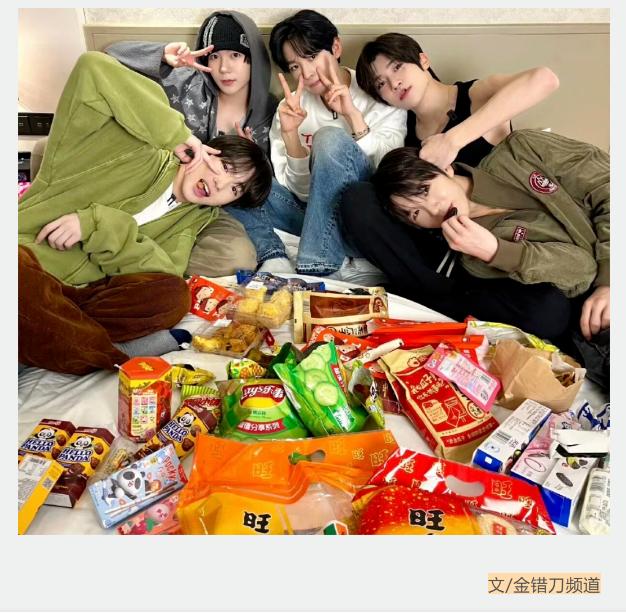
Group 1 - The core point of the article highlights the rising popularity of Chinese snacks and beverages in international markets, particularly in Southeast Asia and South Korea, where they have become trendy and sought after by local consumers [6][10][20] - Wahaha is set to rebrand as "Wah Xiaozong" next year, which has sparked mixed reactions among fans, with some expressing nostalgia and others criticizing the name change [2] - Ice tea, once considered a "working-class drink" in China, has gained a new status in South Korea, where over 30 Korean female celebrities have become its unofficial endorsers [4][10] Group 2 - Chinese snacks like spicy strips and melon seeds have gained significant traction overseas, with brands like Yanjinpuzi earning 516 million yuan from international sales last year, marking a 7.7% increase [8][39] - The price of Chinese spicy strips has skyrocketed in the U.S., with a 65g pack selling for $16.99, significantly higher than domestic prices, indicating a strong demand [10][18] - The popularity of Chinese snacks has led to the emergence of imitation products in foreign markets, showcasing their influence and acceptance [12][18] Group 3 - The success of Chinese snacks abroad is attributed to effective marketing strategies, including leveraging social media influencers and adapting products to local tastes [21][22][31] - Brands like Qiaqia and Wangwang have established production bases in countries like Vietnam and Thailand, facilitating their entry into local markets [43][45] - The article emphasizes that the future of the overseas market for Chinese snacks is promising, as the strategies used by foreign brands to enter China are now being applied in reverse [49][50]
9.28犀牛财经晚报:中秋白酒销售或同比下滑超20% 王健林及万达集团被限制高消费
Xi Niu Cai Jing· 2025-09-28 10:25
Group 1: Securities Industry - The 2025 classification evaluation results for securities companies have been released, with 53 classified as A, 43 as B, and 11 as C [1] - A total of 107 companies were evaluated, with A-class companies making up approximately 50% of the total, B-class around 40%, and C-class about 10% [1] - Among A-class companies, 14 are rated as AA, representing about 25% of A-class firms [1] Group 2: Nonferrous Metals Industry - The Ministry of Industry and Information Technology and eight other departments have issued a plan for the nonferrous metals industry, projecting an average annual growth of around 5% in value added from 2025 to 2026 [1] - The production of ten types of nonferrous metals is expected to grow by approximately 1.5% annually, with significant progress in domestic resource development for copper, aluminum, and lithium [1] - The plan also anticipates that the production of recycled metals will exceed 20 million tons, with continuous improvements in high-end product supply capabilities and advancements in green, low-carbon, and digital development [1] Group 3: Jewelry Industry - Major jewelry brands such as Chow Tai Fook and Chow Sang Sang are set to increase the prices of their gold jewelry due to rising international gold prices, with some products seeing price hikes of up to 40% [2] - The price of gold jewelry has surpassed 1100 yuan per gram, prompting brands to adjust their pricing strategies to maintain profit margins [2] - Specific products are expected to see price increases ranging from 10% to 40%, with a notable example being a gold bracelet that may rise from 38,600 yuan to 53,800 yuan [2] Group 4: Alcohol Industry - The overall sales of white liquor during the Mid-Autumn Festival are expected to decline by over 20% year-on-year, aligning with previous broker forecasts [3] - Feedback from various provinces indicates a sales drop of 20-30%, with only a few brands like Moutai experiencing slight sales recovery [3] Group 5: Beverage Industry - Wahaha Group's Shanghai factory, which generated over 120 million yuan in revenue last year, is facing closure and has launched a new brand "Hu Xiao Wa" for bottled water amid brand authorization disputes [5] - The factory's shift to a new brand is described as a desperate measure to survive, with management acknowledging the challenges ahead [5] Group 6: Automotive Industry - The founder of Leap Motor, Zhu Jiangming, addressed the company's recent business disputes and the temporary restrictions placed on him, expressing confidence in the company's future [6] - GAC Fiat Chrysler's core assets are being sold at a significant discount after multiple failed auctions, with the latest auction set to start at approximately 6 billion yuan for land and buildings [7] Group 7: Real Estate Industry - Vanke is actively selling off assets from the Guangxin asset package, with multiple properties listed for auction in recent months [8] - The company has been working to dismantle and revitalize the Guangxin asset package, which was acquired for 55.1 billion yuan in 2017 [8] Group 8: Technology Industry - Starry Technology has submitted its prospectus for a Hong Kong IPO, aiming to raise funds for business expansion and enhance brand recognition [9] - The company reported a revenue of approximately 1.385 billion yuan in the first half of the year, marking a year-on-year growth of about 19.18% [9]

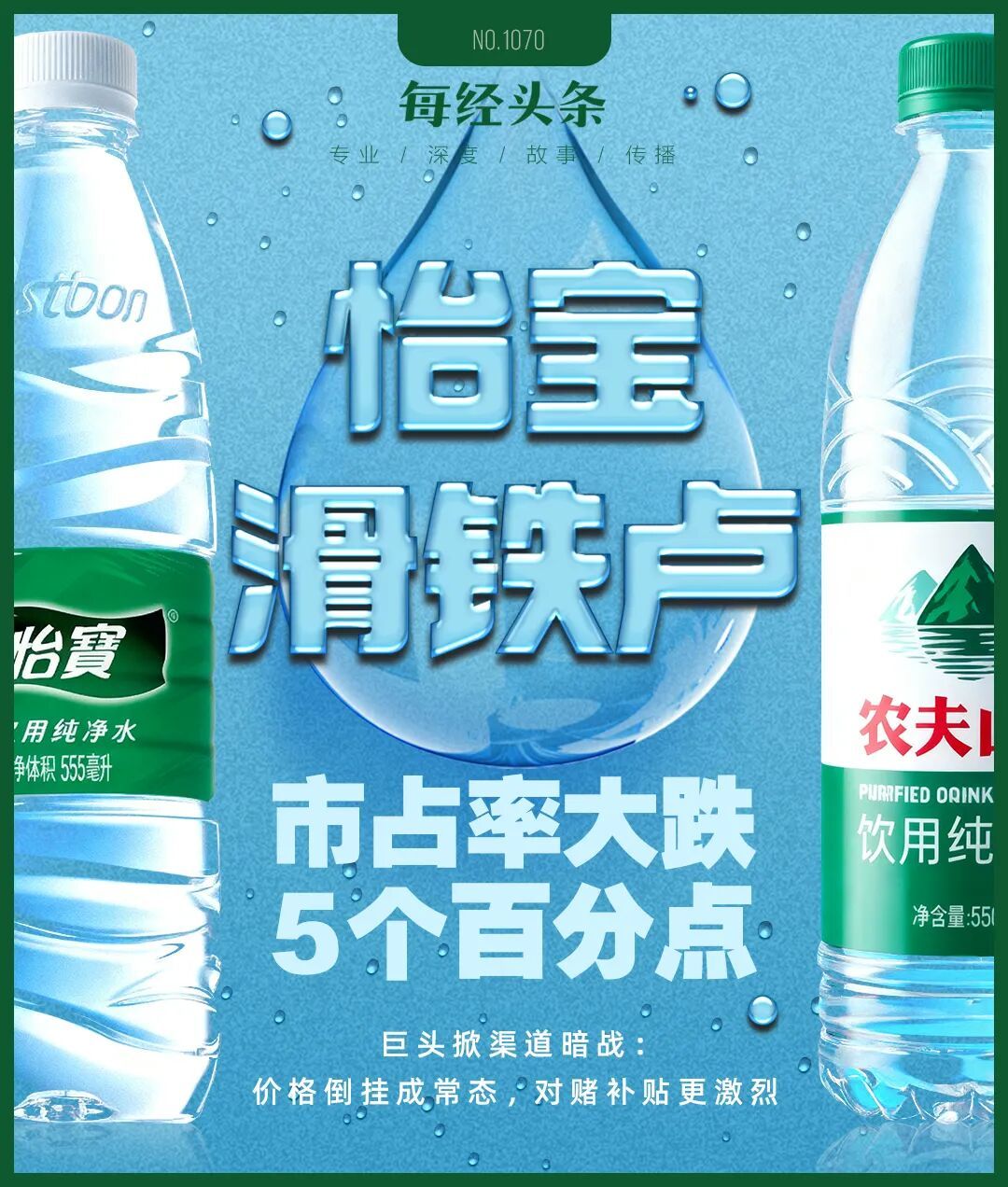
农夫大战怡宝,抢到更多蛋糕的却是宗馥莉!农夫绿瓶上市后,怡宝上演“滑铁卢”:市占率大跌近5个百分点
Mei Ri Jing Ji Xin Wen· 2025-09-28 10:17
Core Viewpoint - The ongoing price war in China's bottled water market has intensified, particularly among major players like Nongfu Spring, Wahaha, and Yibao, leading to significant market share shifts and financial impacts on the companies involved [2][5][10]. Group 1: Market Dynamics - Nongfu Spring launched its green bottle purified water at a retail price of 1 yuan per bottle, directly targeting the core markets of Yibao and Wahaha [2][8]. - The competition has escalated to a "water war" among the three companies, with each investing heavily in subsidies and pricing strategies to capture market share [5][10]. - As of August 2025, Wahaha's market share increased from 14.22% to 17.7%, while Yibao's share dropped from 25.11% to 20.34% [10][12]. Group 2: Pricing Strategies - Retail prices for bottled water have plummeted, with Nongfu Spring's red bottle water being sold at around 0.8 yuan per bottle, nearly matching the wholesale price [5][10]. - Yibao has also engaged in aggressive pricing tactics, including promotional offers that have seen prices drop to as low as 0.01 yuan per bottle [8][10]. - The intense competition has led to a phenomenon of "price inversion," where distributors sell products below cost to meet sales targets and maintain market presence [12][13]. Group 3: Financial Performance - Yibao's financial results for the first half of 2025 showed a significant decline, with revenue dropping by 18.52% to 6.206 billion yuan and net profit decreasing by 28.74% to 0.823 billion yuan [16]. - The gross margin for Yibao fell from 49.3% to 46.7%, indicating pressure on profitability due to the ongoing price war [16]. - The overall bottled water market has seen a shift, with Yibao's previously steady market share now facing unprecedented challenges due to aggressive pricing from competitors [14][16].
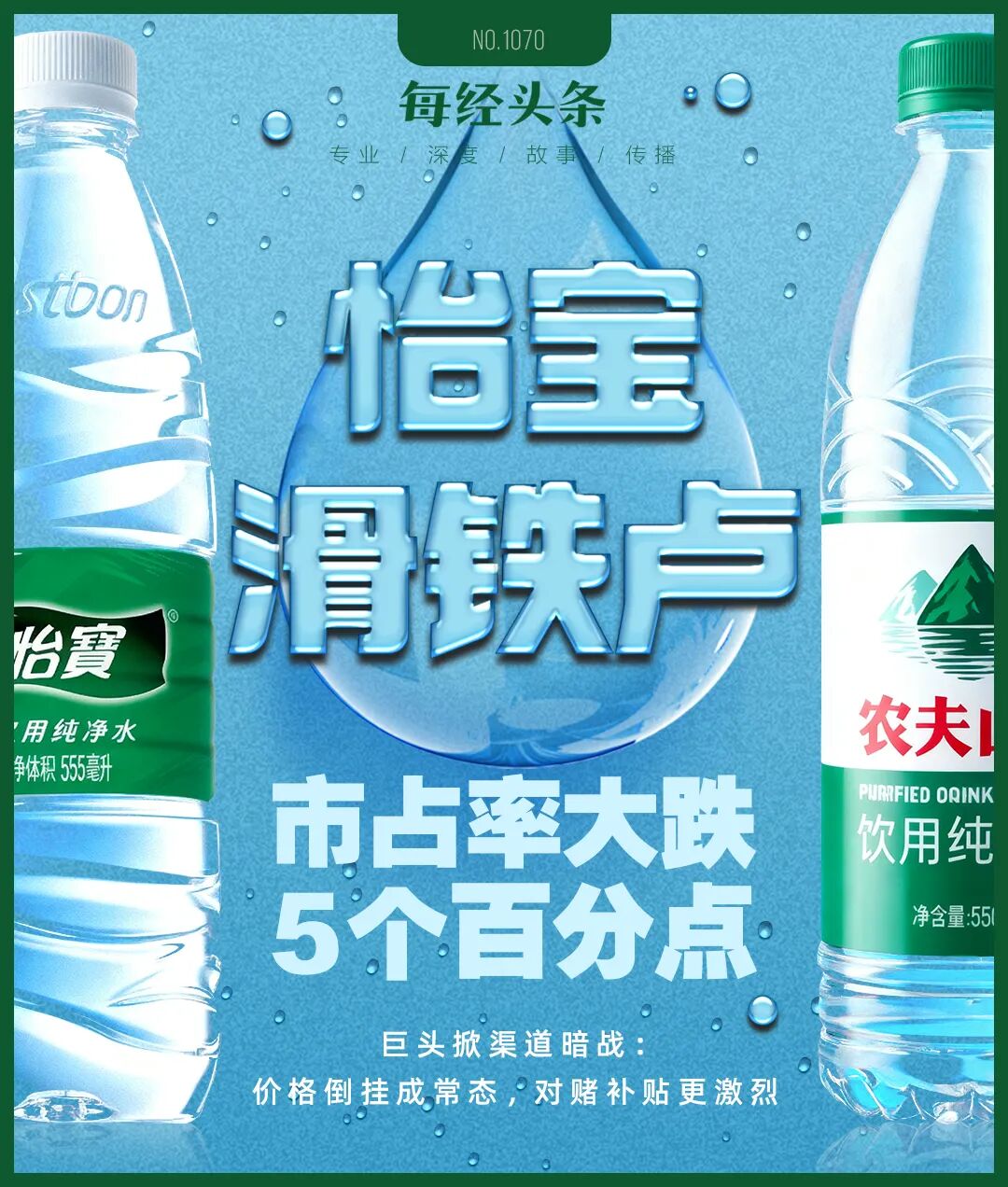
农夫大战怡宝,抢到更多蛋糕的却是宗馥莉,农夫绿瓶上市后,怡宝上演“滑铁卢”:市占率大跌近5个百分点
3 6 Ke· 2025-09-28 10:06
Core Viewpoint - The ongoing price war in China's bottled water market has intensified, with major players like Nongfu Spring, Wahaha, and Yibao engaging in aggressive pricing strategies, leading to significant market share shifts and financial impacts on the companies involved [1][6][13]. Group 1: Price War Dynamics - Nongfu Spring launched its green bottle purified water at a retail price of 1 yuan per bottle, directly targeting the core markets of Yibao and Wahaha [1][6]. - The retail price of Nongfu Spring's red bottle water has dropped to around 0.8 yuan per bottle due to heavy subsidies from the company and external platforms [3][8]. - Wahaha, under the leadership of Zong Fuli, has also reduced its bottled water prices to below 1 yuan, employing aggressive promotional strategies similar to those seen in other sectors [6][8]. Group 2: Market Share Changes - As of April 2024, Wahaha's market share in the bottled water segment increased from 14.22% to 17.7%, while Yibao's share decreased from 25.11% to 20.34% [8][12]. - The competitive landscape has shifted significantly, with Nongfu Spring maintaining a leading position despite short-term fluctuations in market share [8][12]. Group 3: Financial Performance - Yibao's revenue and net profit have declined significantly, with a reported 18.52% drop in revenue and a 28.74% decrease in net profit for the first half of 2025 compared to the same period in 2024 [15][16]. - The gross margin for Yibao has decreased by 2.6 percentage points, indicating pressure on profitability amid the price war [15][16]. Group 4: Industry Practices - The practice of "performance betting" in subsidies has become common, where distributors face pressure to meet sales targets or risk losing rewards, leading to price undercutting [8][11]. - Instances of "price inversion" have emerged, where distributors sell products below cost to maintain market presence, reflecting the intense competitive pressures in the industry [11][12].
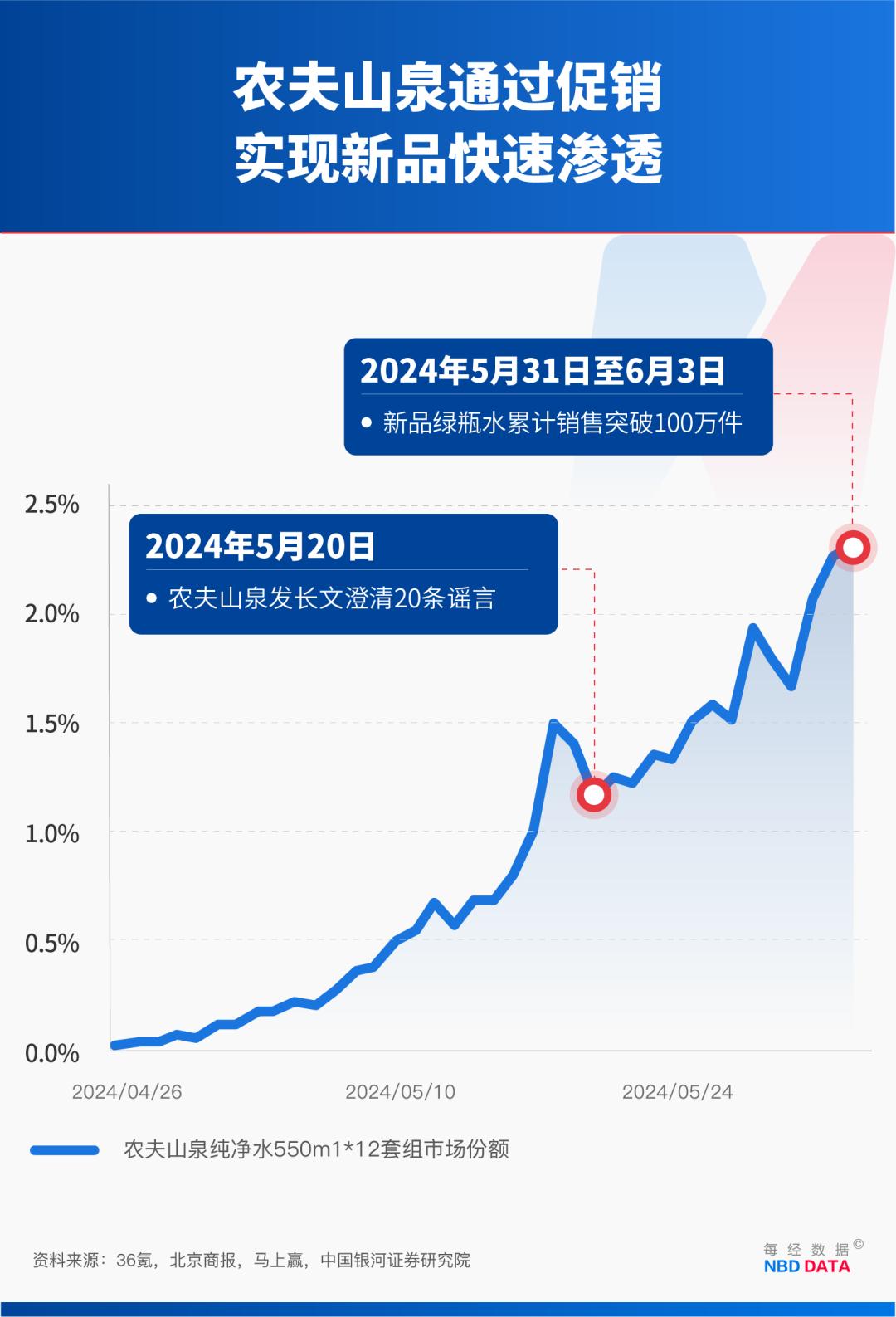
农夫大战怡宝,抢到更多蛋糕的却是宗馥莉!农夫绿瓶上市后,怡宝上演滑铁卢
Mei Ri Jing Ji Xin Wen· 2025-09-28 09:58
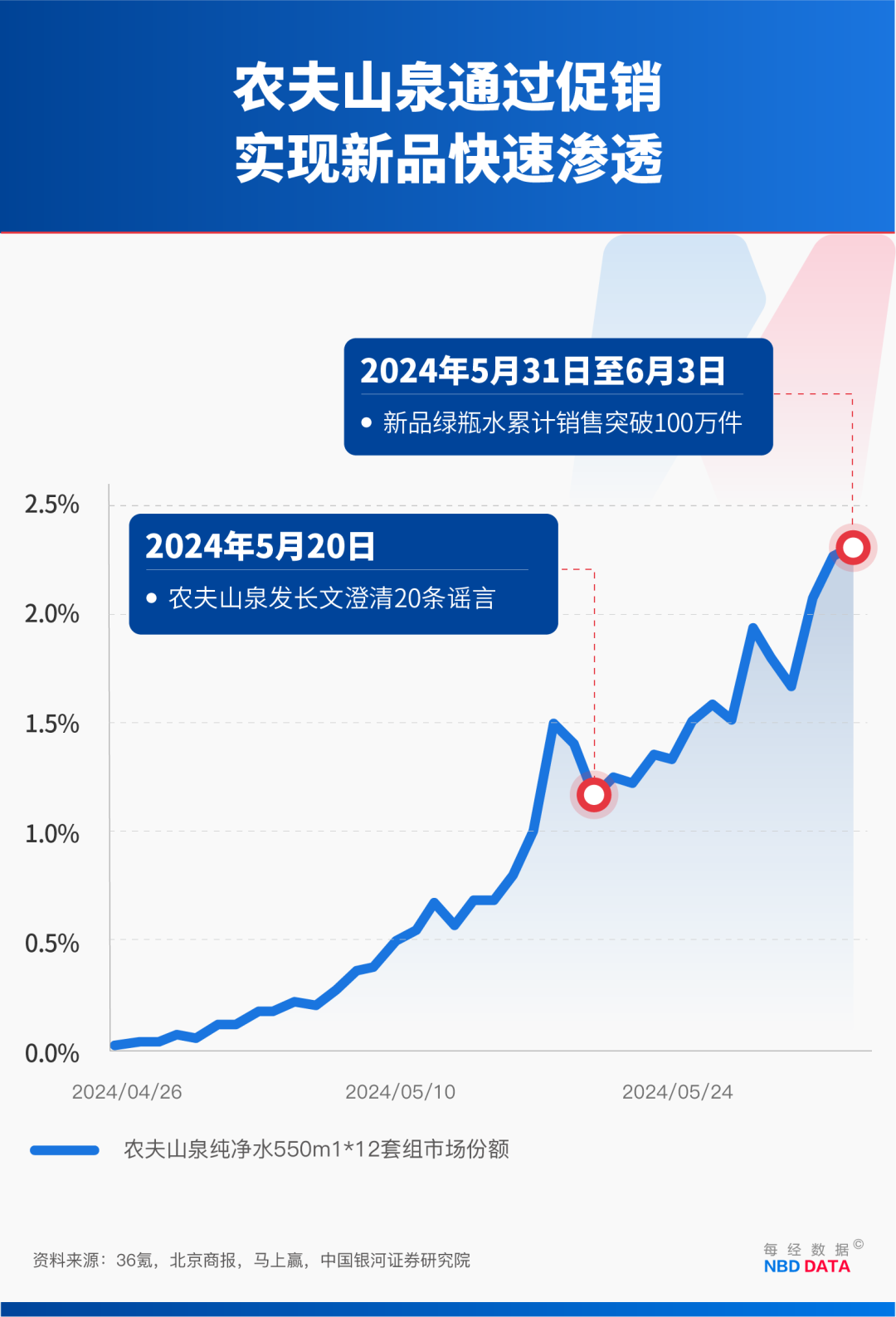
Core Viewpoint - The intense competition in the bottled water market in China has led to a significant price war among major players, particularly between Nongfu Spring, Wahaha, and Yibao, with Nongfu Spring's introduction of the green bottle water at a price point of 1 yuan per bottle directly targeting the core market of Yibao and Wahaha [2][8]. Group 1: Market Dynamics - Nongfu Spring launched its green bottle water in April 2024, reducing the retail price to 1 yuan per bottle, intensifying competition in the bottled water sector [2][8]. - The competition has been characterized as a "water war" among the three companies, with each investing heavily in marketing and pricing strategies to capture market share [6][10]. - As of May 31, 2024, Nongfu Spring's green bottle water achieved sales of over 1 million units within a short period [3]. Group 2: Pricing Strategies - The retail price for Nongfu Spring's red bottle water is 2 yuan, but through various subsidies, the effective price can drop to around 0.8 yuan per bottle for consumers [6][10]. - Yibao has also engaged in aggressive pricing strategies, including promotional offers that have seen prices drop to as low as 0.01 yuan per bottle [8][10]. - The pricing strategies have led to a situation where the cost for distributors and retailers is often lower than the retail price, creating a "price inversion" scenario [12][14]. Group 3: Market Share Changes - As of April 2024, Wahaha's market share increased from 14.22% to 17.7% during the ongoing competition, while Yibao's market share decreased from 25.11% to 20.34% [10][16]. - The competitive landscape has shifted significantly, with Yibao experiencing a decline in market share for the first time since 2005, attributed to the aggressive pricing and marketing of Nongfu Spring's green bottle water [16][18]. - Yibao's revenue and net profit have also seen a decline, with a reported 18.52% drop in revenue and a 28.74% drop in net profit in the first half of 2025 compared to the previous year [18][19]. Group 4: Industry Trends - The bottled water industry in China has seen a dramatic evolution over the past three decades, with Yibao and Nongfu Spring emerging as key players [19][24]. - The current price war reflects a broader trend in the industry where companies are increasingly relying on aggressive pricing to capture market share, particularly in the low-price segment [24][25]. - The competitive strategies employed by these companies highlight the challenges faced by traditional market leaders like Yibao, which is struggling to maintain its competitive edge amid rising competition [25].