韵达股份

Search documents
网点老板讲述“史上最无感双11”:快递少了吗?技术上位、人力退场 ,行业驶向AI与全球化新战场
Mei Ri Jing Ji Xin Wen· 2025-11-15 06:49
Core Insights - This year's "Double 11" shopping festival saw a significant shift in consumer behavior and logistics operations, with many express delivery companies reporting stable package volumes compared to previous years, indicating a more normalized shopping pattern [1][3][6]. Group 1: Delivery Volume and Trends - Many delivery point owners reported that the volume of packages during this year's "Double 11" was nearly the same as last year, with peak daily volumes only slightly higher than usual [1][5]. - The average daily package collection volume for postal and express companies during "Double 11" reached 634 million, which is 117.8% of regular business volume, with a peak daily volume of 777 million packages [1][3]. - The logistics peak period has been extended, with significant promotional activities starting as early as September and lasting until mid-November, leading to three distinct peak periods [5][6]. Group 2: Automation and Technology Adoption - The express delivery industry has increasingly adopted automation technologies, with many companies investing in automated sorting equipment and unmanned delivery vehicles to enhance efficiency and reduce labor intensity [7][8][11]. - Jitu Express reported a significant increase in global package volume, with a 9% year-on-year growth on November 11, and a 15% increase in average daily package volume from November 1 to 12 [7][8]. - Major express companies like Zhongtong and Yunda have deployed thousands of unmanned vehicles and drones to address last-mile delivery challenges, indicating a shift towards technology-driven logistics solutions [8][9][11]. Group 3: Market Performance and Future Outlook - Experts noted that this year's "Double 11" was characterized by the best performance across enterprise, user, and delivery endpoints, reflecting a healthy development in the logistics industry [6][11]. - The logistics sector is transitioning from a focus on quantity to a focus on quality, with expectations for stable price increases in the coming year as automation becomes standard in delivery operations [11].


宁波A股十年,IPO企业数量、质量保持全国前列
Sou Hu Cai Jing· 2025-11-13 13:26
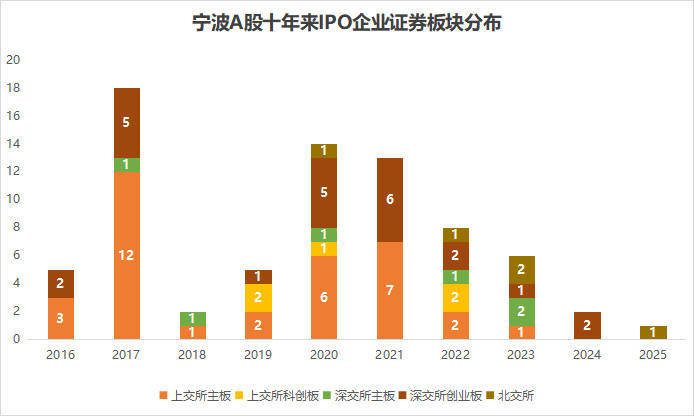
Core Points - The A-share market index (Shanghai Composite Index) has reached 4026.52 points, marking a new high in nearly a decade, driven by multiple factors including policies, funding, and industry dynamics [2][4] - Over the past decade, the "Ningbo Legion" has consistently performed well in terms of both the quantity and quality of IPOs, maintaining a leading position nationally [3][6] - Ningbo's A-share IPOs have been closely aligned with the overall market trends, with significant milestones achieved in 2017 and 2020 [4][6] IPO Market Dynamics - The A-share IPO process can be divided into three phases over the last decade: recovery (2013-2018), prosperity (2019-2022), and tightening (2023 onwards) [4] - Ningbo has seen a total of 123 A-share IPOs, ranking in the top ten cities in China for both the number of IPOs and total market capitalization, which stands at 1.62 trillion yuan [6][19] - The manufacturing sector remains a strong foundation for Ningbo's IPOs, with 63 companies listed on the Shanghai Stock Exchange and 17 on the Shenzhen Stock Exchange [9][11] Regional Distribution and Growth - The distribution of listed companies in Ningbo has evolved, with the top regions now being Yinzhou and Beilun, while Yuyao has emerged as a significant player [12][14] - Yinzhou continues to lead in terms of market capitalization, with notable companies like Ningbo Bank and Ningbo Port contributing significantly [14] - The growth of IPOs in Beilun, Yuyao, and Cixi has been remarkable, with each region seeing substantial increases in both the number of companies and total market value [14][16] Industry Focus and Future Outlook - Beilun has focused on new energy vehicles and robotics, while Yuyao has developed strengths in automotive parts and integrated circuits [16][19] - Despite the growth, many Ningbo-listed companies remain relatively small, with only five companies exceeding 50 billion yuan in market capitalization [19] - There are currently 51 companies in Ningbo preparing for IPOs, indicating a potential for further economic vitality through capital market engagement [19]
2026年交通运输行业投资策略报告:反内卷、历史新高船龄和供求共振-20251113
Western Securities· 2025-11-13 06:06
Group 1: Express Delivery Industry - The express delivery sector is expected to benefit from anti-involution policies, with prices starting to rise since July 2025 due to government measures against low-price and disorderly competition [13][15][20] - In September 2025, major express companies reported a year-on-year increase in single ticket prices, indicating the initial success of the anti-involution policies [24][21] - The express delivery volume is projected to maintain good growth, with a compound annual growth rate of 11.6% from 2023 to 2028 [34][32] Group 2: Oil Transportation Industry - The average age of VLCC (Very Large Crude Carrier) ships reached a historical high of 13 years in August 2025, indicating a need for capacity renewal [52][51] - There is a significant gap between the number of new orders and the required capacity updates, with only 112 VLCCs expected to be delivered by 2029 against a potential scrapping of 319 older vessels [58][56] - Global oil production and consumption are expected to grow in the coming years, which may positively impact oil transportation demand [43][42] Group 3: Aviation Industry - The aviation sector is anticipated to enter a supply-demand resonance cycle, with a projected low growth rate in aircraft supply over the next eight years [71][73] - Most airlines are expected to see good growth in passenger numbers in 2025, with overall load factors remaining high [80][84] - Government policies aimed at promoting consumption and addressing competition in the aviation sector are expected to boost demand in 2026 [90][92]
跟着快递小哥两小时送200多单,今年双十一送得多,罚得更多
3 6 Ke· 2025-11-12 23:57
Core Insights - The article highlights the bustling activity at a logistics center in Shanghai during the peak of the Double Eleven shopping festival, showcasing the intense workload and challenges faced by delivery personnel in the express delivery industry [2][3][5]. Industry Overview - The Double Eleven shopping festival has evolved over the years, with the number of participating platforms increasing and consumer perception becoming more normalized, leading to a significant rise in delivery volumes [7]. - This year, the express delivery volume reportedly increased by approximately 30% compared to the previous year, indicating a growing demand in the sector [7]. Operational Dynamics - The logistics center operates from early morning, with workers starting as early as 4:20 AM to prepare for the influx of packages, reflecting the high-pressure environment in which delivery personnel operate [2][3]. - On November 12, a single delivery point processed nearly 15,000 packages in one day, showcasing the scale of operations during peak periods [5]. Financial Aspects - Delivery personnel are compensated on an hourly basis, with daily earnings around 200 yuan for part-time work, highlighting the financial pressures faced by workers in the industry [5]. - The base delivery fee for packages is around 1 yuan, with variations depending on the courier company, indicating a competitive pricing environment that affects earnings [12]. Challenges Faced by Workers - Delivery personnel express concerns over increasing penalties and stricter requirements, which add to their stress and operational challenges [12][14]. - A notable incident involved a delivery worker receiving a fine after being praised by a customer, illustrating the harsh realities of performance metrics in the industry [12]. Future Outlook - The article concludes with a reflection on the ongoing challenges and pressures within the express delivery industry, suggesting that while the current environment is demanding, there is hope for more humane regulations in the future [14].


技术加码 理念升级——透视“双十一”快递业务发展新变化
Xin Hua She· 2025-11-12 14:25
Core Viewpoint - The express delivery industry in China is experiencing significant growth and transformation during the "Double Eleven" shopping festival, driven by technological advancements, green initiatives, and operational upgrades [1][3][5]. Group 1: Technological Advancements - The application of smart sorting, AI routing systems, and autonomous vehicles is reshaping China's logistics framework, with companies like Yunda and JD Logistics implementing advanced technologies to enhance efficiency [1][3]. - JD Logistics reported a 50% year-on-year increase in inbound goods during "Double Eleven," with inventory turnover days reduced to 30.9 days, and over 95% of self-operated orders fulfilled within 24 hours [3][5]. - Yunda's hub center utilized automated sorting and AI routing optimization, resulting in a 25% improvement in average transport efficiency and a 30% increase in vehicle turnover rate during the festival [1][3]. Group 2: Green Initiatives - The express delivery sector is increasingly adopting green and low-carbon practices, such as solar energy utilization and electric vehicle deliveries, to reduce environmental impact [5][6]. - Yunda's hub center installed over 20,000 square meters of solar panels to support its operations, while JD Logistics' carbon management platform has helped reduce over 464 tons of carbon emissions [5][6]. - Companies are also implementing packaging recycling initiatives, with Yunda reporting a 50% increase in packaging recycling during "Double Eleven" compared to regular periods [5][6]. Group 3: Industry Transformation - The rapid development of logistics and express delivery services has created a high-speed freight network, with significant upgrades in technology and operational concepts leading to high-quality growth in the industry [6]. - The integration of AI and algorithm optimization is enhancing logistics efficiency and management, providing new value across the industry [5][6]. - Experts highlight that the express delivery industry's evolution is closely linked to the rapid growth of e-commerce, necessitating continuous innovation and improvement [6].
研报掘金丨中银证券:维持韵达股份“增持”评级,短期消费旺季或将驱动业务量增长
Ge Long Hui A P P· 2025-11-12 08:04
Core Viewpoint - Yunda Holdings reported a net profit attributable to shareholders of 730 million yuan for the first three quarters of 2025, a year-on-year decrease of 48.15%, indicating a phase of financial pressure [1] Industry Summary - The implementation of "anti-involution" policies is expected to promote rational pricing in the industry, coupled with demand catalyzed by the consumption peak season, which may lead to an increase in the average price per delivery [1] - Short-term growth in business volume is anticipated due to the consumption peak season, while long-term growth is supported by steady domestic economic growth and the expansion of consumption scenarios [1] - The accelerated construction of rural express delivery networks is expected to release demand for express services from both urban and rural areas, providing incremental space for the express delivery industry [1] Company Summary - The company is expected to enhance operational efficiency, alleviating cost pressures, as it continues to advance its "1+N+AI" multi-layered technology strategy, which empowers profitability and strengthens its competitive position in the industry [1] - Due to the pressure on delivery prices this year, the company has adjusted its previous profit forecasts but maintains an optimistic outlook for future operations under the "anti-involution" context, sustaining an "overweight" rating for the company [1]

韵达股份(002120):前三季度公司业务量保持增长,科技战略赋能长期经营
Bank of China Securities· 2025-11-12 02:06
Investment Rating - The report maintains an "Accumulate" rating for the company [1][5]. Core Views - The company has shown growth in business volume despite a decrease in profit margins, with a focus on improving operational efficiency through technology [3][8]. - The "anti-involution" policy in the express delivery industry is expected to lead to more rational pricing, which, combined with seasonal demand, may enhance both volume and pricing in the future [8]. Financial Performance Summary - For the first three quarters of 2025, the company reported revenue of RMB 37.493 billion, a year-on-year increase of 5.59%. However, the net profit attributable to shareholders decreased by 48.15% to RMB 730 million [3][8]. - The adjusted profit forecasts for 2025-2027 are RMB 1.424 billion, RMB 1.882 billion, and RMB 2.197 billion, reflecting a year-on-year change of -25.6%, +32.2%, and +16.7% respectively [5][10]. - The average revenue per package decreased by 6.31% to RMB 1.95, while the total volume of packages delivered increased by 12.98% to 19.143 billion [8][10]. Valuation Metrics - The expected earnings per share (EPS) for 2025 is RMB 0.49, with corresponding price-to-earnings (P/E) ratios of 15.4, 11.6, and 10.0 for the years 2025, 2026, and 2027 respectively [5][10]. - The company’s market capitalization is approximately RMB 21.889 billion, with a circulating share count of 2,815.13 million [2][3]. Future Outlook - The report anticipates that the combination of the "anti-involution" policy and seasonal demand will drive both volume and price increases in the express delivery sector [8]. - The ongoing development of the rural express delivery network is expected to release additional demand, providing growth opportunities for the company [8].
联邦快递中国区总裁许宝燕:不卷价格 以“枢纽+下沉”重构在华物流业务新格局
Mei Ri Jing Ji Xin Wen· 2025-11-11 13:59
Core Insights - The Chinese express delivery industry is transitioning from a price war to a value competition phase, with FedEx poised for new growth opportunities after 41 years in the market [2][3] - The State Post Bureau reported that in September, the national postal industry generated a revenue of 152.57 billion yuan, a year-on-year increase of 6.8%, with express delivery revenue reaching 127.37 billion yuan, up 7.2% [2] - FedEx's strategy focuses on cost reduction, efficiency enhancement, and quality improvement, aligning with the industry's shift towards value competition [3][5] Industry Trends - The logistics market in China is evolving rapidly, driven by policy incentives and trade upgrades, with 229 national logistics hubs established, primarily in central and western regions [3][5] - Cross-border e-commerce is experiencing significant growth, with imports and exports reaching 33.61 trillion yuan in the first three quarters of 2025, a 4% increase [3][5] - The logistics sector is witnessing a shift from scale competition to value competition, with some companies seeing an increase in single-ticket gross profit from 0.1 yuan to 0.3 yuan [3][4] Company Strategy - FedEx is focusing on leveraging infrastructure benefits and aligning with market demand, having established 103 branches and over 100 ground operations stations across major cities [5][6] - The company is enhancing its logistics infrastructure, with significant upgrades planned for key operational centers, including a 48% expansion of the Shenzhen International Port Operations Center [5][6] - FedEx is prioritizing the establishment of operations in transportation hubs and trade-active areas to improve service efficiency and customer experience [6] Future Outlook - FedEx's future strategy will concentrate on three main areas: expanding network coverage in Europe and Asia, enhancing cross-border e-commerce and heavy cargo transport, and deepening digital transformation [8][9] - The company is optimistic about the long-term potential of the Chinese market, which has become one of the fastest-growing regions for FedEx's international business [8][9] - The growth of trade between China and Vietnam, projected to reach 205.2 billion USD in 2024, has prompted FedEx to increase its cargo flights between the two countries [8]

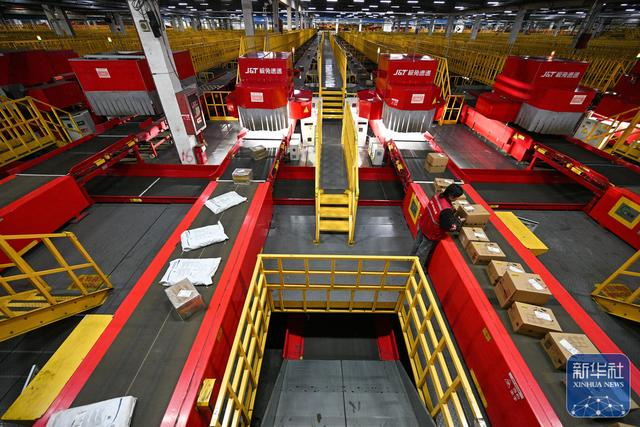
忙碌的“双十一”
Xin Hua She· 2025-11-11 09:36
Core Points - The "Double Eleven" shopping festival has prompted e-commerce and logistics companies across China to operate at full capacity to handle the surge in online shopping logistics [2][4][6] Group 1: E-commerce and Logistics Operations - Various logistics centers, such as those in Nanjing, Qingdao, and Linyi, are actively sorting packages to meet the high demand during the shopping festival [2][4][6] - Workers at multiple logistics hubs, including those operated by China Post, are engaged in sorting and processing packages to ensure timely delivery [10][11][42] - The use of smart sorting lines and automated systems is prevalent in logistics operations, enhancing efficiency in package handling [38][47] Group 2: Live Streaming and Sales - Live streaming sales have become a significant trend, with hosts promoting various products, including clothing and agricultural goods, across different regions [8][15][30] - E-commerce platforms are leveraging live streaming to boost sales, particularly in rural areas, showcasing local products like specialty crops [23][44] - The integration of live streaming with e-commerce is seen as a strategy to attract consumers and increase sales during the shopping festival [17][34]
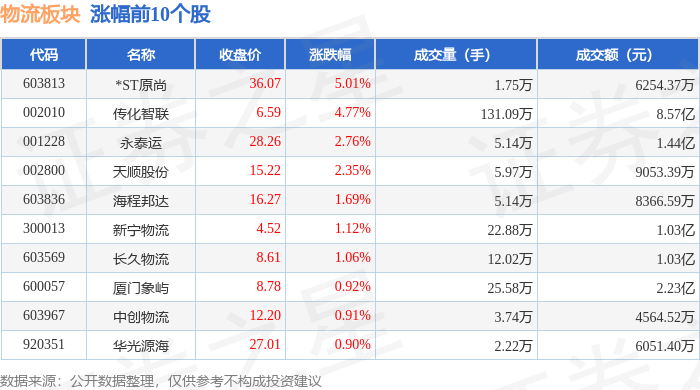
物流板块11月11日跌0.42%,ST雪发领跌,主力资金净流出3.56亿元
Zheng Xing Xing Ye Ri Bao· 2025-11-11 08:39
Core Viewpoint - The logistics sector experienced a decline of 0.42% on November 11, with ST Xuefa leading the losses, while the Shanghai Composite Index closed at 4002.76, down 0.39% [1]. Group 1: Market Performance - The logistics sector's individual stock performance showed mixed results, with notable gainers including ST Yuanshang (+5.01%) and Chuanhua Zhili (+4.77%), while ST Xuefa fell by 5.07% [1][2]. - The trading volume for Chuanhua Zhili reached 1.31 million shares, with a transaction value of 857 million yuan, indicating strong market interest [1]. Group 2: Capital Flow - The logistics sector saw a net outflow of 356 million yuan from institutional investors, while retail investors contributed a net inflow of 374 million yuan [2]. - The capital flow data indicates that while institutional investors withdrew funds, retail investors were actively buying into the sector [2][3]. Group 3: Individual Stock Analysis - ST Xuefa had a significant drop in share price, closing at 4.68 yuan with a trading volume of 202,900 shares and a transaction value of 96.83 million yuan [2]. - Other notable declines included Yunda Holdings (-0.66%) and China Foreign Trade (-1.55%), reflecting a broader trend of selling pressure in the logistics sector [2].