
海康威视

Search documents
兴证策略:如何看待本轮开门红的结构与延续性?
Xin Lang Cai Jing· 2026-01-11 10:28
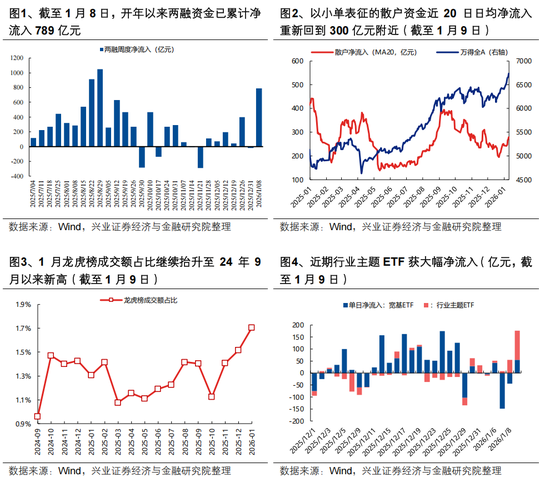
Group 1 - The current market rally, referred to as "开门红," is supported by improving macroeconomic data and ample liquidity, which enhances market risk appetite and attracts new capital inflows [1][9][40] - Various types of trading funds have shown accelerated entry into the market, including a net inflow of 78.9 billion yuan in margin financing since the beginning of the year and an average daily net inflow of retail funds returning to around 30 billion yuan [1][9][40] - The structural consensus among different types of funds is strong, focusing on sectors such as TMT (storage, AI applications), military (commercial aerospace), non-ferrous metals, new energy (controlled nuclear fusion), machinery (robots), and pharmaceuticals (innovative drugs, brain-machine interfaces) [2][35][38] Group 2 - The global stock market is experiencing a strong start in 2026, driven by expectations of loose liquidity, geopolitical changes, and emerging industrial trends, with A-shares reflecting this global narrative [5][38] - Key events such as the International Consumer Electronics Show (CES) and geopolitical developments are catalyzing themes in the market, enhancing the strategic value of resource products and driving structural similarities across global markets [5][38] - The market is currently in a favorable position with limited downside risk and significant potential for upward movement, supported by improved PMI and price data, as well as a high percentage of stocks still below their previous highs [11][44] Group 3 - The recent surge in the commercial aerospace sector has raised concerns about its current crowding and sustainability, with trading volume indicating a potential for further upward movement [16][51] - As the earnings forecast disclosure period approaches, the correlation between stock prices and earnings will increase, necessitating a focus on structural adjustments based on performance [21][57] - Industries with significant upward revisions in profit forecasts since November include technology (consumer electronics, computing), advanced manufacturing (new energy, military), and cyclical sectors (building materials, non-ferrous metals) [26][58]

光大周度观点一览:光研集萃-20260111
EBSCN· 2026-01-11 09:12
2026 年 1 月 11 日 联合研究 光研集萃(2026 年 1 月第 1 期) ——光大周度观点一览 要点 策略周度观点:寻找好春季行情中的持续性亮点 对春季行情保持耐心,重点关注成长与小盘风格。在政策支持与产业热点频出的 共同作用下,本周市场延续了 12 月末以来的强势表现。短期我们认为市场热度 仍有望持续,不过需要关注 1 月中旬之后到春节前市场逐步降温的可能。从历史 规律来看,上证指数当年 1 月的涨跌幅与上一年 12 月的涨幅呈一定的"此消彼 长"特征,同时春节之前市场交易热度也将有所下行。预计春节之后市场或许会 迎来新一轮上行动力。对于春季行情,投资者应保持耐心。 结构层面上,成长风格与小盘风格通常在春季行情中明显占优,短期建议关注成 长与顺周期两条主线。成长主线建议关注商业航天、半导体产业链、AI 等方向; 顺周期主线建议关注有色金属、零售、社会服务等方向。 本周重点行业 计算机:整体来看,中国 AI 应用具备三大机遇:1)实业深耕:基于我国完整的 工业体系,为 AI 的发展提供高价值的现实世界数据/应用场景/能源供应,重点 关注拥有行业 Knowhow 和数据的公司;2)外展出海:AI 工 ...
中国上市公司“第一大省”:拥有889家,总市值超过浙江+江苏
Sou Hu Cai Jing· 2026-01-11 06:08
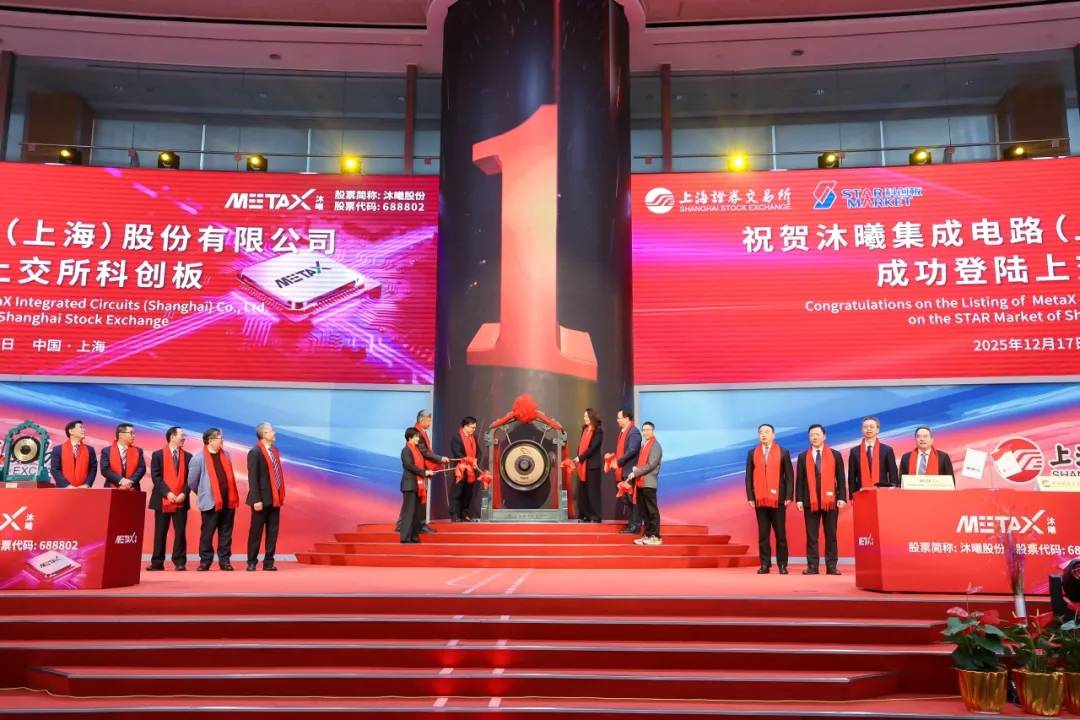
Group 1 - The capital market serves as a "barometer" for China's economy, with listed companies acting as the "locomotive" for economic development. By the end of 2025, there will be 5,469 listed companies in China, with a total market capitalization of 123 trillion yuan. In 2025, 116 new companies are expected to be listed, representing a 16% increase compared to 2024, raising a total of 131.77 billion yuan, primarily in sectors like computer, communication, and electronic equipment manufacturing [1] Group 2 - Shanghai ranks fifth with 452 listed companies, adding 8 new companies last year. Notably, the company Muxi Co., which specializes in high-performance GPU chips, has sold over 25,000 units by the end of March 2025 [3] - Beijing holds the fourth position with 481 listed companies and a total market capitalization of 30.6 trillion yuan, the highest in the country. It has 48 companies with a market value exceeding 100 billion yuan, primarily consisting of state-owned enterprises and large tech and financial firms [3] Group 3 - Jiangsu ranks third with 721 listed companies and a total market capitalization of 8.95 trillion yuan. It added 29 new companies last year, the highest in the country, with a focus on manufacturing and strategic emerging industries [5] - Suzhou has become the leading city for new listings, with 12 new companies, supported by a robust industrial ecosystem and a systematic service mechanism for companies preparing to go public [5] Group 4 - Zhejiang is in second place with 731 listed companies and a total market capitalization of 9.18 trillion yuan. The capital city, Hangzhou, has 231 listed companies, followed by Ningbo with 124 [5] - By the end of last year, Zhejiang had 10 companies with a market value exceeding 100 billion yuan, with four located in Hangzhou [6] Group 5 - Guangdong remains the top province with 889 listed companies and a total market capitalization of 19.32 trillion yuan, reflecting a 29% year-on-year growth. It added 21 new companies last year, including notable firms like Marco Polo and Stone Innovation [8] - Guangdong has 30 companies with a market value exceeding 100 billion yuan, with Industrial Fulian leading at 1.2322 trillion yuan [8] Group 6 - The distribution of listed companies across various exchanges shows Guangdong leading with 32 on the Beijing Stock Exchange, 92 on the Shanghai Stock Exchange's Sci-Tech Innovation Board, and 324 on the Shenzhen Stock Exchange's Growth Enterprise Market [9] - Jiangsu follows with 56 on the Beijing Stock Exchange and 222 on the Shanghai Stock Exchange's main board [9]
研判2025!中国家用网络附加存储(NAS)行业发展背景、市场销量、企业格局及未来趋势分析:行业发展潜力巨大,预计到2029年出货量将突破192万台[图]
Chan Ye Xin Xi Wang· 2026-01-10 02:06
Core Insights - The NAS (Network Attached Storage) market is experiencing rapid growth due to increasing consumer data generation and the proliferation of smart devices, with 67.5% of data produced in China in 2024 coming from consumers [1][5] - The home NAS market in China is projected to see significant growth, with shipments expected to exceed 585,000 units in 2024, a 33% year-on-year increase, and sales surpassing 1.2 billion RMB [1][9] - The competitive landscape includes three main categories of players: ToB manufacturers like Synology and QNAP, ToC brands like Ugreen and Jimi, and tech giants like Huawei, Xiaomi, and Lenovo [1][10] Industry Overview - NAS devices are designed for data storage and network connectivity, consisting of physical storage drives, CPUs, operating systems, and network interfaces, enabling multi-device access and data backup [2][4] - The demand for NAS is driven by the digital lifestyle and the need for secure data storage solutions, especially as data security concerns rise [5][6] Market Development - The home NAS market has evolved significantly since 2020, with new entrants focusing on user-friendly, cost-effective solutions, leading to increased adoption among consumers [7][9] - The market penetration of home NAS remains low, indicating substantial growth potential, with forecasts suggesting shipments could reach 1.92 million units by 2029 [1][9] Competitive Landscape - The market is highly concentrated, with seven major companies, including Ugreen, Jimi, Synology, QNAP, Huawei, Lenovo, and Hikvision, holding over 85% of the market share in 2024 [1][10] - Ugreen has rapidly gained recognition as the leading consumer NAS brand in China, particularly after launching its DXP and DH series products [1][10] Future Trends - The consumer NAS market is expected to continue evolving with advancements in technology and user demands, potentially transforming NAS into a central hub for smart home ecosystems [11][12] - Competition is anticipated to intensify as domestic manufacturers enter the market, focusing on innovation in data transmission, energy efficiency, and heat dissipation technologies [11][12]




杭州AI的秘密,藏在小镇里
3 6 Ke· 2026-01-09 03:49
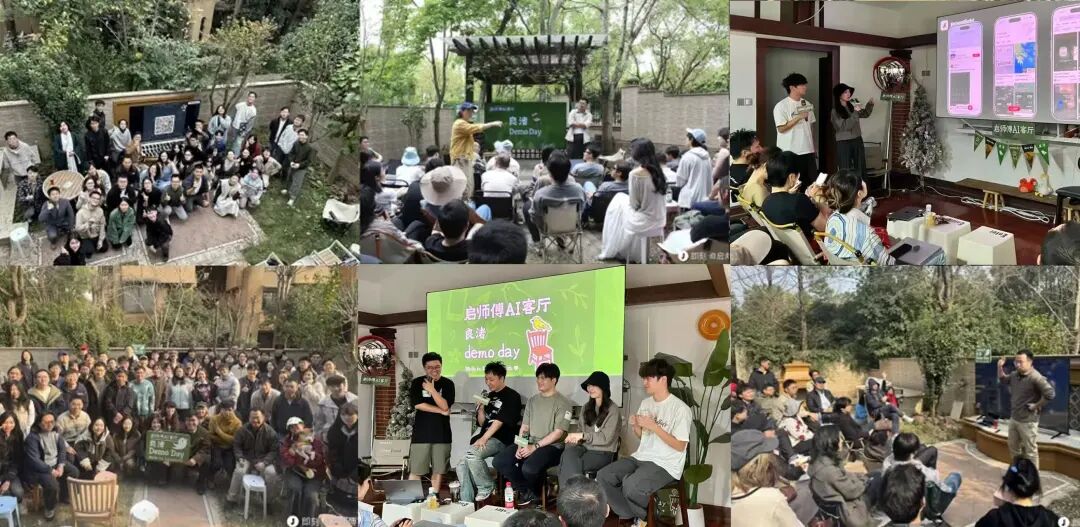
Core Insights - The article highlights the emergence of Hangzhou as a new hub for AI innovation, driven by the "Six Little Dragons" and the influence of Alibaba, marking a shift from an e-commerce narrative to an AI narrative by 2025 [3][4]. Group 1: The Rise of Hangzhou's AI Ecosystem - Hangzhou's "Six Little Dragons" represent six high-growth companies focusing on cutting-edge technologies such as robotics, AI, and game development, which have attracted talent from other regions [3][4]. - The city has become a magnet for entrepreneurs due to its favorable environment, including lower living costs and a supportive atmosphere for startups, allowing for a more focused entrepreneurial spirit [4][5]. - The local government has provided significant support to tech startups, including direct investments and resources for talent acquisition, which has fostered a nurturing environment for innovation [5][6]. Group 2: The Role of Local Culture and Community - The entrepreneurial culture in Hangzhou is characterized by a blend of idealism and realism, allowing for a unique ecosystem where startups can thrive despite high uncertainty [6][7]. - The "small town mechanism" in Hangzhou facilitates rapid information flow and community interaction, which is essential for innovation, contrasting with larger cities where resources are more dispersed [9][13]. - Hangzhou's small towns, such as the AI Town and Cloud Town, serve as incubators for startups, providing a compact environment that encourages collaboration and reduces operational costs [9][10]. Group 3: The Influence of Alibaba - Alibaba has played a crucial role in establishing the digital economy in Hangzhou, providing a foundation for talent and technological support that has enabled the rise of the "Six Little Dragons" [14][15]. - The presence of Alibaba has created a talent pool and a culture of innovation that attracts new startups, further enhancing Hangzhou's reputation as a tech hub [14][16]. - The city's ambition to become a "Silicon Valley" of China is reflected in its ongoing development of innovation clusters like "China Cloud Valley," which aims to drive the AI industry forward [15][17]. Group 4: Future Prospects and Challenges - Hangzhou's strategy of integrating small towns and larger innovation valleys aims to create a seamless flow of resources and ideas, positioning the city for future growth in the tech sector [18]. - Despite its rapid development, Hangzhou still faces challenges in original innovation capabilities and global influence compared to other major cities like Beijing and Shanghai [18]. - The city's vibrant ecosystem continues to evolve, with the potential to produce groundbreaking innovations that could reshape industries [18].


海康观澜大模型落地见效 覆盖工业质检、新能源电力等多领域
Jing Ji Guan Cha Wang· 2026-01-09 03:06
Core Insights - Hikvision focuses on technological innovation in IoT perception, artificial intelligence, and big data, providing a comprehensive range of smart IoT hardware and software products, as well as services for complex intelligent IoT system construction [1] Group 1: Technology and Product Offerings - The company offers perception technologies that extend from visible light to millimeter waves, infrared, X-rays, and sound waves, integrating AI and big data into its smart IoT products, IT infrastructure, platform services, data services, and application services [1] - The "Guanlan" large model framework consists of a foundational model, industry models, and scenario application models, integrating multimodal data such as visual, acoustic, thermal, and X-ray data, and has been recognized for its maturity and reliability in model development [1] Group 2: Applications in Industrial Manufacturing - In the industrial manufacturing sector, the application of the Guanlan large model effectively addresses efficiency bottlenecks in traditional production processes, achieving an 80% increase in detection efficiency for soldering defects in circuit board production compared to traditional methods [2] - The model aids in real-time analysis of the entire product packaging process at Hikvision's manufacturing base, addressing common industry pain points related to flexible manufacturing and component misplacement [2] Group 3: Applications in Renewable Energy - In the renewable energy sector, the Guanlan large model's wind power prediction unit exemplifies its practical application, predicting future power generation based on wind direction and speed, with a 1% increase in prediction accuracy translating to significant revenue changes [3] - The wind power prediction unit utilizes a self-developed time series model that reduces long-term prediction errors, maintaining high accuracy for forecasts ranging from 15 minutes to ten days ahead, which lowers management and scheduling costs for the grid [3] - In a 300MW offshore wind farm in East China, the annual reduction in power prediction deviation assessment costs exceeded 1.2 million yuan, a decrease of over 15%, while in an 80MW mountainous wind farm in South China, the reduction exceeded 800,000 yuan, a decrease of over 46% [3] Group 4: Future Focus - The company aims to continue focusing on technological innovation and promote the large model's large-scale application across more industry scenarios, providing technical support for digital and intelligent transformation in various industries [3]
港股七巨头三年总市值累计上涨101%!银河证券:当前 AI 投资非泡沫化
Ge Long Hui· 2026-01-09 02:15
从市场角度来看,当前中美 AI 相关板块并未处于典型的泡沫狂热期,不必过度担忧。同时,技术创新 与产业落地的本质是非线性演进过程,绝非一蹴而就的短期行为。与商业周期相似,科技投资也存在明 显的周期特征。资产的泡沫不会阻断核心技术发展的大趋势,而寻找那些无惧市场泡沫、能够穿越周期 的企业和资产才是关键。 从产业路径来看,中国AI发展路径与美国形成明显分化,根源在于所处的资源约束条件不同。中国所 面临的硬约束在于尖端训练芯片进口受限以及高端 GPU 供给阶段性稀缺,因此建立大规模算力集群在 经济性与可持续性上显然难以与美国比肩。在此情形下,单纯复制美国的算力堆叠模式,并不具备现实 可行性。与其追随美国进行算力军备竞赛,不如选择一条更具中国特色、符合国情的发展道路,即在有 限算力条件下挖掘最优效果,产业界的高性价比模型和开源模型就是这一思路下的产物。例如, DeepSeek 等产品不靠算力堆叠,而是在工程体系优化和精准建模中持续降低成本并提升性能,体现出 用工程能力弥补算力限制的方法论选择。得益于相对较低的 token 使用价格,中国大语言模型如 DeepSeek、通义千问等在全球范围内广受欢迎,过去一年的使用量位 ...
去年全球人形机器人出货量约1.3万台,AI人工智能ETF(512930)盘中蓄势
Xin Lang Cai Jing· 2026-01-09 01:59
Group 1 - The core viewpoint of the articles highlights the rapid growth and potential of the AI industry, particularly in the humanoid robot and AI chip markets, driven by domestic manufacturers in China [1][2] Group 2 - As of January 9, 2026, the Zhongzheng AI Theme Index (930713) shows mixed performance among its constituent stocks, with Runze Technology (300442) leading with a 5.35% increase, followed by Guanghuan Xinnet (300383) at 4.48%, and Fudan Microelectronics (688385) at 3.76% [1] - The global humanoid robot shipment reached approximately 13,000 units last year, with Chinese manufacturers contributing the majority, significantly outpacing companies like Tesla and Figure AI [1] - Shanghai Zhiyuan topped the global humanoid robot manufacturers with an estimated shipment of 5,168 units last year, followed by Yushu Technology and UBTECH [1] - The AI chip market in China is projected to grow from 142.54 billion yuan in 2024 to 1,336.79 billion yuan by 2029, indicating a substantial increase in demand driven by AI advancements [2] - The Zhongzheng AI Theme Index includes 50 listed companies involved in providing resources, technology, and application support for AI, reflecting the overall performance of AI-related securities [2] - As of December 31, 2025, the top ten weighted stocks in the Zhongzheng AI Theme Index account for 58.08% of the index, with companies like Zhongji Xuchuang (300308) and Hikvision (002415) among the leaders [2]

人工智能训练师:在数据海洋中练就“掘金术”
Zhong Guo Qing Nian Bao· 2026-01-09 00:05
Core Insights - The article discusses the emerging profession of "Artificial Intelligence Trainer," highlighting the skills required and the educational pathways available for this role. It emphasizes the importance of practical experience and the integration of industry needs into educational programs [1][7]. Group 1: Education and Training - The curriculum for "Artificial Intelligence Trainer" includes data preprocessing, algorithm design, and model training, with core courses such as machine learning and deep learning [1][3]. - Practical projects, such as collaborations with local companies, are essential for students to gain hands-on experience and develop their technical skills [2][5]. - Competitions and certifications, like the "Artificial Intelligence Trainer" certification, are integral to assessing students' skills and enhancing their employability [6][5]. Group 2: Industry Demand and Job Opportunities - The demand for AI-related roles is increasing, with new positions like "Artificial Intelligence Data Engineer" emerging as industries seek high-quality data for AI applications [4][7]. - Companies are looking for skilled personnel to support the intelligent transformation of traditional industries, creating job opportunities for graduates in various sectors [9][8]. - The integration of education and industry is crucial, as seen in programs that prepare students for immediate employment in relevant fields [8][9].
制造业上市公司高质量发展研究报告
中国信通院· 2026-01-08 07:47
Investment Rating - The report does not explicitly provide an investment rating for the manufacturing industry or specific companies within it [2]. Core Insights - The manufacturing sector is a key component of the national economy and plays a crucial role in technological innovation and high-quality economic development [7]. - The report identifies a group of top 100 manufacturing companies that demonstrate strong operational quality, innovation capabilities, and industry leadership, serving as a benchmark for advanced development models in China's manufacturing sector [8][9]. - The report highlights the need for manufacturing companies to transition from scale-driven growth to quality and efficiency-oriented development, responding to both domestic and international challenges [18][19][20]. Summary by Sections 1. New Situations Facing High-Quality Development of Manufacturing Listed Companies - The domestic development environment is shifting from scale-driven growth to a focus on quality and efficiency [18]. - The international environment is increasingly characterized by intensified competition and geopolitical risks, affecting the global competitiveness of manufacturing companies [19]. - New requirements for high-quality development are emerging, necessitating a comprehensive assessment of the current state and challenges faced by manufacturing listed companies [20]. 2. Overall Development Overview of Manufacturing Listed Companies - The A-share market continues to expand, with a stable structure and an increasing number of manufacturing listed companies [22]. - Manufacturing companies are experiencing steady growth in scale, assets, and R&D investment, although profitability is under pressure [22][29]. 3. Analysis of the Top 100 High-Quality Development Manufacturing Companies - The top 100 companies have established a solid leading position in terms of scale, innovation, and industry influence, although structural disparities remain [39]. - These companies exhibit strong operational resilience and superior financial stability compared to the industry average [39]. - Innovation activities among the top 100 companies are increasingly systematic and efficient, contributing to their high-quality development [39][46]. 4. Existing Issues - There is a significant disparity in innovation capabilities among manufacturing companies of different sizes, with larger firms concentrating more resources on innovation [41]. - Some companies still rely on scale expansion and cost-driven strategies, lacking in value transformation and enhancement capabilities [41]. - The internationalization of manufacturing companies faces rising uncertainties and external pressures, necessitating improved risk management and compliance capabilities [41]. 5. Policy Recommendations - Recommendations include enhancing the innovation system, optimizing capital market functions, guiding leading companies to drive industry development, and promoting high-quality internationalization of manufacturing [9].