
百威亚太

Search documents
重庆啤酒业绩持续低迷,跨界对冲主业颓势
Xin Lang Cai Jing· 2025-08-16 21:05
Core Viewpoint - Chongqing Brewery's performance continues to decline, with a 0.24% decrease in revenue to 8.839 billion yuan and a 4.03% drop in net profit to 865 million yuan in the first half of 2025, following a year of poor performance [1] Group 1: Financial Performance - In the first half of 2025, Chongqing Brewery's revenue was 8.839 billion yuan, a decrease of 0.24% year-on-year, while net profit was 865 million yuan, down 4.03% [1] - The company's performance in 2024 was already declining, with net profit down 16.61% year-on-year [1] - Despite the revenue and net profit decline, sales volume increased by 0.95% to 1.8008 million kiloliters in the first half of 2025 [1] Group 2: Product Performance - The revenue from mainstream products fell by 0.92% to 3.145 billion yuan in the first half of 2025, marking the only decline among the three product categories [1] - High-end product revenue was nearly flat, at 5.265 billion yuan, with a slight increase of 0.04% [1] - Economic products saw growth, but their revenue contribution remains minimal at 2.2% [1] Group 3: Market Challenges - The South region, a key growth area for Chongqing Brewery, experienced a revenue decline of 1.47% in the first half of 2025, the largest drop among its three core sales regions [2] - Increased competition from brands like Zhujiang and Qingdao has put pressure on the South region's market [2] - To address these challenges, Chongqing Brewery announced a 600 million yuan capital increase for its subsidiary, Carlsberg Chongqing Brewery, to support its operations [2] Group 4: Industry Trends - The overall beer market in China has been facing a downturn, with major beer companies reporting varying degrees of revenue and profit declines [2] - The beer industry is recognized as one of the most competitive sectors in the domestic market, undergoing structural adjustments and transformations [2] - In response to market conditions, Chongqing Brewery has ventured into non-beer categories, launching products like Tianshan Fresh Fruit Orange Soda and energy drinks to cater to younger consumers' diverse needs [2]


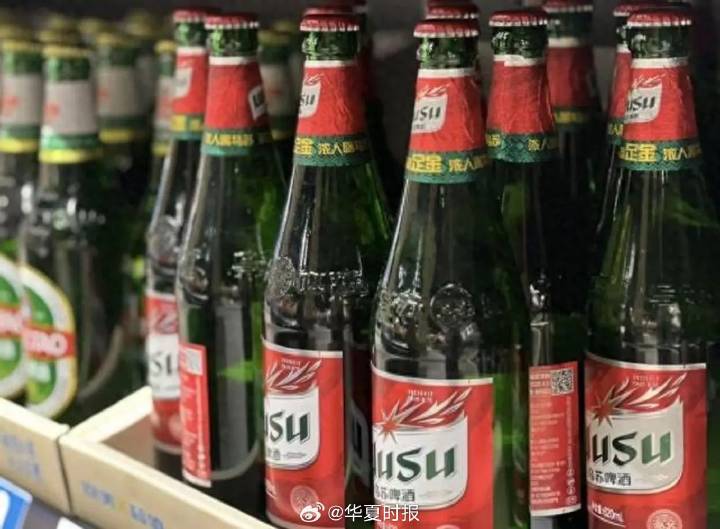
重庆啤酒遭遇了高端化增长瓶颈
Xin Lang Cai Jing· 2025-08-16 04:02
Core Viewpoint - Chongqing Beer experienced a less than ideal performance in the first half of 2025, with revenue and net profit both declining despite a slight increase in sales volume, indicating a "volume-price divergence" and suggesting poor sales of high-end products [1][3]. Financial Performance - The company reported a revenue of 8.839 billion yuan, a year-on-year decrease of 0.24%, and a net profit of 865 million yuan, also down year-on-year [1]. - High-end product revenue growth was only 0.04%, while mainstream product revenue fell by 0.92%. The best-performing segment was the economy products priced below 4 yuan, which generated 196 million yuan in revenue [3]. - High-end and mainstream products accounted for 97.72% of total revenue, with high-end products generating 5.265 billion yuan and mainstream products 3.145 billion yuan [3]. Market Dynamics - The decline in high-end beer sales is attributed to external factors such as reduced dining scenarios due to "alcohol bans" [4]. - The company’s performance varied by region, with the Northwest region being the only area to show revenue growth at 2.596 billion yuan, up 1.75% year-on-year. The Central region saw a decline of 0.7% to 3.532 billion yuan, and the South region fell to 2.479 billion yuan, down from 2.515 billion yuan [4]. Strategic Initiatives - Chongqing Beer is focusing on non-on-premise channels and has established an "instant retail task force" to capitalize on the growing trend of instant retail sales, which saw a 160% increase in transaction volume for beer on platforms like Meituan [5][8]. - The company is also diversifying its product offerings, launching new products such as 1L craft beers and non-alcoholic beverages [5]. - An investment of 600 million yuan was announced to enhance the competitiveness of its Foshan operations, aiming to improve production capacity in the South region [8][9].
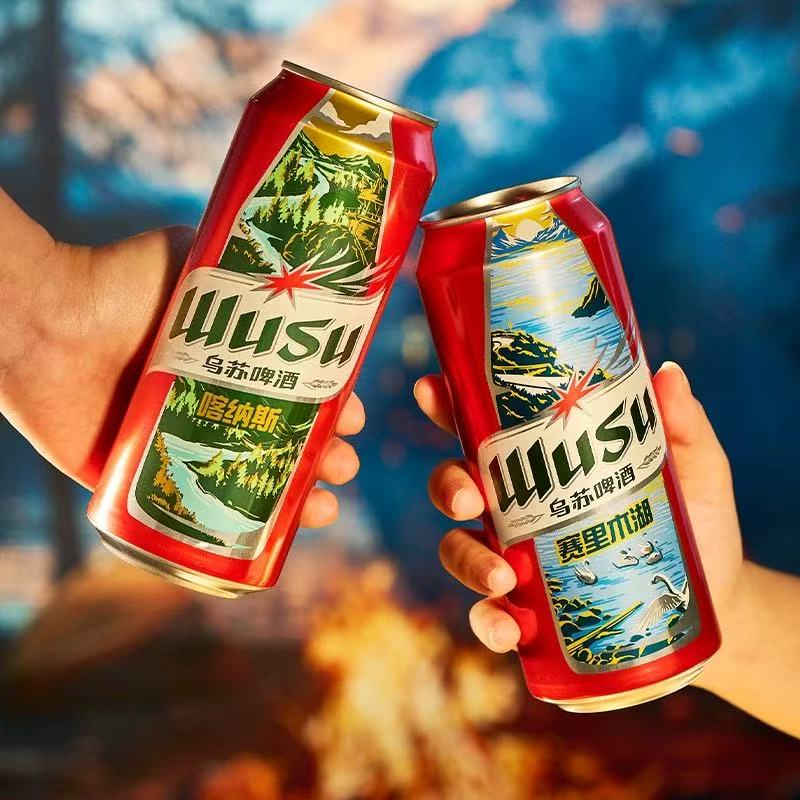
白酒、食品品牌企业扎堆切入精酿啤酒赛道 高端啤酒竞争更激烈
Zheng Quan Ri Bao· 2025-08-16 01:32
Core Insights - The craft beer sector is witnessing an influx of brands from various industries, including major liquor and food companies, as they seek growth opportunities amid a competitive landscape in the high-end liquor market [1][4]. Group 1: Market Entry and Strategy - Wuliangye's subsidiary launched a craft beer named "Fenghuolun," priced at 19.5 yuan per can, targeting consumers aged 25 to 49 and aiming to capture the mid-to-high-end beer market [1][2]. - Other companies like Zhenjiu Lidu and Luzhou Laojiao have also entered the craft beer market, with Zhenjiu Lidu's "Niushi News" priced at 88 yuan per bottle, emphasizing a new consumer experience [2][3]. - The entry of food companies like Haoxiangni and Three Squirrels into the craft beer market reflects a broader trend of diversification among brands seeking new revenue streams [1][4]. Group 2: Industry Trends and Growth - The Chinese craft beer market is projected to grow from 428 billion yuan in 2022 to 680 billion yuan by 2024, with a compound annual growth rate of 26.7%, and is expected to exceed 1 trillion yuan by 2025 [6]. - The craft beer segment is attractive due to its high gross margins, typically ranging from 55% to 65%, which are significantly higher than those of industrial beers [6]. - The shift in consumer preferences towards higher-quality and premium experiences is driving the growth of craft beer, as companies leverage existing distribution networks and brand equity to support higher price points [4][6]. Group 3: Competitive Landscape - Major players like China Resources Beer, Qingdao Beer, and Budweiser APAC dominate over 90% of the market, while craft beer brands and regional players compete for the remaining share [5]. - The overall beer production in China has been declining since reaching a peak of 50.62 million kiloliters in 2013, with a projected production of 35.21 million kiloliters in 2024 [5]. - The high-end beer segment has shown robust growth since 2020, contributing significantly to the profits of leading beer companies [5][6]. Group 4: Future Outlook - Experts predict that the trend of cross-industry collaboration in the alcoholic beverage sector will intensify, with a focus on quality enhancement and brand development [7][8]. - The high-end beer market is expected to continue evolving, with an emphasis on product innovation and meeting the diverse needs of consumers [7].




精酿啤酒进入“战国时代”五粮液、珍酒跨界入局
Xin Lang Cai Jing· 2025-08-15 22:41
Core Viewpoint - Wuliangye's subsidiary, Xianlin Ecological Wine Industry, has launched a new craft beer brand "Fenghuolun," entering the mid-to-high-end craft beer market with a retail price of 19.5 yuan per can (390ml) [2] Group 1: Market Entry and Strategy - Wuliangye's entry into the craft beer market aligns with the structural changes in domestic alcohol consumption, targeting new consumer groups such as young people, middle-aged individuals in small towns, and senior white-collar workers [4] - The craft beer market is projected to reach a scale of 134.2 billion yuan by 2025, with significant growth expected over the next five years [3] - The strategy includes a focus on mid-to-high-end pricing and a distribution model that combines self-operated base markets with national regional agents and brand alliances [4] Group 2: Competitive Landscape - Other traditional liquor companies, such as Guizhou Zhenjiu, are also entering the craft beer space, indicating a trend of cross-industry competition [3] - The entry of liquor giants into the craft beer market is expected to raise channel thresholds and squeeze out smaller brands in the short term, while potentially reshaping the industry landscape in the long term [3][4] - The craft beer segment is becoming increasingly competitive, with established brands like Qingdao Beer and Yanjing Beer also launching high-priced craft beer products [4] Group 3: Advantages and Challenges - Liquor companies have advantages in channel reuse, brand momentum transformation, and supply chain collaboration, which can facilitate rapid market entry and product distribution [3][4] - However, challenges include brand recognition conflicts and consumer skepticism regarding the expertise of liquor companies in producing beer, leading to higher educational costs [4] - The craft beer market is described as entering a "Warring States" period, with traditional liquor giants leveraging their existing distribution networks to target the mid-to-high-end market [4]
「一城一酒」关键增长区域“失守”,重庆啤酒业绩持续低迷,跨界对冲主业颓势
Hua Xia Shi Bao· 2025-08-15 11:56
Core Viewpoint - Chongqing Brewery's performance continues to decline, with a 0.24% decrease in revenue and a 4.03% decrease in net profit in the first half of 2025, indicating ongoing struggles after a year of poor performance [2][3] Financial Performance - In the first half of 2025, Chongqing Brewery achieved revenue of 8.839 billion yuan and net profit of 865 million yuan, both showing a downward trend compared to the previous year [2] - The company experienced a significant drop in revenue and net profit in 2024, with net profit decreasing by 16.61% [3] - Despite the decline in revenue and net profit, sales volume increased by 0.95% to 1.8008 million kiloliters in the first half of 2025 [3] Product Segmentation - Revenue from high-end products accounted for 59.6% of total revenue, while mainstream products contributed 35.6% and economy products only 2.2% [4] - Mainstream product revenue decreased by 0.92% to 3.145 billion yuan in the first half of 2025, marking the only decline among the three product categories [4] - High-end product revenue showed negligible growth of 0.04%, indicating a slowdown in growth for both mainstream and high-end products since 2024 [4][5] Regional Performance - The South region, a key growth area for Chongqing Brewery, saw a revenue decline of 1.47% in the first half of 2025, the most significant drop among the three core sales regions [6] - The South region had previously been a strong performer, with revenue growth exceeding 13% in 2022 and 2023, but is now facing increased competition from brands like Zhujiang and Qingdao [6] Strategic Actions - In response to declining performance, Chongqing Brewery announced a 600 million yuan capital increase for its subsidiary, Carlsberg Chongqing Brewery, to enhance its market competitiveness [7] - The company is also diversifying its product offerings by launching non-beer products such as fruit-flavored soda and energy drinks to adapt to market changes and consumer preferences [8][9]
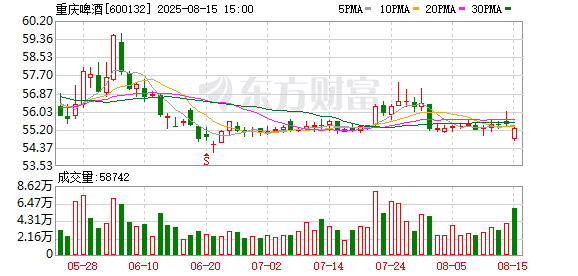
啤酒突围赛:上半年产量降0.3%;百威中国收入再度下滑,燕京、珠江净利润双位数增长
Sou Hu Cai Jing· 2025-08-13 10:34
Core Insights - Yanjing Beer reported a revenue growth of 6.37% and a net profit increase of 45.45% in the first half of the year, contrasting with Budweiser APAC's revenue decline of 9.5% and a volume drop of 8.2% in the same period, highlighting the competitive landscape in the beer industry [2][8][9] Industry Performance - In the first half of 2025, China's beer production from large-scale enterprises reached 19.044 million kiloliters, a slight year-on-year decrease of 0.3% [3][10] - The overall beer industry is characterized by "slight volume decline, rapid price increase, and significant profit growth," with expectations of a potential annual production decline of no more than 1% [3][10][11] Market Dynamics - The performance disparity among beer companies reflects differences in channel strategies, with domestic brands like Yanjing and Zhujiang successfully pivoting towards non-consumption channels, while Budweiser remains heavily reliant on traditional on-premise sales [8][9] - Zhujiang Beer is expected to report a net profit increase of 15%-25%, with over 70% of its sales coming from non-consumption channels, aligning with the industry's shift towards high-end and non-consumption market segments [8][9] Consumer Trends - The beer market is witnessing a shift towards high-end products and diversified consumption scenarios, with instant retail and craft/non-alcoholic beers emerging as growth drivers [10][11][15] - The industry's competitive landscape is intensifying, with brands focusing on high-end experiences and efficient supply chains to capture market share [11][15] Strategic Shifts - Major beer companies are increasingly exploring the beverage sector as a growth avenue, with Yanjing and Qingdao Beer launching new beverage products to diversify their offerings [12][13][14] - This cross-industry strategy aims to mitigate the impact of declining beer production and tap into consumer trends favoring healthier and more varied beverage options [14][15]


燕京啤酒:高端化红利正“见顶”,双轮驱动尚未跑通|看财报
Tai Mei Ti A P P· 2025-08-12 07:04
Core Viewpoint - Yanjing Beer reported positive growth in revenue, profit, and sales for the first half of 2025, with net profit exceeding 1 billion yuan for the first time, indicating a seemingly stable situation for the company. However, the growth rate of its flagship product, Yanjing U8, has declined, suggesting that its peak growth period may be over, and the company has yet to find a new growth driver [2][3][4]. Financial Performance - In the first half of the year, Yanjing Beer achieved beer sales of 2.3517 million kiloliters, a year-on-year increase of 2.03% - The company reported operating revenue of 8.558 billion yuan, up 6.37% year-on-year - Net profit attributable to shareholders reached 1.1 billion yuan, a 45.45% increase, while the net profit excluding non-recurring items was 1.036 billion yuan, up 39.91% [3][4]. Product Performance - Yanjing U8 remains the fastest-growing product in the industry, but its growth rate has decreased from over 50% in 2022 to around 30% in 2023 [6][8]. - The revenue from mid-to-high-end products accounted for 70% of total revenue, with mid-to-high-end product revenue reaching 5.536 billion yuan, a year-on-year increase of 9.32% [3][4]. Market Challenges - The beer market in China is experiencing a contraction, with the top five beer companies holding over 90% market share, leading to intense competition [6][7]. - The overall beer production in China has been declining since reaching a peak in 2013, with a reported decrease of 0.6% in production for the previous year [6][7]. - Yanjing Beer faces challenges in expanding its market presence beyond its primary regions of North and South China, where it holds a significant revenue share [8]. Strategic Initiatives - Yanjing Beer has initiated a dual-drive strategy focusing on both beer and beverage segments, launching the Best Soda brand in March, which generated 83 million yuan in revenue, a 98.69% increase year-on-year. However, this segment still represents less than 1% of total revenue [4][5].
港股异动丨啤酒股普涨 华润啤酒涨2.34% 啤酒行业消费量有望保持平稳
Ge Long Hui· 2025-08-12 03:38
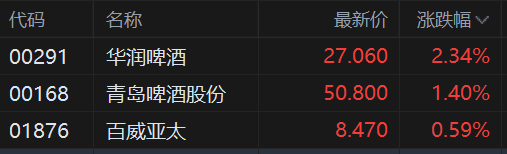
港股啤酒股普遍上涨,其中,华润啤酒涨2.34%,青岛啤酒股份涨1.4%,百威亚太涨0.6%。 消息上,兴业证券发研报称,展望来看,核心消费人群数量在未来5年仍有支撑,啤酒行业消费量有望 保持平稳,同时借鉴海外经验,并结合中国经济高质量发展、区域间升级节奏差异带来的充足市场纵 深、现饮渠道占比较高带来更高提价自主性和升级潜力等现实因素,该行认为啤酒高端化仍是中长期的 主要趋势以及竞争的胜负手,此外第二曲线外延探索有望打开长期想象空间。(格隆汇) | 代码 | 名称 | 最新价 涨跌幅 v | | --- | --- | --- | | 00291 | 华润啤酒 | 27.060 2.34% | | 00168 | 青岛啤酒股份 | 50.800 1.40% | | 01876 | 百威亚太 | 8.470 0.59% | ...
成也“高端”败也“高端”?上半年燕京啤酒业绩大涨,百威亚太净利下滑超两成
Sou Hu Cai Jing· 2025-08-12 02:33
Core Insights - Yanjing Beer reported a significant increase in net profit by over 40%, driven by the growth of high-end beer products, while Budweiser APAC experienced a decline in net profit exceeding 20% due to missing certain consumption scenarios [1][4] Group 1: Yanjing Beer Performance - Yanjing Beer achieved revenue of 8.558 billion yuan, a year-on-year increase of 6.37%, and a net profit of 1.103 billion yuan, up 45.45% [1] - The revenue growth was notable across regions, with East China seeing a 20.48% increase and South Central China a 15.35% increase [1] - The company’s traditional channel revenue grew by 6.02%, while e-commerce channels saw a remarkable growth of 30.79% [1][3] Group 2: Budweiser APAC Performance - Budweiser APAC's total sales volume decreased by 6.1% to 4.363 billion liters, with revenue dropping by 5.6% to 3.136 billion USD [3] - In the Chinese market, sales volume fell by 8.2% and revenue by 9.5% in the first half of the year [3] - The company is focusing on expanding its high-end product offerings in non-immediate consumption channels, which have started to show progress [3][6] Group 3: Market Trends and Strategic Insights - The contrasting performances of the two companies highlight the impact of their high-end strategies, with Yanjing benefiting from a successful product upgrade and Budweiser facing challenges in high-end dining and nightlife venues [4][6] - Analysts noted that Yanjing's growth is attributed to the strong performance of its flagship product, Yanjing U8, and improvements in company governance and efficiency [5][9] - The beer market is becoming increasingly diverse, with new brands and channels emerging, indicating a shift towards more personalized consumer demands [9]
中证香港100主要消费指数报2720.99点,前十大权重包含百威亚太等
Jin Rong Jie· 2025-08-11 07:45
作者:行情君 从中证香港100主要消费指数持仓的市场板块来看,香港证券交易所占比100.00%。 从中证香港100主要消费指数持仓样本的行业来看,食品占比40.86%、软饮料占比32.67%、酒占比 15.57%、烟草占比10.89%。 资料显示,指数样本每半年调整一次,样本调整实施时间分别为每年6月和12月的第二个星期五的下一 交易日。权重因子随样本定期调整而调整,调整时间与指数样本定期调整实施时间相同。在下一个定期 调整日前,权重因子一般固定不变。特殊情况下将对指数进行临时调整。当对应的母指数调整样本时, 行业指数样本将相应调整。当样本公司有特殊事件发生,导致其行业归属发生变更时,将对指数进行相 应调整。当样本退市时,将其从指数样本中剔除。样本公司发生收购、合并、分拆等情形的处理,参照 计算与维护细则处理。 金融界8月11日消息,上证指数上涨0.34%,中证香港100主要消费指数 (H100消费,L11184)报2720.99 点。 数据统计显示,中证香港100主要消费指数近一个月上涨7.60%,近三个月上涨5.05%,年至今上涨 18.36%。 据了解,中证香港100行业指数系列将中证香港100指数样本 ...