Momenta

Search documents
中国智能驾驶芯片_自我们首次覆盖以来的常见问题与投资者反馈-China Smart Driving Chips_ FAQs and investor feedback since our initiation
2025-09-22 01:00
Summary of China Smart Driving Chips Conference Call Industry Overview - **Industry**: China Smart Driving Chips - **Key Companies**: Horizon Robotics (Outperform), Black Sesame (Underperform) [1][2] Core Insights and Arguments Market Potential - **Total Addressable Market (TAM)**: Expected to reach USD 15.4 billion by 2030, with a 40% CAGR from 2025 to 2030 [2] - **Penetration Rates**: Anticipated that L2++ (Urban NOA) penetration will reach 65% by 2030, while L2+ (Highway NOA) will plateau in the low 20s [2][18] OEM In-House Development - **Market Share**: Third-party vendors expected to retain over 60% market share by 2030 due to economies of scale [3][26] - **In-House Viability**: In-house solutions become cost-effective only when annual shipments exceed 1.5 million units; few OEMs can achieve this [3][30] Competition Landscape - **Horizon Robotics**: Stands out with a hardware-software integrated model, delivering performance comparable to NVIDIA at lower costs [4][38] - **Momenta**: Potential challenger but 2-3 years behind Horizon in chip development [4][43] - **Qualcomm**: Slow commercialization progress and limited mass production capabilities hinder its competitiveness [42] Financial Projections - **Horizon Robotics Valuation**: Projected annual shipment of J6P to reach 7.1 million units by 2030, corresponding to a 38% market share in outsourced L2+ & Above segment [5][52] - **Gross Margin**: Expected to decline from 77% in 2024 to 57% in 2030 due to changes in revenue mix [57] Additional Important Insights Consumer Preferences - **Smart Driving Features**: Over 70% of Chinese consumers consider smart driving functions important in vehicle purchasing decisions [12][14] - **Importance Increase**: From 2023 to 2024, smart driving features gained the most importance among factors influencing EV purchases [14] Risks and Catalysts - **Geopolitical Risks**: Concerns about the stability of partnerships with foundries like TSMC; however, short-term production is not expected to be affected [60] - **Investment Implications**: Horizon Robotics is positioned for growth due to its integrated solutions and strong R&D capabilities [7][8] OEM Strategies - **BYD's Position**: Struggling with L2+ promotion but expected to invest more in L2++ solutions to enhance user experience [22] - **In-House vs. Outsourcing**: OEMs like NIO, Xpeng, and Li Auto may focus on in-house development for strategic goals, but economic viability remains a concern [30][37] Conclusion The China Smart Driving Chip sector presents significant growth opportunities, particularly for Horizon Robotics, which is well-positioned to capitalize on the increasing demand for advanced driving features. The competitive landscape is evolving, with both in-house and third-party solutions coexisting, but the latter is expected to dominate the market due to scalability and cost advantages.
展商数量超百家 中国汽车在慕尼黑书写出海新篇章
Zhong Guo Qing Nian Bao· 2025-09-21 23:07
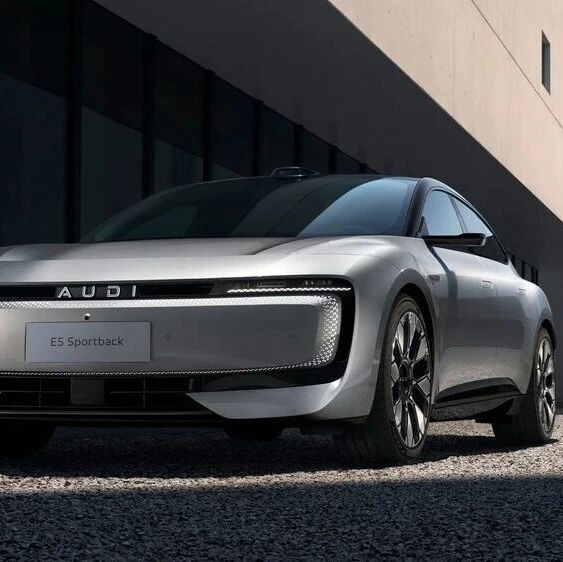
Core Insights - The 2025 Munich International Motor Show showcased a significant presence of Chinese automotive manufacturers and suppliers, with 116 exhibitors, the highest among international participants, indicating a strong shift in the global automotive landscape [2][14] - Chinese automotive companies are transitioning from exploratory participation to establishing a solid foothold in the European market, demonstrating a comprehensive representation of the entire automotive supply chain [2][9] Group 1: Chinese Automotive Brands - BYD launched its Dolphin Surfing Edition at the Munich Motor Show, priced at €37,990 (approximately ¥316,000), marking its first mass-produced model from its upcoming European factory in Hungary [3] - Xpeng Motors gained attention through its collaboration with Volkswagen, showcasing five new models and advanced technologies, including humanoid robots and flying cars [4][5] - Leap Motor's B10, a global model, has seen over 50,000 deliveries since its launch in China, with plans for European delivery starting in October [6] Group 2: Technological Innovations - CATL introduced the NP3.0 technology platform, the highest safety level in battery technology, and launched the Shining Pro lithium iron phosphate battery, responding to the European market's demand for electric vehicle safety and efficiency [9] - Lightyear showcased its NOA intelligent driving and L4 autonomous driving solutions, announcing a global strategy and a partnership with Qualcomm to enhance its technological capabilities [10] - Momenta presented its AI technology and deep collaborations with over 20 global automakers, including plans for L4 autonomous Robotaxi operations in Munich by 2026 [11] Group 3: European Automotive Industry Response - European automakers like BMW and Mercedes are emphasizing collaboration with Chinese companies to enhance battery performance and meet the demands of the Chinese market [13][14] - Audi's CEO acknowledged China's advancements in automotive intelligence and electrification, highlighting the importance of partnerships with Chinese tech firms [14] - The Munich Motor Show illustrated a dual dynamic of competition and cooperation between Chinese and European automotive industries, driving innovation and transformation in the sector [14][15]

AUDI首款战略车型上市 推动奥迪在华电动化战略加速落地
Jing Ji Guan Cha Bao· 2025-09-20 13:11
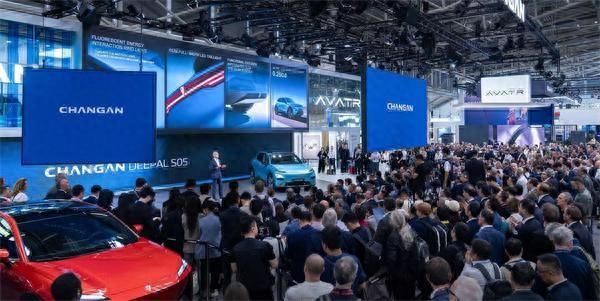
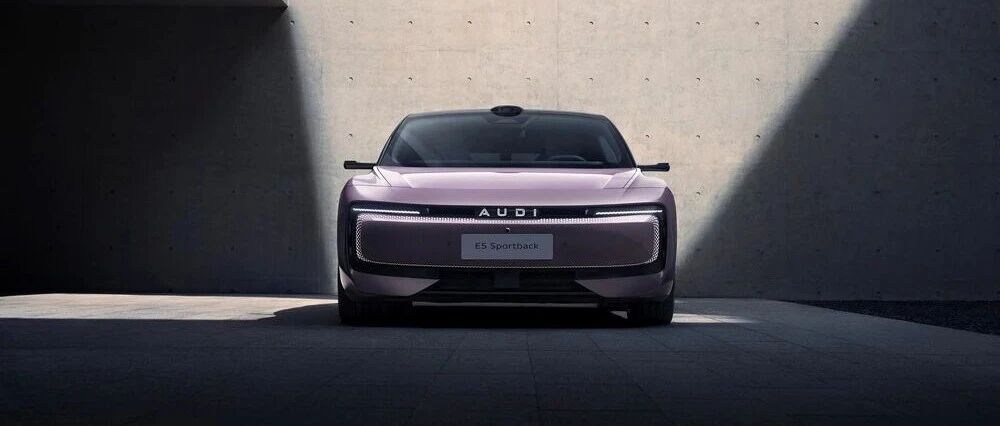
Group 1 - Audi officially launched its first strategic model, the Audi E5 Sportback, on September 16, with a starting price of 235,900 yuan [2] - The Audi E5 Sportback features a design that combines elements of coupe and wagon, reflecting Audi's new electric vehicle design language tailored for the Chinese market [2] - The vehicle is equipped with the new AUDI OS operating system and Qualcomm Snapdragon 8295 automotive-grade chip, providing an iPhone-like user experience [2] Group 2 - Audi is the first luxury car brand to collaborate deeply with Chinese tech company Momenta in the field of assisted driving, developing a comprehensive solution for urban, highway, and parking scenarios [3] - The E5 Sportback boasts a dual motor system producing 787 horsepower and 800 Nm of torque, achieving 0-100 km/h acceleration in just 3.4 seconds [3] - The vehicle incorporates advanced features such as CDC variable damping suspension and air suspension, ensuring a balance of sporty performance and luxury comfort [3] Group 3 - The Audi E5 Sportback is manufactured at the SAIC Audi AUDI Intelligent Manufacturing Base, which adheres to Audi's global quality and craftsmanship standards [4] - The company is upgrading its showrooms to enhance user experience, with nearly 200 showrooms already revamped to reflect AUDI brand elements [4] - By the end of the year, SAIC Audi plans to establish over 240 fully functional user centers across more than 100 cities in China [4]
任少卿加入中科大......
自动驾驶之心· 2025-09-20 05:35
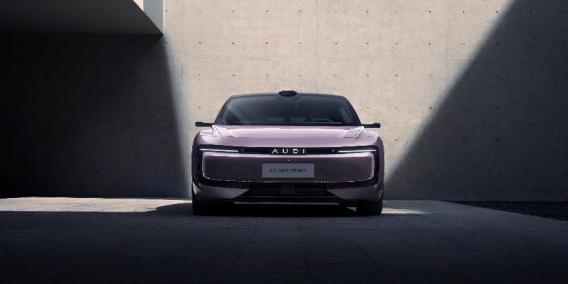
Core Viewpoint - Ren Shaoqing, a prominent figure in AI and autonomous driving, has returned to his alma mater, the University of Science and Technology of China, to start a new academic program focusing on advanced AI topics [4][6]. Group 1: Background of Ren Shaoqing - Ren Shaoqing is a co-founder of Momenta and former Vice President of NIO, with a strong academic background including a PhD from the University of Science and Technology of China [4]. - He is recognized for his contributions to AI, particularly as the author of ResNet and Faster R-CNN, with over 440,000 citations, making him the most cited Chinese scholar globally [4]. Group 2: Academic Program Details - The new program will focus on areas such as AGI (Artificial General Intelligence), world models, embodied intelligence, and AI for Science [6]. - The program is open for recruitment of master's and doctoral students, with urgent interviews scheduled for students with recommendation qualifications starting next Monday [6].

任少卿在中科大招生了!硕博都可,推免学生下周一紧急面试
量子位· 2025-09-20 05:12
Core Viewpoint - Ren Shaoqing, a prominent figure in AI and computer vision, is starting a recruitment program at his alma mater, the University of Science and Technology of China, focusing on advanced topics in AI such as AGI, world models, embodied intelligence, and AI for Science [1][2]. Group 1: Recruitment Details - The recruitment is open for both master's and doctoral students, with emergency interviews starting on the upcoming Monday for students with recommendation qualifications [3]. - Interested students can send their resumes to Ren Shaoqing's email for inquiries regarding the application process and interview details [16]. Group 2: Background of Ren Shaoqing - Ren Shaoqing is an expert in computer vision and autonomous driving, having graduated from the University of Science and Technology of China and obtained a joint PhD with Microsoft Research Asia [4][5]. - He has been recognized as one of the most influential scholars in AI, ranking 10th in the AI 2000 list, and received the Future Science Prize in Mathematics and Computer Science in 2023 [6]. Group 3: Contributions to AI - Ren is a co-author of ResNet, a groundbreaking work in deep learning that addresses the vanishing gradient problem, significantly impacting fields requiring high perception capabilities like computer vision and autonomous driving [7]. - ResNet has received over 290,000 citations and won the Best Paper Award at CVPR 2016 [8]. - He also contributed to Faster R-CNN, an efficient two-stage object detection algorithm that balances speed and accuracy [10]. Group 4: Role in NIO - After completing his PhD, Ren co-founded Momenta and later joined NIO, where he played a key role in developing autonomous driving algorithms and leading the smart driving R&D team [13]. - At NIO, he developed the NIO World Model (NWM), which integrates spatiotemporal cognition and generative capabilities, allowing for high-fidelity scene reconstruction and long-term scenario simulation [14][15].
当豪华车开始炫耀“中国里子”
虎嗅APP· 2025-09-19 11:10
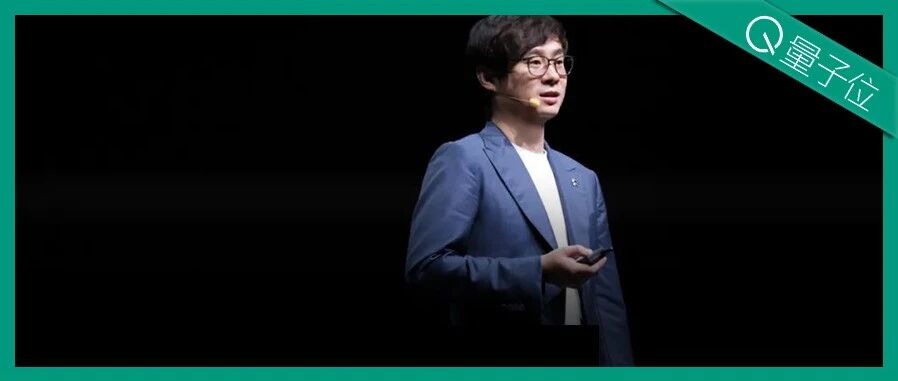
Core Viewpoint - The traditional luxury car market is undergoing a significant transformation as consumers redefine what luxury means, focusing more on technology and performance rather than traditional attributes like engine sound and leather interiors [3][4]. Group 1: Market Dynamics - The launch of the Audi E5 Sportback exemplifies the shift in luxury branding, emphasizing smart technology and fast charging over historical brand narratives [6][7]. - Major luxury brands like BMW, Mercedes-Benz, and Audi have seen significant declines in delivery volumes in China, with decreases of 15.5%, 14.2%, and 10.3% respectively in the first half of the year [7]. - In contrast, Chinese electric vehicle brands are gaining market share, indicating a struggle for traditional luxury brands to adapt to the electric vehicle market [8][11]. Group 2: Challenges for Traditional Luxury Brands - Traditional luxury brands are experiencing "era anxiety," struggling to transition from internal combustion engines to electric vehicles, where the competitive focus has shifted to battery technology and smart features [11][12]. - The unique characteristics of the Chinese market, including high consumer expectations for smart technology, pose additional challenges for traditional brands accustomed to a more uniform global strategy [12]. - The previous reliance on brand heritage and craftsmanship for premium pricing is diminishing as younger consumers prioritize actual performance and experience [12][13]. Group 3: Strategic Partnerships - Traditional luxury brands are increasingly collaborating with Chinese technology firms like Huawei and battery manufacturers like CATL (Contemporary Amperex Technology Co., Limited) to enhance their offerings [30][31]. - Huawei's smart driving solutions and CATL's battery technology are becoming essential components for luxury brands to remain competitive in the evolving market [30][34]. - The partnership with CATL is particularly strategic, as the company holds a dominant position in the global battery market, with a 37.9% share and a significant presence in high-end electric vehicles [22][25]. Group 4: Future Implications - The collaboration between luxury brands and Chinese suppliers signifies a shift in the automotive industry's power dynamics, with traditional brands adapting to new realities by leveraging local expertise [32][35]. - The integration of Chinese technology into luxury vehicles is not just a survival strategy but also a reflection of the changing landscape of the global automotive industry [35][36]. - As luxury brands navigate this transformation, the balance between maintaining brand heritage and embracing new technologies will be crucial for their future success [34][36].
英伟达5亿美元投资Wayve,寻求自动驾驶突破口
Jing Ji Guan Cha Bao· 2025-09-19 11:03
Group 1 - Nvidia is increasing its investment in the autonomous driving and artificial intelligence sectors, with a recent commitment to invest $500 million in the UK startup Wayve [1] - This investment follows a previous $1 billion investment led by SoftBank, highlighting Nvidia's strategic positioning in the global AI landscape [1] - Wayve, founded in 2017, is known for its "end-to-end" algorithms that rely on cameras and machine learning rather than high-definition maps, aligning with Nvidia's computing ecosystem, although its commercialization is still in early stages [1] Group 2 - Despite Nvidia's dominance in AI training through GPUs, its progress in autonomous driving has not met expectations, relying more on partnerships rather than its own product breakthroughs [1] - The investment in Wayve reflects the capital anxiety within the autonomous driving sector, as companies like SoftBank, Uber, and Nvidia have yet to achieve scalable implementation [1] - In contrast to European firms that depend on capital for breakthroughs, Chinese suppliers like Yuanrong Qixing and Momenta showcased a robust and complete supply chain at the Munich Auto Show, indicating strong competition [2]

中国企业全球抢滩:Robotaxi订单纷至,商业化落地加速
Xin Jing Bao· 2025-09-19 03:33
Core Insights - Chinese autonomous driving companies are increasingly entering international markets, shifting from technology importers to exporters, and becoming essential partners in global collaborations [1][2][3] Group 1: International Expansion - Hesai Technology signed a laser radar order worth over $40 million with a leading US Robotaxi company [1] - Momenta plans to start L4 autonomous Robotaxi testing in Munich, Germany, in 2026, having established deep partnerships with over 20 global automakers [2] - Companies like Baidu and Xiaoma Zhixing are also expanding their Robotaxi services internationally, with plans to launch in various regions by 2025-2026 [2][3] Group 2: Technological Advancements - Chinese companies are leveraging complex road environments to develop superior algorithms, enhancing their problem-solving capabilities [4] - Momenta's "data flywheel" approach allows for continuous training and optimization of its algorithms using data from over 400,000 vehicles [4] - The shift from high-precision maps to "mapless" solutions is gaining traction, with Chinese firms leading this technological transition [5] Group 3: Cost Reduction and Commercial Viability - The cost of manufacturing Robotaxis has decreased by 80% over the past five years, making them more competitive globally [6] - Companies like Hesai Technology are producing high-performance laser radars at significantly lower costs, enabling larger fleet deployments [6] - The total cost of Xiaoma Zhixing's seventh-generation autonomous driving suite has decreased by 70%, with substantial reductions in key components [6] Group 4: Market Dynamics and Future Outlook - The capital market's focus is shifting from technology feasibility to commercialization timelines and cash flow expectations [7] - A potential wave of mergers and acquisitions may occur as companies with specific technological expertise seek partnerships with larger firms [7] - Collaborations between tech companies and ride-hailing platforms like Uber are expected to accelerate profitability in the autonomous driving sector [7][8]



中国企业全球抢滩:Robotaxi订单纷至 商业化落地加速
Xin Jing Bao· 2025-09-19 03:31
Group 1 - Chinese autonomous driving companies are increasingly entering overseas markets, with significant contracts being signed, such as Hesai Technology's $40 million lidar order and Junsheng Electronics' 15 billion yuan automotive intelligence project [1][2] - Momenta has partnered with Uber to conduct L4 autonomous driving Robotaxi tests in Munich by 2026, showcasing the shift from technology import to export in the Chinese autonomous driving sector [2][3] - The capital landscape is evolving, with companies like Hello Chuxing securing strategic financing to support their Robotaxi business, indicating a shift from pure investment to collaboration [3][4] Group 2 - The competitive edge of Chinese companies lies in their ability to produce cost-effective solutions, with the manufacturing costs of Robotaxi decreasing by 80% over the past five years [6][7] - The advancements in algorithms, particularly Momenta's data-driven approach, allow for rapid iteration and optimization, leveraging the complex driving conditions in China [4][5] - The market is witnessing a shift in focus from technological feasibility to commercialization timelines and cash flow expectations, leading to potential mergers and acquisitions in the sector [7][8]
奥迪的一次“关键反击”
虎嗅APP· 2025-09-18 10:27
Core Viewpoint - The Audi E5 Sportsback is considered a significant product in the Chinese automotive market, reflecting current industry trends and posing a competitive threat to domestic brands [2][3][9]. Group 1: Product Significance - The Audi E5 Sportsback received over 10,000 pre-orders within 30 minutes of its launch, indicating strong market demand and product appeal [3]. - The model features a high adoption rate of the quattro all-wheel-drive system, with nearly 60% of initial orders opting for this configuration [3]. - The vehicle's color option, "Morning Purple," was chosen by 35% of buyers, showcasing its aesthetic appeal [3]. Group 2: Key Strategies - Audi's approach with the E5 Sportsback includes localizing technology, innovating brand strategy, and implementing disruptive pricing [5][8]. - A global team was formed between Audi AG and SAIC to integrate Audi's technological expertise into the E5 Sportsback, particularly highlighting the quattro system's performance [6]. - The introduction of a new "AUDI" branding, rather than the traditional four-ring logo, aims to attract a younger, tech-savvy consumer base [8]. Group 3: Market Context - The E5 Sportsback represents a shift in the luxury automotive sector, as traditional brands adapt to the growing dominance of local electric vehicle manufacturers [11]. - Audi's sales of electric vehicles in China were only 7,564 units in the first half of the year, while the penetration rate of electric vehicles in the luxury market exceeded 40% [11]. - The collaboration with Chinese tech companies like Huawei and CATL is essential for traditional luxury brands to remain competitive in the rapidly evolving market [12]. Group 4: Competitive Landscape - The E5 Sportsback's pricing strategy, ranging from 235,900 to 319,900 yuan, directly targets the price segments of emerging domestic brands [8]. - The competitive environment is intensifying as new generation products from luxury brands like BMW and Mercedes-Benz prepare to enter the Chinese market, challenging the current dominance of local new energy vehicle brands [13].