
极氪

Search documents
国补调整 地方接棒!年末收关 全国超30地推出汽车消费补贴
Mei Ri Jing Ji Xin Wen· 2025-12-09 12:33
Core Insights - The article highlights the recent surge in local government subsidies for automobile purchases across China, with over 30 provinces and cities implementing special subsidy policies totaling over 1 billion yuan, aimed at stimulating consumer demand as the year-end approaches [1][2]. Group 1: Local Subsidy Initiatives - Local subsidies vary in structure, with Hunan offering a maximum subsidy of 50,000 yuan, while other regions like Hangzhou and Zhenjiang provide substantial incentives for both fuel and new energy vehicles [2]. - The coverage of these subsidies is broad, with cities like Dalian and Fuzhou opening their programs to all local consumers, while others like Tianjin and Hangzhou target specific districts [2]. Group 2: National Policy Context - The national "old-for-new" vehicle subsidy program is nearing its end, with over 80% of the 69 billion yuan allocated for the fourth batch already utilized, leading to early closure of application channels in major provinces [3]. - The national policy adjustments reflect a normal consumption pattern of funds, as stated by the National Development and Reform Commission [3]. Group 3: Market Trends and Consumer Behavior - November saw a decline in retail sales of passenger vehicles, with a year-on-year drop of 8.1%, marking the first decline in three years, attributed to earlier consumption peaks and tightening of old-for-new policies [3][4]. - The impending end of the exemption on new energy vehicle purchase tax is expected to heighten consumer urgency, particularly in rural areas, as the market anticipates a shift towards mid-range fuel and new energy vehicles [4][5]. Group 4: Manufacturer Responses - In response to the changing market dynamics, several major new energy vehicle brands have introduced sales policies to mitigate the impact of the upcoming tax changes, offering to cover tax differences for delayed deliveries [5]. - Predictions for December suggest a stable market with potential slight declines, although new energy vehicle sales are expected to strengthen [5].

“一个吉利”整合进入尾声 吉利汽车公布极氪持有人对价选择
Zhong Guo Jing Ying Bao· 2025-12-09 12:14
Core Insights - Geely Automobile Holdings Limited has announced the final results and implementation plan for the privatization transaction of Zeekr Intelligent Technology Holdings Limited, marking the completion of the "One Geely" initiative [2][3] Summary by Sections Privatization Transaction - Approximately 70.8% of eligible Zeekr shareholders opted for share consideration, resulting in the issuance of 777,228,611 shares by Geely Automobile [2] - About 29.2% of eligible shareholders chose or are considered to have chosen cash consideration, leading to a total cash payment of approximately $701 million [2] - Each Zeekr share can be exchanged for $2.687 in cash or 1.23 shares of Geely Automobile, while each Zeekr American Depositary Share can be exchanged for $26.87 in cash or 12.3 shares of Geely Automobile [2] Merger Completion and Strategic Goals - The merger between Geely Automobile and Zeekr is expected to be completed by December 29, 2025 [3] - Post-merger, Geely aims to leverage Zeekr's leading position in the global luxury electric vehicle market, enhancing its capabilities across technology, products, supply chain, manufacturing, marketing, and international resources [3] - Geely will cover mainstream, mid-to-high-end, and luxury segments, establishing a diverse power system including fuel, pure electric, plug-in hybrid, and hydrogen electric vehicles [3] Financial Performance and Strategic Initiatives - Geely's business operations have shown continuous growth, with a revenue of 239.5 billion yuan for the first three quarters of 2025, a 26% year-on-year increase [4] - Core net profit attributable to shareholders reached 10.62 billion yuan, reflecting a 59% year-on-year growth, indicating significant improvement in profitability [4] - As of September 2025, Geely's total cash level stood at 60.1 billion yuan, with a net cash level of 45.2 billion yuan, showcasing robust cash flow [4] - The completion of the merger will solidify Geely's cost advantages, enhance brand competitiveness, and strengthen its global market influence [4]

销量口碑双第一 极氪9X登顶50万级大型SUV销冠
Ge Long Hui· 2025-12-09 10:17
Core Insights - Zeekr 9X achieved over 8,000 units sold in November, ranking first in the large SUV market priced above 500,000 yuan [1] - The vehicle features advanced technology, including a 48V active stabilizer similar to that used in Rolls-Royce Cullinan, despite facing supply chain challenges [1] - The average delivery price of Zeekr 9X reached 538,000 yuan, indicating strong market demand and consumer acceptance [1] Market Position - Zeekr 9X has successfully penetrated the 500,000 yuan luxury market, competing directly with established brands like BMW and Audi [1] - The average transaction prices for competitors BMW X5 and Audi Q7 are in the range of 500,000 to 600,000 yuan, highlighting the competitive landscape [1] - Zeekr 9X's performance reinforces the capability of Chinese brands to make significant inroads in the high-end electric vehicle sector [1] Consumer Reception - Zeekr 9X topped the large SUV reputation score on automotive platforms, indicating strong consumer approval [1] - It also received the highest score in the 400,000 to 600,000 yuan price segment for new energy SUVs on another platform, showcasing its product strength and user recognition [1]
回归“一个吉利”,即将收官 吉利汽车公布极氪持有人对价选择
Jin Rong Jie· 2025-12-09 09:54
Core Viewpoint - Geely Automobile Holdings Limited is progressing towards the completion of its privatization transaction with Zeekr Intelligent Technology Holdings Limited, marking a significant step in its strategy to consolidate operations and enhance market competitiveness [1] Group 1: Privatization Transaction Details - Approximately 70.8% of eligible Zeekr holders opted for share consideration, resulting in the issuance of 777,228,611 shares by Geely Automobile [1] - About 29.2% of eligible Zeekr holders chose or are deemed to have chosen cash consideration, leading to a total cash payment of approximately $701 million by Geely Automobile [1] Group 2: Strategic Implications - The merger transaction is expected to be completed by December 29, 2025, which will establish a solid foundation for Geely Automobile to build cost advantages and enhance brand competitiveness [1] - Geely Automobile aims to achieve comprehensive coverage across mainstream, mid-to-high-end, and luxury segments, creating a diverse power system that includes fuel, pure electric, plug-in hybrid, and hydrogen fuel cell vehicles [1] - The company is focused on strengthening its smart manufacturing and technological innovation capabilities, with a commitment to improving profitability and delivering long-term returns to shareholders [1]
没有一家“明星”车企,宁波何以产出浙江四成新能源车?
2 1 Shi Ji Jing Ji Bao Dao· 2025-12-09 09:45
Core Insights - Ningbo is undergoing a significant industrial transformation in the manufacturing landscape of the Yangtze River Delta, particularly in the automotive sector, with a focus on electric vehicles (EVs) [1] - The city has achieved a remarkable growth in its automotive manufacturing output, with a total vehicle production of 645,000 units in the first ten months of 2025, including 286,000 units of new energy vehicles (NEVs), marking a 24% year-on-year increase in output value [1][2] - The automotive industry in Ningbo is characterized by a unique "dual-core" structure, featuring both the locally rooted Geely group and the globally recognized SAIC Volkswagen, which complement each other rather than compete [1][2][3] Automotive Manufacturing - SAIC Volkswagen's Ningbo factory is a "star factory" with a production capacity of 300,000 units per year, contributing to one-third of the city's NEV production, and is notable for its flexible manufacturing capabilities [2] - Geely has established a comprehensive ecosystem in Ningbo, including research institutes, core components, and vehicle manufacturing, which enhances efficiency in R&D and production cycles [2][3] - The rapid rise of the Zeekr brand under Geely is attributed to its ability to leverage local engineering resources and manufacturing capabilities, with projected sales of over 220,000 units in 2024 [3] Supply Chain Dynamics - Ningbo hosts over 5,000 automotive parts companies, including 22 national-level champion enterprises and 97 specialized "little giants," making it a hub for automotive supply chains [4][6] - The local supply chain exhibits a high degree of specialization and geographical clustering, resulting in an average coordination response time of just 2.3 hours between vehicle manufacturers and core suppliers [6] - Traditional automotive parts companies are adapting to the NEV wave, with firms like Joyson Electronics and Shenglong actively transitioning to new technologies and business models [4][6] Research and Innovation - Ningbo is investing in future technologies, such as solid-state batteries, with research led by a team at Dongfang University, which has made significant advancements in solid electrolyte materials [7][9] - The development of a new superionic conductor capable of operating at extreme temperatures has the potential to revolutionize solid-state battery applications, garnering international attention [9] - The city is also exploring smart and connected technologies, with initiatives in automated operations at the Meishan Port area, showcasing its ambition to integrate advanced manufacturing with innovative applications [10]
吉利汽车公布极氪持有人对价选择,合并进入收官阶段
Ge Long Hui· 2025-12-09 09:17
Core Viewpoint - Geely Automobile Holdings Limited is finalizing the privatization of Zeekr Intelligent Technology Holdings, marking the completion of the "One Geely" strategy, with significant shareholder participation in the exchange of shares and cash [1][2] Group 1: Privatization Details - Approximately 70.8% of eligible Zeekr shareholders opted for share compensation, resulting in the issuance of 777,228,611 shares by Geely Automobile [1] - About 29.2% of eligible Zeekr shareholders chose or are deemed to have chosen cash compensation, leading to a total cash payment of approximately $701 million [1] - Each Zeekr share can be exchanged for $2.687 in cash or 1.23 shares of Geely Automobile, while each American Depositary Share can be exchanged for $26.87 in cash or 12.3 shares of Geely Automobile [1] Group 2: Strategic Implications - The merger is expected to be completed by December 29, 2025, allowing Geely to leverage Zeekr's position in the luxury electric vehicle market and enhance its technological and global capabilities [2] - Geely aims to cover mainstream, mid-to-high-end, and luxury segments, establishing a diverse power system that includes fuel, pure electric, plug-in hybrid, and hydrogen electric vehicles [2] - Financial performance shows a revenue of 239.5 billion yuan for the first three quarters of 2025, a 26% year-on-year increase, and a core net profit of 10.62 billion yuan, reflecting a 59% growth [2] - As of September 2025, Geely's total cash level reached 60.1 billion yuan, with a net cash level of 45.2 billion yuan, ensuring ample reserves for long-term development [2]
回归“一个吉利”即将收官,吉利汽车公布极氪持有人对价选择
Ge Long Hui A P P· 2025-12-09 09:08
Core Viewpoint - Geely Automobile (0175.HK) announced the results of the privatization transaction for Zeekr Intelligent Technology Holdings Co., Ltd. (NYSE: ZK), indicating a significant step towards the completion of the "One Geely" strategy [1] Group 1: Privatization Transaction Details - Approximately 70.8% of eligible Zeekr holders opted for share consideration, leading to the issuance of a total of 777,228,611 shares by Geely Automobile [1] - About 29.2% of eligible Zeekr holders chose or are considered to have chosen cash consideration, resulting in a total cash payment of approximately $701 million by Geely Automobile [1] Group 2: Strategic Implications - The merger transaction between Geely Automobile and Zeekr is expected to be completed by December 29, 2025, which will establish a solid foundation for Geely to enhance cost advantages, brand competitiveness, and global market influence [1] - Geely aims to achieve comprehensive coverage across mainstream, mid-to-high-end, and luxury segments, forming a diverse power system that includes "fuel, pure electric, plug-in hybrid, and hydrogen fuel cell" [1] - The company is focused on strengthening its smart manufacturing and technological innovation capabilities, with a commitment to improving profitability and delivering long-term returns to shareholders [1]
地平线推高阶智驾普及10万元车型,智驾平权迈入深水区
Bei Jing Shang Bao· 2025-12-09 08:01
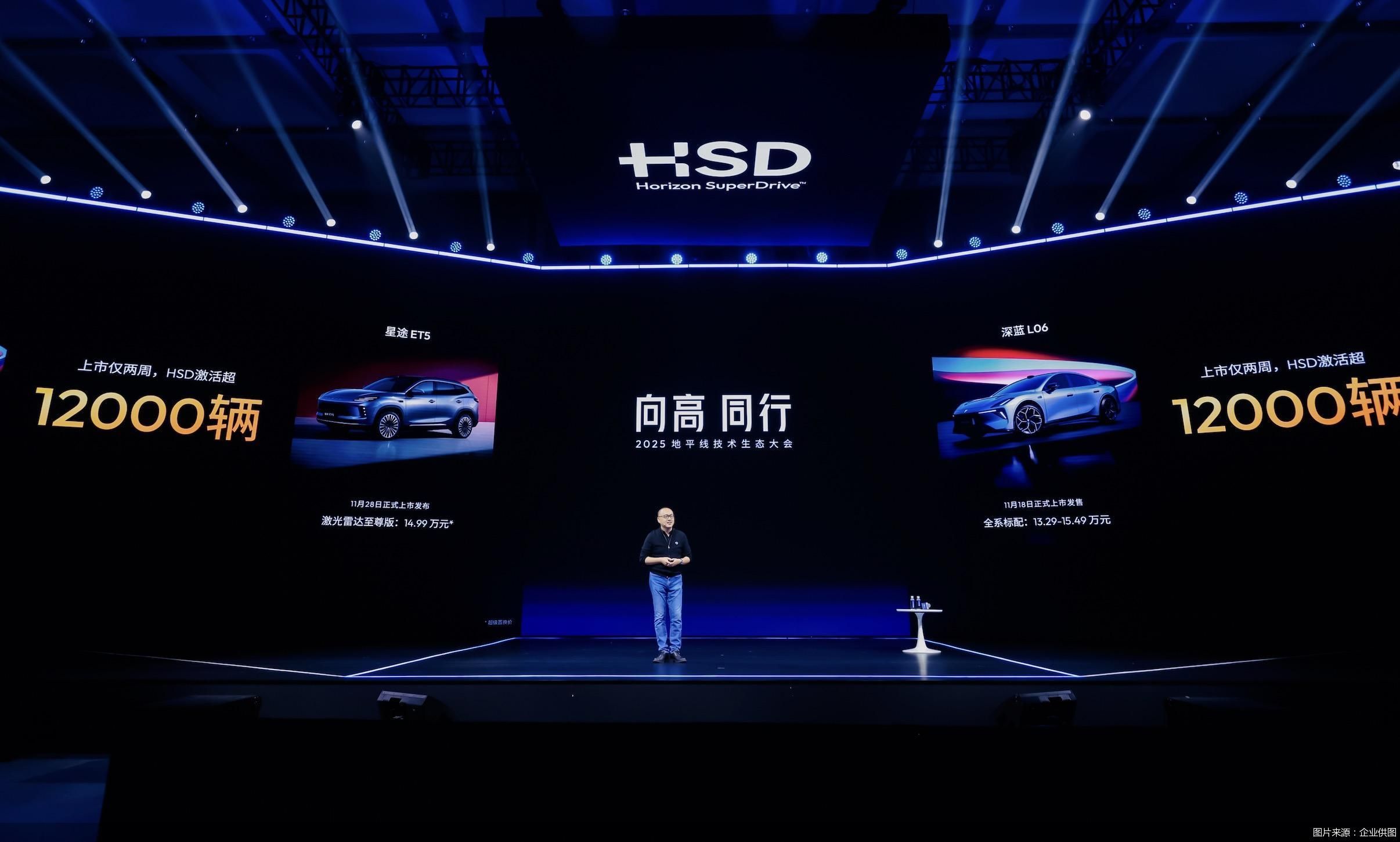
Core Insights - The high-level autonomous driving technology is accelerating its penetration into the mass market, with Horizon Robotics announcing the upcoming mass production of its city navigation assisted driving (NOA) system based on the Journey 6M chip, expected to be featured in vehicles priced around 100,000 yuan [2] Group 1: Market Trends - Historically, advanced city NOA features have been limited to high-end models priced above 200,000 yuan due to the high cost of computing chips and complex algorithm development [3] - The demand for intelligent driving at lower price points is increasing in the Chinese market, with nearly 50% of NOA deliveries in the first three quarters of this year coming from vehicles priced below 200,000 yuan, contributing to a 70% increase in market delivery [4] Group 2: Technological Advancements - Horizon's Journey chip family has achieved cumulative shipments of over 10 million units in five years, with the latest Journey 6 chip series achieving over one million shipments in its first year [3] - The HSD Together algorithm service model aims to significantly reduce the manpower, computing power consumption, and time to market by 90% for partners developing products based on Horizon's validated intelligent foundation [3] Group 3: Competitive Landscape - Major automakers are increasingly introducing high-level autonomous driving features in lower-priced models, such as GAC Toyota's model priced at 149,800 yuan and Zeekr's model featuring city NOA [4] - The competition in the intelligent driving sector is shifting from high-end to mid-range and low-end vehicles, necessitating a balance between cost and performance to avoid a "low price, low quality" cycle [4]
11月国内乘用车零售销量同比下降8.1% 乘联分会预测:2026年车市增长面临压力
Mei Ri Jing Ji Xin Wen· 2025-12-09 06:13
Core Viewpoint - In November, the domestic passenger car market experienced a year-on-year decline in retail sales by 8.1%, contrasting with the typical year-end sales surge seen in previous years. The total retail sales for the year reached approximately 21.48 million units, reflecting a 6.1% increase year-on-year [1][10]. Group 1: Market Performance - The retail sales volume in November was about 2.225 million units, showing a month-on-month decrease of 1.1% [1]. - The cumulative growth rate of retail sales for the year showed fluctuations, with a 1.2% increase from January to February, a 15% increase from March to June, and a decline in growth to around 6% from July to September [3]. - The decline in November sales is attributed to a high base effect from previous quarters, aligning with earlier predictions of a "low-middle-high-flat" trend for the year [3]. Group 2: Policy Impact - The "old-for-new" vehicle replacement policy has been a significant factor in regulating market growth, with over 11.2 million applications for subsidies by October 22, 2023 [3]. - The average daily subsidy scale dropped to 30,000 units in November due to the suspension of subsidies in various regions, indicating a clear effect on growth adjustment [3]. Group 3: New Energy Vehicles (NEVs) - In November, the number of manufacturers with monthly sales exceeding 10,000 units for NEVs rose to 22, accounting for 94.2% of total NEV sales for the month [4]. - The total sales of NEVs reached 1.321 million units in November, marking a year-on-year increase of 4.2%, with a penetration rate of 59.3% in the overall passenger car market, up 7 percentage points from the previous year [4]. - The penetration rate for domestic brands' NEVs was 79.6%, while luxury brands and mainstream joint ventures had penetration rates of 38.8% and 8%, respectively [4]. Group 4: Export Trends - NEV exports reached 284,000 units in November, representing a year-on-year increase of 243.3%, making up 47.3% of the total export market [7]. - The share of pure electric vehicles in NEV exports decreased to 57%, while plug-in hybrid models increased to 42% [7]. - The export of complete vehicles has also driven growth in battery exports, with a total of 7.039 million kWh of electricity used for NEV exports and wholesale in November [8]. Group 5: Future Outlook - The retail share of new forces in the market reached 22.1% in November, an increase of 5.9 percentage points year-on-year, with pure electric models accounting for 72.8% of new force sales [9]. - Predictions for December suggest a relatively stable market, with potential for slight negative growth, influenced by consumer urgency due to upcoming changes in vehicle purchase tax policies [9]. - Looking ahead to 2026, the market is expected to face significant pressure due to changes in tax incentives, with a projected reduction in tax benefits leading to a potential decline in growth [9].

11月俄新电动汽车销量同比增长57%
Xin Hua Cai Jing· 2025-12-08 23:29
Core Insights - The report from Russian automotive analysis agency Autostat indicates that the sales of new electric vehicles in Russia are expected to increase by 57% year-on-year in November 2025, reaching 1,602 units [1] - The top five electric vehicle brands in Russia for November include domestic brands AmberAuto and Evolute, as well as Chinese brands Zeekr, Xiaomi, and BYD [1] - For the first eleven months of 2025, a total of 11,200 new electric vehicles were sold in Russia, representing a 31% decrease compared to the same period in 2024 [1]