
一个吉利

Search documents
【热点评述】简析吉利发布“一个吉利,全面领先”2030战略
乘联分会· 2026-03-05 08:36
Core Viewpoint - Geely Holding Group has officially launched its "One Geely, Comprehensive Leadership" 2030 strategic goal, aiming to achieve global sales exceeding 6.5 million units and revenue surpassing 1 trillion yuan, positioning itself among the top five global automakers by 2030 [3][10]. Strategic Framework - The "One Geely" strategy focuses on enhancing top-level coordination and breaking down operational barriers among its various brands, promoting global collaboration in technology, market expansion, and supply chain sharing to effectively respond to intense competition in the global automotive industry [5][9]. - The "Six-in-One" core capability system is essential for achieving "Comprehensive Leadership," integrating technology, brand, and ecosystem to form a systematic competitive advantage [7]. Technological Support - The implementation of the strategy will heavily rely on the "Seven Vertical" technology system, which includes smart driving, smart cockpit, electronic architecture, vehicle architecture, batteries, electric drive, and super hybrid technology, to enhance safety and competitiveness in the era of electrification and intelligence [8]. Global Market Strategy - Geely's 2030 strategy includes a differentiated global expansion approach, particularly targeting Southeast Asia and Europe, transitioning from product output to full value chain output [9]. Sales Performance and Goals - In 2025, Geely's sales reached a record high of 4 million units, ranking seventh globally, with new energy vehicles becoming a core growth driver, achieving sales of 2.293 million units and a penetration rate of 56% [10]. - For 2026, Geely has set a sales target of 3.45 million units, reflecting a growth of approximately 14% compared to the previous year, with a focus on launching multiple key new models [11]. Challenges Ahead - Despite a strong start in January 2026, where Geely ranked first among domestic manufacturers, the overall industry outlook remains challenging, with most domestic brands experiencing double-digit declines, highlighting the need for effective marketing strategies amid changing policy environments [12][13].


2030年销量突破650万辆 跻身全球前五 吉利控股集团发布“一个吉利 全面领先”战略目标
Jing Ji Wang· 2026-01-23 09:25
Core Insights - Geely Holding Group has announced its 2030 strategic goal of "One Geely, Comprehensive Leadership," aiming to achieve global sales exceeding 6.5 million vehicles and revenue surpassing 1 trillion yuan, with 75% of sales from new energy vehicles and over one-third from overseas markets [1][5]. Group 1: Strategic Goals - The 2030 strategy focuses on enhancing top-level planning and global collaboration to create a unified strategic framework [1][5]. - Geely aims to develop a "six-in-one" core capability system to ensure key performance indicators reach a leading level among global automakers [1][5]. Group 2: Sales Performance - In 2025, Geely's total sales reached 4.116 million vehicles, a 26% year-on-year increase, marking five consecutive years of rapid growth [3]. - New energy vehicle sales reached 2.293 million units, up 58%, with a penetration rate of 56% [3]. Group 3: Brand and Market Strategy - Geely plans to strengthen its core brand and create a clear, distinctive global brand matrix to enhance brand competitiveness and influence [5]. - The company will leverage its international brands like Volvo and Polestar to capitalize on local market advantages in Europe and North America [5]. Group 4: Technological Advancements - Geely is committed to enhancing its "seven verticals" technology system, focusing on smart driving, smart cockpits, and electric architectures to maintain a leading position in safety and innovation [6][9]. - The company aims to develop advanced platforms for smart driving and AI technologies, including the L2 and L3 autonomous driving capabilities [6][7]. Group 5: Ecosystem Development - Geely is focusing on three major ecological business areas: user services, future mobility, and methanol-hydrogen electric ecosystems [10][12]. - The company plans to establish a comprehensive service system for users and develop a nationwide integrated mobility service by 2030 [10]. Group 6: Talent and Sustainability - Geely is enhancing its organizational structure and talent development to support its transformation into a technology-driven enterprise [13]. - The company is committed to sustainable development, aiming to reduce carbon footprints and promote green technologies across its product lifecycle [13]. Group 7: Future Outlook - Geely aims to innovate in AI technology, energy diversification, product premiumization, and internationalization to drive high-quality development in the automotive industry [15]. - The company is set to launch new models and technologies that enhance user experience and operational efficiency [15].
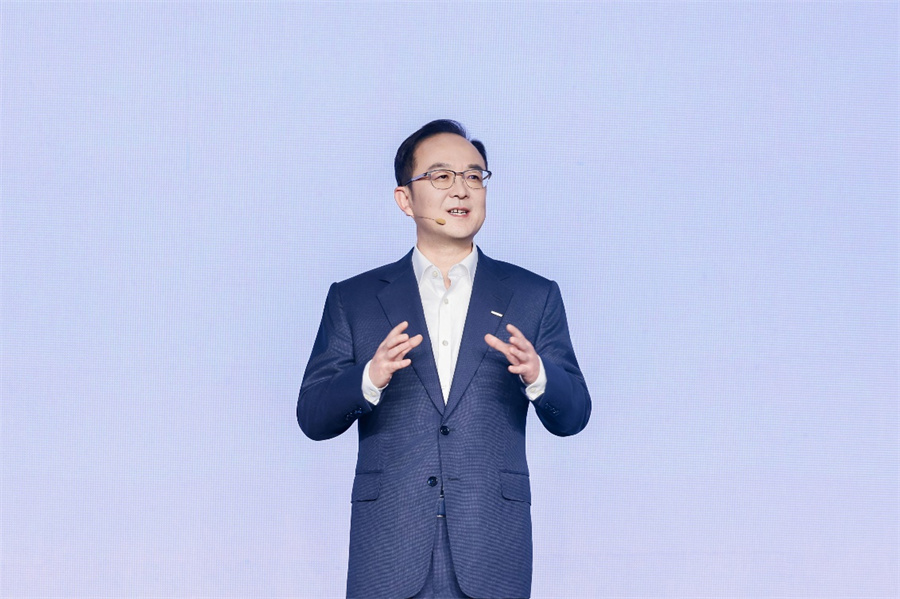
吉利控股集团发布“一个吉利 全面领先”战略目标
Zhong Guo Qi Che Bao Wang· 2026-01-23 03:58
Core Insights - Geely Holding Group has announced its 2030 strategic goal of "One Geely, Comprehensive Leadership," aiming to achieve global sales exceeding 6.5 million vehicles and revenue surpassing 1 trillion yuan, with 75% of sales coming from new energy vehicles [1][5] - The company plans to enhance its core capabilities and establish a global strategic framework to become a leader in high-quality development for Chinese enterprises [1][5] Strategic Goals - The 2030 key indicators include global total sales exceeding 6.5 million vehicles, revenue over 1 trillion yuan, and ranking among the top five global automakers [1] - Geely aims for new energy vehicle sales to account for approximately 75% of total sales and for overseas sales to exceed one-third of total sales [1] Business Performance - In 2025, Geely's total sales reached 4.116 million vehicles, a 26% year-on-year increase, with new energy vehicle sales at 2.293 million, up 58%, achieving a penetration rate of 56% [3] - Geely ranked seventh globally in total sales, marking it as the fastest-growing company among the top ten automotive groups [3] Brand Strategy - Geely is focused on strengthening its core brand and creating a clear, distinctive global brand matrix to enhance brand competitiveness and influence [5] - The company will leverage its various brands, including Geely, Lynk & Co, and Volvo, to create a collaborative and mutually beneficial brand partnership model [5] Technological Advancements - Geely is committed to enhancing its "Seven Vertical" technology system, focusing on smart driving, smart cockpits, and electric architectures to maintain a leading position in global safety [8] - The company aims to develop advanced platforms for L2 and L3 autonomous driving and to commercialize L4 technology and Robotaxi services [8] Ecosystem Development - Geely plans to establish three major ecological business areas: user services, future mobility, and methanol-hydrogen electric ecosystems [9][10] - The user service ecosystem will focus on creating a convenient, transparent, and digitalized after-sales service system [9] Talent and ESG Initiatives - Geely is enhancing its organizational structure and talent development to support its transformation into a technology-driven enterprise [11][13] - The company is committed to sustainable development, aiming to integrate green technologies and practices throughout its product lifecycle [13] Future Outlook - By 2026, Geely aims to create a unified "smart vehicle brain" through AI technology, enhancing the driving experience and promoting high-quality development in the automotive industry [14] - The company is focused on regional deepening and global collaboration to ensure steady international growth [14][15]
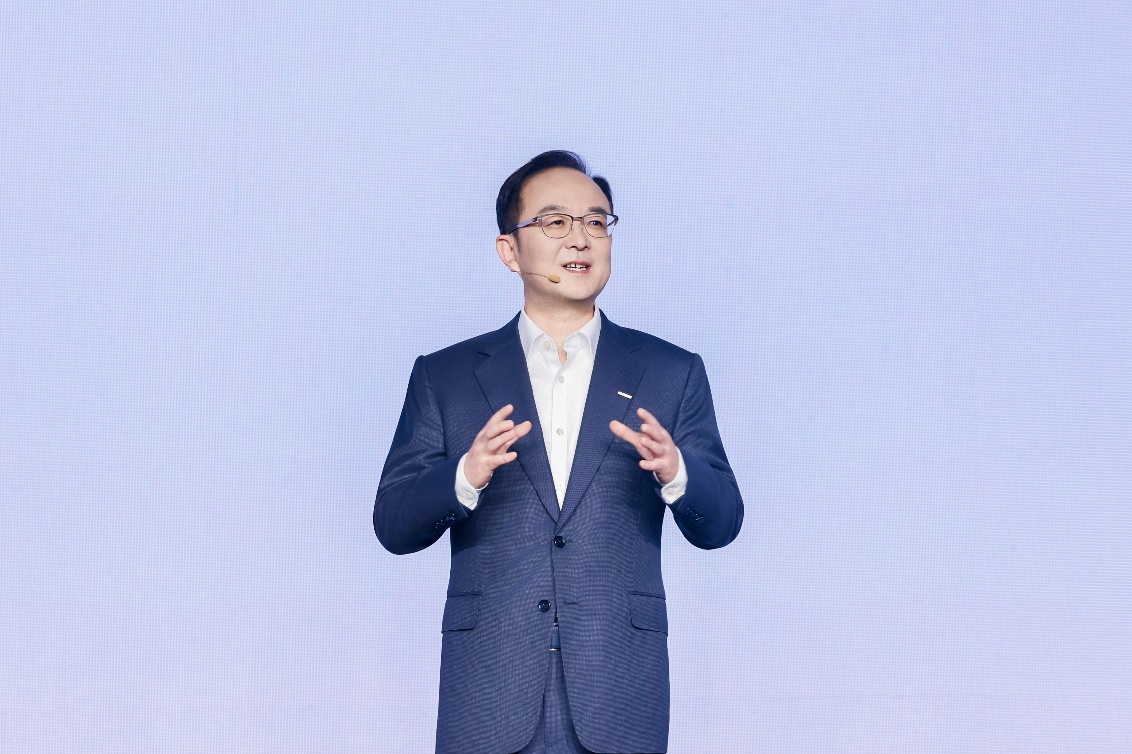
吉利喊出“万亿”营收目标
Zhong Guo Ji Jin Bao· 2026-01-22 16:17
Core Insights - Geely aims to achieve a revenue of over 1 trillion yuan and global sales exceeding 6.5 million vehicles by 2030, positioning itself among the top five global automakers [2][5] - The company reported a sales milestone of 4.116 million vehicles in 2025, ranking seventh globally [2] Group 1: New Energy Vehicles as Growth Engine - New energy vehicles (NEVs) are projected to account for approximately 75% of Geely's total sales by 2030, translating to over 4.87 million NEVs [4] - In 2025, Geely's total sales grew by 26% year-on-year, with NEV sales increasing by 58% to 2.293 million units, achieving a NEV penetration rate of 55.7% [4] - Geely's Galaxy brand saw a remarkable 150% year-on-year sales growth in 2025, reaching 1.2358 million units, highlighting the effectiveness of Geely's strategic transition to NEVs [4] Group 2: Global Market Expansion - Geely plans to ensure that over one-third of its total sales by 2030 will come from overseas markets, estimating overseas sales to exceed 2.16 million vehicles [5] - The company has accelerated its global market strategy, including a strategic partnership with Renault in Brazil to produce and sell NEVs [6] Group 3: Brand Strategy and Ecosystem Development - Geely aims to strengthen its brand matrix by enhancing the positioning and synergy of its various brands, including Geely, Galaxy, Lynk & Co, and Zeekr, while leveraging international brands like Volvo and Polestar [7] - The company plans to launch 100,000 customized Robotaxi vehicles by 2030, initiating commercial operations globally [7] Group 4: Strategic Integration and Resource Optimization - Geely is committed to implementing the "One Geely" strategy, focusing on top-level operations and global governance to ensure efficient and compliant operations across its business units [8] - The company aims to streamline its business segments and optimize its industrial layout, enhancing resource utilization efficiency [8] Group 5: Technological Advancements - Geely plans to develop a global top-tier new energy architecture covering vehicle classes A to E, with a target to reduce the average development cycle and overall costs by over 30% [9] Group 6: User Service Ecosystem - Geely is initiating the "Geely Boundless" ecosystem to facilitate shared user rights across multiple brands, aiming to create a comprehensive service experience that integrates post-vehicle market, mobility services, and quality living [10]
吉利喊出“万亿”营收目标
中国基金报· 2026-01-22 16:07
Core Viewpoint - Geely aims to achieve a revenue of over 1 trillion yuan and global sales exceeding 6.5 million vehicles by 2030, positioning itself among the top five global automakers [2][4]. Group 1: Sales and Revenue Goals - Geely's sales surpassed 4.1 million vehicles in 2025, ranking seventh among global automakers [3]. - The target for 2030 includes global sales of over 6.5 million vehicles, with a revenue goal exceeding 1 trillion yuan [4][11]. Group 2: New Energy Vehicles (NEVs) as Growth Engine - NEVs are identified as a core growth engine, with an estimated 75% of 2030 sales coming from this segment, translating to over 4.87 million NEVs [6]. - In 2025, Geely's NEV sales grew by 58% to 2.29 million units, achieving a penetration rate of 55.7% [6][7]. Group 3: Global Market Expansion - By 2030, Geely aims for over one-third of its sales to come from international markets, estimating overseas sales to exceed 2.16 million vehicles [11]. - The company has accelerated its global market strategy, including a partnership with Renault in Brazil to produce and sell NEVs [12][13]. Group 4: Brand Strategy and Ecosystem Development - Geely plans to enhance its brand matrix by leveraging its various brands, including Geely, Lynk & Co, and Volvo, to improve competitiveness [14]. - The company is set to launch 100,000 customized Robotaxi vehicles for commercial operation globally by 2030 [15]. Group 5: Strategic Integration and Resource Optimization - Geely's "One Geely" strategy focuses on top-level operations and global governance to ensure efficient resource integration and compliance across business units [17]. - The company aims to reduce the average development cycle and costs of new models by over 30% through a new global NEV architecture [17].
“一个吉利”整合进入尾声 吉利汽车公布极氪持有人对价选择
Zhong Guo Jing Ying Bao· 2025-12-09 12:14
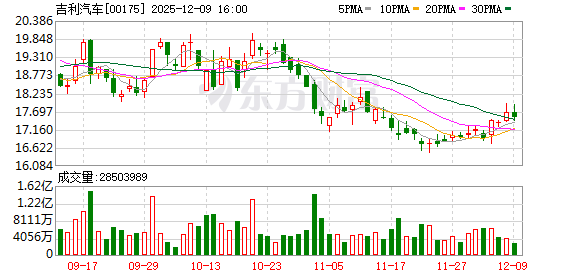
Core Insights - Geely Automobile Holdings Limited has announced the final results and implementation plan for the privatization transaction of Zeekr Intelligent Technology Holdings Limited, marking the completion of the "One Geely" initiative [2][3] Summary by Sections Privatization Transaction - Approximately 70.8% of eligible Zeekr shareholders opted for share consideration, resulting in the issuance of 777,228,611 shares by Geely Automobile [2] - About 29.2% of eligible shareholders chose or are considered to have chosen cash consideration, leading to a total cash payment of approximately $701 million [2] - Each Zeekr share can be exchanged for $2.687 in cash or 1.23 shares of Geely Automobile, while each Zeekr American Depositary Share can be exchanged for $26.87 in cash or 12.3 shares of Geely Automobile [2] Merger Completion and Strategic Goals - The merger between Geely Automobile and Zeekr is expected to be completed by December 29, 2025 [3] - Post-merger, Geely aims to leverage Zeekr's leading position in the global luxury electric vehicle market, enhancing its capabilities across technology, products, supply chain, manufacturing, marketing, and international resources [3] - Geely will cover mainstream, mid-to-high-end, and luxury segments, establishing a diverse power system including fuel, pure electric, plug-in hybrid, and hydrogen electric vehicles [3] Financial Performance and Strategic Initiatives - Geely's business operations have shown continuous growth, with a revenue of 239.5 billion yuan for the first three quarters of 2025, a 26% year-on-year increase [4] - Core net profit attributable to shareholders reached 10.62 billion yuan, reflecting a 59% year-on-year growth, indicating significant improvement in profitability [4] - As of September 2025, Geely's total cash level stood at 60.1 billion yuan, with a net cash level of 45.2 billion yuan, showcasing robust cash flow [4] - The completion of the merger will solidify Geely's cost advantages, enhance brand competitiveness, and strengthen its global market influence [4]

产销逆势新高,“一个吉利” 战略的红利释放
晚点Auto· 2025-11-19 12:50
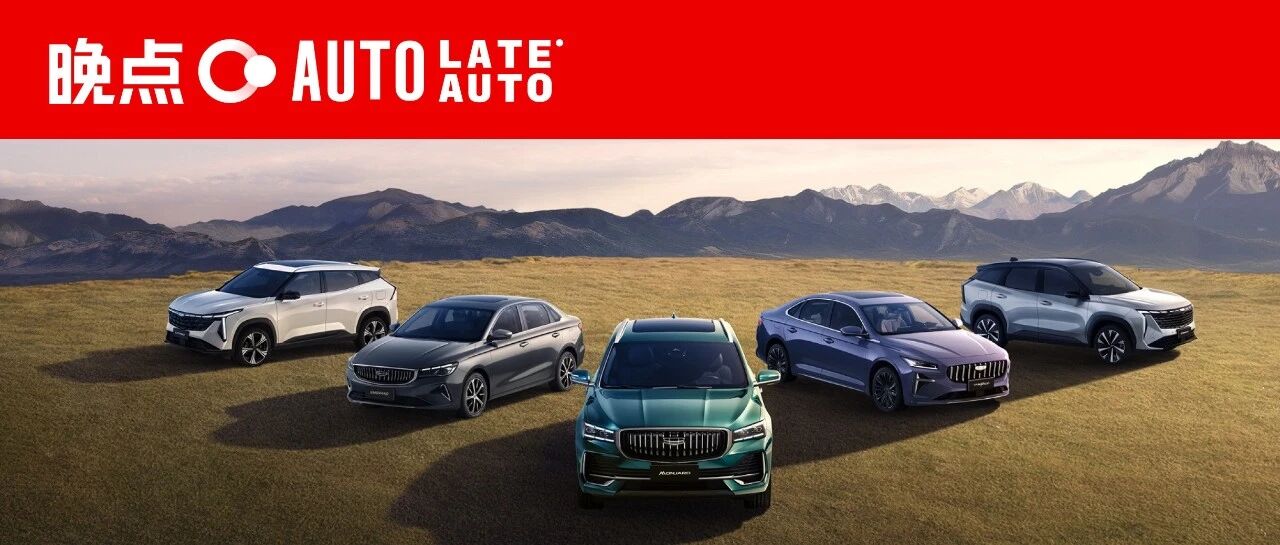
Core Viewpoint - Geely Auto has shown significant growth in key performance indicators despite industry challenges, with a projected annual sales target of 3 million units becoming increasingly likely [4][20]. Sales Performance - In Q3, Geely's sales reached 761,000 units, a year-on-year increase of 43%, surpassing the industry average [4]. - The cumulative sales for the first three quarters exceeded 2.17 million units, with market share rising from 8% to 10.2% [5]. - The average sales price increased from 93,000 yuan in Q1 to 105,000 yuan in Q3, reflecting improved product structure and profitability [10][18]. Product Strategy - The "One Geely" strategy has led to better product integration, allowing for a clearer market segmentation across different brands, enhancing competitiveness [5][16]. - The Galaxy brand has seen explosive growth, with Q3 sales reaching 327,000 units, a 170% increase year-on-year [5]. - Key models like the Galaxy Star and Starry 8 have performed exceptionally well, with the Starry 8 becoming the top-selling plug-in hybrid B-class sedan in China [8]. Brand Collaboration - The merger of Lynk & Co and Zeekr into Zeekr Technology Group has clarified brand positioning, with Lynk focusing on high-end markets and Zeekr on luxury electric vehicles [10][11]. - The collaboration has reduced internal competition and improved operational efficiency, with a notable increase in sales for both brands [10][11]. Financial Efficiency - The company has achieved significant cost savings through strategic integration, with R&D expenses reduced by 10%-20% annually [16]. - Management expenses decreased to 1.8% from 2.4% year-on-year, indicating improved operational efficiency [18]. Future Outlook - Geely plans to accelerate new product launches, with several new models expected to hit the market in the coming quarters [20]. - The management believes that the current market challenges present new opportunities for Geely, emphasizing a focus on sustainable profitability [19][20].
对话淦家阅:《台州宣言》一年考,“笨小孩”吉利如何闯关
2 1 Shi Ji Jing Ji Bao Dao· 2025-09-22 23:07
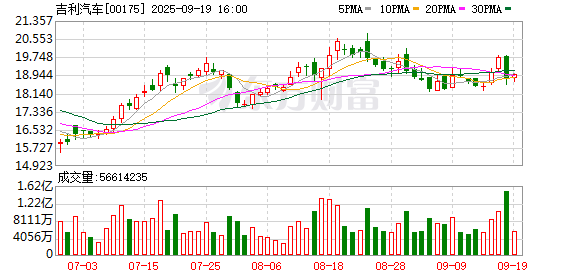
Core Viewpoint - Geely is undergoing significant internal integration to enhance efficiency and reduce redundancy, aiming to establish a unified brand identity and improve product positioning in the competitive automotive market [1][4][6]. Group 1: Internal Integration and Brand Positioning - Geely's CEO emphasizes the importance of a systematic approach to integration, referring to the company as a "clumsy child" that must steadily progress towards its goals [2][3]. - The integration has clarified brand positioning, with distinct roles for its sub-brands: Zeekr as luxury technology, Lynk & Co as mid-to-high-end performance, and Galaxy as mainstream high-value products [2][4]. - The launch of the Galaxy M9 SUV, priced under 200,000 yuan, showcases Geely's ability to control costs and break market barriers [2][15]. Group 2: Market Challenges and Sales Goals - Geely has raised its annual sales target to 3 million units, reflecting confidence in its growth strategy amid fierce competition in the electric vehicle market [5][17]. - The company aims to accelerate product launches, with several new models, including the Zeekr 9X and Starry 6, set to hit the market soon [5][18]. - Geely's sales from January to August reached 1.897 million units, a 47% year-on-year increase, with domestic growth exceeding 60% [17][19]. Group 3: Technological Advancements and Strategic Partnerships - Geely is focusing on enhancing its smart driving capabilities through a partnership with Qianli Technology, aiming to develop a comprehensive intelligent driving solution [8][10]. - The company is committed to maintaining technological leadership in smart driving, requiring significant investment in AI and engineering capabilities [10][11]. - Geely's R&D investment from 2021 to 2025 exceeds 100 billion yuan, with total R&D spending over 250 billion yuan in nearly 11 years, indicating a shift from investment to harvest phase [16].
21对话|淦家阅:《台州宣言》一年考 “笨小孩”吉利如何闯关
2 1 Shi Ji Jing Ji Bao Dao· 2025-09-20 05:19
Core Viewpoint - Geely is undergoing significant internal restructuring to achieve a unified brand strategy, focusing on integrating its autonomous driving teams and enhancing operational efficiency [2][3][4]. Group 1: Organizational Changes - Geely's CEO emphasized the need for a cohesive approach to autonomous driving, moving away from multiple fragmented teams to a single entity called "Qianli Zhijia" [3][4]. - The establishment of Qianli Zhijia aims to combine AI capabilities from Qianli Technology with Geely's mass production experience, creating a more efficient development process [3][4][10]. - The integration process is expected to address issues of internal competition among brands and reduce redundant investments, thereby improving overall efficiency [4][5][9]. Group 2: Product Strategy - Geely is positioning its brands distinctly: Zeekr as luxury technology, Lynk & Co as mid-to-high-end performance, and Galaxy as mainstream high-value products [4][9]. - The recent launch of the Galaxy M9 SUV, priced under 200,000 yuan, showcases Geely's ability to control costs while offering competitive products [4][20]. - The company aims to enhance its product matrix by ensuring that different models cater to various market segments without overlapping [4][22]. Group 3: Market Position and Goals - Geely has raised its annual sales target to 3 million units, reflecting confidence in its growth strategy amid increasing competition in the electric vehicle market [7][25]. - The company reported a 47% year-on-year increase in sales from January to August, with significant growth in the domestic market [25][26]. - Geely plans to accelerate the launch of new models, including the Zeekr 9X and Galaxy M9, to meet its revised sales goals [7][26]. Group 4: Technological Development - Geely is focusing on developing a robust technological framework for its autonomous driving capabilities, emphasizing the need for both technical leadership and economic efficiency [10][12]. - The company has committed over 100 billion yuan to R&D from 2021 to 2025, with total investments exceeding 250 billion yuan over the past 11 years [21][25]. - Geely's strategy includes leveraging shared components across brands to reduce costs and enhance product quality [21][24].
21对话|淦家阅:《台州宣言》一年考,“笨小孩”吉利如何闯关
2 1 Shi Ji Jing Ji Bao Dao· 2025-09-20 04:37
Core Viewpoint - Geely is undergoing significant internal restructuring to enhance efficiency and reduce resource duplication, particularly in its smart driving teams, as part of its "One Geely" strategy [1][2][9] Group 1: Organizational Changes - Geely has consolidated multiple smart driving teams into a single entity called "Qianli Zhijia" to address issues of resource dispersion and redundancy [2][3] - The establishment of Qianli Zhijia aims to integrate AI capabilities from Qianli Technology with Geely's mass production experience [2][10] - A new subsidiary, "Qianli Haohan," will be created under Qianli Zhijia to provide smart driving services specifically for Geely [2][11] Group 2: Product Strategy - Geely has clarified its brand positioning, with Zeekr targeting luxury technology, Lynk focusing on mid-to-high-end performance, and Galaxy catering to mainstream high-value products [3][8] - The Galaxy M9, a large six-seat SUV priced under 200,000 yuan, exemplifies Geely's ability to control costs while breaking market barriers [3][20] - The company emphasizes a "Three Nine Plan" to ensure distinct market positioning for its various brands [3][22] Group 3: Financial Performance and Goals - Geely has raised its annual sales target to 3 million units, reflecting confidence in its growth trajectory, with a 47% year-on-year increase in sales from January to August [7][25][26] - The company has seen significant growth in the domestic market, exceeding 60% year-on-year [25] - The Galaxy brand has achieved over 1.33 million cumulative sales, marking it as the fastest-growing new energy brand to reach this milestone [7][26] Group 4: Competitive Landscape - The Chinese automotive market is highly competitive, with local brands capturing nearly 90% of the new energy vehicle market share by mid-2025 [6] - Geely faces pressure from competitors like BYD, particularly in the 100,000 to 200,000 yuan price segment [7][25] - The company is accelerating product launches, including the upcoming Zeekr 9X and Xingyao 6 models, to maintain market competitiveness [7][26]