
中诚信国际

Search documents
湖北清能投资发展集团有限公司2025年面向专业投资者公开发行公司债券跟踪评级获“AAA”评级
Sou Hu Cai Jing· 2025-07-31 02:30
中诚信国际认为,湖北清能投资发展集团有限公司信用水平在未来12~18个月内将保持稳定。 2025年7月30日,中诚信国际公布评级报告,湖北清能投资发展集团有限公司2025年面向专业投资者公 开发行公司债券跟踪评级获"AAA"评级。 本次跟踪维持主体及债项上次评级结论,主要基于湖北清能投资发展集团有限公司(以下简称"湖北清 能"或"公司")控股股东综合实力雄厚,公司在业务及资金等方面可获得股东支持、融资渠道较为通畅 等方面的优势。同时中诚信国际也关注到房地产行业风险、土地储备质量有待改善、新能源业务投资及 经营情况有待观察等因素对其经营和整体信用状况造成的影响。本次债项信用等级充分考虑了湖北省融 资担保集团有限责任公司(以下简称"湖北担保")提供的全额无条件不可撤销的连带责任保证担保对债 项还本付息的保障作用。 来源:金融界 ...
四川省国有资产经营投资管理有限责任公司2024年面向专业投资者公开发行公司债券(第一期)跟踪评级获“AAA”评级
Sou Hu Cai Jing· 2025-07-30 03:22
本次跟踪维持主体及债项上次评级结论,其中"24国经01"债项级别充分考虑了四川发展融资担保股份有 限公司(以下简称"四川发展担保")提供的无条件不可撤销的连带责任保证担保,"24国经02"债项级别 充分考虑了天府信用增进股份有限公司(以下简称"天府信用增进")提供的不可撤销的连带责任保证担 保。中诚信国际认为,跟踪期内,四川省经济财政实力不断增强,综合实力在西部地区领先,潜在的支 持能力很强;四川省国有资产经营投资管理有限责任公司(以下简称"四川国经"或"公司")为四川省以 农业和科技产业为重点领域的国有资本运营公司,职能定位重要,继续获得政府大力的支持。同时中诚 信国际也关注到公司利润总额对个别股权投资收益依赖较大、担保业务扩张较快带来的代偿风险、存量 逾期委托贷款本息尚未收回以及参股公司股权拟无偿划出等因素对其经营和整体信用状况造成的影响。 中诚信国际认为,四川省国有资产经营投资管理有限责任公司信用水平在未来12~18个月内将保持稳 定。 2025年7月29日,中诚信国际公布评级报告,四川省国有资产经营投资管理有限责任公司2024年面向专 业投资者公开发行公司债券(第一期)跟踪评级获"AAA"评级。 来源 ...
扩内需政策有望进一步加码
Zhong Guo Zheng Quan Bao· 2025-07-17 21:03
Core Viewpoint - The macroeconomic policies in China are expected to further support economic growth in the second half of the year, with an emphasis on boosting consumption, stabilizing the real estate market, and enhancing liquidity [1][2]. Group 1: Economic Performance - China's GDP grew by 5.3% year-on-year in the first half of the year, with major indicators performing better than expected, largely due to proactive macroeconomic policy support [1]. - Fiscal policies have played a significant role in driving economic performance, with effective consumer promotion measures noted by experts [1]. Group 2: Consumption and Export Dynamics - The improvement in consumption is attributed not only to subsidies but also to the emergence of new consumer habits [2]. - Despite a decline in the export growth rate of labor-intensive goods, manufacturing exports, particularly in integrated circuits and automobiles, have helped maintain a high overall export growth rate [2]. Group 3: Future Policy Directions - Experts anticipate continued macroeconomic policy support to foster economic growth, with a focus on expanding domestic demand [2]. - Policies aimed at boosting consumption are expected to evolve, with an emphasis on income enhancement and alleviating supply-side constraints to create new consumption scenarios [2]. Group 4: Monetary Policy Considerations - There is potential for further adjustments in monetary policy, including liquidity provision and benchmark interest rates [3]. - Regulatory policies may also see adjustments, particularly concerning interbank liabilities and certificates of deposit [3].
熊猫债市场年度回顾与展望:大珠小珠落玉盘,保持活跃,保持期待
Zhong Cheng Xin Guo Ji· 2025-07-16 11:01
Report Industry Investment Rating No relevant content provided. Core Viewpoints of the Report - In 2024, the panda bond market continued to be hot, with the annual issuance volume reaching a new high, and the market is expected to remain active in 2025 [1][17] - The development of the panda bond market is driven by factors such as the low - cost financing advantage of RMB, the improvement of relevant systems, and the increase in foreign investment participation [1][2] Summary According to Related Content 2024 Review - **Issuance Scale and Structure**: In 2024, 44 entities issued 109 panda bonds, with a total issuance scale of 194.8 billion yuan, a year - on - year increase of 26.1%. The proportion of pure foreign issuers rose from about 20% in 2023 to nearly 40%. The proportion of bonds with a term of 5 years and above exceeded 20%, and the proportion of bonds with a single - issue scale of over 25 billion yuan rose from 25% to 50% [1] - **Regional and Industry Diversity**: Since 2023, panda bond issuers have covered five continents globally, with new issuers from South America in 2024. The issuer industries include finance, consumption, industry, etc., with new sub - industries such as pulp and original research drugs [1] - **Investment - side Changes**: The proportion of foreign investors and foreign banks in panda bond investment increased from 20% in 2023 to nearly 50% in 2024, due to RMB internationalization, good issuer qualifications, and yield advantages [2] 2024 Highlights - **BASF's First Panda Bond**: In June 2024, BASF issued a 2 - billion - yuan panda bond with a final coupon rate of 2.39%, using an optimized pricing and allocation mechanism [10][11] - **Suzano's First Panda Bond in Latin America**: In November 2024, Suzano issued a 1.2 - billion - yuan green panda bond, highlighting the deepening of China - Brazil bilateral financial cooperation [12] - **UOB's Return and Listing on SGX**: In October 2024, UOB issued a 5 - billion - yuan panda bond, and it was listed on the Singapore Exchange in November, the first panda bond to be listed outside the Greater China region [13] - **Beijing Enterprises' 10 - year Panda Bond**: In April 2024, Beijing Enterprises issued a 2 - billion - yuan 10 - year panda bond, setting multiple market records and forming a relatively complete bond valuation system [14] - **CapitaLand's Sustainable - linked Panda Bonds**: In 2024, CapitaLand issued two phases of panda bonds totaling 2 billion yuan, the first being a sustainable - linked panda bond from a Singaporean enterprise, which helps achieve sustainability goals [16] 2025 Outlook - **Issuance Scale**: The panda bond issuance scale is expected to remain high in 2025, with regular issuers likely to increase issuance frequency, issue long - term bonds, and diversify issuance varieties [17] - **Issuer Structure**: The proportion of pure foreign issuers may further increase, and more issuers from regions such as Africa, the Middle East, and Latin America are expected to enter the market [18] - **Investment - side Trends**: Foreign investors are expected to maintain high enthusiasm for investing in panda bonds due to the optimization of investment mechanisms, and the investment value of panda bonds is expected to be further demonstrated [20] Rating Market - In 2024, China Chengxin International maintained a leading position in the panda bond rating market, with a comprehensive market share of 54% and 70% in the pure foreign issuer rating market [21]
中拉合作迈向新阶段,熊猫债引领金融合作新机遇
Zhong Cheng Xin Guo Ji· 2025-07-16 11:01
Report Summary 1. Report Industry Investment Rating No information provided. 2. Core Viewpoints - The China - Latin America and the Caribbean Community (CELAC) cooperation has entered a new stage, with deepening political mutual trust and expanding economic and trade cooperation. The issuance of panda bonds is an important direction for financial cooperation between the two sides, but attention should be paid to the sovereign credit risks in Latin America and the construction of a new sovereign credit rating system [1][2][6][10]. 3. Summary by Relevant Catalogs 3.1 China - Latin America Cooperation Enters a New Stage - On May 13, 2025, the Fourth Ministerial Meeting of the China - CELAC Forum was held in Beijing. On May 14, a seminar on China - Latin America panda bonds was held, with representatives from China and Brazil participating [1]. - Latin America is rich in resources and strategically important. In 2024, the bilateral trade volume between China and Latin America reached $500 billion. By the end of 2023, China's direct investment stock in Latin America was $600.8 billion. China has 5 free - trade partners in Latin America, and the free - trade dividends are constantly emerging [2]. - China's political relations with Latin American countries have been upgraded. China has proposed initiatives that are increasingly recognized by Latin American countries, and more than 20 countries have signed Belt and Road cooperation memorandums with China [4]. 3.2 Promising Prospect of China - Latin America Panda Bond Cooperation - In 2024, 44 entities issued 109 panda bonds with a total issuance scale of 194.8 billion yuan, a year - on - year increase of 26.1%. The proportion of overseas investors increased significantly to nearly 50% [6]. - In November 2024, the first panda bond issued by a Latin American entity was successfully issued, setting a benchmark for more Latin American issuers [6][7]. - Chinese rating agencies play an important role in bridging information asymmetry between overseas issuers and domestic investors. However, they need to innovate rating methods due to the limitations of local ratings and geopolitical changes [9]. 3.3 Attention to Sovereign Credit Risks in Latin America - Sovereign credit risk is an important factor affecting Latin American entities' issuance of panda bonds. The deepening of China - Latin America political mutual trust and cooperation helps improve the sovereign credit strength of Latin American economies in RMB terms [10]. - In 2025, Latin American economic growth is expected to slow from 2.4% in 2024 to 2.0%. Different countries face various challenges: Brazil has fiscal problems; Mexico is affected by the US economy; Argentina has high inflation and debt; Chile is at risk of relying on single - resource exports; and Colombia has fiscal and political uncertainties [11].
6月基建投资增速虽放缓,下半年稳定增长有支撑
Di Yi Cai Jing· 2025-07-16 05:18
Core Viewpoint - Infrastructure investment growth has slowed down in June, but overall remains stable in the first half of the year, contributing to economic stability within a reasonable range [1][2][3] Group 1: Infrastructure Investment Trends - Narrow infrastructure investment (excluding power, heat, gas, and water supply) grew by 4.6% year-on-year in the first half of the year, down from 5.6% in the first five months [1] - Broad infrastructure investment growth, including power and water supply, was approximately 8.9% in the first half, a decline of 1.5 percentage points from the previous five months [1] - June saw a significant slowdown in narrow infrastructure investment growth to about 2%, the slowest since August of the previous year [2] Group 2: Factors Influencing Investment - The slowdown in infrastructure investment growth is attributed to weather disturbances, low funding availability, and a significant drop in construction material prices [2] - Long-term trends indicate a shift in funding allocation towards more effective innovation and technology sectors, reducing the impact of government debt on traditional infrastructure investment [2][3] Group 3: Fiscal Policy and Funding - Fiscal spending has shifted towards social welfare and technology, with infrastructure-related expenditures showing a slight decline [3] - Government bond issuance has been front-loaded, with cumulative financing of 7.6 trillion yuan in the first half of the year, an increase of approximately 4.3 trillion yuan compared to the same period last year [3] - The issuance of super long-term special bonds and local government special bonds is set to accelerate in the second half of the year, with approximately 0.75 billion yuan in super long-term bonds and 2.24 trillion yuan in new special bonds expected [4] Group 4: Future Outlook - The establishment of new policy financial tools is anticipated to address capital shortages for project construction, with estimates around 500 billion yuan [5] - Experts suggest that incremental policies may include increasing government borrowing to stimulate infrastructure investment [5]
促发展惠民生 置换债发行提速
Zhong Guo Zheng Quan Bao· 2025-07-10 20:53
Key Points - The issuance of replacement bonds for hidden debt reached approximately 1.8 trillion yuan in the first half of the year, indicating a rapid and early issuance trend [1] - The issuance of special new bonds for debt resolution is projected to be 800 billion yuan annually for five years starting in 2024, with 4.623 billion yuan issued in the first half of this year [1][2] - The total amount of local bonds issued for debt resolution accounted for 41% of the total issuance in the first half of the year [1] - The issuance of replacement bonds helps to make hidden debts visible, thereby reducing the scale of existing hidden debts and improving the overall debt structure [2] - Local governments are increasingly using special bonds to repay overdue payments to enterprises, with specific allocations made in regions like Yunnan [2][3] - The Ministry of Finance emphasizes the importance of resolving overdue payments to enterprises, particularly for private enterprises, to enhance their resilience against risks [3][4] - There is a call for accelerating the transformation of local investment companies to reduce reliance on local governments and improve their market competitiveness [4][5]
中诚信国际一季度主权信用级别调整:新兴市场国家阶段性风险缓释,特朗普关税冲击再添变数
Zhong Cheng Xin Guo Ji· 2025-07-08 14:14
Economic Overview - Global economic growth momentum is weakening, influenced by trade frictions, monetary policy paths, and geopolitical factors, leading to increased volatility in economic and financial markets[1] - Geopolitical risks remain high, with ongoing conflicts such as the Russia-Ukraine war and tensions in the Middle East exacerbating global economic uncertainty[1] - Emerging markets are experiencing some relief in sovereign credit risk due to a global trend towards lower interest rates[1] Impact of Tariffs - Trump's tariff policy, implemented on April 2, is expected to worsen global trade imbalances and hinder economic growth, potentially harming the U.S. economy and increasing "stagflation" risks[2] - The tariffs are likely to raise inflation expectations, which may restrict the Federal Reserve's ability to lower interest rates in the short term[2] - The tariff impacts could lead to increased uncertainty in global trade and capital markets, posing downward risks to global sovereign credit levels[2] Sovereign Credit Rating Actions - Credit rating downgrades occurred for France, Germany, and Thailand due to political instability and economic challenges, with France's rating adjusted from AAg to AA-g[3][5] - Positive adjustments were made for Turkey, Serbia, Egypt, and Sri Lanka, reflecting improved economic conditions and investor confidence, with Turkey's rating upgraded from BB-g to BBg[3][5] - Belgium's credit outlook was revised to negative due to slowing economic growth and rising fiscal deficits, while the ratings for the UAE and the UK were maintained[3][5] Specific Country Insights - France faces increasing fiscal deficits and debt issues due to political discord, which could elevate borrowing costs[8] - Germany's economic outlook is dimmed by a slight recession influenced by the Russia-Ukraine conflict, alongside declining political stability affecting policy effectiveness[12] - Egypt's credit rating was upgraded due to significant foreign investment inflows and improved fiscal liquidity, stemming from the Ras El-Hekma agreement and IMF loans[19][20]
信用评级行业迎深度重塑:从“服务发行人”转向“服务投资人”
Shang Hai Zheng Quan Bao· 2025-07-01 19:09
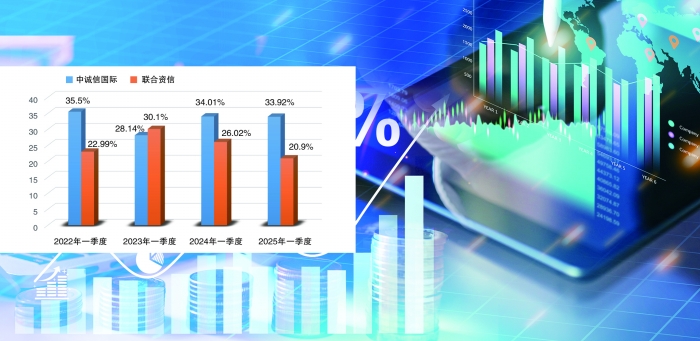
Core Insights - The credit rating industry is undergoing a deep transformation due to the cancellation of mandatory rating policies and accelerated expansion of the bond market [1][2] - The focus of the industry is shifting from "serving issuers" to "serving investors," enhancing the risk pricing and forward warning functions of ratings [1][2] Group 1: Market Dynamics - Since the cancellation of mandatory rating policies in 2021, the competitive landscape among rating agencies has changed, moving from a "policy-driven" phase to a "market-oriented" cycle [2] - In Q1 2022, 14 rating agencies undertook 1,879 bond products, a year-on-year decrease of 23.65%. By Q1 2023, the number rebounded to 2,395 due to a recovery in the bond market [2] - In Q1 2024, the number of bonds rated slightly decreased to 2,246, but the demand for ratings of non-financial corporate entities significantly increased, indicating a more structured demand for rating services [2][3] Group 2: Leading Agencies - In Q1 2025, the number of rating agencies increased to 15, with a total of 2,609 bonds rated. China Chengxin International maintained a market share of 33.92%, while United Ratings' share dropped to 20.9% [3] - The top six rating agencies collectively hold over 90% of the market share, highlighting the increasing "Matthew Effect" in the industry [3] Group 3: Service Evolution - Rating agencies are optimizing their positioning and exploring niche markets such as green finance and cross-border ratings to break through market fragmentation [3][5] - United Ratings has maintained the highest market share in the financial institution issuance market for four consecutive years, with a nearly 50% share in the panda bond market [5] Group 4: Profitability and Innovation - The credit rating industry is experiencing positive changes in service efficiency and innovative business structures, with a notable increase in the forward-looking capabilities of ratings [6] - The proportion of unrated bonds rose to 63.55% in 2024, reflecting the gradual effectiveness of market mechanisms [6] Group 5: Challenges and Opportunities - Despite positive developments, the industry faces challenges such as insufficient coverage of green economy and technology innovation enterprises, as well as uneven regional service distribution [7] - The current "issuer-paid" model raises concerns about the independence of ratings, and the industry needs to enhance its credibility [7] Group 6: Technological Advancements - Rating agencies are actively reshaping their service structures to transition from traditional "debt rating" to "multi-dimensional credit services" [8] - Many agencies are exploring a "dual-track payment" mechanism to enhance service quality and credibility [8] - The industry is entering a "technology-enabled" era, with agencies leveraging AI and machine learning to improve data processing and risk modeling capabilities [9]

浙江省浙商资产管理股份有限公司主体等级获“AAA”评级
Sou Hu Cai Jing· 2025-06-27 08:28
资料显示,浙商资产成立于2013年8月,由浙江省人民政府批复同意浙江省国际贸易资产管理有限公司 出资设立,是全国首批5家、浙江省第一家具有批量转让金融不良资产资质的省级地方资产管理公司。 公司展业坚持以不良资产经营为主业,同时加大不良主业创新开展投行化投资业务、托管重组业务及工 业科技业务等,其中不良资产业务收入是公司收入主要来源。产权结构方面,公司初始注册资本为 10.00亿元,成立以来经历多次股权变更及增资,2018年引入两家战略投资者,2020年3月再次引入两家 战略投资者,并同步实施员工持股计划。2022年9月13日,公司召开股东大会审议通过《关于浙江省浙 商资产管理有限公司整体变更为股份公司的议案》,并于9月26日完成工商变更,企业类型变更为其他 股份有限公司(非上市)。2024年以来,公司增发7.85亿股股份1,募集资金19.74亿元,增资扩股完成 后,公司实收资本增至78.85亿元。截至2024年末,浙江省国际贸易集团有限公司(以下简称"国贸集 团")持股比例为52.81%,国贸集团由浙江省人民政府国有资产监督管理委员会(以下简称"浙江省国资 委")持股90.00%,公司控股股东为国贸集团,实际 ...