
中远海运集团

Search documents
打造绿色化智慧化港口,盐田港积极拓展内外贸一体化布局网络
Zhong Guo Zheng Quan Bao· 2025-08-26 00:28
Core Viewpoint - Yantian Port is expanding its operations and enhancing its capabilities to meet the growing demand for container throughput, driven by its strategic location and the support of Shenzhen's foreign trade environment [1][3][4]. Group 1: Port Development and Capacity Expansion - A fully automated container terminal with an annual throughput capacity of 3 million TEUs is under construction in the East Port area of Yantian [1][3]. - In the first half of this year, Yantian Port's container throughput exceeded 7.58 million TEUs, a year-on-year increase of 12.7% [3]. - The total throughput for Yantian Port surpassed 15 million TEUs last year for the first time [3]. - The East Port area will provide additional capacity to meet the demand exceeding design capabilities, with plans for completion by 2026 [3]. Group 2: Strategic Partnerships and New Projects - Yantian Port has expanded its network by acquiring 100% of Xiaomo Port and is currently constructing the second phase of Xiaomo Port, which will increase its annual automobile transport capacity from 300,000 to 1 million vehicles [4]. - The company has also partnered with Huangshi City to develop Huangshi New Port, which has achieved a cargo throughput of over 100 million tons [4]. Group 3: Integration of Domestic and International Trade - Yantian Port is actively participating in the trend of domestic and international trade integration by enhancing its port layout and expanding its service offerings [4][5]. - The port has opened 20 inland ports and 33 sea-rail intermodal routes, significantly improving customs efficiency and connectivity with the national railway network [5]. Group 4: Environmental and Technological Advancements - Yantian Port is focusing on green and smart upgrades, implementing measures such as shore power systems and LNG refueling to reduce carbon emissions by nearly 20,000 tons by 2024 [8]. - The port is developing a digital management system to transition from traditional operations to intelligent control, enhancing overall efficiency and value creation [8]. Group 5: Financial Performance and Future Outlook - Yantian Port's net profit is projected to reach 1.35 billion yuan in 2024, reflecting its robust growth and strategic initiatives [10].


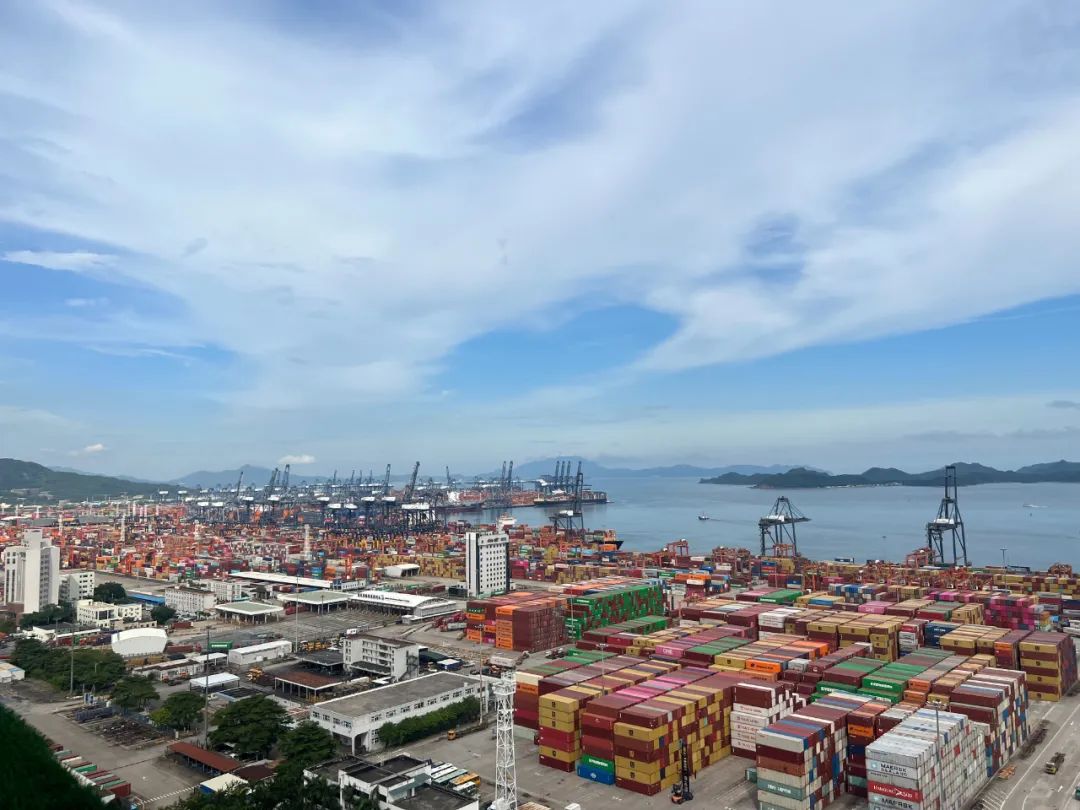
打造绿色化智慧化港口 盐田港:积极拓展内外贸一体化布局网络
Zhong Guo Zheng Quan Bao· 2025-08-25 22:12
Core Viewpoint - Yantian Port is expanding its operations and enhancing its capabilities to meet the growing demand for container throughput, driven by its strategic location and the support of Shenzhen's trade environment [1][2][3]. Group 1: Port Development and Capacity - Yantian Port is constructing a fully automated container terminal with an annual throughput capacity of 3 million TEUs, expected to be operational by 2026 [2]. - In the first half of this year, Yantian Port's container throughput exceeded 7.58 million TEUs, marking a 12.7% year-on-year increase [2]. - The port's total throughput surpassed 15 million TEUs last year for the first time [2]. Group 2: Strategic Expansion - The company has been actively expanding its port network, including the acquisition of Xiaomo Port, which will increase its annual automobile transport capacity from 300,000 to 1 million vehicles [3]. - Yantian Port has established a comprehensive port layout network along the coastline, integrating both maritime and inland river connections [3][4]. Group 3: Integration of Trade - The company is enhancing its operations in line with the national trend of integrating domestic and international trade, focusing on developing intermodal transport solutions [3][4]. - Yantian Port has opened 20 inland ports and 33 sea-rail intermodal routes, significantly improving customs efficiency and reducing transport times [4][5]. Group 4: Green and Smart Transformation - Yantian Port is pursuing green initiatives, including the installation of shore power systems and the promotion of LNG refueling, aiming to reduce carbon emissions by nearly 20,000 tons by 2024 [7]. - The port is also advancing its digital transformation to enhance operational efficiency and create value through a comprehensive digital management platform [7][8]. Group 5: Financial Growth - The company is projected to achieve a net profit of 1.35 billion yuan in 2024, reflecting significant growth from its initial profit of 140 million yuan at the time of listing [9].
从印尼自贸区到中国自贸港 ——新航线为中印尼经贸合作再添新通道
Zhong Guo Zheng Quan Bao· 2025-08-23 00:26
Core Viewpoint - The launch of a direct shipping route from Indonesia's Batam Island to China's Yangpu Port by COSCO Shipping Group signifies an expansion of maritime connectivity between China and Southeast Asia, enhancing regional trade and logistics efficiency [1] Group 1 - The inaugural container ship from Batam to Yangpu marks a significant milestone in the development of direct maritime services between China and Southeast Asia [1] - The direct shipping route is expected to shorten travel time and reduce logistics costs, providing tangible benefits for trade between China and Indonesia, as well as the broader region [1] - COSCO Shipping's Indonesian subsidiary emphasizes that this direct connection is a crucial step in promoting regional interconnectivity [1]
服贸会抢先看:沃尔玛、毕马威首亮相,智慧物流“炫技”现场
Nan Fang Du Shi Bao· 2025-08-20 15:38
Group 1: Event Overview - The 2025 China International Service Trade Fair (CIFTIS) will be held from September 10 to 14 in Beijing, focusing on supply chain and business services [1] - The supply chain transportation service theme is "People Enjoy Their Travel, Goods Flow Smoothly," emphasizing smart transportation and logistics [1] - The business service theme is "Digital Intelligence Leading, Beijing's Colorful Business," showcasing innovations in high-end business services [1] Group 2: Supply Chain Transportation Services - The transportation service section will adopt a "trinity" cooperation model (government-led, enterprise-operated, association-supported) to promote deep integration of technology and industry innovation [2] - Over 100 leading global enterprises will participate, with a 100% completion rate for exhibitors; 60% of the exhibitors are from Fortune 500 companies [2] - The international participation rate is 24%, with notable companies like COSCO Shipping Group and Beijing Investment Yijia presenting [2] Group 3: Smart Public Transportation - The smart public transportation exhibition will showcase Beijing's innovative practices in public transport services, including smart stations and maintenance robots [3] - New service models such as "face recognition entry" and "smart carriages" will be highlighted, transitioning from efficient transport to quality service [3] - The exhibition will also feature a near-zero carbon service area project and a smart logistics platform [3] Group 4: Smart Logistics Services - The smart logistics service section will demonstrate technology-driven global supply chain upgrades, including blockchain delivery orders and automated port technologies [4] - Companies like Meituan and SF Express will present their innovations in drone delivery and cross-border e-commerce services [4] - A transportation forum will be held to discuss new paradigms in urban transportation services [4] Group 5: Business Services - The business service exhibition will cover 2,400 square meters, showcasing "Beijing Service" cases and AI big data innovations [5] - Major global companies like Walmart and KPMG will present their service innovations and insights on ESG and digital transformation [6] - The exhibition aims to enhance the internationalization and professionalism of business services [5][6] Group 6: Human Resources Services - The human resources service sector will present innovative practices through interactive experiences and results releases [8] - New solutions for talent management will be introduced, including a comprehensive management platform and a job matching service [9] - AI-driven recruitment solutions will be showcased, enhancing service efficiency and precision in talent selection [9]
WRC2025上的“颠覆者样本”:生而成熟的鹿明机器人
3 6 Ke· 2025-08-09 01:17
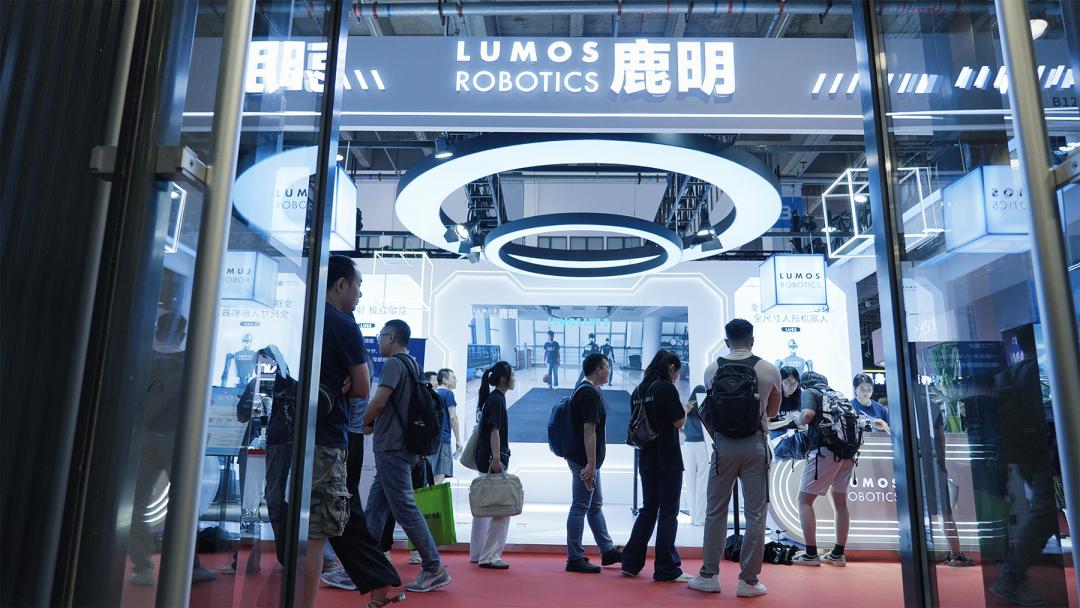
Core Insights - The article highlights the rapid development and competitive landscape of humanoid robotics, focusing on the emergence of Lumos Robotics, which has made significant strides in a short time frame [3][21] - Lumos Robotics has introduced the LUS2, a full-sized humanoid robot capable of standing up in one second, showcasing advanced dynamic balance and control technologies [10][12] Company Overview - Lumos Robotics was founded in September 2022 and has quickly completed what other humanoid manufacturers take years to achieve [3] - The founder, Yu Chao, has a strong academic background and extensive experience in robotics, having previously led projects for Xiaomi and other companies [6][21] - The team includes members from the original core team of a previous robotics venture, contributing to a robust research and development capability [6] Product Development - Lumos Robotics has launched multiple products within a year, including the LUS series humanoid robots, the MOS robot for industrial logistics, and the NIX robot for home and entertainment [15][21] - The LUS2 robot is designed at a height of 160 cm and can perform long-range actions with a two-hour high-intensity operation time, suitable for various applications [10][21] - The MOS robot features a dual-arm design with a load capacity of 50 kg, significantly higher than the current market standard [15][18] Technological Advancements - The LUS2 utilizes a high-speed dynamic balance control system and advanced algorithms for posture adjustment, achieving a response time significantly faster than human reflexes [10][12] - The robot's modular design allows for technology reuse across different applications, enhancing its versatility [11][12] Market Position and Strategy - The humanoid robotics market is currently in a critical development phase, with many companies vying for position, but Lumos Robotics stands out due to its comprehensive technology stack and rapid product iteration [3][12] - The company has formed strategic partnerships with leading firms in logistics and manufacturing to co-create solutions, which is essential for generating real-world data and scaling operations [16][18][20] - Predictions indicate a significant growth trajectory for the humanoid robotics market, with Lumos Robotics positioned to capitalize on this trend due to its early maturity and technological capabilities [21]

中远海科(002401) - 2025年8月5日投资者关系活动记录表
2025-08-05 11:40
Group 1: Company Products and Technologies - The "Ship Vision Treasure" product is a digital platform based on intelligent recognition technology for the entire lifecycle of ship navigation, utilizing cloud computing, IoT, and big data algorithms [2][3] - The Hi-Dolphin model is the first large model in the domestic shipping industry, providing services through API and Widget integration, enhancing product intelligence and customer experience [5] - The company is increasing its marketing efforts to expand the influence of its digital products, including Ship Vision Treasure and Hi-Dolphin [3] Group 2: Blockchain and Research - The company holds a 7% stake in Shanghai Pujiang Shuchain Digital Technology Co., but currently has no direct cooperative projects with them [4] - The company is actively researching the application of blockchain technology in transportation and shipping information [4][9] Group 3: Financial Outlook and Business Strategy - The company aims to leverage its competitive advantages in technology, product quality, and brand reputation to enhance its digital shipping and supply chain business [6][7] - The digital shipping and supply chain business is expected to maintain a growth trend, while the digital transportation and security business will accelerate its transformation under pressure [7] Group 4: Research and Development - The company has consistently increased its R&D investment, achieving positive results in major scientific projects and intellectual property [8] - Future R&D efforts will focus on core product development, common underlying technology, and business model innovation [8] Group 5: Corporate Support and Plans - China COSCO Shipping Group supports the company as a technology-oriented listed company and provides abundant business opportunities and application scenarios [9] - The company currently has no plans for mergers or acquisitions but will continue to evaluate quality targets in its supply chain [10] - There are no current plans for a new stock incentive program, following the completion of the 2019 restricted stock incentive plan [11]

巴拿马运河有变?李嘉诚邀请内地投资人加入,央企要上场介入?
Sou Hu Cai Jing· 2025-08-01 09:40
关于李嘉诚集团出售巴拿马运河港口一事可以说是一波三折,在一开始被国家叫停后李嘉诚又想通过擦边球的方式将其 出售,在被约谈过后李嘉诚又表示绝不可能在不合法情况下出售港口,现在的港口出售一事李嘉诚更是邀请中国内地投 资人加入,另有消息显示央企将加入到这场港口出售的谈判中,这是否意味着李嘉诚会将巴拿马运河港口出售给国家? 01 央企将收购巴拿马运河港口 3月份的时候,李嘉诚旗下的长和集团突然发布消息,打算将旗下的43个港口出售给贝莱德公司,看似正常的一场商业行 为却引起了全球范围内的关注,因为这43个港口包括巴拿马运河的2个港口,而贝莱德公司的CEO和特朗普的关系也十分 密切,可以说该财团背后有着美国政府的影子。 特朗普对巴拿马运河的野心很大 在这时问题就来了,特朗普多次扬言要收回巴拿马运河的主权甚至是不惜动用军队,并对中国在巴拿马运河的影响力表 示不满。在这种情况下长和集团将巴拿马运河交给有着美国政府身影的贝莱德财团等于说是羊入虎口,特别是该运河是 中国海上货物出口贸易的主要通道,一旦被美国掌控,那么特朗普就又多了对付中国的一张底牌。 也正是这样对于长和集团的港口出售一事公布后,中方多次对李嘉诚集团进行约谈,并表 ...

城记 | 挺进“深蓝”,哪些城市在领跑中国海洋经济
Xin Hua Cai Jing· 2025-07-24 07:34
Core Insights - A new wave of marine economic development is gaining momentum in China, with local governments taking the lead and central authorities providing direction [1][2] Group 1: Marine Economic Policies and Developments - Shandong initiated the "Modern Marine Industry Action Plan (2024-2025)" in June 2022, followed by Guangdong and Shanghai's respective regulations and plans in June 2023 [1] - The Central Financial Committee's sixth meeting in July 2023 further clarified the direction for high-quality marine economic development [1] Group 2: Shanghai's Marine Economic Performance - Shanghai's marine GDP reached 10,372 billion yuan in 2019, accounting for 27.2% of the city's total GDP and 11.6% of the national marine GDP, making it the only city in China with a marine economy exceeding 10 trillion yuan [2] - By 2024, Shanghai's marine GDP is projected to rise to 11,387 billion yuan [2] Group 3: Competitive Positioning - Shanghai ranks first in marine economic development in China and is among the top three globally, according to various reports [3] - The city is recognized as a global marine center, ranking fourth in the world, following Singapore, Rotterdam, and London [3] Group 4: Research and Innovation Capacity - Shanghai boasts 12 research institutes, 13 marine-related universities, and over 20 municipal innovation platforms, along with significant corporate players in the marine sector [4] - The city is focusing on developing world-class industrial clusters in shipbuilding and marine engineering [4] Group 5: Economic Hinterland and Influence - Shanghai's economic hinterland, supported by the Yangtze River Economic Belt, provides a rich application scenario for marine economic development [5] - The Yangtze River Economic Belt's GDP reached 630,228 billion yuan in 2024, accounting for 47% of the national total [5] Group 6: Challenges and Opportunities in Other Cities - Other coastal cities like Tianjin and Qingdao are striving to enhance their marine economic capabilities but face challenges in innovation and technology transfer [6][7] - Qingdao aims to elevate its marine economic strength to second place nationally by 2025, while Shenzhen is also competing for this position [7] Group 7: Future Directions in Marine Industries - The marine fishery sector in China remains robust, with opportunities for digital marketing integration and high-value utilization of marine resources [8] - Shanghai is positioned to optimize its marine fishery industry chain and establish a global cold chain logistics center for aquatic products [8]
周期之王,越赚越多了
Hu Xiu· 2025-07-07 22:47
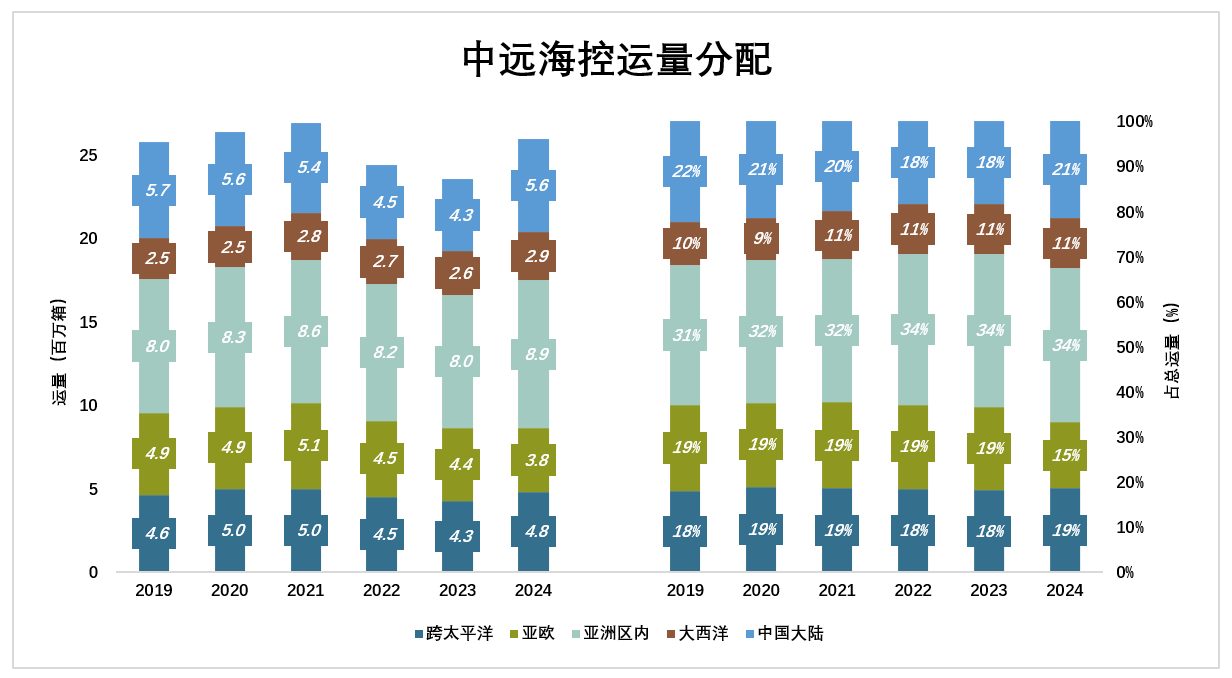
Core Viewpoint - The article highlights the strong cash returns and valuation of China COSCO Shipping Holdings (中远海控), emphasizing its resilience in the shipping industry despite concerns over trade wars and capacity expansion [1][3][4]. Group 1: Dividend and Returns - China COSCO Shipping Holdings implemented a dividend of 10.3 yuan per 10 shares for the annual report and 5.2 yuan for the interim report, resulting in a cash return of 10.29% for shareholders within a year [1]. - In contrast, Kweichow Moutai (贵州茅台) offered a lower dividend yield of 3.63% during the same period [2]. Group 2: Valuation and Market Concerns - The dividend yield of China COSCO Shipping Holdings is 2.8 times that of Kweichow Moutai, with a low dynamic price-to-earnings ratio of 5.1 times [3]. - Investor concerns stem from three main issues: trade wars leading to reduced cargo, capacity expansion causing freight rate collapse, and profit shrinkage when freight rates drop without a corresponding decrease in costs [3]. Group 3: Performance Analysis - Over the past six years, China COSCO Shipping Holdings has experienced fluctuations in performance due to the pandemic and trade wars, yet maintained an average annual net profit of 48.13 billion yuan, which is 80% of Kweichow Moutai's net profit over the same period [4]. - The shipping volume has shown stability, with only a 0.78% difference between 2019 and 2024, indicating that concerns about cargo availability may be overstated [5]. Group 4: Shipping Routes and Trends - The article discusses changes in major shipping routes, noting that the trans-Pacific route saw an increase in volume during the pandemic, while the Eurasian route has declined due to reduced purchasing power in Europe [6][9]. - The Asia-Pacific routes have shown significant growth, with a volume increase of 11.2% from 2019 to 2024, indicating a shift in trade dynamics [7][10]. Group 5: Revenue and Pricing Dynamics - Revenue from the trans-Pacific route has increased significantly despite fluctuations in shipping volume, with a revenue index of 210 in 2021 compared to 2019 [12]. - The Eurasian route has also seen a rise in revenue despite a decrease in shipping volume, with a revenue increase of 60% compared to 2019 [13]. Group 6: Cost and Profitability - The relationship between costs and prices is crucial, with shipping costs rising at a slower rate than freight rates, allowing shipping companies to maintain profitability [20][24]. - In 2024, the total cost as a percentage of revenue decreased to 65%, indicating improved profitability for China COSCO Shipping Holdings [27]. Group 7: Future Prospects - China COSCO Shipping Holdings is in discussions to acquire a stake in ports owned by Li Ka-shing, which could significantly enhance its revenue and operational capacity [32][40]. - The potential acquisition of a 25% stake in Li Ka-shing's ports could double the revenue and overseas throughput of China COSCO Shipping Holdings [40].
让更多中国船驶入绿色新航路
Jing Ji Ri Bao· 2025-07-05 22:14
Core Viewpoint - The successful green methanol bunkering of the "COSCO Shipping Yangpu" vessel in Hainan marks a significant step towards low-carbon transformation in China's shipping industry, establishing a closed-loop system of "Chinese ship + Chinese port + Chinese methanol" [1] Industry Outlook - The global consensus on low-carbon transformation emphasizes that green shipping is an inevitable trend, with the shipping industry emitting approximately 1 billion tons of greenhouse gases annually [1] - Traditional energy-saving technologies and speed reductions alone cannot achieve carbon neutrality goals; alternative fuels like green methanol and green ammonia are essential [1] - In the first five months of this year, 58% of new ship orders (17.2 million tons out of 29.7 million tons) were for alternative fuel vessels, up from 47% last year and only 8.2% in 2016, indicating a rapid shift in the industry towards energy transformation [1] Innovations in Green Shipping - The "COSCO Shipping Yangpu" is the first domestically built methanol dual-fuel container ship, showcasing the application of domestic methanol engines with top-tier energy efficiency [1] - The green methanol used for bunkering is produced from urban waste by China National Offshore Oil Corporation, marking a significant step in establishing a circular economy model in Hainan [2] - Hainan's ability to produce and bunkering green methanol supports the development of a complete industrial chain covering biomass collection, methanol production, and storage [2] Challenges in Green Transition - The production capacity of green methanol is severely insufficient, with many global projects planned but few realized, and China still relies heavily on fossil fuels for methanol production [3] - The construction of methanol bunkering networks is in its infancy, with only 35 planned methanol bunkering ports compared to 276 for LNG [3] - The high cost of green methanol (3 to 4 times that of traditional fuels) poses a significant barrier to commercial viability, necessitating sustained high oil prices or a comprehensive carbon tax mechanism for economic feasibility [3] Solutions to Overcome Challenges - A multi-faceted approach is needed, including the establishment of a carbon tax mechanism and subsidies for green ship manufacturing and operations [4] - Collaboration between industry, academia, and research is essential to address technical bottlenecks in fuel storage safety and reduce production costs [4] - Prioritizing the development of fuel bunkering networks in densely trafficked areas like the Yangtze River Delta and Pearl River Delta is crucial for infrastructure support [4] - The successful transition of the "COSCO Shipping Yangpu" vessel symbolizes the potential for broader adoption of green shipping practices, with the hope that turning waste into green methanol becomes a common occurrence [4]