欧莱雅集团

Search documents
商社美护行业周报:美丽田园战略升级,珀莱雅入局PDRN-20251126
Guoyuan Securities· 2025-11-26 05:50
Investment Rating - The report maintains an "Overweight" rating for the industry, with a focus on new consumption sectors such as beauty care, IP derivatives, and gold jewelry [6][30]. Core Insights - The beauty care sector is seeing significant developments, including L'Oréal's minority stake investment in the Chinese skincare brand LAN and Proya's entry into the PDRN market with a new trademark [3][23]. - E-commerce company Yatsen reported a Q3 revenue of RMB 998 million, a 47.5% year-on-year increase, indicating strong growth in the beauty sector [3][23]. - The report highlights the strategic upgrades of Meili Tianyuan, focusing on brand enhancement, chain expansion, and digital transformation [3][23]. Market Performance - For the week of November 17-21, 2025, the retail, social services, and beauty care sectors experienced declines of 7.24%, 4.86%, and 4.53% respectively, ranking 28th, 15th, and 12th among 31 primary industries [15][16]. - The report notes a general downturn in consumer-focused sub-sectors, with trade, general retail, and tourism experiencing the largest declines of 9.12%, 7.49%, and 5.75% respectively [15][16]. Key Industry Events and News - L'Oréal announced a minority investment in LAN, marking its first investment in a local skincare brand in China [3][23]. - Proya launched a new product line under the "PROYA MED" brand, focusing on scientific and medical attributes [3][23]. - The report mentions significant revenue growth for companies like Yatsen and Meili Tianyuan, with Yatsen's Q3 revenue up 47.5% and Meili Tianyuan announcing strategic upgrades [3][23][24]. Investment Recommendations - The report recommends focusing on companies such as Proya, Giant Bio, Marubi, Runben, and others within the beauty care and new consumption sectors [6][30].

深度 | 蔓迪港股递表,引爆防脱“新战局”
FBeauty未来迹· 2025-11-25 14:18
Core Insights - The core viewpoint of the article is that the power dynamics in China's anti-hair loss market have shifted from traditional daily chemical brands to pharmaceutical companies, driven by a growing consumer base and evolving market demands [4][5]. Market Dynamics - The anti-hair loss market in China has seen a significant transformation, with over 300 million people affected by hair loss, particularly among the 26-35 age group, indicating a shift from a minor issue to a widespread concern [4]. - Pharmaceutical companies, particularly those with OTC pipelines and dermatological resources, have emerged as the primary players in the market, leading to a dual oligopoly dominated by Sanofi's Mandi and Zhendong Pharmaceutical's Dafeixin [4][8]. - The market for anti-hair loss products has reached 5.247 billion yuan in sales within the first ten months of 2025, reflecting a year-on-year growth of over 47% [10][13]. Brand Strategies - Pharmaceutical companies are creating a new narrative of "anti-hair loss = medicine + consumer," leveraging high margins and professional barriers while extending their product lines into daily care categories [5][19]. - Brands like Mandi and Dafeixin are combining pharmaceutical and cosmetic products, promoting them through "scientific anti-hair loss salons" to capture consumer interest [6][9]. Competitive Landscape - Traditional daily chemical brands are struggling, with companies like Bawang reporting a significant decline in profits despite a slight revenue increase, highlighting a structural challenge in the market [8]. - The consumer focus has shifted from "shampoo for hair loss" to "medical treatment and scalp management," indicating a demand for more scientifically-backed solutions [9][10]. Emerging Trends - The average price of anti-hair loss products has risen to over 113 yuan, suggesting consumers are willing to invest more in effective scalp care solutions [13]. - New brands such as EHD and Off&Relax are gaining traction, with EHD leading in sales at 371 million yuan, showcasing a trend towards professional and functional care [16][18]. Future Directions - To compete effectively, beauty brands must transition from traditional narratives to scientific and medical language, focusing on the mechanisms behind hair loss and scalp health [19][23]. - The integration of devices with hair care products is emerging as a trend, with brands like Kérastase introducing scalp care devices that enhance treatment efficacy [25][27]. Conclusion - The anti-hair loss market is evolving into a sector characterized by scientific, medical, and long-term management approaches, with pharmaceutical companies redefining the rules and traditional brands being compelled to adapt [19].


近10亿,吉利资本领投了一家明星机器人公司丨投融周报
投中网· 2025-11-24 08:13
Focus Review - The robotics sector sees strong entry from industrial capital, with Astribot completing hundreds of millions in A++ round financing led by Guoke Investment and Ant Group, alongside other notable investors [4][14] - The health sector, particularly gene and cell therapy (CGT), remains hot, with Zhonghe Gene completing tens of millions in Pre-A+ round financing, and Ruipu Morning achieving 500 million in A+ round financing [4][31] - AI and data are in high demand, with Guanglun Intelligent announcing several hundred million in A and A+ round financing, and DataArc completing seed rounds totaling tens of millions [5][41] New Consumption - L'Oréal invests in Chinese skincare brand LAN, marking its first investment in a local skincare brand [7] - Lingyu Universe secures 200 million in Pre-A round financing from major financial institutions [8] Hard Technology - Bosi Xinyu completes several million in angel+ round financing led by Zhongguancun Development Group [11] - Ganfeng Technology announces a strategic investment of 100 million from Meihua Venture [12] - Huanxi Intelligent completes its second round of financing within a year, backed by Shunyu Capital [13] Health Sector - Anxin Medical completes tens of millions in angel round financing led by Haiyuan Capital [22] - SenseTime Medical secures hundreds of millions in Pre-A+ round financing from various investors [24] - Mingche Technology announces tens of millions in A round financing [25] Internet/Enterprise Services - Yisixuan Magnetic completes seed round financing of several million [36] - Bili Information secures tens of millions in A+ round financing from Tiantu Investment [37] - Boundary Consulting receives over 400 million in strategic investment from Huaitongda Network [38]

宝洁系频出老板,欧莱雅量产高管?
3 6 Ke· 2025-11-21 00:46
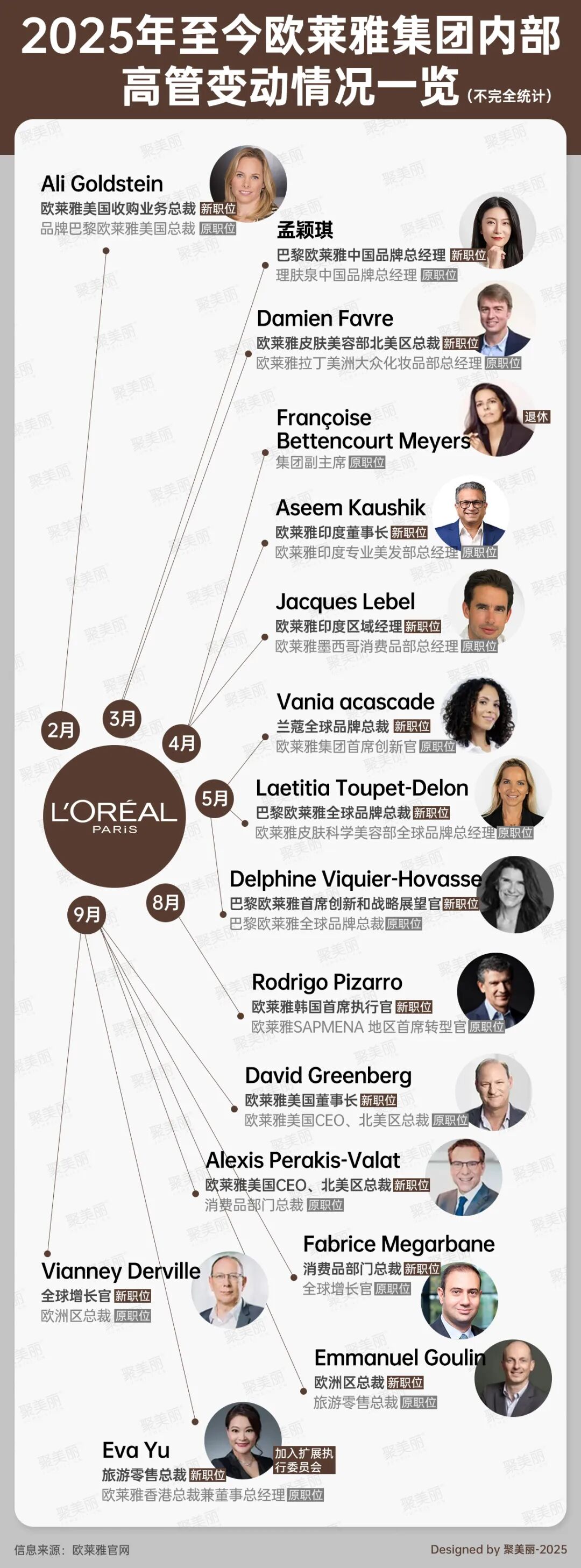
Core Insights - The movement of top talents from Procter & Gamble (P&G) and L'Oréal serves as a barometer for changes in the beauty industry landscape [1][4] - L'Oréal has experienced significant internal executive turnover, with over ten changes since 2025, which is nearly three times that of P&G [1][4] - Former L'Oréal executives tend to pursue more stable career paths, often taking on key management roles in other multinational or leading domestic beauty companies [4][12] Group 1 - The trend shows that L'Oréal executives are more suited for corporate roles, while P&G alumni are more inclined to start their own businesses [4][12] - The beauty industry faces challenges in brand development and internationalization, making L'Oréal-trained executives valuable assets for companies seeking to navigate these complexities [6][36] - Recent appointments of former L'Oréal executives in domestic beauty companies like Perlay and Betaini highlight the ongoing trend of talent migration [8][10] Group 2 - The executive rotation mechanism at L'Oréal fosters a diverse skill set among its leaders, preparing them for high-level decision-making roles [18][22] - L'Oréal's systematic approach to talent development emphasizes cross-functional and cross-regional experiences, which enhances the adaptability of its executives [22][23] - The influx of L'Oréal executives into competitor companies is reshaping the power dynamics within the global beauty industry [17][36] Group 3 - Women hold a significant proportion of leadership roles within L'Oréal, with 58% of board members and 54% of leaders being female, reflecting a broader trend in the beauty industry [33][34] - The competition for top talent in the beauty sector is intensifying, with companies like Estée Lauder and Johnson & Johnson actively recruiting from L'Oréal [34][35] - The strategic hiring of L'Oréal executives by companies like Perlay and Kering underscores the demand for their expertise in brand management and global operations [36][37]

时尚情报丨女王的时尚生活
Di Yi Cai Jing· 2025-11-19 07:43
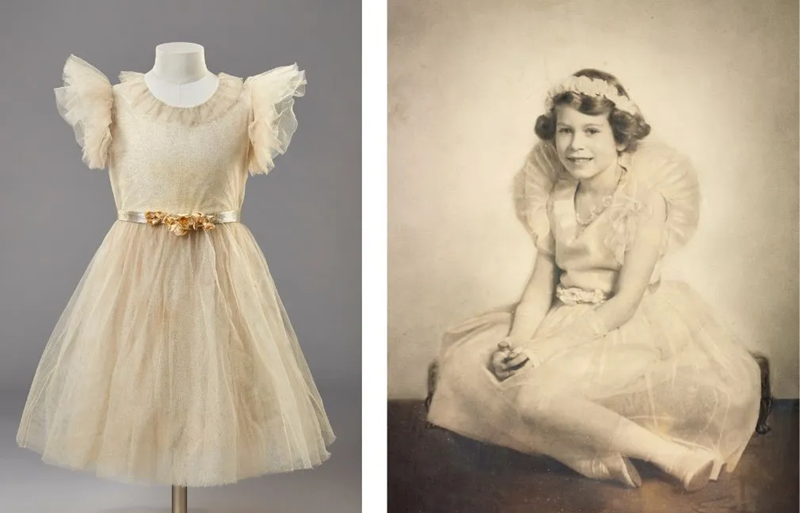
Group 1: Buckingham Palace Exhibition - Buckingham Palace will host a major exhibition titled "Queen Elizabeth II: Her Fashion Life" from April 10 to October 18 next year, celebrating the Queen's influence on British fashion [1][3] - This exhibition will be the largest ever dedicated to Queen Elizabeth II's fashion, featuring approximately 200 items, with about half being displayed for the first time [3] - The exhibition will showcase a range of garments from haute couture evening dresses to fitted non-official outfits, allowing visitors to explore the Queen's wardrobe [3] Group 2: Richemont Group's Performance - Richemont Group reported a sales figure of €10.62 billion for the first half of the 2026 fiscal year, reflecting a 10% increase at constant exchange rates and a 5% increase at actual exchange rates [6] - The Asia-Pacific region, particularly China, showed a strong recovery with a 5% revenue increase to €3.44 billion, while North America, the Middle East, and Africa experienced even higher growth rates of 18% and 19% [6] - The jewelry segment, including Cartier and Van Cleef & Arpels, exceeded expectations with a 9% revenue increase to €7.75 billion, contributing over 70% of the group's total revenue [6] Group 3: L'Oréal's Investment in Local Brand - L'Oréal announced a minority stake investment in the Chinese skincare brand LAN, marking its first investment in a local skincare brand through its Chinese investment arm [7][9] - LAN, founded in 2019, specializes in oil-based skincare and has been the top-selling facial oil brand in China for two consecutive years, with over 100,000 units sold of its best-selling product [9] - The investment aims to leverage L'Oréal's global expertise in beauty research and market expansion to accelerate LAN's product innovation and global outreach [9] Group 4: Cartier's New High Jewelry Collection - Cartier launched its new EN ÉQUILIBRE high jewelry collection in Beijing, featuring over 480 pieces of high jewelry, high watchmaking, and antique collections [10][12] - The collection emphasizes balance through pure lines, three-dimensional shapes, and color harmony, showcasing pieces like the BYZAS necklace with a pear-shaped blue sapphire and the NEMOROSA necklace featuring a "Tutti Frutti" design [12]
俞敏洪在南极旅游发全员信引争议,有员工称无法共情;京东外卖独立App上线;阿里回应千问崩了;小米公关部总经理王化将换岗丨邦早报
创业邦· 2025-11-18 00:08
Group 1 - JD.com announced the official launch of its independent food delivery app, aiming to enhance user accessibility and convenience for its delivery services [3] - New Oriental's founder Yu Minhong sent a controversial letter to employees from Antarctica, reflecting on the company's journey and encouraging unity amidst challenges, which received mixed reactions from staff [5][7] - Alibaba's new AI application "Qianwen" faced service interruptions on its first day due to overwhelming user traffic, leading to a trending topic on social media [8] Group 2 - Former CEO of Hema, Hou Yi, is launching a new pet food brand "Chong Tian Tian" after the closure of his previous venture "Pai Te Xian Sheng" [10] - ByteDance's Seed AI team has seen significant turnover, with seven core members leaving this year, raising concerns about talent retention [11] - XPeng Motors plans to release seven new vehicles in 2026, focusing on "super range extender" configurations to address market needs [11] Group 3 - DJI confirmed its investment in a 3D printing company, reflecting confidence in the growth potential of the consumer 3D printing market, which is projected to reach $24.61 billion in 2024 [11] - Ubisoft is rumored to have been acquired, following a sudden halt in its stock trading and a delay in its Q2 financial report [13] - Meta's executives defended their aggressive AI investments, suggesting that current spending levels are not excessive compared to historical tech bubbles [13] Group 4 - Mercedes-Benz's CEO stated that the strict deadline for phasing out fuel vehicles in Europe by 2035 is no longer feasible, advocating for more flexibility in the transition to electric vehicles [13] - OceanBase launched a new AI domain, indicating a strong commitment to integrating AI into its database solutions [13] - L'Oréal Group made a minority investment in the Chinese skincare brand "LAN," marking its first investment in a local skincare company [14]



动画电影《鬼灭之刃》让IMAX成抢票主战场;开拓海外市场仍是中企出海首要动因 | 消费早参
Mei Ri Jing Ji Xin Wen· 2025-11-17 23:15
Group 1: Film Industry - The animated film "Demon Slayer: Infinity Castle Chapter One" debuted in mainland cinemas, achieving a strong IMAX box office of 875 million yuan in its opening weekend, capturing 23% of the box office with only 1% of the screens [1] - The film's popularity has reignited the "midnight screening" trend in the Chinese film market, with IMAX midnight screenings accounting for 38% of the film's box office, generating 71 million yuan and setting a new record for IMAX midnight screenings of Japanese films in China [1] - The success of the film highlights the powerful appeal of established intellectual properties (IPs) and the importance of quality content in driving market recovery and attracting diverse international films to the Chinese market [1] Group 2: Corporate Expansion - A report by ACCA indicates that expanding overseas markets remains the primary motivation for Chinese companies venturing abroad, with traditional exports still dominating, while digital and platform-based models have a low representation [2] - From a financial management perspective, the report identifies regulatory compliance, geopolitical risks, and talent shortages as the three main financial risks faced by companies going abroad [2] - The traditional export model exposes companies to risks such as anti-dumping measures and exchange rate fluctuations, while the demand for cross-border tax compliance and localized talent is expected to benefit international audit, tax SaaS, and overseas outsourcing service providers [2] Group 3: Investment Activity - L'Oréal Group has made a minority equity investment in the Chinese skincare brand LAN, marking its first investment in a local skincare brand through its Shanghai-based investment arm [3] - This investment reflects L'Oréal's commitment to deepening its presence in the Chinese market and aims to enhance its portfolio in the clean skincare segment, while LAN is expected to benefit from resources that accelerate its internationalization [3] - The collaboration may spark a trend in the beauty industry, focusing on Eastern aesthetics and Chinese ingredients, potentially leading to a reevaluation of the value of Chinese beauty brands [3] Group 4: Corporate Financing - Tianwei Foods announced that it has submitted an application for issuing overseas listed shares (H-shares) to the Hong Kong Stock Exchange, with the application materials accepted by the China Securities Regulatory Commission [4] - This move is seen as a significant step for the company to expand its overseas financing channels and enhance its international influence, potentially attracting more international investors if the listing is successful [4] - The application process still faces uncertainties as it requires approvals from various regulatory bodies, but successful listing could provide new capital support for the company's long-term development [4]
首次布局中国本土护肤品牌,欧莱雅投资「LAN兰」
Guan Cha Zhe Wang· 2025-11-17 13:20
Group 1 - L'Oréal Group announced a minority stake investment in the Chinese skincare brand "LAN" through its Shanghai Meici Investment Co., marking its first investment in a local skincare brand [1] - "LAN" has achieved significant market success, ranking first in facial oil sales in China for two consecutive years (2023-2024), showcasing its innovative positioning in the market [1] - This investment reflects a strategic shift for international beauty giants from acquisition to strategic investment in the Chinese market, allowing for deeper collaboration with local brands while maintaining their independence [1][9] Group 2 - Meici Investment, established in 2022, aims to discover and nurture innovative forces in the Chinese beauty market, expanding its investment focus from fragrance to skincare technology [2] - The investment in "LAN" signifies a broader strategy to build an ecosystem in the beauty industry by focusing on brands with technological innovation and local market insights [2][7] - Previous investments by Meici include a high-end fragrance brand and a biotech company, indicating a clear investment logic centered on innovation and market understanding [4][7] Group 3 - The investment in "LAN" is part of a growing trend among international consumer giants to engage with the Chinese market through strategic investments rather than traditional acquisitions [10] - This shift is driven by changes in the Chinese market, including the rise of local brands and more mature consumer behavior, necessitating a deeper understanding and collaboration with local players [10][12] - Other international companies, like Unilever, are also adjusting their strategies in China, focusing on partnerships and acquisitions to enhance competitiveness and product offerings [12]

LVMH在京将开多家门店;施华洛世奇裁400岗位
2 1 Shi Ji Jing Ji Bao Dao· 2025-11-17 07:36
Group 1: Industry Overview - The luxury goods industry is showing signs of stabilization, with major players like Richemont reporting a 5% sales growth and a 7% increase in sales in mainland China, Hong Kong, and Macau for Q2 [1][2] - LVMH plans to open several large flagship stores in Beijing in December, indicating a significant recovery in the Chinese luxury market [4] - Burberry has returned to profitability, with an adjusted operating profit of £19 million, reversing a loss from the previous year, and showing signs of recovery in the Greater China market [5][6] Group 2: Company-Specific Developments - On Holding AG reported a record net sales increase of 24.9% to CHF 794.4 million, with a net profit surge of 289.8%, driven by strong performance across all channels [9] - Asics achieved a revenue growth of 19% to ¥625 billion, marking the first time the company’s revenue surpassed ¥600 billion in nine months [11] - Kering's management has denied rumors of selling the McQueen brand, emphasizing a deep restructuring plan aimed at restoring profitability within three years [15] - Swarovski announced a significant restructuring plan, including a reduction of approximately 400 jobs at its headquarters, as part of efforts to improve efficiency and cost control [19] Group 3: Legal and Competitive Landscape - Coty has filed a lawsuit against Gucci and Kering over a commercial contract dispute regarding Gucci's beauty and fragrance business, following Gucci's decision to partner with L'Oréal for future operations [21][22]
美妆巨头起诉Gucci
21世纪经济报道· 2025-11-16 09:12
Core Viewpoint - The dispute over Gucci's beauty and fragrance licensing between Coty and Kering Group highlights the complexities of brand management and the strategic shift towards leveraging specialized partners for beauty products, as Kering collaborates with L'Oréal for a long-term exclusive agreement post-2028 [1][2][10]. Group 1: Licensing Dispute - Coty has filed a lawsuit against Kering and Gucci regarding the beauty and fragrance licensing agreement, asserting its rights until the contract's expiration [1][4]. - Kering and L'Oréal's partnership will take over Gucci's beauty business after Coty's current license expires in 2028, indicating a significant shift in Gucci's beauty strategy [1][5]. - Kering has stated it will continue to honor existing agreements with Coty, while Coty maintains that it will operate under the current licensing terms [1][2][10]. Group 2: Financial Implications - Coty's Q1 2026 financial results show a net revenue of $1.578 billion, a 6% decline, with the high-end beauty segment contributing $1.07 billion, down 6% year-over-year [5]. - Gucci accounts for approximately 8% of Coty's total sales and 11% of its revenue, indicating a significant potential impact on Coty's financials if the licensing agreement is lost [5][10]. - Kering's beauty segment has shown growth, with a 9% increase in revenue to €150 million in the first half of 2025, contrasting with a 16% decline in overall revenue [7][8]. Group 3: Industry Trends - The collaboration between luxury brands and specialized beauty companies reflects a trend towards optimizing resource allocation and enhancing operational efficiency in the beauty sector [8][11]. - The shift towards licensing and partnerships is seen as a strategic move to maximize growth potential in the beauty market, especially for luxury brands that may lack the expertise in beauty operations [2][8]. - The ongoing litigation may affect the collaborative atmosphere between Coty and Kering, potentially impacting future negotiations and partnerships [8][10].