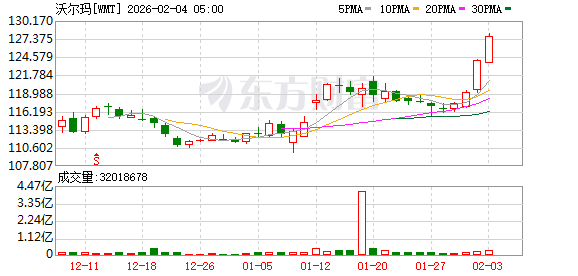
沃尔玛

Search documents
胖东来创始人于东来年后退休;雷军:初代SU7正式停产;拓竹科技年终奖总额增超50%,最高奖金超200万;xAI两位联合创始人离职 丨邦早报
Sou Hu Cai Jing· 2026-02-12 00:41
Group 1 - Founder of Pang Donglai, Yu Donglai, announced retirement after the New Year, transitioning to an advisory role, with decision-making now led by the Pang Donglai decision committee [1] - xAI co-founders Jimmy Ba and Wu Yuhua have both announced their departures from the company, marking significant talent loss as 6 out of 12 co-founders have left [3] - Tuo Zhu Technology's year-end bonus for 2025 is reported to exceed a 50% increase compared to 2024, with the highest bonus surpassing 2 million yuan [3] Group 2 - Boston Dynamics CEO Robert Playter has announced his resignation, with CFO Amanda McMaster taking over temporarily while a successor is sought [6] - Xiaomi's CEO Lei Jun announced the discontinuation of the first-generation SU7, with the new generation expected to launch in April [6] - Estée Lauder has filed a lawsuit against Walmart for selling counterfeit products, seeking an injunction and monetary damages [7] Group 3 - Meta plans to build a new data center in Lebanon, Indiana, with an investment exceeding $10 billion, creating approximately 4,000 construction jobs and over 300 operational jobs [7] - Yonghui Supermarket's CEO Wang Shoucheng reflected on the company's past focus on scale, announcing plans to close nearly 400 low-quality stores and distribute nearly 50 million yuan in profit sharing to employees in 2025 [7] - ByteDance is reportedly developing AI chips and negotiating with Samsung for manufacturing [7] Group 4 - Heineken announced plans to cut 5,000 to 6,000 jobs and lowered its 2026 operating profit growth forecast to 2% to 6% [8] - UCloud announced a price increase for its products and services starting March 1, 2026, due to rising costs in the global supply chain [8] - Zhi Ran Medical completed a 300 million yuan A+ round financing to advance clinical trials and product iterations [8] Group 5 - Eutelsat secured approximately 1 billion euros in export credit financing for its OneWeb satellite procurement project [9] - iFLYTEK launched the Xinghuo X2 model, which boasts enhanced capabilities in various areas, including mathematics and language understanding [9] - The global logistics robot company, Geekplus, introduced the world's first general-purpose humanoid robot designed for warehouse operations [11]



资讯日报:美国 12 月零售销售增长停滞-20260211
Guoxin Securities Hongkong· 2026-02-11 08:38
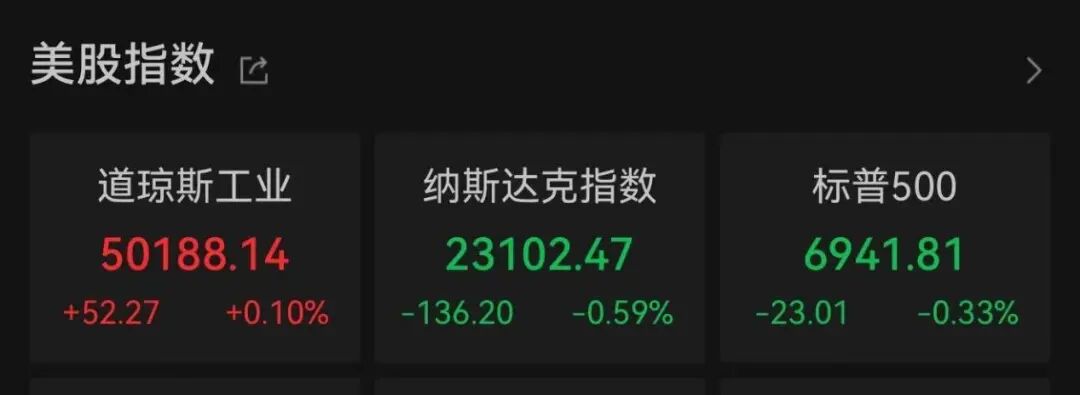
Market Overview - The Hang Seng Index closed at 27,183, up 0.58%, maintaining above the 27,000 mark[9] - The S&P 500 index fell by 0.33%, while the Nasdaq dropped by 0.59%[9] - The Dow Jones index increased slightly, reaching a new historical high[9] Retail Sector Performance - U.S. retail sales in December remained flat month-on-month, missing the expected growth of 0.4% and down from a previous increase of 0.6% in November[9] - Costco and Walmart saw declines of over 2% and 1%, respectively, due to the disappointing retail data[9] Technology Sector Insights - Hong Kong tech stocks continued to recover, with Alibaba and JD.com both rising approximately 2%[9] - AI application stocks performed strongly, with the stock of Yueda Group surging over 15%[9] Biopharmaceutical Sector Trends - The biopharmaceutical sector saw widespread gains, with companies like WuXi Biologics and Innovent Biologics also experiencing significant increases[9] - Upcoming earnings disclosures in February and March are expected to show improved performance for several innovative drug companies[9] Economic Indicators - The employment cost index in Q4 reached its lowest growth in four years, indicating potential economic weakness[12] - The Cleveland Fed President suggested that the Federal Reserve may keep interest rates unchanged for an extended period[12]
再创新高!科技巨头,罕见出手
Zhong Guo Ji Jin Bao· 2026-02-11 00:38
Group 1: Alphabet's Bond Issuance - Alphabet has issued a rare century bond, marking the first such issuance by a tech company since the late 1990s, with a total fundraising of nearly $32 billion in less than 24 hours [5][6] - The bond issuance included seven different types of debt, with the dollar-denominated portion receiving over $100 billion in subscriptions, indicating strong demand [5] - The primary buyers of the century bond are expected to be insurance companies and pension funds, aiming to attract a diverse range of investors [5][6] Group 2: Market Performance - The U.S. stock market showed mixed performance, with the Dow Jones Industrial Average reaching a new all-time high, while the S&P 500 and Nasdaq indices declined [2] - Among the "Big Tech" companies, only Tesla saw an increase in stock price, while Alphabet's stock fell by 1.78% [5] - Consumer retail stocks experienced a downturn, with major retailers like Costco and Walmart also reporting declines [8] Group 3: Economic Indicators - U.S. retail sales showed stagnation in December 2025, with core retail sales remaining flat, reflecting cautious consumer spending amid high inflation [4] - The employment cost index for Q4 2025 increased by 0.7%, which was below market expectations, indicating potential economic pressures [4] - The upcoming non-farm payroll report for January is anticipated to provide further insights into the employment landscape [4]
可选消费W06周度趋势解析:海外消费业绩密集发布带动股价波动,A H股期待26年可选消费恢复
海通国际· 2026-02-09 00:30
Investment Rating - The report assigns an "Outperform" rating to multiple companies in the discretionary consumption sector, including Nike, Li Ning, Midea Group, JD Group, Haier Smart Home, Gree Electric, Anta Sports, and many others [1]. Core Insights - The report highlights that overseas consumer earnings releases have led to stock price volatility, with A/H shares anticipating a recovery in discretionary consumption in 2026 [1]. - The performance of various sectors is analyzed, with gaming, U.S. hotels, snacks, and retail showing positive trends, while luxury goods and overseas cosmetics are experiencing declines [4][12]. - The report notes that the gaming sector saw a strong increase in gross gaming revenue, with a year-on-year growth of 24%, exceeding market expectations [6][14]. Sector Performance Summary - **Gaming Sector**: Increased by 5.5%, driven by strong January gross gaming revenue growth and positive earnings from MGM China [6][14]. - **U.S. Hotels**: Also up by 5.5%, with Marriott and Hilton showing positive earnings forecasts [6][14]. - **Snacks**: Grew by 3.6%, with companies like Youyou Foods and Qiaqia Foods reporting significant growth expectations [6][14]. - **Retail Sector**: Increased by 3.5%, led by Walmart and Target, which exceeded market sales forecasts [8][14]. - **Domestic Sportswear**: Rose by 2.6%, with Li Ning benefiting from its partnership with the Chinese Olympic Committee [8][14]. - **Credit Card Sector**: Gained 2.3%, supported by strong earnings from Visa and Mastercard [8][14]. - **Domestic Cosmetics**: Increased by 2.1%, benefiting from overall strength in the beauty and skincare sector [8][14]. - **Luxury Goods**: Slightly up by 0.9%, influenced by a rebound in the U.S. market [8][14]. - **Overseas Cosmetics**: Decreased by 5.7%, with concerns over the sustainability of growth for Estée Lauder [9][15]. - **Pet Sector**: Down by 0.7%, with companies like Guai Bao Pet and Zhongchong Co. experiencing declines [8][14]. - **Gold and Jewelry**: Fell by 1.2%, affected by fluctuations in gold prices [8][14]. Valuation Analysis - The report indicates that the valuation of various sectors remains below their historical averages, with expected P/E ratios for 2025 showing significant discounts compared to the past five years [10].
重大信号!瑞银集团,批量减持明星科技股!
证券时报· 2026-02-07 02:10
Core Viewpoint - UBS Group significantly reduced its holdings in major tech stocks during the fourth quarter of last year, with only a slight increase in Meta among the "Magnificent 7" tech stocks [1][3]. Group 1: Holdings and Changes - UBS disclosed a 5.65% decrease in the market value of its securities, totaling $616.68 billion as of the end of 2025 [1]. - The top five holdings of UBS include Nvidia ($14.45 billion), Microsoft ($13.56 billion), Apple ($12.11 billion), Broadcom ($8.23 billion), and Amazon ($7.99 billion), collectively accounting for 14.52% of the investment portfolio [3]. - In Q4, UBS reduced its holdings in Nvidia by 10.47% (10.04 million shares), Apple by 10.57% (5.27 million shares), Microsoft by 7.64% (2.32 million shares), Google by 9.05% (2.21 million shares), Amazon by 4.57% (1.66 million shares), and Tesla by 15.09% (0.71 million shares) [3]. Group 2: Financial Performance - UBS reported Q4 total revenue of $12.1 billion, exceeding the previous year's $11.6 billion and meeting analyst expectations [6]. - The net profit attributable to shareholders increased by 56% year-over-year to $1.2 billion, surpassing the analyst estimate of $919 million [6]. - Wealth management business saw a net inflow of $8.5 billion, significantly lower than the expected $27.4 billion, with a notable outflow of $14.1 billion from the U.S. wealth management sector [6]. Group 3: Future Outlook - UBS's CEO indicated that net new assets in the Americas wealth management division are expected to turn positive in 2026, although challenges are anticipated in the first half of 2026 [7]. - UBS's investment banking division contributed significantly to the overall profit, with a 34% increase in operating profit driven by market volatility [7].

悬崖上的永辉
虎嗅APP· 2026-02-06 00:08
Core Viewpoint - Yonghui Supermarket is facing significant financial challenges, with a projected net loss of 2.14 billion yuan in 2025, marking a 45.6% increase year-on-year, and has reported losses for five consecutive years. The company attributes these losses to major operational strategy adjustments, including store renovations and closures, which have resulted in direct losses of 1.2 billion yuan [4][8]. Group 1: Company Background and Growth - Yonghui Supermarket was founded in 1995 by brothers Zhang Xuansong and Zhang Xuanning, starting with a micro-profit model. The brand was officially established in 1998 and gained momentum in 2000 by leveraging the "Agricultural Reform Supermarket" policy, leading to rapid growth [6][7]. - By 2010, Yonghui became the first "fresh food stock" listed on the Shanghai Stock Exchange, and by 2020, it achieved a record revenue of 93.2 billion yuan, marking its peak in the industry [7][8]. Group 2: Recent Challenges and Strategic Changes - Since 2021, Yonghui has entered a prolonged period of losses, with figures of 3.944 billion yuan in 2021, 2.763 billion yuan in 2022, and 1.329 billion yuan in 2023. The company has attempted a major transformation called "Fat Reform" to address these issues, which involves comprehensive changes in product structure, shopping experience, and organizational framework [8][9]. - The "Fat Reform" has led to significant financial costs, including a projected loss of 2.14 billion yuan for 2025, with 910 million yuan attributed to asset write-offs and 300 million yuan due to loss of gross margin from store renovations [9][10]. Group 3: Market Dynamics and Competitive Landscape - The retail landscape has shifted dramatically, with the rise of e-commerce and community group buying, which have significantly impacted traditional retail models. The community group buying market in China surpassed 830 billion yuan in 2023, with user numbers increasing from 212 million in 2017 to 845 million [10][11]. - Yonghui's traditional advantages in fresh food are being eroded by new competitors offering lower prices and more efficient supply chains. The company struggles to compete with both discount stores and experiential retailers, leading to a loss of customer traffic [11][13]. Group 4: Future Directions and Strategic Imperatives - Yonghui's transformation should not aim to replicate the success of competitors like Fat Donglai but rather focus on establishing a unique shopping proposition that differentiates it from other channels. This involves creating an emotional connection with consumers and offering distinctive value beyond price [17][18]. - The company must navigate its complex organizational structure and historical burdens to find a new positioning that resonates with consumers in a rapidly evolving market. The challenge lies in identifying what unique reasons consumers will have to choose Yonghui over other retail options [18].

美股科技软件板块大崩盘,罪魁祸首竟是这家公司?
阿尔法工场研究院· 2026-02-05 07:48
Core Viewpoint - The emergence of native AI models, exemplified by Anthropic's new automation tools, poses a significant threat to traditional software companies, raising questions about the sustainability of their business models and competitive advantages [2][3]. Group 1: Impact of Anthropic's Tools - Anthropic's release of a legal tool plugin for its Claude Cowork platform has triggered panic selling in the software sector, particularly affecting legal software and data service companies [2]. - Major companies like Thomson Reuters and LegalZoom saw their stock prices plummet by 21% and over 20% respectively, as their core business models were directly challenged by the cost-effective and integrated solutions offered by AI [3]. - The market fears that if companies can use a single AI plugin to handle legal compliance tasks that previously required multiple expensive software subscriptions, the subscription value of traditional SaaS companies will be severely undermined [3]. Group 2: Subscription Model Crisis - The term "SaaSpocalypse" reflects the growing concern that AI advancements may not just assist growth but could potentially replace traditional subscription models entirely [5]. - The traditional software industry's reliance on high-margin recurring revenue from seat-based billing is threatened as AI agents can perform tasks that previously required multiple personnel [5]. - This shift in expectations regarding future growth is a key driver behind the current wave of panic selling in the software sector [5]. Group 3: Performance Discrepancies - Among S&P 500 software stocks, only 69% reported revenues above expectations, significantly lower than the tech sector's overall 85% success rate, indicating a weak position in the AI-driven market [6]. - Even strong performers like Microsoft are under scrutiny as their Azure cloud business shows signs of slowing growth, leading to a decline in stock price over four consecutive trading days [6]. - In contrast, Palantir emerged as a rare "safe haven" with a 70% revenue increase in Q4, suggesting that the market is selectively favoring companies that can effectively leverage AI to enhance productivity [6]. Group 4: Market Reallocation - Despite the Nasdaq's poor performance, the S&P 500 shows a "seesaw" effect, with companies like FedEx and Walmart gaining market value, indicating a shift of funds from vulnerable software stocks to more defensively positioned sectors [7]. - The selling pressure on software stocks is characterized by a "surrender" mentality among investors, who are eager to exit positions regardless of price [7]. - From an investment perspective, extreme panic often creates opportunities, as evidenced by Microsoft's valuation dropping to a three-year low with a forward P/E ratio around 25 [7]. Group 5: Future Outlook - The year 2026 is anticipated to be a pivotal moment for the software industry, as AI programming and automation lower development barriers and diminish traditional business moats [8]. - The consensus on Wall Street has shifted fundamentally, with software no longer seen as a guaranteed profit generator in the face of competition from companies like Anthropic that possess foundational AI models [8]. - Investors are advised to focus on identifying companies with core competencies that are not easily replaceable by automation, rather than blindly attempting to catch falling stocks [8].




肯德基涨价背后:外卖狂奔,骑手成本上涨丨消费参考
2 1 Shi Ji Jing Ji Bao Dao· 2026-02-05 02:18
Group 1 - Yum China provided further explanation for the price increase at KFC, stating it is a mild adjustment affecting only delivery menu prices, with no changes to dine-in prices [1] - The average price adjustment for KFC's delivery products was 0.8 yuan, while dine-in prices remained unchanged [2] - In 2025, Yum China's delivery sales are expected to grow by 25%, accounting for 48% of restaurant revenue, up from 39% the previous year [2] Group 2 - KFC's system sales are projected to increase by 5% in 2025, with same-store sales growing by 1% and operating profit rising by 8% to 1.3 billion USD [3] - As of the end of 2025, KFC plans to have a total of 12,997 stores, with 1,349 new stores added during the year [3] - Pizza Hut's system sales are expected to grow by 4% in 2025, with same-store sales also increasing by 1% and operating profit rising by 19% to 183 million USD [4] Group 3 - Yum China's total revenue is projected to grow by 4% to 11.8 billion USD in 2025, with operating profit increasing by 11% to 1.3 billion USD [3] - The CFO mentioned that the current subsidy competition in the delivery platform is beneficial for larger businesses, allowing them to collaborate with multiple platforms [3]
AMD大跌带崩芯片股,“中国金龙”下挫,黄金反弹,原油拉升
Di Yi Cai Jing Zi Xun· 2026-02-04 23:25
2026.02.05 本文字数:1676,阅读时长大约3分钟 作者 |第一财经 樊志菁 周三,受科技股抛售潮加剧影响,纳指标普承压收跌,资金流向工业等板块避险。截至收盘,道指涨 260.31点,涨幅0.53%,报49501.30点,纳指跌1.51%,报22904.58点,标普500指数跌0.51%,报6882.72 点。 | 道琼斯工业平均 纳斯达克 | 标普500 | | --- | --- | | 49501.30 22904.58 | 6882.72 | | +260.31 +0.53% -350.61 -1.51% -35.09 -0.51% | | 明星科技股跌多涨少,苹果涨2.60%,微软涨0.72%,谷歌跌2.16%,亚马逊跌2.36%,Meta跌3.28%。特 斯拉跌3.78%。 软件板块因AI技术发展挑战继续承压,甲骨文跌5.19%。 美股延续周二抛压,投资者对板块高估值存忧,同时质疑华尔街本轮人工智能行情是否已见顶,纷纷撤 离高风险成长股,转向沃尔玛等周期股。科技板块成为当日标普500指数中表现最差的板块。 Certuity首席投资官斯科特・韦尔奇表示:"去年年底,市场已开始区分人工智能领 ...
【环球财经】拥抱AI 沃尔玛市值突破1万亿美元
Xin Hua She· 2026-02-04 10:33
路透社数据显示,过去十年,沃尔玛股价飙升468%。报道分析,这主要归功于沃尔玛同时吸引高收入 和低收入消费者的战略。在美国,每4美元的杂货消费中,就有1美元流向沃尔玛。 值得一提的是,沃尔玛十分重视电商业务。过去5年间,其在线市场商品扩展至超5亿种,推出1小时送 达服务,创建与亚马逊Prime竞争的Walmart+会员计划,并打造价值40亿美元的广告业务。截至2025年 10月31日的3个月内,受在线订单和广告业务推动,其美国电商业务销售额增长28%。 更为关键的是,沃尔玛抢占先机大力投资人工智能(AI),投入数十亿美元用于供应链自动化,以提升生 鲜品质、加快配送速度,并优化库存预测和搜索功能。伦敦证券交易所估算,该公司已连续15个季度超 出美国同店销售预期。投资者对其AI布局的乐观情绪进一步推高股价。 美国谷歌公司上月说,将与沃尔玛等大型零售商合作,扩展其"双子座"AI模型的购物功能。去年10月, 开放人工智能研究中心(OpenAI)与沃尔玛宣布类似合作,称将允许ChatGPT用户通过"即时结账"功能购 买沃尔玛网站上除生鲜外的大部分商品。 新华财经北京2月4日电 美国沃尔玛公司3日成为全球首家市值突破1万 ...