
Flexport

Search documents
我国石化产业迎出口利好
Zhong Guo Hua Gong Bao· 2025-05-19 02:25
Group 1 - The US has canceled 91% of additional tariffs, and China has reciprocated with a 91% cancellation of counter-tariffs, benefiting both producers and consumers in both countries [2][3] - The petrochemical industry is expected to see significant benefits from the tariff adjustments, as costs for importing crude oil, LNG, and other chemical raw materials from the US will decrease, leading to lower production costs [3] - The reduction in tariffs is likely to enhance the price competitiveness of Chinese petrochemical products in the US market, potentially increasing exports and alleviating production pressure on certain chemical products [3] Group 2 - A "rush to ship" is anticipated as foreign trade companies compete for a 90-day buffer period to stock up on goods, leading to a potential increase in shipping rates from May to July [4] - The total export value of China's chemical products is projected to be approximately $370.7 billion in 2024, with exports to the US accounting for about $44.6 billion, representing 12.03% of total exports [4] - The easing of tariffs is expected to stabilize agricultural input prices in the US, which have been negatively impacted by previous tariff policies [4] Group 3 - Companies are actively seizing the opportunity presented by the tariff adjustments, with specific mentions of increased export potential for certain products like acetamiprid and lithium batteries [5] - The tariff adjustments are seen as providing a relatively stable overseas trade environment for solar and energy storage products, with ongoing projects in the Middle East expected to enhance global supply capabilities [5] - The recent tariff changes are viewed as a temporary relief for the Chinese chemical industry, with companies advised to monitor future negotiations and adapt their strategies accordingly [5]
中美海运集装箱预订量飙升,万科再获深铁15亿借款 | 财经日日评
吴晓波频道· 2025-05-15 16:03
Group 1: Social Financing and Monetary Policy - In April, China's social financing scale increased by 1.16 trillion yuan, with a year-on-year increase of 1.22 trillion yuan, totaling 16.34 trillion yuan in the first four months, which is 3.61 trillion yuan more than the same period last year [1] - The broad money supply (M2) reached 325.17 trillion yuan, growing by 8% year-on-year, while the narrow money supply (M1) was 109.14 trillion yuan, up by 1.5% [1] - The widening M2-M1 gap indicates overall market liquidity is ample, but the flow of funds into the real economy needs improvement [2] Group 2: International Relations and Trade - China will implement a visa-free policy for citizens of Brazil, Argentina, Chile, Peru, and Uruguay from June 1, 2025, facilitating business and tourism [3] - The expansion of China's "visa-free circle" is expected to boost tourism and foreign investment, as more international visitors gain direct experience of China [4] Group 3: Shipping and Trade Volume - Container bookings from China to the U.S. surged by 277% to 21,530 twenty-foot equivalent units (TEUs) following the recent tariff agreement, indicating a strong rebound in trade activity [5] - The increase in shipping demand is attributed to traders taking advantage of the temporary tariff suspension to stock up on goods [6] Group 4: Venture Capital and Technology Financing - Seven Chinese government departments announced the establishment of a national venture capital guidance fund to support long-term investments in technology [7] - The initiative aims to enhance financing for technology companies, particularly in their early stages, addressing the challenges of converting research into marketable products [8] Group 5: Corporate Earnings and Market Performance - Tencent reported a 13% year-on-year increase in revenue for Q1, reaching 180 billion yuan, while net profit decreased by 7% to 47.82 billion yuan [9] - Despite strong performance in gaming and advertising, Tencent's e-commerce strategy faces challenges, with unclear long-term planning [10] Group 6: Real Estate Financing - Vanke received a loan of up to 15.52 billion yuan from its largest shareholder, Shenzhen Metro Group, as part of ongoing financial support amid market challenges [11] - The cumulative loans from Shenzhen Metro to Vanke have reached nearly 12 billion yuan this year, highlighting the ongoing financial strain on Vanke [12] Group 7: U.S. Treasury Yields and Economic Outlook - The 30-year U.S. Treasury yield approached 5%, reflecting concerns over rising fiscal deficits and the impact of proposed tax cuts [13] - The relationship between rising Treasury yields and the dollar's strength is weakening, indicating market uncertainty regarding U.S. economic prospects [14] Group 8: Stock Market Trends - The Chinese stock market experienced fluctuations, with the Shanghai Composite Index falling by 0.68% amid mixed sector performance [15] - Consumer stocks showed resilience, while technology sectors faced adjustments, reflecting a cautious market sentiment [15]




新关税落地,开往美国的货船都快不够用了
吴晓波频道· 2025-05-14 17:56
Core Viewpoint - The Geneva statement marks the beginning of a new phase in the US-China relationship, shifting the focus from tariff disputes to technology breakthroughs, rule restructuring, and industrial chain competition [2][11]. Group 1: Market Reactions - Following the Geneva statement, the US lifted 91% of new tariffs on China and reduced the small package tax rate from 120% to 54%, leading to a surge in market activity [3][4]. - Export activities intensified, with logistics companies reporting a 35% increase in shipping orders from China to the US on the first day of the trade agreement [6]. - The stock market reacted positively, with the Shanghai Composite Index returning to 3400 points and the shipping index hitting a ceiling [6][7]. Group 2: Business Strategies - Companies are urged to reconsider their reliance on a single market and accelerate their overseas expansion strategies to mitigate risks [8][10]. - There is a growing trend among Chinese businesses to adopt a more rational approach to overseas investments, such as preferring leasing land instead of purchasing it outright [10]. - Experts suggest that businesses should utilize the 90-day window to enhance their overseas presence and diversify supply chains to reduce costs and comply with origin rules [17]. Group 3: Compliance and Risk Management - Companies need to strengthen their legal awareness and compliance capabilities, particularly regarding intellectual property and local regulations in target markets [18][21]. - It is essential for businesses to clarify contract terms related to tax and tariff responsibilities to avoid disputes arising from tariff changes [20][21]. - The importance of establishing a sustainable operational framework is emphasized, moving away from gray area practices to genuine localization in foreign markets [22][23]. Group 4: Long-term Outlook - The ongoing US-China trade tensions are expected to persist, necessitating a balanced approach to international market strategies [24][28]. - The restructuring of global supply chains is deemed irreversible, with a focus on building a globalized and localized supply chain system [25][26]. - The future investment landscape will likely center around technological innovation and domestic consumption, with a potential for gradual RMB appreciation [31][34].

90天,“抢运”开启!
Hua Er Jie Jian Wen· 2025-05-14 02:02
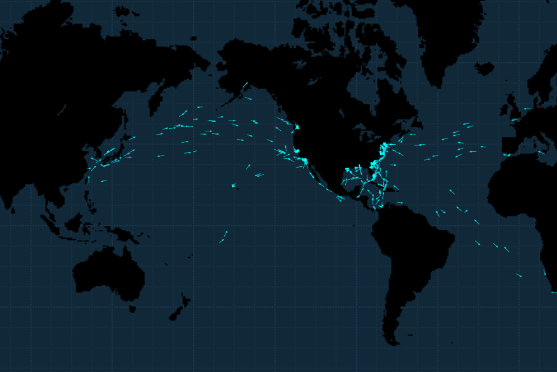
中美贸易休战引爆"超级抢运"潮,大幅降低的关税将催生90天疯狂进口周期。 在另一份报告中,杰富瑞(Jefferies)分析师指出,中美之间跨太平洋航线的货运费率已从4月中旬的每四 十英尺等量单位2,000美元飙升至本周的约2,500美元: 5月12日,中国商务部发布《中美日内瓦经贸会谈联合声明》,中美各取消了共计91%的加征关税,暂 停实施24%的反制关税90天。面对未来90天大幅降低的进口成本,高盛分析师Sun预测这将引发一波涌 向美国港口的进口潮。根据停靠美国港口的集装箱船的实时照来看,拥挤趋势已经显现。 高盛分析师周二提出了关键问题——在90天关税暂停期内,中国出口商和美国进口商将多么急切地争相 下订单: 我们生活在一个高度不确定的世界。谁知道90天后会发生什么?沃尔玛们是否应该尽可能多 地储备圣诞商品,也许不仅是为了2025年,甚至可能为2026年做准备? 无独有偶,野村证券中国首席经济学家陆挺则在周一的报告中写道: 由于许多中国出口商可能在4月份暂停了对美国的出货,关税的大幅下调可能会引发一波积 压出口潮。 释放积压需求,航运费率将飙升 货运代理商如达飞轮船(CMA CGM SA)将90天暂停期和中 ...
美线货代跌宕30天
Zhong Guo Jing Ying Bao· 2025-05-13 14:59
Core Viewpoint - The recent U.S.-China trade negotiations have led to the cancellation of some tariffs, which is expected to revitalize the logistics market, particularly for freight forwarders involved in U.S. routes [1][2][17]. Group 1: Market Impact - Orders for logistics services have surged to more than double the pre-trade war daily average following the announcement of tariff cancellations [1]. - The logistics industry faced a significant downturn in April, with a drastic drop in cargo volumes due to high tariffs, leading to many freight forwarders experiencing severe financial strain [1][3][5]. - Shipping rates fluctuated significantly around the tariff implementation date, with rates dropping sharply after April 9, indicating a direct correlation between tariff policies and shipping demand [4][5]. Group 2: Trade Dynamics - The introduction of "transshipment trade" has increased as companies seek to navigate high tariffs, although regulatory scrutiny has intensified, making this option less viable [1][9][11]. - The U.S. is heavily reliant on Chinese imports, with China accounting for 65% of U.S. apparel imports and 52% of footwear imports, indicating the potential for significant supply chain disruptions due to tariff policies [6]. - The World Trade Organization (WTO) has predicted that the trade tensions could lead to an 80% reduction in trade volume between the U.S. and China [5]. Group 3: Future Opportunities - The recent tariff negotiations have created a sense of optimism among freight forwarders, who are now looking for new opportunities in the market as demand is expected to rebound [2][17]. - Companies are increasingly focusing on global supply chain strategies, with many considering relocating production to Southeast Asia to mitigate tariff impacts [13][14]. - The logistics sector is anticipated to undergo a reshuffling, with successful adaptation to the new trade environment potentially leading to growth opportunities for agile companies [14][19].
关税冲击有多大?华尔街紧盯港口、卡车和供应链数据
Hua Er Jie Jian Wen· 2025-05-07 13:19
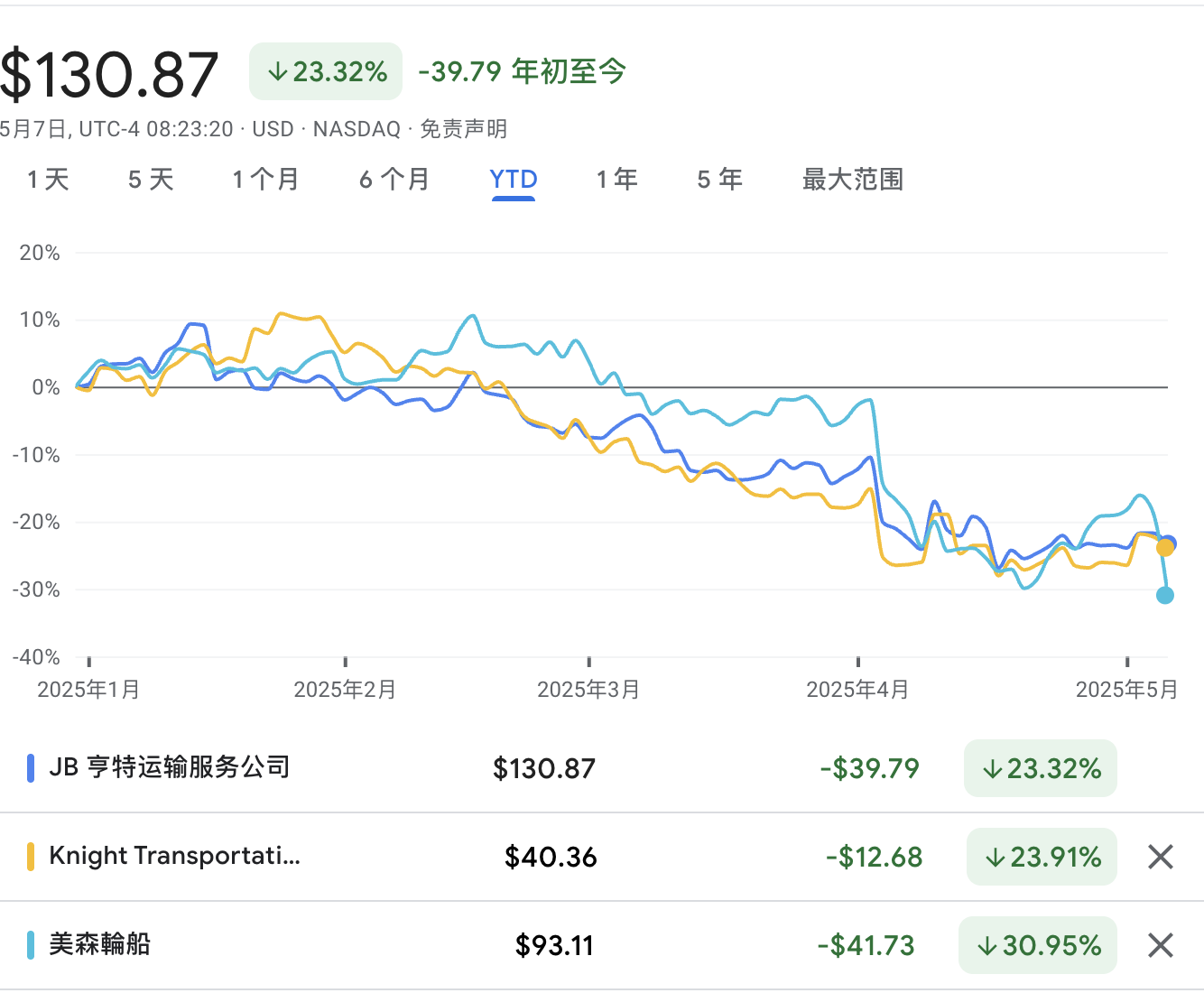
Core Insights - The shipping and logistics data is being closely monitored by Wall Street to assess the impact of the Trump administration's tariff policies on the economy [1] - The Dow Jones Transportation Average has underperformed the Dow Jones Industrial Average by over 9 percentage points this year, marking its worst performance in the past decade [1] Shipping Industry - Major freight companies in the U.S., such as J.B. Hunt Transport Services, Knight-Swift Transportation Holdings, and Matson, have seen their stock prices plummet this year [2] - There has been a significant decline in container shipping bookings to the U.S., with a 60% drop reported since April 9, according to Flexport [4] - Nearly 30% of trans-Pacific voyages to the U.S. have been canceled as of the week of May 4 [4] - The import volume at the Port of Los Angeles is expected to decrease by 35% compared to the same period last year [4] Trucking Industry - Trucking companies are reducing orders for heavy trucks due to tariff concerns, with net orders in North America falling to 16,500 units in March, a year-over-year decline of 5.9% [5] - The cancellation rate for truck orders has reached a two-year high, and dealer inventories have hit a record 91,600 units [5] - Truck drivers are facing profit levels similar to those during the global financial crisis [5] Supply Chain - The GEP Global Supply Chain Volatility Index reached a five-year low in March, driven by reduced manufacturing activity in North America [6] - Companies are preparing for higher procurement costs and potential consumer spending slowdowns, with expectations of further reductions in April readings [6]
美国物流企业CEO:关税对美国小企业是一场“灭绝危机”,就像小行星灭绝恐龙那样
Hua Er Jie Jian Wen· 2025-05-04 08:28
Group 1 - The implementation of high tariffs in the U.S. is expected to severely impact small businesses, potentially leading to thousands of closures and millions of job losses [1] - Small businesses are facing unprecedented uncertainty, unable to bear high tariffs or quickly shift their supply chains, likened to a ship stuck in the Suez Canal [1][3] - The CEO of Flexport, Ryan Petersen, emphasizes that even companies that have planned for tariffs are struggling, as they cannot price their products in advance due to the 90-day lead time for overseas orders [3] Group 2 - Petersen's company has access to approximately 1% of U.S. trade data, allowing for comprehensive tracking of costs and additional expenses due to tariffs [2] - There is a looming supply chain crisis, with a significant drop in shipping bookings to the U.S. since the tariffs took effect, indicating future logistical challenges [3] - Petersen predicts that the White House will concede before a full-blown crisis occurs, as the current situation is unsustainable [3]
当自己的商业模式被摧毁时, 我们能做什么?
Hu Xiu· 2025-05-04 01:40
Core Viewpoint - Flexport CEO Ryan Petersen stated that since the implementation of tariffs, the shipping order volume from China to the U.S. has decreased by 60%, posing a significant threat to many small businesses in the U.S. that rely on this trade, potentially leading to thousands of company closures and millions of job losses, which he describes as an extinction-level risk [1]. Group 1 - The high tariffs are not just an additional cost but can directly destroy viable business models for many American small enterprises [1]. - The long-term maintenance of such high tariffs could result in severe economic consequences, including widespread business failures and job losses [1]. Group 2 - The article reflects on the interconnectedness of businesses that depend on importing goods from China, highlighting the potential for disruption in this ecosystem [2]. - It emphasizes the need for businesses to adapt to external changes, suggesting that adjustments to business models are a regular necessity [3]. Group 3 - The article provides practical advice for businesses affected by the tariffs, such as exploring new supply sources, including domestic options, to mitigate the impact of high tariffs [10][13]. - It suggests that businesses can pivot to exporting goods as an alternative strategy, leveraging existing relationships and networks [10]. - The potential for creating new business models, such as consulting based on the experience gained from adapting to new supply chains, is also discussed [14].
Z Event|SaaStr前夕,ZP联合硅谷20家顶尖VC,线下交流企业AI的下一个十年?
Z Potentials· 2025-04-26 03:26
5月1日,旧金山。SaaStr Annual 2025 开幕前夕,一场 面向企业AI Agent与B2B领域创业者与投资人 的闭门私享 会即将启幕。 Runa Capital 是一家全球性早期风险投资基金,专注于 B2B软件、深科技、金融科技基础设施 ,投资了 MariaDB (全球领先的开源数据库平台)。 DCM Ventures 是一家跨境布局、管理超40亿美元资产的顶级风险投资机构,专注投资美洲、亚洲和新兴市场的创 新企业。投资了 Bill.com 、 Kuaishou快手 、 Musical.ly(TikTok前身)等 。 Susa Ventures 是一家 硅谷顶尖 Pre-Seed/Seed 阶段投资机构,以高质量深度陪伴创业者著称。压中了 Together AI 、 Robinhood 、 Flexport等 。 Sierra Ventures 是一家成立于1982年的老牌早期基金,专注于 企业软件、数据基础设施与深科技 领域。曾经投资 了 Elastic 、 Intuit等。 嘉宾阵容 在生成式AI和智能体逐步渗透企业 场景的当下, Z Potentials 联合Runa Capital、DC ...