HTC

Search documents
HTC或将发布AR智能眼镜新品
WitsView睿智显示· 2025-08-07 09:05
Group 1 - HTC is set to launch a new product under the VIVE category on August 14, which is likely to be an AR smart glasses with strong connectivity features [1] - HTC VIVE previously hinted at this launch on social media, announcing a themed event titled "What's Next" at Taipei 101, confirming the introduction of the first smart glasses [2] - HTC has a history of exploring wearable devices, having released the VIVE Flow VR glasses in 2021, which emphasized mobile connectivity and provided an immersive VR experience with specifications such as 3.2K resolution and a 100-degree field of view [2]

库克感谢“国补”;硅基智能疑似回应全员裁员争议丨新鲜早科技
2 1 Shi Ji Jing Ji Bao Dao· 2025-08-04 02:22
21世纪经济报道新质生产力研究院综合报道 早上好,新的一天又开始了。在过去的24小时内,科技行业发生了哪些有意思的事情?来跟21tech一起 看看吧。 【巨头风向标】 苹果2025财年第三财季业绩强劲,库克:部分归功于中国"国补"的帮助 美东时间7月31日美股盘后,苹果公布2025财年第三财季财务数据,总营业收入940.4亿美元,同比增长 10%,创2021年12月以来最大季度增幅;净利润234.3亿美元,同比增长9%。苹果在此季度迎来历史性 里程碑,累计销量突破30亿部iPhone。库克表示,中国市场收入好转(大中华区收入153.7亿美元,同 比增长4.4%)部分归功于中国政府对部分设备的补贴政策,并强调苹果正"大幅增加"AI投资。 硅基智能疑似回应全员裁员争议:目前有稳定的产研与销售团队 8月3日消息,针对近日网传"全员裁员"的消息,硅基智能发布声明称,2025年将重点布局杭州、嘉兴、 香港、新加坡等地,预计全年新增岗位数百个,2026年将达到新增数千人的扩张节奏,疑似辟谣该传 闻。根据网传截图,硅基智能创始人司马华鹏此前在工作群内@所有人并表示:"各位,昨天我去看研 发,只有徐超一个人在加班,公司今天已 ...

库克感谢“国补”;硅基智能疑似回应全员裁员争议丨科技风向标
2 1 Shi Ji Jing Ji Bao Dao· 2025-08-04 02:16
Group 1: Apple Financial Performance - Apple reported strong financial results for Q3 of FY2025, with total revenue reaching $94.04 billion, a 10% year-over-year increase, marking the largest quarterly growth since December 2021 [2][11] - Net profit for the quarter was $23.43 billion, reflecting a 9% year-over-year growth [2][11] - iPhone revenue grew by 13% to $44.58 billion, while services revenue also increased by 13% to $27.42 billion [11] Group 2: Market and Regional Insights - Revenue from the Greater China region was $15.37 billion, up 4.4% year-over-year, indicating a recovery in the Chinese market, partially attributed to government subsidies [2][11] - The report highlighted a significant increase in AI investments by Apple, suggesting a strategic focus on artificial intelligence [2] Group 3: Other Company Developments - Apple is developing a simplified version of ChatGPT through a newly established team called "Answers," aiming to enhance user information access across its products [5] - The company is testing its first self-developed CMOS sensor, expected to debut in the iPhone 18 series, featuring LOFIC technology for improved dynamic range [9] Group 4: Industry Trends - Amazon's Q2 FY2025 results exceeded expectations with net sales of $167.7 billion and net profit of $18.2 billion, but a disappointing outlook for AWS led to an over 8% drop in stock price [12] - The private rocket company Blue Arrow Aerospace plans to go public, having filed for an IPO in Beijing, indicating growth in the commercial space sector [13]
投资日历:8月资本市场大事提醒
news flash· 2025-07-31 08:41
Group 1 - The Hong Kong "Stablecoin Regulation" will take effect on August 1 [1] - The "Government Data Sharing Regulation" will be implemented [1] - The 2025 22nd ChinaJoy will take place [1] Group 2 - The Bank of Japan released the minutes from the June monetary policy meeting [2] - DJI launched its first robotic vacuum cleaner [2] - The Bank of England announced its interest rate decision [2] Group 3 - The International Energy Agency (IEA) published its monthly oil market report [3] - Tencent Holdings disclosed its interim performance report [3] - Xiaomi Group released its interim performance report [3] Group 4 - The Hang Seng Index Company announced the results of its second-quarter review [4] - The Jackson Hole Global Central Bank Conference will be held [4] - The 2025 China International Big Data Industry Expo will take place [4] Group 5 - OpenAI plans to launch the new flagship model GPT-5 [5]

看完这36条心法,就读懂了雷军
Sou Hu Cai Jing· 2025-07-26 14:29
Core Insights - The article discusses the entrepreneurial journey of Lei Jun and the founding of Xiaomi, highlighting the challenges and strategies that led to its success [4][20][21] - It emphasizes the importance of hard work, learning from failures, and maintaining a user-centric approach in building a great company [5][6][36] Group 1: Entrepreneurial Journey - Lei Jun's early experiences with Kingsoft and the challenges faced during the launch of the "Pangu" office suite shaped his understanding of market needs and user demands [12][13][16] - The transition from Kingsoft to founding Xiaomi in 2010 was driven by a deep reflection on the essence of the internet and the desire to create a significant company [19][20] - Xiaomi's initial marketing strategy involved extensive engagement on social media to find early adopters, which was crucial for its launch [21][22] Group 2: Challenges and Resilience - Xiaomi faced a "death spiral" in 2015 due to declining sales and supply chain issues, which required a strong response from the leadership to regain market confidence [33][34] - The company's ability to unite its team and maintain user trust during tough times was pivotal in overcoming challenges [35][36] Group 3: Key Principles and Strategies - The article outlines 36 entrepreneurial principles derived from Lei Jun's experiences, emphasizing the importance of focus, trust, and continuous improvement [27][28][29] - It highlights the significance of creating a strong team and fostering a culture of innovation and resilience within the company [30][31][32] - The concept of "explosive products" is introduced, suggesting that successful products are the result of effective production, appropriate pricing, and user-oriented innovation [87][89][92]


好好的大公司,怎么就病了?
3 6 Ke· 2025-07-23 02:45
Core Insights - The concept of "big company disease" refers to large, once-successful enterprises that gradually lose vitality and competitiveness, leading to stagnation or decline [2][14] - The article discusses the symptoms of "big company disease," including strategic misalignment, organizational dysfunction, and innovation stagnation [2][11] Strategic Misalignment - The first symptom of "big company disease" is strategic misalignment, where companies lose focus on their core mission and begin to expand into unrelated markets without a unified strategy [2][5] - Frequent changes in strategic direction can lead to confusion and resource misallocation, as seen in companies like HTC and Meituan [3][5] - Companies that maintain a clear strategic focus, like Nintendo, are more likely to succeed [2][5] Organizational Dysfunction - The second symptom is organizational dysfunction, characterized by slow decision-making processes and a lack of effective communication within the organization [7][8] - As companies grow, their decision-making structures can become cumbersome, leading to missed opportunities, as illustrated by Giordano's slow response to e-commerce challenges [7][8] - Internal competition for resources can create inefficiencies, as seen in companies like Vanke and Wang An Computer, where departments operate in silos [8][9] Innovation Stagnation - The third symptom is a decline in innovation capabilities, where companies become risk-averse and fail to pursue groundbreaking ideas [11][12] - Companies may continue to release new products, but these often lack true innovation and merely extend existing lines, as demonstrated by Blackberry and Sony [11][12] - The article emphasizes that true innovation requires a willingness to explore new possibilities rather than relying solely on past successes [16][21] Underlying Mechanisms - The article identifies three interrelated mechanisms that contribute to "big company disease": success traps, internal drive imbalance, and short-termism [14][18][21] - Success traps occur when companies become overly reliant on past successful strategies, leading to a decline in adaptability [15][16] - Internal drive imbalance arises from bureaucratic structures that prioritize risk avoidance over value creation, resulting in a lack of responsiveness to market changes [18][19] - Short-termism manifests as a focus on immediate financial performance at the expense of long-term strategic goals, stifling innovation and growth [21][23] Conclusion - The article concludes that while "big company disease" is a real phenomenon, it is not insurmountable. Companies can still become great by embracing self-renewal, maintaining customer sensitivity, and fostering a culture of innovation [23][24]

高盛:ASIC 人工智能服务器及组件强劲增长;2025 年第三季度机型转换
Goldman Sachs· 2025-06-11 02:16
Investment Rating - The report assigns a "Buy" rating to several companies within the Taiwan Technology sector, including Wiwynn, Wistron, Hon Hai, Gigabyte, and various AI server components [25]. Core Insights - The Taiwan Technology sector is experiencing strong growth in ASIC AI servers and related components, with notable revenue increases reported by key players such as Wiwynn (+187% YoY) and Gigabyte (+108% YoY) [1][8]. - The report highlights a transition in server models expected in 3Q25, with a cautious outlook on rack-level AI server shipments due to macro uncertainties [9]. - The demand for components like liquid cooling, silicon photonics, rail kits, and chassis is anticipated to rise, driven by specification upgrades and the increasing adoption of AI technologies [9][10]. Summary by Sections ASIC AI Servers and Components - ASIC AI servers are showing robust growth, with Wiwynn's revenues up 187% YoY, significantly exceeding estimates [1][8]. - Baseboard-based AI servers also demonstrate strong performance, with Gigabyte achieving 108% YoY revenue growth [1][8]. - Liquid cooling solutions are gaining traction, with AVC reporting 87% YoY revenue growth [1][8]. Market Outlook - The report expresses caution regarding rack-level AI server shipments in the second half of 2025, while maintaining a positive outlook for ASIC and baseboard-based AI servers [9]. - The global market for AI servers is projected to reach 19,000 racks by 2025, indicating a significant growth opportunity [9]. Non-AI Sector Insights - The smartphone supply chain is expected to strengthen in 3Q25, with new high-end models being prepared for launch [10]. - AI PCs are anticipated to see continued penetration, with brands like ASUS and Lenovo leading the charge [10]. Investment Opportunities - Recommended investments include AI server ODMs and brands such as Wiwynn, Wistron, Hon Hai, and Gigabyte, as well as components like AVC, Fositek, and LandMark [11].
文化引流,科技搭台:VR院线正打造线下文化消费新生态 | 早期项目
3 6 Ke· 2025-05-29 05:41
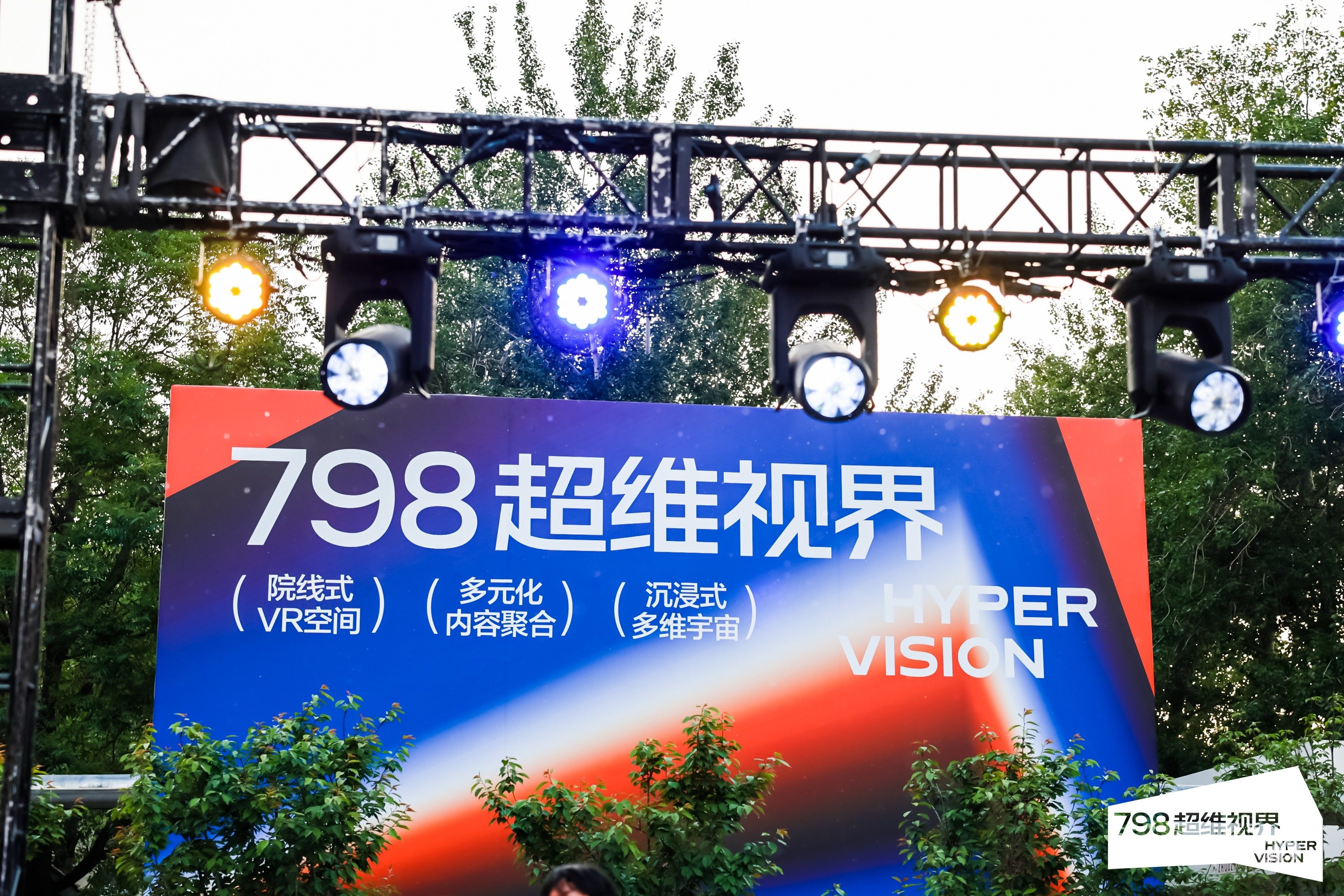
Core Viewpoint - The VR large space market is rapidly growing, with IDC predicting a global market size exceeding $12 billion by 2025 and a compound annual growth rate of 58%, with China being a key growth market [1][4]. Group 1: Company Overview - 798 Super Dimension VR Cinema, developed by 798 Cultural Technology, officially opened to the public on May 1, 2025, marking the company's first VR cinema and a step in its future VR scene implementation plan [1][4]. - The team behind 798 Cultural Technology has been active in the cultural and technological integration sector since 2022, organizing numerous art and technology exhibitions [4][7]. - In the past year, the 798 area hosted nearly 4,000 exhibitions and welcomed 12.57 million visitors, showcasing the company's rapid growth and engagement in the cultural sector [7][8]. Group 2: Project Details - The 798 Super Dimension project occupies 3,500 square meters and features five themed spaces and two release halls, with an initial lineup of eight VR films covering genres such as mystery, sci-fi, cultural arts, and science education [7][10]. - The selection process for the films involved evaluating over a hundred candidates based on immersive experience, interaction, visual effects, narrative, and gameplay, ensuring high-quality content for users [8][10]. Group 3: User Experience and Engagement - The project aims to provide a rich and diverse content selection through a combination of real-world anchors and virtual narratives, enhancing the immersive experience for users [14][16]. - During the May Day holiday, over 5,000 visitors experienced the VR cinema, achieving an 80% occupancy rate on a single day, indicating strong consumer interest and engagement [16].
诺基亚坟墓里,埋着半套战胜美国的密码本
36氪· 2025-05-11 13:43
Core Viewpoint - The article discusses the rise and fall of Nokia, highlighting how it once dominated the mobile phone market but ultimately succumbed to competition from Apple and other tech giants, illustrating the broader narrative of Europe's struggle in the tech industry against the U.S. [3][10][80] Group 1: Historical Context - Nokia's transformation from a rubber factory to a tech giant took just ten years, showcasing its early strategic advantages in global supply chains and technology [9][10]. - The launch of the iPhone in 2007 marked a pivotal moment, as Nokia recognized the threat posed by Apple's innovative approach to mobile technology [4][5]. Group 2: Leadership and Strategy - Jorma Ollila, Nokia's third-generation leader, took over during a time of crisis and successfully led the company to capture 40% of the global mobile market by focusing on innovation and strategic investments [15][46]. - The leadership styles of Nokia's first two leaders, Björn Westerlund and Kari Kairamo, shaped the company's culture and strategic direction, with Kairamo pushing for a more open and innovative environment [44][30]. Group 3: Technological Advancements - Nokia was instrumental in the development of the GSM standard, which became the dominant mobile communication technology in Europe, allowing it to lead the market in the 1990s [49][50]. - The introduction of the Nokia 1011, the world's first GSM phone, marked a significant milestone, leading to widespread adoption and establishing Nokia as a household name [54][56]. Group 4: Competitive Landscape - The competition between Nokia and Apple represents a shift in the tech landscape, where design and user experience became critical factors for success, contrasting with Nokia's earlier focus on hardware [8][64]. - Nokia's failure to adapt to the smartphone revolution and its reliance on the outdated Symbian OS led to a rapid decline in market share as competitors like Apple and Android gained traction [68][74]. Group 5: Lessons and Implications - The rise and fall of Nokia serve as a cautionary tale for companies about the importance of innovation, adaptability, and understanding market dynamics [80][82]. - The article emphasizes the need for companies to maintain strong relationships with allies, users, and developers to sustain competitive advantages in rapidly changing industries [77][82].


2025年全球AR VR行业发展趋势报告
Sou Hu Cai Jing· 2025-04-21 13:41
Core Insights - The report highlights the growth of the global AR/VR industry, driven by the metaverse concept, with the market expected to reach $120.7 billion by 2025 from $93.7 billion in 2024 [1] - Key sectors for AR/VR applications include gaming, education, and healthcare, which are anticipated to undergo significant transformations [1] - The report emphasizes the role of both startups and tech giants in advancing AR/VR technologies, with notable contributions from companies like NVIDIA, Sony, and HTC [1] Industry Overview - The AR/VR industry is evolving as a crucial part of the metaverse infrastructure, reshaping how people interact, work, and engage socially [8][9] - The integration of AI and other technologies is expected to enhance user experiences in the metaverse, influencing consumer behavior and expectations [10][18] - The report outlines the definitions of AR, VR, MR, and XR, clarifying their roles in creating immersive experiences [13] Market Trends - The report identifies several trends in the AR/VR industry, including the expansion of mobile AR from gaming to business tools and the increasing prevalence of cross-platform applications [1] - AI is projected to drive advancements in AR technology, improving scene understanding and content creation [1] - The report notes a decline in consumer enthusiasm for the metaverse despite technological advancements, indicating a need for renewed engagement strategies [1] Key Applications - The gaming industry is highlighted as a significant player in the metaverse, with platforms like Fortnite and Roblox showcasing the potential for large-scale virtual interactions [29] - The metaverse is expected to redefine work and collaboration, offering immersive virtual offices and meetings as alternatives to traditional video conferencing [30] - Education and training sectors are poised for transformation through immersive learning environments, allowing for realistic simulations and skill practice [31][32] Economic Implications - The metaverse is anticipated to develop its own digital economy, where users can buy and sell digital goods and services, including virtual real estate and NFTs [37] - Interoperability between different virtual worlds is a key promise of the metaverse, enabling seamless transitions for users and their digital assets [38] - User-generated content will play a significant role in the metaverse, allowing individuals to create and customize their virtual experiences [39]