微软

Search documents
中际旭创(300308):全年盈利或破百亿,龙头尽享AI算力红利
Guotou Securities· 2026-02-03 11:49
Investment Rating - The report assigns a "Buy-A" investment rating to the company with a target price of 735.6 CNY, based on a current stock price of 591.00 CNY as of February 2, 2026 [5]. Core Insights - The company is expected to achieve a net profit of between 9.8 billion to 11.8 billion CNY for the year 2025, representing a year-on-year growth of 89.5% to 128.2% [1]. - The growth is primarily driven by increased demand for computing power, leading to higher shipments of high-speed optical modules [1]. - The global market for AI computing power is experiencing rapid growth, with demand significantly outpacing supply, particularly for high-end optical modules [2]. - The company has maintained its leading position in the global optical module market for four consecutive years, benefiting from strong R&D capabilities and efficient manufacturing processes [3]. - The demand for 800G products is steadily increasing, and the company is also scaling up its 1.6T product deployment [4]. Financial Projections - Revenue projections for the company are as follows: 38.95 billion CNY in 2025, 84.48 billion CNY in 2026, and 120.4 billion CNY in 2027, with corresponding net profits of 11.34 billion CNY, 25.28 billion CNY, and 35.02 billion CNY [10][14]. - The gross margin is expected to improve from 34% in 2024 to approximately 42% by 2027, driven by the demand for high-end products [12][14]. - The company is projected to achieve a net profit margin of 29.1% in 2025, increasing to 29.9% in 2026 [11]. Market Dynamics - The report highlights that the growth of AI infrastructure is a key driver for the demand for high-speed optical modules and switches, with the global Ethernet optical module market expected to grow by 35% to reach 18.9 billion USD by 2026 [2]. - The company is well-positioned to capitalize on the increasing demand for optical communication modules, particularly in AI data centers and 5G networks [16].

计算机行业点评报告:Meta:AI赋能驱动营收新高,战略聚焦拓展增长新空间
Huaxin Securities· 2026-02-03 10:24
Investment Rating - The report maintains a "Recommended" investment rating for the industry, indicating an expected performance exceeding 10% relative to the market index [11]. Core Insights - Meta's revenue reached a record high of $59.893 billion in Q4 2026, reflecting a year-over-year growth of 23.8% and a quarter-over-quarter growth of 16.9%, driven primarily by a significant increase in advertising revenue [5][6]. - The company's operating profit for the quarter was $24.745 billion, with a year-over-year increase of 10.2%, although the operating margin decreased by 7 percentage points to 41% [5]. - The advertising business is the core growth engine, with Q4 advertising revenue at $58.137 billion, up 24.3% year-over-year, supported by an increase in daily active users and improvements in ad targeting efficiency through AI [6][8]. Revenue and Profit Performance - Q4 revenue of $59.893 billion represents a 23.8% year-over-year increase, surpassing market expectations, while the full-year revenue reached $200.966 billion, up 22.2% [5]. - The operating profit for the quarter was $24.745 billion, with a net profit of $22.768 billion, reflecting a year-over-year increase of 9.3% [5][6]. Business Segments - The advertising segment showed growth in both volume and price, with ad impressions and average ad prices increasing by 18% and 6% year-over-year, respectively [6]. - Reality Labs reported a quarterly loss of $6.02 billion, prompting a strategic shift to reduce workforce and focus on AI and wearable devices [6][7]. Product and Technology Development - Meta is increasing R&D spending significantly, with Q4 2025 R&D expenses at $22.14 billion, a 49.2% increase year-over-year, and total annual R&D expenses of $72.22 billion, up 84.1% [7]. - The company is focusing on AI model development and VR hardware iterations, with total investments in Reality Labs reaching $21.4 billion in 2025 [7]. User Ecosystem and Commercialization - The Family of Apps achieved a daily active user count of 3.58 billion in December 2025, a 6.9% year-over-year increase, enhancing the foundation for monetization [7]. - The scale of the user ecosystem and efficiency improvements are driving a positive cycle in commercialization, with ad impressions increasing by 18% year-over-year in Q4 [7][8]. Investment Recommendations - The report suggests that Meta's advertising business, supported by AI technology, is a key growth driver, with a strong user base providing a solid foundation for revenue growth [8]. - The focus on AI and wearable devices in the Reality Labs segment is expected to inject strong momentum into long-term growth, despite short-term losses [8].
光通信概念股涨幅居前 北美CSP资本开支指引乐观 光纤光缆行业已转向量价齐升
Zhi Tong Cai Jing· 2026-02-03 06:57
Group 1 - The core viewpoint of the article highlights the significant increase in stock prices of optical communication concept stocks, driven by strong capital expenditure growth in AI infrastructure from major companies like Microsoft and Meta [1] - Microsoft reported a record capital expenditure of $37.5 billion for the second fiscal quarter of 2026, representing a 66% year-on-year increase [1] - Meta anticipates its capital expenditure for 2026 to be between $115 billion and $135 billion, nearly double its 2025 capital expenditure [1] Group 2 - Both Microsoft and Meta's management emphasized that their investments in computing power will continue to increase in the coming quarters to support the training of next-generation large models and growing inference demands [1] - Citic Securities released a report indicating a surge in AI agent phenomena like Clawdbot and a significant increase in Tokes usage, projecting strong AI computing power demand in 2026 [1] - The optical fiber and cable industry has transitioned from recovery to a phase of simultaneous volume and price increases, with continued recommendations for the optical module industry chain due to high visibility in performance [1]

2026矿业AI驱动转型基础白皮书-微软
Sou Hu Cai Jing· 2026-02-03 03:56
人工智能正深刻重塑采矿业发展格局,全面渗透从勘探、开采到加工、回收的全价值链,同时为供应链物流等辅助环节带来效率革新,成为推动行业经济效 益与可持续发展融合的核心力量。在全球能源转型背景下,2040 年清洁能源技术相关矿产需求预计增长四倍,人工智能为矿业应对资源短缺、减排压力等 挑战提供了关键解决方案,其在勘探阶段可降低 20%-30% 的时间与成本。 采矿业的 AI 应用实现了多维度突破:资源层面,能有效回收低品位矿产,延长矿山运营寿命;价值回收方面,针对复杂矿石系统优化加工技术,提升多种 贵重矿物的回收率;可追溯性上,通过数字护照、微量元素指纹识别等技术实现全流程监控;安全领域,尾矿库近实时监测技术降低环境风险,爆破测绘技 术提升作业安全与矿石利用率,冶金厂智能药剂混合系统保障产品质量稳定。 生成式 AI 时代下,网络安全挑战日益复杂,国家行为体与网络犯罪组织的攻击手段不断升级。微软推出 "安全未来计划",倡导以威胁情报策略、行业政府 合作等方式强化防御,为 AI 应用筑牢安全基础。 企业 AI 转型成功需依托五大核心驱动因素:组织和文化上,需构建敏捷创新的环境,强化领导层认同与跨领域合作;商业战略要明确 ...



2026美国互联网行业AI代理购物持续推进
Sou Hu Cai Jing· 2026-02-03 02:21
今天分享的是:2026美国互联网行业AI代理购物持续推进 报告共计:11页 AI代理购物赛道竞争白热化 科技巨头各显神通重塑消费体验 2026年伊始,美国互联网行业围绕人工智能代理购物的布局与竞争陡然加速。各大科技公司不再满足于仅作为流量入口或交易平台,而是积极推动AI深度 介入购物全流程,旨在成为用户消费决策的核心代理。这一趋势不仅标志着电商体验的又一次革新,也预示着行业生态与竞争格局将面临深刻重塑。 谷歌近期动作频频,其推出的通用商务协议成为行业焦点。这一开源标准旨在解决长期困扰AI购物发展的核心难题——商品数据碎片化与库存信息不一 致。通过联合主流支付方与大型零售商,该协议构建了一个标准化的数据桥梁,使得AI助手能够直接、可靠地获取实时商品信息与库存状态。此举显著提 升了AI推荐的准确性与交易流畅度,用户可在谷歌搜索及Gemini应用中实现无缝下单。相比之下,一些较早涉足此领域的对话式AI,因受限于数据质量, 其购物功能的实际使用率与转化效果尚未达预期,凸显了底层数据生态建设的重要性。 微软与亚马逊亦不甘示弱,从不同路径切入战场。微软通过与知名电商服务商及品牌合作,推出了集成于其Copilot聊天界面的 ...

北美投入超预期,CPOOIO打破算存瓶颈
2026-02-03 02:05
Summary of Conference Call Notes Industry Overview - The focus is on the optical communication industry, particularly the investment opportunities in the optical sector from 2023 to 2025, with expectations of a market reversal after short-term fluctuations [1][2]. Key Points and Arguments 1. **Capital Expenditure Trends**: - Companies like Meta and Microsoft have reported higher-than-expected revenues driven by AI, indicating a positive outlook for capital expenditures [1]. - Upcoming earnings reports from Google and Amazon are anticipated to reflect optimistic capital expenditure guidance, further supporting the optical communication investment thesis [2]. 2. **Long-term Contracts and Demand**: - Meta has signed a significant five-year supply agreement worth approximately $6 billion with Corning, highlighting the growing demand for optical communication products [2]. - The demand for optical components, including MPO jumpers and related products, is expected to continue increasing due to the rapid growth in optical communication needs [2]. 3. **Company Performance**: - Companies such as Xuchuang, Xinyi, Tianfu, and Yuanjie have released optimistic earnings forecasts, with Xinyi exceeding market expectations [3]. - The overall performance of these companies is expected to improve in Q4 2023, driven by easing material costs and increasing demand [3]. 4. **Emerging Technologies and Market Dynamics**: - The CPU sector is experiencing significant growth, with strong performance noted in January 2023, indicating a robust demand for optical components [4]. - The optical communication market is expected to benefit from advancements in new technologies and applications, particularly in the context of AI and data centers [5]. 5. **Specific Company Updates**: - **Jieput**: Reported a net profit of approximately 80 million yuan for Q4, marking a 170% year-on-year increase, driven by growth in its new energy and optical communication businesses [6]. - **Zhongci Electronics**: Focused on expanding its 800G substrate business and is well-positioned to capture market share in the 1.6T market, with ongoing production ramp-up [10]. 6. **Market Opportunities**: - The optical communication sector is poised for growth, particularly with the anticipated demand for high-capacity optical modules and components as AI technologies advance [18][36]. - The transition from copper to optical solutions in data centers is expected to create substantial market opportunities for optical communication companies [18][36]. Additional Important Insights - The conference highlighted the importance of understanding the evolving landscape of AI and its implications for optical communication, particularly in terms of network architecture and data center efficiency [13][27]. - The potential for optical solutions to address the bandwidth and connectivity challenges posed by AI workloads was emphasized, suggesting a significant shift in market dynamics [18][36]. - The upcoming events, such as OFC and GTC, are expected to provide further insights and developments in the optical communication sector, reinforcing the positive outlook for the industry [38]. This summary encapsulates the key insights and developments discussed during the conference call, focusing on the optical communication industry and its growth potential.
2026年中国人工智能生成内容(AIGC)产业链、用户规模及竞争现状,行业加速向垂直行业深度渗透[图]
Chan Ye Xin Xi Wang· 2026-02-03 01:35
Core Insights - The AIGC (Artificial Intelligence Generated Content) industry is experiencing explosive growth in China, with revenue expected to rise from approximately 440 million yuan in 2020 to 544.55 billion yuan by 2032, positioning China as a potential global leader in this market [1][10]. Group 1: AIGC Industry Overview - AIGC is defined as a new content production method utilizing AI technology to automatically generate content, categorized as a type of content from the producer's perspective [2]. - The core infrastructure of the AI industry consists of computing power, algorithms, and data, which are essential for the innovation and development of the AIGC sector [2]. Group 2: AIGC Industry Advantages - AIGC significantly reduces costs and increases efficiency by automating repetitive content production tasks, thus shortening the overall content creation cycle and lowering labor and time costs [3][4]. - The technology enables multi-modal creation, allowing for cross-media conversion of different content forms, enhancing creativity and broadening the scope of content presentation [3][4]. - AIGC offers high customization accuracy, deeply analyzing user inputs to generate tailored content that meets diverse user needs [4]. Group 3: AIGC Industry Policies - Since 2023, China has been establishing a multi-layered policy framework for AIGC, progressing from basic regulations to comprehensive empowerment and safety governance [5]. - Policies encourage innovation in AIGC technology across various fields, aiming to create a robust application ecosystem [5]. Group 4: AIGC Industry Chain - The upstream of the AIGC industry includes data collection, cleaning, and labeling, which provide high-quality data support for AI model training [7]. - The downstream involves various applications that utilize AI models to solve specific problems, including the development and operation of applications that automatically generate images, text, and music [7]. Group 5: AIGC Industry Development Status - Since 2023, advancements in large model capabilities and decreasing operational costs have accelerated the development of AIGC, with commercial products like ChatGPT and Midjourney emerging [8][9]. - The global AIGC market is projected to grow from approximately $2.3 billion in 2020 to about $19.5 billion by 2024, with a compound annual growth rate of 70.6% [9]. Group 6: AIGC User Growth - The user base for AIGC in China is expected to reach 515 million by June 2025, driven by the expansion of application scenarios and increased product usability [11][12]. - The demographic profile shows that young and middle-aged groups constitute the majority of users, reflecting the adoption patterns of emerging internet technologies [12]. Group 7: AIGC Competitive Landscape - Major international players in the AIGC space include OpenAI, Microsoft, Google, and Meta, while Chinese companies like Baidu, Alibaba, and Tencent are also significant competitors [13][14]. - The competition is shifting from technical parameter comparisons to the ability to implement and commercialize solutions across various scenarios [14]. Group 8: AIGC Industry Development Trends - AIGC technology is evolving towards systematic upgrades, with multi-modal integration breaking down barriers between different types of data [17]. - The industry is moving towards deeper penetration into vertical sectors, creating tailored solutions that meet specific needs [17].




甲骨文收跌近3%,启动500亿美元集资计划,高负债受关注
Ge Long Hui· 2026-02-03 01:32
Group 1 - Oracle has launched a fundraising plan of up to $50 billion, including an initial bond issuance of up to $25 billion, to support its aggressive cloud infrastructure expansion strategy [1][2] - The fundraising will consist of a combination of debt and equity, with the first bond issuance expected to be between $20 billion and $25 billion, planned for a single issuance within 2026 [1] - Oracle aims to transform from a traditional database software provider to a heavy asset cloud infrastructure giant to compete with Amazon Web Services (AWS) and Microsoft Azure [2] Group 2 - Concerns about Oracle's capital expenditure funding sources have been temporarily alleviated, but the company's balance sheet is under scrutiny due to approximately $95 billion in outstanding debt [2] - The large-scale debt expansion raises worries on Wall Street regarding the company's cash flow pressures and financial structure vulnerabilities, especially in a high-interest-rate environment [2] - Notable investor Michael Burry has disclosed a short position against Oracle, criticizing the company's unnecessary heavy asset expansion [2]
美股异动丨甲骨文收跌近3%,启动500亿美元集资计划,高负债受关注
Ge Long Hui· 2026-02-03 01:24
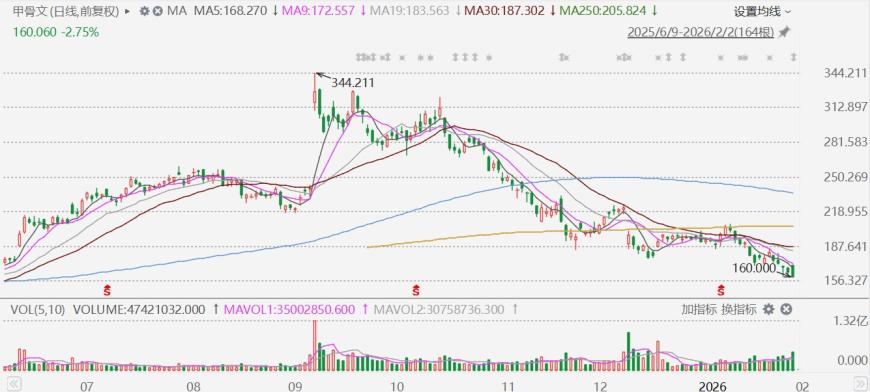
(原标题:美股异动丨甲骨文收跌近3%,启动500亿美元集资计划,高负债受关注) 美国软件公司甲骨文(Oracle)正式启动最高500亿美元的集资计划,当中包含首期高达250亿美元的债券 发行,全力冲刺云基建。甲骨文周一股价先升后跌,盘初一度涨4%,后半段转弱,最终收跌2.75%,报 160.06美元。 为抢占人工智能(AI)算力的高地,甲骨文宣布启动规模庞大的集资计划,拟透过债券和股权组合筹集最 高达500亿美元资金,以支撑其激进的云端基础设施扩张策略。首期发债将分为8个部分进行,预计规模 介乎200亿至250亿美元之间,为2026年内单次性发行,剩余资金缺口将透过股权相关工具及普通股发行 填补。 甲骨文正试图从传统的数据库软件供应商,转型为重资产的云端基础设施巨头,以与亚马逊云(AWS)和 微软Azure竞争。甲骨文的集资路径进一步清晰,市场对该公司解决资本开支资金来源的担忧暂时得到 缓解。然而,甲骨文的资产负债表也受到关注,集团目前的未偿债务已高达约950亿美元。在利率高企 的背景下,如此大规模的举债扩张,引发华尔街对公司现金流压力及财务结构脆弱性的忧虑。市场对甲 骨文的质疑声音依然存在,电影《沽注一掷》 ...
美股低开高走逼近新高,存储板块爆发,闪迪飙升15.44%,原油市场遭遇重挫,贵金属市场多空激战白热化
Jin Rong Jie· 2026-02-03 00:43
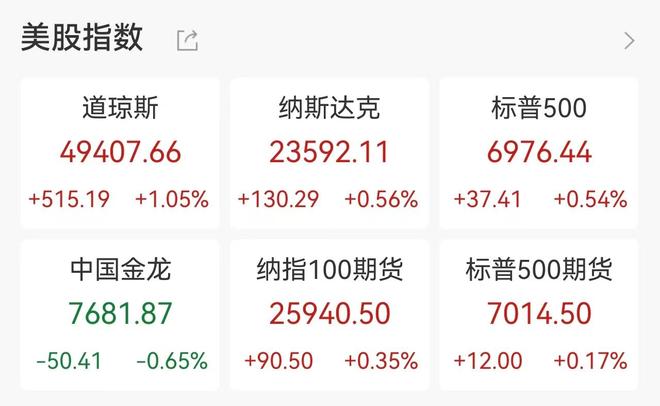
Market Overview - The US stock market showed resilience on February 2, with all three major indices closing higher after a volatile precious metals market. The Dow Jones Industrial Average rose by 515.19 points, or 1.05%, to 49,407.66 points; the Nasdaq Composite increased by 0.56% to 23,592.11 points; and the S&P 500 gained 0.54% to 6,976.44 points, nearing its historical closing high [1][2]. Sector Performance - The storage chip sector was the standout performer, with SanDisk's stock surging 15.44% to a record closing price of $665.24, bringing its market capitalization to $98.2 billion. This surge was driven by significantly better-than-expected company earnings and improved industry fundamentals, as SK Hynix and SanDisk reported over a 30% increase in average selling prices (ASP) for NAND flash memory [2][3]. - Other major players in the storage sector also saw gains, with Micron Technology up 5.52%, Western Digital up 7.99%, and Seagate Technology up 6.2%, indicating a strong collective performance among the "big four" in storage [2]. Technology Stocks - Technology stocks exhibited mixed performance. Apple rose over 4%, while Google and Amazon both increased by more than 1%. However, Nvidia fell nearly 3%, and Tesla, Microsoft, and Meta experienced declines between 1% and 2% [4][5]. - Google’s Waymo is nearing completion of a $16 billion financing round, while Oracle's stock fluctuated due to its fundraising plans. The market is focused on upcoming earnings reports from major companies, including Alphabet and Amazon, with nearly 80% of the companies that have reported so far exceeding expectations [4]. Chinese Stocks - Chinese stocks faced pressure, with the Nasdaq Golden Dragon China Index declining by 0.65%. Notable declines included XPeng Motors down over 8%, NIO and Baidu down over 3%, while Pinduoduo saw a counter trend increase of 2.38% [5][6]. Commodity Markets - The precious metals market experienced intense volatility, with COMEX silver futures fluctuating around the $80 mark, closing down 1.93% at $78.77 per ounce, and spot silver dropping over 7%. Gold futures also fell by 1.94% to $4,622.50 per ounce. Analysts are divided on the outlook for gold prices, with some suggesting limited downside potential [6][7]. - The oil market faced significant declines, with WTI crude oil futures dropping 4.71% to $62.14 per barrel and Brent crude down 4.36% to $66.30 per barrel. Progress in negotiations between the US and Iran has alleviated concerns over supply disruptions, while the US plans to reduce tariffs on India to 18%, potentially increasing US energy imports from India [7].