铠侠

Search documents
2024-2025年全球存储市场趋势白皮书解读(57页附下载)
Sou Hu Cai Jing· 2025-05-28 12:37
Core Insights - The white paper highlights significant transformations in the global memory market driven by advancements in AI technology, increasing server storage demands, and upgrades in consumer storage products [19] Group 1: Global Memory Market Changes and Technological Developments - High-density 3D NAND Flash storage is continuously improving, with advancements in read/write performance, power consumption, durability, and cost [2][36] - The complexity of etching and deposition processes increases with the number of layers in NAND Flash, leading to challenges that manufacturers are overcoming through various techniques [2][41] - Major manufacturers like Samsung and SK Hynix are focusing on mass production plans for NAND Flash with over 300 layers, utilizing Wafer-to-Wafer bonding technology [2][41] Group 2: Server NAND and DRAM Application Growth - The expansion of global data center infrastructure and increased investment in AI infrastructure are driving the growth of server storage demand [3][9] - In 2024, the application shares of NAND in servers, mobile devices, and PCs are projected to be 30%, 31%, and 14% respectively, with server NAND application share expected to rise to 30% by 2025 [4][43] - For DRAM applications, the shares in servers, mobile devices, and PCs are expected to be 34%, 32%, and 14% in 2024, with server DRAM application share anticipated to grow to 36% by 2025 [5][47] Group 3: Storage Technology and Application Outlook - QLC NAND is improving in performance and reliability, making it suitable for read-intensive applications, particularly in computing centers [6][51] - The rise of AI PCs is driving the growth of PCIe 4.0/5.0 SSD applications in the consumer market, with an expected penetration rate of 35% by 2025 [7][58] - Manufacturers are actively expanding into overseas markets, particularly in Southeast Asia, Latin America, and Africa, where the SSD market holds significant potential [8][71] Group 4: AI Server Storage Demand - There is a surge in capital expenditure for AI infrastructure, significantly increasing the demand for AI servers [9][72] - The global HBM market is projected to reach $16 billion in 2024 and grow to $30 billion by 2025, accounting for 28% of the global DRAM market [11] - The demand for enterprise-grade PCIe 5.0 SSDs is rapidly increasing, with an expected shipment share of 30% by 2025 [12][50] Group 5: Consumer Storage Product Applications and Developments - Global PC shipments are expected to see a slight increase of 3% in 2025, with AI PC penetration reaching 35% [13][58] - The global smartphone shipment volume is projected to reach approximately 1.184 billion units in 2024, with NAND capacity expected to exceed 220GB by 2025 [15][16] - AI glasses are emerging as a significant consumer electronics product, with shipments expected to rise from 2 million units in 2024 to 10 million units in 2025 [17][18]




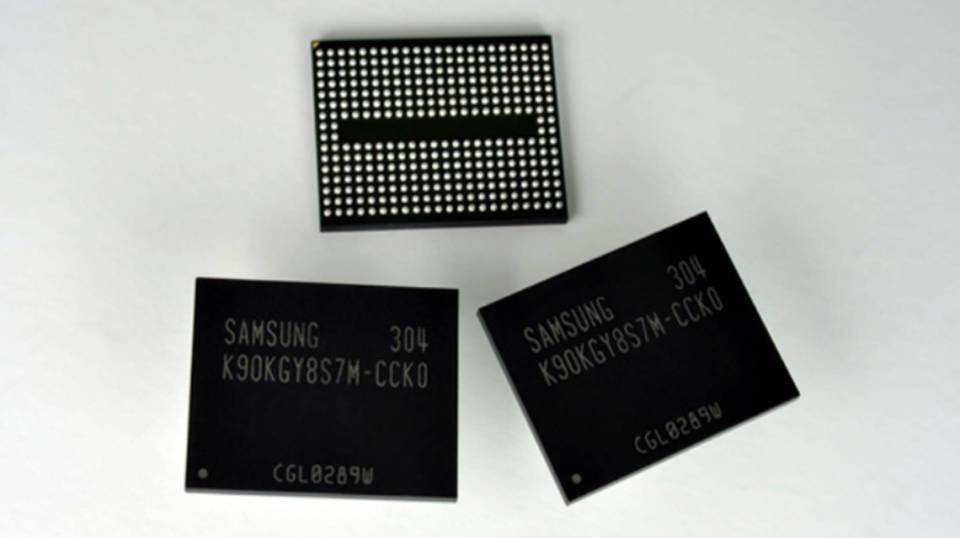
消息称三星电子 MLC NAND 闪存将停产,计划6月再收最后一批订单
Sou Hu Cai Jing· 2025-05-27 01:23
Group 1 - Samsung Electronics announced the discontinuation of MLC NAND flash memory production, with the last orders to be accepted next month [1] - The company has also informed clients about a price increase for MLC NAND, prompting customers to seek alternative suppliers [1] - LG Display is looking for alternative suppliers for MLC NAND, primarily for 4GB eMMC used in large-sized OLED panels, as it currently relies on Samsung, Kioxia, and ESMT [3] Group 2 - The discontinuation of MLC NAND is expected to have a minimal impact on Samsung's sales, as it represents a negligible portion of their revenue [5] - Samsung plans to focus resources on TLC and QLC product lines, with TLC currently holding a 62% share of the global NAND flash memory market [5]
晚报 | 5月27日主题前瞻
Xuan Gu Bao· 2025-05-26 15:11
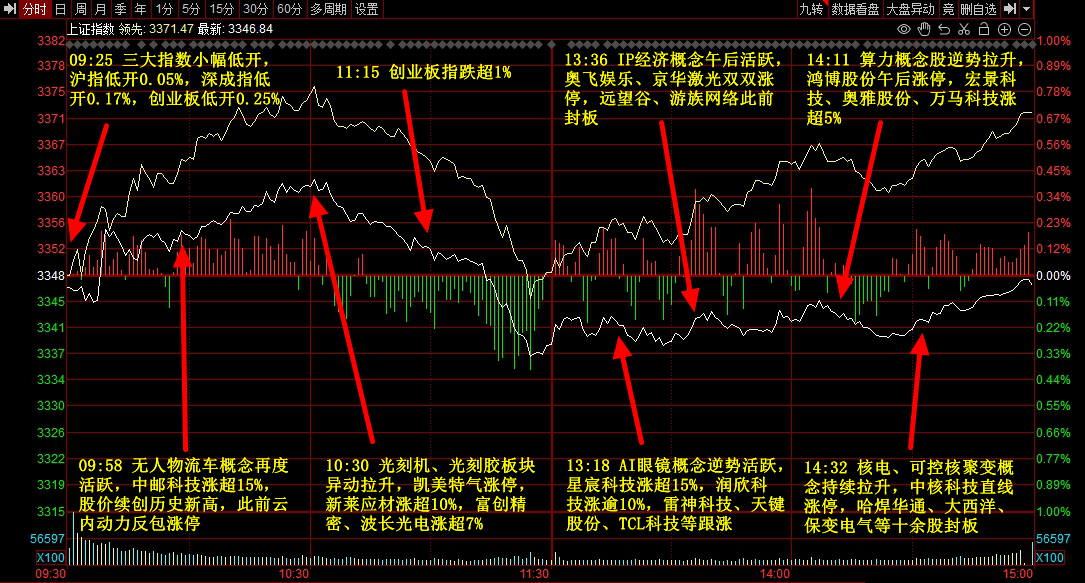
Group 1: Flash Memory Market - TrendForce predicts a 10% quarter-on-quarter increase in NAND flash prices by Q3 2025, driven by AI demand and enterprise SSD growth [1] - Major NAND flash manufacturers, including Samsung and SK Hynix, have reduced production by 10%-15% in Q2 2023 to address oversupply [1] - The storage price trend shows a rebound in Q2 2023, with DRAM and NAND flash contract prices expected to rise by 3%-8% [1] Group 2: Star Flash Technology - Huawei's WATCH5 series will be the world's first smartwatch to support Star Flash technology, which is expected to disrupt the short-range wireless communication market [2] - Star Flash technology is projected to reach a global market size of over $6 billion by 2025, with a compound annual growth rate of 117.2% [2] Group 3: Nuclear Power Industry - The U.S. government plans to construct 10 large nuclear power plants by 2030 and quadruple nuclear power capacity by 2050, aiming to reform the nuclear energy sector [3] - Domestic projects related to nuclear fusion are accelerating, with significant achievements in high-temperature plasma research [3] Group 4: AI Computing Power - Huawei has launched the Ascend Super Node technology, which is the largest scale interconnection in the industry, enhancing AI computing capabilities [4] - The demand for computing power in North America is creating growth opportunities for the AI industry and related supply chains [4] Group 5: Humanoid Robots - The first global competition featuring humanoid robots took place in Hangzhou, marking a significant milestone for the robotics industry [5] - The humanoid robot sector is expected to accelerate development, with increased policy support and market participation from various industry players [5] Group 6: 5G Satellite Communication - The International Telecommunication Union has approved a detailed specification for 5G satellite radio interfaces, enhancing the integration of satellite and terrestrial communication systems [6] - The development of 5G non-terrestrial networks (NTN) is expected to enable seamless global coverage and low-latency communication [6]
存储路线图,三星最新分享
半导体芯闻· 2025-05-26 10:48
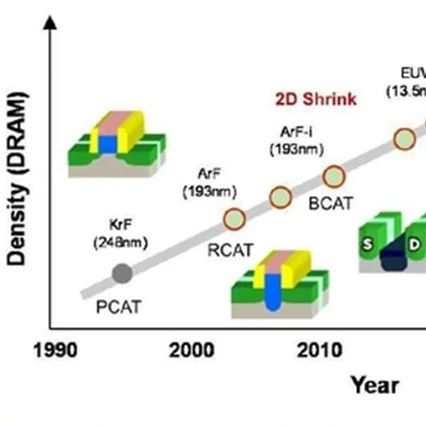
Core Viewpoint - Samsung Electronics presented the evolution of next-generation DRAM and NAND flash memory at the "IMW 2025" event, highlighting advancements in memory density and architecture [1][10]. DRAM Evolution - The evolution of DRAM units has transitioned from planar n-channel MOS FETs in the 1990s to advanced structures that mitigate short-channel effects and leakage currents. The area of DRAM units has been reduced from "8F2" to "6F2," achieving a 25% reduction in unit area while maintaining the same processing dimensions [1][3]. - The current 10nm generation DRAM units maintain the "6F2" layout but are expected to shift to a "4F2" layout in the next generation, referred to as "0A" generation, due to limitations in maintaining the existing structure [3][5]. 3D DRAM Development - Samsung is exploring 3D DRAM technology, which involves vertically stacking longer DRAM units to increase memory capacity. This approach aims to enhance memory density significantly [7][9]. NAND Flash Memory Evolution - NAND flash memory has evolved from planar structures to 3D configurations, allowing for increased charge storage and reduced interference between adjacent cells. The number of stacked layers in 3D NAND has grown from 32 layers in the early 2010s to over 300 layers by the mid-2020s, significantly increasing density and capacity [11][13]. - Challenges similar to those faced by planar NAND persist, including difficulties in etching deeper holes for unit string channels and increased interference due to reduced spacing between storage holes. Innovations such as using ferroelectric films in charge trap cells are being explored to mitigate these issues [14][17]. Future Innovations - Various companies and experts shared advancements in memory technologies, including imec's pure metal gate technology for 3D NAND reliability and NEO Semiconductor's 3D X-DRAM technology, which resembles 3D NAND structures [18][19].
中科曙光与海光信息宣布战略重组;TI、高通等呼吁免除半导体关税;DDR4价格涨幅大于DDR5…一周芯闻汇总(5.19-5.25)
芯世相· 2025-05-26 04:30
Core Insights - The article discusses significant developments in the semiconductor industry, highlighting government support for foreign investment in key sectors and the impact of tariff policies on major semiconductor companies [9][10][12]. Industry Trends - The Ministry of Commerce supports foreign investment projects in integrated circuits, biomedicine, and high-end equipment manufacturing, prioritizing them in major foreign investment project lists [9]. - Major U.S. semiconductor companies, including Intel and Qualcomm, are urging the Trump administration to exempt semiconductor tariffs, warning that such tariffs could harm the U.S. semiconductor industry [10][12]. - SEMI reports a 27% year-on-year increase in global semiconductor capital expenditure for Q1 2025, driven by investments in advanced logic and high-bandwidth memory technologies [11]. Company Developments - TSMC and Intel submitted letters opposing tariffs on semiconductor production equipment, citing potential cost increases and project delays [10]. - A strategic restructuring was announced between Zhongke Shuguang and Haiguang Information, aiming to enhance the information industry landscape [12]. - Weir Shares plans to issue H-shares and list on the Hong Kong Stock Exchange to accelerate internationalization and enhance competitiveness [12][14]. - Xiaomi unveiled its first self-developed flagship SoC, the Xuanjie O1, utilizing TSMC's 3nm process technology [13]. Market Dynamics - TrendForce indicates that DDR4 prices are rising faster than DDR5 prices due to anticipated supply tightening [20]. - The five major NAND Flash manufacturers are implementing a 10%-15% production cut to address oversupply, which is expected to support a rebound in storage prices [21]. - The demand for HBM4 products is expected to increase manufacturing costs significantly, with a projected premium exceeding 30% due to design complexities [20]. Strategic Moves - Foxconn is investing €250 million to establish Europe's first FOWLP factory, focusing on advanced semiconductor packaging and testing [18]. - Wolfspeed is preparing to file for bankruptcy due to unresolved debt issues, seeking Chapter 11 protection [16]. - Samsung Electronics plans to expand its 1c DRAM production capacity, with investments expected to be completed by the end of the year [17].


全球首个机器人拳王出炉!互殴现场堪比真人擂台赛;五大原厂同步减产,内存价格进入上行周期——《投资早参》
Mei Ri Jing Ji Xin Wen· 2025-05-25 23:27
Important Market News - The National Internet Information Office, in collaboration with financial management departments, has shut down accounts and websites spreading false information about the capital market, engaging in illegal stock recommendations, and promoting virtual currency trading [1] Industry Insights - The CMG World Robot Competition will take place on May 25, 2025, in Hangzhou, with Yushu Technology participating as a partner. The competition emphasizes high technical barriers, particularly in structural stability and impact resistance for combat scenarios [2] - Zhiyuan Robotics has secured new financing from JD.com and Shanghai Embodied Intelligence Fund, with plans to scale production of its Lingxi X2 robot by the second half of 2025, aiming for thousands of units by the end of 2026 [2] - The humanoid robot industry is experiencing dual catalysts of technological validation and commercialization, with events driving technological breakthroughs and policy support accelerating the transition towards practical applications [3] - The global NAND Flash market is facing a 25.3% quarter-over-quarter decline in Q1 2025, primarily due to reduced enterprise SSD purchases and ongoing consumer weakness, leading to a significant supply-demand imbalance [4] - Major NAND manufacturers, including Samsung and SK Hynix, have initiated production cuts of 10%-15% to adjust market structure, which is expected to support a price recovery in the second half of 2025 [5] - A new national online identity authentication service will be implemented on July 15, 2025, aimed at reducing personal information collection while ensuring user identity verification [6][7] Avoidance Alerts - Key shareholders of Koyuan Pharmaceutical, Xianggang Technology, Youyan Powder Materials, and Nongxin Technology have announced plans to reduce their holdings by up to 3% of total shares through various trading methods [8]

2024-2025年全球存储市场趋势白皮书
Sou Hu Cai Jing· 2025-05-25 10:14
Group 1: Global Storage Market Trends - The global storage market is expected to grow rapidly from 2024 to 2025, driven by advancements in technologies such as 3D NAND, HBM, and PCIe 5.0, which enhance server and consumer storage capabilities [4][36]. - AI consumer electronics are opening new application scenarios, necessitating continuous innovation from storage manufacturers to adapt to market changes [4][36]. Group 2: Technological Developments in Storage - High-layer 3D NAND Flash technology is continuously improving storage density, with companies like Samsung and SK Hynix advancing to over 300 layers, and Samsung's 400-layer NAND expected to enter mass production by 2025 [1][26]. - The demand for server storage is surging, with NAND applications projected to account for 30% and DRAM for 34% of the market by 2025 [2][30]. - QLC NAND technology is entering a mature phase, with performance and reliability enhancements, making it suitable for read-intensive applications [2][38]. Group 3: Consumer Storage Product Applications - AI PCs are driving storage upgrades, with global PC shipments expected to reach 261 million units by 2025, and AI PC penetration projected at 35% [3][45]. - The global smartphone market is also seeing increased storage demand, with shipments expected to reach 1.21 billion units by 2025, and AI smartphones penetrating 30% of the market [4][4]. Group 4: AI Consumer Electronics Opportunities - AI glasses are emerging as a new market hotspot, with expected shipments of 10 million units by 2025, driven by companies like Ray-Ban Meta and ByteDance [5][5]. - The integration of AI in various consumer electronics is raising storage performance and capacity requirements, indicating a trend towards deeper collaboration between storage technology and AI [6][6]. Group 5: Server Storage Market Analysis - The capital expenditure of major tech companies for AI infrastructure is significantly increasing, with Microsoft, Google, Amazon, and Meta projected to spend a combined total of over $320 billion in 2025 [60][63]. - The demand for AI servers is expected to grow, with the number of AI servers projected to reach 180,000 units by 2025, reflecting a 29% year-on-year increase [73][73].


日本晶圆厂,为啥不如预期
半导体行业观察· 2025-05-25 02:52
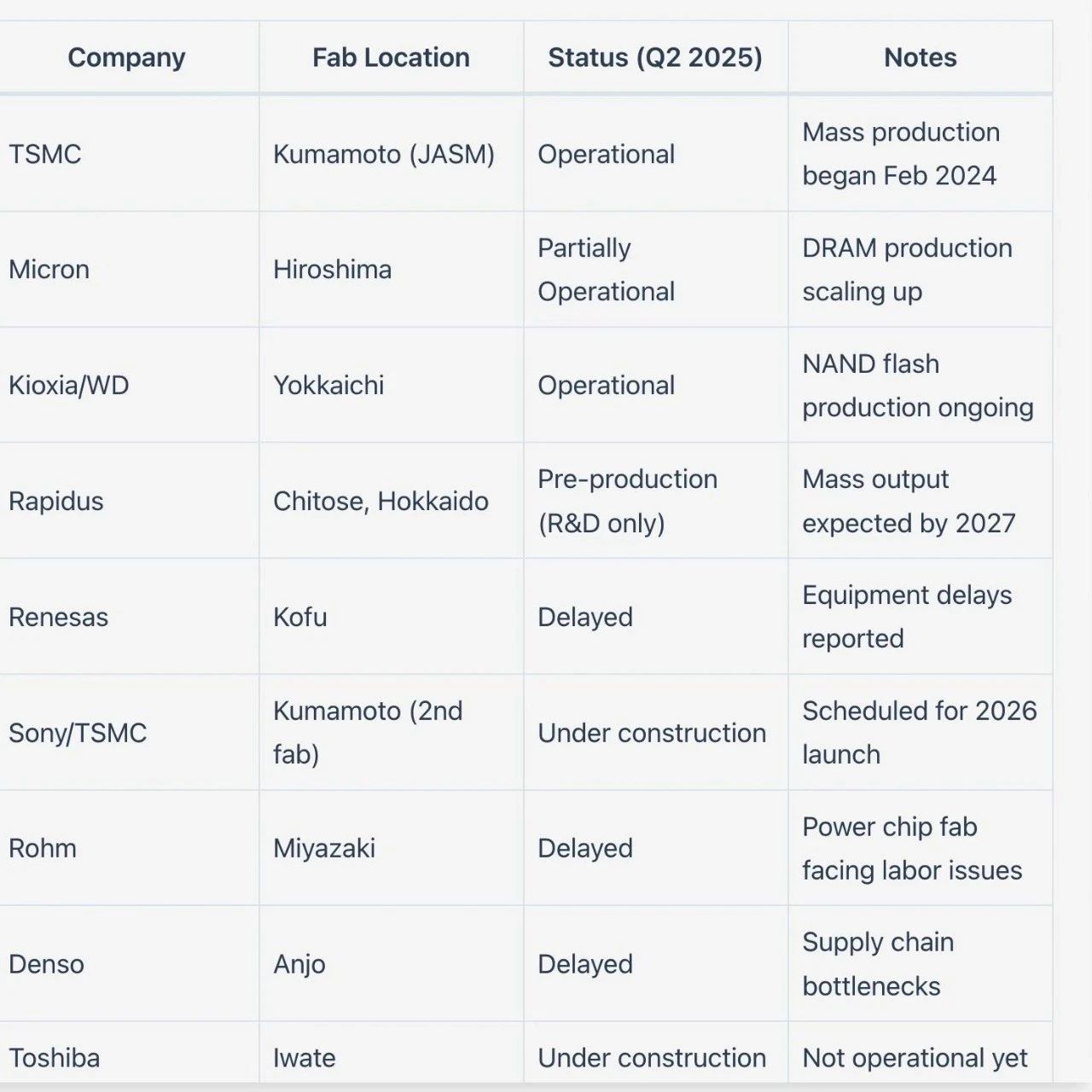
如果您希望可以时常见面,欢迎标星收藏哦~ 来源:内容来自 techovedas 。 日本承诺芯片产业的复兴——从纸面上看,这似乎势不可挡。台积电、美光和Rapidus等巨头纷纷 推出大胆计划。数十亿美元的政府补贴也源源不断地涌入。日本各地的新芯片厂开始拔地而起。但 问题在于:其中一半的工厂仍未实现量产。 在这些头条新闻的背后,有些事情似乎不太对劲。工程延误、设备短缺以及技术工人的匮乏,正在 悄悄地阻碍着日本的高科技雄心。对于一个正努力在全球芯片领域重夺地位的国家来说,经济放缓 来得可不是时候。那么,日本半导体复兴停滞不前背后究竟发生了什么?让我们深入挖掘。 五点概述 截至2025年5月,日本15座新建芯片厂中只有7座投入量产。 对传统和非人工智能芯片的需求延迟导致运营停滞。 人工智能芯片的热潮正在超越传统芯片领域,打破以往的预测。 受影响的公司包括瑞萨电子、罗姆和铠侠。 由于晶圆厂闲置,日本 130 亿美元的补贴计划受到严格审查。 日本斥资650亿美元进军半导体领域 日本政府已承诺投入超过10 万亿日元(约合 650 亿美元)重建其芯片产业。 此举旨在减少对外国半导体的依赖,尤其是来自中国大陆和台湾的半导体。 ...

存储路线图,三星最新分享
半导体行业观察· 2025-05-24 01:43
Group 1: DRAM Evolution - Samsung Electronics reviewed the evolution of DRAM units, highlighting the transition from planar n-channel MOS FETs in the 1990s to advanced structures in the 21st century due to short-channel effects and leakage currents [1][3] - The layout of DRAM unit arrays improved in the 2010s, reducing unit area from "8F2" to "6F2," achieving a 25% reduction in area while maintaining the same processing dimensions [1][3] - The next generation of DRAM, referred to as "0A" (below 10nm), is expected to shift from the "6F2" layout to a "4F2" layout, indicating a significant change in design [3][4] Group 2: 3D DRAM Development - Samsung is exploring 3D DRAM technology, which involves vertically stacking longer DRAM units to increase memory capacity [6][8] - The prototype of 3D DRAM, known as "VS-CAT," demonstrates the potential for increased density and reduced silicon area by stacking storage unit arrays above peripheral circuits [8][12] Group 3: NAND Flash Memory Evolution - NAND flash memory has reached the limits of density and miniaturization, prompting a shift from planar NAND to 3D NAND technology, which significantly increases charge storage capacity and reduces interference between adjacent units [10][12] - The number of stacked layers in 3D NAND has increased from 32 layers in the early 2010s to over 300 layers by the mid-2020s, enhancing memory density [12][14] - Challenges similar to those faced by planar NAND persist in 3D NAND, including difficulties in etching deeper holes for unit string channels and increased interference due to reduced spacing between storage holes [12][13] Group 4: Ferroelectric Film Applications - The introduction of ferroelectric films in NAND flash memory units aims to reduce programming voltage and suppress threshold voltage fluctuations, which can help mitigate interference between cells [14][16] - The use of ferroelectric films allows for multi-value storage capabilities, increasing the number of threshold voltage levels from two to eight or sixteen [14][16] Group 5: Future Technologies and Innovations - Various companies and experts shared advancements in DRAM and NAND technologies, including imec's pure metal gate technology and NEO Semiconductor's 3D X-DRAM technology [18][19] - Innovations in ferroelectric memory and resistive memory technologies were also discussed, showcasing ongoing efforts to enhance performance and reliability in semiconductor storage solutions [19][20]
这类芯片,将涨价
半导体芯闻· 2025-05-21 10:29
Core Viewpoint - The article discusses the recent surge in DRAM prices driven by concerns over potential tariffs in the U.S. and strong demand for high bandwidth memory (HBM), which is expected to boost the profits of major South Korean memory chip manufacturers like Samsung Electronics and SK Hynix [1][2]. Group 1: DRAM Price Surge - DRAM prices have increased significantly, with Samsung and SK Hynix raising prices for traditional DDR4 and new DDR5 DRAM by double-digit percentages [1]. - The average selling price (ASP) of standard PC DRAM (DDR4 8Gb 1Gx8) rose by 22.2% in April, reaching $1.65 after five months of decline [1]. - Major clients are stockpiling DRAM ahead of potential U.S. tariffs, leading to a faster-than-expected depletion of component inventories [2]. Group 2: HBM Demand and AI Influence - The demand for HBM is rising alongside DRAM prices, fueled by Nvidia's recent agreement with Saudi Arabia for AI chip supply, which is expected to drive a second wave of AI memory demand [2][3]. - Nvidia's purchase of SK Hynix's HBM3E chips reflects a 60% price increase for 12-layer chips compared to 8-layer chips, indicating strong demand for high-performance memory [3]. Group 3: NAND Flash Market Dynamics - The top five NAND Flash manufacturers, including Samsung and SK Hynix, are implementing production cuts of 10% to 15% to address oversupply issues [4]. - This synchronized reduction in NAND production is expected to support a rebound in memory prices, with a forecasted price increase in the second quarter of 2025 [5]. - The first quarter saw a decline in NAND Flash prices by 15% to 20%, but the second quarter is projected to recover by 3% to 8% [5].