美光

Search documents
存储巨头宣布涨价
21世纪经济报道· 2025-03-09 14:40
Group 1: Storage Products - The global storage giant SanDisk announced a price increase of over 10% for consumer storage products starting April 1, with potential for further increases in the coming quarters [2] - The price hike is attributed to two main factors: reduced supply due to major manufacturers like Samsung, Hynix, and Micron cutting production, particularly of high-end storage chips, leading to potential shortages starting Q2 [2] - There is a surge in demand driven by AI technology, with devices such as servers, smartphones, and AI glasses requiring significantly higher storage capacities, for instance, AI servers need 2-4 times the storage of regular servers [2] Group 2: Non-Ferrous Metals - Prices of metals such as copper, aluminum, and cobalt are rising, with international copper prices increasing by over 10% this year and cobalt prices surging over 20% in a week due to export halts from the Democratic Republic of Congo [4] - The price increases are driven by three main factors: policy stimulus from domestic infrastructure and renewable energy initiatives, a surge in demand from the electric vehicle and renewable energy sectors, and supply constraints due to production halts in copper mines and geopolitical conflicts affecting cobalt exports [4] - While consumers may not feel the immediate impact, businesses will face increased cost pressures, and investors are advised to monitor related stocks that may benefit from these price increases [4] Group 3: Underlying Trends - The price increases in both storage and metals are not coincidental but are part of broader trends driven by technology and global dynamics [6] - AI and renewable energy are reshaping industry rules, making high-end storage and rare metals highly sought after [6] - Geopolitical tensions and tariffs are making supply chains more fragile, necessitating adaptive strategies from companies [6] Group 4: Future Outlook - The upward price trend in both storage and non-ferrous metals is expected to continue, with investors advised to pay attention to policy and technological indicators [7] - A specialized report titled "Clue Early Know" will be released to help investors identify potential opportunities in the storage and non-ferrous metal sectors [7]


低点反弹30%+,拐点真的来了!
格隆汇APP· 2025-03-09 09:12
Core Viewpoint - The storage chip market is experiencing a resurgence driven by the increasing demand for AI infrastructure and applications, particularly in enterprise storage, while consumer-grade chip prices are declining due to oversupply [1][2][8]. Group 1: Market Dynamics - The enterprise storage market is facing a supply-demand imbalance, with strong demand leading to price increases of nearly 15% for enterprise-grade storage chips, while consumer-grade chips are seeing price declines [10][12]. - The overall storage chip market has seen a cumulative increase of over 30% since January 7, 2023, indicating a recovery phase [1][2]. - Major players like SK Hynix and Samsung are adjusting their production strategies, focusing on high-value storage chips to alleviate inventory pressures [12][17]. Group 2: Technological Advancements - High-performance storage chips, such as HBM (High Bandwidth Memory) and SSDs (Solid State Drives), are critical for modern data centers, fulfilling the needs for high efficiency and low latency [3][4]. - Domestic companies like Changxin Storage and Yangtze Memory Technologies are making significant advancements in high-density storage technology and low-power solutions, aiming to catch up with global leaders [6][7]. - The introduction of innovative architectures, such as Changjiang Storage's Xtacking technology, is expected to enhance the performance of NAND flash memory [7]. Group 3: Future Outlook - The demand for AI applications is anticipated to drive further investments in AI infrastructure, with companies like Alibaba planning to invest more in cloud and AI capabilities over the next three years [2][5]. - The market for storage chips is expected to stabilize as manufacturers implement production cuts and inventory management strategies, which will help balance supply and demand [13][17]. - Predictions indicate that NAND Flash prices may see a rebound in the second half of the year, while enterprise storage prices are expected to remain stable [15][16].

都盯上了HBM
半导体行业观察· 2025-03-09 03:26
Core Viewpoint - Samsung plans to launch its first mobile product featuring LPW DRAM memory by 2028, which is expected to significantly enhance performance and reduce power consumption in mobile devices [1][15]. Group 1: HBM in Automotive Sector - The automotive industry is increasingly adopting HBM memory due to the rising demand for real-time data processing and high-resolution image handling in advanced driving assistance systems and smart cockpit systems [2][4]. - SK Hynix's HBM2E has already been integrated into Waymo's autonomous vehicles, marking a significant entry of HBM into the automotive sector [3]. - The global automotive storage chip market is projected to grow from $4.76 billion in 2023 to $10.25 billion by 2028, with demand for HBM in automotive applications expected to surpass that in data centers [5]. Group 2: HBM in Mobile Devices - The rapid advancement of AI and 5G technologies is driving the need for high-performance memory in mobile devices, as they require higher bandwidth and lower latency for complex applications [7][9]. - Mobile HBM, developed by Samsung and SK Hynix, utilizes advanced 3D stacking technology to significantly increase memory bandwidth, achieving data transfer rates of hundreds of GB/s [9][10]. - Samsung's LPW DRAM is expected to achieve a bandwidth of over 200GB/s, a 166% increase compared to existing LPDDR5x, while reducing power consumption to 1.9pJ/bit, which is 54% lower than LPDDR5x [16]. Group 3: Competitive Landscape - Samsung and SK Hynix are competing in the mobile HBM market, with Samsung focusing on high bandwidth designs and SK Hynix prioritizing low power consumption and cost-effectiveness [20][21]. - The development of mobile HBM is expected to shift from a supplier-centric model to a demand-driven approach, allowing for customized solutions tailored to specific customer needs [21]. - As both companies advance their technologies, the competition will likely influence the market dynamics for mobile HBM, impacting the performance of smartphones, PCs, and AR/VR devices [20][26].
存储市场复苏信号?美光、SanDisk双双涨价
半导体行业观察· 2025-03-08 03:39
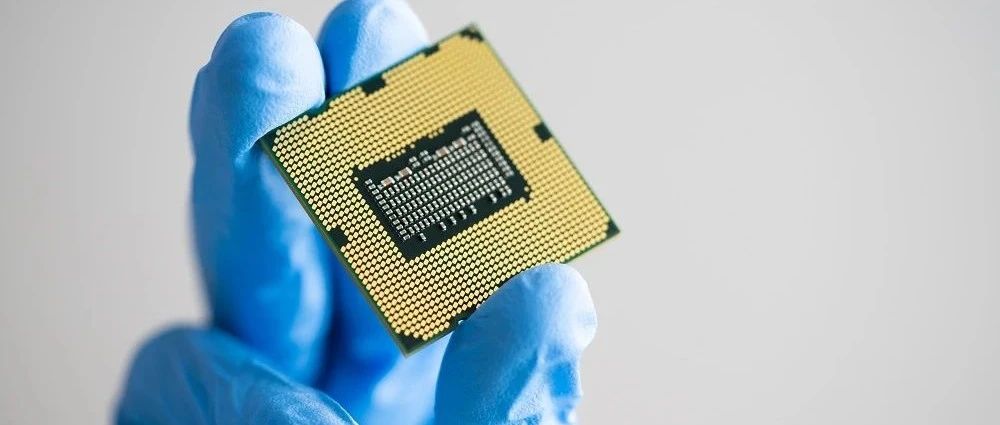
Core Viewpoint - The storage industry is experiencing a price increase, with major companies Micron and SanDisk planning to raise prices by over 10% starting April 1, reflecting supply-demand changes and the impact of recent tariffs [1][2]. Group 1: Price Increase Announcement - Micron and SanDisk's price adjustments apply to all channels and consumer markets, indicating a strategic response to supply chain challenges and demand fluctuations [1]. - The price increase is seen as a "test" to gauge market reactions, with potential benefits for Taiwanese storage manufacturers like Nanya Technology, Winbond, and Macronix, as well as module manufacturers such as Phison, ADATA, and Team Group [1]. Group 2: Market Demand and Supply Dynamics - The rationale behind the price hike includes upstream manufacturers reducing production, which has begun to stabilize supply-demand conditions, and the implementation of Trump 2.0 tariffs [2]. - There has been an observed increase in orders from module manufacturers, but the sustainability of this demand remains to be seen [3]. Group 3: Future Price Adjustments - SanDisk has communicated to partners that operational costs are rising due to supply chain challenges, and they may implement further price changes in the coming quarters [3]. - The current market still has significant inventory, and while there is a sentiment of withholding supply from upstream manufacturers, the overall impact on supply-demand dynamics is still under observation [3].

研发下一代智能存算芯片,「铭芯启睿」完成近亿元天使轮融资,多家战投出资|早起看早期
36氪· 2025-03-07 15:00
Core Viewpoint - The article discusses the innovative RRAM technology developed by "Mingxin Qirui," which integrates storage and computing to significantly enhance AI computing efficiency. The company recently completed nearly 100 million yuan in angel financing, led by Jin Qiu Fund, with participation from major strategic and financial investors like Lenovo Ventures and Xiaomi Investment [1][4]. Group 1: Company Overview - "Mingxin Qirui" was established in May 2024 and focuses on developing new RRAM storage and AI computing technologies to overcome traditional computing architecture limitations [1]. - The company has a strong foundation in intellectual property, with over 200 patents and chip design IP derived from the research team at the Chinese Academy of Sciences, which has over 20 years of systematic research in semiconductor storage [3]. Group 2: Technology Advantages - RRAM technology allows for the integration of storage and computation, addressing the "memory wall" bottleneck in traditional computing architectures, especially in AI applications that require extensive matrix operations [1][2]. - RRAM consumes significantly less energy compared to traditional storage, has the potential for higher storage density due to its ability to modulate multiple resistance states, and is expected to play a crucial role in AI computing [2]. Group 3: Market Position and Partnerships - The company is rapidly advancing its productization and commercialization efforts, having signed contracts worth several million yuan for embedded IP and strategic cooperation agreements for independent RRAM chips [4]. - Major industry players, including TSMC, Samsung, Micron, and SK Hynix, are also exploring RRAM technology, indicating a competitive landscape [3]. Group 4: Investment Insights - Investors view RRAM as a promising technology for AI computing, with Jin Qiu Fund highlighting its low power consumption, fast read/write capabilities, and high density as key advantages [5][6]. - Lenovo Ventures emphasizes the potential of RRAM to significantly reduce AI operational costs and enhance computing efficiency, aligning with the evolving demands of the AI landscape [6].

新兴存储,最新预测
半导体行业观察· 2025-03-06 01:28
Core Viewpoint - The article discusses the evolution and future of alternative and persistent memory technologies, highlighting the competition among various types of memory to become mainstream in the semiconductor industry [2][3][6]. Group 1: Historical Context - For the past 40 years, semiconductor memory has evolved from SRAM, DRAM, EPROM, and EEPROM to include newer technologies like FRAM, MRAM, ReRAM, and PCM [2][3]. - NAND flash memory has been a cornerstone of non-volatile storage, but it faces limitations at the 15nm node, leading to the development of 3D NAND variants [7][8]. Group 2: Current Developments - Recent advancements in memory technologies include the emergence of microcontrollers utilizing MRAM and FRAM, with companies like NXP and Texas Instruments leading the way [6][10]. - The collaboration between NXP and TSMC aims to develop MRAM-based microcontrollers for the automotive market in 2023 [6]. Group 3: Challenges and Limitations - The transition to alternative memory technologies faces economic challenges, as the costs associated with these new technologies are currently higher than traditional NAND and DRAM [8][10]. - The integration of new memory types into existing systems is complicated by the need for additional on-chip SRAM, which increases costs and complexity [5][10]. Group 4: Future Predictions - Experts predict that it may take around ten years for alternative memory technologies to replace flash and SRAM in embedded applications due to slow development in microcontroller technology [10]. - The transition to alternative memory in external NAND flash chips and SDRAM is expected to be delayed, but once it begins, it may accelerate quickly [10].
NAND,大降20%
半导体芯闻· 2025-03-05 10:25
Core Viewpoint - The NAND flash memory market is experiencing a revenue decline of 6.2% in Q4 2023, primarily due to weak consumer demand, with expectations of a further 20% drop in industry revenue in Q1 2024 [1][2]. Group 1: Market Trends - The average selling price (ASP) of NAND flash memory has decreased by 4% quarter-over-quarter, while overall shipment volume has declined by 2% [1]. - By the end of 2024, global NAND flash revenue is projected to be $16.52 billion, reflecting a 6.2% decrease from the previous quarter [2]. - Manufacturers are expected to clear excess inventory, which will contribute to further price declines in NAND flash memory [1]. Group 2: Manufacturer Performance - Major NAND flash manufacturers are facing revenue declines, with Samsung's market share at 35.2% despite a nearly 10% revenue drop compared to Q3 2023 [3]. - SK Hynix experienced a 6.6% revenue decline, while Micron faced a 9.3% drop, and Kioxia and Western Digital saw declines of 0.2% and 0.4%, respectively [4]. - Many manufacturers are shifting focus towards enterprise SSDs to mitigate losses, with Samsung and SK Hynix addressing production imbalances relative to market demand [4]. Group 3: Future Outlook - The industry anticipates improvements in the second quarter of 2024 as production aligns more closely with demand [2]. - Kioxia is adopting a more technical approach by enhancing data transfer speeds and increasing the number of 3D NAND layers, as seen in their latest 10th generation 332-layer V-NAND flash [4]. - Micron plans to cut costs in its NAND flash business while continuing to offer high-capacity enterprise SSDs to boost profitability [4].

国补点燃中国智能手机市场,看好端侧AI硬件创新浪潮和国产算力需求
INDUSTRIAL SECURITIES· 2025-03-04 01:56
行业周报 | 电子 证券研究报告 | 行业评级 | 推荐(维持) | | --- | --- | | 报告日期 | 2025 年 03 月 02 日 | 相关研究 【兴证电子】周报:阿里巴巴资本开支 超预期,看好端侧 AI 硬件创新浪潮和国 产算力需求-2025.02.23 【兴证电子】行业跟踪报告:创新 AI 交 互载体,AR 眼镜快速发展-2025.02.20 【兴证电子】Deepseek 拉动推理需求爆 发,服务器架构创新催生 PTFE PCB 需 求-2025.02.18 分析师:姚康 分析师:胡园园 S0190525010001 huyuanyuan1@xyzq.com.cn 分析师:王恬恬 S0190524040002 wangtiantian22@xyzq.com.cn 研究助理:刘珂瑞 liukerui@xyzq.com.cn 研究助理:刘培锐 S0190520080007 yaokang@xyzq.com.cn 分析师:仇文妍 S0190520050001 qiuwenyan@xyzq.com.cn 分析师:张元默 S0190523020002 zhangyuanmo@xyzq.com.cn ...
NAND新出路是什么?
半导体芯闻· 2025-03-03 10:17
Core Viewpoint - NAND manufacturers are often overlooked in the AI boom, as their growth potential in AI applications is limited compared to DRAM, particularly HBM, which is essential for AI computing needs [1][2][3] NAND Market Dynamics - The NAND market has experienced significant fluctuations, with a notable recovery in early 2024 driven by increased demand from the smartphone sector and AI server construction [6][8] - Global smartphone shipments rose by 8.2% year-on-year in Q1 2024, with a shift towards larger capacity models [6] - AI server demand led to a 32% quarter-on-quarter increase in enterprise SSD procurement, with North America's top three cloud service providers accounting for 58% of global orders [6][7] - Strategic production cuts by major manufacturers have resulted in a 17% increase in NAND Flash contract prices in Q1 2024 [6][9] AI Demand and Pricing Trends - AI server SSD demand is projected to exceed 45EB in 2024, with an average annual growth rate of over 60% expected in the coming years [7][9] - The average selling price (ASP) of NAND products has increased by approximately 15% due to AI demand, despite a 1% decline in shipment volume [9][10] - The enterprise SSD contract price has seen an accumulated increase of over 80% from Q4 2023 to Q3 2024 due to heightened AI server demand [7][9] Technological Innovations - SanDisk has introduced a new storage technology called High Bandwidth Flash (HBF), aimed at providing high bandwidth and capacity for AI inference applications [15][19] - HBF technology allows for parallel access to multiple high-capacity 3D NAND arrays, potentially offering a solution to compete with HBM in specific applications [15][19] - The first generation of HBF technology can provide up to 4TB of VRAM capacity, with plans for further enhancements [15][19] Future Outlook - NAND manufacturers are exploring various strategies to adapt to market changes, including enhancing storage density and dynamic capacity adjustments [22][23] - The introduction of HBF could signify a new opportunity for NAND manufacturers to capture a share of the AI market, although competition remains fierce [24][25] - The industry's recovery is evident, but ongoing challenges in the consumer electronics market continue to exert pressure on NAND manufacturers [11][24]
【电子】存储跌价即将结束,25Q2价格有望逐步回升——半导体行业跟踪报告之二十八(刘凯/黄筱茜)
光大证券研究· 2025-03-03 09:20
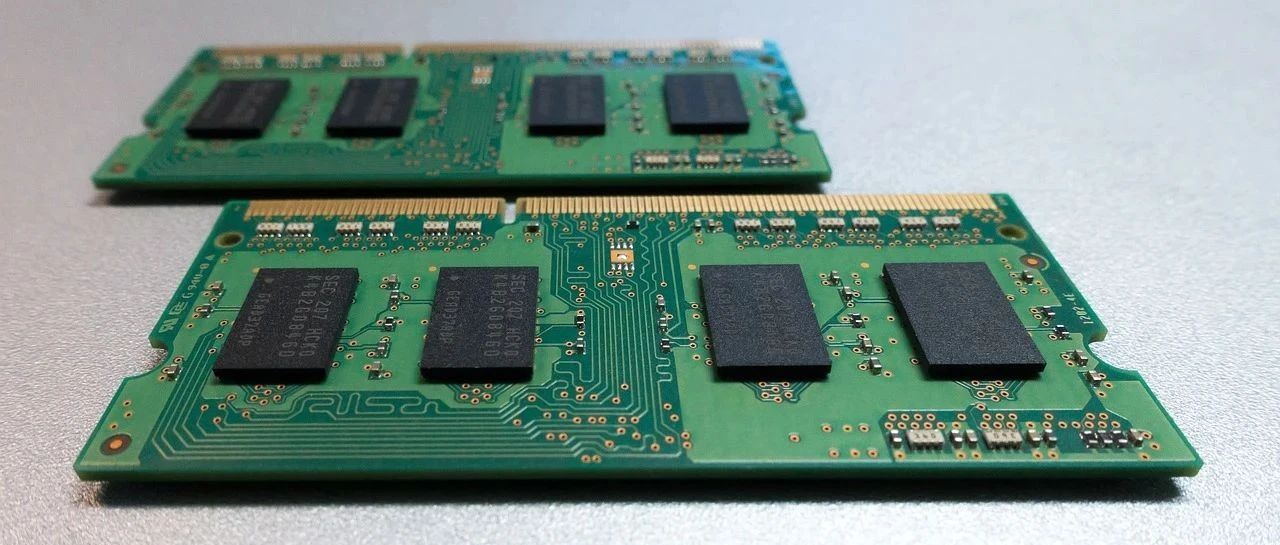
NAND Flash合同价有望于25Q2开始上涨,涨价趋势有望持续至25年底 TrendForce集邦咨询认为,NAND Flash市场供需结构将有望在25年下半年显著改善,包含原厂减产、智能 手机库存去化、AI及DeepSeek效应等因素将推升NAND Flash需求,从而缓解供过于求的局面,预期下半 年将迎来价格回升。根据闪徳资讯,随着NAND Flash厂商积极减产以维持供需秩序,NAND Flash下游有 望于2025年第二季度进入补库存周期,NAND Flash合同价也有望于2025年第二季度开始上涨,涨价趋势 至少可持续至2025年底,NAND Flash下半年有望转为供不应求。此外,自2024年第四季起,中国政府持 续推出的以旧换新补贴政策有效地刺激智能手机销量,加速NAND Flash库存去化速度。智能手机品牌厂 有机会在2025年第二季扩大低价库存,带动需求动能。 DRAM现货价或已接近底部 点击注册小程序 特别申明: 本订阅号中所涉及的证券研究信息由光大证券研究所编写,仅面向光大证券专业投资者客户,用作新媒体形势下研究 信息和研究观点的沟通交流。非光大证券专业投资者客户,请勿订阅、接收或使 ...