长江存储

Search documents
存储行业近况交流
2025-10-27 00:30
Summary of Storage Industry Conference Call Industry Overview - The DRAM market inventory is gradually decreasing since 2025, with current utilization at approximately 82%, which is at the lower limit of normal supply-demand balance, positively impacting prices [1][2] - The fastest-growing demand sectors are servers and automotive electronics, while the mobile market holds the largest share at 35% [2] - The NAND Flash market is highly competitive, with Samsung leading in market share [1][4] Key Points and Arguments DRAM Market - Major players in the DRAM market include Samsung (41%), SK Hynix (27%), Micron (26%), and ChangXin (6%) [2] - Current prices for DRAM products: - DDR4 16GB 3,200 at $6.8 - DDR4 8GB ETT at $4.5 - DDR5 prices range from $6.0 to $8.5 [2][4] - Server market accounts for 30% of total storage demand, with significant demand spikes following new product launches like iPhone 17 and Xiaomi 17 [2] NAND Flash Market - Samsung holds a 31% market share in NAND Flash, with inventory expected to decrease starting in 2025 [4] - Current NAND Flash utilization is between 78%-80%, projected to rise to around 90% in Q4 2025 [4] - Typical NAND Flash product prices include: - 1TB QLC wafer at $5.5 - 1TB TLC wafer at $6.2 [4] Technological Developments - DRAM manufacturers are transitioning to D1β process technology, while ChangXin is at D1z, indicating a generational gap [4] - NAND Flash is evolving towards higher stacking layers, with Changjiang Storage closing the gap with international competitors [1][4] - Samsung is seeking collaboration with Changjiang Storage due to the trend of separating logic and storage arrays, with Xstacking technology being crucial [5] HBM Market - HBM prices are expected to stabilize with slight declines due to increased capacity [10] - AI servers constitute about 4.5%-5% of total storage, with HBM being essential for AI products [10] - Current HBM production capacity is 100,000 pieces/month, projected to expand to 326,000 pieces/month by 2025 [10] Additional Insights - The supply-demand dynamics are influenced by the transition of cold data to hot data, increasing the demand for SSDs, particularly ESSDs [26][28] - The HDD market is not expected to expand significantly, leading to a shift towards SSDs [26][27] - The overall storage industry is anticipated to maintain an upward trend due to improving supply-demand relationships and technological advancements [4] Conclusion - The storage industry is experiencing a positive shift with decreasing inventories and increasing demand across various sectors, particularly in DRAM and NAND Flash markets. The collaboration between major players and advancements in technology will likely shape the future landscape of the industry.

AI 驱动存储市场迎超级周期!长江存储份额突破 9%
是说芯语· 2025-10-25 01:32
Core Insights - The global NAND flash memory market showed a strong recovery in Q2 2025, achieving a 24% quarter-on-quarter growth, following a significant decline of 25.3% in Q1 2025 due to weak enterprise SSD demand [1] - The recovery is driven by inventory replenishment in downstream sectors such as PCs, mobile devices, and data centers after a destocking period in 2024, leading to over 10% growth in NAND bit shipments [1] Market Share and Performance - Samsung holds the largest market share at 31%, followed by SK Hynix at 17%, Kioxia at 17%, and Micron at 15% in Q1 2025 [2] - Yangtze Memory Technologies Co. (YMTC) achieved a notable milestone with a global market share of 9%, supported by advancements in technology, capital investment, and favorable policies [2] Price Trends and Future Outlook - Major memory suppliers like Samsung and SK Hynix plan to raise storage product prices by up to 30% in Q4 2025, driven by structural changes in the storage market due to AI demand [4] - The price increase is influenced by the high storage capacity requirements of AI servers, which are 8-10 times that of traditional servers, and a shift in production focus towards high-margin products [4] Industry Trends - The price increase cycle is expected to continue into 2026, driven by long-term AI demand and a supply expansion cycle of 18-24 months [4] - The market is shifting towards a "high-end concentration and low-end substitution" model, with leading companies focusing on high-end markets while domestic firms like Yangtze Memory and ChangXin Memory target consumer and niche markets [4] - Performance differentiation within the industry is increasing, with IDM companies like Samsung and SK Hynix benefiting from capacity and technology advantages, while module manufacturers' performance depends on inventory costs and bargaining power [4]

跨界赛道狂奔,资金来源成疑:盈新发展五连板谁是资本赌局买单人?
Hua Xia Shi Bao· 2025-10-24 13:36
Core Viewpoint - Yingxin Development (000620.SZ) has announced a plan to acquire 81.81% of Changxing Semiconductor Technology Co., Ltd., which will allow the company to enter the memory packaging and testing sector, despite previous commitments to focus on cultural tourism [2][4]. Group 1: Company Strategy and Financial Performance - The acquisition is seen as a shift in strategy, raising questions about the coherence of Yingxin Development's business direction, especially since it recently rebranded from "Xinhua Group" and aimed to focus on cultural tourism [2][4]. - Yingxin Development has reported negative net profits for the past five and a half years, with revenue declining for three and a half years, casting doubt on the funding sources for the cash acquisition [2][6]. - In 2024, the company reported revenue of 3.043 billion yuan, a year-on-year decline of 21.47%, and a net loss of 533 million yuan, a 251.50% year-on-year drop [7]. Group 2: Market Reaction and Expert Analysis - The stock price surge is attributed to market speculation regarding the cross-industry transformation rather than a rational valuation based on Yingxin Development's fundamentals or the true value of Changxing Semiconductor [3][9]. - Experts express skepticism about the practicality of a cultural tourism and semiconductor packaging integration, highlighting the lack of synergy between the two sectors and the high difficulty of integration [5][6]. - The acquisition agreement lacks specific details on pricing and performance commitments, raising concerns about potential overpayment for low-quality assets [5][6]. Group 3: Industry Context and Competitive Landscape - Changxing Semiconductor, established in 2012, specializes in memory chip packaging and testing, but its competitive position is questioned as it lags behind leading firms in advanced packaging technologies [4][5]. - The customer base for memory packaging is concentrated, and if Changxing Semiconductor is not integrated into established supply chains, it may face intense price competition [5][6]. - The transaction is not classified as a related party transaction and is not expected to constitute a major asset restructuring, which may affect regulatory scrutiny [4].


时空科技:拟收购标的公司嘉合劲威与美光、长江存储等建立长期合作关系 若供应商业务发生不利变化将对公司经营产生重大不利影响
Mei Ri Jing Ji Xin Wen· 2025-10-24 13:08
Core Viewpoint - The company, Time Space Technology (605178.SH), announced its plan to acquire 100% equity of Shenzhen Jiahe Jingwei Electronic Technology Co., Ltd. through a combination of share issuance and cash payment, marking its entry into the storage industry, which is outside its current business scope [2] Group 1: Acquisition Details - The target company specializes in the research, design, production, and sales of storage products such as memory modules and solid-state drives [2] - Prior to this transaction, the company had no experience in the storage industry, indicating a significant shift in its operational focus [2] Group 2: Risks and Challenges - The acquisition may expose the company to integration risks as the target company will be incorporated into its management and consolidated financials [2] - The target company relies on storage chips as its primary raw material, which are produced by a limited number of manufacturers, including SK Hynix, Micron, Samsung, Hefei Changxin, and Yangtze Memory Technologies [2] - Although the target company has established long-term and stable relationships with major storage chip manufacturers or their distributors, potential adverse changes in international trade or supplier relationships could lead to supply shortages, significantly impacting the company's operations [2]

全球芯片“大地震”:英伟达不甘心,阿斯麦不安心,安世中国不屈服
Mei Ri Jing Ji Xin Wen· 2025-10-24 10:04
Group 1 - The article highlights the complex geopolitical landscape affecting major companies, particularly in the semiconductor and AI sectors, as they navigate the challenges posed by international policies and market dynamics [1] - NVIDIA's CEO expressed deep regret over the company's exit from the Chinese market, noting a drastic decline in market share from 95% to 0% due to U.S. export restrictions [2][3] - NVIDIA's potential revenue from the Chinese market was estimated to be between $2 billion and $5 billion for the current quarter, with a projected value of $50 billion by 2025, which now seems unattainable [2][3] Group 2 - ASML reported a record 42% of its sales coming from the Chinese market, but the CEO anticipates a significant decline in this percentage in 2026, reflecting growing concerns about potential market loss [4] - ASML's reliance on DUV lithography machines for 70% of its revenue in China poses a risk, as U.S. restrictions prevent the sale of more advanced EUV equipment [4][5] - The Chinese semiconductor industry is rapidly advancing, with companies like SMIC achieving over 90% yield in 14nm production and Huawei's Ascend 910B chip competing with NVIDIA's H100 [5] Group 3 - AMS, a subsidiary of a Chinese company, faces severe repercussions from U.S. export controls, which have led to asset freezes and management changes imposed by the Dutch government [6][7] - AMS China has publicly condemned the Dutch government's actions, asserting its independence and compliance with Chinese laws, while also emphasizing its significant local production capabilities [7][8] - The situation with AMS highlights the broader implications for global supply chains, particularly in the automotive sector, where the company plays a crucial role [7][8]



应用材料启动全球 4% 裁员,影响超过 1400 名员工!
是说芯语· 2025-10-24 05:06
Core Viewpoint - Applied Materials has announced a global layoff plan affecting approximately 4% of its workforce, which translates to over 1,400 employees, as a response to market fluctuations and policy adjustments in the semiconductor equipment industry [1][3]. Group 1: Layoff Details - The layoff will incur costs between $160 million and $180 million, primarily for severance and one-time termination benefits, with most costs expected to be recorded in Q4 of FY2025 [3]. - The layoff notifications began on October 23, 2023, and the plan is expected to be completed by Q1 of FY2026 [3]. - The company aims to enhance operational structure and efficiency to tackle challenges posed by market volatility and geopolitical factors [3]. Group 2: Market Impact and Revenue Forecast - New export control rules from the U.S. Department of Commerce are projected to reduce Applied Materials' revenue by $110 million in Q4 of FY2025 and $600 million in FY2026 [4]. - The company's revenue from China accounts for 35% of its total, but a decline is anticipated due to equipment shipment digestion and new policy restrictions [4]. - The U.S. House of Representatives has identified support for Chinese companies by U.S. equipment manufacturers as a regulatory focus, increasing policy uncertainty for operations in China [4]. Group 3: Industry Trends - The global semiconductor equipment industry is entering a cyclical adjustment phase, with a projected sales decline of 8%-10% in 2025, marking the first negative growth in five years [5]. - Competitors like ASML and Tokyo Electron have lowered revenue forecasts, while other U.S. firms are implementing hiring freezes or localized layoffs [5]. - Despite current challenges, the CEO of Applied Materials emphasized the long-term growth potential of the semiconductor industry, particularly in AI chips and advanced packaging [5]. Group 4: Domestic Opportunities - The contraction of U.S. equipment manufacturers is creating opportunities for domestic semiconductor equipment localization in China, where the current overall localization rate is about 20% [6]. - In mature process areas, the localization rate exceeds 35%, with companies like Naura and North Huachuang entering the supply chains of major Chinese firms [6]. - It is anticipated that the localization rate for mature process equipment could surpass 50% by 2027, promoting a self-sufficient industry chain [6].

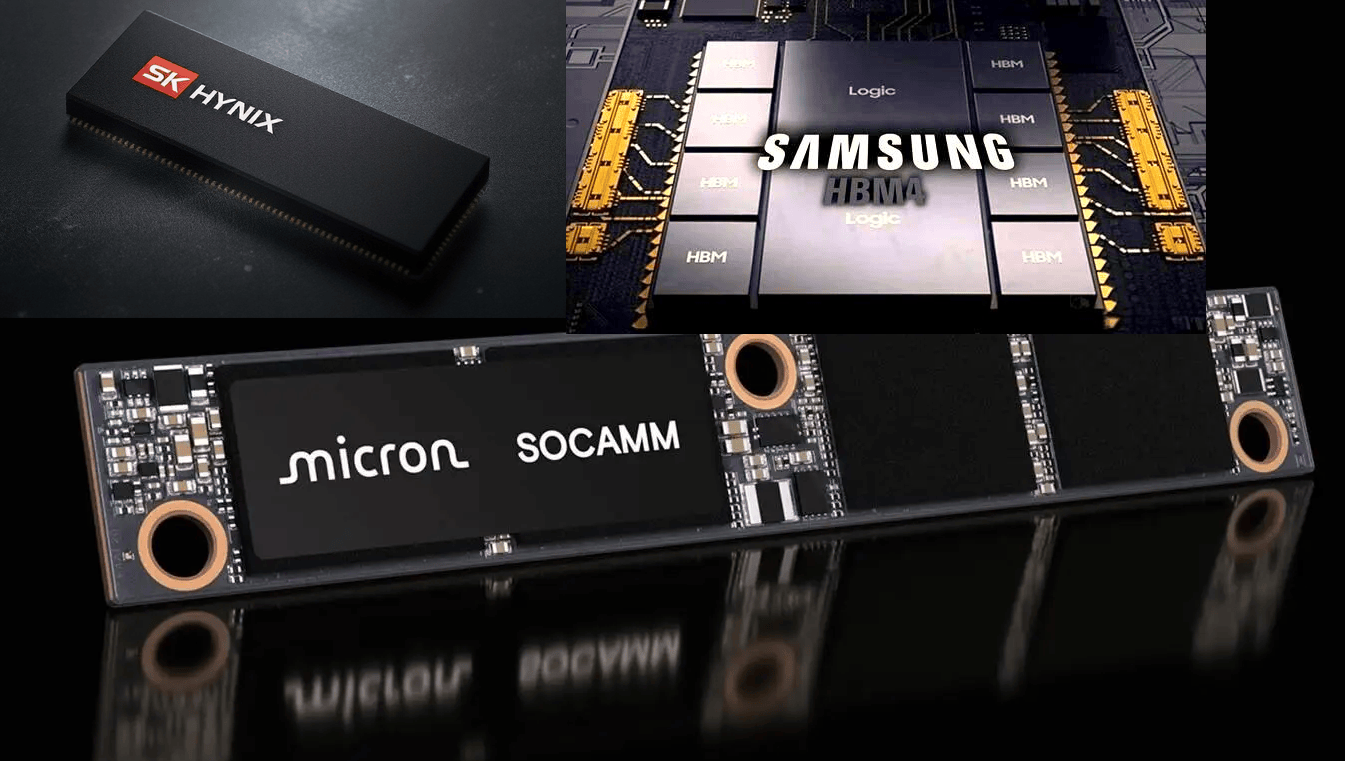
涨价30%!存储芯片涨价潮席卷全球
Sou Hu Cai Jing· 2025-10-24 00:11
Core Viewpoint - Major memory manufacturers like Samsung Electronics and SK Hynix are set to increase DRAM and NAND flash prices by up to 30% in Q4 2025 due to surging storage demand driven by AI advancements [1][2] Group 1: Price Dynamics - DRAM prices are expected to rise significantly, with mobile DRAM types like LPDDR4X/5/5X seeing increases of up to 30% [2] - Micron has notified customers of a 20% to 30% price increase for NAND flash, reflecting extreme market supply tightness [1][2] - The entire industry is adjusting prices, with Samsung planning to follow suit [2] Group 2: Demand Drivers - AI remains the core engine driving demand, with AI servers requiring several times more DRAM than traditional servers, heavily relying on HBM and large-capacity SSDs [2] - Global tech giants are projected to invest over $400 billion in AI infrastructure by 2025, directly boosting demand for HBM, DDR5, and LPDDR5 [2] Group 3: Supply Dynamics - Major manufacturers are concentrating advanced production capacity on high-margin products, leading to a significant supply-demand gap [3] - HBM consumes more than three times the wafer amount compared to standard DRAM, further squeezing traditional DDR4/LPDDR4 production [3] Group 4: Capacity and Market Outlook - Samsung is focusing on 1c-nanometer and HBM4 technologies, with plans for significant capacity increases by 2026 [6] - SK Hynix's new M15X plant is set to begin production of HBM3E and HBM4 in Q4 2025 [6] - TrendForce forecasts a 20.8% increase in average HBM prices by 2025, with new HBM4 pricing potentially reaching $500, significantly higher than HBM3e [6] Group 5: Industry Impact - The storage chip industry is entering a "super cycle" driven by AI, with supply-demand mismatches and technological upgrades pushing prices higher [4][7] - Downstream companies are concerned about shortages, leading to negotiations for long-term supply agreements with major manufacturers [7] - End-users will face rising costs for SSDs and memory modules, significantly increasing personal computer upgrade expenses [7] - Domestic manufacturers like Yangtze Memory Technologies and ChangXin Memory are positioned to capitalize on the shift towards HBM, enhancing their market share [7]
至纯科技:公司与长江存储、长鑫科技均有合作
Ju Chao Zi Xun· 2025-10-23 13:09
Core Viewpoint - The company, Zhichun Technology, maintains partnerships with major domestic semiconductor firms and focuses on providing comprehensive lifecycle products and services for wafer fabs [1][3] Group 1: Company Overview - Zhichun Technology's product system includes process equipment, high-purity process equipment and systems, electronic materials, components, and professional services, catering to various stages of wafer fab construction and production [3] - The customer base includes major domestic integrated circuit manufacturers such as SMIC, Hua Hong, Shanghai Huali, Yangtze Memory Technologies, Changxin Memory Technologies, Yandong Micro, Silan Micro, and Runpeng Semiconductor [3] Group 2: Industry Trends - The rapid development of the domestic semiconductor industry chain is driving continuous expansion in wafer manufacturing, leading to an increasing demand for high-purity process equipment and systems [3] - Industry experts believe that Zhichun Technology's positioning in the semiconductor process equipment sector will benefit from accelerated wafer fab construction and the localization process [3] Group 3: Strategic Positioning - The company aims to deepen strategic cooperation with leading wafer fabs to enhance its technical service capabilities and market share [3] - Through technological innovation and industry chain layout, Zhichun Technology has gradually achieved domestic substitution for some equipment [3] - The company is expected to further solidify its leading position in the domestic high-purity process equipment market by closely binding with top customers [3]

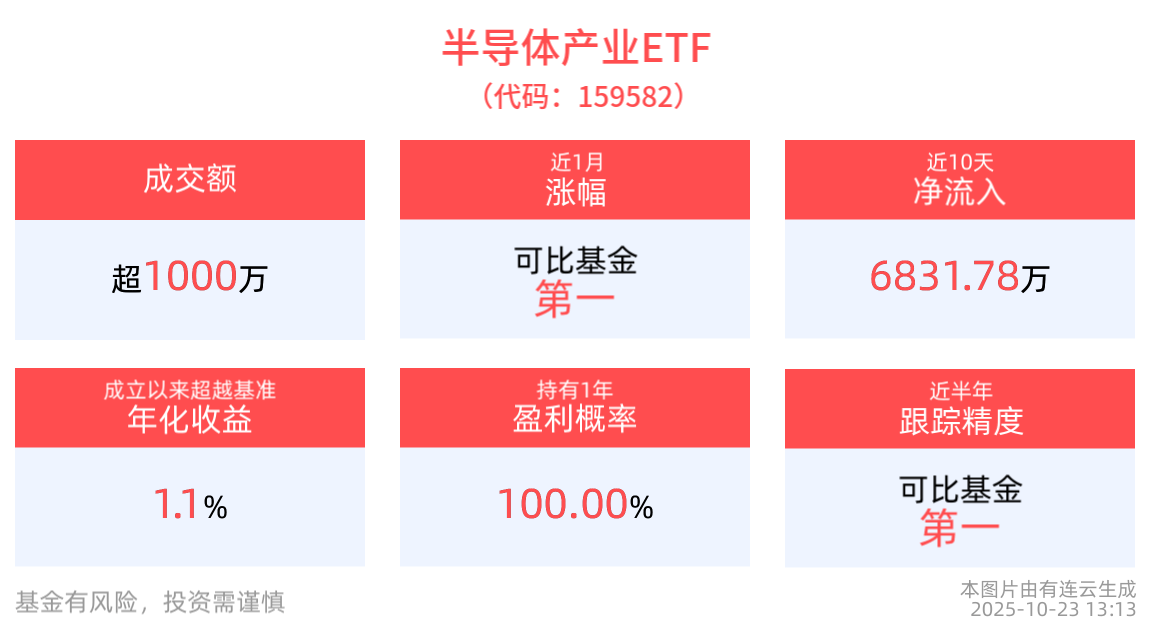
半导体产业链全线回调,半导体产业ETF(159582)横盘震荡
Sou Hu Cai Jing· 2025-10-23 05:48
Market Performance - As of October 23, 2025, the Zhongzheng Semiconductor Industry Index decreased by 1.52%, with major stocks like ShenGong Co. leading the decline at 5.10% [2] - The Sci-Tech Innovation Board Chip Index fell by 2.00%, with stocks such as TuoJing Technology rising by 3.06% while ShengKe Tongxin dropped by 4.98% [4] - The Sci-Tech Innovation Board New Materials Index declined by 1.32%, with TianCheng Technology increasing by 5.98% and ShenGong Co. again leading the decline [7] ETF Performance - The Semiconductor Industry ETF (159582) decreased by 1.37%, with a recent price of 2.09 yuan, but showed a 3.87% increase over the past month [2] - The Sci-Tech Chip ETF (588990) also fell by 1.94%, with a recent price of 2.43 yuan, and a 0.98% increase over the past month [4] - The Sci-Tech New Materials ETF (588010) dropped by 1.37%, with a recent price of 0.79 yuan, and a 0.75% increase over the past month [7] Liquidity and Trading Volume - The Semiconductor Industry ETF had a turnover rate of 4.43% with a trading volume of 17.2464 million yuan, averaging 77.5828 million yuan daily over the past month [2] - The Sci-Tech Chip ETF had a turnover rate of 8.66% with a trading volume of 58.0718 million yuan, averaging 161 million yuan daily over the past month [4] - The Sci-Tech New Materials ETF had a turnover rate of 8.03% with a trading volume of 19.9337 million yuan, averaging 32.1769 million yuan daily over the past week [7] Industry Developments - Yangtze Memory Technologies is considering an IPO in mainland China, potentially valued over 40 billion USD, which could be one of the largest listings in the domestic semiconductor sector [8] - Tesla has added a manufacturing engineer position for its Optimus robot, planning to launch several products next year, indicating a growing interest in humanoid robots [8] - NVIDIA's new Rubin series will utilize M9 materials, suggesting an increase in material chain focus and potential technological upgrades [8] Institutional Insights - The expectation of Yangtze Memory's IPO strengthens the logic of domestic storage autonomy, potentially boosting valuations in chip equipment and material chains [9] - The AI and semiconductor sectors are experiencing renewed interest, with a focus on upstream components like sensors and drive systems due to Tesla and other developments [9] - The peak production of global advanced packaging lines is expected between 2025 and 2028, with equipment procurement cycles starting in late 2024, indicating a significant demand for related equipment [9] ETF Overview - The Semiconductor Industry ETF closely tracks the Zhongzheng Semiconductor Industry Index, covering key sectors in semiconductor materials, equipment, and applications [10] - The Sci-Tech Chip ETF tracks the Sci-Tech Innovation Board Chip Index, focusing on semiconductor-related companies with a maximum of 50 constituents [10] - The Sci-Tech New Materials ETF follows the Sci-Tech Innovation Board New Materials Index, concentrating on advanced materials relevant to the semiconductor industry [10] Weighting and Composition - As of September 30, 2025, the top ten stocks in the Zhongzheng Semiconductor Industry Index accounted for 78.18% of the index [11] - The top ten stocks in the Sci-Tech Chip ETF represented 59.69% of the index [11] - The top ten stocks in the Sci-Tech New Materials Index made up 51.58% of the index [12]
稀土反制立竿见影!ASML对我们销售额跌20%,国产光刻机撑起半条生产线
Sou Hu Cai Jing· 2025-10-22 20:07
Core Viewpoint - The global semiconductor industry is undergoing significant adjustments due to intensified U.S. export controls aimed at limiting China's access to advanced lithography machines, which poses a direct threat to the production stability of Chinese companies [2][4]. Group 1: U.S. Export Controls - The U.S. government has updated regulations multiple times, prohibiting the export of EUV machines and extending restrictions to maintenance services and spare parts, creating potential risks for installed equipment [2]. - ASML, the primary supplier of high-end lithography machines, has acknowledged the challenges posed by these restrictions, particularly regarding the maintenance of EUV systems that rely on rare earth elements [8][10]. Group 2: China's Response and Self-Reliance - Chinese technology companies are making steady progress in independent research and development of lithography machines, with firms like Shanghai Micro Electronics achieving testing applications for 28nm DUV technology [4]. - The Chinese government is investing heavily in semiconductor R&D, with funding expected to exceed previous levels by 2025, focusing on talent development and ensuring production continuity under external pressures [4][12]. Group 3: Rare Earth Elements as a Leverage - China has implemented new regulations on rare earth elements, requiring export licenses for 12 types and extending to products containing Chinese rare earths, directly responding to U.S. rules [6][10]. - The global supply chain for rare earths is heavily reliant on China, which accounts for 70% of mining and 90% of processing, prompting international companies to reassess supply chain security [6][12]. Group 4: Impact on Global Supply Chains - ASML has stockpiled rare earth inventories to mitigate short-term impacts but acknowledges potential long-term delays in production due to reliance on these materials [8]. - Major companies like Intel and Samsung are auditing their product components to avoid compliance risks, while Chinese firms are accelerating domestic replacements, leading to significant improvements in production yields [8][22]. Group 5: Strategic Industry Comparisons - The U.S. focus on technology controls contrasts with China's resource-based strategy, creating a complementary response to the ongoing trade tensions [14]. - Chinese companies are expected to achieve breakthroughs in EUV technology by 2025, with collaborative efforts from academic institutions enhancing the development process [14][20]. Group 6: Global Industry Dynamics - The semiconductor conflict highlights the limitations of unilateralism, as the U.S. attempts to coordinate with allies have not fully anticipated the repercussions of China's resource management [20]. - China's recent regulatory adjustments are seen as a rational response, with a focus on maintaining domestic production while pushing for fair global supply chains [22].