
Momenta

Search documents
广汽集团(02238)发布中期业绩,股东应占亏损25.38亿元 同比盈转亏
智通财经网· 2025-08-29 11:55
Group 1: GAC Group Financial Performance - GAC Group reported a sales revenue of 42.611 billion yuan for the first half of 2025, a decrease of 7.88% year-on-year [1] - The company recorded a loss attributable to equity holders of 2.538 billion yuan, compared to a profit of 1.516 billion yuan in the same period last year [1] - The total vehicle production and sales were 801,700 units and 755,300 units respectively, representing a decline of 6.73% and 12.48% year-on-year [1] Group 2: New Energy Vehicle Sales - GAC Group's new energy vehicle sales reached 154,100 units, a decrease of 6.08% year-on-year, while energy-saving vehicle sales increased by 13.43% to 211,600 units [1] - The proportion of energy-saving and new energy vehicle sales increased to 48.43% during the reporting period [1] Group 3: GAC Trumpchi Developments - GAC Trumpchi launched the "Xiangwang" new energy vehicle series, including models like Xiangwang S7 and Xiangwang M8 Qiankun, focusing on smart and electric transformation [2] - The sales of energy-saving and new energy vehicles for GAC Trumpchi reached 35,000 units, an increase of 18% year-on-year [2] Group 4: GAC Toyota Performance - GAC Toyota achieved sales of 344,700 units in the first half of 2025, a growth of 2.58% year-on-year [3] - The company’s energy-saving and new energy vehicle sales reached 202,300 units, a significant increase of 30.55%, with a market share of 58.70% [3] - GAC Toyota's first jointly developed pure electric model, Platinum Smart 3X, became the best-selling joint venture electric vehicle for two consecutive months [3]

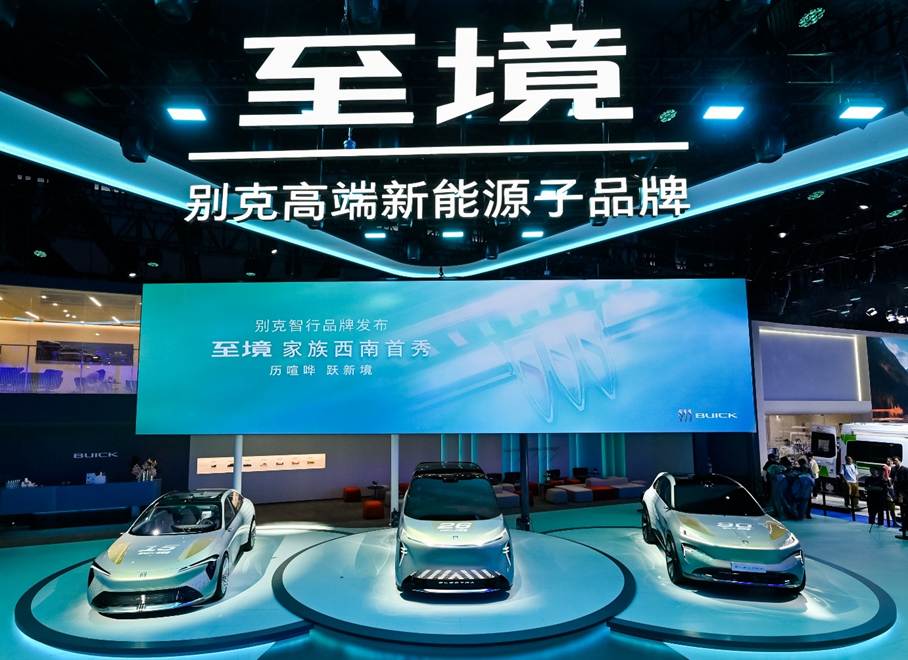
别克“至境”高端新能源子品牌首秀2025成都车展
Qi Lu Wan Bao· 2025-08-29 07:25
Core Viewpoint - Buick's high-end new energy sub-brand "Zhijing" debuted at the 28th Chengdu International Auto Show, showcasing three concept cars and highlighting Buick's strong reserves and forward-looking layout in the new energy sector [1][3][5]. Group 1: Product Launch and Features - Buick plans to launch five new energy models based on the "Xiaoyao" architecture within the next eight months, including the upcoming Buick Zhijing L7 intelligent luxury sedan [1][5]. - The "Zhijing" series vehicles are built on the "Xiaoyao" super fusion architecture, which integrates advanced technologies for a high-value travel experience [5][11]. - The Buick Zhijing L7 will feature the "Zhenlong" range extension technology and the "Xiaoyao Zhixing" advanced driver assistance system, offering a comprehensive driving experience [8][13]. Group 2: Technological Innovations - The "Xiaoyao" architecture is developed entirely by a local team in China and is designed specifically for the Chinese market, marking a milestone for joint venture brands in the electric and intelligent vehicle sector [9][11]. - The "Xiaoyao Zhixing" driver assistance system aims to provide a top-tier intelligent travel experience, developed in collaboration with leading smart driving companies [1][16][18]. - The architecture supports various vehicle types and driving forms, including pure electric, plug-in hybrid, and range-extended technologies, showcasing its versatility [11][13]. Group 3: Market Positioning and Strategy - Buick's introduction of the "Zhijing" brand and the "Xiaoyao" architecture signifies a strategic shift from market following to technology leadership in the electric vehicle sector [19]. - The brand aims to focus on the high-end new energy market, enhancing its core competitiveness in the new energy era [19][20].


“舱驾一体”加速上车:算力共享与成本博弈下,融合难题仍待解
Mei Ri Jing Ji Xin Wen· 2025-08-28 12:34
Core Insights - The rapid development of "integrated cockpit and driving" in the Chinese market is driven by the fusion of independent smart cockpit and smart driving functions, creating a powerful "central brain" for managing all intelligent features of vehicles [1][2] - The evolution of automotive architecture is becoming the core of transformation in the automotive industry, with a shift from distributed systems to centralized systems [2][3] Industry Trends - The automotive architecture is transitioning from a distributed system with multiple independent "brains" to a centralized system, leading to the emergence of three main forms: integrated driving and parking, integrated cockpit and parking, and integrated cockpit and driving [2] - The trend towards centralized computing is exemplified by the adoption of a single universal SoC (System on Chip) as the core of central computing, with Qualcomm's Snapdragon Ride Flex SoC being a key player in this new phenomenon [2][3] Technological Advancements - The advantages of "computing power sharing" and cost reduction are prompting more automakers to consider the "integrated cockpit and driving" solution, as the computing power of cockpit SoCs and driving SoCs continues to increase [3][4] - NIO's central computing platform, ADAM, can share up to 256 TOPS of computing power between driving and cockpit functions, enhancing operational efficiency [3] Challenges - The challenge of "system multi-domain parallelism" remains a significant hurdle for the "integrated cockpit and driving" approach, as the differing focuses of smart cockpit and smart driving systems complicate their integration [4][5] - The increasing number of display interfaces and the need for advanced human-machine interaction (HMI) further elevate the computing power requirements for AI technologies in vehicles [5][6] Future Outlook - Many players in the automotive industry are actively launching products related to "integrated cockpit and driving," with over ten Chinese automakers and ecosystem partners planning to adopt the new Snapdragon automotive platform [6][7] - While "integrated cockpit and driving" is currently a leading solution, it may not be the ultimate answer for future smart driving technologies, indicating a need for ongoing evaluation as advancements occur [7]


华为高管:世界上根本没有免费的东西
半导体芯闻· 2025-08-27 10:40
Core Viewpoint - Huawei's automotive business is rapidly expanding, particularly in the field of assisted driving, with various collaboration models with car manufacturers being explored [2][3]. Group 1: Collaboration Models - Huawei's automotive business unit (BU) collaborates with car manufacturers through multiple models, including component supply, single intelligence (either smart cockpit or assisted driving), dual intelligence (both smart cockpit and assisted driving), and full-stack solutions [2]. - The collaboration process involves Huawei supporting car manufacturers throughout the entire lifecycle, from product definition and design to manufacturing and marketing [2][7]. Group 2: Technology Approach - Huawei's approach to assisted driving does not align with the Vision-Language-Action (VLA) model favored by some car manufacturers; instead, it emphasizes the World and Action (WA) model, which directly controls the vehicle through sensory inputs [3][9]. - The WA model is considered by Huawei to be the ultimate solution for achieving true autonomous driving, bypassing the language processing step [9]. Group 3: Commercialization and Market Strategy - Huawei does not have a specific short-term commercialization goal for its assisted driving technology, focusing instead on long-term user-centered strategies and sustainable investment [7]. - The company believes that the market for assisted driving features will evolve, and that pricing strategies should reflect the ongoing development and maintenance costs associated with these technologies [12]. Group 4: Industry Trends and Future Outlook - The number of players in the autonomous driving space is expected to decrease as the industry consolidates, with future success relying heavily on data-driven approaches [10]. - The differentiation in assisted driving technology is minimal, as the primary goal remains zero accidents and fatalities, with pricing determined by perceived value to consumers [11].
华为高管:世界上根本没有免费的东西
Di Yi Cai Jing Zi Xun· 2025-08-27 08:51
Core Insights - Huawei's automotive business is rapidly expanding its assisted driving solutions and collaborating with various car manufacturers, including Baojun, Leap Motor, and Hongqi, indicating a growing presence in the industry [2][3] - The company emphasizes a diverse cooperation model with car manufacturers, ranging from component supply to full-stack solutions, enhancing their capabilities from product definition to marketing [2][9] - Huawei's approach to assisted driving technology diverges from the prevalent Vision-Language-Action (VLA) model, focusing instead on a World and Action (WA) model that utilizes direct sensory inputs for vehicle control [3][10] Cooperation Models - Huawei's cooperation with car manufacturers includes multiple models: component supply, single intelligence (either smart cockpit or assisted driving), dual intelligence (both), and full-stack solutions [2][9] - The collaboration process is designed to deepen over time, with Huawei supporting car manufacturers throughout the entire product lifecycle, from design to marketing [2][9] Technology Perspective - Huawei does not endorse the VLA approach, believing it is not the ultimate solution for autonomous driving; instead, it prioritizes the WA model, which aims for direct control through sensory inputs [3][10] - The company acknowledges the rapid development of assisted driving technology and anticipates a consolidation of players in the market, driven by data, computing power, and algorithms [11] Commercial Strategy - Huawei does not have a specific short-term profitability target for its automotive business, focusing instead on long-term user-centered investments and sustainable growth [8] - The company argues that there is no such thing as a free service in the automotive sector, as costs are often hidden in vehicle pricing or future service fees [13]
死磕技术的自动驾驶全栈学习社区,近40+方向技术路线~
自动驾驶之心· 2025-08-27 01:26
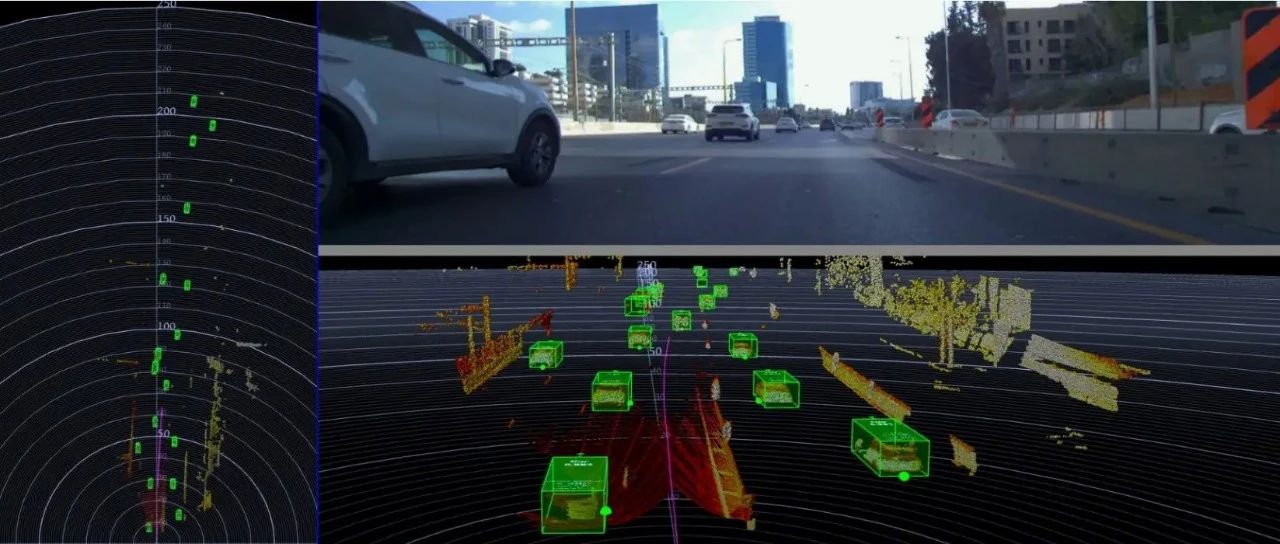
Core Viewpoint - The article emphasizes the establishment of a comprehensive community for autonomous driving enthusiasts, aiming to connect learners and professionals in the field, providing resources, networking opportunities, and industry insights. Group 1: Community and Resources - The "Autonomous Driving Heart Knowledge Planet" has over 4,000 members and aims to grow to nearly 10,000 in two years, serving as a hub for communication and technical sharing [1][12] - The community offers a variety of resources including video content, articles, learning paths, Q&A, and job exchange opportunities [1][2] - Nearly 40 technical routes have been organized within the community, catering to various interests such as industry applications and the latest benchmarks [2][5] Group 2: Learning and Development - The community provides structured learning paths for beginners, including full-stack courses suitable for those with no prior experience [7][9] - Members can access detailed information on end-to-end autonomous driving, multi-modal models, and various data sets for training and fine-tuning [3][26] - Regular discussions with industry leaders are held to explore trends, technological directions, and production challenges in autonomous driving [4][58] Group 3: Job Opportunities and Networking - The community has established internal referral mechanisms with multiple autonomous driving companies, facilitating job placements for members [9][11] - Members are encouraged to engage in discussions about career choices and research directions, receiving guidance from experienced professionals [55][60] - The platform aims to connect members with job openings and industry opportunities, enhancing their career prospects in the autonomous driving sector [1][62]
对话华为靳玉志:世界上根本没有免费的东西
Di Yi Cai Jing Zi Xun· 2025-08-26 09:48
Core Viewpoint - Huawei's automotive business is rapidly expanding, particularly in the field of assisted driving, with various collaboration models with car manufacturers being explored [1][2]. Group 1: Huawei's Automotive Business Development - Huawei's automotive business unit (BU) has seen key figures, such as CEO Jin Yuzhi and Huawei Qian Kun, publicly engaging with the media, indicating a shift from behind-the-scenes to a more prominent role [1]. - The assisted driving sector is experiencing significant growth, with Huawei's Qian Kun technology being integrated into 1 million vehicles and the upcoming large-scale deployment of Huawei ADS 4 [1]. - The collaboration models between Huawei and car manufacturers include component supply, single intelligence (either smart cockpit or assisted driving), dual intelligence (both smart cockpit and assisted driving), and full-stack solutions [1][7]. Group 2: Technical Perspectives and Strategies - Huawei Qian Kun does not align with the VLA (Vision-Language-Action) approach favored by some manufacturers, instead prioritizing WA (World and Action) for direct vehicle control through sensory inputs [2][9]. - The company emphasizes that there is no such thing as a free lunch in the automotive industry, suggesting that costs are often hidden in other areas, such as vehicle pricing [2][12]. Group 3: Collaboration and Empowerment - Huawei's strategy involves a comprehensive support system for car manufacturers, guiding them through the entire process from product definition to marketing, thereby enhancing their capabilities [7][8]. - The company aims to empower manufacturers, particularly state-owned enterprises, by sharing its successful experiences in product development and market strategies [7][8]. Group 4: Future Outlook and Market Dynamics - The number of players capable of achieving L3 and L4 autonomous driving is expected to decrease as the industry consolidates, driven by the need for data, computational power, and algorithms [10]. - The differentiation in assisted driving technology is minimal, with the primary goal being zero accidents and fatalities, which complicates pricing strategies [11].
均胜电子上半年汽车智能化与机器人业务实现多点突破
Zheng Quan Ri Bao· 2025-08-26 06:11
Core Insights - Company achieved a revenue of 30.347 billion yuan, representing a year-on-year growth of 12.07% [2] - Net profit attributable to shareholders reached 708 million yuan, with a year-on-year increase of 11.13% [2] - Overall gross margin improved, with the second quarter gross margin at approximately 18.4%, marking a recent high [2] Automotive and Robotics Focus - Company concentrated on automotive and robotics components, driving breakthroughs in key products and technologies [2] - In smart driving, significant R&D investment of approximately 2.488 billion yuan was made, focusing on smart cockpits, intelligent driving, and high-power fast charging for new energy vehicles [2] - Collaboration with leading smart driving algorithm company Momenta resulted in a major project with an order value exceeding 1 billion yuan [2] New Orders and Market Position - New projects secured in the first half of the year have a total lifecycle value of approximately 31.2 billion yuan, with automotive safety and electronics contributing 17.4 billion yuan and 13.8 billion yuan respectively [3] - Over 20.6 billion yuan in new orders related to new energy vehicles were obtained [3] - Company is strategically extending into the robotics industry, leveraging its core automotive component expertise [3] Robotics Development - A wholly-owned subsidiary for humanoid robotics was established, focusing on R&D and commercialization of key components [3] - The company aims to provide integrated hardware and software solutions for robotics, including control systems and high-performance materials [3]

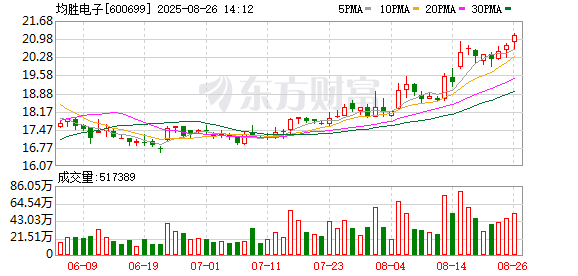
均胜电子上半年毛利率持续提升,汽车智能化与机器人业务多点突破
Quan Jing Wang· 2025-08-25 11:20
Core Insights - Company achieved a revenue of approximately 30.347 billion yuan in the first half of 2025, representing a year-on-year growth of 12.07% [1][2] - The overall gross margin increased by 2.9 percentage points to about 18.4% in Q2 2025, marking the highest level in recent years [1][2] - The company is focusing on breakthroughs in key products and technologies in the automotive and robotics sectors, with significant progress reported [1][4] Financial Performance - Revenue for the first half of 2025 was approximately 30.347 billion yuan, up from 27.079 billion yuan in the same period last year, reflecting a growth of about 12.07% [2] - The total operating profit was around 1.247 billion yuan, with net profit attributable to shareholders increasing by 11.13% to 708 million yuan [1] - The overall gross margin for the first half of 2025 improved by approximately 2.6 percentage points to about 18.2% [2] Business Segments - The automotive safety business achieved a gross margin of approximately 15.9%, up by about 2.0 percentage points year-on-year, while the automotive electronics business saw a gross margin increase of about 2.2 percentage points to approximately 21.5% [2] - The company has made significant advancements in smart driving, including a partnership with Momenta, resulting in a high-level intelligent driving domain control project with an order value exceeding 1 billion yuan [1][5] - In the robotics sector, the company is providing integrated hardware and software solutions, having established partnerships with leading robotics companies [8] R&D and Innovation - The company invested approximately 2.488 billion yuan in R&D in the first half of 2025, ensuring continued leadership in key technology areas [4] - New orders for the first half of 2025 amounted to approximately 31.2 billion yuan, with over 20.6 billion yuan related to new energy vehicles, accounting for over 66% of the total [5] - The company is actively developing innovative safety solutions, including a new series of gas generators and advanced safety belt systems [6] Global Strategy - The company is enhancing its global operations by integrating Chinese suppliers and optimizing procurement prices, leading to a significant increase in overseas gross margins [3] - The company is strategically extending its reach into the robotics industry, establishing a wholly-owned subsidiary to focus on humanoid robotics [8] - The company is also pursuing international expansion, with plans to list on the Hong Kong main board to create a global capital platform [9][10]
均胜电子:继续扩大与Momenta合作,已战略投资智能驾驶芯片公司
Mei Ri Jing Ji Xin Wen· 2025-08-25 10:59
Core Insights - Junsheng Electronics reported significant advancements in its intelligent driving business, including a collaboration with leading intelligent driving algorithm company Momenta, resulting in a major contract exceeding 1 billion yuan for advanced intelligent driving domain controller solutions for multiple vehicle models, expected to begin mass production in 2026 [1] Group 1: Business Developments - The partnership with Momenta marks a breakthrough in the intelligent auxiliary driving domain control project for a well-known autonomous brand [1] - The company is actively pursuing project confirmations with other domestic and global clients [1] Group 2: Strategic Investments - Junsheng Electronics made a strategic investment in intelligent auxiliary driving chip manufacturer Xinxinhangtu, developing advanced intelligent driving domain controllers based on this chip [1] - The related chip has successfully been tested in vehicles, indicating progress in product development [1] Group 3: Growth Outlook - The company anticipates a rapid growth phase for its intelligent driving business as related orders are progressively realized [1]