
奇瑞汽车

Search documents
【重磅深度】乘用车全球化策略:从全面扩张走向分市场/分主体的结构性出海
东吴汽车黄细里团队· 2026-01-08 14:45
Group 1 - The article predicts that Europe, Latin America, and Southeast Asia will continue to contribute significantly to the growth of new energy vehicle (NEV) penetration rates, with Europe expected to exceed previous forecasts due to the release of affordable models and the reintroduction of some subsidies [2][18] - In Southeast Asia, the NEV penetration rate is projected to reach 19% by 2026, driven by contributions from Chinese automakers and local firms like VinFast, despite tightening import incentives [2][18] - Latin America's NEV penetration is expected to increase to 5% by 2026, but the growth will be limited due to a focus on local industrial protection and tax adjustments rather than direct demand stimulation [3][18] Group 2 - The article outlines that the total market size accessible to Chinese automakers is approximately 27 million vehicles, with an export potential market of about 9.08 million vehicles [5][20] - The export market analysis indicates that the share of NEV exports in total exports is expected to rise to 42% by 2025, with BYD being a major contributor to this growth [5][20] - The methodology for assessing market entry potential includes filtering based on trade barriers, bilateral relations, and external uncertainties, leading to the exclusion of markets like North America, Japan, and India [6][22] Group 3 - The article discusses the competitive landscape for Chinese automakers, highlighting that regions like Oceania, the Middle East, Central Asia, and Africa are more favorable for vehicle exports due to less stringent regulatory environments [8][25] - It emphasizes the importance of local production and supply chain investments in Southeast Asia and Latin America, where local market conditions are evolving [8][25] - The analysis of company strategies reveals that BYD has developed a replicable global operation model, while Chery and Great Wall have adopted different approaches to expand their market presence [9][24][27] Group 4 - The article concludes that companies with a strong overseas presence and proven execution capabilities, such as BYD, Great Wall, and Chery, should be prioritized for investment [12][13] - It highlights the need for companies to adapt to local market conditions and regulatory frameworks to ensure sustainable growth in international markets [12][13] - The overall export volume for Chinese automakers is projected to increase significantly, with NEV exports expected to reach 362,000 units by 2026 [30][37]





多家车企密集降价促销!
新华网财经· 2026-01-08 14:40
Core Viewpoint - Multiple automakers are launching aggressive discount promotions to counter the impact of the new energy vehicle purchase tax adjustments set for 2026 [6] Group 1: Promotions and Discounts - Tesla China has introduced purchase incentives for the Model 3/Y/Y L, including a "7-year ultra-low interest" financing option with a minimum down payment of 79,900 yuan and monthly payments starting at 1,918 yuan [2] - GAC Group announced promotional activities for its self-owned brands, offering a maximum of 70,000 yuan in "government-enterprise subsidies" for models like GAC Trumpchi [2] - NIO's Firefly brand is providing benefits such as a 2,000 yuan purchase tax subsidy and rewards for repeat buyers [3] - Xiaomi is offering various promotions for its YU7 and SU7 Ultra models, including a 3-year interest-free option and a limited-time purchase benefit of 48,000 yuan [3] - BMW has initiated a broad price adjustment across 31 models, with the iX1 seeing a price drop from 299,900 yuan to 228,000 yuan, a reduction of 24% [3] - Volvo is promoting its new XC70 with a direct purchase tax subsidy of 14,000 yuan and additional purchase benefits [3] - Wuling Motors is providing full purchase tax subsidies for several new energy models, along with up to 8,000 yuan in trade-in subsidies and 5,000 yuan in limited-time financial interest subsidies [4] - Traditional automakers like Dongfeng, Chery, and FAW-Volkswagen are also rolling out new year discount promotions for select brands or models [5] Group 2: Market Outlook - The automotive industry anticipates that the increase in purchase tax for new energy vehicles will negatively impact sales, with predictions of a significant market decline in the first quarter of 2026 [6] - However, the early introduction of vehicle scrappage and trade-in subsidies has shifted industry sentiment to a more optimistic outlook, suggesting that the market may continue to grow in 2026 [7] - The China Automobile Dealers Association forecasts a strong start to January 2026, driven by pent-up demand from the end of 2025 and pre-holiday purchasing activity [7]


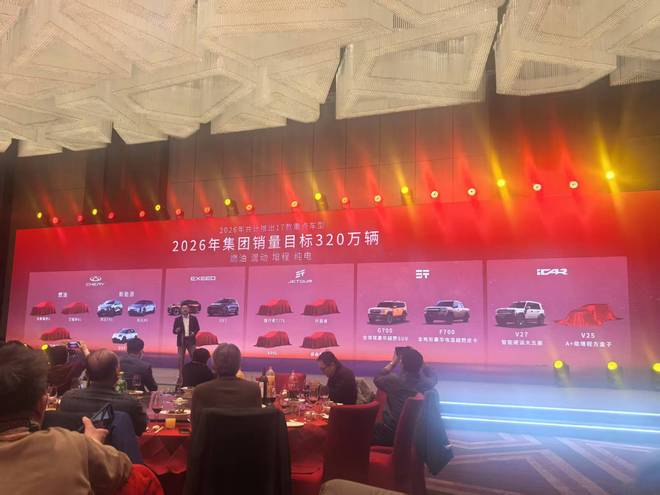
奇瑞2026年目标销量320万辆,将推出17款新车
Guan Cha Zhe Wang· 2026-01-08 12:56
Group 1 - Chery Automobile plans to launch 17 new models by 2026, covering four categories: fuel, hybrid, range-extended, and pure electric [1][3] - The Chery brand will introduce three fuel vehicles: the new Tiggo 8, Arrizo 8L, and Arrizo 7, along with three new energy vehicles: the Fengyun T9L, Fengyun A9, and QQ3 [3] - The Exeed brand will release models EX6, EX7, and ES7, while the Jetour brand will launch four models: Traveler 7/7L, Voyager, X90L, and Free Traveler [3] Group 2 - Jetour Zongheng will introduce the G700 luxury off-road SUV and the F700 all-terrain luxury hybrid off-road pickup [3] - The iCAR brand will launch the V27 smart hard-core five-seater and the V25A+ range-extended box [3] - In 2025, Chery's total sales reached 2.8064 million units, a year-on-year increase of 7.8%, with new energy vehicle sales at 903,800 units, up 54.9% [3]
二闯IPO!大昌科技更换保荐机构,近半营收依赖奇瑞汽车
Bei Jing Shang Bao· 2026-01-08 12:52
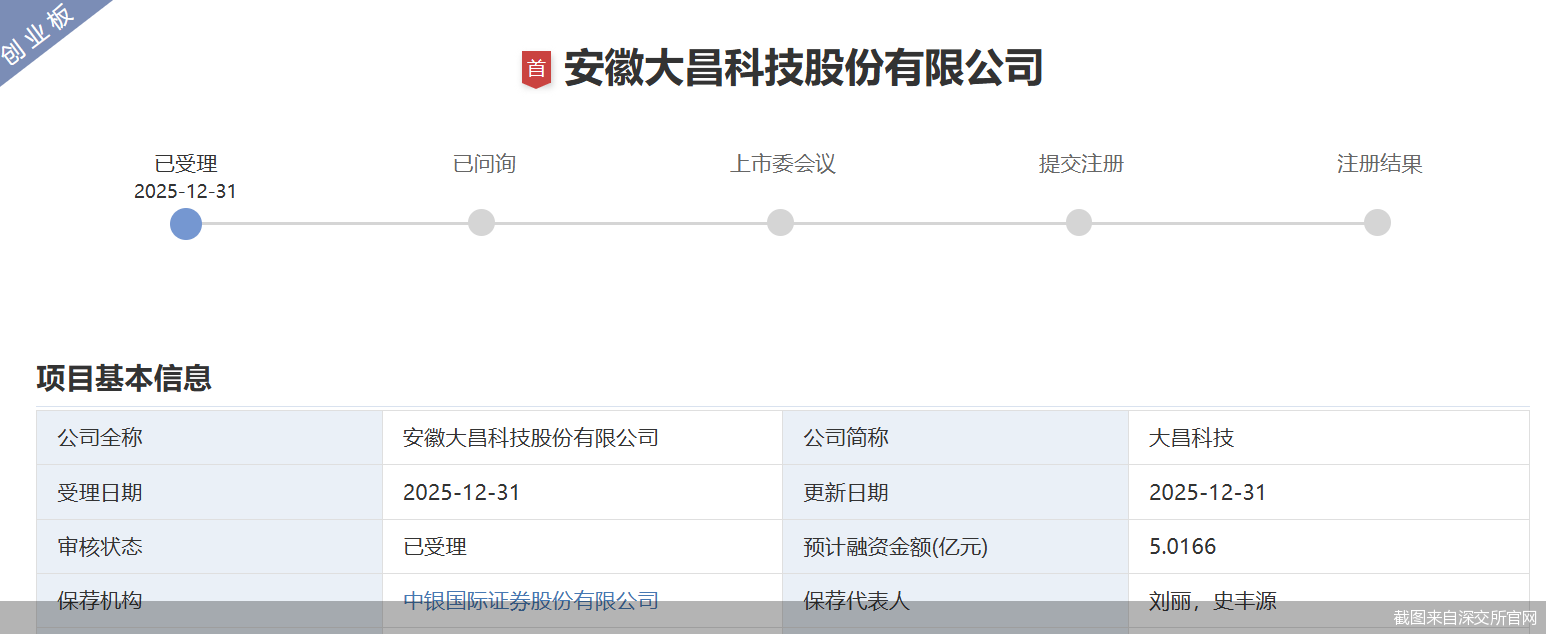
Group 1 - Anhui Dachang Technology Co., Ltd. has re-applied for an IPO on the ChiNext board after withdrawing its previous application over a year ago, with the application recently accepted by the Shenzhen Stock Exchange [1][3] - The company primarily engages in the research, production, and sales of automotive parts and related tooling, with major products including body structure assemblies and chassis components [3] - The company's largest customer, Chery Automobile, contributes nearly 50% of its revenue, highlighting a significant customer concentration risk [1][3][4] Group 2 - Financial performance shows fluctuations, with revenues of approximately 816 million yuan, 1.255 billion yuan, and 1.171 billion yuan from 2022 to 2024, and a net profit of about 73.54 million yuan, 104 million yuan, and 91.40 million yuan for the same periods [3] - For the first three quarters of 2025, the company reported revenues of approximately 815 million yuan and a net profit of about 58.02 million yuan [3] - The company has a high customer concentration, with sales to the top five customers accounting for 89.24%, 88.9%, 87.33%, and 80.71% of total revenue in the respective reporting periods [3][4] Group 3 - The company plans to raise 502 million yuan in its current IPO application, an increase from the previous target of 374 million yuan, with proceeds allocated to various projects including an intelligent factory and production line enhancements [5] - The company has changed its sponsor from Guoyuan Securities to Zhongyin International Securities for this IPO, following regulatory scrutiny of the previous sponsors [5][6] - The company’s major receivables are concentrated among a few clients, with accounts receivable totaling approximately 445 million yuan, 781 million yuan, 661 million yuan, and 640 million yuan at the end of the respective reporting periods [4][6]
雷军抛出55万辆的小目标,流量反噬让小米认清现实?| DA观
Sou Hu Cai Jing· 2026-01-08 12:12
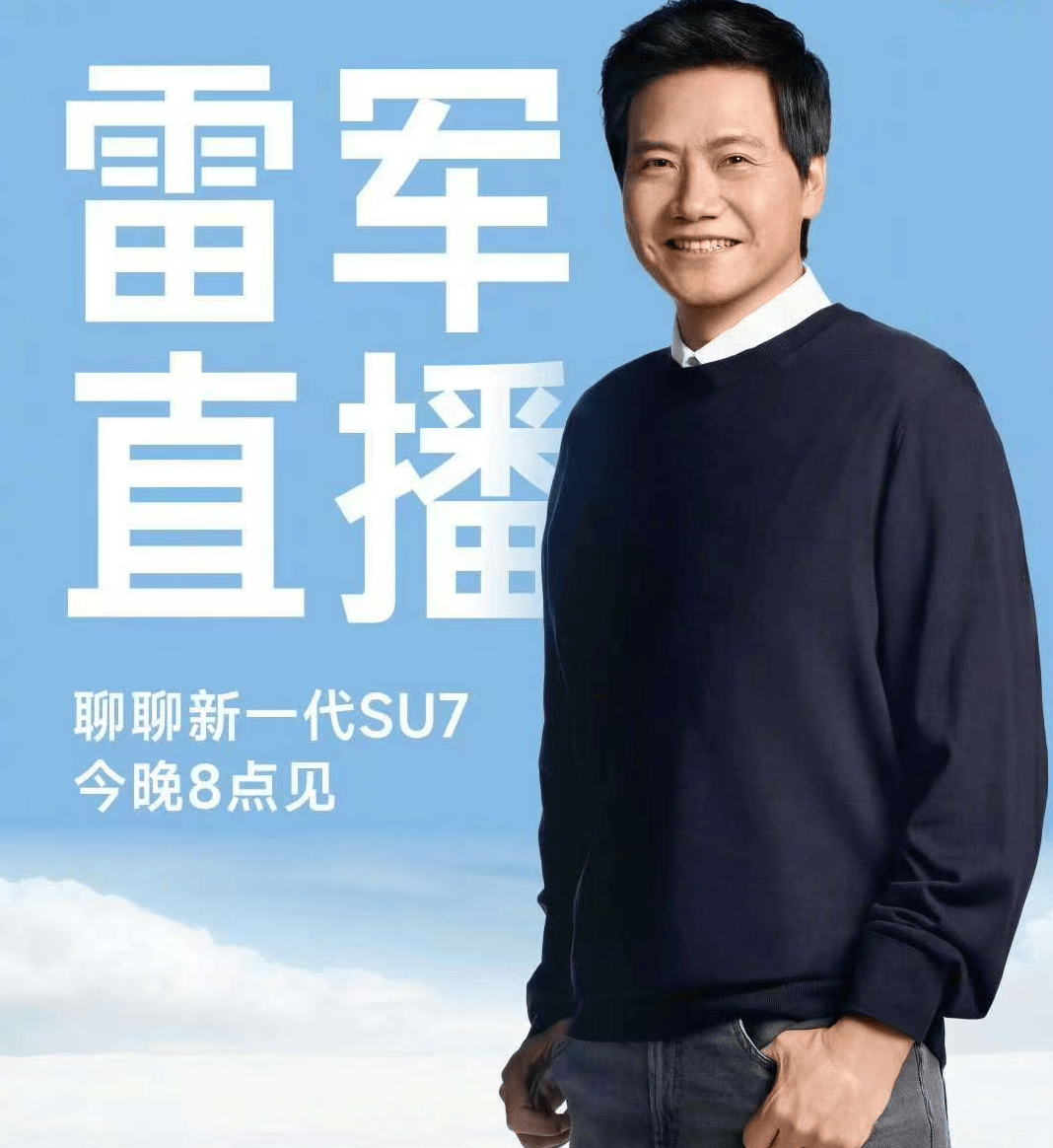
Core Viewpoint - Xiaomi's CEO Lei Jun announced the launch of the new SU7 model expected in April 2026, with a sales target of 550,000 vehicles for the year, which appears conservative compared to previous growth rates [2][3][4]. Sales Targets and Performance - The sales target of 550,000 units for 2026 is only a 34% increase from 410,000 units in 2025, which itself was a significant jump from 135,000 units in 2024 [3][4]. - The internal target may be even lower, around 500,000 units, indicating a cautious approach amidst market uncertainties [4]. - The current main model, YU7, has a monthly sales volume exceeding 30,000 units, suggesting that the target for 2026 may not reflect substantial growth compared to previous years [5]. Market Position and Competition - Xiaomi's sales strategy is being compared to competitors like Leap Motor, which aims for 1 million units in 2026, and Great Wall Motors, targeting 1.8 million units with a 36.4% growth rate [6]. - The company has experienced a significant drop in sales for its Ultra version, which fell from over 3,000 units per month to just 80 units in November 2025 [20]. Marketing and Consumer Sentiment - Xiaomi's marketing strategies have been effective in generating initial interest, with the SU7 achieving 88,898 pre-orders in 24 hours, showcasing the company's ability to leverage its existing consumer base [8][10]. - However, there are signs of consumer backlash, particularly regarding collaborations with KOLs that have not resonated well with Xiaomi's core fanbase, leading to a need for the company to reassess its marketing partnerships [14]. Safety Concerns and Public Perception - The company has faced significant challenges related to safety incidents involving its vehicles, which have raised public concerns about the safety of its products [18][20]. - The negative impact of these incidents has been compounded by a lack of timely responses from the company, leading to increased scrutiny and criticism from consumers [18][22]. Strategic Shifts - Xiaomi may need to adopt a "car sea" strategy, introducing more models to meet sales targets, which contradicts previous statements by Lei Jun about avoiding excessive model proliferation [24].

全球汽车业2026八大猜想
Zhong Guo Qi Che Bao Wang· 2026-01-08 11:43
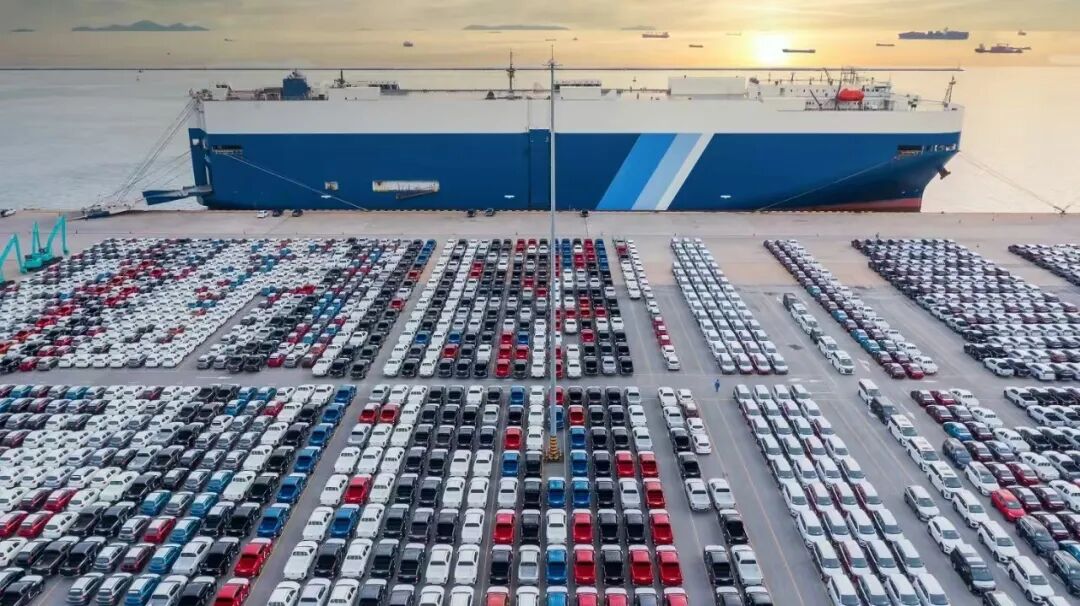
Group 1 - The global automotive trade is expected to face increased tensions in 2026, with significant downward pressure on trade growth predicted by organizations like the WTO and IMF, projecting growth rates of only 0.5% and 0.6% respectively, down from 2.4% in 2025 [2][3] - The rise of trade protectionism is a core driver of this tension, as various countries implement unilateral trade measures, disrupting the established rhythm of the global automotive supply chain and increasing uncertainty in international trade [3] Group 2 - The global electric vehicle (EV) market is anticipated to experience a slowdown in sales growth in 2026, with the U.S. market showing particularly pessimistic trends due to the cancellation of favorable policies under the Trump administration, leading to a significant drop in consumer purchasing intent [4][5] - In China, the growth forecast for domestic electric vehicle sales has been revised down from 16% to 14% for 2026, attributed to high base effects and the reintroduction of purchase taxes despite continued government subsidies [5] Group 3 - Chinese automotive companies are accelerating their localization strategies overseas, transitioning from simple vehicle exports to localized production and comprehensive system output, as evidenced by projects like Changan's factory in Thailand and BYD's plans in Hungary and Malaysia [6][7] - Major Chinese automakers are implementing diverse strategies to enhance localization, including CKD exports to reduce tariff costs and partnerships with local firms to quickly integrate into new markets [7] Group 4 - The collaboration model between Chinese and foreign automotive companies is evolving, moving from a "market for technology" approach to a deeper integration based on technology output and resource sharing, extending cooperation beyond China to global markets [8][9] Group 5 - 2026 is projected to be a pivotal year for the commercialization of Robotaxi services, with advancements in technology, policy support, and reduced costs driving the transition from pilot programs to large-scale operations [11][12] - In China, companies like Pony.ai and Baidu are achieving significant milestones in Robotaxi deployment, with Baidu's service reportedly handling over 250,000 fully autonomous orders weekly [12] Group 6 - The year 2026 is recognized as a critical period for the validation of solid-state battery technology, with multiple automakers planning to conduct vehicle testing, marking a significant step towards overcoming limitations of current lithium-ion batteries [13] - Chinese automakers are actively pursuing diverse technological routes for solid-state battery production, with companies like SAIC and GAC announcing plans for testing and production timelines [13] Group 7 - The integration of AI large models into the automotive sector is expected to redefine value creation in 2026, with advancements in smart driving and intelligent cockpit technologies enhancing user engagement and operational efficiency [14][15] - The market for AI-driven automotive services is projected to expand significantly, with estimates suggesting that the AI model-derived market could exceed 100 billion yuan by 2028 [15] Group 8 - 2026 is anticipated to be a key year for the mass production and delivery of humanoid robots by automotive companies, with significant advancements in technology and a focus on commercial applications across various sectors [16][17] - Companies like Tesla and Xpeng are leading the charge in humanoid robot development, with plans for large-scale production and deployment in industrial and service contexts [17]
骏成科技:公司产品通过一级供应商交付应用于上汽吉利长安等主机厂
Zheng Quan Ri Bao Wang· 2026-01-08 10:43
Core Viewpoint - Jun Cheng Technology (301106) engages with major domestic automotive manufacturers through first-tier suppliers, indicating a strong position in the automotive supply chain [1] Group 1: Company Overview - Jun Cheng Technology's products are delivered through first-tier suppliers such as Weichai, Visteon (Tianbao Automotive), Tianyouwei (603202), and Xintongda [1] - The company collaborates with leading automotive manufacturers including SAIC Group (600104), Geely Automobile, Changan Automobile, Beijing Automotive, Chery Automobile, and Dongfeng Motor [1]

乘用车全球化策略:从全面扩张走向分市场、分主体的结构性出海
Soochow Securities· 2026-01-08 09:35
Group 1: Global Market and New Energy Penetration Forecast - The overall global passenger car sales are projected to reach 9,015 million units by 2026, with a growth rate of 1.7% year-on-year [16] - In Europe, the new energy penetration rate is expected to exceed 30% by 2026, driven by the launch of affordable models and the reintroduction of subsidies [2][34] - Southeast Asia is anticipated to see a new energy penetration rate of 19% in 2026, with significant contributions from Chinese automakers and local manufacturers [2][37] Group 2: Chinese Automakers' Global Market Share Forecast - The potential export market for Chinese automakers is estimated at 27 million units, with an export potential of approximately 9.08 million units by 2025 [3][5] - The market share ceiling for Chinese brands in regions prioritizing local brand development is expected to be lower compared to markets that do not emphasize local brand cultivation [5] - By 2025, the export share of new energy vehicles is projected to reach 42%, with BYD being a major contributor to this growth [3] Group 3: Export Predictions for Automakers - BYD is expected to have a high market match across most regions, particularly in Oceania and the UK, where there are minimal structural constraints [9] - Chery's core markets with the highest external environment match include Russia, Central Asia, and the Middle East, while the EU market presents more constraints [9] - Great Wall Motors is well-positioned in markets with stable demand for SUVs and pickups, particularly in the Middle East and Africa [9] Group 4: Investment Recommendations - The report suggests prioritizing investment in automakers with mature overseas systems and proven execution capabilities, specifically recommending BYD, Great Wall Motors, and Chery [11] - The export volume of various automakers is expected to increase significantly, with Chery projected to have an export share of 42% by 2026 [10] - The overall export volume for Chinese automakers is forecasted to reach 745,000 units by 2027, with a year-on-year growth rate of 13% [12]
车市2025|从监管智驾到准许L3上路 十大事件解码多维博弈
Xin Jing Bao· 2026-01-08 08:45
Core Insights - The Chinese automotive market in 2025 is undergoing a multifaceted transformation driven by policy regulations, capital restructuring, technological breakthroughs, and safety standards, marking a significant shift from mere technological iterations to a comprehensive industry evolution [1] Regulatory Changes - The Ministry of Industry and Information Technology (MIIT) has mandated that automotive companies clarify system functionalities and safety responses, effectively ending the use of vague terms like "L2.999" and "quasi-L3" in marketing, promoting a focus on safety over flashy terminology [2] - A new regulation requires large enterprises to pay small and medium-sized suppliers within 60 days, significantly reducing the previous average payment period of 170-200 days, thus improving cash flow for smaller suppliers and enhancing the overall supply chain stability [3][4] Industry Restructuring - The establishment of the China Changan Automobile Group as a new state-owned enterprise marks a significant shift in the industry landscape, enhancing decision-making autonomy and financing capabilities, and allowing a concentrated focus on new energy and intelligent vehicles [5] - Dongfeng Group has accelerated its transformation by divesting inefficient fuel assets and focusing on high-end new energy brands, exemplifying a successful capital operation strategy in the traditional automotive sector [6][7] Safety and Quality Standards - New safety regulations for hidden door handles in vehicles emphasize that aesthetics should not compromise safety, requiring mechanical emergency functions to be retained in designs, thus addressing safety concerns in the industry [8] - A significant lawsuit against battery manufacturer Xinwanda highlights the critical importance of quality in the battery sector, as a major claim for 2.314 billion yuan has been filed due to quality issues, prompting a shift towards prioritizing quality over mere scale in the industry [12][13] Strategic Collaborations - A partnership between FAW Group and Leap Motor, involving a 3.74 billion yuan investment, illustrates a strategic collaboration aimed at leveraging each other's strengths in manufacturing and technology, potentially enhancing both companies' market positions [14]
从监管智驾到准许L3上路,十大事件解码多维博弈
Xin Jing Bao· 2026-01-08 08:29
Core Insights - The Chinese automotive market in 2025 is undergoing a multifaceted transformation driven by policy regulations, capital restructuring, technological breakthroughs, and safety standards. This transformation is not merely a technical iteration or market reshuffle but a comprehensive evolution that presents opportunities for industry restructuring and transformation [1] Regulatory Changes - The Ministry of Industry and Information Technology (MIIT) has mandated that automotive companies clarify system functionality and safety responses, moving away from exaggerated claims in intelligent driving promotions. This shift has led to a more rational understanding of "assisted driving" versus "autonomous driving" among consumers [2] Supply Chain Developments - The implementation of a 60-day payment term for large enterprises purchasing from small and medium-sized suppliers has significantly alleviated cash flow pressures on these suppliers. This change allows them to invest more in technology development, enhancing the quality and technical level of components [3] New Corporate Structures - The establishment of the China Changan Automobile Group as a new state-owned enterprise marks a significant shift in the industry landscape, enhancing decision-making autonomy and financing capabilities while focusing on new energy and intelligent technology [5] Asset Restructuring - Dongfeng Group has accelerated its transformation by divesting low-efficiency fuel assets and focusing on high-end new energy brands. This strategic move exemplifies how traditional automakers can innovate through capital restructuring [6][7] Safety Regulations - New regulations regarding hidden door handles require mechanical emergency functions to ensure safety in extreme conditions, reflecting a balance between innovation and safety in vehicle design [8] Market Performance - Chery Automobile's successful IPO, achieving a market value exceeding 200 billion HKD, highlights its strong performance with a 7.8% increase in total sales and a 54.9% surge in new energy vehicle sales [9] Autonomous Driving Milestones - The approval of L3-level conditional autonomous driving vehicles for real-world testing represents a significant milestone for the industry, allowing for data collection and setting safety boundaries for future developments [10] Corporate Integrations - The completion of the integration of Geely and Zeekr signifies a strategic elevation of Geely's market position, enhancing its technological capabilities and financial stability [11] Quality Concerns - A significant lawsuit against Xinwanda for quality issues in battery cells has raised alarms in the battery industry, emphasizing the need for improved quality management throughout the product lifecycle [12][13] Strategic Partnerships - FAW's investment in Leap Motor illustrates a strategic collaboration that combines manufacturing strength with innovative technology, potentially enhancing both companies' market positions [14]
