
博通

Search documents
与OpenAI签署380亿美元算力供应协议,亚马逊开盘涨超4%
Di Yi Cai Jing· 2025-11-03 15:49
Core Insights - Amazon announced a strategic partnership with OpenAI valued at $38 billion, which is expected to grow over the next seven years [1][2] - Following the announcement, Amazon's stock rose over 4% in pre-market trading [1] Partnership Details - OpenAI will run its AI workloads on Amazon Web Services (AWS), utilizing Amazon EC2 UltraServers that provide access to hundreds of thousands of NVIDIA GPUs and the ability to scale up to tens of millions of CPUs [2] - AWS is currently building the infrastructure for OpenAI, employing complex architectural designs to enhance AI processing efficiency [2] Deployment Timeline - OpenAI is set to begin using AWS computing services immediately, with all computing capabilities expected to be deployed by the end of 2026, and potential further expansion in 2027 and beyond [3] Competitive Landscape - Amazon did not specify whether OpenAI would use its proprietary AI chips, unlike Anthropic, which has utilized Amazon's Trainium and Inferentia chips [3] - OpenAI has been expanding its partnerships with various computing providers, favoring GPU usage over proprietary ASIC chips [3] Financial Context - NVIDIA announced an investment of up to $100 billion in OpenAI to support the construction of AI data centers with at least 10 gigawatts of capacity [4] - OpenAI's CEO stated that the company’s revenue exceeds $13 billion, indicating confidence in future growth despite significant capital expenditure commitments [4] - Amazon reported a 12% increase in net sales to $180.2 billion for Q3 2025, with a net profit of $21.2 billion, reflecting strong demand for AI and core infrastructure [4] Market Sentiment - There is ongoing debate in the market regarding the potential for an AI bubble, with experts suggesting that the return on investment from massive AI expenditures may not be clear for at least a year [5]

芯片之王易主?英伟达市值破5万亿美元 分析师警告:90%份额恐不保
Sou Hu Cai Jing· 2025-10-31 11:02
Group 1: Nvidia - Nvidia's market capitalization recently surpassed $500 billion, marking a historic high and reflecting strong market confidence in artificial intelligence technology [1] - The stock price of Nvidia rose by 5.2% during trading, reaching $211.47 per share, achieving this milestone just four months after crossing the $400 billion mark [1] - The rapid growth is attributed to Nvidia's leading position and continuous innovation in the AI sector, with CEO Jensen Huang announcing new collaboration plans to meet global demand for AI infrastructure and solutions [1] - Investment firm Fort Pitt Capital Group's CIO Dan Eye noted that investors are beginning to recognize the importance of not overly focusing on short-term valuation fluctuations in AI stocks [1] - Eye also mentioned that while Nvidia currently holds a significant share of the AI chip market, this share may face downward pressure in the long term due to increasing competition from rivals like AMD and Broadcom [1] Group 2: Apple - Apple achieved a significant milestone with its market capitalization surpassing $400 billion, becoming the third company to reach this level after Nvidia and Microsoft [3] - The rise in Apple's stock price, which increased by approximately 25% over the past three months, was driven by strong demand for its latest iPhone series [3] - Analysts have mixed views on Apple's long-term strategy in the AI sector, with some believing its unique advantages in hardware design and ecosystem development will help maintain competitiveness, while others point out its cautious approach to AI may impact long-term growth potential [3] Group 3: Technology Industry Trends - The recent performance of the technology sector indicates that AI-related technologies are becoming a key driver of market growth, with increasing demand for AI chips, software, and services as industries accelerate digital transformation [3] - Global markets are intensifying investments in domestic technology industries, which may have profound implications for the future competitive landscape of the global tech sector [4] - Analysts suggest that while the innovation potential in the tech sector remains strong, investors should remain cautious and thoroughly understand each company's technological capabilities, business models, and sustainability [4]

新股前瞻|罗博特科(300757.SZ)培育第二增长极对冲主业下滑,CPO概念傍身能让港股市场心动?
智通财经网· 2025-10-31 05:05
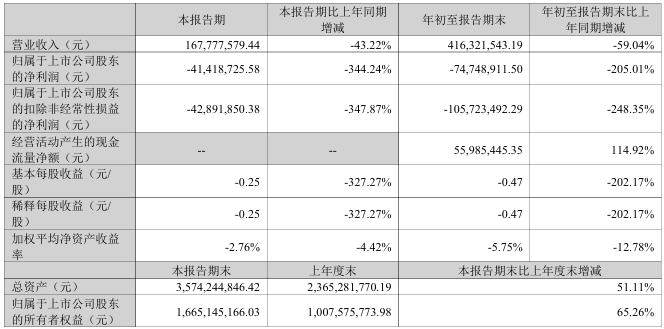
Core Viewpoint - The recent bull market in China's capital market is primarily driven by the technology sector, with the optical module CPO being a standout area, particularly highlighted by the performance of the "three giants" in the A-share market [1] Company Performance - Robotech (300757.SZ) has experienced significant stock price fluctuations this year, with its financial performance failing to meet growth expectations, leading to a stagnation in stock price despite a previous surge [1] - The company's revenue for 2022, 2023, and 2024 was reported at 901 million yuan, 1.57 billion yuan, and 1.104 billion yuan respectively, while net profits were 25.6 million yuan, 79.5 million yuan, and 63.2 million yuan [1] - For the first three quarters of 2024, Robotech reported revenue of 416 million yuan and a net loss of 74.7 million yuan, indicating a negative growth trend in core financial metrics [2] Strategic Developments - The acquisition of ficonTEC, a leader in high-precision coupling equipment, is a milestone for Robotech, providing proprietary technology for assembling and testing silicon photonic devices [3] - Following the acquisition, ficonTEC is expected to contribute significantly to Robotech's revenue, with projections indicating a net profit margin increase from 13.1% in 2025 to 22.6% by 2028 [3] Revenue Structure - The majority of Robotech's revenue has historically come from photovoltaic manufacturing solutions, accounting for 92.8% in 2022, but this share is declining as the company begins to see revenue from its silicon photonic assembly and testing equipment business, which reached 18.7% in the first half of 2024 [4][5] Market Position - Robotech holds a 25.5% market share in the silicon photonic smart manufacturing equipment market, ranking first globally, and is the only supplier capable of providing end-to-end solutions in this space [7][9] - The company has established itself as a key player in the high-end coupling equipment market, with ficonTEC being the sole supplier for certain products, including those for Broadcom and Nvidia [9][10] Future Outlook - The company is actively seeking to cultivate new growth points to offset declines in its main business, including expanding into international markets like India and enhancing its semiconductor packaging capabilities [6][10] - The success of Robotech's future performance is contingent on the stabilization of its photovoltaic equipment business and the realization of growth in its silicon photonic and CPO sectors, with the upcoming Hong Kong listing expected to enhance its investment appeal [10]

新股前瞻|罗博特科培育第二增长极对冲主业下滑,CPO概念傍身能让港股市场心动?
Zhi Tong Cai Jing· 2025-10-31 05:03
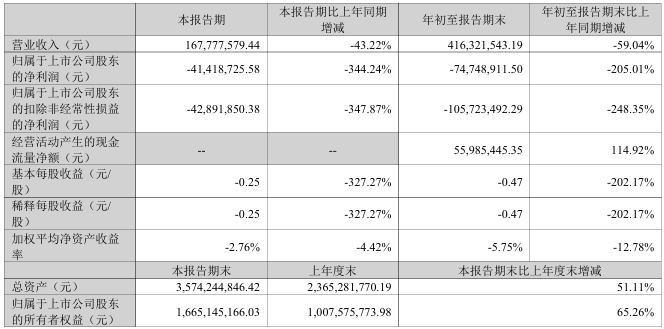
Core Viewpoint - The Chinese capital market has experienced significant changes since September 24, 2024, with technology, particularly optical modules and CPO, being a key focus. Robotech (300757.SZ), involved in silicon photonics and CPO, has shown volatile stock performance despite the overall bullish trend in the market [1]. Financial Performance - Robotech's revenue for 2022, 2023, and 2024 was 901 million yuan, 1.57 billion yuan, and 1.104 billion yuan, respectively, with net profits of 25.6 million yuan, 79.5 million yuan, and 63.2 million yuan. The latest report indicates a revenue of 416 million yuan for the first three quarters of 2024, with a net loss of 74.7 million yuan, reflecting negative growth in core financial metrics [1][2]. - The company's revenue decreased by 43.22% year-on-year for the current reporting period and by 59.04% year-to-date. The net profit attributable to shareholders showed a decline of 344.24% for the current period and 205.01% year-to-date [2]. Business Overview - Robotech specializes in high-precision smart manufacturing equipment and systems, focusing on automation solutions for optical interconnects, optical sensing, and photovoltaic cells. The acquisition of ficonTEC has been pivotal, providing proprietary technology for assembling and testing silicon photonic devices [3][4]. - The company's revenue structure shows that photovoltaic manufacturing solutions contributed 92.8% to 72.6% of total revenue from 2022 to the first half of 2025, while the silicon photonic assembly and testing equipment business began contributing revenue only in 2024, reaching an 18.7% share by mid-2025 [4][5]. Market Position and Growth Potential - Robotech holds a 25.5% market share in the silicon photonic smart manufacturing equipment market, ranking first globally. It is the only supplier capable of providing end-to-end solutions and ultra-high precision assembly and testing equipment for silicon photonics [7][9]. - The company is actively expanding its international presence, particularly in the growing Indian market, and plans to introduce efficient battery-related equipment and solutions tailored to overseas market demands [6][10]. Future Outlook - The demand for automated packaging and coupling equipment is expected to rise alongside the rapid development of silicon photonics and CPO technologies, which will benefit Robotech's related business segments. The company has an order backlog of 662 million yuan in its optoelectronic and semiconductor business [10]. - The stabilization and recovery of the photovoltaic equipment business will be crucial for Robotech's performance in the short term, while long-term growth will depend on the successful execution of its strategies in the silicon photonics and CPO sectors. The upcoming Hong Kong listing is anticipated to enhance the company's ability to leverage its production capabilities and support global customers [10].
罗博特科培育第二增长极对冲主业下滑,CPO概念傍身能让港股市场心动?
Zhi Tong Cai Jing· 2025-10-31 04:59
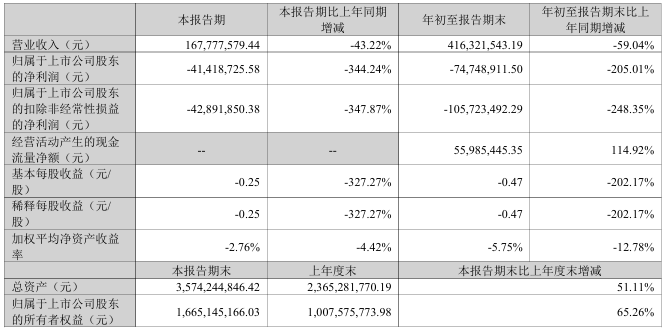
Core Viewpoint - The Chinese capital market has experienced significant changes since September 24, 2024, with technology, particularly optical modules and CPO, being a key focus. Robotech (300757.SZ), involved in silicon photonics and CPO, has shown volatile stock performance despite the overall bullish trend in the market [1]. Financial Performance - Robotech's revenue for 2022, 2023, and 2024 was 900.1 million yuan, 1.57 billion yuan, and 1.104 billion yuan, respectively, with net profits of 25.6 million yuan, 79.5 million yuan, and 63.2 million yuan [1]. - For the first three quarters of 2024, Robotech reported revenue of 416.3 million yuan and a net loss of 74.7 million yuan, indicating negative growth in core financial metrics [2]. - The company's operating cash flow was 55.9 million yuan, with a basic and diluted earnings per share of -0.25 yuan [2]. Business Overview - Robotech specializes in high-precision smart manufacturing equipment and systems, focusing on solutions for silicon photonics and photovoltaic cell manufacturing [3]. - The acquisition of ficonTEC, a leader in high-precision coupling equipment, has been a significant milestone, enhancing Robotech's technological capabilities and market position [3][6]. Revenue Structure - The majority of Robotech's revenue has historically come from photovoltaic manufacturing solutions, accounting for 92.8% in 2022 and 72.6% in the first half of 2024. However, the contribution from silicon photonics assembly and testing equipment is beginning to grow, reaching 18.7% in the first half of 2024 [6][7]. Market Position - Robotech holds a 25.5% market share in the silicon photonics smart manufacturing equipment market, ranking first globally. It is the only supplier capable of providing end-to-end solutions in this niche [9][10]. - The company has established itself as a key player in the high-precision silicon photonics assembly and testing equipment sector, with a unique capability to achieve ultra-high precision levels [9]. Future Growth Potential - The demand for automated packaging and coupling equipment is expected to rise alongside the rapid development of silicon photonics and CPO technologies, positioning Robotech to benefit significantly [11]. - The company is actively expanding its international presence, particularly in the growing Indian market, and plans to introduce efficient battery-related solutions [8][11]. - The successful completion of its Hong Kong listing could enhance Robotech's investment value and operational capabilities, allowing better utilization of its production capacities in Germany and Estonia [11].
再创历史!英伟达市值一夜突破5万亿美元!
具身智能之心· 2025-10-31 00:04
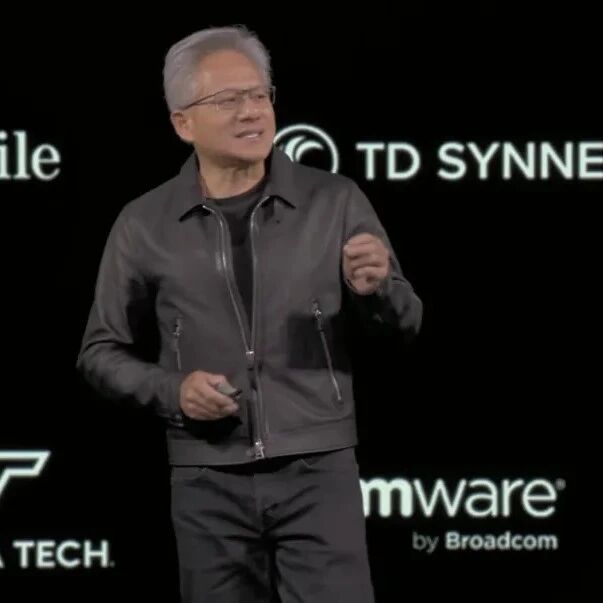
Core Viewpoint - Nvidia has become the first company in history to surpass a market valuation of $5 trillion, marking a significant milestone in the tech industry [2][4][11]. Group 1: Market Performance - On October 29, Nvidia's stock price rose by 5.44%, reaching an intraday high of $212.19 per share, and closing at $207.04 per share, resulting in a market capitalization of $5.03 trillion [3][11]. - Since the beginning of 2025, Nvidia's stock has surged by 56%, showcasing its rapid growth compared to other major tech companies [6][40]. - Nvidia's market value now exceeds the combined market capitalizations of major competitors such as AMD, Intel, and Qualcomm, as well as entire sectors within the S&P 500 [6][7]. Group 2: Growth Trajectory - Nvidia's market value has skyrocketed from $1 trillion to $5 trillion in just two and a half years, a feat unmatched by other tech giants [10][24]. - The company achieved its first $1 trillion valuation in May 2023, followed by reaching $3 trillion in June 2024, and then $4 trillion in just over a year [23][24]. - In contrast, Microsoft took nearly six years to grow from $1 trillion to $4 trillion, while Apple took over seven years for the same growth [17][20]. Group 3: Strategic Developments - The recent surge in Nvidia's market value is attributed to announcements made during the GTC developer conference, where CEO Jensen Huang unveiled several technological advancements and partnerships [26][40]. - Key highlights from the conference included plans to collaborate with the U.S. Department of Energy to build new supercomputers and the introduction of the Blackwell chip series, which is expected to significantly increase production [27][28]. - Nvidia's new open system architecture, Nvidia NVQLink, aims to accelerate the development of quantum supercomputers, further positioning the company at the forefront of technological innovation [29][32]. Group 4: Future Outlook - Nvidia anticipates that the cumulative revenue from its upcoming products, including the Blackwell and Rubin chip platforms, could reach $500 billion by the end of next year [32][34]. - The company is also set to invest up to $100 billion in building AI data centers in collaboration with OpenAI, indicating a strong commitment to expanding its AI infrastructure [40][41]. - Nvidia's growth is closely tied to the increasing demand for computational power driven by AI advancements, with its GPUs being integral to the infrastructure of leading AI companies [40].
中概股下挫,小马智行跌近7%,阿里跌超3%,加密货币超24万人爆仓
21世纪经济报道· 2025-10-30 23:09
Core Viewpoint - The article discusses a sudden shift in the US stock market, particularly highlighting the significant decline in major technology stocks, which had previously driven the indices to new highs. Concerns over poor earnings and the potential AI bubble are central to this downturn [1][10]. Group 1: Market Performance - On a recent Thursday, all three major US stock indices fell, with the Dow Jones down 0.23%, the S&P 500 down 0.99%, and the Nasdaq Composite down 1.57%, ending a streak of record highs [1]. - Major tech stocks experienced significant declines, with Meta dropping 11.33%, Microsoft down 2.9%, and the Philadelphia Semiconductor Index falling 1.53%, where 22 out of 30 component stocks declined [2]. Group 2: Earnings and AI Concerns - The poor earnings guidance for Q4 from eBay led to a nearly 16% drop in its stock price, marking the largest decline since 2008 [2]. - Analysts express concerns about the sustainability of the AI-driven market rally, suggesting that the enthusiasm for AI may have led to inflated valuations and potential market bubbles [10]. Group 3: Chinese Stocks and Cryptocurrency - The Nasdaq China Golden Dragon Index fell by 1.88%, with many popular Chinese stocks also declining, including Xiaoma Zhixing down 6.79% and Baidu down 4.54% [4]. - The cryptocurrency market faced a significant downturn, with major digital currencies dropping over 6%, leading to a total liquidation of nearly $1.1 billion across the market [6][8]. Group 4: Commodity Market Response - As market risk aversion increased, gold prices surged, closing up 2.44% and surpassing $4000. The World Bank projects a 42% increase in gold prices by 2025 [8].

中概股下挫,小马智行跌近7%,阿里跌超3%,加密货币超24万人爆仓
2 1 Shi Ji Jing Ji Bao Dao· 2025-10-30 23:08
Group 1: Market Overview - The US stock market experienced a sudden shift, with all three major indices declining: Dow Jones down 0.23%, S&P 500 down 0.99%, and Nasdaq down 1.57%, ending a streak of record highs [1] - Concerns over poor earnings and fears of an AI bubble led to significant declines in several large tech stocks, including Meta down 11.33% and Microsoft down 2.9% [2] Group 2: Individual Stock Performance - eBay's stock plummeted nearly 16%, marking its largest drop since 2008, due to Q4 earnings guidance falling short of expectations [2] - The Philadelphia Semiconductor Index fell 1.53%, with 22 out of 30 component stocks declining, including AMD down 3.59% and Broadcom down 2.46% [2] Group 3: Cryptocurrency and Gold Market - Cryptocurrency stocks faced a collective downturn, with notable declines such as Canaan down over 7% and Coinbase down over 3% [6] - The cryptocurrency market saw significant sell-offs, with over 24,400 individuals liquidated, totaling nearly $1.1 billion [6] - Gold prices surged, closing up 2.44% and surpassing $4,000, as market risk aversion increased [6] Group 4: AI Bubble Concerns - The enthusiasm for AI has driven much of the stock market's gains since October 2022, but there are concerns about the sustainability of this trend [9] - Analysts warn of potential bubble risks associated with AI, suggesting that investors may be prematurely pricing in its positive impacts [10] - Historical valuation metrics indicate that the S&P 500 may be overvalued, raising concerns about a potential market downturn despite apparent strong growth [10]

英伟达市值飙上5万亿后,AI牛市能否延续至2026?
Jin Shi Shu Ju· 2025-10-30 13:16
Core Viewpoint - Nvidia has become the first company to surpass a market capitalization of $5 trillion, highlighting the unprecedented influence of AI in capital markets and the global economy [1] Group 1: Market Performance - Nvidia's stock price surge reflects the strong demand for AI, with the company reaching a market cap of $2 trillion in March 2024, $3 trillion in just 66 trading days, and $4 trillion by July 2025, surpassing both Apple and Microsoft [2] - The company's market cap now exceeds the combined market values of AMD, ARM, ASML, Broadcom, Intel, Lam Research, Micron Technology, Qualcomm, and TSMC, as well as the total market cap of the utilities, industrials, and consumer staples sectors in the S&P 500 [1] Group 2: AI Industry Dynamics - Nvidia is positioned as a key player in the AI sector, with significant partnerships and investments in companies like OpenAI, Oracle, Nokia, and Eli Lilly, which have contributed to the positive market sentiment [1] - The company has shipped 6 million units of its Blackwell chip and received an additional 14 million orders, indicating strong demand for its products [1] Group 3: Valuation Concerns - Analysts express concerns about Nvidia's high valuation, with a price-to-earnings ratio of 33 times expected earnings for the next year, compared to the S&P 500 average of 24 times [3] - Despite the high valuation, Nvidia's stock is still considered attractive by some analysts, with expectations of total sales reaching $500 billion over the next five quarters [5] Group 4: Investment Risks - There are concerns among investors and analysts about the potential for an "internet bubble" scenario, given the significant investments in data centers and chip production, alongside high debt levels and relatively limited current revenue [2] - Nvidia's access to the Chinese market remains an uncertain factor that could impact future revenue [2]
AI狂浪席卷之下 长期低调的半导体设备终于藏不住了! 这家EUV链条的“核心之眼”单日暴涨超20%
智通财经网· 2025-10-30 08:01
Group 1: AI Chip Industry Overview - The global AI chip industry is experiencing a bullish market atmosphere, driven by significant investments from major tech companies like Microsoft, Google, and Meta in AI computing infrastructure [1][7] - NVIDIA has reached a market capitalization of $5 trillion, becoming the first company to achieve this milestone [1] - Semiconductor equipment suppliers have seen substantial stock price increases, reflecting the growing demand for AI chip manufacturing capabilities [1][4] Group 2: Lasertec's Market Performance - Lasertec's stock surged by 21%, reaching a market value of $17.5 billion, marking its largest increase in over a year [2] - Analysts expect Lasertec's revenue to grow by 27%, positioning it as a key beneficiary in the AI chip wave [2][3] - The company specializes in EUV mask actinic inspection, which is critical for the AI chip supply chain [2][3] Group 3: Semiconductor Equipment Demand - The demand for semiconductor equipment is rising due to the expansion of AI computing needs and significant investments in AI infrastructure [7][8] - Companies like ASML, Applied Materials, and KLA are expected to benefit from the increasing complexity and performance requirements of advanced CPU/GPU packaging [9] - The AI infrastructure investment wave is projected to reach $2 trillion to $3 trillion, indicating a robust growth trajectory for the semiconductor equipment sector [7][8]


