小红书

Search documents
全球Z世代“轻社交”趋势:动因与启示
3 6 Ke· 2025-11-25 10:23
Core Insights - The global Z generation is rapidly shifting towards flexible and low-burden "light socializing" as a behavioral adjustment in response to increasing global uncertainty and the evolution of the digital ecosystem [1] Group 1: Changes in Social Interaction - The social focus of Z generation is moving from building stable friendship networks to modular social interactions that match specific scenarios and immediate needs [2] - Over 60% of young people develop "meal partners" in work environments, and 58% seek temporary partners through offline activities, indicating a trend towards functional and low-emotional-burden social models [2] - The proportion of users using social media to maintain friendships or meet new people has decreased by over 25% since 2014, supporting the trend of weakening social motivations among Z generation [2] Group 2: Content Consumption Trends - The popularity of ephemeral content, such as Instagram Stories, has surged, with daily active users increasing from 150 million in 2017 to 500 million in 2025, and 86.6% of users maintaining daily posting habits [3] - The trend of setting visibility for posts to only three days reflects a shift towards more immediate and less pressured self-expression among young users [3] Group 3: Interaction Dynamics - Social gaming is reshaping social connections, with platforms like BeReal and Zenly incorporating game-like elements into social interactions [4] - Games like Roblox have transformed into lightweight social spaces, where "playing together" replaces traditional methods of forming social relationships, aligning with Z generation's preference for low-burden socializing [4] Group 4: Driving Forces Behind "Light Socializing" - The high global uncertainty index and persistent economic pressures have led Z generation to seek low-energy social interactions as a coping strategy [5] - The long-term exposure to negative information has heightened uncertainty among Z generation, prompting a shift away from high-investment social connections [6][7] - Algorithm-driven content ecosystems have influenced social behavior, with over 10% growth in passive browsing since 2014, leading to a preference for functional and lightweight relationships [8] Group 5: Implications and Recommendations - Technology companies should build diverse ecosystems that cater to global needs while adapting to local cultural differences [9] - Product design should focus on creating low-burden, high-authenticity interactive scenarios to align with the evolving social values of Z generation [9] - Companies should integrate the concept of "sustainable socializing" into their technology frameworks, optimizing algorithms to balance user engagement and diverse content delivery [10]
短视频平台大变天!流量规则洗牌!
Sou Hu Cai Jing· 2025-11-24 08:13
Core Insights - A significant shift in traffic rules is occurring due to the "Clear Action" initiated by the Central Cyberspace Administration of China, leading to collective actions by platforms like Douyin, Xiaohongshu, Weibo, Kuaishou, WeChat Video Account, and Bilibili to enhance algorithm transparency and user empowerment [1][3] Group 1: Algorithm Transparency and User Empowerment - Platforms are enhancing algorithm transparency by publicly disclosing operational rules and promoting user awareness of recommendation logic and intervention mechanisms [3] - Douyin has launched a Safety and Trust Center and organized open days to explain its recommendation logic and governance outcomes [3] - Weibo has improved the transparency of its trending algorithms by publicizing ranking rules and introducing trending heat tags to indicate underlying factors [3] Group 2: Content Recommendation Optimization - WeChat Video Account has introduced user-friendly materials to explain its algorithm recommendations and launched features to help users avoid "information cocoons" [3] - Douyin has upgraded its management assistant and introduced content preference evaluation features to visualize users' recent browsing activities [3] - Xiaohongshu has implemented content preference evaluation and adjustment features to facilitate user access to diverse recommended content [3] Group 3: Positive Content Promotion and Risk Mitigation - Kuaishou is leveraging positive algorithms to enhance the discovery of uplifting and trustworthy content, ensuring that such content is prominently featured in recommendations [3] - WeChat Video Account has developed a dual mechanism for friend recommendations and algorithm recommendations to continuously improve its identification and suppression models for inappropriate content [3] - Douyin has introduced a verification mechanism to prevent malicious behaviors such as staged content and misleading edits [3] Group 4: User Control and Feedback Mechanisms - Platforms are continuously optimizing features for interest preference management and content feedback to allow users to adjust algorithmic recommendations [3] - Kuaishou provides users with detailed interest preference management tools, enabling them to adjust the intensity of content recommendations based on personal preferences [3] - Weibo has introduced various negative feedback options for users to express disinterest, ensuring a more precise response to user needs [3] Group 5: Future Trends in Internet Traffic - By 2025, the internet platform traffic competition is expected to evolve into a more intricate phase, characterized by accelerated rule iterations, diversified user mindsets, and technological disruptions [3]


2025年营销“5大趋势”| 麦当劳、小红书、追觅、完美日记近40位企业嘉宾齐聚灵眸大赏
Sou Hu Cai Jing· 2025-11-24 07:42
Core Insights - The Morketing Summit 2025 will focus on the new ecosystem of marketing in China, discussing trends and transformations from 2025 to 2026 [2][3] - Key topics include brand building, channel innovation, AI-driven marketing growth, and podcast marketing, with participation from nearly 40 companies [2] Group 1: Marketing Trends - The discussions at the summit will shift from traditional advertising techniques to the broader changes in the marketing ecosystem, including consumer behavior and technological advancements [2] - Five major trends have been identified that will influence brand strategies and marketing decisions in 2025-2026 [2] Group 2: Emotional Economy - The concept of the emotional economy emphasizes that consumers are increasingly motivated by emotional connections rather than just product functionality [42][43] - Brands like McDonald's leverage emotional assets that resonate across generations, highlighting the importance of creating a sense of belonging and happiness for consumers [43] Group 3: Human-Centric Marketing - Human-centric marketing focuses on understanding users as individuals with emotions and motivations, rather than just data points [44] - This approach is driven by the decline in effectiveness of traditional marketing methods, necessitating brands to create content that resonates personally with consumers [44] Group 4: Content as Core Asset - In the fragmented media landscape, engaging content is essential for capturing consumer attention and driving brand loyalty [45] - Brands should develop a content strategy that includes basic product information, professional educational content, and value-driven narratives to connect with consumers [45][46] Group 5: All-Scene Marketing - The concept of "all-scene" marketing recognizes that consumer interactions occur across multiple touchpoints, necessitating a cohesive brand presence in various contexts [47][48] - Brands must ensure consistent experiences across different platforms and touchpoints to enhance consumer engagement and loyalty [49] Group 6: AI in Marketing - AI is a significant focus, with its potential to enhance marketing decision-making, content generation, and consumer engagement [50] - The summit will explore how AI can transform marketing strategies, improve efficiency, and create personalized consumer experiences [50][51]





“清朗浦江·e企共治” 奇富科技(QFIN.US)助力共建清朗网上金融信息生态
智通财经网· 2025-11-24 07:27
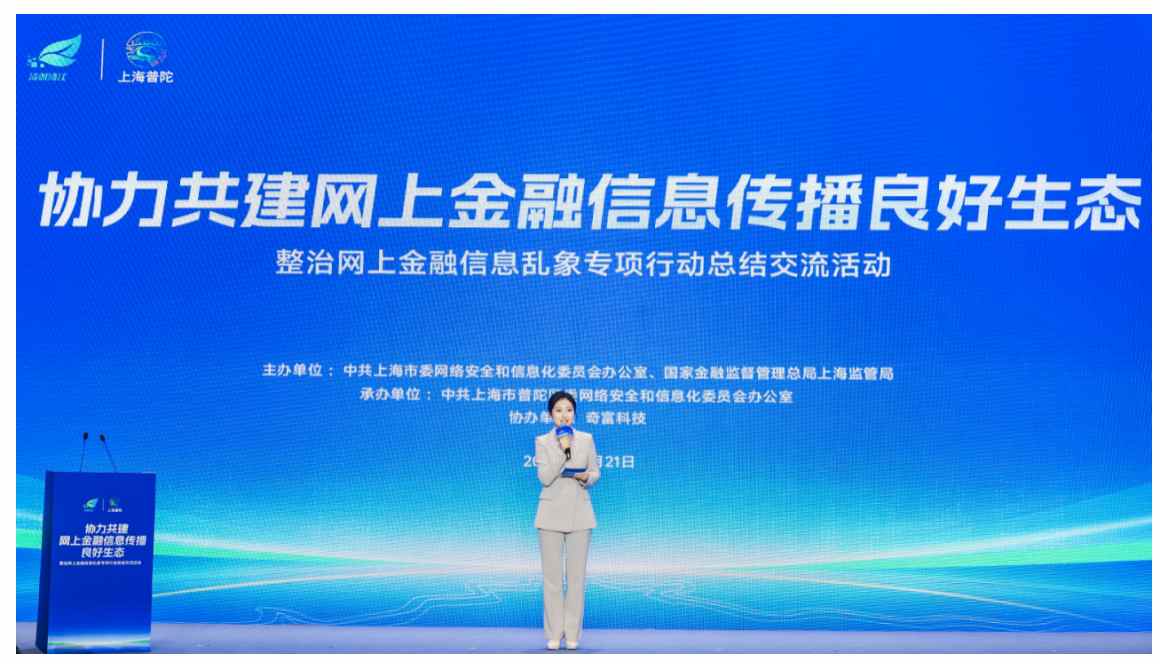
Group 1 - The event "Clear and Bright Pujiang: Joint Governance of Online Financial Information" was held in Shanghai, focusing on creating a good ecosystem for online financial information dissemination [1] - Key officials from regulatory bodies and financial institutions participated, discussing governance experiences and collaborative strategies [1] - The event resulted in the release of the "Shanghai Guide for Handling Bad Financial Information," which provides standardized procedures for identifying and managing harmful financial information [3] Group 2 - An initiative titled "Proposal for Regulating Online Financial Information Dissemination Order" was launched by internet companies including QFIN, Alipay, Xiaohongshu, and Bilibili, proposing seven specific measures to enhance industry responsibility [3] - QFIN shared its experience in combating financial black and gray markets, emphasizing the importance of consumer protection and financial security [5] - The company has developed a proprietary "Anti-Fraud Expert Strategy System" that utilizes advanced technologies to identify and manage black market activities, processing 89,000 incidents and identifying 44,000 related clients [7] Group 3 - QFIN has established a dedicated department for black and gray market governance, collaborating with law enforcement to initiate 23 cases and apprehend over 260 criminals [7] - The company has created a communication mechanism with media platforms to address and manage non-compliant content, successfully handling nearly 2,300 cases [7] - The event reinforced a collaborative governance framework involving regulatory guidance, corporate responsibility, and industry cooperation, aiming to enhance financial security in Shanghai [7]
“清朗浦江·e企共治” 奇富科技助力共建清朗网上金融信息生态
Zhong Guo Jing Ji Wang· 2025-11-24 06:48
Group 1 - The event "Clear and Bright Pujiang: Joint Governance of Online Financial Information" was held in Shanghai, focusing on creating a good ecosystem for online financial information dissemination [1] - A guideline titled "Shanghai Guide for Handling Bad Financial Information Online" was released, outlining standards for identifying and processing bad financial information [1] - The event was attended by key officials from various regulatory bodies and financial institutions, emphasizing the importance of collaboration in governance [1] Group 2 - An initiative titled "Proposal for Regulating Online Financial Information Dissemination Order" was launched by internet companies including Qifu Technology, Alipay, Xiaohongshu, and Bilibili, proposing seven specific measures to enhance industry self-discipline [2] - The initiative focuses on building a joint governance system, fulfilling platform responsibilities, and strengthening educational guidance [2] Group 3 - Qifu Technology shared its experience in combating financial black and gray industries, emphasizing its commitment to financial security and consumer protection through technological innovation and collaborative efforts [4] - The company developed a "Fraud Prevention Expert Strategy System" that integrates four core modules for comprehensive governance, processing 89,000 incidents related to black and gray industries [6] - Qifu Technology established a dedicated department for black and gray industry governance, collaborating with law enforcement to initiate 23 cases and arrest over 260 criminals [6] Group 4 - The event aimed to enhance the joint governance mechanism for online financial information, promoting a model of "regulatory guidance, corporate responsibility, and industry co-governance" [6] - Qifu Technology plans to continue leveraging technology and deepening collaboration with various stakeholders to strengthen financial security and protect consumer rights [6]

“黑五”好物首进线下快闪店,进口电商为何不只拼大促?
Sou Hu Cai Jing· 2025-11-24 03:41
Core Insights - The cross-border e-commerce industry is experiencing a slowdown in growth, particularly in the highly competitive import e-commerce sector, shifting from price wars to value wars [2][8] - Amazon's introduction of a physical "Black Friday" pop-up store in Shanghai represents a strategic move to adapt to industry changes and deepen localization efforts, targeting the young consumer market [4][11] Group 1: Amazon's Pop-Up Store Initiative - The "Black Friday" pop-up store showcases global bestsellers and niche products across four themed spaces, enhancing the shopping experience with interactive elements and convenient purchasing options [5][7] - The event is linked to the main "Black Friday" activities, offering over 3 million overseas products with significant discounts and expedited shipping options [5][10] Group 2: Market Trends and Consumer Behavior - Data from customs indicates that China's cross-border e-commerce imports reached approximately 425.54 billion yuan, growing by 5.9%, which is slightly lower than export growth [8] - Young consumers are shifting their preferences from seeking low-priced big brands to embracing unique and personalized products, with a growing demand for items that emphasize design and emotional value [10] Group 3: Competitive Landscape and Differentiation - The competitive landscape in China's import e-commerce market is characterized by a mix of comprehensive platforms, social e-commerce, and niche players, necessitating differentiation strategies [11] - Amazon's focus on enhancing service quality and consumer experience through offline interactions aims to build trust and address the challenges of virtual shopping [10][12] Group 4: Localization and Future Strategies - Amazon's localization efforts include adapting to Chinese consumer habits through pop-up stores and social media integration, aiming to create a local independent traffic pool [11][12] - The company plans to replicate the pop-up store model in more cities and shopping centers, integrating cross-border shopping into everyday consumer experiences [12]


两部门发文,DeepSeek、Kimi、豆包等或将入围
21世纪经济报道· 2025-11-23 14:31
Core Viewpoint - The article discusses the newly released draft regulations for personal information protection by large internet platforms in China, emphasizing the responsibilities and obligations these platforms must adhere to in safeguarding user data [1][3]. Group 1: Regulatory Framework - The draft regulations define large internet platforms based on user scale, specifically those with over 50 million registered users or 10 million monthly active users [5]. - Major companies like Tencent, Alibaba, ByteDance, and emerging AI firms such as DeepSeek and MiniMax are included under this definition, indicating a broader scope of regulation [3][5]. - The principle of "with great power comes great responsibility" is highlighted, indicating that larger platforms will face stricter compliance requirements [1][3]. Group 2: Compliance Requirements - Large platforms are required to establish dedicated personal information protection teams responsible for creating and implementing internal management systems and emergency response plans [10]. - The regulations mandate that personal information collected within China must be stored in domestic data centers, and platforms must conduct compliance audits and risk assessments [11]. - There is an emphasis on the need for platforms to publish social responsibility reports regarding personal information protection, which has previously been inadequately addressed by many companies [10]. Group 3: Independent Oversight - The draft regulations propose the establishment of independent supervisory committees composed mainly of external members to oversee personal information protection practices [13][15]. - These committees are tasked with monitoring compliance, evaluating the protection of sensitive personal information, and ensuring regular communication with users [15]. - Concerns are raised about the feasibility of these committees, as many platforms have yet to take significant steps towards establishing them [14].





全域洞察报告-一财商学院
Sou Hu Cai Jing· 2025-11-23 08:18
Core Insights - The report from Yicai Business School indicates that China's e-commerce has entered an era of "omni-channel operation," shifting from a concentrated platform structure to a more diversified one, requiring merchants to overcome barriers such as data fragmentation and fragmented consumer decision-making [1][12]. Group 1: Omni-Channel Operation - The core logic of omni-channel operation is to break down barriers between scenarios and channels, encompassing four dimensions: marketing and transaction integration, online and offline integration, public and private domain integration, and content and shelf integration [1][13]. - Merchants need to focus on omni-channel customer acquisition and refined operations, while platforms take the lead in logistics and fulfillment infrastructure [1][2]. Group 2: Four Key Elements - The four key elements for building the foundation of omni-channel operation are price power, content power, product nicknames, and private domain management [2][3]. - Platforms like JD, Pinduoduo, and Taobao are competing for consumer price sensitivity through strategies like "hundred billion subsidies," while merchants can participate by improving supply chain efficiency and offering discounts [2][3]. Group 3: Direct-to-Consumer (DTC) Model - The "China Enterprise Omni-Channel DTC Insight White Paper" reveals that 67% of surveyed companies have been engaged in omni-channel DTC for over three years, focusing on consumer-centric strategies and data integration [2][3]. - A case study of a typical company, Liangpinpuzi, demonstrates effective omni-channel collaboration through data integration and marketing decentralization [2]. Group 4: Platform Strategies - Different platforms have distinct operational strategies: Xiaohongshu focuses on internal marketing loops, Douyin connects content and shelves through a "star-push-search-direct" model, and Taobao maintains its traffic operation base through a five-star pricing strategy [3][12]. - The report discusses the need for merchants to adapt their strategies based on platform characteristics and product attributes [3]. Group 5: Future Trends - The future of omni-channel operation is expected to evolve towards refinement and intelligence, requiring merchants to balance short-term sales with long-term brand value [3][12]. - The report emphasizes the importance of data integration tools to enhance organizational efficiency and break down data silos [2][3].

两部门拟明确“守门人”认定标准,AI新贵们也入围了?
2 1 Shi Ji Jing Ji Bao Dao· 2025-11-23 07:57
Core Viewpoint - The draft regulations on personal information protection for large internet platforms have been released, establishing criteria for identifying such platforms and outlining their obligations for personal information protection [1][2]. Group 1: Identification of Large Platforms - The draft specifies that platforms with over 50 million registered users or 10 million monthly active users will be classified as large internet platforms, which includes traditional internet giants and emerging AI companies [3][4]. - Companies like DeepSeek, MiniMax, and Kimi, as well as smart device manufacturers such as OPPO, vivo, and Honor, are also likely to fall under this classification due to their user base [1][3]. Group 2: Responsibilities and Compliance - Large platforms are required to establish dedicated personal information protection teams, appoint responsible personnel, and publish annual social responsibility reports regarding personal information protection [6][7]. - The draft emphasizes the need for platforms to store personal information generated within China in domestic data centers and to conduct compliance audits and risk assessments [7]. Group 3: Independent Supervision - The draft regulations propose the establishment of independent supervisory committees composed mainly of external members to oversee personal information protection compliance [10][11]. - These committees will be responsible for monitoring compliance with personal information protection regulations and will need to maintain regular communication with users [11].

大众点评已在海外开通超1000城
21世纪经济报道· 2025-11-23 02:30
Core Insights - The article discusses the international expansion of Dazhong Dianping (大众点评), focusing on its efforts to penetrate overseas markets, particularly in Southeast Asia and the Middle East, with a goal to become a global platform for local lifestyle needs [1][2][12]. Group 1: Expansion Strategy - Dazhong Dianping began its international efforts in Southeast Asia in 2017 and is accelerating its expansion in 2025, focusing on key cities [2][5]. - The company aims to establish a strong foundation by building its capabilities and gathering local information, rather than pursuing immediate commercialization [2][6]. - As of now, Dazhong Dianping has launched services in over 1,000 cities across more than 200 countries, targeting areas with high concentrations of Chinese tourists and overseas Chinese [6][10]. Group 2: Local Market Penetration - The company is employing a localized approach by forming teams that include both Chinese and local personnel to better penetrate local markets [8][9]. - Dazhong Dianping has partnered with local agents in over ten cities to enhance merchant information and operational efficiency [8][9]. - The company is focusing on building relationships with local restaurants, adapting to their marketing preferences, which often lean towards traditional media rather than digital platforms [9][10]. Group 3: Consumer Targeting - Currently, Dazhong Dianping primarily serves Chinese tourists and overseas Chinese, but it has ambitions to evolve into a global platform catering to a wider audience [12][13]. - The long-term vision is to transform Dazhong Dianping into a "global yellow pages" service, which would require overcoming significant challenges in user habit changes and local market integration [12][13]. - Competitors like Xiaohongshu (小红书) are also attempting to capture the same market, indicating a competitive landscape for Dazhong Dianping's expansion efforts [12][13].