旭升集团

Search documents
旭升集团(603305.SH):已累计回购0.8648%公司股份
Ge Long Hui· 2025-08-01 09:06
格隆汇8月1日丨旭升集团(603305.SH)公布,截至2025年7月31日,公司通过上海证券交易所交易系统以集中竞价交易方式已累计回购公司股份824.39万股,占公司目前总股本的0.8648%, ...

旭升集团:目前公司在机器人业务上,目前与海内外客户在产品各阶段进展顺利
Mei Ri Jing Ji Xin Wen· 2025-07-30 11:07
每经AI快讯,有投资者在投资者互动平台提问:请问目前机器人订单是否充足?公司在机器人业务和 客户资源上是否又有新的进展? (文章来源:每日经济新闻) 旭升集团(603305.SH)7月30日在投资者互动平台表示,目前公司在机器人业务上,以海内外头部客 户全面开拓、全面卡位为主,产品主要以关节壳体及躯干结构件等为主,重点关注轻量化结构件在人形 机器人领域的重要作用。目前与海内外客户在产品各阶段进展顺利。 ...

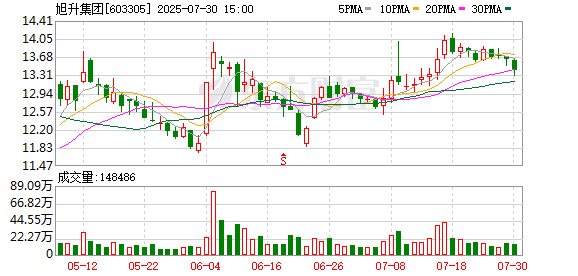
旭升集团(603305.SH):产品主要以关节壳体及躯干结构件等为主
Ge Long Hui· 2025-07-30 09:17
Group 1 - The company is focusing on expanding its robotics business by targeting leading domestic and international clients [1] - The main products include joint shells and trunk structural components, with an emphasis on the importance of lightweight structural components in humanoid robots [1] - Progress with clients in various product stages is reported to be smooth [1]
特斯拉20250724
2025-07-25 00:52
Summary of Tesla's Conference Call Company Overview - **Company**: Tesla - **Date of Call**: July 24, 2025 Key Points Industry and Market Developments - **Robotaxi and Robot Projects**: Significant progress in Robotaxi and robot projects, with plans to start Robotaxi service in June 2025 and expand it over tenfold, entering the European market within months and achieving mass production by 2026 [2][4] - **New Model Launches**: Two new models are set to launch in the second half of 2025: a reduced version of Model Y for the U.S. market in August and a long version Model YL for the Chinese market between September and October [2][6] - **Legislative Impact**: The expiration of the $7,500 federal tax credit for new electric vehicles and $4,000 for used vehicles under the Inflation Reduction Act on September 30, 2025, is prompting Tesla to accelerate new vehicle launches [2][11] Financial Performance - **Q2 2025 Financials**: Tesla reported $22.4 billion in revenue for Q2 2025, a year-over-year decline of 11%, with profits at $1.17 billion, down 16%. Vehicle sales decreased by 13% to 380,000 units, indicating a relatively weak position in the global market [3] Capital Expenditure and Revenue Guidance - **Capital Expenditure Adjustment**: Tesla revised its 2025 capital expenditure forecast to over $9 billion from an initial estimate of $10 billion, attributed to slowing revenue growth [2][12] New Business Initiatives - **Commercialization of Robotics**: Tesla is exploring commercialization paths for its robots, showcasing their interaction capabilities and service functions, such as dancing and bartending [2][12] - **Dual Strategy for Robotics**: The robot project is adopting a dual strategy targeting both businesses (ToB) and consumers (ToC), with applications in restaurant services [4][13] Supply Chain and Production Insights - **Supply Chain Opportunities**: The U.S. manufacturing policy and high tariffs are driving companies to establish production in North America, benefiting suppliers like Fuyao, Minth, and Bertel [19] - **European Market Growth**: European new energy vehicle sales grew by 24% from January to May 2025, with core countries exceeding 30% growth, providing competitive advantages to Chinese parts suppliers with production capabilities in Europe [20] Future Outlook - **Sales Expectations in China**: Despite concerns, Model Y weekly orders remain stable at around 10,000, with expectations for significant contributions from the Chinese market following the launch of Model YL [21][22] - **Positive Supply Chain Outlook for 2026**: The automotive supply chain is expected to have good opportunities in 2026, with companies like Topband, Newquay, and Aikodi likely to benefit from new vehicle launches and robot projects [23] Additional Insights - **Lightweight Materials in Robotics**: The use of lightweight materials is a key focus, with the second-generation robot achieving a 10% weight reduction and a 30% increase in mobility efficiency [14][15] - **Reducer Technology Development**: Advances in reducer technology are crucial for enhancing robot performance, with leading manufacturers making progress in combining planetary and harmonic reducers [16][17] This summary encapsulates the essential insights from Tesla's conference call, highlighting the company's strategic initiatives, financial performance, and market outlook.

【周观点】7月第2周乘用车环比-8.9%,继续看好汽车板块
东吴汽车黄细里团队· 2025-07-20 15:04
Core Viewpoint - The automotive sector is expected to continue its growth trajectory, driven by three main themes: dividends, smart technology, and robotics [4][5][11]. Weekly Review - In the second week of July, the number of compulsory insurance registrations for vehicles was 362,000, reflecting a week-over-week decrease of 8.9% and a month-over-month decrease of 19.6% [49]. - The performance of sub-sectors showed significant variation, with commercial trucks leading at +9.4%, followed by auto parts at +4.1%, and passenger vehicles at +1.8% [4][11]. Research Outcomes - The team released in-depth reports on the domestic market prospects for range-extended vehicles and the evolution of the automotive lighting industry, highlighting the decline of Japanese brands and the rise of domestic manufacturers [2]. Industry Changes 1. The Li Auto i8 has opened for pre-orders with an expected price range of 350,000 to 400,000 yuan, with a launch event scheduled for July 29 [3]. 2. Great Wall Motors reported a revenue of 92.367 billion yuan for H1 2025, a year-over-year increase of 1.03%, but a net profit decrease of 10.22% to 6.337 billion yuan [3]. 3. Jifeng Co. projected a net profit of 150 to 180 million yuan for H1 2025, marking a significant year-over-year increase of 182.25% to 238.70% [3]. 4. Wencan Co. forecasted a net profit of 1.2 to 1.5 million yuan for H1 2025, a decrease of 81.67% to 85.33% year-over-year, primarily due to geopolitical factors and rising energy prices in Europe [3]. Sector Configuration - The automotive sector is advised to focus on three main lines: dividends and good structure, AI smart technology, and AI robotics. The recommendation is to increase the allocation towards dividend-style investments in the second half of the year compared to the first half [5][11]. - Key stocks in the dividend and good structure line include Yutong Bus, China National Heavy Duty Truck, and Fuyao Glass [6][11]. - For the AI smart technology line, preferred stocks include Xpeng Motors and Li Auto in Hong Kong, and companies like Seres and BYD in A-shares [6][11]. - In the AI robotics line, recommended stocks include Top Group and Precision Forging Technology [7]. Market Performance - The automotive sector in A-shares ranked third this week, while the Hong Kong automotive sector ranked fourth [15][11]. - The overall market saw a rebound across various segments, particularly in commercial trucks and the Hong Kong automotive index [4][11].

人形机器人轻量化:商业化前夕的必修课,材料创新引领产业破局
机器人大讲堂· 2025-07-16 13:54
Core Insights - The article emphasizes the importance of lightweight design in humanoid robots, highlighting that it is a critical path for commercialization and performance enhancement [3][31] - Tesla's humanoid robot, Optimus, is set to utilize advanced AI models and undergo significant design improvements, including a focus on lightweight construction [1][2] Group 1: Lightweight Design Importance - Lightweight design is not merely about reducing weight but involves systematic optimization to enhance overall performance [3] - Key benefits of lightweight design include improved battery life, reduced heat generation, lower dependency on high-performance components, and increased operational flexibility [3][4] Group 2: Industry Trends - Major manufacturers like Tesla, UBTECH, and Yushutech are actively pursuing lightweight designs, with Tesla's Optimus reducing weight from 73 kg in 2022 to 63 kg in 2023, achieving a 30% increase in walking speed [2][4] - The trend towards lightweight design is becoming a core research direction for humanoid robot manufacturers, with various models demonstrating significant weight reductions and improved performance [4] Group 3: Lightweight Implementation Strategies - The two main approaches to achieving lightweight designs are structural lightweighting and material lightweighting [6] - Structural lightweighting focuses on optimizing parameters and integrating components to reduce weight without compromising strength [6] - Material lightweighting involves using low-density materials like magnesium alloys, PEEK, and nylon to replace traditional metals while maintaining performance [7][8] Group 4: Material Innovations - Magnesium alloys are favored for their low density and high strength, making them suitable for structural components in humanoid robots [10][11] - PEEK is recognized for its superior mechanical properties and is increasingly used in critical components, although its high cost and production complexity pose challenges [14][15] - Nylon offers a balance of flexibility and rigidity, making it a viable option for various robot parts, especially in consumer applications [19][20] Group 5: Market Opportunities and Challenges - The lightweight design of humanoid robots is expected to create significant market opportunities for related materials, with projected market sizes for modified PEEK, magnesium alloys, and modified nylon reaching billions [30][31] - However, the industry faces challenges such as potential underperformance in robot sales, increased competition, and uncertainties in technological pathways [28][30]
人形机器人轻量化:产业化前夕的进修课,应用为重
2025-07-15 01:58
Summary of Key Points from Conference Call Records Industry Overview - The focus is on the humanoid robot industry, specifically the trend of lightweighting to enhance performance and efficiency [1][2][6]. Core Insights and Arguments - **Lightweighting Importance**: Lightweighting is crucial for addressing key issues such as endurance, heat dissipation, and performance in humanoid robots. It can be achieved through structural and material lightweighting [2][6]. - **Material Innovations**: Key lightweight materials include PEEK (Polyether Ether Ketone), magnesium alloys, and engineering plastics like nylon (PA). PEEK is highlighted for its superior mechanical properties and potential applications in critical components [3][4][5]. - **Market Potential**: The global PEEK market is projected to reach approximately 6.1 billion yuan in 2024, with the Chinese market estimated at around 1.9 billion yuan. The market is expected to grow significantly, driven by increased demand in automotive and aerospace sectors [3][19]. - **Material Selection**: The preferred material hierarchy for components is PEEK, followed by magnesium alloys and nylon, based on weight reduction effectiveness, technical difficulty, and cost-effectiveness [27]. Material-Specific Insights - **PEEK**: - PEEK is recognized for its excellent mechanical performance and is used in joint modules and structural components. Its production is complex, with high barriers to entry due to the specialized processing required [4][15][18]. - The current price of PEEK is around 300,000 yuan per ton, with a limited market capacity [3]. - **Magnesium Alloys**: - Magnesium alloys are noted for their strength and cost-effectiveness, with applications in industrial robots leading to weight reductions of about 11% and energy savings of 10% [3][5]. - The market for magnesium alloys is estimated at around 300 million yuan, indicating limited but significant potential [3][5]. - **Nylon (PA)**: - Nylon is widely used in various industries, with PA66 prices decreasing to below 30,000 yuan per ton, enhancing its cost-effectiveness [20][21]. - Despite its advantages, nylon faces challenges in replacing critical components in humanoid robots, particularly in high-stress applications [21]. Development Trends - **Future Directions**: The humanoid robot industry is moving towards parameter optimization, topological structure optimization, and integrated design to achieve significant weight reduction and efficiency improvements [11][12]. - **Challenges**: The industry faces challenges in integrating structural components due to the limited number of parts and the need for advanced design capabilities [12][13]. Key Companies and Market Players - **Leading Companies**: - Recommended companies include Keda Li, Zhaomin Technology, and Hengbo Co., which are actively involved in lightweight material applications [7][28]. - In the PEEK sector, Zhongyan Co. is highlighted for its leading position and potential for growth due to domestic substitution trends [30]. - In the magnesium alloy sector, Xusheng Group and Baowu Magnesium Industry are noted for their strong market presence [29]. Additional Insights - **Market Dynamics**: The PEEK production landscape is dominated by a few global players, with significant market share held by companies like Victrex and Solvay, while Chinese companies are expected to gain ground as domestic demand increases [19][18]. - **Material Performance**: The performance of materials like PEEK in applications such as harmonic reducers shows a potential weight reduction of up to 71%, indicating significant advantages in manufacturing processes [24]. This summary encapsulates the key points from the conference call records, focusing on the humanoid robot industry's lightweighting trends, material innovations, market dynamics, and leading companies.

解码传统制造业跨界跃迁“浙江样本”
Zhong Guo Zheng Quan Bao· 2025-07-14 20:55
Core Viewpoint - The entry of Zhiyuan Robotics into the Sci-Tech Innovation Board-listed company, Shuangwei New Materials, has attracted significant attention in the capital market, highlighting a collective leap of Zhejiang automotive parts companies into the humanoid robotics industry, aiming for high-quality development and a new growth curve [1][2]. Group 1: Industry Transition - Zhejiang Province has over 100 humanoid robotics-related companies, with more than 40 listed on the A-share market, indicating a robust shift from automotive manufacturing to humanoid robotics assembly [2]. - Companies like Xiash Precision and Junsheng Electronics are strategically pivoting towards humanoid robotics as a second growth curve, leveraging their existing automotive parts expertise [2][4]. - The humanoid robotics industry is seen as a new growth space, with companies like Shuanglin Co. and Wanliyang actively developing core components to tap into a market worth hundreds of billions [2][4]. Group 2: Technological Synergy - The transition of Zhejiang automotive parts companies to humanoid robotics is facilitated by the technological similarities in precision manufacturing, power control, and sensor integration, allowing for cost-effective R&D [7][11]. - Companies are utilizing existing production equipment and supply chains from the automotive sector to minimize costs and risks associated with entering the humanoid robotics market [9][11]. - The collaboration with leading automotive manufacturers enhances the supply chain and accelerates the development of humanoid robotics components [8][9]. Group 3: Market Potential - The humanoid robotics market is projected to experience explosive growth, with global sales expected to reach 1.24 million units by 2025 and over 500 million units by 2035, indicating a significant opportunity for companies in this sector [4][5]. - The aging population and labor shortages in manufacturing are driving the demand for humanoid robots, further solidifying the market's potential [6]. Group 4: Policy Support and Ecosystem - The Zhejiang government is providing targeted policy support to facilitate the transition of traditional manufacturing to future industries, emphasizing a collaborative approach between enterprises, academia, and research institutions [13][14]. - The establishment of a comprehensive ecosystem that includes supply chain collaboration and technological innovation is crucial for the successful transition of companies into the humanoid robotics sector [12][14].




机器人催化不断,看好新一轮行情启动
AVIC Securities· 2025-07-13 14:05
Investment Rating - Industry investment rating is "Overweight" [1] Core Viewpoints - The report highlights a new round of market momentum driven by advancements in robotics, particularly in humanoid robots, with a projected global demand of approximately 2 million units by 2030 [4][19] - Key recommended stocks include Xinjie Electric, Beite Technology, Hanwei Technology, Zhaowei Electromechanical, Hengli Hydraulic, and Nuwei Co., among others [2][4] - The report emphasizes the importance of tracking the humanoid robot sector, which is entering a critical growth phase [3][4] Summary by Sections Humanoid Robots - The humanoid robot industry is expected to see significant growth, with major projects and partnerships emerging, such as the procurement project by China Mobile for humanoid biped robots worth 124 million [9][19] - Companies like Tesla and Figure are ramping up production, with Figure planning to increase its humanoid robot output by three times in the upcoming months [10][19] Photovoltaic Equipment - The report notes an accelerated penetration of N-type technology, enhancing the competitive edge of leading companies in the sector [20] - It suggests focusing on companies that are innovating in cost-reduction technologies and expanding production capacity [20] Energy Storage - The energy storage sector is poised for growth due to favorable policies and increasing demand from both generation and user sides [20] - Key players in this space include companies involved in lithium battery systems and integrated storage solutions [20] Semiconductor Equipment - The semiconductor equipment market is projected to reach 140 billion by 2030, with a growing share from domestic manufacturers [4][20] Automation - The automation market is expected to grow significantly, with a market size of approximately 40 billion, projected to reach 55.7 billion by 2026 [4][20] Hydrogen Energy - The report highlights the potential of green hydrogen in achieving carbon neutrality, with a focus on companies that have integrated hydrogen production capabilities [21] Engineering Machinery - The report suggests monitoring leading companies in the engineering machinery sector, emphasizing those with product, scale, and cost advantages [4][20]



【重磅深度】人形轻量化大势所趋,镁合金&“以塑代钢”是核心
东吴汽车黄细里团队· 2025-07-13 09:16
Core Viewpoint - The trend of lightweight humanoid robots is becoming increasingly prominent, with a focus on raw materials and process design to address issues such as insufficient endurance, low flexibility, and poor heat dissipation [2][7]. Group 1: Lightweight Trend in Humanoid Robots - The lightweight trend is evident from the perspective of downstream manufacturers, with notable reductions in weight across various models, such as the 20 kg reduction in the UBTECH Walker C and the 10 kg reduction in Tesla's Optimus from Gen 1 to Gen 2 [13][21]. - Lightweight solutions can resolve critical issues for humanoid robots, including enhancing flexibility and extending battery life, as demonstrated by a 40% weight reduction leading to a 6-hour operational time for certain models [21][17]. Group 2: Material Replacement and Cost Efficiency - Magnesium alloy is highlighted for its superior weight reduction capabilities compared to aluminum, with current prices favoring magnesium, making it a cost-effective choice [3][35]. - The semi-solid process addresses the corrosion resistance of magnesium alloys, which is crucial for humanoid robot components that are lighter than automotive parts, thus lowering barriers to entry [3][35]. Group 3: High-Performance Engineering Plastics - The shift towards high-performance engineering plastics like PEEK, PPS, and PPA is opening new market opportunities, with PEEK being particularly suitable for high-value applications in humanoid robots [4][75]. - The market value ranking for these materials indicates that PEEK has the highest potential, followed by PPA and PPS, with the humanoid robot sector expected to generate a market space in the billions [4][75]. Group 4: Investment Recommendations - Key companies to watch include leading magnesium alloy die-casting firms such as Baowu Magnesium and Xingyuan Zhuomai, as well as humanoid robot lightweight joint component manufacturers like Xusheng Group [5][62]. - Attention should also be given to leading engineering plastic companies such as Zhaomin Technology, Water Co., and Zhongyan Co. [5][62].