东风股份

Search documents
2026年车圈这三大趋势藏不住
Zhong Guo Qi Che Bao Wang· 2026-01-06 08:02
Core Insights - The automotive industry in China is transitioning from "scale expansion" to "quality enhancement," indicating a shift in focus towards technological transparency and user trust as key competitive factors [1][3][4] Group 1: Technological Transparency - Companies are moving away from abstract innovation slogans to concrete technological commitments and public demonstrations, with firms like FAW aiming to become technology companies and SAIC focusing on electrification and intelligence [1] - The concept of "technological transparency" is becoming a competitive threshold, where companies must publicly verify their core component performance and manufacturing standards to build market trust [1] Group 2: Smart Technology as a Necessity - Smart technology is no longer an optional enhancement but a critical requirement for survival in the industry, as evidenced by leaders like Li Shufu and Yin Tongyue emphasizing the importance of emotional and intelligent vehicles [2] - The automotive value proposition is shifting from mere transportation to mobile intelligent terminals, with AI and advanced driving capabilities becoming essential for competitive advantage [2] Group 3: Trust as a Core Asset - The Chinese automotive market has transitioned to a stock competition phase, with a 52.7% penetration rate for new energy vehicles by 2025, shifting the focus from acquiring new customers to retaining existing ones [3] - Building user trust is now a fundamental asset for companies, requiring substantial investment in product quality, service experience, and commitment fulfillment [3] Group 4: Industry Implications - The ongoing competition around technology, intelligence, and trust is expected to enhance the resilience and security of the supply chain, fostering a modern automotive industry with international competitiveness [4][5] - As companies deepen their focus on core technologies and optimize user experiences, the Chinese automotive industry is poised to occupy a higher position in the global value chain, contributing significantly to the nation's automotive ambitions [5]
重汽2.2万 东风进前二 福田翻倍 徐工/陕汽大涨!12月重卡销9.5万辆 | 光耀评车
第一商用车网· 2026-01-06 06:54
Core Viewpoint - The heavy truck industry in China achieved significant growth in 2025, with total sales reaching 1.137 million units, marking a year-on-year increase of approximately 26% [1][19]. Group 1: Monthly Sales Performance - In December 2025, approximately 95,000 heavy trucks were sold, representing a month-on-month decline of about 16% but a year-on-year increase of around 13% compared to 84,200 units in December 2024 [1][3]. - The average growth rate for the heavy truck market from April to December 2025 was as high as 41%, indicating a strong upward trend throughout the year [1][3]. - The total sales for 2025 marked the highest level in the last four years, with a total of 1.137 million units sold [1]. Group 2: Export and Terminal Sales - Heavy truck exports in December 2025 are expected to increase by nearly 20%, with total exports for the year projected at around 330,000 units, setting a new historical record [5]. - Domestic terminal sales for heavy trucks in December are estimated to grow by about 11%, with total terminal sales for 2025 expected to approach 800,000 units, reflecting a year-on-year increase of over 30% [5]. Group 3: New Energy and Gas Heavy Trucks - New energy heavy truck sales in December 2025 are projected to exceed 37,000 units, representing a year-on-year increase of over 140%, with a monthly penetration rate nearing 50% [7]. - For the entire year, new energy heavy truck sales are expected to reach approximately 224,000 units, a year-on-year increase of over 170% [7]. - In contrast, gas heavy truck sales in December 2025 are expected to decline by nearly 40% month-on-month, with a year-on-year growth rate of about 26% [9]. Group 4: Major Players in the Market - China National Heavy Duty Truck Group (重汽) sold over 22,000 heavy trucks in December 2025, maintaining its position as the industry leader with a market share of approximately 26.7% [11]. - Dongfeng Motor Corporation (东风) sold about 19,000 heavy trucks in December, ranking second in the industry with a market share of around 16% [13]. - Foton Motor (福田) achieved the highest growth rate among major companies, with December sales increasing by approximately 113% year-on-year [15]. Group 5: Future Outlook - The heavy truck market in 2026 is expected to experience a slight domestic decline while maintaining steady growth in exports, influenced by the continuation of the old truck replacement policy [19].


中国新能源汽车走红乌拉圭
Xin Lang Cai Jing· 2026-01-06 02:39
Core Insights - By 2025, one in every three passenger cars sold in Uruguay will be a Chinese electric vehicle, indicating a significant market penetration of Chinese brands [1] - The Uruguayan automotive market is projected to sell 71,442 vehicles in 2025, reflecting an approximate 8% growth compared to 2024 [1] - The surge in vehicle sales is primarily driven by the substantial increase in electric vehicle sales, with brands such as BYD, Dongfeng, JMC, Jianghuai, and MG experiencing rapid growth [1]

中国汽车-重估拐点框架:2026 年增长放缓背景下的资本支出扩张与竞争-China Automobiles_ Revisiting inflection framework_ Capex expansion & competition amid slowing growth into 2026
2026-01-06 02:23
Summary of China Automobiles Conference Call Industry Overview - The China automobile industry is experiencing a cyclical assessment regarding overcapacity and competition, particularly as growth is expected to slow into 2026 [1] - Government subsidies and anti-involution policies have been implemented to stabilize pricing and profitability within the industry [1] Key Financial Metrics - OEMs raised a total of **US$15.6 billion (Rmb111 billion)** through equity issuance in 2025, facilitating new product investments and market competition [1][31] - OEM combined capital expenditure (capex) increased by **31% year-over-year** in Q3 2025, although this was a moderation from **66% year-over-year** in Q2 2025 [4][7] - Industry cash profit (EBITDA) declined by **10% year-over-year** in Q3 2025, compared to a **1% decline** in Q2 2025 [4][24] Market Dynamics - In 2026, **119 new NEV models** are expected to be launched, with domestic passenger vehicle growth projected to slow to **-2%** and new energy vehicle (NEV) growth at **+11% year-over-year** [2] - Exports are anticipated to be a bright spot, with overseas markets poised for NEV mass adoption [2] Competitive Landscape - Managements of various OEMs remain optimistic about their individual company growth despite a conservative outlook for the overall auto industry in 2026 [4][18] - The majority of OEMs are still above cash cost levels, indicating that industry consolidation may be prolonged due to less concern over cash positions [18][19] Company-Specific Insights - **BYD** and **XPeng** are highlighted as better positioned for overseas exposure, with expanding sales networks and new export models [2] - **Li Auto** plans to launch facelift models and increase R&D expenses while focusing on overseas markets [36] - **Nio** aims for a monthly sales volume of **50,000 units** in 1H26, driven by new model launches and improved pricing strategies [38] - **SAIC** targets **1 million units** in sales for 2026, with a focus on new model launches and cost-cutting measures [36] - **GAC** aims to increase export volume to **250,000 units** in 2026, up from **130,000 units** in 2025 [36] Investment Considerations - The effectiveness of government subsidies is expected to weaken, with a projected **15%** stimulation effectiveness in 2026, leading to an estimated **1.8 million** units of stimulated demand [51] - Domestic NEV retail sales volume is forecasted at **14 million** units in 2026, reflecting an **11% year-over-year** increase [52] - Export volume for passenger vehicles is expected to reach **7.4 million** units in 2026, with NEV exports projected to grow by **35% year-over-year** [53] Conclusion - The China automobile industry is at a critical juncture with intensifying competition and a shift towards overseas markets. Companies are focusing on cost control, R&D investments, and expanding their international presence to navigate the challenges ahead [18][35]


中国汽车第一城易主
第一财经· 2026-01-06 01:31
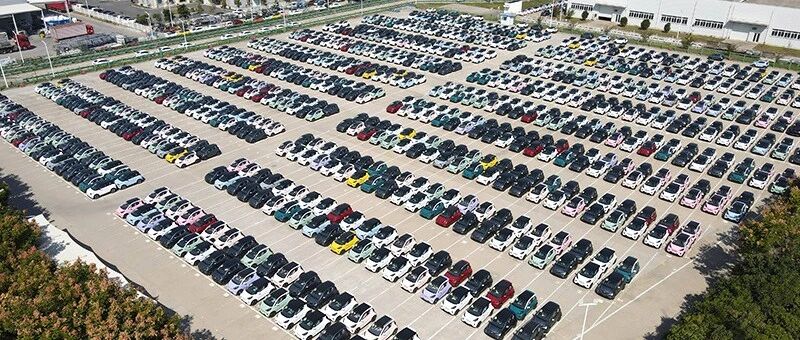
2026.01. 06 本文字数:2318,阅读时长大约4分钟 作者 | 第一财经 葛慧 2025年中国"汽车第一城"的争夺形势已逐渐明朗。 2025年,在新能源汽车浪潮与统计口径调整的双重影响下,传统汽车制造重镇面临转型压力,而新 兴城市正凭借赛道优势加速突围。目前,重庆以近250万辆的整车产量领跑总量榜,合肥则以超120 万辆的新能源汽车产量占据细分赛道首位。 在整车制造领域,国家统计局自2021年推行"法产并重"的统计改革,随着该统计改革的持续推进, 真实的汽车产业版图正浮出水面。这场城市间的角逐,不仅是产能规模的比拼,更是技术创新、产业 链整合与政策适应能力的综合竞争。统计方法的调整、技术路线的选择,都将深刻影响未来十年的城 市产业竞争格局。 重庆成为"汽车第一城"几成定局 第一财经从重庆市2025年11月份的统计月报中获悉,重庆前11月的汽车产量为249.81万辆,同比增 12.1%。以城市角度来看,重庆成为"汽车第一城"几成定局。 重庆的汽车产业发展中,既有央企长安这样的传统品牌坐镇,也有"黑马"赛力斯的逆袭。2025年, 长安汽车实现了3000万辆下线,全国首块L3级自动驾驶专用正式号牌也在重庆 ...
中国汽车第一城易主
Di Yi Cai Jing Zi Xun· 2026-01-06 01:20
Core Insights - The competition for the title of "Automobile Capital" in China by 2025 is intensifying, with Chongqing currently leading in overall vehicle production and Hefei excelling in the new energy vehicle segment [1][2]. Group 1: Chongqing's Position - Chongqing's vehicle production reached 2.4981 million units from January to November 2025, marking a 12.1% year-on-year increase, solidifying its status as a leading automobile city [2]. - The city is home to traditional brands like Changan and emerging players like Seres, contributing to its competitive edge [2]. Group 2: Hefei's Growth - Hefei produced 1.246 million new energy vehicles in the same period, ranking first among cities in this category [4]. - The city aims to achieve a scale of 700 billion yuan in its new energy vehicle industry by 2025, with a target of producing over 3 million vehicles [4]. Group 3: Other Competitors - Anhui province, with a total vehicle production of 3.335 million units and 1.635 million new energy vehicles, has surpassed Guangdong to become the leading province [3]. - Cities like Wuhu and Liuzhou are also making significant strides, with Wuhu's production expected to rise and Liuzhou achieving a vehicle production of 1.331 million units, a 37.8% increase [5][4]. Group 4: Emerging Cities - Cities such as Xi'an, Zhengzhou, and Qingdao are approaching the "million vehicle" production threshold, with Xi'an producing 1.576 million vehicles and Zhengzhou showing a significant year-on-year growth of 89.72% [9]. - Qingdao's production reached 911,700 units, supported by major manufacturers like SAIC-GM Wuling and Chery [10]. Group 5: Challenges for Major Cities - Shenzhen's automotive production has declined, with the city no longer maintaining a competitive edge in vehicle production due to statistical adjustments [7]. - Guangzhou's traditional vehicle production fell by 20%, indicating a significant transition challenge [8].

商用车板块1月5日涨1.07%,宇通客车领涨,主力资金净流出2.25亿元
Zheng Xing Xing Ye Ri Bao· 2026-01-05 08:59
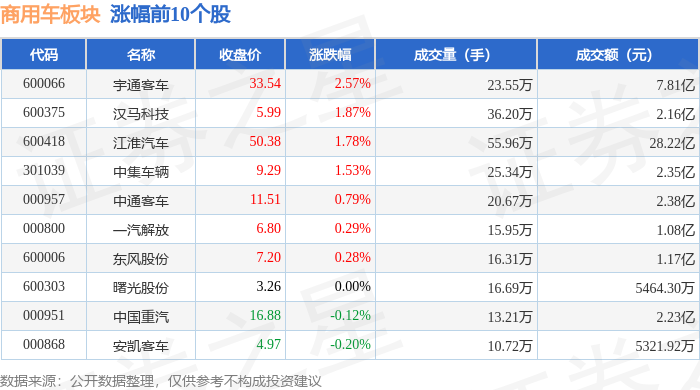
Group 1 - The commercial vehicle sector increased by 1.07% on January 5, with Yutong Bus leading the gains [1] - The Shanghai Composite Index closed at 4023.42, up 1.38%, while the Shenzhen Component Index closed at 13828.63, up 2.24% [1] - Key stocks in the commercial vehicle sector showed varied performance, with notable increases in stocks like Zhitong Bus (up 2.57%) and Hanma Technology (up 1.87%) [1] Group 2 - The commercial vehicle sector experienced a net outflow of 225 million yuan from institutional investors, while retail investors saw a net inflow of 158 million yuan [3][4] - Individual stock performances varied, with King Long Automobile seeing a significant net outflow from institutional investors of 38.81 million yuan [4] - The overall trading volume for the commercial vehicle sector was substantial, with Jianghuai Automobile recording a trading volume of 559,600 shares and a transaction value of 2.82 billion yuan [1]


【新能源】2025年12月新能源乘用车厂商批发销量快讯
乘联分会· 2026-01-05 08:46
Core Viewpoint - The article predicts a 25% growth in China's new energy passenger vehicle market sales by 2025, aligning with the "14th Five-Year Plan" expectations for the new energy vehicle market [2]. Group 1: Market Trends - December marks a peak buying season for new energy vehicles as the vehicle purchase tax exemption policy expires, but market dynamics are affected by adjustments in vehicle replacement and trade-in subsidies, leading to a noticeable divergence in market trends [2]. - Major manufacturers have adjusted their production schedules to reduce inventory, preparing for a strong start in the "15th Five-Year Plan" [2]. Group 2: Sales Performance - In December, several key manufacturers, including Tesla, Seres, NIO, and others, achieved record high wholesale sales for new energy vehicles, contributing to a structural growth in the market [2]. - BYD's exports reached 133,000 units in December, a year-on-year increase of 75,000 units, significantly boosting the overall sales growth of new energy passenger vehicles by 4% [2]. Group 3: Sales Data - According to the latest data, the wholesale sales of new energy passenger vehicles in December are estimated at 1.57 million units, representing a 4% year-on-year growth but an 8% month-on-month decline [3]. - Cumulatively, the wholesale sales of new energy passenger vehicles for the year 2025 are projected to reach 15.33 million units, reflecting a 25% year-on-year increase [3].


广汽本田工厂复工时间推迟2周
日经中文网· 2026-01-05 07:51
Group 1 - Honda's electric vehicle production in China is delayed by two weeks due to semiconductor supply issues, with plans to resume production on January 19 [2] - The joint venture with GAC Group, GAC Honda, has three factories affected by the delay, while the joint venture with Dongfeng Motor, Dongfeng Honda, continues production [4] - Honda's production in Japan is also impacted, with two factories halting operations on January 5 and 6 due to semiconductor shortages [4] Group 2 - The semiconductor shortage is primarily due to Nexperia, a semiconductor manufacturer, halting supply, which has led to insufficient inventory for Honda [4] - The expected impact on Honda's operating profit for the fiscal year ending March 2026 is a reduction of 150 billion yen due to the production cuts [5] - The production cuts have not yet been factored into Honda's financial performance [5]

12月新能源牵引车销近3万辆大涨195%!徐工第一,解放/三一/陕汽/重汽超3000辆 | 头条
第一商用车网· 2026-01-05 06:58
Core Viewpoint - In December 2025, the sales of new energy tractors in China reached a record high of 28,600 units, marking a year-on-year increase of 195% and a month-on-month increase of 45% [3][20]. Group 1: Market Performance - The total sales of new energy heavy trucks in December 2025 reached 34,500 units, representing a year-on-year increase of 191% [1]. - The new energy tractor market achieved a monthly sales record with a total of 28,600 units sold in December, which is approximately 2.95 times the sales of December 2024 [3][20]. - The year 2025 saw a cumulative sales figure of 158,300 units for new energy tractors, reflecting a year-on-year growth of 223% [12]. Group 2: Regional Insights - In December 2025, all 30 provincial-level administrative regions in China reported new sales of new energy tractors, with 26 regions adding over 100 units each [4]. - Shanghai led the sales with over 7,000 new energy tractors sold in December, followed by Shanxi with nearly 4,000 units [4][6]. Group 3: Company Performance - In December 2025, 12 companies sold over 100 new energy tractors, with 9 companies exceeding 1,000 units. XCMG topped the list with 4,222 units sold [8][9]. - The top three companies in cumulative sales for 2025 were Jiefang (25,400 units), XCMG (24,900 units), and SANY (22,200 units), all exceeding 20,000 units [12][14]. - The market share of the top five companies in 2025 was over 10%, with Jiefang at 16.0%, XCMG at 15.7%, and SANY at 14.1% [18].