小象超市

Search documents
山姆也没能逃过“千亿魔咒”
Sou Hu Cai Jing· 2025-07-24 06:41
Core Viewpoint - The article discusses the challenges faced by Sam's Club in China, particularly after surpassing the 100 billion yuan revenue mark, highlighting issues related to product quality and selection that could jeopardize member loyalty and retention [4][5][36]. Group 1: Industry Context - The retail industry in China has seen a trend where companies reaching the 100 billion yuan revenue threshold often experience a decline or strategic missteps shortly thereafter [4][12]. - Both Yonghui and RT-Mart, once leading players, have faced significant revenue drops and losses after reaching similar milestones, indicating a potential "100 billion curse" in the retail sector [14][15][12]. Group 2: Sam's Club's Performance - Sam's Club achieved over 100 billion yuan in revenue in 2024, marking a significant milestone, yet it has faced criticism for product quality and selection issues [17][18]. - Complaints regarding product safety and quality have surged, with a reported 65% increase in complaints in 2024, indicating a decline in consumer trust [20]. Group 3: Membership Strategy - Sam's Club's strategy focuses heavily on member retention and renewal rates, with a reported 92% renewal rate among its "excellent members," contributing significantly to its revenue [29]. - The company has been expanding its presence in lower-tier cities while struggling to maintain its market share in first-tier cities, where competition from other membership-based retailers is intensifying [31][33]. Group 4: Competitive Landscape - The competitive environment is becoming increasingly challenging for Sam's Club, with rivals like Costco and local platforms gaining traction and market share [33][35]. - The unique selling proposition of Sam's Club, which has been its stringent quality control and unique product offerings, is at risk as similar products become available at competing retailers [36].


全渠道数据复盘:2025上半年消费市场底层变化与增长变量
3 6 Ke· 2025-07-24 04:02
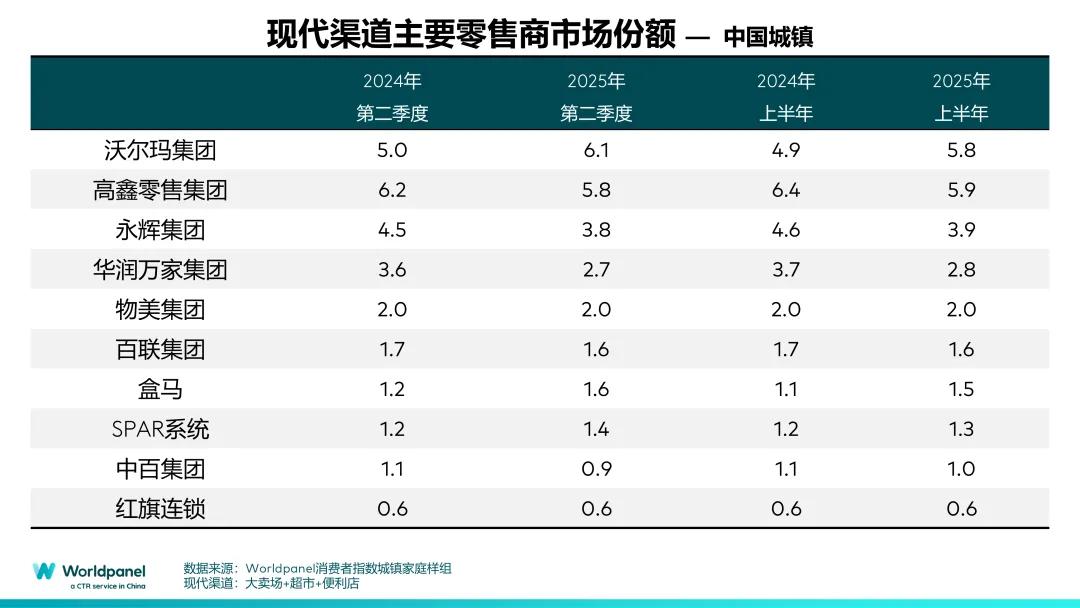
Group 1: Market Overview - The consumer goods market in urban China is expected to grow by 2.5% year-on-year in the first half of 2025, indicating a stable upward trend [1] - Beverage sales remain the main driver of the fast-moving consumer goods market, with a year-on-year growth of 5.6%, particularly in juice and functional drinks [1] - The retail sales of consumer goods increased by 5.0% year-on-year in the first half of this year, with final consumption expenditure contributing over 50% [1] Group 2: Out-of-Home Consumption - The out-of-home consumption market saw a year-on-year increase of 8.7% in customer traffic across cities [2] - The demand for emotional value, social needs, and entertainment experiences is driving the rapid adoption of new scenarios and technologies [2] Group 3: Offline Channels - Convenience store sales decreased by 3.6% year-on-year, while small supermarkets grew by 7.3%, indicating a stable performance in modern channels [3] - Major retailers showed a mixed performance, with Walmart leading in the second quarter, while the top ten retailers' market share declined by 1.1 percentage points [4][7] Group 4: Membership Stores - Membership stores have seen a year-on-year penetration rate increase of 3.6%, with Sam's Club showing significant growth in the East and South regions [8] - Sam's Club plans to open its largest store in Beijing by the end of 2025, aiming to attract customers with a "shopping + micro-vacation" model [8] Group 5: Discount Retail - Discount retailers are exploring new formats, with a focus on leisure food stores achieving a penetration rate exceeding 25% [10] - Traditional supermarkets are accelerating their transformation into hard discount formats, with regional players like "小百惠" and "家家悦" showing rapid growth [11] Group 6: Online Channels - E-commerce sales grew by 6.9% year-on-year in the first half of 2025, with Douyin's penetration rate increasing by 5.6 percentage points [12] - The 618 shopping festival saw a 2.9 percentage point increase in online channel penetration, with Douyin performing particularly well [14] Group 7: Conclusion - The fast-moving consumer goods market is experiencing a mild recovery, with consumers being price-sensitive while also valuing experiential and quality aspects [15] - The integration of online and offline channels is reshaping the consumer landscape, with a focus on product value, experiential value, and brand differentiation [16]

零售快报 | 2025年上半年中国快速消费品市场平稳向好,线上线下多元业态重塑消费格局
凯度消费者指数· 2025-07-23 04:17
Core Insights - The consumer market in China is showing a moderate recovery, with a year-on-year growth of 2.5% in the urban fast-moving consumer goods (FMCG) market for the first half of 2025, driven primarily by beverages, which grew by 5.6% [1] - The service consumption sector is on the rise, with a notable 8.7% increase in foot traffic in the out-of-home consumption market [2] - The retail landscape is evolving, with significant performance disparities among major retailers, as evidenced by a 1.1 percentage point decline in market share for the top ten retailers [4] Group 1: Market Performance - The FMCG market's growth is supported by positive trends in beverages, food, household cleaning, and personal care products, while dairy products lag behind [1] - The retail sales of convenience stores decreased by 3.6%, while small supermarkets saw a 7.3% increase in sales [3] - The overall retail sales of consumer goods increased by 5.0% in the first half of the year, with final consumption expenditure contributing over 50% [1] Group 2: Retail Channel Insights - Membership stores are gaining traction, with an overall penetration rate increase of 3.6 percentage points in the first half of 2025, driven by strong performances from Sam's Club [8][9] - Traditional supermarkets are transitioning to hard discount models, with companies like Zhongbai Group and Jiajiayue achieving rapid growth in their discount formats [12] - E-commerce channels experienced a 6.9% increase in sales, with platforms like Douyin and JD Group showing significant growth in penetration rates [13][15] Group 3: Consumer Behavior Trends - Consumers are increasingly sensitive to price while also valuing experiential aspects of shopping, leading to a demand for higher quality and functionality in products [17] - The 618 shopping festival saw a surge in demand for essential goods, with consumers diversifying their purchasing channels and seeking more personalized products [17] - Instant retail is redefining convenience, with platforms integrating resources to enhance consumer experiences, achieving over 35% penetration in the first half of 2025 [16]

渠道洞察特辑Vol.3:“30分钟万物到家”— 即时零售的下一场战争(I)
凯度消费者指数· 2025-07-21 02:58
Core Insights - The article highlights the intense competition in the "delivery battle" among major platforms, reflecting the rapid evolution of the instant retail industry driven by consumer demand for "immediate satisfaction" [1][4][5] Group 1: Market Trends - Instant retail penetration in urban China is projected to rise from 26% in 2020 to 50% by 2025, with a compound annual growth rate of 11.3% [4] - The market has shifted from community group buying and horizontal platforms to front warehouse models and self-operated offline retailers, with front warehouse models leading growth at 30% [5][19] - The front warehouse model has transformed consumer shopping expectations, evolving from mere delivery to a combination of price, efficiency, and quality [6][14] Group 2: Consumer Behavior - The primary consumers of the front warehouse model are childless families (single, young couples, and adults under 45), whose consumption patterns align well with the model's characteristics of speed and convenience [9][17] - High-frequency essential goods dominate the front warehouse model, including ready-to-drink beverages, condiments, frozen foods, fast-moving consumer goods, and fresh produce [13][12] Group 3: Competitive Landscape - Key players in the front warehouse market include Pupu Grocery, Dingdong Maicai, and Xiaoxiang Supermarket, with the latter experiencing significant market share growth due to effective strategies [12][14] - Major competitors like Meituan and Alibaba are intensifying their marketing efforts and resource allocation, leading to a complex competitive environment [19][20] - The future growth of the front warehouse model will depend on the ongoing capital and resource competition among industry giants [19]
山姆讲不好中产故事了?
虎嗅APP· 2025-07-16 13:51
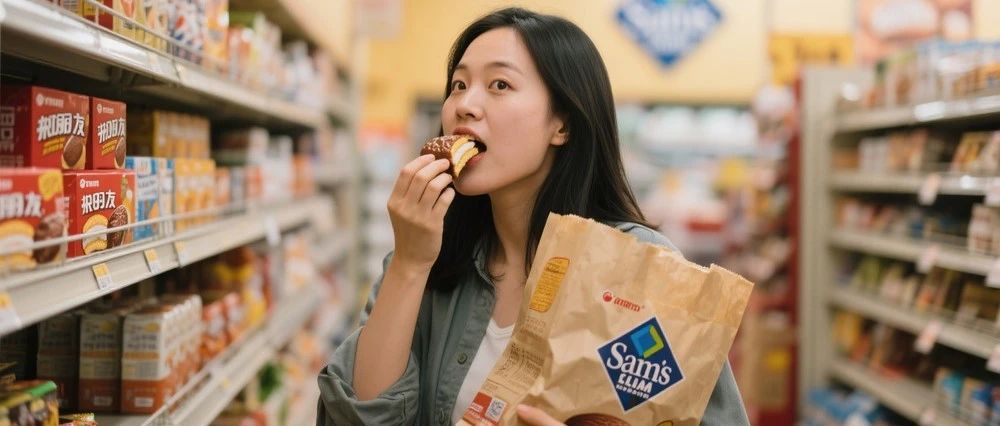
Core Viewpoint - The incident involving the brief appearance and quick removal of Haoliyou Pie from Sam's Club highlights a deeper issue of trust and brand perception among the middle-class consumers in China, indicating a potential strategic crisis for the company [2][3][16]. Group 1: Understanding the Incident - The backlash against the inclusion of Haoliyou Pie reflects the sensitivity of middle-class consumers towards brand trust and aesthetic standards, which Sam's Club has cultivated over time [2][16]. - The core of the incident is not merely about the product itself but rather the social narrative it represents regarding middle-class values and expectations [2][16]. Group 2: Forces at Play - Two opposing forces are identified in the business landscape: "Efficiency Vortex," which focuses on scale and cost reduction, and "Trust Bedrock," which relies on unique offerings and brand loyalty [5][6]. - Sam's Club operates in the "Trust Bedrock" quadrant, having built its reputation on a foundation of trust and quality, but is now attempting to expand into the "Efficiency Vortex" [9][21]. Group 3: Trust Dynamics - The membership model of Sam's Club is based on long-term trust and a commitment to quality, which has been established through rigorous product selection and supply chain management [11][12]. - Trust has become a default premise for purchasing decisions among middle-class consumers, allowing Sam's Club to focus on cost reduction and supply chain optimization [12][13]. Group 4: The Crisis of Trust - The Haoliyou incident reveals a potential fracture in the trust that middle-class consumers have in Sam's Club, as any deviation from established aesthetic standards can be perceived as a betrayal [16][19]. - Social media has amplified the impact of this incident, transforming individual consumer experiences into collective narratives that can quickly erode brand trust [17][18]. Group 5: Expansion Challenges - As Sam's Club seeks to expand, it faces the challenge of maintaining its established standards while also increasing the number of stores and product offerings [21][22]. - The need for rapid growth may dilute the brand's standards, leading to potential trust issues among consumers who expect consistency in product quality and brand values [22][26]. Group 6: Competitive Landscape - Sam's Club's competitors, such as Hema and traditional supermarkets, are not only vying for market share but are also adopting different strategies that may undermine Sam's Club's unique value proposition [23][24]. - The rise of efficiency-driven platforms poses a threat to Sam's Club's traditional model, as consumers may prioritize immediate availability over curated experiences [26].
山姆讲不好中产故事了
Hu Xiu· 2025-07-16 13:00
Core Insights - The incident involving the brief appearance and subsequent removal of the "Haoliyou Pie" at Sam's Club highlights a significant trust issue with the middle-class consumer base in China [4][21][24] - The core of the controversy is not merely about the product itself but rather the deeper social narrative surrounding middle-class values and aesthetic standards [4][5][21] Group 1: Trust Dynamics - Sam's Club operates on a membership model that relies on long-term trust and a carefully curated selection of products [14][18] - The trust established by Sam's Club is built over time through strict product selection, scale procurement, and a robust supply chain [15][16][18] - Any deviation from the established aesthetic and quality standards can lead to significant backlash from the middle-class consumers, as seen in the "Haoliyou incident" [22][23][24] Group 2: Market Positioning - Sam's Club has been positioned in the second quadrant of a trust-efficiency matrix, aiming to expand into the first quadrant [12][30] - The company faces challenges in balancing efficiency-driven expansion with maintaining the curated experience that its members expect [31][32] - Competitors like Hema and other traditional supermarkets are not only competing on product selection but also on immediate service delivery, which poses a threat to Sam's Club's unique value proposition [34][35][38] Group 3: Social Media Impact - Social media has transformed consumer-brand relationships, amplifying any perceived missteps and turning them into collective narratives [25][27][28] - The rapid dissemination of information on platforms like Xiaohongshu can quickly escalate minor issues into significant trust crises for brands like Sam's Club [27][28] - The "Haoliyou incident" serves as a reminder of the fragility of brand trust in the current media landscape, where consumer sentiment can shift rapidly [28][42]
朴朴超市冲刺港股IPO:区域盈利模型能否支撑全国化野心?
Sou Hu Cai Jing· 2025-07-11 00:19
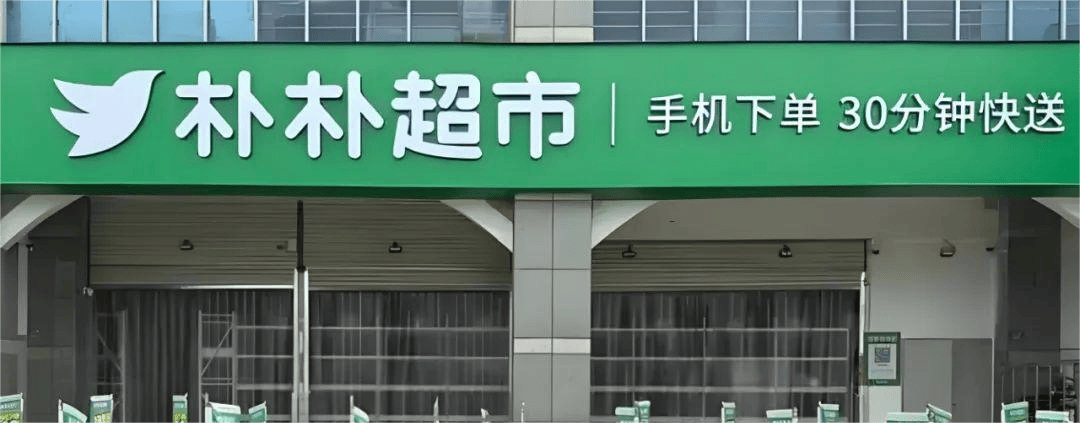
Core Insights - Instant retail is experiencing a reversal, with Meituan's recent transformation announcement leading to increased market interest [1] - The front warehouse model, previously criticized, has shown resilience from 2022 to 2025, as major players adjust their strategies, creating a more complex industry landscape [1] Group 1: Company Strategy - Pupu Supermarket has established a differentiated hardware layout, with over 400 large front warehouses in 9 cities, each covering an area of 800-1000 square meters and maintaining 6000-8000 SKUs, providing a competitive edge over peers like Dingdong Maicai [3] - The product structure of Pupu is shifting from a focus on fresh produce, which has decreased from 60% to 50%, with plans to further reduce it to 45% in the next three years, aiming to enhance profitability through higher-margin products [4] - Pupu has launched its private label "Yuci," with over 750 SKUs by October 2024, targeting a 15% sales contribution by year-end, although it still lags behind competitors like Hema in terms of product value [7] Group 2: Market Position and Competition - Pupu's conservative expansion strategy is evident, having only entered 9 cities primarily within the familiar "Fuzhou-Xiamen economic circle," while competitors are rapidly expanding their market presence [8] - The competitive landscape is intensifying, with giants like Meituan, Taobao (Ele.me), and JD.com setting new standards for delivery times, making "30-minute delivery" the industry norm [10] - Pupu faces increasing pressure as competitors leverage capital, traffic, and technology to expand aggressively, threatening its localized service advantages [10] Group 3: Future Outlook - Pupu is reportedly preparing for an IPO in Hong Kong, indicating a critical juncture in its development, with a vision to transform every location into a convenient and affordable city [11] - The company is at a strategic crossroads, needing to balance cautious expansion with the need to keep pace with industry trends, as it navigates the challenges of maintaining its unique offerings while responding to competitive pressures [13]
QuestMobile 2025即时零售行业流量竞争分析报告:聚合平台再掀战火,三大阵营格局初现,厮杀“刺刀见血”
QuestMobile· 2025-07-08 01:59
Core Insights - The article discusses the competitive landscape of the instant retail app sector, highlighting significant growth in user engagement and the emergence of various operational models among key players [2][3][9]. Group 1: Market Growth and User Engagement - As of May 2025, the monthly active user base for instant retail apps reached 551 million, marking a 6% year-on-year increase, with fresh food e-commerce apps growing by 15% to 128 million users [3][12]. - The competition has intensified with major players like Meituan, Taobao, and JD.com restructuring their services to enhance user engagement, particularly in the "30-minute living circle" for food delivery [3][25]. Group 2: Competitive Landscape - Three main operational models have emerged: "front warehouse self-operated," "store-warehouse integrated self-operated," and "platform aggregation," each catering to different user needs [23]. - The overlapping user base among JD.com, Meituan, and Ele.me reached 77.61 million, a 32.4% increase year-on-year, indicating a shift towards multi-platform usage among consumers [27]. Group 3: User Demographics and Preferences - The user demographic is skewing younger, with users born after 2000 showing a strong preference for food delivery services, while users from the 90s and 00s account for over 55% of the fresh food e-commerce app market [33][35]. - The lower-tier market is becoming a new growth engine, with Ele.me and Meituan's combined user base in this segment reaching 5.167 million, reflecting a 2.6% year-on-year growth [37]. Group 4: Merchant and Rider Dynamics - The demand for instant delivery services is driving an increase in merchant participation, with Meituan's merchant app reaching nearly 17 million monthly active users [44]. - The competition for riders is intensifying, with JD.com's Dada Express leading the market with over 6 million active users, a 368% increase year-on-year [52][56].

200万支绣球背后的盒马生意经
Hua Er Jie Jian Wen· 2025-07-03 12:28
Core Insights - The article highlights the strategic focus of Hema on the flower market, particularly the hydrangea, as it prepares for the peak sales season [1][2] - Hema has established its first hydrangea village in Yunnan, aiming to strengthen its supply chain control and competitive advantage in the flower sector [1][4] - The overall flower retail market in China is projected to reach a total scale of 220 billion yuan in 2024, with online consumption accounting for approximately 120 billion yuan [2] Company Strategy - Hema's business model has transitioned to a positive cycle, achieving its first annual adjusted EBITA profit in the fiscal year from April 2024 to March 2025, with a GMV exceeding 75 billion yuan [1] - The introduction of hydrangeas in 2021 has led to significant sales growth, with over 2 million units sold in a summer season, making it the highest repurchased flower at Hema [2][4] - Hema is continuously innovating its product offerings, introducing seasonal flowers like peach blossoms and tulips to enhance customer experience and drive sales [2][3] Market Dynamics - The flower market in China has seen rapid growth, with over 5 million industry workers and nearly 220,000 seedling flower enterprises, generating an annual output value of over 520 billion yuan [1][2] - Hema faces increasing competition from other platforms like Seven Fresh and Little Elephant Supermarket, prompting the company to innovate its products and business models [2] - The average wholesale price of hydrangeas has significantly decreased due to Hema's direct partnerships with quality cultivation bases, stabilizing market prices [4]
朴朴十年拓九城,“平替”盒马何时飞升
Sou Hu Cai Jing· 2025-07-02 03:58
Core Insights - Meituan's strategic retreat from the "next-day delivery" model is perceived as a tactical contraction rather than a failure of the model, contrasting with the trust crisis triggered by the delisting of Daily Fresh [1] - The competition in the instant retail sector is intensifying, with major players like JD and Alibaba ramping up their efforts, leading to increased innovation and standardization across the industry [2][12] - Pupu Supermarket's unique approach involves a large warehouse model with cautious expansion, focusing on local community needs and a diverse product selection [5][11] Company Overview - Pupu has established over 400 large front warehouses in nine cities, with each warehouse covering a 1.5 km radius and offering 6,000 to 8,000 SKUs [2][3] - The supermarket's strategy emphasizes a "friendly neighborhood" positioning, with a focus on high-frequency fresh produce as a traffic driver while gradually reducing the proportion of fresh goods in its offerings [5][6] - Pupu's private label business, initiated in 2023, aims for a 15% sales contribution by the end of 2024, with over 750 SKUs already developed [6][10] Competitive Landscape - The rapid expansion of competitors like Xiaoxiang Supermarket, which has adopted a similar large warehouse model, poses a significant challenge to Pupu's market position [14][16] - Major players are leveraging their existing delivery networks to enhance efficiency, making delivery speed a key differentiator in the instant retail space [12][13] - Pupu's cautious expansion strategy may not suffice in the face of aggressive competition, as rivals are quickly encroaching on its established territories [17][18] Future Outlook - Pupu is reportedly in discussions with top investment banks for a potential IPO, indicating its ambition to scale beyond its current nine-city footprint [18] - The company faces a critical decision on whether to maintain its conservative growth strategy or accelerate expansion to keep pace with the rapidly evolving market [18]