新石器

Search documents
一个普通自动驾驶算法工程师的2025年
自动驾驶之心· 2026-01-15 12:28
Core Viewpoint - The article discusses the significant advancements in the autonomous driving industry in 2025, focusing on the evolution of L2, L3, and L4 levels of autonomous driving technology, highlighting both the opportunities and challenges faced by the industry [3][11]. Group 1: L2 Level Developments - In 2025, L3 autonomous driving technology began to gain regulatory approval, leading to a decline in the previously popular "L2++" concept, with all consumer-facing smart driving functions now categorized as L2 [6][8]. - BYD initiated the "smart driving equality" movement by integrating its self-developed "Tian Shen Zhi Yan" system into lower-priced models, making advanced features accessible to more consumers [8]. - Traditional automakers like Geely and Chery followed suit, expanding mid-level assisted driving features to a broader market, contributing to a wave of widespread smart driving adoption [8][10]. - The market saw an increase in domestic smart driving suppliers like Momenta expanding into overseas markets, securing contracts with established automakers [8][10]. Group 2: L3 Level Developments - The end of 2025 marked a turning point for L3 autonomous driving, with the Ministry of Industry and Information Technology granting approval for the first L3 conditional autonomous driving models, including the BAIC Arcfox Alpha S and Changan Deep Blue SL03 [12][14]. - These models can operate under specific conditions, with the Arcfox capable of speeds up to 80 km/h on designated roads, marking a significant shift in responsibility from drivers to manufacturers and system suppliers [14][15]. - The approval of L3 technology is expected to reshape the industry landscape, potentially becoming a benchmark for measuring the leading players in the autonomous driving sector in 2026 [15]. Group 3: L4 Level Developments - 2025 was a pivotal year for L4 autonomous driving, witnessing a resurgence in capital investment and the beginning of commercial viability, with companies like Pony.ai and WeRide going public and raising significant funds [16][17]. - L4 technology demonstrated its commercial potential in specific applications, such as autonomous mining trucks and urban delivery vehicles, achieving operational efficiencies and cost reductions [19][23]. - The industry consensus shifted from a focus on technological idealism to practical commercial applications, emphasizing the importance of production capabilities and operational efficiency [23]. Group 4: Industry Insights and Future Outlook - The article emphasizes the need for continuous learning and adaptation within the autonomous driving sector, as technological advancements and market dynamics evolve rapidly [24][29]. - The growing application of autonomous driving technology across various urban and logistical scenarios in China reflects the country's leadership in the global autonomous driving landscape [29].


配件成本下行推动规模化商用 无人物流车价格竞争日趋激烈
Nan Fang Du Shi Bao· 2026-01-14 23:15
Core Insights - The year 2025 is anticipated to be a pivotal year for the explosive growth and large-scale commercial application of unmanned logistics vehicles, driven by advancements in technology, cost reductions, and supportive policies [1][2][12] - The market for unmanned delivery vehicles is projected to exceed hundreds of billions globally by 2027, with China expected to capture over 40% of the market share [2] Market Dynamics - The investment in unmanned logistics vehicles is expected to continue in 2026, with significant interest from capital markets and major internet companies participating in funding rounds for key players in the industry [3][4] - Major logistics companies, including JD Logistics and China Post, are initiating large-scale procurement of unmanned vehicles to enhance efficiency and reduce costs [5][8] Competitive Landscape - The supply of unmanned logistics vehicles is increasing, with new entrants in the market and a decline in the cost of core components, leading to intensified price competition [6][7] - As of September 2025, the price of unmanned vehicles has dropped below 20,000 yuan, prompting various manufacturers to adopt diverse sales strategies to capture market share [6][7] Industry Trends - The demand for unmanned logistics vehicles is shifting from the express delivery sector to broader applications in urban logistics and instant delivery, indicating a significant growth opportunity [9][10] - Companies are expanding their operations internationally, with several securing licenses for unmanned vehicles in markets such as the UAE and Singapore [9][10] Challenges and Considerations - The industry faces challenges related to safety, regulatory compliance, and the need for a robust service infrastructure as unmanned vehicles become more prevalent [10][11] - Experts emphasize the importance of balancing market growth with sustainable practices to avoid excessive competition and ensure the reliability of unmanned logistics vehicles [12]

深圳无人车运营规模破千台,在物流配送等场景实现规模化应用
Nan Fang Du Shi Bao· 2026-01-12 12:08
Core Insights - Shenzhen's functional autonomous vehicle fleet has surpassed 1,000 units, reaching 1,122 vehicles, marking a significant milestone in large-scale operations with a month-on-month growth of over 20% [1][4] - The operational efficiency and road network coverage of autonomous vehicles have improved, with a total open route mileage of 6,393 kilometers, reflecting a 16% increase [1][11] - The total operational mileage for autonomous logistics vehicles reached 245,000 kilometers in December, completing 1.87 million deliveries, a substantial increase of 49% compared to the previous month [1][31] Fleet Scale - The total number of operational vehicles is 1,122, with 206 new vehicles added in December, representing a month-on-month growth rate of 22.5% [4] - Breakdown of December's new vehicles: 718 autonomous logistics vehicles, 400 autonomous sanitation vehicles, and 4 autonomous inspection vehicles [4] Operational Efficiency - The average online rate for vehicles remained stable at 86%, with 965 vehicles online in December [7] - The average daily operational hours for autonomous logistics vehicles decreased slightly, indicating a potential area for efficiency improvement [23] Route Expansion - The number of open routes increased by 22% in December, with 346 new routes added, contributing to the total mileage of 6,393 kilometers [11][13] - Significant growth in route density was observed in the Luohu and Bao'an districts [17] Economic Impact - The autonomous logistics vehicles generated an estimated commercial value of approximately 16.58 million yuan in December, with cost savings of nearly 1.9 million yuan [31] - The total number of deliveries included 1.67 million express deliveries and about 200,000 fresh produce deliveries [31] Industry Developments - The 2025 Guangdong-Hong Kong-Macao Greater Bay Area functional autonomous vehicle competition showcased advancements in safety verification and scenario innovation [35] - A demonstration event in Futian District focused on real-world applications of autonomous logistics and sanitation vehicles, promoting collaboration between government and enterprises [37] Compliance and Safety - The compliance rate for vehicles reached 99.2%, while the operational compliance rate was 93.3%, indicating a mature management system [26][39] - The number of traffic accidents involving autonomous logistics vehicles increased month-on-month, highlighting the need for ongoing safety measures [24]

这个省社保科创基金的6支专项基金启航了
母基金研究中心· 2026-01-11 07:47
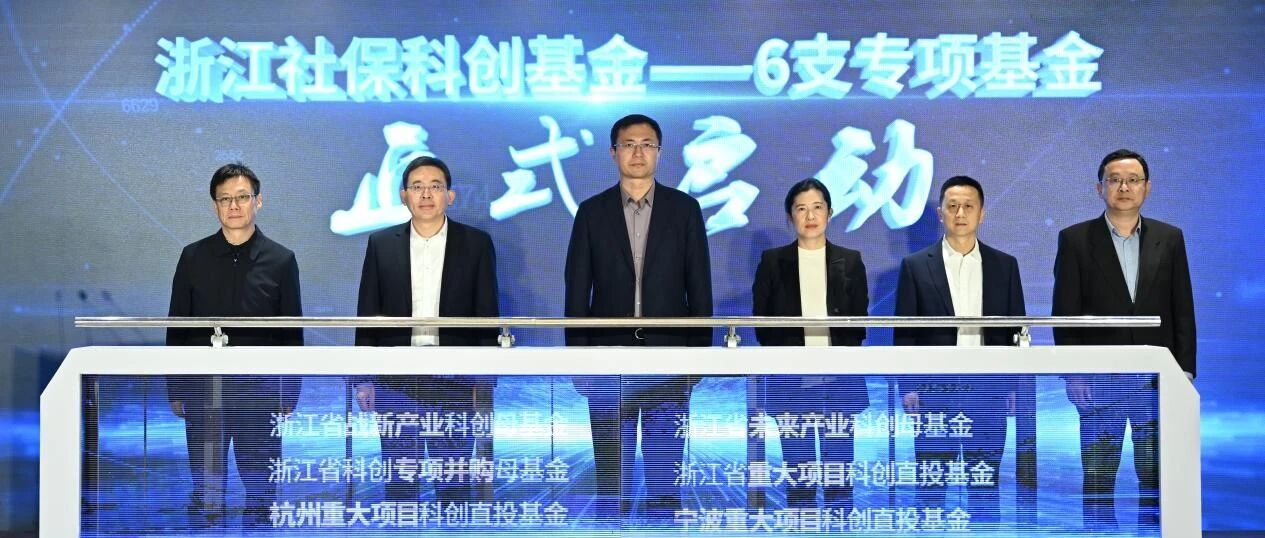
Core Viewpoint - The Zhejiang Social Security Science and Technology Innovation Fund has officially entered a comprehensive investment phase, marking a significant step in supporting technological innovation and economic development in Zhejiang Province [5][6]. Group 1: Fund Launch and Structure - The Zhejiang Social Security Science and Technology Innovation Fund has launched six specialized funds, including the Zhejiang New Industry Science and Technology Mother Fund and the Zhejiang Future Industry Science and Technology Mother Fund, each with a scale of 10 billion [5]. - The total investment amount for the first six projects signed at the conference exceeds 1.6 billion, covering sectors such as quantum science, artificial intelligence, integrated circuits, advanced manufacturing, and new materials [5]. Group 2: Strategic Goals and Future Directions - The fund aims to support national strategies for technological self-reliance and innovation in Zhejiang, emphasizing market-oriented operations and professional decision-making [6]. - The fund is designed to provide long-term, strategic, and patient capital, with a maximum duration of 18 years and an initial investable sub-fund size of nearly 300 billion [8]. Group 3: Collaboration and Investment Opportunities - The conference included a dialogue among scientists, investors, and entrepreneurs, promoting a healthy cycle between technology, industry, and finance [7]. - Zhejiang is positioned as a promising investment destination, with innovation becoming a new trend and artificial intelligence emerging as a key identifier for the region [8].
自动驾驶激战CES:黄仁勋硬刚马斯克,中国军团已默默量产破局
Sou Hu Cai Jing· 2026-01-10 13:41
Core Insights - The autonomous driving industry is experiencing a pivotal moment at CES 2026 after years of volatility, with significant technological advancements and a shift towards practical applications [2][54] - The competition is intensifying among major players, including Nvidia, Tesla, Qualcomm, Mobileye, and various Chinese companies, each pursuing different technological and business strategies [4][10][18] Group 1: Nvidia's Role - Nvidia's CEO Jensen Huang introduced the open-source autonomous driving model Alpamayo, which is described as a "ChatGPT moment for physical AI," emphasizing the importance of sensor fusion in autonomous driving [4][7] - The competition between Nvidia and Tesla highlights a broader industry debate between vision-based and sensor-based approaches to autonomous driving [7][8] Group 2: Competitive Landscape - Qualcomm is collaborating with Leap Motor to create an integrated solution that combines cockpit, driving assistance, and vehicle control systems, showcasing a shift towards multi-domain control [10][14] - Mobileye is advancing its L3 solutions in partnership with Audi and is testing a prototype that allows drivers to close their eyes while driving, indicating significant progress in autonomous technology [16] Group 3: Chinese Companies' Innovations - Great Wall Motors is showcasing its ASL architecture, which aims to integrate AI capabilities into vehicles, with plans for ASL 1.0 to be implemented in the first half of the year [18][21] - Geely has announced its upgraded AI 2.0 technology system, which integrates driving, cockpit, and chassis systems, with plans to roll out L3 and L4 functionalities by the end of 2026 [27] Group 4: Market Trends and Business Models - The CES 2026 event indicates a lowering of entry barriers for new players in the autonomous driving sector, with a clear divergence in business models emerging [45][46] - Two primary paths are identified: one focusing on vertical market breakthroughs for profitability in closed environments, and the other targeting the Robotaxi market for broader expansion [51][54] Group 5: Future Outlook - The industry is moving beyond technical validation into commercial viability, with various applications like RoboBus and autonomous delivery vehicles beginning to emerge [51][54] - The next 12 months are critical for the autonomous driving sector, as it transitions into a phase where practical implementations will be tested and scaled [54]



今天十点!一场关于自驾L4的圆桌探讨(斯年智驾/新石器/卡尔动力等)
自动驾驶之心· 2026-01-10 01:00
Core Insights - The article discusses the advancements in autonomous driving technology, particularly the transition from Level 2 (L2) to Level 4 (L4) automation, highlighting that high-level assisted driving has reached a "quasi-L4" stage by December 2025 [3] - It emphasizes the significant investment in the L4 sector, with over 30 billion yuan raised in the domestic autonomous driving industry in 2025, indicating a shift in focus towards L4 technology [3] - A roundtable event is planned to explore the technological and commercial realities of L4 autonomous driving, featuring insights from leading companies in the field [3] Group 1: Industry Developments - The technology pathways for L2 and L4 are converging, allowing for the reuse of the same model across both levels [3] - The article notes that the L4 sector is gaining renewed attention due to its potential to reach a critical development phase [3] Group 2: Event Details - A significant roundtable discussion on L4 autonomous driving will take place, featuring diverse perspectives from top companies in the industry [3] - The event aims to delve into the evolution of L4 technology, market dynamics, and future directions [3] Group 3: Key Speakers - He Bei, founder and chairman of Sinian Intelligent Driving, has extensive experience in autonomous driving and has published over 30 papers and holds more than 100 patents [4] - Miao Qiankun, CTO of New Stone Age Autonomous Vehicles, has over 15 years of experience in R&D and has led the development of L4 urban logistics delivery vehicles, which are operational in over 300 cities [5] - Wang Ke, VP of AI R&D at Karl Power, and Ma Qianli, Tech Lead at a top global automotive company, bring significant expertise in autonomous vehicle technology and commercial operations [6]

CES2026上,中国具身企业拉爆海外......
具身智能之心· 2026-01-08 09:30
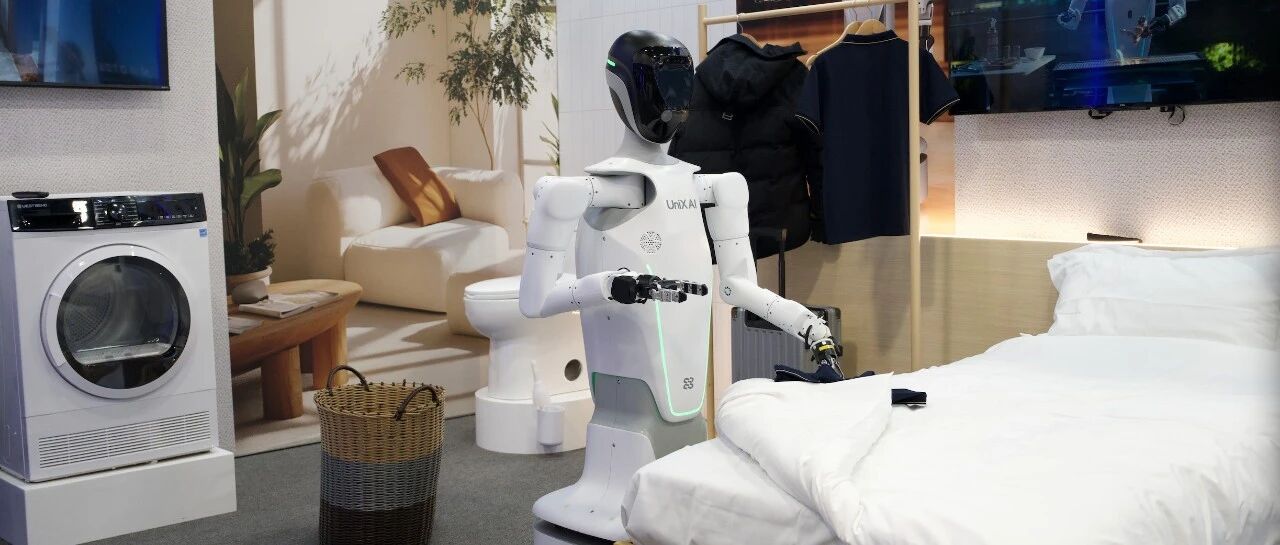
Group 1: CES 2026 Overview - The CES 2026 in Las Vegas showcased over 4,000 exhibitors, with 942 Chinese companies participating, accounting for approximately 22% of the total, making China the second-largest exhibiting country globally [4] - This year's focus was on AI and hardware, with a notable increase in the presence of Chinese brands [3] Group 2: Embodied Intelligence Sector - Among the 38 humanoid robot exhibitors, 21 were from China, representing 55% of the total, indicating a shift towards showcasing engineering delivery capabilities and real-world operational abilities [6] - Chinese company UniX AI gained significant media attention at CES, being featured in major global news outlets shortly after its presentation [6] - Unitree showcased its H1 humanoid robot, which has a 360-degree perception capability and a 15 kg load capacity suitable for industrial inspections [7] - Galaxy General demonstrated a collaborative operation between humanoid and quadruped robots, introducing a new outdoor inspection model with enhanced environmental adaptability and an 8-hour battery life [9] Group 3: Autonomous Driving Sector - Companies like Geely, Great Wall, Leap Motor, and New Stone presented their products at CES, indicating that autonomous driving is becoming a consumer product [11] Group 4: AI Glasses and Consumer Products - Among the 23 AI glasses brands, nearly 70% were Chinese, including Alibaba, XREAL, and Thunderbird [15] - Domestic brands like TCL and Hisense showcased their strengths, while emerging brands like MOVA and Yingshi also made their presence felt [17]
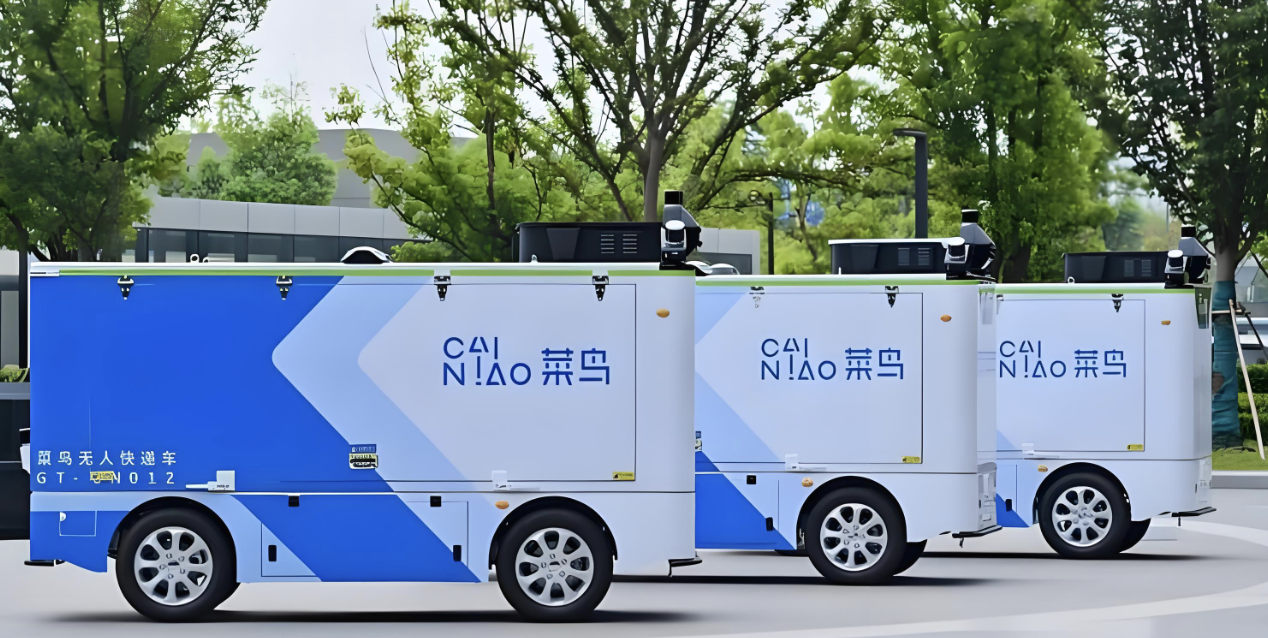
菜鸟入股九识智能?一场货运无人车行业的“超级整合”猜想
Xin Lang Cai Jing· 2026-01-08 08:49
Core Viewpoint - The logistics autonomous vehicle industry is witnessing significant financing and strategic partnerships, with Alibaba's Cainiao Group reportedly planning to invest in Jiushi Intelligent, aiming for deeper integration and collaboration to strengthen market leadership [1][2][4]. Group 1: Strategic Collaboration - The collaboration between Cainiao and Jiushi Intelligent is focused on integrating technology and ecological resources to enhance their dominance in urban delivery markets and expand into the global autonomous freight market [2][4]. - This partnership is seen as a strategic move rather than a superficial investment, indicating a deeper resource optimization as the industry matures [1][2]. Group 2: Company Profiles - Jiushi Intelligent, with a market share leading position, has a strong team from top institutions like Baidu and Waymo, and has recently secured a record order of 7,000 autonomous vehicles from China Post [4][5]. - Cainiao, backed by Alibaba, has a robust foundation in AI and machine vision, and has been developing autonomous vehicles since 2013, with plans to expand its global logistics network [5][6]. Group 3: Market Dynamics - The logistics autonomous vehicle market is evolving from a technology showcase to a mature commercial operation, with applications expanding beyond delivery to include sanitation and security [6][9]. - The anticipated partnership between Jiushi Intelligent and Cainiao is expected to accelerate the industry towards a "ten-thousand vehicle" operational norm, enhancing scalability and efficiency [9][11]. Group 4: Financial Implications - The potential investment from Cainiao is viewed as a signal of deepening capital integration in the autonomous freight sector, moving from simple financial investments to ecosystem building [8][11]. - Jiushi Intelligent has undergone multiple funding rounds, raising significant capital, which supports its expansion into over 300 cities with more than 15,000 deployed vehicles [4][8].
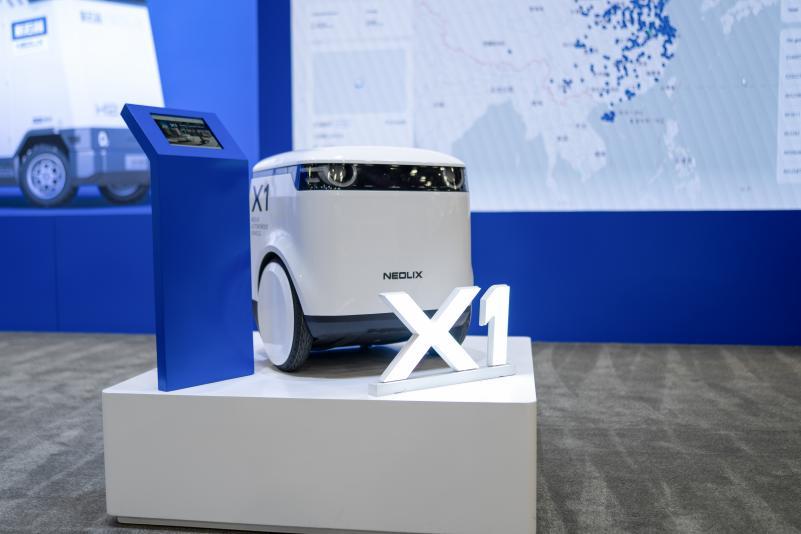
CES 2026:新石器无人车首秀 发布下一代无人驾驶物流解决方案
Huan Qiu Wang· 2026-01-07 08:48
Core Insights - Neolix officially launched its AI-driven next-generation autonomous logistics solutions at CES 2026, showcasing a complete RoboVan product matrix designed to address the "last 100 meters" delivery challenge [1][3] - The new Neolix X1 focuses on refined end-point delivery, capable of navigating both indoor and outdoor environments, including sidewalks and elevators, forming a comprehensive unmanned delivery chain from regional transfer to doorstep delivery [1][3] Company Developments - Neolix's founder and CEO, Yu Enyuan, stated that autonomous logistics is at a critical turning point, transitioning from pilot exploration to large-scale commercial deployment, with 2025 marking a milestone year for the company [3] - The next-generation solution features a "dual-engine architecture," which includes a global intelligent scheduling system supporting over 100,000 L4 autonomous vehicles, reportedly improving fleet efficiency by 30% [3] - Neolix has deployed over 16,000 L4 autonomous vehicles, accumulating nearly 80 million kilometers in total driving distance, with business applications expanding beyond express delivery to include fresh produce, supermarkets, and warehousing logistics [3] Global Expansion - Neolix accelerated its globalization efforts, having obtained local unmanned delivery vehicle licenses in the UAE in 2025 and forming strategic partnerships with companies in Japan, South Korea, and Europe [4] - The company aims to expedite overseas expansion in 2026, targeting the delivery of over 50,000 unmanned vehicles internationally by 2027 [4] - Industry observations indicate that as autonomous driving technology matures and costs optimize, solutions like those from Neolix are transitioning from technical demonstrations to large-scale commercial applications, potentially reshaping urban logistics systems [4]
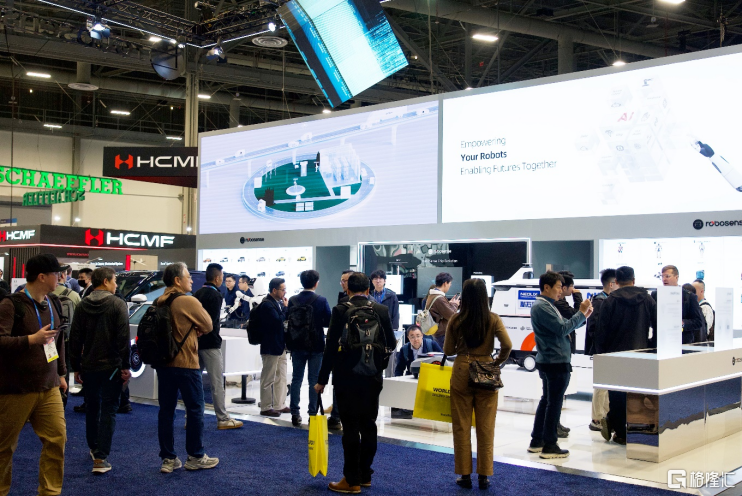
RoboSense速腾聚创CES 2026展开AI机器人生态全景蓝图:具身机器人突破 合作客户覆盖各行各业
Ge Long Hui· 2026-01-07 08:32
Core Insights - RoboSense showcased its groundbreaking AI robot "Delivery Guy" at CES 2026, marking its tenth consecutive year at the event, demonstrating significant advancements in embodied intelligence [1][4][6] - The robot autonomously completed a series of complex tasks, including gift packaging, delivery, and box recycling, utilizing RoboSense's proprietary "Hand-Eye Coordination" solution [1][6][7] Product Innovations - The exhibition featured several new products, including the second-generation solid-state LiDAR E1 Gen2, the world's first 3D safety LiDAR Safety Airy, and the ultra-mini digital LiDAR Airy Lite, among others [3][11] - RoboSense's self-developed chips were also highlighted, showcasing the company's commitment to advancing its technology stack [3][12] Strategic Partnerships - RoboSense announced collaborations with leading brands in various sectors, including a partnership with Segway Navimow for a new LiDAR lawn mowing robot and joint displays with New Stone and Coco Robotics for autonomous delivery vehicles [3][10] - The company also partnered with Geely to showcase the flagship SUV Lynk & Co 900, emphasizing the commercial application of its technology across multiple scenarios [3][10] Technological Advancements - The "Delivery Guy" robot utilized the VTLA-3D operational model, integrating tactile feedback with 3D point cloud data to enhance environmental perception and operational success rates [6][7] - The robot's system includes an Active Camera series for precise perception and a multi-degree-of-freedom dexterous hand to address visual blind spots, demonstrating advanced capabilities in long-range and high-precision tasks [7][8] Future Vision - RoboSense aims to solidify its position as a core technology ecosystem builder in the AI robotics field, focusing on self-developed innovations and commercial applications to drive the evolution of the automotive and robotics industries [16]