
雀巢

Search documents
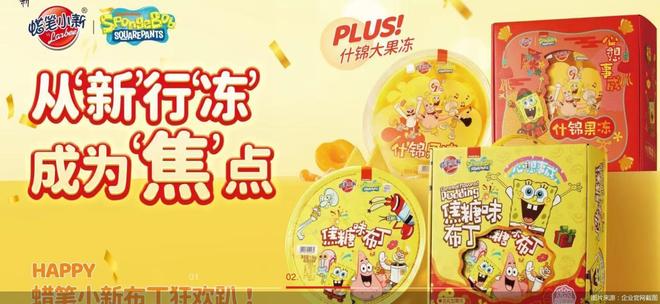
蜡笔小新食品跨界AI自救
Bei Jing Shang Bao· 2026-02-11 16:35
Group 1: Acquisition Overview - Crayon Shin-chan Foods has signed an agreement to acquire 100% of Qucloud AI HK Limited for HKD 188 million, marking its entry into the data-driven consumer goods sector [1] - The acquisition will be financed through the issuance of consideration shares and convertible bonds, with 20.83 million shares priced at HKD 3.98 each, totaling approximately HKD 81 million, representing about 9.54% of the company's share capital before the transaction [1] - Post-acquisition, Crayon Shin-chan Foods will control Beijing Qucloud Technology Co., Ltd., which focuses on developing AI-driven software applications for businesses, including food and consumer goods manufacturers [1] Group 2: Financial Performance and Market Position - Crayon Shin-chan Foods has faced continuous net profit losses since 2015, with losses amounting to approximately HKD 338 million in 2015 and reaching HKD 93.46 million in 2024 [2] - Despite the ongoing losses, the company reported a 4.5% year-on-year revenue growth to HKD 516 million in the first half of the previous year, with a net profit turnaround to HKD 2.52 million from a loss of HKD 43.64 million in the same period [2] Group 3: Strategic Rationale for Acquisition - The company aims to leverage Qucloud's technology and client resources in smart marketing to diversify its revenue streams and create synergies with its existing business [3] - The acquisition is seen as a strategic move to enhance operational and marketing efficiency, as well as brand loyalty through AI solutions, aligning with the industry's shift towards data-driven marketing [3][4] - Industry experts suggest that the acquisition reflects a trend where food companies are integrating AI capabilities to improve marketing ROI and potentially offer technology services externally, creating a second growth avenue [4]
跨界AI,蜡笔小新食品的自救尝试?
Bei Jing Shang Bao· 2026-02-11 13:13
Core Viewpoint - Crayon Shin-chan Foods is making a strategic move to transform into a data-driven modern consumer goods group by acquiring Qucloud AI HK Limited for HKD 188 million, indicating a shift towards AI-driven marketing and operational efficiency [2][4]. Group 1: Acquisition Details - The acquisition will be financed through the issuance of consideration shares and convertible bonds, with 20.83 million shares priced at HKD 3.98 each, representing approximately 9.54% of the company's share capital before the transaction [2]. - The convertible bonds amount to HKD 106 million, with a conversion price of HKD 4.62 per share, potentially leading to the issuance of 22.84 million shares, which would account for about 10.46% of the company's share capital before the transaction [2]. Group 2: Financial Performance - Crayon Shin-chan Foods has faced continuous net losses since 2015, with cumulative losses reaching HKD 338 million in 2015 and projected losses of HKD 41.45 million and HKD 20.88 million for 2024 and 2025, respectively [3]. - Despite the ongoing losses, the company reported a revenue increase of 4.5% year-on-year to HKD 516 million in the first half of 2025, with a net profit turnaround to HKD 2.52 million from a loss of HKD 43.64 million in the same period last year [3]. Group 3: Strategic Rationale - The company aims to leverage Qucloud's technology and client resources in smart marketing to enhance operational and marketing efficiency, thereby expanding revenue sources and creating synergies with existing business [4]. - The acquisition aligns with a broader industry trend where food companies are integrating AI capabilities to improve marketing effectiveness and operational efficiency, as seen with other major players like Mondelez and Nestlé [4][5]. Group 4: Industry Context - The shift towards AI-driven marketing reflects a structural trend in the food industry, where companies are increasingly focusing on digital operational capabilities to enhance consumer engagement and optimize inventory [5]. - Crayon Shin-chan Foods' acquisition strategy is seen as a "self-rescue" effort to find high-margin growth opportunities amid performance pressures, contrasting with larger multinational firms that have more substantial capital and established digital infrastructures [5].

营养健康赛道IPO密集落地 | 庶正智库【1月号】
Sou Hu Cai Jing· 2026-02-10 12:16
Core Insights - The Chinese nutrition and health industry is experiencing a surge in IPO activities, indicating a shift from local operations to global expansion and a focus on scientific validation [4][5]. IPO Developments - In 2025, several companies in the nutrition and health sector are set to go public, covering the entire supply chain from raw materials to manufacturing and branding [4]. - Dongpeng Beverage plans to list on the Hong Kong Stock Exchange in early 2026, aiming to raise over HKD 10.1 billion, marking the largest IPO in the non-alcoholic beverage sector in Hong Kong history [4]. - Xianle Health is advancing its H-share listing while optimizing its global CDMO platform by divesting non-core assets [4]. - Ruoyuchen has submitted its application to the Hong Kong Stock Exchange, focusing on its proprietary brand FineNutri to transition from a service provider to a brand owner [4]. - Other companies like Jiyuan Group and Hengmei Health are also pursuing listings to enhance their production capacities and market presence [4][5]. Regulatory Updates - The National Market Supervision Administration has released several guidelines and regulations affecting the health and nutrition sector, including the review of special medical formula food production licenses and the management of live-streaming e-commerce [6][7]. - New regulations have been introduced to ensure compliance in the marketing of health products, including a ban on certain food sales in live-streaming environments [6]. Market Trends - There is a notable increase in demand for health supplements, with sales of ginseng and other tonic products rising by 55% year-on-year during the New Year holiday [17]. - The import of medical and health products has also seen significant growth, with a 70.4% increase in imports in Hubei province in 2025 [17]. Industry Insights - The current wave of capital influx is not merely for financing but signals a critical transition in the industry towards scientific validation and global operations [4]. - Companies with genuine research capabilities, compliant product systems, and international perspectives are expected to gain a competitive edge in high-quality development [4].




数读「糖果、巧克力」:低糖健康、功能功效、IP食玩,是出路吗?
3 6 Ke· 2026-02-10 03:41
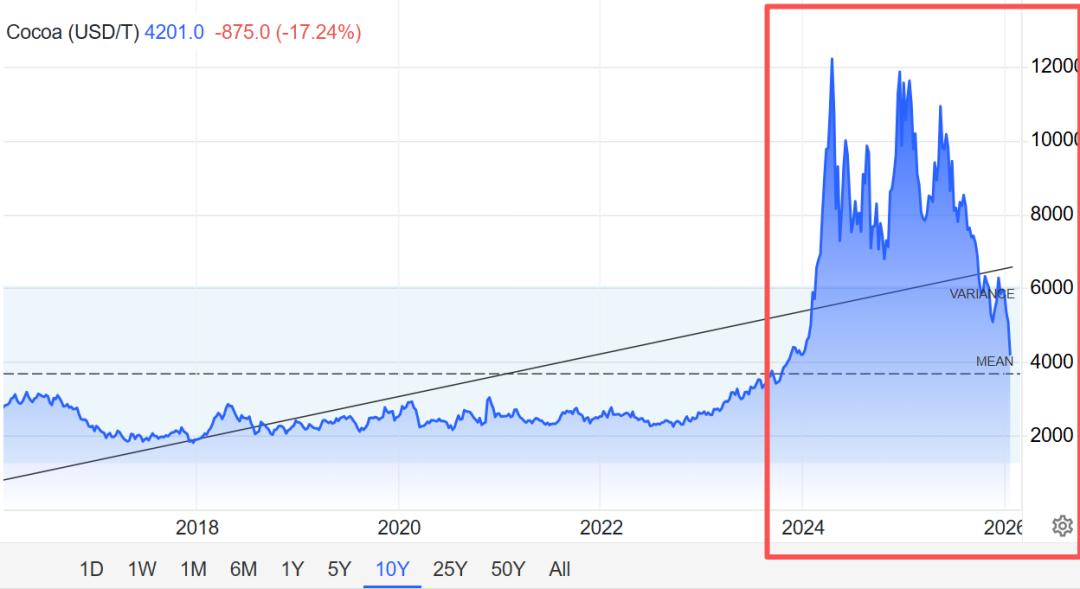
Overview - The leisure snack category, particularly candy and chocolate, has faced significant challenges in recent years due to health trends and rising raw material costs, with cocoa prices expected to remain high in 2024 and 2025, having increased several times compared to a decade ago [1][3]. Market Dynamics - In 2024 and 2025, chocolate accounts for approximately 9% of the leisure snack category, while candy holds about 4%, indicating a significant disparity [5]. - Both categories are experiencing negative sales growth, with chocolate sales declining by about 7% year-on-year, while candy's decline is more pronounced, exceeding 10% [5][9]. - The overall market for leisure snacks in traditional retail channels is shrinking, affecting all subcategories, with candy facing more severe pressure than chocolate [5][14]. Seasonal Trends - Chocolate sees higher sales in the autumn and winter months due to increased caloric needs and holiday celebrations, while candy's market share has shown a noticeable decline in 2025 [7][9]. Pricing Trends - The average price per 100 grams for chocolate has been rising, influenced by increased raw material costs, while candy prices have generally decreased [11][14]. - The price index for both chocolate and candy has shown a similar trend, with fluctuations indicating a general decline in prices for leisure snacks overall [13][14]. Regional Insights - In 2025, the market share of candy has declined across seven regions, with the Southwest region having the highest share, while the Northeast has the lowest [16]. - Chocolate's market share is higher in East China, North China, and Southwest regions, with some regions showing growth in 2025 compared to 2024 [17]. Market Concentration - The chocolate category has a high market concentration, with the top three companies holding over 70% of the market share, which is expected to increase further [19]. - In contrast, the candy category has a much lower concentration, with the top three companies holding only about 20% of the market share, indicating a fragmented market [19]. Brand Performance - Among chocolate brands, Meiji has shown significant sales growth, while Mars maintains the largest market share [22][27]. - In the candy sector, all top ten companies reported negative sales growth, with Mars being the only one exceeding 8% market share [36][42]. Product Trends - The chocolate category is seeing a rise in the number of SKUs, particularly in milk chocolate, while the market share of nostalgic products like M&Ms is declining [30][33]. - In the candy category, products like pressed candy and sugar-free options are gaining traction, but traditional candy faces challenges in maintaining market share [43][50]. Future Outlook - The candy and chocolate sectors are expected to evolve with a focus on health-oriented products and innovative marketing strategies, such as IP branding, to enhance consumer appeal and pricing power [53].

宠物食品行业2026年展望
2026-02-10 03:24
Summary of Pet Food Industry Conference Call Industry Overview - The pet food market is experiencing sluggish overall growth, with leading OEM companies facing performance pressures due to a slowdown in pet consumption in China and major brands building their own supply chains, resulting in reduced OEM orders. The number of new brands entering the market is also declining [1][3][5]. - The concentration of domestic pet food brands is increasing, with the CR5 market share surpassing 30% and CR10 approaching 50%. This high concentration is raising the barriers for new brands entering the market, leading to diminishing opportunities [1][4][5]. Market Dynamics - Online channels such as Taotian, JD.com, and Pinduoduo dominate the market, accounting for approximately 70% of sales. In contrast, traditional offline channels are seeing a decline in sales, with their share dropping below 7% [1][6]. - Supermarkets and convenience stores are experiencing faster growth, although their absolute sales figures remain low. For example, the supermarket sector grew by about 5% compared to 2024 [1][6]. - Douyin (TikTok) as a sales channel has a dual nature; brands with strong content can acquire customers at a low cost, but traditional omnichannel brands struggle to achieve profitability on this platform [1][7]. Future Outlook - The pet food industry is expected to face destocking, defoaming, and a cooling off in 2026, leading to intense competition. Small enterprises will face significant challenges, while large channels like department stores and supermarkets are expected to grow [1][8]. - The industry is likely to see increased consolidation and mergers, particularly among supply chain companies with revenues of 200-500 million and brand companies with revenues of 100-300 million. New opportunities are anticipated in the medical field and functional products, such as prescription food for senior dogs [1][9]. Growth Drivers - The primary growth driver for the pet food market over the next three to five years will be volume growth, with an expected annual growth rate of 10%-15%. However, due to intense price competition, overall consumption growth is not expected to exceed 10% [2][16]. Competitive Landscape - The competition among high-end cat food brands during the 2025 Double Eleven shopping festival is expected to be fierce, with no significant decline in advertising spending anticipated in 2026 [12][13]. - Domestic brands have a competitive advantage in the prescription food sector, with the potential for both volume and price growth as new medical needs arise [17]. International Expansion - Chinese pet food brands face challenges in international markets, particularly in Southeast Asia, which has significant potential due to high pet ownership rates. However, they must overcome local market policies and competition from established Western brands [10][12][11]. E-commerce and Retail Trends - Alibaba's platforms, including Taobao, remain the most critical online channels for businesses. The application of AR systems to enhance customer service and operational efficiency is also seen as a key growth strategy [18]. - The instant retail sector is rapidly developing, with Meituan and other players capturing significant market shares. The scale of instant retail is expected to reach 4-4.5 billion yuan, with a year-on-year growth of 30%-40% [19][20]. Conclusion - The pet food industry is at a critical juncture, with increasing concentration, evolving consumer preferences, and the need for brands to adapt to a competitive landscape. Companies must focus on cost efficiency and explore new market opportunities to sustain growth in a challenging environment [1][8][9].
5 Relatively Secure And Cheap Dividend Stocks, Yields Up To 8% (February 2026)
Seeking Alpha· 2026-02-07 13:20
Group 1 - The primary goal of the "High Income DIY Portfolios" service is to provide high income with low risk and capital preservation for DIY investors [1] - The service offers seven portfolios designed for income investors, including three buy-and-hold portfolios, three rotational portfolios, and a conservative NPP strategy portfolio [1] - The portfolios aim to create stable, long-term passive income with sustainable yields, catering to retirees or near-retirees [1] Group 2 - The author of the monthly series on Dividend Stocks has 25 years of investment experience and focuses on dividend-growing stocks with a long-term horizon [2] - A unique 3-basket investment approach is applied, targeting 30% lower drawdowns, 6% current income, and market-beating growth over the long term [2] - The service includes a total of 10 model portfolios with varying income targets, buy and sell alerts, and live chat for portfolio management [2]


山西证券:宠物食品行业发展前景广阔 品牌升级转型谋突围
智通财经网· 2026-02-06 08:53
Core Insights - The pet food industry in China is expected to continue growing due to increasing pet ownership and consumer spending on pet products, with a notable shift from OEM to brand-oriented models [1][9] Group 1: Market Growth and Trends - The number of pets in urban China is projected to reach 126 million by 2025, with a year-on-year growth of 1.8%, and a CAGR of 4.6% from 2020 to 2025 [2] - The urban pet consumption market is expected to exceed 312.6 billion yuan by 2025, with a CAGR of 8.6% from 2020 to 2025, and the cat consumption market growing at a CAGR of 11.4% [2] - The pet ownership penetration rate in urban China is around 21% in 2024, indicating significant room for growth compared to Japan and South Korea [4] Group 2: Competitive Landscape - The global pet food market is growing at a steady rate of around 5%, with North America holding the largest share at 42.5%, and major players like Mars and Nestlé controlling over 40% of the market [3] - Domestic companies are gradually increasing their market share, with three out of the top five companies being local brands by 2024, including Guobao and Zhongchong [3] - The competitive landscape is characterized by a shift towards brand concentration, with larger companies leveraging brand matrices to enhance market presence [7] Group 3: Consumer Behavior and Preferences - The pet owner demographic is becoming younger, with 69% of pet owners being born in the 1990s and 2000s by 2025, leading to a trend of personalized and premium pet food choices [5] - There is a growing preference for high-end pet food products, with increased consumption of wet food, baked food, and freeze-dried food on platforms like Tmall [5] Group 4: Business Models and Strategies - The shift from OEM to brand-oriented models is evident, with domestic brands enjoying a premium of nearly 15% over OEM products [6] - Companies are increasingly focusing on R&D and supply chain management rather than traditional marketing strategies to build sustainable competitive advantages [8] - The competition is expected to intensify as new entrants emerge and marketing costs rise, necessitating a focus on product quality and brand reputation [9]

行业聚焦:全球奶酪酱行业头部生产商市场份额及排名调查(附核心企业名单)
QYResearch· 2026-02-06 08:36
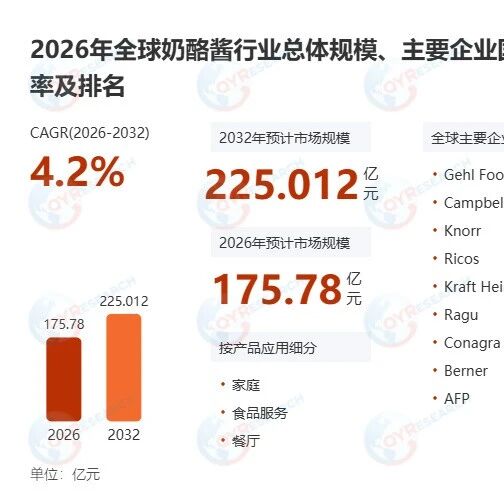
奶酪酱是英国烹饪中常用的一种传统酱汁。它以白酱(被称为 "母酱"之一)和切达奶酪为基础。奶酪酱可以 被视为英式莫尔奈酱(莫尔奈酱本身是贝夏梅尔酱的一种变体,传统上由一半格鲁耶尔奶酪和一半帕玛森奶酪 混合而成)的英式版本。制作方法是在白酱中加入适量的切达奶酪,然后用英式芥末、伍斯特沙司和胡椒等香 料调味。 根据 QYResearch 调研团队最新报告"全球奶酪酱市场报告 2026-2032 "显示,预计 2032 年全球奶酪酱市场规模 将达到 33.1 亿美元,未来几年年复合增长率 CAGR 为 4.2% 。 图. 全球奶酪酱市场前10强生产商排名及市场占有率(基于2025年调研数据;目前最新数据以本公司最新调研 数据为准) 根据 QYResearch 头部企业研究中心调研,全球范围内奶酪酱生产商主要包括 Gehl Foods 、 Kerry Group 、 AFP 、 Nestlé 、 Conagra 、 Campbell (Prego) 、 Bay Valley 、 Kraft Heinz 、 McCormick 、 Knorr 等。 2025 年,全球前五大厂商占有大约 43.0% 的市场份额。 图. 奶 ...
雀巢CEO再谈裁员1.6万:借助AI降低人力成本丨消费参考
2 1 Shi Ji Jing Ji Bao Dao· 2026-02-06 02:12
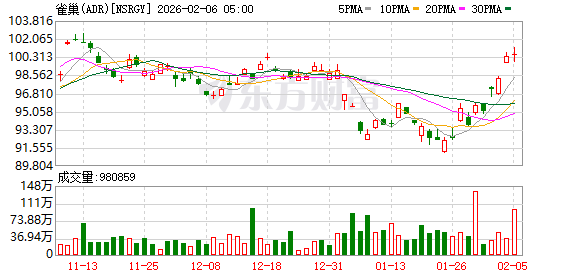
Group 1 - The core viewpoint of the article highlights the impact of artificial intelligence (AI) on employment, with Nestlé's CEO Phil Navratil stating that AI enables faster and more agile operations, leading to a reduction in workforce needs [2][4] - Nestlé plans to cut approximately 16,000 jobs, which is about 6% of its total workforce, over the next two years, with around 12,000 white-collar positions affected [2][5] - The layoffs will focus on the marketing sector, while the sales sector remains relatively stable [2][5] Group 2 - Nestlé's financial performance shows pressure, with total sales of CHF 65.9 billion for the first nine months of 2025, a year-on-year decline of 1.9% [5] - The organic growth rate for Nestlé was 3.3%, with a negative impact of 5.4% from currency fluctuations [5] - The Greater China region has been a significant drag on performance, with an organic growth rate of -10.4% in Q3 2025, continuing a downward trend [5][6]

雀巢宣布两项全球合作计划,助力推广再生农业,扶持新一代农业从业者
Zhong Guo Jing Ji Wang· 2026-02-05 04:05
Core Viewpoint - Nestlé is accelerating the transition to regenerative agriculture and encouraging youth involvement in future agricultural development through global partnerships with The Nature Conservancy and Goodwall during the 2026 World Economic Forum in Davos [1][2] Group 1: Partnership and Collaboration - Nestlé's COO Stephanie Hart emphasized the importance of regenerative agriculture for the long-term resilience of Nestlé's business and the global food system [1] - The collaboration with The Nature Conservancy aims to deepen the existing achievements of the Nestlé Agriculture Framework, which has already shown significant results in increasing crop yields and farmer incomes while promoting ecological protection [1] - The partnership with Goodwall will help attract new talent to the agricultural sector by developing agricultural-related curricula and utilizing gamified teaching methods to enhance youth understanding of regenerative agriculture [2] Group 2: Strategic Goals - Nestlé's long-term goal is to make regenerative agriculture the standard model for its global supply chain procurement while nurturing a continuous stream of young agricultural entrepreneurs [2] - Previous collaborations with the World Farmers' Organisation focus on advocating for fair agricultural policies and promoting practical solutions to enhance the food system's resilience to climate change [2]