
古茗

Search documents
古茗卖爆糖水,茶饮下半场的赚钱信号是它?
3 6 Ke· 2025-11-20 00:43
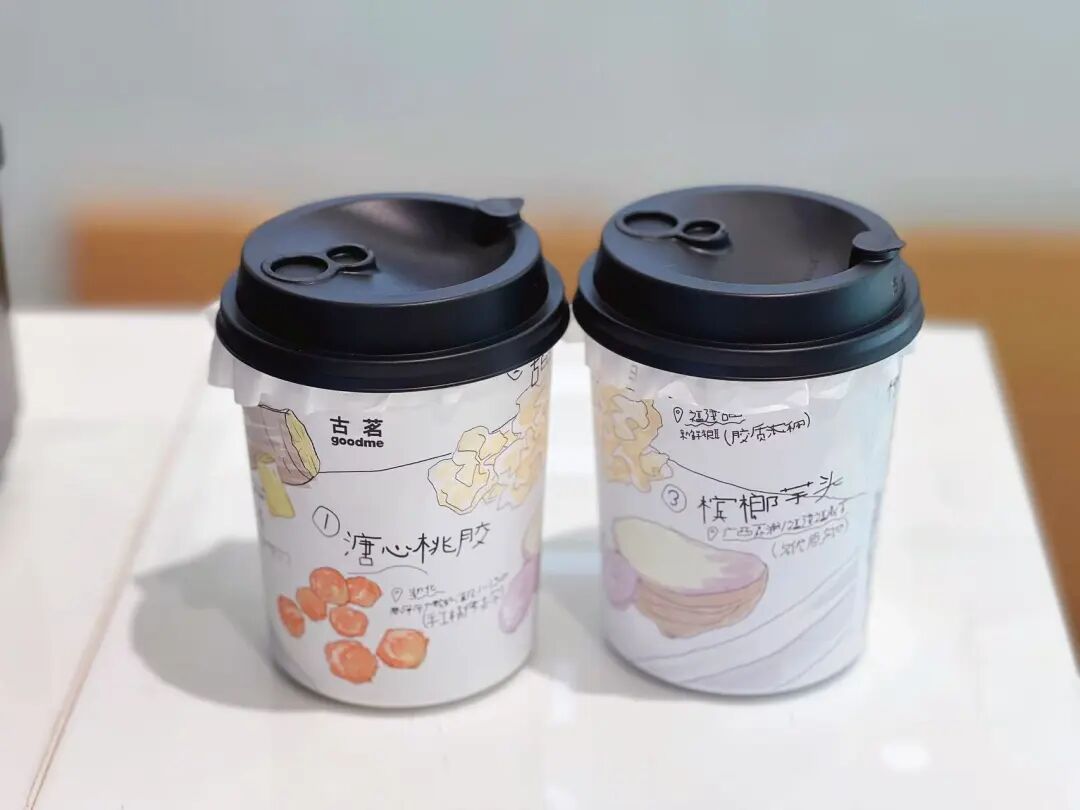
Core Insights - Guming's new slow-cooked dessert series has become a top seller, leading to widespread consumer interest and product shortages across multiple stores [1][4][6] - The introduction of these products marks a significant exploration into the dessert category for Guming, which aims to establish its unique brand identity within this segment [7][15] Group 1: Product Launch and Consumer Response - Guming launched two new products: Peach Gum Tapioca Milk and Taro Mochi Milk, priced at 16 yuan and 18 yuan respectively, which quickly sold out in many locations [1][3] - The new offerings have generated a DIY trend among consumers, with social media filled with positive reviews highlighting the rich ingredients and flavors [1][6] - The packaging of the new products features information about the origin and preparation of ingredients, enhancing consumer engagement [3] Group 2: Industry Trends and Competitor Actions - Other tea brands, such as Cha Bai Dao and CoCo, are also entering the dessert market, indicating a growing trend among tea shops to diversify their offerings [7][11] - Brands like Ji Dong Shao Xian Cao have reported significant sales increases after transitioning to a "tea + dessert" model, with some stores seeing revenue growth exceeding 200% [7][9] - The dessert category is becoming a second growth curve for beverage shops, as evidenced by the popularity of solid desserts like Mango Pomelo Sago [15][19] Group 3: Market Dynamics and Consumer Behavior - The overlap in consumer demographics between tea and dessert products allows tea shops to leverage existing customer bases without extensive marketing efforts [15] - The core ingredients for tea and dessert products are often similar, which helps reduce inventory pressure and enhances ingredient utilization [15][17] - The boundaries between tea and dessert offerings are blurring, as both types of establishments increasingly incorporate each other's products to enhance competitiveness and consumer experience [19]

新茶饮“造富”神话,仍在持续
3 6 Ke· 2025-11-19 12:48
Core Insights - The article highlights the booming IPO activity of Chinese new tea brands in 2025, marking it as the "Year of New Tea Drink IPOs" with multiple brands going public in quick succession [1][2] - The competitive landscape of the new tea drink industry is largely determined by the number of stores, with leading brands like Mixue Ice Cream and Tea, and Gu Ming having significant store counts [2][3] - The article emphasizes the importance of supply chain management and differentiation in driving the success of tea brands in the capital market [8][11] Group 1: IPO Activity - The IPO of Hu Shang A Yi on May 8, 2025, saw its opening price rise by 68% compared to the issue price, continuing the trend of successful listings in the new tea drink sector [1] - Other notable IPOs include Gu Ming in February, Mi Xue Ice City in March with a subscription rate of 1145 times, and Ba Wang Tea Ji in April, which became the first Chinese tea brand listed on NASDAQ [1] - The article mentions the previous listings of Nayuki and Cha Bai Dao, bringing together the "Six Little Dragons" of the new tea drink industry [1] Group 2: Store Count as a Key Indicator - Store count is identified as a critical metric for determining brand positioning in the new tea drink market, with Mixue leading with 44,000 stores [2] - As of September 2025, Gu Ming had increased its store count by 507 since June, while Hu Shang A Yi joined the "10,000 store club" with 10,739 stores [2] - Sweet Lala is preparing for an IPO in 2025, currently operating 6,382 stores, with plans to expand further into rural areas [3] Group 3: Supply Chain Management - The article discusses the significance of supply chain efficiency in the new tea drink sector, with brands like Cha Yan Yue Se investing heavily in self-built supply chains to control quality and costs [8][10] - Sweet Lala employs a mixed model of self-production and large-scale procurement, while also establishing production bases to enhance supply chain capabilities [10] - The competitive advantage in the new tea drink market is increasingly tied to the ability to manage supply chains effectively, as brands seek to differentiate themselves [8][11] Group 4: Differentiation Strategies - The new tea drink market is experiencing a shift towards differentiation, with brands like Jasmine Milk White focusing on unique flavor profiles and product offerings [11][13] - Tea Yan Yue Se has diversified its business by developing sub-brands, enhancing consumer trust and engagement [11][14] - The article notes that successful brands are leveraging unique product offerings and strong supply chain management to attract both consumers and investors [11][15]
不需要那么多影院了!万达电影“收权”、上海电影“扩网”独家对话:解密龙头公司存量战
Mei Ri Jing Ji Xin Wen· 2025-11-19 10:39
Core Insights - The cinema industry is facing significant challenges, with a decline in annual box office revenue per screen dropping below 500,000 yuan, leading to over 15 cinema closures in just half a month [2] - Major cinema chains like Wanda Film and Shanghai Film are adapting their strategies in response to market pressures, focusing on direct management rather than franchise models [4][6] Industry Overview - The number of cinema screens in China is approaching 100,000, yet the market is experiencing a structural downturn, prompting leading cinema investment companies to rethink their operational strategies [2] - The shift from a franchise model to a focus on direct management is evident, with Wanda Film halting new franchise agreements while Shanghai Film continues to expand its franchise network [2][4] Strategic Adjustments - Wanda Film's management has emphasized a strategic pivot towards direct operations, which currently account for approximately 15% of its total box office revenue, as opposed to the 2% from franchise operations [6] - The company is undergoing a transition following its acquisition by Ru Yi Film, moving away from the Wanda Group's influence and focusing on long-term operational sustainability [6][7] Market Trends - The cinema industry is entering a phase of optimization, where the focus is shifting from expansion to enhancing operational efficiency and customer experience [9] - The competition is expected to intensify in non-box office revenue streams, with companies exploring diverse business models to attract audiences beyond traditional film screenings [11][12] Revenue Diversification - Companies are increasingly looking to enhance non-box office revenues through collaborations with popular IPs and gaming, as seen with Wanda Film's partnerships that have generated significant additional revenue [11][12] - The success of films like "Wang Wang Mountain Little Monster" demonstrates the potential for substantial non-box office income, with the IP generating over 2.5 billion yuan in merchandise sales [13]


门店逼近3万家、配送费增超两倍!瑞幸三季度“增收不增利”背后:咖啡业“规模换利润”走到拐点?
Mei Ri Jing Ji Xin Wen· 2025-11-18 11:09
国研网报告显示,现制咖啡赛道预计到2025年市场规模将接近1300亿元。市场仍在增长,但对于具体品 牌来说境遇各有不同。伴随着头部茶饮品牌加码咖啡线、低价连锁加速开店、外卖平台补贴大战此起彼 伏,作为国内连锁咖啡品牌第一的瑞幸,同样面临行业竞争压力。 今年的咖啡市场正在经历剧烈洗牌。 《每日经济新闻》记者(以下简称"每经记者")注意到,年初古茗等茶饮品牌低价布局下沉咖啡市场, 暑期库迪咖啡借外卖补贴获得喘息机会,10月底星巴克中国出售60%股权并推出"县城计划"加码下沉市 场,这些市场行为均加剧了咖啡市场的竞争态势。 图片来源:每经记者 张建 摄 11月17日晚间,瑞幸发布2025年第三季度财报,其报告期内营收同比增长50.2%至152.9亿元。值得一提 的是,虽然瑞幸的规模仍在快速增长,但这一财季却出现了"增收不增利"的情况。 首先,瑞幸仍以高速扩店、扩大规模为核心策略。从财报来看,第三季度,瑞幸的门店达到29214家, 月均交易用户破1.12亿,这种网络密度带来的覆盖与履约优势是其最重要的护城河,也是推动营收增长 的核心动力。 更值得关注的是,瑞幸联营门店所贡献的营收,在瑞幸的收入结构中愈发关键。 截至2 ...

动辄投入百万,餐饮品牌正透过联名游戏IP“抢人”?
投中网· 2025-11-18 03:14
Core Viewpoint - The collaboration between the restaurant industry and game IPs is becoming a prevalent marketing strategy, driving significant traffic and engagement for brands, despite the high costs associated with such partnerships [4][5][12]. Group 1: Trends in Collaboration - Game IPs are increasingly becoming a frequent choice for restaurant brand collaborations, with 70 game brands engaging in partnerships with various food and beverage companies by mid-2025 [6]. - The nature of these collaborations is evolving from simple branding to deeper integrations, including in-game items, themed stores, and exclusive menus [6][10]. - Notable examples include Luckin Coffee's collaboration with "Honor of Kings," which sold over 10 million cups in just three days, and Gu Ming's partnership with "Honkai: Star Rail," which caused their app to crash due to high traffic [4][6]. Group 2: Financial Considerations - Collaborating with top-tier game IPs typically incurs costs exceeding one million, with deeper partnerships ranging from 1.5 million to 3 million [8][10]. - Gu Ming reported a significant increase in advertising expenses, attributing over 70 million yuan to IP collaborations, indicating the financial impact of these marketing strategies [9]. - While the immediate financial returns may not be evident, the long-term brand value enhancement is often cited as a key benefit of these collaborations [10][17]. Group 3: Strategic Motivations - The restaurant industry is targeting the growing gaming demographic, which reached approximately 679 million users in China, with a market revenue of 168 billion yuan in the first half of 2023 [13]. - Collaborating with game IPs allows brands to tap into established fan bases, generating organic promotion and enhancing brand recognition [14][15]. - The emotional connection created through familiar game characters and narratives can lead to stronger customer engagement compared to traditional marketing methods [15][17]. Group 4: Success Factors - Successful collaborations require a strong alignment between the restaurant brand and the game IP's user demographics to maximize effectiveness [18]. - Quality control in supply chains is crucial, as many collaborations have failed due to issues like insufficient stock or poor product quality [18]. - Innovative and engaging marketing strategies, such as limited-time offers and interactive experiences, are essential to capture consumer interest and differentiate from competitors [18][20]. Group 5: Long-term Considerations - The challenge for brands lies in converting the temporary traffic spikes from collaborations into lasting customer loyalty and brand equity [21]. - The ultimate goal is to transform casual customers into loyal fans, ensuring that the collaborations yield sustainable benefits rather than fleeting attention [21].

瑞幸拟赴美上市!CFO安静履历亮眼
Sou Hu Cai Jing· 2025-11-17 10:19
Core Viewpoint - Luckin Coffee, after overcoming a significant financial scandal, is planning to return to the U.S. capital market with a strong operational performance and a large number of stores [3][4][6]. Group 1: Company Background - Luckin Coffee was founded in 2017 and quickly reached a valuation of $4 billion within two years through aggressive subsidies and rapid store openings [3]. - The company went public on NASDAQ in May 2019, achieving the fastest IPO record globally [3]. - In 2020, Luckin faced a financial scandal, admitting to fabricating transactions and inflating sales figures, leading to an 80% drop in stock price and eventual delisting from NASDAQ [4]. Group 2: Financial Performance - As of Q2 2025, Luckin reported total net revenue of 12.359 billion yuan, a year-on-year increase of 47.1%, and a net profit of 1.251 billion yuan, up 43.6% [6]. - The company has expanded internationally, entering markets in Singapore, Malaysia, and the U.S., with a total of 89 overseas stores and 26,206 global stores as of the end of Q2 [6]. - Luckin aims for annual revenue exceeding 50 billion yuan in 2025 [6]. Group 3: Market Position - Luckin Coffee has become a leading player in the Chinese coffee market, holding approximately 35% market share, significantly ahead of Starbucks at 14% and Luckin's competitor, Kudi Coffee, at 18% [7]. - The rise of local coffee brands, such as Manner and Lucky Coffee, poses competitive pressure on Luckin, particularly in urban areas and lower-tier markets [8]. Group 4: Management and Governance - The company appointed a new CFO, Ms. An Jing, who has over 17 years of experience in finance and management, particularly in technology companies [9][11]. - To successfully return to the U.S. market, Luckin must meet stringent auditing and internal control requirements set by the PCAOB, which will be crucial for rebuilding investor confidence [11].

华西证券:首予古茗(01364)“买入”评级 高品质平价茶饮仍有翻倍以上的增长空间
智通财经网· 2025-11-17 07:07
智通财经APP获悉,华西证券发布研报称,古茗(01364)凭借其高质价比产品策略、区域加密的门店 网络及自建冷链供应链,组成了规模与效率的正向循环。公司业绩持续增长稳健,未来有望通过品类拓 展与品牌力提升支撑单店销售,同时加盟政策优化将驱动门店规模实现翻倍以上增长空间,预计2025 年-2027年EPS分别为1.16/1.21/1.45元,对应PE分别为17.4/16.7/14.0倍,首次覆盖给予公司"买入"评级。 投资建议 华西证券主要观点如下: 市场规模 自创立以来,古茗致力于提供新鲜美味、口味一致、价格亲民的高品质饮品,历经15年稳步发展现已成 为茶饮行业的头部品牌之一;截至2025年6月底,全国门店总数达11179家,覆盖200余个城市。公司以加 盟模式为主,收入主要来自向加盟商销售货品及设备以及提供服务,2025H1,实现收入56.63亿 元/+41.2%,经调整净利润10.86亿元/+42.4%,经调整净利率19.2%/+0.2pct。 竞争壁垒 不同于其他茶饮品牌,公司具有独特的战略打法——采用货架型高频上新的产品策略和区域加密扩张的 门店策略,并自建冷链物流体系打造供应链壁垒。区域加密扩张策略 ...

华西证券:首予古茗“买入”评级 高品质平价茶饮仍有翻倍以上的增长空间
Zhi Tong Cai Jing· 2025-11-17 07:05
Core Viewpoint - Company has established itself as a leading brand in the tea beverage industry through a high-quality price ratio product strategy, a regionally encrypted store network, and a self-built cold chain supply chain, resulting in a positive cycle of scale and efficiency [1] Market Size - Since its establishment, the company has focused on providing fresh, delicious, consistent, and affordable high-quality beverages, growing steadily over 15 years to become one of the top brands in the tea beverage industry; as of June 2025, the total number of stores nationwide is expected to reach 11,179, covering over 200 cities [1] - The company primarily operates through a franchise model, generating revenue mainly from selling goods and equipment to franchisees and providing services; in the first half of 2025, it achieved revenue of 5.663 billion yuan, a year-on-year increase of 41.2%, with an adjusted net profit of 1.086 billion yuan, up 42.4%, and an adjusted net profit margin of 19.2%, an increase of 0.2 percentage points [1] Competitive Barriers - The company differentiates itself from other tea beverage brands by employing a high-frequency product launch strategy and a regionally encrypted expansion strategy, along with a self-built cold chain logistics system to create supply chain barriers [2] - The dense store network resulting from the regional encryption strategy helps shorten transportation distances, reduce warehousing and logistics costs, and ensure high-frequency delivery of ingredients, achieving a "two-day delivery" service in the industry, fulfilling the brand's "freshness" promise; cost savings from improved supply chain efficiency can be directly converted into pricing advantages, supporting the brand's high-quality price ratio strategy and enhancing franchisee profitability, which in turn promotes further store growth and cost dilution [2] Future Outlook - Although the company, as a brand owner, does not directly participate in the revenue sharing of franchise stores, its revenue is closely related to the GMV of franchise stores, making the improvement of single-store sales and the increase in the number of stores the core drivers of the company's performance growth [3] - In the short term, single-store sales are expected to grow rapidly due to the external delivery competition; even if delivery subsidies slow down, the company can still support single-store sales through product and scenario expansion and brand enhancement [3] - Following a policy adjustment in February this year that boosted confidence among new franchisees, the pace of store openings has accelerated significantly; with continued regional encryption and penetration into untapped areas, the company is projected to have over 35,000 store openings in mainland China, indicating more than double the current growth potential [3] Investment Recommendations - The company is expected to achieve revenues of 12.458 billion yuan, 15.677 billion yuan, and 18.434 billion yuan from 2025 to 2027, representing year-on-year growth of 41.7%, 25.8%, and 17.6%, respectively; net profit attributable to the parent company is projected to be 2.768 billion yuan, 2.888 billion yuan, and 3.450 billion yuan, with year-on-year growth of 87.3%, 4.3%, and 19.5% [4] - EPS is expected to be 1.16 yuan, 1.21 yuan, and 1.45 yuan, with the latest stock price (closing price on November 14 at 22.3 HKD, exchange rate 1 HKD = 0.91 CNY) corresponding to PE ratios of 17.4, 16.7, and 14.0 times [4] - The company is given a "buy" rating for the first coverage [4]
巴菲特时代过去了,在恶劣的竞争中,必须找到商业模式的这“三个问题”
3 6 Ke· 2025-11-17 02:54
Core Insights - The article discusses the importance of understanding business models in the context of investment analysis, particularly in the A-share market, emphasizing the need to adapt beyond traditional frameworks like those of Warren Buffett [1] Group 1: Business Models in the Tea Beverage Industry - The two tea brands, Mixue Ice Cream and Nayuki, operate under fundamentally different business models, with Mixue focusing on low-cost products and profitability, while Nayuki has reported significant losses despite high revenue [2][3] - Nayuki's business model is centered around a direct sales approach, prioritizing store locations and customer experience, which has led to operational challenges and losses [3] - In contrast, Mixue's franchise model relies on providing raw materials and support to franchisees, allowing for easier scalability and profitability [4][6] Group 2: Efficiency and Cost Management - Mixue achieves cost efficiency through lower material costs and economies of scale, allowing it to maintain competitive pricing and profitability [8][9] - The franchise model of Mixue is particularly suited to the Chinese market, leveraging a vast pool of potential franchisees who seek stable business opportunities [4][6] - The operational strategy of Gu Ming, another tea brand, focuses on supply chain efficiency, ensuring rapid delivery and fresh ingredients, which enhances its competitive edge in lower-tier markets [10] Group 3: Live Streaming E-commerce Models - The article outlines two primary business models in live streaming e-commerce: brand self-broadcasting and MCN (Multi-Channel Network) models, each with distinct core resources and key operations [11][13] - The self-broadcasting model emphasizes long-term operations and customer loyalty, while the MCN model relies on leveraging popular influencers for sales [13][14] - The challenges faced by traditional live streaming models highlight the need for companies to innovate and adapt their business strategies to maintain competitiveness [14][24] Group 4: Evolution of Oriental Selection - Oriental Selection has transitioned to a self-built supply chain model, integrating cultural elements with agricultural products to create a unique market position [18][20] - The company's shift towards self-operated products and direct supply chain management has resulted in significant revenue growth and improved profit margins [21][22] - Despite challenges following the departure of a key influencer, the company continues to pursue its strategic goals, focusing on building a sustainable business model [19][24]


分红“港”知道|最近72小时内,中国光大银行、古茗、沪上阿姨、景福集团、敏华控股等5家港股上市公司公告分红预案!
Mei Ri Jing Ji Xin Wen· 2025-11-17 02:10
Group 1 - China Everbright Bank announced a dividend of RMB 0.1050 per share, with no ex-dividend date or payment date specified. It is part of the Hang Seng Index for banks and the CSI Central State-Owned Enterprises Dividend Index [1] - Gu Ming declared a dividend of HKD 0.93 per share, with an ex-dividend date of December 8, 2025, and a payment date of December 29, 2025. It belongs to the non-alcoholic beverages sector and is not part of the CSI Central State-Owned Enterprises Dividend Index or the Hang Seng High Dividend Yield Index [1] - Hu Shang A Yi announced a dividend of RMB 0.6760 per share, with an ex-dividend date of December 12, 2025, and a payment date of February 4, 2026. It is also in the non-alcoholic beverages sector and is not included in the aforementioned indices [1] - Jingfu Group declared a dividend of HKD 0.004 per share, with an ex-dividend date of November 28, 2025, and a payment date of December 11, 2025. It operates in the jewelry and watch sector and is not part of the CSI Central State-Owned Enterprises Dividend Index or the Hang Seng High Dividend Yield Index [1] Group 2 - Minhua Holdings announced a dividend of HKD 0.15 per share, with an ex-dividend date of December 1, 2025, and a payment date of December 17, 2025. It is categorized under the furniture sector and is not part of the CSI Central State-Owned Enterprises Dividend Index or the Hang Seng High Dividend Yield Index [2] - The CSI Central State-Owned Enterprises Dividend Index, as of November 14, has a one-year dividend yield of 5.56%, which is higher than the 10-year government bond yield of 3.74%. The largest investment vehicle tracking this index is the Hong Kong Central State-Owned Enterprises Dividend ETF (513910) [2] - The Hang Seng High Dividend Yield Index, as of November 14, has a one-year dividend yield of 5.26%, exceeding the 10-year government bond yield of 3.44%. The only ETF tracking this index is the Hang Seng Dividend ETF (159726) [2]
