地平线

Search documents
“智能三大件”产业加速融合 剪刀差效应有望重现
Zheng Quan Shi Bao· 2025-09-18 17:52
Core Viewpoint - The integration of smart vehicles, smart robots, and low-altitude flying vehicles is accelerating, with the potential to significantly reduce costs and enhance technological development through shared supply chains and resources [1][2][3]. Group 1: Industry Integration - The three industries—smart vehicles, smart robots, and low-altitude flying vehicles—exhibit deep coupling in technology, resources, and application scenarios, primarily supported by artificial intelligence [2][3]. - The supply chain overlap between smart vehicles and smart robots exceeds 60%, with some companies reaching 70%, indicating a strong potential for cross-industry technology reuse [3][4]. - The integration of these industries is expected to replicate the "cost-volume" scissors effect seen in electric vehicles, where component costs have decreased significantly, leading to increased sales [4][5]. Group 2: Cost Reduction Potential - If the cost of flying cars can be controlled to around 200,000 yuan, it would align with ground transportation pricing, as indicated by industry experts [1][5]. - The price of laser radar has dropped from 100,000 yuan in 2019 to 800 yuan today, showcasing the potential for cost reductions in related technologies [4]. - The mass production capabilities of electric vehicle components are expected to facilitate significant cost reductions in smart robots, potentially halving the time from prototype to mass production [5][6]. Group 3: Collaborative Development - Companies are encouraged to establish global manufacturing advantages and promote cross-industry collaboration to enhance technological integration and supply chain efficiency [6][7]. - The establishment of the EAI 100 Innovation Center in Wuhan aims to foster collaboration among over 300 companies in the smart industry, focusing on technology development and standardization [7][8]. - Local governments are recognizing the trend of integration among these industries and are initiating policies to support collaborative development [7].
半年亏52亿!地平线陷双重危机:芯片巨头压境,核心客户自研
Guo Ji Jin Rong Bao· 2025-09-18 13:09
Core Viewpoint - Horizon faces significant challenges in business, profitability, and technology despite reporting a revenue increase in the first half of 2025 [1] Financial Performance - In the first half of 2025, Horizon reported revenue of approximately 1.567 billion yuan, a year-on-year increase of 67.6%, while losses expanded to 5.233 billion yuan from 5.098 billion yuan in the same period last year [2] - Adjusted operating losses grew by 34.9% year-on-year to 1.111 billion yuan, primarily due to rising sales costs and R&D expenses [2] - Sales costs surged to 543 million yuan, a staggering increase of 177.13% compared to 196 million yuan in the previous year [2] - The automotive product solutions segment contributed 778 million yuan in revenue, a 250% increase from 222 million yuan year-on-year, with a gross margin improvement of 3.9 percentage points to 45.6% [3] - The automotive licensing and services business saw a 6.9% revenue increase to 738 million yuan, but its gross margin declined from 93% to 89.7% [3] - Overall gross margin decreased by 13.7 percentage points to 65.36% due to fluctuations in gross margins across different business segments [3] R&D and Operational Costs - R&D expenses reached 2.3 billion yuan, a 62% increase from 1.42 billion yuan year-on-year, driven by a strategic shift towards mid-to-high-end assisted driving solutions [5] - Administrative expenses rose by 26.33% to 307 million yuan, while sales and marketing expenses increased from 198 million yuan to 272 million yuan [6] Competitive Landscape - Despite significant R&D investments, Horizon's technology still lags behind international chip giants like Intel, Qualcomm, and NVIDIA, which are advancing to 4nm/5nm processes [7][8] - The self-research trend among automotive manufacturers is reducing Horizon's market space, as clients like BYD and Li Auto begin to develop their own chips and algorithms [9] Customer Dependency - Horizon's revenue is heavily reliant on a few major clients, with the top five clients accounting for 52.48% of revenue in the first half of 2025, and the largest client contributing 19.7% [10][11] - The instability of client business has become evident, with significant drops in revenue contribution from major clients compared to the previous year [12]
张永伟:智能汽车和具身机器人、飞行汽车供应链重合度超过60%
Jing Ji Guan Cha Bao· 2025-09-18 11:14
Core Insights - The three emerging industries of smart vehicles, embodied robots, and low-altitude economy (including flying cars) are deeply interconnected in technology, supply chains, and applications, with over 60% overlap in their supply chains [1] - The integration of artificial intelligence technology is fundamental to these industries, which share a common technological architecture of "perception-decision-execution" [1] - By 2030, the global market for the "three major components" of aggregated intelligence is expected to reach nearly $240 billion, with China's market exceeding $120 billion [2] Industry Overview - The automotive supply chain can be closely linked with the supply chains of embodied robots and low-altitude flying vehicles, with shared components such as perception devices [1] - The mass production benefits from the automotive industry, particularly in batteries, thermal management, and chips, can accelerate the maturity of the robotics and low-altitude flying vehicle sectors [1] - Companies like Tesla are leading in the humanoid robot field, sourcing over 70% of their suppliers from the existing automotive supply chain, while domestic companies are also diversifying into multiple categories [2] Market Trends - The competition in the future will focus on the collaborative efficiency of aggregated ecosystems rather than individual products, positioning the "three major components" as key drivers for high-quality economic development and global expansion [2] - The Wuhan Optics Valley has emerged as a significant base for the aggregated intelligence industry, housing the largest and most diverse humanoid robot innovation center in the country [2]


佑驾创新刘国清:与公交系统合作,是无人物流车规模化的可复制路径
Guan Cha Zhe Wang· 2025-09-18 10:03
Core Insights - The collaboration between public transportation companies and unmanned logistics vehicles is seen as a mutually beneficial model that can be replicated across various bases, addressing the challenges of commercialization and scalability in the unmanned logistics sector [1][6] - Youjia Innovation has officially entered the unmanned logistics field with the launch of its unmanned logistics brand "Xiaozhu Unmanned Vehicle," which includes the T5 and T8 models, set to be deployed in four cities by 2025 with a total order delivery of 400-500 units [1][2] Group 1: Product Details - The T5 unmanned logistics vehicle has a cargo capacity of 5.5m³, a maximum load of 1000kg, and a range of 180km, primarily serving express city distribution, retail, and fresh food delivery [2] - The T8 model features a cargo volume of 8.5m³, a maximum load of 1700kg, and a range of 240km, suitable for city distribution and industrial logistics, including specialized applications in mining and ports [2] Group 2: Technological Advantages - Intelligent driving is a core competency of Xiaozhu Unmanned Vehicle, supported by Youjia Innovation's extensive experience in the field, having served over 42 OEMs and Tier 1 clients since its establishment in 2013 [3] - The company has accumulated over 500,000 kilometers of data during the development phase of a single model, with 41% of the data being urban road data, aligning well with city distribution environments [3] Group 3: Strategic Partnerships and Market Expansion - The launch event featured notable figures from the automotive industry and government representatives from various cities, indicating strong support for the Xiaozhu Unmanned Vehicle [4][5] - Youjia Innovation has signed strategic cooperation agreements with Shenzhen Postal Service and Eastern Bus, aiming to enhance urban governance and empower the logistics industry [5] - The company anticipates that the delivery volume of Xiaozhu Unmanned Vehicles will reach 10,000 units by 2026, although achieving significant scale remains a challenge [5] Group 4: Market Challenges and Strategies - The company acknowledges the difficulty of expanding its network beyond the automotive sector to achieve commercial viability, emphasizing the need for substantial resources to build brand recognition and secure road rights [5][6] - The collaboration with public transportation systems is viewed as a solution to the resource challenges faced by unmanned logistics vehicles, leveraging the surplus resources available within these systems [6]
“2025凤凰之星”评委万喆:“卷”本质是一种“激烈竞争”
凤凰网财经· 2025-09-18 08:55
Core Viewpoint - The "2025 Phoenix Star Listed Company Selection" aims to highlight the core competitiveness and influence of Chinese listed companies, promoting healthy development between mainland and Hong Kong stock markets [1][3]. Group 1: Selection Process - The selection process began on August 2, with a public registration phase and case collection, followed by a first-round evaluation on August 28 to form a benchmark candidate pool [1]. - The final results will be announced on September 23, after a review process for newly registered companies with outstanding indicators [1]. Group 2: Evaluation Criteria - The selection includes nine major awards, such as Best Innovative Listed Company and Best Shareholder Return Listed Company, covering key areas of corporate development [3]. - The evaluation is characterized by a "panoramic" and "global perspective," incorporating multiple dimensions such as operational efficiency, innovation capability, social responsibility, and international competitiveness [4][5]. Group 3: Globalization and Competitive Strategy - The evaluation emphasizes the importance of companies' "going global" capabilities, encouraging them to build long-term strategies in global competition [5]. - The transformation of Chinese companies is described as three major leaps: from "quantity expansion" to "quality enhancement," from "output factors" to "localized coexistence," and the synergy of "hard and soft power" [6][7]. Group 4: Addressing "Involution" Concerns - The article addresses concerns about the "involution" culture of Chinese companies abroad, distinguishing between healthy competition and harmful involution [7]. - It emphasizes the need for compliance with local laws and regulations and the importance of localized cooperation to foster a positive competitive environment [8]. Group 5: Brand Building - Companies are advised to focus on long-term strategies rather than short-term gains to enhance their international brand influence [8]. - Successful examples of brand building include companies like Pop Mart and BYD, which leverage unique advantages to establish brand recognition globally [8]. Group 6: Event Support and Promotion - The event is supported by various organizations, including the China Listed Companies Association and the Drucker School of Management, with results to be revealed at the "Phoenix Bay Area Financial Forum 2025" [11].

电动化、智能化赋能零部件行业锚定新增量
Huan Qiu Wang Zi Xun· 2025-09-18 03:14
板块龙头 规模与结构的双重博弈 来源:中国汽车报 随着2025年上半年财报陆续出炉,汽车零部件上市公司业绩表现成为市场关注的焦点。今年以来,汽车 产业变革持续演进,市场竞争更趋激烈,零部件上市公司业绩增长是主流,但不同企业也有各自的具体 情况。 2025年上半年,中国新能源汽车的渗透率达到44.3%,电动化与智能化业务成为众多零部件企业的增长 引擎。以旧换新政策的加力扩围、智能化技术的加速落地及海外市场的深耕细作,为汽车零部件企业带 来新的发展机遇。但同时,受原材料成本上涨、市场竞争加剧等多重因素影响,部分企业的利润空间受 到挤压,面临转型升级的增长压力。 在此背景下,汽车零部件企业纷纷行动起来,一是在一些新兴领域积极布局,寻找新的业务增长点,二 是在供应链管理、生产效率等方面做好提升,努力降低成本,应对原材料成本上涨带来的挑战。此外, 国际化发展战略也成为众多零部件企业的共同选择。总体而言,今年上半年,中国汽车零部件行业努力 在变革中寻找机遇,展现出强大的韧性和活力。 电池电机 2025年上半年,沪深两市汽车零部件板块市值排名靠前的企业总体呈现增长态势,在传统业务规模优势 的基础上,不断挖掘新动能。 今年前 ...
全国首批L3级“真自动驾驶”汽车要来了!
Mei Ri Jing Ji Xin Wen· 2025-09-17 13:07
Core Viewpoint - The recent introduction of the "Automobile Industry Stabilization Growth Work Plan (2025-2026)" allows for conditional approval of L3 autonomous vehicle production, signaling a significant step towards the commercialization of L3 autonomous driving technology in China [1][10]. Industry Developments - The automotive industry is gearing up for the launch of L3 autonomous vehicles, with several companies, including XPeng Motors and GAC Group, planning to release L3 models by the end of this year [3][4]. - Various automakers have announced their timelines for L3 technology, with GAC Group stating it will mass-produce its first L3 vehicle in Q4 of this year, while other companies like Chery and Huawei are also targeting similar timelines for their L3 offerings [3][4][5]. Technical Challenges - Despite advancements, the rollout of L3 technology faces challenges related to infrastructure, regulatory frameworks, and the definition of responsibility in case of accidents [2][6][11]. - Experts emphasize that L3 technology requires extensive testing and validation to ensure safety and reliability before widespread consumer adoption [5][7]. Regulatory Framework - The Ministry of Science and Technology has issued ethical guidelines for the development of autonomous driving technologies, clarifying the responsibilities of drivers and systems under different levels of automation [6][10]. - Local governments are actively working on regulations to support the testing and deployment of L3 vehicles, with over 50 cities having introduced pilot policies or local regulations for autonomous driving [14]. Consumer Implications - The transition from L2 to L3 autonomous driving represents a significant shift in consumer experience, moving from driver assistance to full vehicle control under specific conditions [6][7]. - The cost of L3 vehicles is expected to be higher than L2 models due to advanced hardware and safety features, which may affect consumer adoption [15]. Future Outlook - Industry experts predict that 2030 will be a critical period for the large-scale application of L3 and L4 autonomous driving technologies, with expectations for rapid advancements in the coming years [16].


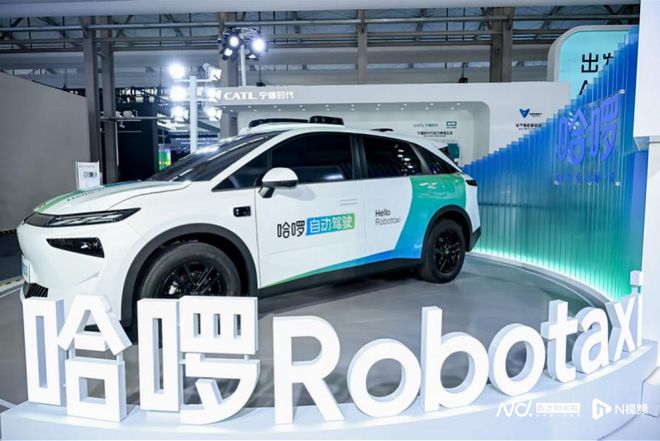
哈啰自动驾驶出租车获阿里战略投资,将部署超5万辆车型
Nan Fang Du Shi Bao· 2025-09-17 04:45
Core Insights - Hello announced a strategic investment in its Robotaxi business from Alibaba Group, aiming to deepen collaboration in intelligent driving technology and accelerate commercialization of Robotaxi services [1] Group 1: Strategic Collaboration - The partnership will focus on developing foundational large models in vision, voice, and language, as well as specialized models for smart cockpits [1] - Alibaba Cloud will collaborate with Hello to enhance algorithm iteration, user experience optimization, and operational efficiency for Robotaxi [1] - Hello's CEO emphasized the alignment of Alibaba's AI capabilities with the needs of scaling Robotaxi operations [1] Group 2: Business Development - In June, Hello officially entered the Robotaxi sector, forming "Zao Fu Intelligent Technology Co., Ltd." with Ant Group and CATL, with an initial investment exceeding 3 billion yuan [1] - The Robotaxi business team has built a core talent matrix of nearly 200 people, aiming for large-scale operations within two years [1] Group 3: Technology and Operations - Hello's first mass-produced Robotaxi model, "HR1," was unveiled at the Bund Conference, featuring a multi-layered operational platform adaptable to various car manufacturers and partners [3] - The company plans to establish a large-scale computing cluster for training and iterating autonomous driving models in collaboration with Alibaba Cloud [4] - Strategic partnerships have been signed with various ecosystem partners to advance Robotaxi technology development and commercialization [4] Group 4: Future Plans - Hello is actively engaging with local governments for deep cooperation, having initiated a commercial pilot operation in Zhuzhou, Hunan [4] - The company aims for SOP mass production of pre-installed models by 2026, covering over 10 cities and reaching a scale of 10,000 vehicles, with plans to deploy over 50,000 Robotaxi vehicles globally by 2027 [4]

「无人物流第一股」乍现,对话佑驾创新刘国清:前装能力是后发先至的底气
IPO早知道· 2025-09-17 02:11
Core Viewpoint - Youjia Innovation aims to deliver 10,000 autonomous vehicles next year, focusing on vehicle lifespan and operational efficiency [2][10]. Product Launch - Youjia Innovation recently launched its unmanned logistics brand "Xiaozhu Unmanned Vehicle," introducing two models: T5 and T8. T5 has a cargo space of 5.5m³, a maximum load of 1,000 kg, and a range of 180 km, while T8 offers 8.5m³ of space, a maximum load of 1,700 kg, and a range of 240 km [3][5]. Strategic Partnerships - The company has formed strategic partnerships with Horizon Robotics, Four-Dimensional Map, and SUTENG to enhance its autonomous driving capabilities [7]. Market Positioning - The founder of Youjia Innovation, Liu Guoqing, believes that the company is not late to enter the unmanned logistics vehicle market, emphasizing the importance of high-quality products and a stable business model [9][13]. Competitive Landscape - The unmanned logistics vehicle sector is highly competitive, with many companies entering the market. Liu Guoqing asserts that the industry is still in its early stages, with significant growth potential [9][24]. Cost Management - Youjia Innovation aims to reduce costs through a stable supply chain and shared materials between its unmanned vehicle and passenger vehicle businesses, focusing on both BOM costs and operational costs [10][18][20]. Delivery Goals - The company anticipates delivering 10,000 vehicles next year, leveraging a "base camp" strategy to establish a strong presence in key logistics cities [19][21]. Long-term Vision - Youjia Innovation emphasizes a long-term perspective in its business strategy, focusing on quality and operational efficiency rather than aggressive pricing [14][27]. International Expansion - The company is exploring opportunities for international expansion in the unmanned logistics vehicle sector, with potential projects in Europe and Southeast Asia [28].

电动化、智能化赋能零部件行业锚定新增量 ——“透视”汽车零部件上市公司2025半年报
Zhong Guo Qi Che Bao Wang· 2025-09-17 01:55
Core Insights - The automotive parts industry in China is experiencing growth driven by the increasing penetration of electric vehicles, which reached 44.3% in the first half of 2025, alongside the acceleration of smart technology and international market expansion [2] - Companies are actively seeking new growth points in emerging fields while enhancing supply chain management and production efficiency to mitigate rising raw material costs and intensifying market competition [2] Group 1: Company Performance - Weichai Power achieved revenue of 113.15 billion yuan, a year-on-year increase of 0.59%, with net profit of 5.64 billion yuan, down 4.4% [3] - Huayu Automotive reported revenue of 84.68 billion yuan, up 9.55%, and net profit of 2.88 billion yuan, up 0.72%, with a significant increase in orders for new energy vehicles [4] - Top Group's revenue reached 12.935 billion yuan, a 5.83% increase, but net profit fell by 11.08% due to high accounts receivable [4] - Fuyao Glass recorded revenue of 21.447 billion yuan, up 16.94%, and net profit of 4.805 billion yuan, up 37.33%, driven by high-value products [5] Group 2: Battery and Electric Drive Sector - CATL reported revenue of 178.886 billion yuan, a 7.27% increase, with net profit of 30.485 billion yuan, up 33.33% [6] - Guoxuan High-Tech achieved revenue of 19.394 billion yuan, up 15.48%, and net profit of 367 million yuan, up 35.22% [6] - The solid-state battery sector is gaining traction, with companies like Guoxuan High-Tech establishing pilot lines and planning for mass production [7] Group 3: Intelligent Configuration and Market Trends - The penetration rate of automotive combination auxiliary driving functions rose to 32% in the first half of 2025 [9] - Desay SV reported revenue of 14.644 billion yuan, a 25.25% increase, with net profit of 1.223 billion yuan, up 45.82% [10] - Horizon achieved revenue of 1.567 billion yuan, a 67.6% increase, driven by significant growth in product and solution sales [10] Group 4: Traditional Parts and Market Dynamics - The domestic multi-cylinder diesel engine sales reached 2.1541 million units, a 3.84% increase in the first half of 2025 [12] - Dong'an Power reported revenue of 2.479 billion yuan, a 25.72% increase, with a net profit turnaround due to increased automatic transmission orders [13] - The tire industry showed steady growth, with significant export increases, although profit margins are under pressure due to raw material price fluctuations [14]