瑞幸咖啡

Search documents
胡润全球餐饮企业价值TOP50发布,蜜雪、瑞幸、海底捞等11家中国企业上榜
Yang Zi Wan Bao Wang· 2025-12-16 07:25
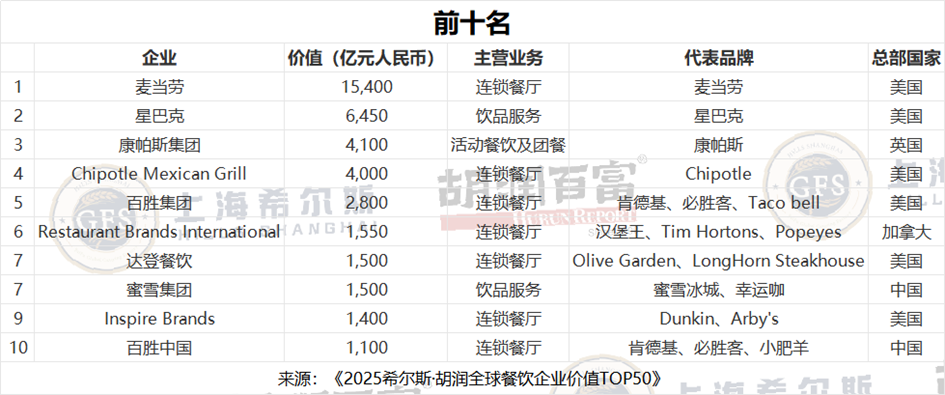
Core Insights - The HuRun Research Institute released the "2025 HuRun Global Restaurant Enterprise Value TOP 50" on December 15, with a threshold of 12 billion RMB for inclusion [1] - A total of 11 Chinese companies made the list, including Mixue Group, Yum China, Luckin Coffee, Haidilao, and others [1] - This is the fourth release of the restaurant industry ranking by HuRun and the first global valuation list for restaurant enterprises [1] Summary by Categories - The top three companies in the ranking are McDonald's valued at 15.4 billion RMB, Starbucks at 6.45 billion RMB, and Compass Group at 4.1 billion RMB [2][3] - The top 10 companies have a minimum valuation of 110 billion RMB, while the top 20 have a threshold of 61 billion RMB [3] - The ranking categorizes companies into three main types: chain restaurants, beverage services, and event catering [3] Chinese Companies Performance - Among the 11 Chinese companies, Mixue Group and Yum China are in the top 10, valued at 15 billion RMB and 11 billion RMB respectively [3] - The total value of all listed companies amounts to 55 trillion RMB [5] - Notably, three of the four recently established companies on the list are from China, including Bawang Chaji, Luckin Coffee, and Manner Coffee [5] International Expansion - Mixue Ice City has expanded significantly overseas, with over 4,700 stores in 12 countries, particularly in Indonesia [5] - Haidilao has established over 100 self-operated stores across 14 countries [5] - Heytea has successfully entered markets in Singapore, the UK, and Canada, with over 100 overseas stores [5]





商场餐饮“排队王”,扎堆去新疆捞金
投中网· 2025-12-16 06:11
Core Viewpoint - Xinjiang is emerging as a lucrative market for the restaurant industry, experiencing a surge in the opening of brand flagship stores, particularly in Urumqi, with a notable increase in consumer interest and spending [4][10]. Group 1: Market Dynamics - Recently, Xinjiang has seen a wave of new restaurant openings, with popular brands like Luckin Coffee and various tea and dessert shops gaining significant traction among local consumers [4][10]. - The restaurant market in Xinjiang is characterized by low competition, allowing for higher profit margins compared to other regions in China [8][11]. - The influx of well-known brands into Xinjiang is accelerating, with major chains like Haidilao and Nayuki's Tea planning to establish a presence in the region [10][11]. Group 2: Consumer Behavior - Xinjiang's consumer spending levels are comparable to first-tier cities, with a relatively low sensitivity to prices, indicating a strong market potential [13]. - The region's tourism is on the rise, with a projected 33% increase in online travel transactions for the winter season, further boosting the local restaurant market [14][15]. - The local population's diverse culinary preferences and the availability of high-quality local ingredients contribute to the attractiveness of the restaurant business in Xinjiang [15]. Group 3: Strategic Opportunities - Companies are encouraged to replicate successful national brand models in Xinjiang and consider becoming regional partners or agents for well-known brands [17]. - Understanding local consumer habits and preferences is crucial for success, as dining times and cultural practices may differ significantly from other regions [19][20]. - Effective remote management and operational strategies are essential for maintaining quality and consistency across locations in Xinjiang, given the vast distances involved [20].

“寄生咖啡”门店突破1万家,独立加盟商遭“背刺”?
阿尔法工场研究院· 2025-12-16 05:23
Core Viewpoint - Nova Coffee has rapidly expanded its store count to over 10,000 globally, leveraging a "store-in-store" model to penetrate lower-tier markets and differentiate itself from competitors like Starbucks and Luckin Coffee [4][5][10]. Expansion Strategy - Nova Coffee's store count reached over 10,000 as of December 11, with a presence in over 300 cities in China and expansion into Australia and Southeast Asia [5]. - The company has achieved a remarkable growth rate of over 400% year-on-year by 2025 [7]. - Nova Coffee's monthly store openings peaked at 1,800, making it the fastest-growing coffee brand globally [8]. - The "store-in-store" model allows Nova to minimize costs and share customer traffic, with 46.2% of its stores located within Meiyijia convenience stores [15][16]. Market Positioning - In 2022, 70% of Nova Coffee's stores were located in lower-tier cities, indicating a strategic focus on underserved markets [12]. - The brand has positioned itself to avoid direct competition with established players by targeting the night economy, with 60% of consumer spending occurring at night [19]. - Nova Coffee has established a strong online presence, with 75% of its revenue coming from delivery services [20]. Product Differentiation - The company emphasizes health-oriented products, offering low-calorie options and avoiding price wars, with an average cup price of 15 yuan [21][22]. - Nova Coffee has signed a partnership with athlete Wu Yanni to promote its health-focused image [22]. Supply Chain and Operational Efficiency - Nova Coffee has built a robust supply chain with 15 distribution centers, enhancing operational efficiency and supporting its rapid expansion [24]. - The introduction of Nova Coffee in convenience stores has significantly boosted coffee sales, with some partners achieving a return on investment in just three months [25]. Competitive Landscape - Despite rapid growth, Nova Coffee faces increasing competition and potential risks associated with its store-in-store model, which may pressure independent store operators [26]. - The overall coffee market in China is becoming more competitive, with over 254,000 coffee shops and a net increase of 38,000 stores in the past year [28]. - The founder emphasizes that reaching 10,000 stores is just the beginning, focusing on supporting partners and franchisees for future growth [29]. Future Outlook - The coffee industry is projected to exceed 1 trillion yuan by 2025, and the sustainability of Nova Coffee's "store-in-store" model will be tested in the competitive market [30].
香薰、盲盒与古法金:观夏、泡泡玛特、老铺黄金的"千亿情绪生意",是怎样炼成的?
3 6 Ke· 2025-12-16 03:34
Core Insights - The article discusses the shift in consumer behavior from functional products to those that provide emotional value, emphasizing the importance of meaning, stories, and emotions attached to products [1][2][4] Group 1: Emotional Consumption - Emotional consumption is driven by two societal psychological factors: the pursuit of instant gratification and the fragmentation of social connections [2][4] - The need for instant gratification leads consumers to seek products that provide immediate emotional satisfaction, similar to the quick emotional stimuli found in platforms like TikTok [2][4] - The urbanization process has increased feelings of loneliness, prompting consumers to seek products that fulfill deeper emotional needs for connection and belonging [4] Group 2: Layers of Emotional Value - The first layer of emotional value is "small happiness," where consumers pay for minor yet certain feelings of joy, such as comfort food or relaxing home items [5][7] - The second layer involves identity construction, where consumers use products to express who they are and find their social group, as traditional identity markers weaken [8][10] - The third layer focuses on co-creation, where consumers desire to participate in the brand narrative, seeking a sense of agency and influence over the products they consume [18][19] Group 3: Case Studies - The case of "Guanxia" illustrates how a brand can create a cultural identity through a sophisticated symbol system, allowing consumers to align with a modern, cultured lifestyle [11][13] - The collaboration of Luckin Coffee demonstrates the creation of social currency through trendy products, where the value lies in the shared experience and belonging to a cultural moment [14][15] Group 4: Strategies for Brands - Brands should focus on creating immediate emotional gratification through appealing design, storytelling, and user empowerment [22][23] - Designing user participation in emotional narratives allows consumers to feel like protagonists in their experiences with the brand [23][25] - Building a community around the brand enhances loyalty, as consumers seek connection with like-minded individuals [26] - Brands should develop products that serve as emotional companions, addressing the need for comfort and connection in daily life [27] - Encouraging co-creation with consumers transforms them from passive buyers to active participants in the brand's evolution [28] Group 5: Market Potential - The emotional consumption market in China is projected to reach a trillion scale, indicating a significant shift in commercial logic towards emotional connections and shared brand narratives [28]


倒计时1天!21世纪经济报道“新消费大会”嘉宾全阵容来袭!
2 1 Shi Ji Jing Ji Bao Dao· 2025-12-16 00:57
Core Insights - The "2025 New Consumption Conference" will take place on December 17 in Shanghai, focusing on the transformative changes in the consumer industry and the emergence of new growth forces [1] - The conference will feature discussions on various aspects of the consumer sector, including trends, business models, and innovative products, aimed at providing insights into brand growth and strategies for the new consumption landscape [2] Group 1 - The consumer industry is undergoing significant changes, with trends such as the rise of IP and trendy products appealing to Generation Z, the integration of AI in consumption and e-commerce, and the competitive landscape of food delivery services [1] - Numerous consumer brands are entering the capital market, and Chinese brands are expanding into global markets, while niche sectors like pet and technology consumption are experiencing robust growth [1] Group 2 - The conference will include a review of classic consumer business cases from 2025 and will analyze innovative products and models within the industry [2] - The event will also unveil typical case studies that showcase the resilience and innovative power of the consumer industry [3]
AI时代下 新支付方式造出更多新消费场景
Mei Ri Shang Bao· 2025-12-15 23:16
Core Insights - The emergence of AI payment systems is revolutionizing the payment landscape, allowing users to place orders and make payments through voice commands, significantly enhancing convenience and efficiency [3][4][5] Group 1: AI Payment Innovations - Alipay launched the first "AI payment" service in China in September, integrating voice-activated ordering and payment through the "Lucky AI" assistant at Luckin Coffee, creating a seamless user experience [4] - Meituan's AI Agent product "Xiao Mei" was also launched for public testing, offering services such as food delivery and restaurant reservations, indicating a growing trend in AI-driven local services [4] - Rokid, a tech company specializing in smart glasses, announced the transition of "AI payment" from mobile devices to smart glasses, showcasing the potential for hands-free ordering through voice commands [4] Group 2: Impact on Consumer Experience - The shift towards "zero presence" payment methods enhances consumer enjoyment and convenience, particularly in cities like Hangzhou, which is known for its rapid adoption of new technologies [5] - The "tap-to-pay" feature, launched in July 2024, has become widespread in Hangzhou, allowing users to place orders without needing to interact with their phones, reflecting a significant change in consumer behavior [5] - The evolution of payment methods is redefining the relationship between consumers and spending, with a focus on creating a more natural and intuitive interaction [6] Group 3: Future of Payment Systems - The trend towards "invisible technology" in payment systems is expected to continue, moving from tangible forms of currency to more seamless interactions [6] - "AI payment" is seen as a starting point for reshaping new consumption scenarios, pushing the industry towards smarter, more efficient, and user-friendly solutions [6] - As technology evolves, payment systems are anticipated to transform from mere transactional tools into intelligent hubs connecting consumers with a broader ecosystem [6]

中国11家上榜全球餐饮TOP50
Shen Zhen Shang Bao· 2025-12-15 22:55
Core Insights - The "Hurun Global Restaurant Enterprise Value TOP 50" list was released, ranking companies based on market value or valuation, marking the first global ranking in the restaurant sector by Hurun Research Institute [1] - McDonald's is the most valuable restaurant company globally, valued at 1.54 trillion RMB, accounting for nearly 30% of the total value of the list [1] - China has 11 companies on the list, with two in the top ten: Mixue Group valued at 150 billion RMB and Yum China at 110 billion RMB [1] Group 1: Company Rankings - McDonald's holds the top position with a brand value of 1.54 trillion RMB, surpassing the combined value of the next three companies [1] - Starbucks ranks second with a brand value of 645 billion RMB, while Luckin Coffee, a Chinese brand, is the second coffee company on the list valued at 70 billion RMB [1][2] Group 2: Chinese Companies Performance - The highest-valued restaurant company in China is Mixue Ice City, which has over 4,700 overseas stores across 12 countries, particularly strong in Indonesia with about 2,600 stores [2] - Haidilao has also performed well internationally, operating over 100 self-operated stores across 14 countries [2] - New tea brands like Heytea and Bawang Chaji are expanding rapidly, with Bawang Chaji exceeding 200 overseas stores and adding over 50 stores in the second quarter of 2025 [2] Group 3: Industry Trends - The average age of Chinese companies on the list is only 16 years, with 7 out of 9 beverage service companies being Chinese [3] - Three of the four companies established in the last decade on the list are from China, including Bawang Chaji and Luckin Coffee [3] - The domestic consumption market in China is seen as a fertile ground for restaurant enterprises, enabling brands like Mixue and Luckin to build extensive store networks [3]
抢疯了!海南!全球跨国企业的新选择!
Sou Hu Cai Jing· 2025-12-15 17:56
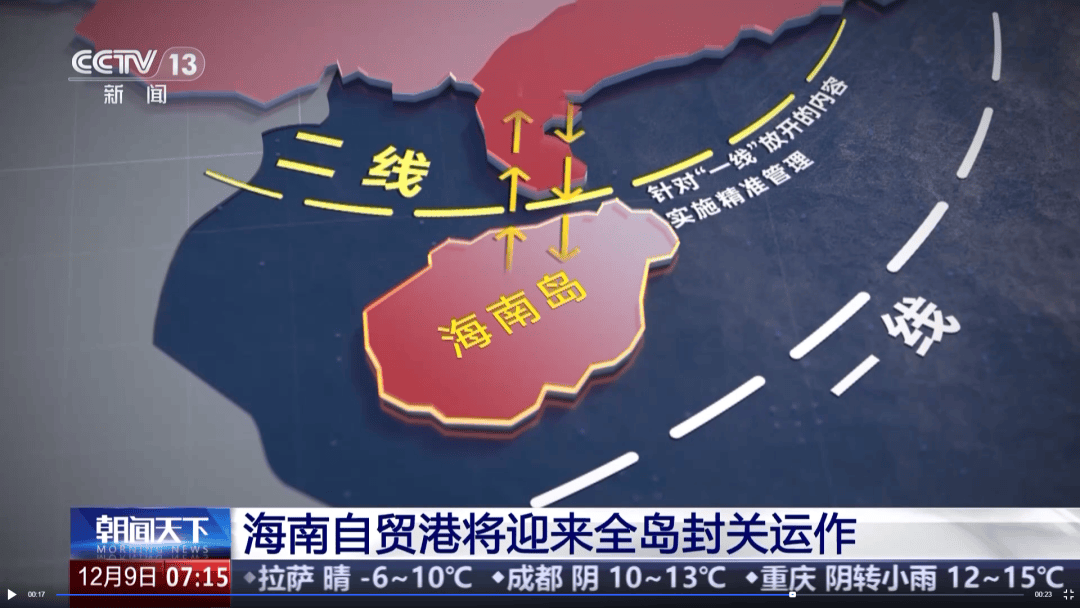
47年前的1978年12月18日,中国发生了具有深远历史影响的大事。 我们结束了一个时代的斗争,从那一天开始,我们定调把中心转移到经济建设上来,实行改开的历史性决策,从那一天开始,中国,开启了改开和社会主 义现代化的伟大征程。 47年后的12月18日,我们又将开始一次历史性尝试:海南封关! 很多人搞不懂封关是啥意思,老赵简单概括一下。 封关,封的是海关,而不是海岛。海南将变成一个海关监管的特殊区域,而不是地理空间上的封关。 央视用了三句话来概括这个运作模式: "一线"放开、"二线"管住、岛内自由。 "'一线'放开",是打开面朝世界的大门。 未来,海南与境外之间的货物、资金、人员往来,将享有前所未有的自由。 绝大多数进口商品零关税,符合条件的货物甚至可以径予放行,无需在口岸久等。 以罗牛山为例,进口大豆等饲料原料可节省13%-17%的关税成本,每年预计节省约1.1亿元,大幅降低企业成本。 而"二线",是海南和内地之间的管理线,这里要"管住",主要是管住货物,防止零关税商品无序流入内地市场。 至于"人",你我往来海南与内地,出差、旅游、生活,一切照旧,不需要任何额外证件。 海南全岛有3.4万平方公里,是全球面积最 ...

【百强透视】蜜雪、古茗等挤进全球TOP50!胡润榜单揭晓餐饮资本新宠
Sou Hu Cai Jing· 2025-12-15 17:04
Group 1 - The core viewpoint of the article highlights a significant shift in the value focus of the Chinese dining industry, with tea beverage brands like Mixue Group and Gu Ming making notable entries into the global market, while traditional Chinese dining categories like hot pot are largely absent from the top rankings [2][3][7] - The "2025 Hurun Global Dining Enterprise Value TOP 50" list shows that Mixue Group ranks seventh with a valuation of 150 billion RMB, surpassing Yum China, indicating its leadership position in the Chinese dining sector [3][4] - The list reveals that among the 11 Chinese companies, five are from the ready-to-drink tea segment, underscoring the dominance of tea beverage brands in the current market landscape [4][5] Group 2 - The tea beverage sector's success is attributed to its high standardization, light asset model, and capital-friendly nature, allowing for rapid expansion and consistent profit margins [7][9] - The innovation speed in the tea beverage industry is significantly higher than that of traditional dining, with 73 out of 130 brands launching new products in the first half of 2025, primarily focused on ready-to-drink items [7][10] - In contrast, traditional Chinese dining faces challenges in standardization and high operational costs, making it difficult to achieve the scale and capital recognition seen in the tea beverage sector [9][10] Group 3 - Mixue Ice City leads globally in store count with over 53,000 locations, surpassing McDonald's and Starbucks, indicating its rapid growth and market penetration [6][12] - The overseas expansion of tea beverage brands is crucial for their growth, with Mixue already having over 4,700 international stores, contributing significantly to their revenue [11][12] - The tea beverage sector is becoming a new core engine in the consumer market, with several leading brands gaining attention in the Hong Kong stock market, reflecting their growth potential and market interest [13]

香薰、盲盒与古法金:观夏、泡泡玛特、老铺黄金的"千亿情绪生意",是怎样炼成的?
新消费智库· 2025-12-15 15:49
Core Insights - The article discusses a significant shift in consumer behavior in China, moving from "tool-based consumption" to "toy-based consumption," where products are valued for their emotional and aesthetic significance rather than just functionality [2][4]. Group 1: Changes in Consumer Behavior - Consumers are increasingly willing to pay for products that offer emotional value, stories, and unique experiences rather than just functionality [4]. - The competition among brands has shifted from price and functionality to the lifestyle and values represented by the products [4][5]. Group 2: Psychological Drivers - Two major psychological drivers are identified: the pursuit of "instant gratification" and the feeling of "atomized existence" in urban life, leading to a desire for emotional connection through consumption [5][6]. - The fast-paced nature of modern life has reduced consumers' patience, making them favor products that provide immediate emotional satisfaction [6][8]. Group 3: Emotional Value Layers - The article outlines three layers of emotional value in consumption: 1. **"Little Happiness"**: Consumers pay for small, certain pleasures that provide immediate emotional relief [10][11]. 2. **Identity Construction**: Consumption becomes a means for individuals to define themselves and find belonging in a fragmented society [14][16]. 3. **Co-creation and Participation**: Consumers seek to engage in the creation of products and brand narratives, valuing their input and influence [25][30]. Group 4: Case Studies - **Case Study 1: Guansha**: This brand creates a "New Orientalism" aesthetic, allowing consumers to express cultural identity and taste through its products [17][18]. - **Case Study 2: Luckin Coffee**: The brand leverages limited edition collaborations to create social currency, allowing consumers to feel part of a trendy community [21][22]. Group 5: Strategies for Brands - Brands are encouraged to create "instant joy" through appealing designs, storytelling, and user empowerment [32]. - Engaging consumers as active participants in the brand narrative is essential for building loyalty and emotional connection [39][30].