
中国通号

Search documents
雅下水电工程开工,工程机械设备迎来增量需求,科创机械ETF(588850)有望受益
Xin Lang Cai Jing· 2025-07-23 07:20
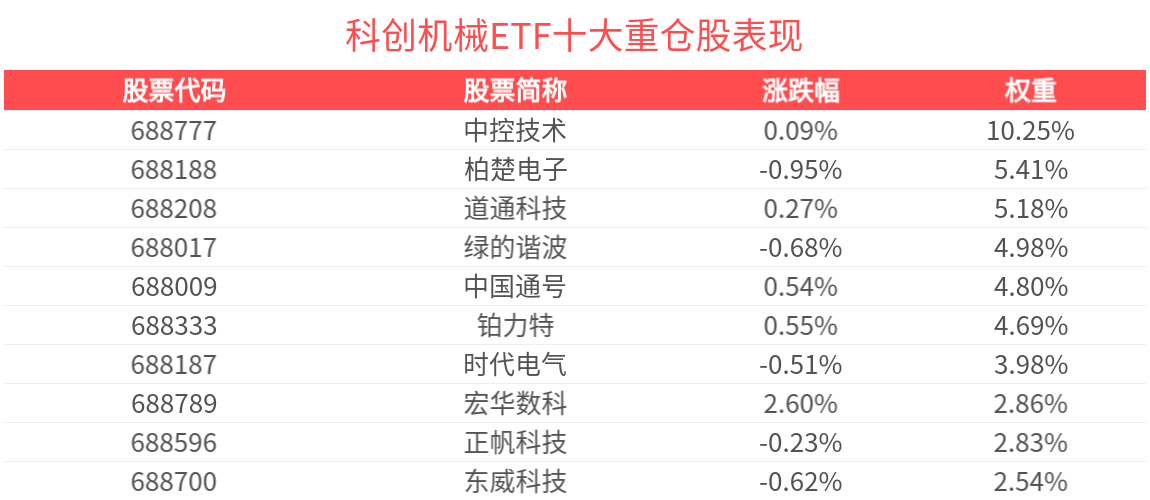
Group 1 - The Shanghai Stock Exchange Sci-Tech Innovation Board Industrial Machinery Index increased by 0.49%, with notable stocks such as Iron Construction Heavy Industry hitting the daily limit up and others like Jepter and Jingzhida rising by 3.61% and 2.96% respectively [1] - The Sci-Tech Machinery ETF (588850) has seen a weekly increase of 6.49% as of July 22, 2025, indicating strong market performance [1] - The top ten weighted stocks in the Industrial Machinery Index account for 48.05% of the index, with Zhongkong Technology and Bichu Electronics being the largest contributors [1][3] Group 2 - The Yarlung Tsangpo River downstream hydropower project, with a total investment of approximately 1.2 trillion yuan, officially commenced construction on July 19, 2025 [3] - The project is expected to create significant demand for construction machinery and equipment due to its large scale and long construction period, similar to the Three Gorges Project [4] - Companies with capabilities in new energy, unmanned operations, and large-tonnage complete equipment are likely to benefit from the challenging working conditions in Tibet [4]

加强自主创新 2035年城轨领域核心技术自主化率将达100%
Zhong Guo Jing Ying Bao· 2025-07-22 06:41
Core Viewpoint - The "National Innovation Urban Rail Development Plan" aims for a complete breakthrough in key technologies and products in the urban rail sector by 2030, achieving over 95% self-sufficiency in core technologies, and reaching 100% by 2035 [1][3]. Group 1: Development Stages - The development of urban rail technology in China has gone through three stages: initial self-reliance, a phase of domestic equipment predominance, and a current focus on self-innovation [1][2]. - The first urban rail line, Beijing Metro Line 1, began construction in 1965, marking the start of urban rail development in China [1]. Group 2: Progress in Localization - Since 1999, the localization rate for urban rail vehicles and equipment has increased, with a target of 70% initially, reaching an average of over 95% since 2020 [2]. - The cost of imported equipment has significantly decreased, with the price per kilometer for CBTC systems dropping from 13 million yuan to between 8 million and 9 million yuan, a reduction of over 30% [2]. Group 3: Challenges and Opportunities - The "National Innovation Urban Rail Development Plan" identifies six major challenges, including weak links in the supply chain, insufficient investment in new technologies, and a lack of international competitiveness [3]. - The urban rail sector must enhance its innovation capabilities and strengthen its market leadership to compete globally [3]. Group 4: Open Cooperation - The urban rail industry emphasizes the importance of open cooperation alongside self-innovation, suggesting that high-level innovation and openness can mutually reinforce each other [4][5]. - The industry aims to learn from international experiences and technologies while maintaining self-reliance [5].
链聚科创板
Shang Hai Zheng Quan Bao· 2025-07-21 19:54
Core Insights - The Sci-Tech Innovation Board (STAR Market) has officially launched, with a total market value exceeding 7 trillion yuan, showcasing the emergence of strong industrial clusters in various sectors [1] - Over six years, the STAR Market has fostered 589 "hard tech" listed companies, raising over 1.1 trillion yuan in direct financing, significantly reshaping the innovation ecosystem [1] - The board has successfully transformed over 120,000 invention patents into tangible benefits for society, enhancing public welfare [1] Industry Developments - In the integrated circuit sector, a complete industrial chain covering design, manufacturing, packaging, materials, and equipment has formed, with 120 listed companies leading the way [3] - Major players like SMIC and Huahong Semiconductor have achieved significant milestones, such as breaking international monopolies and reaching international quality standards [3] - The average R&D intensity of integrated circuit companies on the STAR Market is 22.5%, exceeding the industry average by 10 percentage points [3] Biopharmaceutical Sector - The STAR Market's fifth listing standard has opened crucial financing channels for unprofitable innovative drug companies, with 19 out of 20 companies under this standard successfully launching self-developed drugs [4] - Zai Lab, the first unprofitable drug company listed on the STAR Market, has achieved multiple innovative drug approvals, establishing itself as a benchmark for internationalization in drug innovation [4] High-end Equipment Manufacturing - The STAR Market has created a collaborative innovation matrix in high-end equipment manufacturing, with 127 companies covering critical industries such as high-speed rail and nuclear power [5] - China Railway Signal & Communication Corporation holds a 65% market share in high-speed rail signal control systems, ensuring the safety of the national high-speed rail network [5] Social Impact - The technological breakthroughs from the STAR Market have translated into real benefits for the public, significantly reducing drug prices and improving access to medical resources [6] - Innovative drugs have substantially lowered the economic burden on patients, with some treatments seeing price reductions of over 75% [6] - Domestic medical equipment has improved accessibility, with companies like United Imaging Healthcare breaking international monopolies and producing high-end medical devices [7] Financial Performance - Over 60% of STAR Market companies have introduced cash dividend plans, totaling 38.8 billion yuan, with over 290 companies distributing more than 30% of their profits [9] - The board has also seen significant share buyback and increase plans, with a total amount nearing 38 billion yuan [9] Institutional Innovations - The STAR Market has implemented continuous institutional innovations to address the financing challenges of "light asset, high R&D investment" companies, allowing for a higher refinancing ratio [10] - The establishment of the "Sci-Tech Growth Layer" provides a transitional platform for unprofitable tech companies, enhancing their growth prospects [10] Long-term Vision - The STAR Market has become a core nurturing ground for new productive forces, with 379 companies recognized as national "little giants" and 415 as manufacturing "champions" [12] - The board's R&D investment reached 168 billion yuan, more than three times its net profit, reflecting a strong commitment to innovation [12] - The ongoing reforms aim to further unleash the potential of the STAR Market, enhancing its role in both technological advancement and societal value [13]


寄语科创板
Shang Hai Zheng Quan Bao· 2025-07-21 19:53
Group 1 - The establishment of the Sci-Tech Innovation Board (STAR Market) has provided a nurturing environment for "hard technology" companies, fostering innovation and high-quality development over the past six years [1][13] - Companies like Haiguang Information have significantly improved their governance, innovation, and competitiveness, benefiting from the STAR Market's supportive policies and funding environment [2] - The STAR Market has enhanced the capital market's inclusivity and support for high-quality development of unprofitable technology companies, as demonstrated by companies like Baili Tianheng [3] Group 2 - The STAR Market has been a crucial engine for China's innovation-driven development strategy, injecting vitality into the sci-tech industry [4] - Companies such as United Imaging Healthcare have experienced increased brand influence, easier financing, and more flexible talent incentives due to their listing on the STAR Market [5] - The STAR Market's inclusive policies have allowed companies like Yingshi Innovation to focus on technological breakthroughs and international expansion [6] Group 3 - China Communications Construction Company has effectively utilized the STAR Market's financing mechanisms to support its technological innovation and industry upgrades [7] - JinkoSolar has leveraged the STAR Market to enhance its strategic foundation for global development and technological innovation [8] - The STAR Market has played a significant role in supporting the growth of hard technology enterprises, as highlighted by various companies' experiences [9] Group 4 - Companies like Tuojing Technology have overcome development bottlenecks and achieved profitability within a year of listing on the STAR Market, demonstrating the platform's effectiveness [10] - Zhongkong Technology has gained substantial funding support for its research and development in AI and robotics, solidifying its leading position in industrial automation [11] - Kaisa Biotech has utilized the STAR Market to enhance its capital support for technological innovation in biomanufacturing [12] Group 5 - The STAR Market has become the preferred listing venue for hard technology companies, attracting industry leaders and hidden champions [14] - Companies are optimistic about the STAR Market's future reforms, which are expected to further support the growth of innovative technology firms [15]
中国通号(688009) - 2024年年度权益分派实施公告
2025-07-17 09:30
证券代码:688009 证券简称:中国通号 公告编号:2025-019 中国铁路通信信号股份有限公司 2024年年度权益分派实施公告 本公司董事会及全体董事保证公告内容不存在任何虚假记载、误导性陈述或 者重大遗漏,并对其内容的真实性、准确性和完整性依法承担法律责任。 重要内容提示: 是否涉及差异化分红送转:否 每股分配比例 每股现金红利0.17元(含税),公司不送红股,不进行资本公积转增股本。 发现金红利0.17元(含税),共计派发现金红利1,800,269,230元(含税)。 三、 相关日期 | 股权登记日 | 除权(息)日 | 现金红利发放日 | | --- | --- | --- | | 2025/7/24 | 2025/7/25 | 2025/7/25 | 一、 通过分配方案的股东大会届次和日期 本次利润分配方案经公司2025年 6月 23 日的2024年年度股东大会审议通过。 二、 分配方案 截至股权登记日下午上海证券交易所收市后,在中国证券登记结算有限责任 公司上海分公司(以下简称"中国结算上海分公司")登记在册的本公司全体股东。 3. 分配方案: 本次利润分配以方案实施前的公司总股本10,589 ...
机械行业2025年中报业绩前瞻:25H1需求温和复苏,下半年建议关注设备更新+科技赋能
Shenwan Hongyuan Securities· 2025-07-15 04:13
Investment Rating - The report maintains an "Overweight" rating for the machinery industry, indicating a positive outlook compared to the overall market performance [4]. Core Insights - The machinery industry is expected to see a moderate recovery in demand in the second half of 2025, driven by equipment upgrades and technological empowerment [4]. - Key companies in the machinery sector are projected to experience varied growth rates in Q2 2025, with notable performances from companies like SANY Heavy Industry (25% growth) and PCB manufacturer Ding Tai Gao Ke (66% growth) [4][5]. - The report highlights three main trends in the robotics sector: the advancement of humanoid robots, the entry of global giants into the robotics field, and the practical application of various robot forms in specific scenarios [4]. - In the rail transit equipment sector, significant investment is expected to continue, with a projected fixed asset investment nearing 900 billion yuan for the year, supported by strong passenger demand [4]. - The engineering machinery sector is approaching a cyclical turning point, with signs of recovery in demand and a favorable environment for new machine sales [4]. - The laser segment is experiencing rapid growth, particularly in general laser applications, driven by technological advancements and increased overseas exports [4]. Summary by Sections Robotics and Components - The humanoid robot industry is progressing towards commercialization, with significant contributions expected from companies like Greentech Harmonic and Wolong Electric Drive [4]. Rail Transit Equipment - In the first half of 2025, China's railway fixed asset investment reached 355.9 billion yuan, a year-on-year increase of 5.5%, with expectations for continued high growth [4]. Engineering Machinery - The engineering machinery sector has seen improved profitability and is positioned for a new sales cycle as construction activity resumes [4]. Laser Technology - General laser demand is rapidly increasing due to high-power technology iterations and new applications in consumer electronics and photovoltaics [4].




中国中车20250613
2025-07-14 00:36
Summary of China CRRC Conference Call Company Overview - **Company**: China CRRC - **Industry**: Railway and New Energy Equipment Key Points Performance Highlights - China CRRC's performance exceeded expectations primarily due to the railway market's bidding and delivery pace being better than anticipated, along with strong growth in urban rail and emerging industries such as wind power and IGBT [2][4] - In Q2 2025, the company's net profit attributable to shareholders increased by 15% to 41%, with a median growth rate of 28% [3] - The operating profit maintained a growth rate of around 20% from Q1 2024 to Q2 2025 [3] Market Dynamics - The railway market in Q2 2025 saw significant bidding activities, including 120 locomotives and 68 sets of high-speed trains, which accelerated the delivery pace [6] - The overall fixed asset investment in railways increased by 5.9%, and passenger volume grew by over 7%, setting historical highs [7] - The urban rail market experienced a decline in bidding numbers in 2024 but is expected to recover significantly in 2025, with an estimated vehicle volume of over 4,000 units [9] Emerging Industries - New industries such as wind power, electric drive, IGBT, and marine equipment showed high growth in orders, indicating a positive outlook for revenue and profit [10] - The semiconductor IGBT sector is currently ramping up production capacity, contributing to the overall growth in new industries [10] Future Outlook - For Q3 2025, it is anticipated that around 2,000 freight cars and several locomotives will be delivered, with strong demand for new vehicles and maintenance services [8] - The total railway operating mileage is expected to reach between 2,500 to 3,000 kilometers in the second half of the year, supporting continued demand for high-speed trains [7] Dividend and Investment Perspective - China CRRC maintains a stable dividend policy, with an A-share dividend yield of approximately 4% and a Hong Kong share yield of about 6%, indicating higher relative value in the Hong Kong market [4][13] - Other companies in the sector, such as Jinxi Axle and Siwei Control, are also showing high growth or recovery, suggesting attractive investment opportunities [4][13] Overall Industry Sentiment - The overall sentiment in the railway industry is positive, with improvements in various segments including high-speed trains, new vehicles, and maintenance services [14] - The expected annual profit release is around 15 billion, potentially exceeding expectations, reflecting a significant enhancement in profitability [12][14] Conclusion - China CRRC is positioned well within the railway and new energy equipment sectors, with strong performance indicators and a favorable market outlook, supported by strategic bidding and delivery improvements, alongside growth in emerging industries.

中国高铁领跑优势持续扩大
Jing Ji Ri Bao· 2025-07-10 21:56
Core Viewpoint - The article highlights the significant advancements and achievements of China's high-speed rail (HSR) system, emphasizing its role as a global leader in technology and innovation, particularly with the introduction of the Fuxing train series and the ongoing development of the CR450 model [2][4][10]. Group 1: Development and Achievements - The 12th World High-Speed Rail Conference was held in Beijing, focusing on the theme "High-Speed Rail: Innovative Development for a Better Life" [2]. - By the end of 2024, China's high-speed rail operating mileage is expected to reach 48,000 kilometers, accounting for over 70% of the world's total high-speed rail mileage [2]. - The Fuxing train series has been pivotal in establishing China as a leader in high-speed rail technology, with a cumulative passenger volume of 22.9 billion [2][4]. Group 2: Technological Innovations - The Fuxing trains incorporate advanced technologies such as big data, artificial intelligence, and 5G communication, enhancing safety, punctuality, and energy management [3]. - The CR450 model is designed to achieve operational speeds of up to 400 kilometers per hour, with significant improvements in safety, energy efficiency, and passenger comfort [3][4]. - The development of the HSP advanced geological forecasting system for tunnel construction demonstrates China's commitment to innovative engineering solutions [7][8]. Group 3: Infrastructure and Planning - The "Eight Vertical and Eight Horizontal" high-speed rail network plan is progressing well, with approximately 81.5% of the main corridors completed as of June this year [9]. - Major corridors such as the Beijing-Shanghai and Beijing-Harbin routes have been fully operational, while others are in various stages of development [9]. Group 4: Global Influence and Future Directions - China's high-speed rail control technology is gaining international recognition, with successful implementations in Serbia and Indonesia, showcasing the global competitiveness of Chinese technology [11]. - The focus on digital transformation and intelligent systems aims to enhance operational efficiency and safety in the railway sector [12].
研判2025!中国列车自动控制系统(ATC)行业产业链、贸易情况、重点企业及发展趋势分析:行业进口量增价跌折射国产突破,出口结构升级驱动全球技术输出[图]
Chan Ye Xin Xi Wang· 2025-07-10 01:38
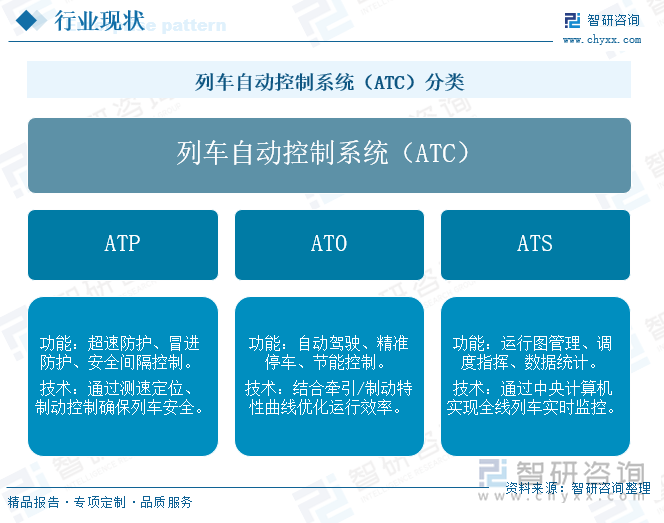
Core Viewpoint - The rapid development of China's rail transit industry has led to an increasing demand for advanced and reliable Automatic Train Control (ATC) onboard equipment, with significant shifts in both import and export dynamics driven by policy adjustments and technological advancements [1][12]. Industry Overview - The ATC system is a comprehensive train control system that enhances the safety, reliability, punctuality, and efficiency of train operations through automation and real-time monitoring [2]. - The ATC system consists of three subsystems: Automatic Train Protection (ATP), Automatic Train Operation (ATO), and Automatic Train Supervision (ATS) [2]. Industry Development History - The ATC industry in China has evolved through four main stages: exploration (1960s-2004), rapid development (2004-2016), innovation (2016-2019), and maturity (2019-present) [4][5][6]. - The introduction of the CTCS technical specifications in 2004 marked a significant advancement, leading to the development of various levels of train control systems [4]. Current Industry Status - In the first five months of 2025, China imported 150 ATC devices, a year-on-year increase of 32.74%, while the import value decreased by 73.78% to 6.6637 million yuan [1][12]. - Exports of ATC devices saw a significant decline in quantity, with 3,834 units exported, down 88.33%, but the export value increased by 4.41% to 34.7974 million yuan, indicating a structural upgrade [1][12]. Industry Supply Chain - The upstream of the ATC industry includes raw materials, components, and software, while the midstream consists of ATC system integrators, and the downstream applications are primarily in urban rail transit and railway trunk lines [8]. Key Companies' Performance - China Railway Signal & Communication Corporation (CRSC) leads the market with its CTCS-3 level control system, which has achieved significant autonomy and is widely used in high-speed rail [19]. - China Communications Technology Co., Ltd. (CCTC) has developed the FAO system, breaking international monopolies and securing major contracts in urban rail projects [21]. Industry Development Trends - The ATC industry is moving towards intelligent and autonomous systems, integrating technologies like AI, big data, and 5G-R communication to enhance operational efficiency and safety [23]. - Chinese ATC companies are expanding globally, particularly in emerging markets, and are utilizing joint ventures and technology transfers to penetrate developed markets [24][25]. - The industry is transitioning from single system suppliers to smart transportation ecosystem builders, focusing on integrated solutions and lifecycle service models [26].

机械行业周报2025年第27周:智元两大核心产品启动量产,国产机器狗移速刷新世界纪录-20250707
EBSCN· 2025-07-07 14:44
Investment Rating - The report maintains a "Buy" rating for the mechanical industry [1] Core Insights - The mechanical industry is experiencing significant advancements, particularly in humanoid robots and automation technologies, with major companies launching mass production of innovative products [3][4][6] - The humanoid robot sector is expected to see a breakthrough in 2025, with mass production levels reaching thousands of units, which will enhance data collection and training capabilities [6] - The agricultural machinery market is facing challenges, but long-term demand is anticipated to rise due to policy support and export opportunities [9] - The engineering machinery sector is currently under pressure domestically but is witnessing growth in exports, with a positive outlook for infrastructure investments [13] - The low-altitude economy is gaining traction, with government support and increasing applications in tourism and logistics [24] Summary by Relevant Sections Humanoid Robots - On June 30, Junpu Intelligent's subsidiary launched mass production of humanoid robots, marking a significant milestone in the industry [3] - The Sichuan provincial government is promoting the development of humanoid robots and related AI products [3] - The humanoid robot industry is expected to see substantial growth, with a focus on complex functionalities and cost reduction in production [6] Agricultural Machinery - The agricultural machinery market's sentiment index is at 40.9%, indicating a downturn [8] - Despite current challenges, tractor exports have increased by 12.6% in quantity and 31.2% in value from January to May 2025 [9] Engineering Machinery - In May 2025, excavator sales reached 18,202 units, with domestic sales declining by 1.5% but exports increasing by 5.4% [13] - The engineering machinery sector is expected to recover as infrastructure investments rise [13] Low-altitude Economy - The low-altitude economy is being actively developed, with initiatives in low-altitude tourism and support for eVTOL aircraft [24][22] - The government is encouraging the application of low-altitude equipment and services across various sectors [22]


