零跑汽车

Search documents
港股汽车板块盘初走低
Jin Rong Jie· 2026-01-26 01:47
本文源自:金融界AI电报 港股汽车板块盘初走低,小鹏汽车(09868.HK)跌超3%,蔚来汽车(09866.HK)跌2.51%,长城汽车 (02333.HK)、零跑汽车(09863.HK)跌幅居前。 ...


宁德时代推出“超混电池”,三元与铁锂从对立走向融合?
Jing Ji Guan Cha Wang· 2026-01-25 10:01
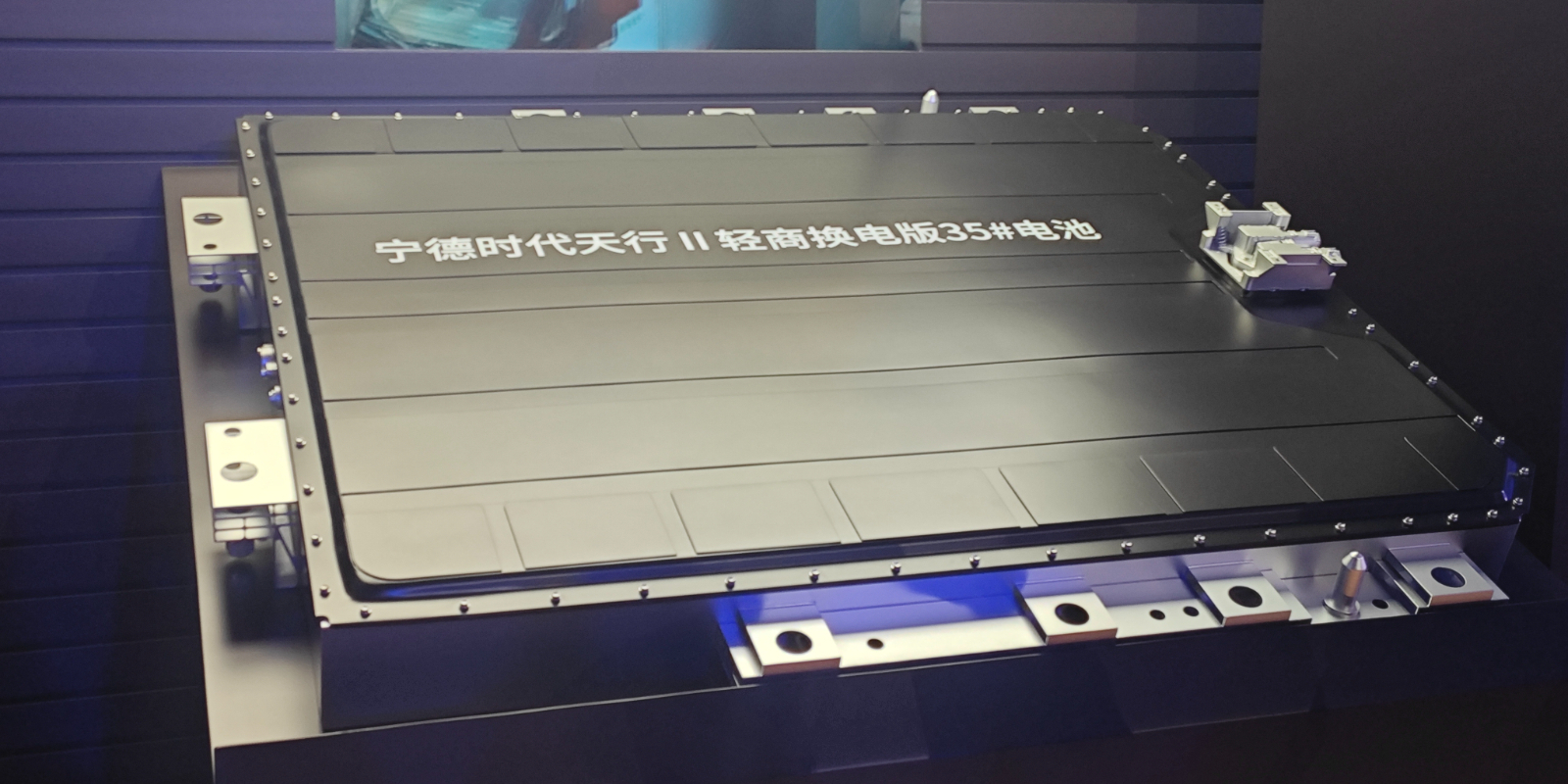
Core Viewpoint - CATL has launched the "Tianxing II Light Commercial All-Scenario Customization Solution" along with the "Battery Manager" Tianxing version, featuring the first light commercial super-mixed chemical system battery, which integrates ternary lithium and lithium iron phosphate materials [2][3]. Group 1: Product Features - The Tianxing II Light Commercial Long-Endurance Battery has a single pack capacity of 253 kWh, the largest in the light commercial sector, enabling a real-world range of 800 kilometers [5]. - The battery's warranty has been extended to 10 years or 1 million kilometers, incorporating self-healing lithium anode materials and self-repairing electrolyte technology to enhance battery lifespan [5]. - The super-mixed battery technology aims to overcome the energy density limitations of lithium iron phosphate while avoiding the high costs associated with pure ternary lithium batteries [3][4]. Group 2: Market Context and Strategy - The demand for longer range in electric vehicles is increasing, with projections indicating that by 2025, some extended-range models will feature batteries exceeding 60 kWh, and by 2026, several models, including the Leap D series, will reach around 80 kWh [3]. - CATL plans to first introduce the super-mixed battery in the commercial vehicle sector, as longer distances in intercity delivery require more economical solutions [4]. - The large-scale commercialization of the super-mixed battery is expected to begin in April 2026, marking a significant milestone for the technology [4][6]. Group 3: Technological Innovation - The development of the super-mixed battery involves complex technical challenges, including interface issues between ternary and lithium iron phosphate materials, voltage platform concerns, and electrolyte oxidation-reduction problems [3]. - This innovation complements CATL's previous "dual-core battery" approach, which focuses on the strategic arrangement of different chemical systems to achieve performance synergy [3][4]. - The emergence of super-mixed batteries provides a new developmental perspective for the power battery industry, allowing for the collaborative use of ternary lithium and lithium iron phosphate within the same cell [5].


汽车行业周报:补贴政策变化致25Q4翘尾现象消失,对26年需求透支有所减少-20260125
GF SECURITIES· 2026-01-25 09:48
Investment Rating - The report provides a "Buy" rating for several companies in the automotive sector, indicating an expected performance that will exceed the market by more than 10% over the next 12 months [5][22]. Core Insights - The change in subsidy policies has led to the disappearance of the tail effect in Q4 2025, resulting in a reduction of demand overdraw for 2026. In December 2025, the number of insured vehicles was 2.278 million, down 16.4% year-on-year but up 13.6% month-on-month. The total number of insured vehicles for the year reached 23.047 million, a slight increase of 0.6% year-on-year, with the penetration rate of new energy vehicles rising to 54.0%, an increase of 7.1 percentage points year-on-year [4][7][16]. Summary by Sections 1. Changes in Subsidy Policies - The report highlights that the changes in subsidy policies have caused consumers to adopt a wait-and-see approach, leading to a decrease in demand overdraw for 2026. The expectation is that as replacement subsidy application channels open, pent-up demand will materialize, and the domestic terminal market will trend towards "price increase and stable volume" [4][7]. 2. PHEV Market Share Tracking - The focus is on the performance of PHEV market shares, particularly for BYD and Geely, as the "mid-level assisted driving equity" leads to share differentiation. The report emphasizes the importance of monitoring configuration adjustments and terminal discount changes to understand further market share differentiation [9][16]. 3. Recent Report Insights - The report notes that the passenger vehicle inventory saw a slight reduction in December 2025, with an estimated 1.5 million vehicles in demand waiting to be fulfilled. The overall industry theme for 2025 was "emerging from deflation," with a judgment of "stable volume and slow price increase" being validated. The outlook for 2026 remains "price increase and stable volume," differing from market consensus due to regulatory changes and risk-return assessments [16][17]. 4. Investment Recommendations - The report suggests a "shelf-style" investment approach, recommending various companies across the passenger vehicle chain. Right-side targets include Geely, BYD, and others, while left-side targets include Great Wall Motors and Changan Automobile. In the commercial vehicle chain, recommended companies include China National Heavy Duty Truck Group and Weichai Power [17].




乘用车行业月报:12月乘用车销量同环比下降,预计26年销量同比微增
GUOTAI HAITONG SECURITIES· 2026-01-25 07:45
Investment Rating - The report assigns an "Accumulate" rating for the automotive industry [22]. Core Insights - The report forecasts that the wholesale sales of passenger vehicles in China will reach 30.21 million units in 2026, reflecting a year-on-year increase of 1%. The sales of new energy passenger vehicles are expected to be approximately 16.85 million units, with a year-on-year growth of 10% [20][21]. - In December 2025, the wholesale sales of passenger vehicles in China were 2.814 million units, a decrease of 9% year-on-year and a decrease of 7% month-on-month. For the entire year of 2025, the wholesale sales reached 29.908 million units, an increase of 9% year-on-year [7][8]. Summary by Sections 1. Total Passenger Vehicle Sales - In December 2025, the total wholesale sales of passenger vehicles in China were 2.814 million units, down 9% year-on-year and down 7% month-on-month. The wholesale sales of new energy passenger vehicles were 156.3 thousand units, up 3% year-on-year and down 8% month-on-month. For the entire year of 2025, the wholesale sales of passenger vehicles were 29.908 million units, up 9% year-on-year, while new energy passenger vehicle sales reached 1.5319 million units, up 25% year-on-year [7][8]. 2. Key Automotive Companies' December Sales - **BYD**: In December, BYD delivered 420 thousand vehicles, down 18% year-on-year and down 12% month-on-month. The overseas sales reached 132 thousand units, up 130% year-on-year [8][9]. - **Geely**: In December, Geely delivered 237 thousand vehicles, up 13% year-on-year. The 2026 sales target is set at 3.45 million units, a 14% increase from 2025 [10]. - **Changan**: In December, Changan delivered 257 thousand vehicles, down 19% year-on-year. The 2026 sales target is 3.3 million units, a 13% increase from 2025 [12]. - **Great Wall Motors**: In December, Great Wall Motors delivered 124 thousand vehicles, down 8% year-on-year. The company launched the "Guiyuan Platform" globally [13][14]. - **Li Auto**: In December, Li Auto delivered 44 thousand vehicles, down 24% year-on-year. The OTA 8.2 version was fully pushed [15]. - **Leap Motor**: In December, Leap Motor delivered 60 thousand vehicles, up 42% year-on-year. The 2026 sales target is set at 1 million units [16][17]. - **Xpeng Motors**: In December, Xpeng Motors delivered 38 thousand vehicles, achieving double growth year-on-year and month-on-month. The 2025 total deliveries reached 429 thousand units, up 126% year-on-year [18][19]. 3. Policy Impact and Market Outlook - The report notes that the effectiveness of the old-for-new vehicle policy is expected to diminish, with a projected total of over 11.5 million vehicles replaced in 2025, of which nearly 60% are new energy vehicles. The new policy for 2026 will shift from fixed subsidies to a "proportional subsidy + cap" model [20]. - The report anticipates that the reduction in new energy vehicle purchase tax incentives will lead to a more competitive market, pushing the industry towards higher performance and efficiency standards [21].


乘用车行业月报:12月乘用车销量同环比下降,预计26年销量同比微增-20260125
GUOTAI HAITONG SECURITIES· 2026-01-25 07:30
Investment Rating - The report assigns an "Accumulate" rating for the automotive industry [22]. Core Insights - The report forecasts that the wholesale sales of passenger vehicles in China will reach 30.21 million units in 2026, reflecting a year-on-year increase of 1%. The sales of new energy passenger vehicles are expected to be approximately 16.85 million units, with a year-on-year growth of 10% [20][21]. - The report highlights that the overall passenger vehicle market in December 2025 saw a wholesale sales volume of 2.814 million units, a decrease of 9% year-on-year and a decrease of 7% month-on-month. For the entire year of 2025, the wholesale sales volume was 29.908 million units, an increase of 9% year-on-year [7][20]. Summary by Sections 1. Total Passenger Vehicle Sales - In December 2025, the total wholesale sales of passenger vehicles in China were 2.814 million units, down 9.4% year-on-year and down 7.0% month-on-month. The wholesale sales of new energy passenger vehicles were 156.3 thousand units, up 3% year-on-year and down 8% month-on-month. For the entire year of 2025, the wholesale sales of passenger vehicles reached 29.908 million units, up 9% year-on-year, while new energy passenger vehicle sales were 1.5319 million units, up 25% year-on-year [7][8]. 2. Key Automotive Companies' December Sales - **BYD**: In December, BYD delivered 420 thousand new vehicles, down 18% year-on-year and down 12% month-on-month. The overseas sales reached 132 thousand units, up 130% year-on-year [8][9]. - **Geely**: In December, Geely delivered 237 thousand new vehicles, up 13% year-on-year. The 2026 sales target is set at 3.45 million units, a 14% increase from 2025 [10]. - **Changan**: In December, Changan delivered 257 thousand new vehicles, down 19% year-on-year. The 2026 sales target is 3.3 million units, a 13% increase from 2025 [12]. - **Great Wall Motors**: In December, Great Wall Motors delivered 124 thousand new vehicles, down 8% year-on-year. The company launched the "Guiyuan Platform" globally [13][14]. - **Li Auto**: In December, Li Auto delivered 44 thousand new vehicles, down 24% year-on-year. The OTA 8.2 version was fully pushed [15]. - **Leap Motor**: In December, Leap Motor delivered 60 thousand new vehicles, up 42% year-on-year. The 2026 sales target is set at 1 million units [16][17]. - **Xpeng Motors**: In December, Xpeng Motors delivered 38 thousand new vehicles, achieving growth in both year-on-year and month-on-month comparisons. The 2025 cumulative delivery was 429 thousand units, up 126% year-on-year [18][19]. 3. Policy Impact and Market Outlook - The report notes that the effectiveness of the old-for-new vehicle policy is expected to diminish, with the total number of vehicles replaced exceeding 11.5 million in 2025, of which nearly 60% were new energy vehicles. The new policy for 2026 will shift from fixed subsidies to a "proportional subsidy + cap" model [20]. - The report anticipates that the reduction in new energy vehicle purchase tax incentives will lead to a more competitive market, pushing the industry towards higher performance and efficiency standards [21].
汽车行业周报:国内人形机器人持续放量,Robotaxi产业化加速
GUOTAI HAITONG SECURITIES· 2026-01-25 00:45
Investment Rating - The report maintains an "Overweight" rating for the automotive industry [5][17]. Core Insights - The automotive sector has shown positive momentum, with the Shenwan Automotive Index rising by 3% in the past week and 9% over the past month. The new energy vehicle index increased by 2% weekly and remained flat monthly, while the automotive parts index rose by 4% weekly and 15% monthly [2][8]. - The domestic humanoid robot market is experiencing significant growth, with major manufacturers achieving substantial production milestones. For instance, Yushu's humanoid robot shipments exceeded 5,500 units in 2025, indicating a shift towards mass production [15]. - The Robotaxi industry is advancing rapidly, with plans for extensive deployment by companies like Cao Cao Mobility, which aims to introduce 100,000 fully customized Robotaxis by 2030 [16]. Summary by Sections 1. Industry Weekly Market Review - The Shenwan Automotive Index increased by 3% in the week of January 16-23, 2026, and by 9% over the past month. The new energy vehicle index rose by 2% weekly but was flat monthly, while the automotive parts index saw a 4% weekly increase and a 15% monthly increase [8][9]. 2. Domestic Humanoid Robots - The humanoid robot market in China is entering a rapid growth phase, with leading manufacturers achieving significant production volumes. Yushu and Zhiyuan have both reported substantial shipment numbers, indicating a breakthrough in mass production capabilities [15]. 3. Robotaxi Industry Acceleration - Cao Cao Mobility is set to deploy 100,000 Robotaxis by 2030, with ongoing trials for their second-generation models. This initiative is expected to enhance the application of AI in transportation and contribute to the subscription-based vehicle market [16]. 4. Investment Strategy and Recommendations - The report suggests focusing on companies that can leverage the growing demand for humanoid robots and recommends key players such as Dechang Motor Holdings and Haoneng Co. The report also highlights the competitive landscape in the passenger vehicle market, suggesting differentiation strategies for companies like Great Wall Motors and SAIC Motor [17].



2026,解码汽车营销六大趋势
汽车商业评论· 2026-01-24 23:07
Core Viewpoint - The article emphasizes the transition from an era focused on scale and speed to a new value-driven era, highlighting the importance of meaning and value in consumer behavior and marketing strategies for 2026 [6][12][18]. Group 1: New Consumer Trends - The year 2026 is identified as a new cycle where consumer focus shifts towards "meaning and value," indicating that marketing must revolve around the reconstruction of product significance and value [6][18]. - Chinese consumers are entering a "value-price ratio" era, which transcends traditional concepts like cost-performance ratio, emphasizing the dual need for basic satisfaction and new experiences [20][21]. - Consumers are becoming "rational emotionalists," seeking self-actualization even in small purchases, which complicates marketing strategies [22][18]. Group 2: Marketing Trends from Award Cases - Six major marketing trends have been identified from the 84 benchmark cases in the 12th Golden Xuan Award, including: 1. **Personalization and IPization**: Brands are encouraged to express their spirit in a personalized manner to build long-term relationships with consumers [26]. 2. **Authenticity**: Consumers prefer relatable stories over grand narratives, seeking genuine emotional connections [30]. 3. **Cross-industry Integration**: Effective cross-industry collaborations should resonate on emotional and value levels rather than just superficial branding [32]. 4. **Beyond Newness**: New product launches should focus on ongoing engagement with users rather than being a one-time event [36]. 5. **Sustained Philanthropy**: Brands are encouraged to integrate long-term social responsibility into their strategies rather than treating it as a marketing event [39]. 6. **AI Scene Power**: The importance of utilizing AI tools effectively in marketing is highlighted, although notable AIGC cases are currently lacking [41].

汽车行业点评:车企一季报有挑战,建议关注三条主线机会
Ping An Securities· 2026-01-24 15:31
Investment Rating - The industry investment rating is "Outperform the Market" which indicates that the industry index is expected to perform better than the market by more than 5% over the next six months [3]. Core Insights - The automotive market in the first quarter faces uncertainties, with upstream cost pressures challenging the performance of automakers' quarterly reports. The retail sales of passenger vehicles in China are projected to reach 23.744 million units in 2025, a year-on-year increase of 3.8% [1]. - The domestic automotive market is transitioning with policy changes, including a shift in the new energy vehicle purchase tax from full exemption to a 50% reduction, which may lead to consumer hesitation. The first quarter of 2026 is expected to experience pressure on automotive consumption due to these factors [1]. - The focus for 2026 is on "quality improvement" in the automotive sector, with policies favoring mid-to-high-end market models to alleviate low-level price competition. The total automotive market growth is expected to slow down, with a projected increase of only 1% year-on-year [1]. - Overseas markets are anticipated to stabilize automakers' sales and profits in 2026, with companies like BYD and Geely planning significant growth in international sales. BYD expects to sell 1.5 million units overseas, while Geely aims for a 50%-80% increase in its overseas sales [1]. - The automotive industry is witnessing a transformation in business models due to advancements in technology, particularly in intelligent driving and robotics. The commercial viability of L3 autonomous driving is expected to progress significantly by 2026, with companies like Tesla and Xpeng leading the charge [2]. Summary by Sections Market Outlook - The retail sales of narrow passenger vehicles are expected to be around 1.8 million units in January 2026, a decrease of 20.4% month-on-month, with new energy vehicle sales reaching approximately 800,000 units, achieving a penetration rate of 44.4% [1]. - The total automotive sales in China for 2026 are projected to be 34.75 million units, including 7.4 million for export, reflecting a slight year-on-year increase of 1% [1]. Policy and Market Dynamics - The automotive market is currently in a transitional phase with policy adjustments, particularly regarding the "old-for-new" vehicle replacement program, which is expected to support consumption in 2026 [1]. - The focus on "quality improvement" in 2026 aims to shift consumer demand towards higher-end models, reducing the prevalence of price wars in the industry [1]. Investment Opportunities - Three main investment opportunities are identified for 2026: 1. Overseas expansion, focusing on companies with strong international market foundations such as Chery, Great Wall, BYD, SAIC, and Geely [2]. 2. The commercialization of intelligent driving and AI business models, with recommendations for companies like Xpeng, Seres, Li Auto, and Horizon Robotics [2]. 3. High-end market positioning, with a focus on companies like Seres, Xiaomi, Li Auto, and Chery, while also suggesting attention to Jianghuai Automobile [2].
汽车行业周报(2026/1/16-2026/1/23):国内人形机器人持续放量,Robotaxi产业化加速-20260124
GUOTAI HAITONG SECURITIES· 2026-01-24 15:17
Investment Rating - The report maintains an "Overweight" rating for the automotive industry [5][17]. Core Insights - The automotive sector has shown positive momentum, with the Shenwan Automotive Index rising by 3% in the past week and 9% over the past month. The new energy vehicle index increased by 2% weekly and remained flat monthly, while the automotive parts index rose by 4% weekly and 15% monthly [2][8][9]. - The domestic humanoid robot market is experiencing significant growth, with major manufacturers achieving substantial production and sales milestones. The Robotaxi industry is also advancing rapidly, with plans for large-scale deployment by companies like Cao Cao Mobility [15][16]. - The report emphasizes the importance of identifying high-value technology routes and companies with inherent advantages, particularly in the humanoid robot and automotive sectors [17]. Summary by Sections 1. Industry Weekly Market Review - The Shenwan Automotive Index increased by 3% in the week of January 16-23, 2026, and by 9% over the month. The new energy vehicle index rose by 2% weekly and remained flat monthly, while the automotive parts index increased by 4% weekly and 15% monthly [8][9]. - Notable stocks with significant gains over the past month include Chaojie Co., Hengbo Co., and Wanxiang Qianchao, while stocks with notable declines include Haima Automobile and Aolian Electronics [10][11][13]. 2. Domestic Humanoid Robots - The humanoid robot market in China is rapidly expanding, with Utree achieving over 5,500 units shipped in 2025. Other companies like Zhiyuan also reported significant production numbers, indicating a shift towards mass production [15]. 3. Robotaxi Industry Acceleration - Cao Cao Mobility plans to deploy 100,000 fully customized Robotaxis by 2030, with ongoing trials for their second-generation models. This sector is seen as a critical application for AI technology [16]. 4. Investment Strategy and Recommendations - The report suggests focusing on companies that can leverage the growing demand for humanoid robots and recommends leading firms in electric motors and reducers. It also highlights the competitive landscape for passenger vehicles and suggests companies like Great Wall Motors and BYD for long-term investment [17].
中国汽车,在欧洲卖爆了
创业邦· 2026-01-24 10:43
Core Viewpoint - The article highlights the significant growth of Chinese electric vehicle manufacturers in the European market, despite challenges such as high tariffs and local competition. Chinese brands have achieved remarkable sales increases, indicating a shift in the automotive landscape in Europe [5][20]. Group 1: Market Performance - In December 2025, the European automotive market is projected to reach sales of 1.15 million units, a year-on-year increase of 7.6%. Chinese automakers' monthly sales in Europe surpassed 100,000 units for the first time, totaling 109,900 units, representing a 127% increase, with a market share of 9.5% [5]. - For the entire year of 2025, the European market is expected to sell 13.3 million vehicles, a 2.3% increase year-on-year. Sales of pure electric vehicles are projected to grow by 30%, while plug-in hybrid vehicles are expected to increase by 34%. Chinese manufacturers are anticipated to sell 810,000 units in Europe, a 99% increase, capturing a market share of 6.1% [5]. Group 2: Brand Performance - SAIC MG emerged as the top-selling Chinese passenger car brand in Europe, selling 307,000 vehicles in 2025, a 26% increase, ranking 16th overall in the market [7]. - BYD achieved sales of 187,000 units, a staggering 276% increase, moving up from 31st to 22nd place in the rankings [10]. - Chery's Jaecoo and Omoda brands ranked third and fourth, with sales of 56,944 and 52,950 units, respectively. Chery's total sales in Europe reached 120,207 units, significantly up from 17,000 units in 2024 [14]. Group 3: Strategic Insights - MG's success is attributed to its British heritage and localized design efforts, which resonate well with European consumers. The brand's pricing strategy, with models priced below £20,000, has also contributed to its strong performance despite high tariffs on Chinese electric vehicles [8][7]. - BYD's focus on meeting consumer needs for hybrid vehicles, particularly with the Seal U model, has allowed it to capture significant market share in the competitive mid-size SUV segment [10][11]. - The article notes that Chinese automakers are not relying on low-cost strategies but are instead redefining personal mobility through smart technology, efficiency, and enhanced user experience [20]. Group 4: Future Outlook - The article anticipates that from 2026 to 2028, Chinese electric vehicle exports to the EU will maintain an annual growth rate of around 20%, positioning them as a key driver of global electric vehicle market growth [20]. - The ongoing negotiations between China and the EU regarding electric vehicle subsidies may lead to a more favorable trading environment, allowing Chinese manufacturers to adapt and thrive in the European market [20].