
黑芝麻智能

Search documents
从“技术验证”转向“场景落地”自动驾驶赛道万亿级市场开启
Shang Hai Zheng Quan Bao· 2025-07-08 17:46
Group 1: Industry Overview - The autonomous driving market is projected to reach a total scale of $1.2 trillion by 2040, with a significant shift from "technology verification" to "scene implementation" expected by mid-2025 [1][2] - The penetration rate of L2 autonomous driving is increasing, while L3 products are gradually being introduced [1][3] - The release of international standards for autonomous driving testing reflects the global consensus on testing verification technology and highlights the growth of China's autonomous driving industry [1] Group 2: Company Developments - Major automakers such as BYD, Changan, Geely, and others are intensifying their smart driving strategies, with BYD's intelligent driving model sales reaching 231,000 units in May [2] - Huawei and SAIC Group are collaborating on the "Shangjie Automobile," aiming for a 2025 launch, while Momenta has partnered with multiple brands to produce over 130 models [2][3] - The rapid development of the autonomous driving industry is driving capacity increases among upstream and downstream enterprises, with Hesai Technology planning an annual production capacity exceeding 2 million units by 2025 [2] Group 3: Market Trends - The autonomous driving sector is experiencing a "listing boom," with over 10 companies seeking to enter the capital market, including Yikong Zhijia and Yushi Technology [4] - The domestic autonomous driving sector has seen nearly 80 significant financing events in the first half of 2025, with disclosed financing exceeding 13.5 billion yuan [4] Group 4: Specific Applications - L4 autonomous driving companies focusing on mining, ports, and logistics are receiving both policy and financial support, with companies like New Stone and White Rhino making significant progress in logistics applications [5] - The commercial deployment of mining autonomous driving solutions is accelerating, with Yikong Zhijia reporting a 264% revenue increase in 2024 compared to 2023 [5] Group 5: Robotaxi Expansion - 2025 is viewed as the "expansion year" for Robotaxi, with companies like Baidu and Xiaoma Zhixing significantly increasing their fleet sizes and operational areas [6][7] - Xiaoma Zhixing has obtained Robotaxi licenses in multiple countries and plans to expand its services to 15 international cities over the next five years [7] - The commercial viability of Robotaxi hinges on overcoming challenges related to technology, regulations, production capacity, and operational capabilities [8]


【IPO前哨】海拍客:获顺为、高瓴投资,还有哪些看点?
Sou Hu Cai Jing· 2025-07-08 06:17
Core Viewpoint - Yangtuo Technology Inc. (referred to as "Haipai Ke") has submitted its prospectus to the Hong Kong Stock Exchange, aiming to list on the main board under the new Chapter 18C rules, with CITIC Securities as its sole sponsor [2][12] Company Background - Haipai Ke was established in February 2015, originally as Hangzhou Yangtuo Network, and was transferred to its current chairman Zhao Chen shortly after [3] - The core team has strong ties to Alibaba, with Zhao Chen having held multiple positions at Alibaba from 2006 to 2015, contributing to the rapid growth of Haipai Ke since its inception [4] Business Model and Performance - Haipai Ke operates a digital platform focused on connecting supply and demand for household care and nutrition products in China's lower-tier markets [5] - The company generates revenue by charging sellers a commission based on platform transaction volumes and offers customized marketing services to brands and manufacturers [7] - As of the end of 2024, Haipai Ke has developed 92 proprietary brands and established partnerships with 153 manufacturers, serving over 38,000 paying buyers [7] Financial Performance - Haipai Ke's total transaction volume reached 11 billion RMB in 2024, making it the largest trading and service platform in the household care and nutrition sector in China's lower-tier markets [7] - However, the company has experienced a significant decline in annual transaction volume from 2022 to 2024, impacting revenue [8] - Revenue figures for 2022, 2023, and 2024 were 895 million RMB, 1.067 billion RMB, and 1.032 billion RMB, respectively, indicating a downward trend [8] - The revenue structure shows a shift towards self-operated business, with self-operated revenue increasing from 60.4% in 2022 to 77.7% in 2024, while digital platform revenue has decreased [9][10] Profitability and Cash Flow - Gross profit figures for 2022, 2023, and 2024 were 393 million RMB, 401 million RMB, and 335 million RMB, with gross margins declining from 43.9% to 32.5% [10] - The company reported net losses of 1.012 million RMB in 2022, 56.54 million RMB in 2023, and 78.83 million RMB in 2024, indicating ongoing financial challenges [11] - Operating cash flow showed net outflows of 133 million RMB in 2022, 6 million RMB in 2023, and 112 million RMB in 2024, highlighting reliance on external financing [11] Future Plans - The IPO aims to inject capital into Haipai Ke for enhancing collaboration within its ecosystem, improving technological capabilities, and pursuing strategic alliances or acquisitions when opportunities arise [12]


现在自动驾驶领域的行情怎么样了?都有哪些方案?
自动驾驶之心· 2025-07-07 06:47
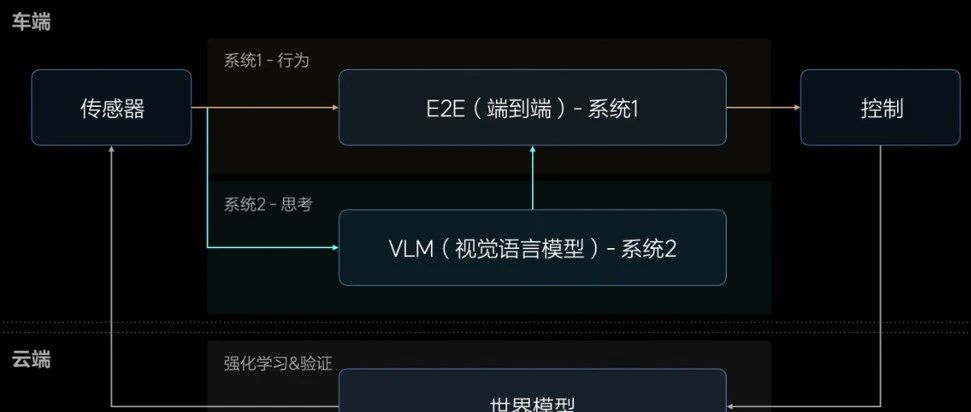
最近有很多同学咨询我们自动驾驶产业到底怎么样了?有哪些职位和方案,今天为大家盘点下当下的一些情况! 所有内容出自AuotRobo求职星球,自动驾驶、具身智能、AI类求职聚集地!这里有最专业的面经和岗位分享~ 自动驾驶分级与应用 主要功能:行车,泊车,座舱,V2X 核心系统构成:芯片,软件,传感器 技术趋势一览 1)传统自动驾驶pipline 2)端到端自动驾驶 3)VLM方案 4)VLA方案 主机厂和自驾公司 1)主机厂 新势力:小鹏,理想,蔚来,华为,极氪,小米,零跑,岚图,深蓝(长安)等; 老牌车厂:比亚迪,吉利,长安,奇瑞(星途),长城,上汽(智己),广汽(埃安)外企:奔驰,大众,现代 等; 2)供应商 已经上市:地平线,小马智行,黑芝麻智能,文远智行,知行汽车等; 未上市:momenta,轻舟智行,元戎启行,卓驭,大疆大厂:百度,滴滴等,京东; 其它:商汤绝影,毫末智行,四维图新,经纬恒润等; 职位与方向一览 1)传统方案 定位建图: 1. 定位匹配 2. 建图(nerf,splatting) 感知层次: 1. 障碍物,红绿灯,地面元素 2. BEV算法,OCC ,mapfree 后融合:静态后融合、 ...
★链接科技企业与全球资本 港股市场重塑新生态
Zheng Quan Shi Bao· 2025-07-03 01:56
Core Viewpoint - The Hong Kong stock market is experiencing a surge in technology company listings, with many firms possessing core technologies and global advantages flocking to the Hong Kong Stock Exchange (HKEX) [1][2]. Group 1: Technology Companies Listing Trend - A variety of technology companies, including Black Sesame Intelligence, Horizon Robotics, and CATL, have either successfully listed or are preparing to list on the HKEX, covering sectors such as artificial intelligence, semiconductors, and new energy [2]. - The HKEX has introduced a "Tech Company Special Line" which has received positive feedback, indicating strong interest from technology firms in listing [2]. Group 2: Market Transformation - The HKEX is evolving into a global hub for technology capital, connecting thriving mainland tech companies with global investors, thereby enhancing its strategic position in the international financial landscape [1][3]. - The listing of CATL, a leading global new energy company, is seen as a milestone for the Hong Kong capital market, showcasing the HKEX's ability to attract international-level tech firms [3]. Group 3: Institutional Optimization - The surge in technology listings is attributed to continuous institutional optimizations by the HKEX, which have created a more favorable financing environment for tech companies [4][5]. - Recent reforms, such as allowing dual-class shares and enabling unprofitable biotech firms to list, have attracted numerous mainland enterprises to the HKEX [4]. Group 4: Positive Interaction with Industry Capital - The successful listing of CATL has encouraged other tech companies planning to list in Hong Kong, indicating a more rational valuation environment for leading tech firms [5]. - The HKEX is becoming a "super connector" for global tech capital, facilitating a positive interaction between tech companies and the capital market [5][6]. Group 5: Long-term Market Appeal - The stable financing environment of the HKEX aligns with the long-term development needs of tech companies, especially in light of global economic recovery and unique issuance rhythms [6]. - The HKEX is positioned to remain an important bridge for mainland tech companies seeking international capital, particularly amid increasing geopolitical uncertainties [6].

【财经分析】2025年上半年港股盘点:估值修复与结构转型下的领跑者
Xin Hua Cai Jing· 2025-07-01 13:54
Core Viewpoint - Despite ongoing high-risk factors such as geopolitical conflicts and tariff policies, the global stock market showed an overall upward trend in the first half of 2025, with the Hong Kong stock market leading with a 20% increase [1]. Market Performance - The Hang Seng Index closed at 24072.28 points, marking a 20% increase since the beginning of the year, with the Hang Seng Tech Index and the China Enterprises Index also rising approximately 19% [3]. - The index experienced two phases of upward movement, with the first phase seeing a rise from a low of 18671.49 points on January 13 to a high of 24874.39 points on March 19, driven by positive impacts from domestic AI developments [3]. - The second phase began in late March, with the index dropping to a low of 19260.21 points on April 9 before climbing to a high of 24533.39 points by June 25, supported by international capital inflows and new listings in the hard tech and new consumption sectors [3]. Sector Performance - Most sectors experienced gains in the first half of the year, with notable increases in jewelry and watches (282%), toys and leisure products (182%), and poultry and meat (112%) [4]. - Among stocks with a market capitalization exceeding 10 billion HKD, the top gainers included Lao Pu Gold (321%), Sanofi (289%), and Yaocai Securities (278%), while the largest declines were seen in Maifushi (-52%), Sunac China (-38%), and Black Sesame Intelligence (-36%) [4]. - The market structure has shifted, with technology, consumption, and healthcare sectors gaining prominence over traditional sectors like finance, internet, and real estate [4]. Capital Flows and IPO Activity - The first half of 2025 saw net purchases of Hong Kong stocks by southbound funds exceeding 730 billion HKD, a 90% year-on-year increase, with southbound trading accounting for 19.3% of daily turnover [5]. - Hong Kong led the world in IPO fundraising, with 42 companies raising over 105 billion HKD, primarily in the technology and consumption sectors, which accounted for over 70% of the total [6]. - The new stock market saw a significant increase in the first-day performance, with 62% of new stocks rising on their debut, and an average first-day gain of over 13% [8]. Future Outlook - Institutions generally expect the liquidity benefits to continue into the second half of the year, although there are concerns about performance pressures in high-valuation sectors [2][9]. - Analysts believe that the strong performance of the Hong Kong market reflects a revaluation of "new core assets" by international capital, supported by a positive cycle of IPO expansion and liquidity activation [9]. - There are potential structural opportunities in the market, although geopolitical conflicts and global recession risks may still impact market performance [10].
爆了!超级盛宴,错过等一年
格隆汇APP· 2025-06-30 09:37
变局加速,机遇涌动!走过充满韧性的 2024 ,中国经济正以"新质生产力"为引擎,在 2025 年深化转型。政策红利持续释放,资本市场改 革深化,外资加速回流人工智能、高端制造、绿色能源等新经济赛道,一场以"新质"为核心的估值重构已然展开。 然而,全球棋局波谲云诡:地缘冲突未息、货币政策分化、供应链重塑承压、多国政治周期叠加 ……如何在百年大变局的深化期,把握未来航 向? 2025 年下半年,机遇与风险并存,投资者如何优化策略,行稳致远? 答案,就在深圳! 2025 年 7 月 4 日 -5 日,格隆汇 2025 中期策略峰会 将再度点亮鹏城! 我们力邀顶尖思想领袖与实战精英,为您: 深度剖析全球与中国经济核心变局; 前瞻 "新质生产力"驱动的投资主脉络; 拆解复杂环境下的风险与机遇; 共话资本市场改革红利与布局良机; TOP 级机构(合计管理超千亿)分享投资策略和方向。 这是一场智慧碰撞的盛宴,一次拨云见日的集结! 与远见者同行,与担当者共进! 会议组成及嘉宾阵容: 7 月 4 日上午 格隆汇 ·中期策略峰会· 2 025 宏观、策略、风投、实业大咖云集,莅临现场共同剖析中国资本市场发展趋势,共同展望 20 ...
中国民营经济组织达1.85亿户 市场主体活力持续增强
Chang Jiang Shang Bao· 2025-06-30 08:29
Group 1 - The total number of private economic organizations in China has steadily increased, reaching 185 million by May 2025, accounting for 96.76% of all operating entities, with a year-on-year growth of 2.3% [2][3] - Private enterprises exceed 58 million, showing a year-on-year increase of 5.2%, while individual businesses reach 127 million, with a growth of 1.0% [3][5] - Private enterprises are focusing on "new quality productivity," significantly contributing to technological innovation in strategic emerging industries such as new energy and high-end equipment manufacturing [2][4] Group 2 - Private enterprises play a crucial role in driving industrial upgrades and stabilizing economic growth, with significant investments in technology and innovation [3][4] - Notable private companies like Huawei and BYD are leading in their respective fields, with Huawei's R&D expenditure reaching 179.7 billion yuan in 2024, accounting for 20.8% of its total revenue [4][5] - Individual businesses are vital for community economies, with 127 million individual businesses providing over 250 million jobs, significantly contributing to employment stability [5][6] Group 3 - The flexibility and market sensitivity of small and medium-sized enterprises enable them to quickly adapt to market demands and convert technological innovations into productive forces [5][6] - Individual businesses are increasingly adopting digital tools to enhance their operations, integrating online and offline services to expand their customer base [6]

洞见2025下半场:新质驱动,韧性突围
格隆汇APP· 2025-06-26 11:07
Core Viewpoint - The article emphasizes the acceleration of change and emerging opportunities in the Chinese economy, driven by "new quality productivity" as a key engine for transformation in 2025, amidst a complex global landscape [1]. Group 1: Economic Outlook - The Chinese economy is expected to deepen its transformation in 2025, with ongoing policy benefits and capital market reforms [1]. - There is a notable influx of foreign capital into new economic sectors such as artificial intelligence, high-end manufacturing, and green energy [1]. Group 2: Event Overview - The "2025 Mid-term Strategy Summit" will take place in Shenzhen on July 4-5, 2025, featuring top thought leaders and practitioners to analyze core changes in the global and Chinese economy [1][2]. - The summit aims to discuss investment strategies and opportunities in the context of the evolving capital market [2]. Group 3: Key Speakers and Topics - Notable speakers include Dr. Kai-Fu Lee, who will discuss the outlook for the Chinese capital market in the second half of 2025 [4]. - Other speakers include Chen Hao, who will address global investment strategies, and Dan Bin, who will focus on ESG investment and new quality productivity [4][5]. Group 4: Company Presentations - The event will feature presentations from numerous outstanding listed companies, providing a platform for direct communication between companies and investors [8]. - A detailed schedule of company roadshows is provided, showcasing various sectors and investment opportunities [10][11]. Group 5: Investor Insights - A full-day Global Institutional Investor Forum will be held on July 5, inviting institutional leaders to share investment strategies and insights for the second half of 2025 [12]. - The forum aims to provide a comprehensive understanding of diverse investment styles and new thinking in the investment landscape [12].
从技术狂欢到盈利拷问,中国AI2.0的集体造血焦虑
Hu Xiu· 2025-06-25 08:19
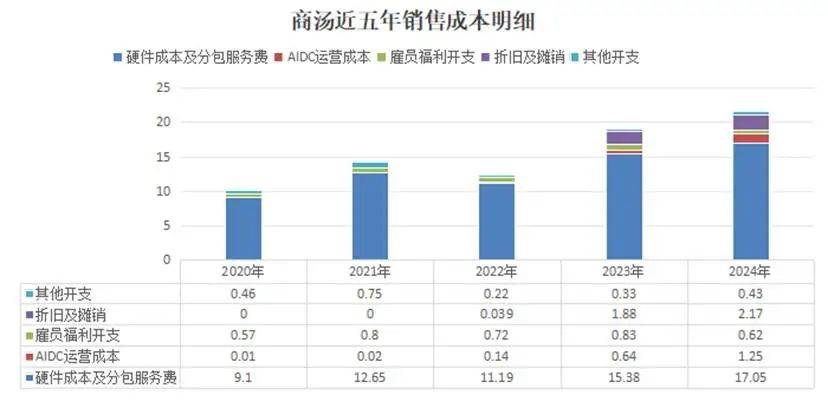
Core Insights - The report shifts focus from demand to supply in the AI 2.0 landscape, analyzing various companies like SenseTime, Black Sesame Intelligence, Qunhe Technology, and others, highlighting their different strategies and challenges in achieving profitability and sustainable growth [1][2][3]. Group 1: SenseTime - SenseTime has transitioned from a government-focused AI 1.0 company to a more diversified AI 2.0 entity, with a significant shift towards generative AI, achieving a revenue of 3.772 billion yuan in 2024, marking a 10.75% year-on-year growth [5][10]. - The company's revenue structure has evolved, with traditional AI contributing only 30% of total revenue by 2024, while generative AI has surged to 63.7% of total revenue, growing by 103.1% year-on-year [7][10]. - Despite revenue growth, SenseTime faces challenges such as declining gross margins, which fell from 70.6% in 2020 to 42.9% in 2024, and cumulative losses of 46.4 billion yuan over five years [16][20]. Group 2: Black Sesame Intelligence - Black Sesame Intelligence focuses on providing cost-effective smart automotive chips and solutions, with 92.4% of its 2024 revenue (4.38 billion yuan) coming from automotive products [27][32]. - The company has improved its gross margin significantly, achieving a gross profit of 195 million yuan in 2024, up 153% year-on-year, with a gross margin of 41.14% [36]. - However, high R&D costs have led to continued losses, with an adjusted net loss of 1.304 billion yuan in 2024, remaining stable compared to the previous year [39]. Group 3: Yingshi Network - Yingshi Network, a subsidiary of Hikvision, has upgraded its business model to focus on AI and IoT, achieving a revenue of 5.442 billion yuan in 2024, a 12.41% increase [45]. - The company’s core product remains smart home cameras, which contributed 54% of total revenue, but growth in this segment has plateaued [46]. - Yingshi's cloud platform services have seen significant growth, nearly doubling from 5.38 billion yuan in 2021 to 10.52 billion yuan in 2024, with a gross margin of 76% [49][50]. Group 4: Qunhe Technology - Qunhe Technology, known for its space design software, reported a revenue of 664 million yuan in 2023, with a 10.48% year-on-year growth [66]. - The company has established itself as a leading provider in the space design software market, holding a 22.2% market share [79]. - Despite revenue growth, Qunhe Technology continues to operate at a loss, with an adjusted loss of 94 million yuan in Q3 2024 [78]. Group 5: Innovation Qizhi - Innovation Qizhi focuses on AI solutions for the manufacturing sector, achieving a revenue of 1.222 billion yuan in 2024, a 30.21% decline year-on-year [85]. - The company has maintained strict cost control, with total operating expenses at 66.3% of revenue, but still reported a loss of 117 million yuan in 2024 [90][94]. - The decline in revenue is attributed to challenges in the manufacturing and financial services sectors, which are critical to its business model [87].
地平线机器人(9660.HK):高端辅助驾驶行业核心受益者 首次覆盖给予“买入”评级
Ge Long Hui· 2025-06-25 06:33
Group 1 - The core viewpoint is that Horizon Robotics is well-positioned to benefit from the growth potential of global smart driving, with projected global and Chinese smart vehicle sales reaching approximately 80 million and 30 million units by 2030, respectively, and high-level assisted driving and autonomous driving penetration rates approaching 100% [1] - Horizon Robotics holds over 40% market share in the Chinese OEM advanced driver assistance market as of 2024, indicating a strong leadership position [1] - The unique BPU (intelligent computing unit) architecture of Horizon Robotics is a key competitive advantage, enabling higher computing power density and intelligence at lower power consumption and cost [1] Group 2 - Horizon Robotics is expected to ship a cumulative total of 7.7 million units of its Journey series chips by the end of 2024, with projected shipments of 4.2 million, 4.5 million, and 5.5 million units for 2025, 2026, and 2027, respectively [2] - The company anticipates revenue of 3.43 billion, 5.41 billion, and 7.46 billion yuan for the years 2025, 2026, and 2027, respectively, with a forecasted return to profitability in 2027 [2] - A "buy" rating is assigned to Horizon Robotics with a target price of 8.60 HKD, based on a 20x P/S valuation for 2026, using comparable companies such as Nvidia, ARM, Mobileye, and Black Sesame Intelligence [2]
