奔驰

Search documents
科博达技术股份有限公司关于2025年第三季度业绩说明会召开情况的公告
Shang Hai Zheng Quan Bao· 2025-12-05 19:23
Core Viewpoint - The company held a Q3 2025 earnings presentation on December 5, 2025, to address investor inquiries regarding its performance and strategic developments [1][2]. Group 1: Company Globalization and Client Structure - The company is advancing its global layout and localization strategy, having established a factory in Japan in 2023 and made significant progress on a Czech facility, which is now in trial production [3]. - In the first three quarters of 2025, the top five end customers contributed 61.30% of the company's revenue, with notable growth from NIO [4]. - The commercial vehicle business accounted for less than 15% of total revenue in the same period [5]. Group 2: Financial Performance and Cost Management - The company's QS expenses decreased by 57% year-on-year, indicating effective cost control measures [6]. Group 3: Product Development and Market Position - The company is a leader in the global lighting control sector, with products supplied to over 30 major automotive manufacturers, including Volkswagen and BMW [7]. - The company has developed high-cost performance automotive central computing platforms and smart driving domain control products, with projected sales exceeding 20 billion yuan from ongoing projects [8]. - The Efuse products have gained traction with clients such as Zeekr, Ideal, Mercedes-Benz, and Ford, reflecting strong market acceptance [8]. Group 4: Revenue Growth and Future Outlook - USB product revenue grew by over 20% year-on-year in the first three quarters of 2025, with future performance dependent on market demand [9]. Group 5: Compliance and Corporate Governance - The independent directors confirmed the legality and compliance of the proposed convertible bond issuance, ensuring it aligns with regulatory requirements and does not harm shareholder interests [9].

贾可:中国汽车淘汰赛至少还有十年
Xin Lang Cai Jing· 2025-12-05 11:18
Core Viewpoint - The Chinese automotive industry is not yet in a stable state and may take at least another 10 years to reach a comfortable equilibrium, with an expectation that around 10 major automotive giants will remain in the market [1][36][56]. Group 1: Industry Outlook - The WNATCES 2025 event aims to address the current challenges in the automotive industry, focusing on the collaboration between manufacturers and suppliers to create a sustainable ecosystem [7][39]. - The event features 100 speakers, including 42 automotive executives and 1,000 attendees from 12 automotive groups and 300 supply chain companies, highlighting the industry's collaborative efforts [7][38]. - The theme of the event, "Long-term and Short-term," emphasizes the need for balance between immediate concerns and future growth strategies [5][36]. Group 2: Historical Context - The evolution of the automotive industry in Europe and the U.S. shows a historical pattern of consolidation, with significant changes occurring over more than a century [13][44]. - The Chinese automotive industry has undergone rapid changes since 2009, with government initiatives aimed at creating a few large manufacturers, but the market has seen a shift towards electric and intelligent vehicles [14][45]. Group 3: Competitive Landscape - The competitive landscape is shifting, with the emergence of six major camps in the Chinese automotive market, including traditional manufacturers, state-owned enterprises, and new entrants [49][51]. - The core competitive advantages have transitioned from traditional components to new technologies such as electric powertrains and intelligent systems, which are now critical for success in the market [17][48]. Group 4: Future Predictions - Industry leaders predict a "淘汰赛" (elimination race) in the automotive sector, with varying timelines for consolidation, ranging from 3 to 10 years [11][42]. - The future of the industry is expected to involve significant technological advancements, particularly in areas like AI and smart vehicle systems, which will reshape the competitive dynamics [25][56]. Group 5: Collaboration and Ecosystem Building - The event aims to foster collaboration among industry players to build a robust ecosystem that can adapt to ongoing changes and challenges [27][61]. - The focus on creating a cooperative environment is seen as essential for navigating the complexities of the automotive market and ensuring long-term sustainability [58][61].


坤泰股份(001260) - 坤泰股份投资者关系活动记录表
2025-12-05 08:30
Company Overview - Shandong Kuntai New Materials Technology Co., Ltd. specializes in the research, production, and sales of automotive soft interior materials, listed on the Shenzhen Stock Exchange on February 16, 2023 [2] - The company’s main products include tufted carpets and needle-punched carpets, primarily serving the complete vehicle assembly market [2] - Kuntai has established stable partnerships with brands such as BMW, Audi, Mercedes-Benz, and NIO, and is expanding its overseas presence with subsidiaries in the USA, Singapore, Mexico, and Morocco [2] Recent Investments and Financial Health - Recent investments include production bases in Mexico and Morocco, funded by the company’s own capital [4] - The company reports a normal cash flow situation, low asset-liability ratio, and sufficient bank credit limits, indicating no significant financial pressure [4] Market Focus and Clientele - The Moroccan production base targets the European automotive carpet market and has signed a cooperation intention with European company Trèves, which is expected to fully utilize the production line's capacity [5] - The establishment of the Moroccan base is progressing smoothly, with efforts to connect with additional overseas clients [5] Digitalization and Operational Efficiency - The company integrates various digital systems, including MES, PLM, SAP, and WMS, to achieve interconnected operations and real-time monitoring of production processes [6] - This digitalization allows for rapid response to design changes and operational adjustments, enhancing overall efficiency [6] Future Plans - Kuntai aims to deliver products economically and defect-free, focusing on high-value automotive soft interior materials through technological innovation and product development [7] - The company plans to consolidate existing customer relationships while actively seeking new clients, with a strategy to expand into the North American and European markets through its production bases in Mexico and Morocco [7]
柔性屏,打开“显示”新视窗
Ren Min Ri Bao· 2025-12-05 00:07
Core Insights - The display technology is rapidly transitioning from "rigid" to "flexible," with flexible displays increasingly applied in consumer electronics, commercial spaces, and smart interactions [1] - Recent advancements include the development of high-performance stretchable polymer light-emitting diodes (PLED) by the Chinese Academy of Sciences and a prototype stretchable display by LG, achieving approximately 53% stretchability [1] - Flexible displays are reshaping human-computer interaction and creating a new generation of industrial clusters with applications ranging from foldable phones to curved screens [1] Group 1: Flexible Display Technology - Flexible displays are not merely bent versions of traditional glass screens; they require a multi-layered structure that includes flexible substrates, electronic components, packaging films, and cover plates [2] - The flexible substrate materials, such as polyimide and polyester, are essential for withstanding high temperatures and numerous folds without deformation [2] - Core electronic components like thin-film transistors (TFT) and organic light-emitting diodes (OLED) rely on high-performance materials to ensure rapid current flow and self-emission capabilities [3] Group 2: Packaging and Protection - Packaging technology is crucial for protecting flexible displays from environmental factors like oxygen and moisture, with ideal materials being lightweight, flexible, and offering excellent moisture and oxidation resistance [4] - Researchers are developing multi-layer composite packaging and exploring self-healing coatings to enhance the longevity of flexible displays while maintaining their flexibility [4] Group 3: Market Expansion and Applications - The global market for flexible displays is expanding, with projections indicating that shipments of flexible AMOLED panels will reach 631 million units by 2024, accounting for 42% of the smartphone screen market [5] - By 2031, the flexible display market is expected to exceed $173 billion, with a compound annual growth rate of 34.3% [5] - Applications of flexible displays are broadening across various sectors, including smart terminals, wearables, automotive, healthcare, and public services [5] Group 4: Innovations in Wearables and Automotive - In the smart terminal sector, flexible displays are enhancing product forms, with Huawei set to release a foldable laptop with an 18-inch screen in 2025 [5] - Flexible displays are transforming automotive interfaces, with companies like Mercedes and BMW integrating flexible OLED screens into their vehicles for improved interaction [6] Group 5: Healthcare and Public Services - In healthcare, flexible displays are being integrated into wearable medical devices for real-time monitoring of health parameters [7] - Public services are adopting large flexible OLED screens for advertising and information dissemination, with applications in venues like the Paris Olympics [7] Group 6: Future of Intrinsic Flexibility - Current flexible displays rely on external structures for deformation, facing challenges such as fragility and resolution loss [8] - The development of intrinsic flexible materials aims to address these issues by enabling the display itself to withstand deformation through molecular structure and micro-design [9] - Intrinsic flexibility could lead to new applications, integrating sensors and AI for real-time data analysis and adaptive interaction [9][10]
为什么所有黑色的车都要被叫做“黑武士”?
虎嗅APP· 2025-12-04 13:51
Core Viewpoint - The term "Black Knight" in the automotive industry has lost its original meaning and exclusivity due to overuse and dilution, transitioning from a symbol of luxury and scarcity to a generic label for any black vehicle [5][7][11]. Group 1: Origin and Evolution of "Black Knight" - The term "Black Knight" originated from the modification scene and was popularized by luxury brands, which used it to create a high-end image [5][6]. - Over 100 automotive brands have launched black versions of their vehicles, with more than 300 models globally identified as "Black Knights" [5][6]. Group 2: Marketing and Consumer Perception - Luxury brands initially leveraged the term for its strong visual impact and limited availability, but as more brands adopted it, the term's significance diminished [6][7]. - The concept of "semantic bleaching" applies to "Black Knight," where its original meaning has been diluted through frequent use, making it synonymous with any black vehicle rather than a high-end product [7][8]. Group 3: Pricing and Cost Analysis - The actual cost of blacking out a vehicle is relatively low, with modifications costing between 600 to 10,000 yuan, while the price increase for "Black Knight" versions can range from 5% to 30% [9][10]. - Limited editions of "Black Knight" vehicles often command significant premiums, with examples including the Mercedes-AMG G63 priced at around 2.4 million yuan and limited to 20 units globally [9][10]. Group 4: Market Trends and Future Outlook - The appeal of "Black Knight" vehicles is waning in the Chinese market, with a noticeable decrease in demand for black modifications compared to previous years [11][12]. - The automotive industry is urged to find new marketing strategies as the "Black Knight" concept approaches obsolescence [12].

保时捷疑遭卫星锁死,智能汽车暗藏“电子手铐”
Xin Lang Cai Jing· 2025-12-04 11:29
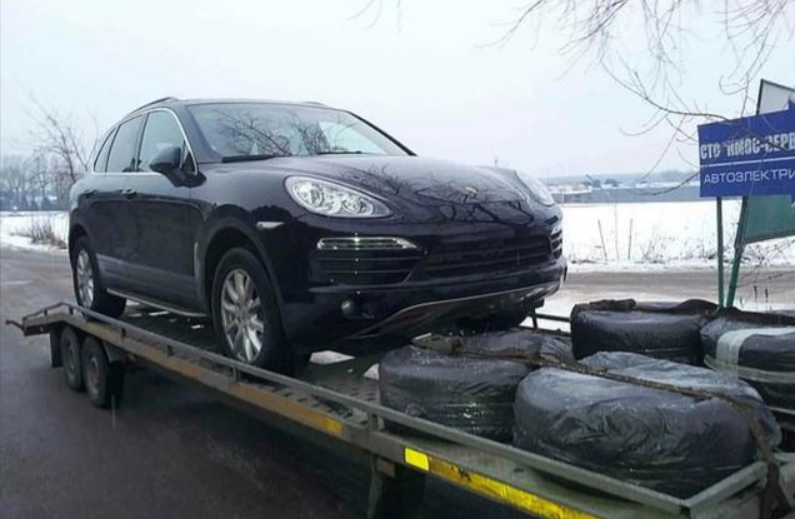
Core Insights - A significant number of Porsche vehicles in Russia have experienced sudden failures, with reports emerging from major cities like Moscow and St. Petersburg since November 28, leading to over 300 vehicles awaiting repairs [1][3][20] - The issue is not limited to Porsche, as some models from Mercedes-Benz, Audi, and Volkswagen are also affected, all of which share a common feature: the Porsche VTS (Vehicle Tracking System) installed in vehicles produced after 2013 [5][23] - The VTS system, originally designed as a theft prevention tool, has malfunctioned, locking engines due to a loss of satellite signal, which raises concerns about the control of vehicle systems by external technology providers [7][25] Technical Analysis - The VTS system relies heavily on continuous satellite signal connectivity; any disruption leads to the system assuming the vehicle is in danger, triggering an engine lock [7][25] - Investigations suggest that the core technology and satellite support for the VTS system are controlled by Western companies, indicating that vehicle owners may not have full control over their vehicles even after purchase [7][25] - The scale of the failures has led to speculation about potential intentional interference with satellite signals, which could be a tactic used in electronic warfare [8][26] Owner Challenges - Vehicle owners have attempted various DIY fixes, such as disconnecting the battery or the VTS module, but only about 30% of vehicles have been successfully restored through these methods; the remaining require extensive repairs [10][28][30] - The complexity of the failures suggests that they are not typical electronic faults but rather involve deeper system-level issues that cannot be resolved through standard resets [12][30] Broader Implications - The incident highlights the vulnerabilities associated with reliance on foreign technology in high-end manufacturing, raising questions about product ownership and control in the era of smart technology [12][32] - It underscores the need for countries to develop autonomous capabilities in critical technology areas to mitigate risks associated with external dependencies [14][34] - The situation serves as a warning about the potential consequences of technological reliance, emphasizing the importance of ensuring that critical infrastructure and consumer products are secure and controllable [14][34] Strategic Recommendations - Companies and governments should prioritize the development of independent technologies in areas such as chips, operating systems, and satellite navigation to enhance economic security and industrial independence [16][34] - There is a need for consumers and businesses to carefully assess the risks associated with technology supply chains and the ownership of product control rights [16][34]
特斯拉印度首秀遇冷:两个月仅卖“100多辆”
Xin Lang Cai Jing· 2025-12-04 11:27
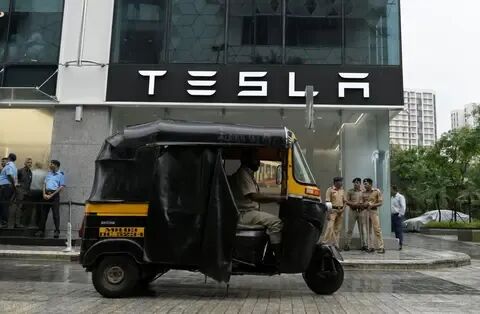
Core Insights - Tesla's entry into the Indian market has faced significant challenges, with only "a little over 100" cars delivered by the end of November, far below expectations and compared to 4,000 units sold by German luxury brands during the same period [2][15] - The high pricing of the Model Y, starting at 5.989 million rupees (approximately $71,000), has limited its market reach, confining it to the luxury segment that represents only about 1% of the local market [5][18] - Tesla's strategy of paying high import tariffs instead of committing to local manufacturing has hindered its ability to lower costs and compete effectively [5][19] Market Entry Challenges - Tesla's first experience center in Mumbai spans approximately 4,000 square feet, with the Model Y being the only model offered in India [3][16] - The company received over 600 orders from July to mid-September, but the conversion rate to actual deliveries has been very low, with only slightly more than 100 cars delivered by the end of November [5][18] - Internal challenges arose with the departure of the head of Tesla's India operations just before the store opening, leading to management being taken over by a team from China [6][18] Pricing and Market Dynamics - The high vehicle price is primarily driven by India's 70%-100% import tariffs on complete vehicles, which Tesla has opted to pay rather than participate in a government program that would reduce tariffs for local manufacturing [7][19] - The lack of charging infrastructure in India, with only about 25,000 charging stations and a high vehicle-to-charging station ratio of 235:1, further limits consumer willingness to purchase electric vehicles [7][19] - The Indian electric vehicle market has a low penetration rate of about 2.5%, with the majority of sales coming from affordable two- and three-wheel electric vehicles, while the demand for four-wheel electric vehicles is concentrated in the price range below 2 million rupees (approximately $24,000) [9][21] Competitive Landscape - Tesla's Model Y is priced three times higher than the mainstream demand threshold, forcing it to compete directly with established luxury brands like BMW and Mercedes, which have sold about 4,000 electric vehicles in India this year, 40 times more than Tesla [9][21] - Local competitors such as Tata and Mahindra are rapidly expanding their market share by leveraging extensive dealership networks and more affordable pricing [9][21] - Chinese electric vehicle brands have captured nearly one-third of the Indian market, contributing significantly to the rapid growth of electric vehicle sales in the country [9][21] Future Prospects - To succeed in India, Tesla needs to localize production to reduce prices, as the Indian government requires a minimum investment of 41.5 billion rupees (approximately $480 million) to qualify for lower tariffs [10][22] - Negotiations between Tesla and the Indian government regarding investment and localization have been complicated, with Tesla currently preferring to test the market through imports rather than making significant investments [10][22] - Even if prices are reduced, Tesla will need to invest heavily in building a dedicated charging and service network to cover India's vast geography [12][25] - The company is also facing a shift in consumer preferences towards practicality and overall ownership costs, necessitating a more localized market strategy [12][25]

轮到马斯克破防,没有车企愿用FSD,「他们不想要!」
36氪· 2025-12-04 10:03
以下文章来源于超电实验室 ,作者王磊 超电实验室 . 让汽车和未来触手可及。 贾老板力挺。 文 | 王磊 编辑 | 秦章勇 来源| 超电实验室(ID:SuperEV-Lab) 封面来源 | IC photo 被马老板视为心头好的FSD,以为自己好心授权给其他车企用,这些企业不说争前恐后,起码也得有相当大的热情。 但事实是, 没有一家车企愿意用特斯拉的FSD。 气的马斯克在社交媒体吐槽,"我曾经警告过他们,甚至提出授权特斯拉 FSD,但他们不想要!属实是疯了……" 也有马斯克破防的时候。 他直接在社交平台声援马斯克,说FF愿意和特斯拉在FSD上全面合作,还说双方已经完成了充电网络兼容,FF和FX车型都能用上特斯拉的超级充电站,合 作已经有了基础。 尴尬的是,马斯克到现在还没回他。 为FSD打抱不平 最扎心的还是福特CEO,他曾直接公开说"Waymo比FSD好用",这等于把拒绝摆在明面上。 不过有意思的是,就在马斯克吐槽"没人懂FSD"的时候,贾跃亭站出来了。 他还表示,就算有传统车企偶尔联系特斯拉,也只是在敷衍的讨论五年后为一个小项目使用FSD,并且提出了一些对特斯拉来说完全不可能实现的要 求,"简直毫无意义" ...

俄罗斯数百辆保时捷突遭锁死断电引猜测,疑遭蓄意的卫星干扰!部分奔驰、奥迪和大众车也受到影响
Ge Long Hui· 2025-12-04 06:39
Core Viewpoint - A significant number of Porsche vehicles in Russia have experienced unexpected shutdowns, leading to speculation about potential satellite interference affecting the standard satellite alarm systems [1] Group 1: Incident Overview - Over 40 Porsche vehicles have been reported as immobilized and towed away in recent days, starting from November 28 [1] - The issue is not limited to Porsche, as some Mercedes-Benz, Audi, and Volkswagen vehicles have also been affected [1] Group 2: Technical Insights - The service director from Rolf stated that the inability to start a large number of vehicles is due to the disruption of the standard satellite alarm system [1] - Technical personnel are currently investigating the root cause of the problem [1]

最后一刻改变主意,欧盟还是决定向美国低头让步,欧媒:很耻辱
Sou Hu Cai Jing· 2025-12-04 06:37
Group 1: Trade Policies and Tariffs - After Trump's administration, the U.S. trade policy became more aggressive, particularly regarding the trade deficit with the EU, leading to a rapid assessment of additional tariffs on EU steel products [1] - The U.S. imposed a 50% tariff on steel in March, significantly reducing German factory orders and disrupting supply chains [5] - On March 26, the U.S. announced a 25% tariff on EU automobiles, severely impacting brands like Mercedes and BMW, which account for about 20% of their global sales [3] Group 2: EU's Response and Negotiations - The EU planned to impose €1.8 billion in tariffs on U.S. agricultural and tech products as a countermeasure, but negotiations led to a temporary suspension of tariffs [5] - In July, the EU agreed to delay countermeasures and sought to negotiate a framework agreement with the U.S., which included a 15% base tariff on most EU goods [8][12] - The EU's concessions were seen as a reluctant choice under pressure from U.S. tariffs, revealing its structural dependencies, such as 60% of energy imports from the U.S. [15] Group 3: Economic Impact and Future Outlook - The agreement led to a gradual recovery of EU exports, but the automotive sector continued to face challenges, with German manufacturers experiencing a decline in U.S. sales [13][17] - The U.S. tariffs raised costs for European companies, particularly in the automotive industry, which is expected to face ongoing sales difficulties [17] - The EU's concessions did not resolve the underlying trade disputes and instead opened new areas of contention, particularly in digital sovereignty [19][21]