
赛力斯

Search documents
11家车企今年销量目标总和猛增19%
新华网财经· 2026-01-19 07:38
Core Viewpoint - The automotive industry is setting ambitious sales targets for 2026, with a total of 11 major companies aiming for 23.8 million units, reflecting a year-on-year increase of approximately 19% compared to 20 million units in 2025 [1][2]. Group 1: Sales Targets of Major Companies - Major companies have set aggressive sales targets for 2026, with a total of 2,380,240 units aimed, which is an 18.96% increase from the 2,000,904 units sold in 2025 [3]. - Great Wall Motors has the most ambitious target, aiming for 1.8 million units, a nearly 36% increase from 1.32 million units in 2025 [5]. - Dongfeng plans to increase its target from 250,000 units in 2025 to 325,000 units in 2026, representing a growth of over 30% [5]. - Changan aims for 3.3 million units, a 13.3% increase, while Chery targets 3.2 million units, a 14.03% increase [5]. - BYD, SAIC, GAC, and Li Auto have not disclosed their targets, but collectively sold 1.167 million units in 2025, indicating potential for significant contributions to the overall market [1]. Group 2: Conservative Institutional Predictions - The China Association of Automobile Manufacturers (CAAM) forecasts total automotive sales in 2026 to be around 34.75 million units, reflecting only a 1% year-on-year growth [2][8]. - UBS predicts a slight decline in wholesale sales, while retail sales may see a mid-single-digit drop [2][8]. - Deutsche Bank and JPMorgan forecast a decline of 3% to 5% in total automotive sales for 2026 [8]. Group 3: New Energy Vehicle Growth - New energy vehicle sales targets are significantly higher than overall sales growth targets, with companies like Geely aiming for a 32% increase in new energy vehicle sales [8]. - The focus on new energy vehicles is seen as a key growth driver for the automotive market, with companies adjusting their strategies accordingly [8]. Group 4: Global Market Challenges - Global electric vehicle sales are expected to grow by 20% to 20.7 million units in 2025, but growth is projected to slow to 15.7% in 2026, with North America facing a significant decline of 23% [9]. - Factors such as changing policies and increased competition in Europe are contributing to a cooling global electric vehicle market [9]. Group 5: Industry Consolidation - The automotive market is expected to see a clearer division between leading, mid-tier, and numerous smaller companies, with a need for consolidation due to increased competition and market saturation [11]. - Only about 10% of Chinese electric vehicle brands are predicted to be profitable in the next five years, leading to the exit of brands with low sales volumes [11].


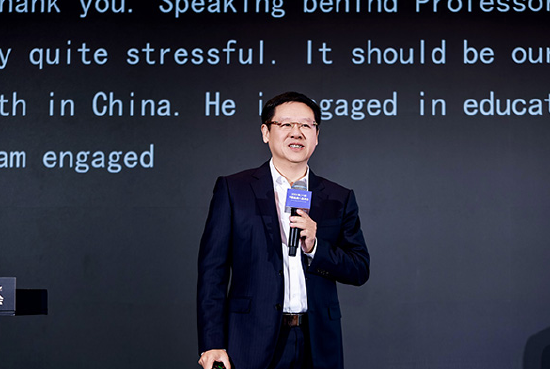
珍酒李渡董事长吴向东:没有超级产品就不会有超级企业
Xin Lang Cai Jing· 2026-01-19 07:08
Core Viewpoint - The 20th China Brand Person Annual Conference will be held on December 29, 2025, in Shenzhen, focusing on the theme "Who Earns Respect for China," gathering over 2,000 elites from various sectors to reflect on the development of Chinese brands and explore new trends and opportunities in brand building [3][12]. Group 1: Innovation and Achievements - The company has implemented an innovative business model through the "Zunyi Forum," hosting 75 forums that attracted over 10,000 participants and generated over 600 million in revenue within 200 days, a significant achievement in a declining industry [5][14]. - The company has adopted a strategy of "one out, one in" for recruitment in certain regions, indicating a shift in operational focus [5][14]. Group 2: Seven Innovations for Business Breakthrough - The company has identified seven areas of innovation: super links, super products, super channels, super communication, super organization, super brand, and super experience, which have contributed to its business breakthroughs [5][14]. - A shift from large conferences to smaller forums has improved conversion rates from initially low percentages to significantly higher levels [5][14]. Group 3: Industry Challenges and Successful Case Studies - The liquor industry is facing challenges such as severe price inversion, affecting all channels [6][15]. - Successful case studies include Pop Mart, which saw a 16-fold increase in market value by creating a super product, LABUBU, and Huawei, which transformed its business model to achieve significant market success [6][15][16]. Group 4: Product Development and Market Positioning - The company has launched a super product, "Dazhen," priced at 600 yuan, which competes with products priced at 3,600 yuan, and is recognized as one of the hottest liquors in the market [8][18]. - The company is also developing a super beer with 20 times the amount of hops used in regular beer, positioning it as a leading new brand in the premium beer segment [8][18]. Group 5: Future Exploration and Incentives - The company is exploring new product lines, including a low-alcohol beverage and a health drink for women, aiming to maintain health into old age [9][19]. - A special equity incentive policy is in place to encourage sales, offering free shares of the listed company to those who assist in selling products [9][19].
11家车企今年销量目标总和猛增19%
第一财经· 2026-01-19 06:45
Core Viewpoint - The automotive industry is setting ambitious sales targets for 2026, with a total of 11 major companies aiming for 23.8 million units, reflecting a year-on-year increase of approximately 19% compared to 20 million units sold in 2025 [3][4]. Group 1: Sales Targets and Growth - Major automakers have disclosed their sales targets for 2026, with a combined goal of 23.8 million units, indicating a significant increase from the previous year's total of 20 million units [3][5]. - If all leading manufacturers achieve their targets, the total sales for 2026 could reach 35.47 million units, representing a growth of about 12% [3]. - Notable ambitious targets include Great Wall Motors aiming for 1.8 million units (up 36%), Dongfeng targeting 3.25 million units (up over 30%), and Chery setting a goal of 3.2 million units (up 14.03%) [10][11][12]. Group 2: Market Predictions and Challenges - The China Automotive Industry Association forecasts total vehicle sales in 2026 to be around 34.75 million units, with a modest growth of 1% [4][17]. - UBS predicts a low single-digit decline in wholesale vehicle sales and a mid-single-digit drop in retail sales for 2026 [18]. - The automotive market is facing challenges, including a reduction in tax incentives and a potential slowdown in electric vehicle sales growth globally [20]. Group 3: Industry Dynamics and Consolidation - The automotive industry is experiencing increased pressure for consolidation, with the top 15 automotive groups accounting for 92.3% of the market share, a slight decrease from the previous year [22]. - The market is expected to see a clearer division between leading, mid-tier, and smaller companies, with many struggling electric vehicle manufacturers facing significant challenges [23]. - Analysts suggest that only about 10% of Chinese electric vehicle brands are likely to be profitable in the next five years, indicating a potential exit of brands with low sales volumes [23].

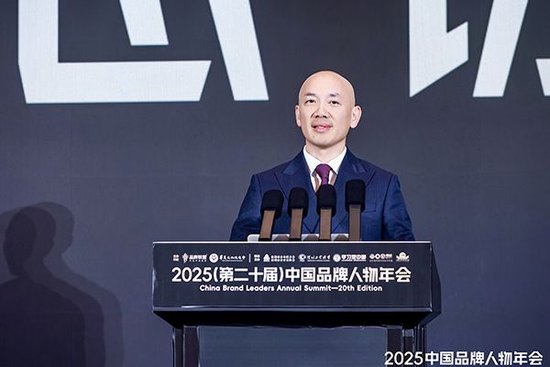
王永:长期主义是前路愈难,依然能找到继续前行的方向
Xin Lang Cai Jing· 2026-01-19 06:24
Core Insights - The 20th China Brand Person Annual Conference is set to take place on December 29, 2025, in Shenzhen, focusing on the theme "Who Earns Respect for China" and aims to gather over 2,000 elites from various sectors to reflect on the development of Chinese brands and explore new trends and opportunities in brand building [3][24]. Group 1: Acknowledgments and History - The conference celebrates the 20th anniversary of the Brand Alliance, which has been pivotal in promoting Chinese brand development since its establishment on December 18, 2005 [6][27]. - Key figures in the Brand Alliance's history include Wang Yong, Ai Feng, and Liu Donghua, who have played significant roles in its establishment and growth [4][25]. - The Brand Alliance has received support from various government leaders and has hosted events in multiple cities, including Guangzhou, Haikou, and Sanya, showcasing the collaborative efforts across regions [7][28]. Group 2: Tribute to Brand Figures - The conference pays tribute to numerous brand figures who have made significant contributions to the global respect for Chinese brands, including scientists, economists, media personalities, and sports figures [10][31]. - The importance of long-term commitment in brand development is emphasized, highlighting that perseverance is crucial in overcoming challenges [11][32]. Group 3: Economic Landscape and Future Outlook - The economic landscape has shifted dramatically, moving away from rapid growth to a new era that requires meticulous cultivation and adaptation [12][33]. - The conference highlights the transition of China from being the "world's factory" to becoming the "world's market," presenting significant opportunities for growth, particularly in the next decade with substantial investments projected in various regions [19][40]. - Plans for the 2026 China Brand Going Global Expo in Hainan are announced, aiming to facilitate the international expansion of Chinese brands [21][42]. Group 4: Embracing AI and Innovation - The establishment of a joint venture, Brand Alliance Intelligent Co., aims to leverage AI to empower various industries and enhance the competitiveness of Chinese brands [21][42]. - The focus on AI is seen as a critical driver for business growth, with a shift from merely having AI capabilities to integrating AI into business operations for measurable outcomes [21][42].
汽车行业周报:低增长之年,追寻高质量发展
Guoyuan Securities· 2026-01-19 05:45
Investment Rating - The report maintains a "Recommended" investment rating for the automotive industry, indicating that the industry index is expected to outperform the benchmark index by more than 10% [6]. Core Insights - The automotive industry is entering a phase of low growth, with a focus on high-quality development opportunities. Key areas of interest include high-growth automotive companies and structural opportunities within the supply chain, particularly in commercial vehicles and automotive technology [4][34]. - The China Association of Automobile Manufacturers (CAAM) forecasts that total vehicle sales in China will reach 34.75 million units in 2026, representing a year-on-year growth of 1%. Passenger vehicle sales are expected to grow by 0.5%, while commercial vehicle sales are projected to increase by 4.7% [3][35]. - New energy vehicles (NEVs) are anticipated to play a crucial role in driving industry growth, with expected sales of 19 million units in 2026, reflecting a significant year-on-year growth of 15.2% [3][35]. Summary by Sections 1. Weekly Market Review (January 10-16, 2026) - The automotive sector index increased by 0.49%, outperforming the Shanghai and Shenzhen 300 index by 1.06 percentage points. The automotive services sector saw the highest growth at 4.51% [12][15]. 2. Weekly Data Tracking (January 10-16, 2026) - From January 1-11, 2026, retail sales of passenger vehicles in China totaled 328,000 units, a 32% decrease year-on-year. Wholesale figures were 381,000 units, down 40% year-on-year [20][21]. 3. Industry News (January 10-16, 2026) - Significant developments include partnerships for advanced driving technologies and the introduction of new vehicle models by major manufacturers, indicating ongoing innovation in the sector [25][29][31]. 4. Key Manufacturer Sales Rankings (2025) - BYD led the passenger vehicle market with sales of 4.55 million units, followed by Geely and Chery. In the NEV segment, BYD also dominated with a market share of 29.7% [23][24]. 5. Future Outlook - The report emphasizes the importance of macroeconomic policies and industry governance in sustaining growth. The focus will be on maintaining competitive advantages in electric and intelligent vehicle technologies [34][36].






广发证券:2026年新能源乘用车单车带电量提升几何?
智通财经网· 2026-01-19 03:20
Core Viewpoint - The report from GF Securities predicts a 15.0% year-on-year increase in the battery capacity of new energy passenger vehicles in 2026, driven by changes in policy, supply, and demand [1]. Group 1: Key Drivers for Battery Capacity Increase - The first driver for the increase in PHEV battery capacity is the new energy vehicle purchase tax adjustment requirements and the launch of long-range PHEVs priced below 200,000 yuan, which will enhance user experience by reducing charging frequency [2]. - The second driver for PHEV battery capacity increase is the concentration of supply for large battery PHEVs priced above 200,000 yuan, as consumers in this segment are less price-sensitive and prefer better daily usage experiences [2]. - For EVs, the first driver is the decrease in the proportion of low-end pure electric vehicles due to the subsidy policy, while the second driver is the competitive strategy of leading manufacturers to "enhance features and raise prices" in response to rising raw material costs [2]. Group 2: Investment Recommendations - The report suggests focusing on right-side targets in the passenger vehicle chain, including Geely, BYD, Chery, Seres, Li Auto, Xpeng, and Leap Motor, while left-side targets include Great Wall Motors and Changan Automobile [3]. - For upstream and downstream chains, right-side targets include Minth Group, Yinlun, Bertli, Top Group, Aikodi, Fuyao Glass, and others, while left-side targets include Yongda Automobile and New Coordinates [3]. - Companies at an inflection point include SAIC Motor, with potential opportunities identified in various segments of the industry [3].

资与治 西南F4拓新局
Zhong Guo Zheng Quan Bao· 2026-01-18 20:44
——上市公司质量和投资价值进一步提高。全省上市公司累计实施并购重组136家次、交易金额813亿 元,累计实施股份回购增持283家次、总金额298亿元,累计实施现金分红超2300亿元。全省科创板、创 业板和北交所上市公司数量占比提升至44%。 对于"十五五"时期,四川证监局表示,将继续按照证监会党委和省委、省政府部署,充分发挥资本市场 功能作用,助力地方经济社会高质量发展。主要从四方面发力:聚焦科技创新,更好助力四川新质生产 力发展;凝聚发展合力,推动上市公司做优做强;强化功能发挥,服务区域发展战略;提高监管精准有 效性,守牢风险底线。 拓面增质 辖区资本市场亮点多 过去五年,四川资本市场发展环境和生态体系持续优化,各类市场主体搭乘政策东风,加速发展。 资本市场亮蜀光 资本市场亮 光 星奔川骛,岁聿云暮。回看"十四五"时期,四川资本市场交出了一份"高分答卷": ——直接融资效能进一步提升。全省新增46家A股上市公司、首发募集资金超360亿元,省内各类市场 主体通过资本市场实现直接融资超2.1万亿元,支持企业发行科创债、绿色债、乡村振兴债等创新品种 债券168只,募集资金超1000亿元。 上市公司总量稳增、赛道更 ...
OptimusGen3定型后首次亮相,高阶自动驾驶产业拐点有望加速到来
Huaxin Securities· 2026-01-18 14:58
Investment Rating - The report maintains a "Recommended" investment rating for the automotive industry, particularly focusing on the humanoid robotics sector [2][8]. Core Insights - The unveiling of Optimus Gen3 marks a significant milestone for Tesla in the humanoid robotics industry, enhancing confidence in its upcoming release in Q1 2026. This event is expected to catalyze a new wave of investment opportunities in the humanoid robotics sector [4][5]. - Shanghai's "Mosu Zhixing" action plan aims to accelerate the implementation of high-level autonomous driving technologies, targeting the large-scale application of L4-level autonomous driving by 2027. This initiative is anticipated to create substantial investment opportunities in the autonomous driving market [6][7]. Summary by Sections Humanoid Robotics Sector - The Huaxin Humanoid Robotics Index increased by 2.38% this week, with a cumulative return of 123.2% since 2025. The trading volume of the humanoid robotics sector accounted for 34.5% of the CSI 2000 index, indicating high market engagement [17][21]. - Within the humanoid robotics sub-sectors, the assembly segment performed well with a 4.8% increase, while other components like actuators and reducers also showed positive growth [21]. Automotive Sector - The CITIC Automotive Index rose by 0.7%, outperforming the broader market by 1.3 percentage points. The automotive sector's PE ratio stands at 33.9, placing it in the 51.7% percentile over the past four years, while the PB ratio is at 3.0, in the 96.3% percentile [34][48]. - Among tracked companies, Aikelan, Jiaoyun Co., and Junda Co. saw significant stock price increases, while companies like Tiangong Co. and Yueling Co. experienced notable declines [41][45]. Key Company Recommendations - The report recommends several companies within the humanoid robotics and automotive sectors, including: - New Spring Co., Shuanglin Co., and Dechang Electric Holdings for their roles in humanoid robotics components [8]. - Companies like Huawei-affiliated automakers and XPeng for their advancements in L3/L4 autonomous vehicle manufacturing [7].
机器人将再度登上春晚舞台,行业密集催化下两家核心公司持续受益
Xuan Gu Bao· 2026-01-18 14:56
Group 1 - The 2026 Spring Festival Gala will integrate "technology + art," showcasing advancements in robotics and enhancing public awareness of "Chinese manufacturing" [1] - The performance will validate the capabilities of domestic robot technology, driving upgrades in the industry chain and attracting capital interest in humanoid robots and related components [1] - The event is expected to stimulate the commercialization of AI algorithms and other technologies, benefiting core industry chain companies [1] Group 2 - Top Group, a core supplier for Tesla, is expanding its product offerings, including joint assemblies and smart motors, and aims to become a leading global supplier of robot components [2] - Lixun Precision Industry has passed testing for its rotary joint module with a major humanoid robot manufacturer and is currently in the small batch sample testing phase [2]

开源证券晨会纪要-20260118
KAIYUAN SECURITIES· 2026-01-18 14:44
Macro Economic Insights - The government is intensifying efforts to clear overdue corporate payments and wages, focusing on key regions and implementing special bonds to support this initiative [6][7] - The central bank has introduced a series of monetary policies, including a 0.25 percentage point reduction in relending and rediscount rates, and plans to maintain a loose monetary stance throughout 2026 [7][17] - The real estate policy includes extending tax incentives for residential property transactions and lowering the minimum down payment for commercial property loans to 30% [7] Industry Insights Computer Industry - Alibaba is fully integrating its Qianwen App into its ecosystem, enhancing its capabilities as an AI shopping assistant and potentially becoming a major entry point for AI services [50] - The launch of "Ant Health Assistant" and "Lingguang," a multimodal AI assistant, indicates Alibaba's strong positioning in the AI sector, with significant user engagement [51][52] - Investment opportunities in AI applications are highlighted, with recommendations for companies benefiting from this trend [53] Machinery Industry - The use of polyurethane TPU materials in humanoid robots is emphasized, showcasing their advantages in safety and shock absorption, which are critical for the mass production of robots [55][56] - The TPU market is expected to grow significantly due to its application in humanoid robots, with a projected market space exceeding 3 billion yuan as production scales up [58] Non-Banking Financial Sector - The regulatory environment for derivatives is becoming more transparent, which may benefit leading brokerage firms as restrictions on scale are expected to ease [6] - The financial sector is experiencing a "slow bull" phase, with positive performance in brokerage and insurance businesses [6] Chemical Industry - The polyester filament industry is entering a new round of production cuts, while the supply-demand dynamics for glyphosate are improving, leading to price increases [6] Automotive Industry - China's heavy truck sales are projected to reach 1.145 million units by 2025, indicating a robust market outlook [6] Food and Beverage Industry - Moutai is deepening market reforms, and the value of Bai Run shares is becoming more apparent, suggesting potential investment opportunities [6] Pharmaceutical Industry - The focus remains on innovative drug sectors, with continued recommendations for investment in this area [6] Trade and Export - China's exports have shown unexpected growth, with a year-on-year increase of 6.6% in December, driven by high-tech products and diversified markets [41][42][45]