古茗

Search documents
互联网、大消费集体转弱。银行有护盘迹象
Ge Long Hui· 2025-11-08 04:25
大消费低开低走延续弱势,截至目前下跌0.78%。其中统一企业大跌5.47%,泡泡玛特下跌4.23%,古茗 下跌2.29%,信达生物、创科实业、阿里健康等股跌幅均在1%上方。 银行股冲高回落,相对抗跌,截止午盘下跌0.28%。其中光大银行上涨1.51%,中信银行下跌0.55%,农 业银行下跌0.33%;青岛银行、邮储银行、大新金融等股跌幅均在1%上方。 内容只是个人观点,仅供参考,不作为投资依据!欢迎关注交流,互相学习、共同探讨! 开盘后直线跳水,随后超跌反弹,截至目前恒生指数下跌0.62%,互联网跌幅居前,大消费、恒生科 技、医疗等股紧随其后,银行相对抗跌。 恒生互联网低开低走大跳水,截至目前下跌1.41%,其中快手下跌4.14%,哔哩哔哩下跌2.76%,商汤下 跌2.23%,京东集团下跌2.13%,阿里巴巴下跌2.06%,美团、地平线机器人、腾讯控股等跌幅均在1% 上方。 ...


39位U40企业家个人财富超50亿,泡泡玛特、寒武纪企业估值涨超五倍
Sou Hu Cai Jing· 2025-11-07 08:16
Core Insights - The 2025 Hurun China U40 Entrepreneurs List features 39 individuals with personal wealth exceeding 5 billion yuan, highlighting the wealth accumulation among the U40 demographic [2][3] Industry Overview - The primary sectors represented by these U40 entrepreneurs are entertainment and new consumption, particularly in online gaming, new tea beverages, and consumer goods [3] - Notable companies in the gaming sector include MiHoYo and Lilith Games, while the new tea beverage sector features brands like Heytea and Manner Coffee [3] Geographic Distribution - Major cities are increasingly attractive for wealthy U40 entrepreneurs, with a significant concentration in Shanghai and Beijing, housing 11 and 9 individuals respectively, followed by Shenzhen with 7 and Guangzhou and Chengdu with 3 each [3] Notable Entrepreneurs - Key figures include: - Wang Ning from Pop Mart with a wealth of 18.2 billion yuan, marking a 562% increase [4] - Chen Tian Shi from Cambricon with 18 billion yuan, a 463% increase [4] - Cai Haoyu from MiHoYo with 8.1 billion yuan, an 11% increase [4] - The list also includes new entrants such as Liu Jingkang from Yingshi with 3.82 billion yuan and Yang Zhilin from Kimi with 7.3 billion yuan [4]

咖啡和空间,谁才是130亿美元星巴克中国的原点?
Xin Lang Cai Jing· 2025-11-07 03:36
Core Insights - Starbucks has finalized a strategic partnership with Boyu Capital to establish a joint venture in China, with a valuation of $4 billion, where Boyu will hold up to 60% equity and Starbucks will retain 40% [1] - The average store valuation for Starbucks in China is approximately $500,000, significantly lower than the global average of $2.24 million, indicating underutilization of store value [1] - Starbucks aims to expand its store count in China to 20,000, with a projected retail business value exceeding $13 billion [4] Financial Performance - Starbucks China reported a revenue of $3.105 billion for the fiscal year 2025, a 5% year-on-year increase, with same-store sales growing by 2% [4] - Despite growth in same-store transactions by 9%, the average transaction value has declined for 12 consecutive quarters, with a 7% drop in Q4 2025 [5][9] - The overall same-store sales for fiscal year 2025 saw a 1% decline, attributed to a 5% decrease in average transaction value [9][10] Market Dynamics - The competitive landscape in China's coffee market has intensified, with local brands like Luckin and Manner outperforming Starbucks in product innovation and cost control [6][7] - Coffee has transitioned into a low-margin retail business in China, challenging Starbucks' traditional high-margin model [7][11] - The shift in consumer behavior towards affordable coffee options has diminished Starbucks' competitive edge in the coffee segment [12][13] Strategic Focus - Starbucks' core business model revolves around creating a "third space" experience, emphasizing the importance of store ambiance over just coffee sales [12][14] - The company is exploring new themes for its stores, such as community spaces focused on interests like pets and outdoor activities, to enhance customer engagement [16] - Starbucks needs to redefine its value proposition in high-tier cities, where consumer perception of its space and experience has weakened [15][17]


机构称政策支持与需求复苏双重驱动下,服务消费已成重要投资主线
Mei Ri Jing Ji Xin Wen· 2025-11-07 02:07
Core Viewpoint - The Hong Kong consumer sector is experiencing downward pressure, with several popular stocks showing significant adjustments, but the "14th Five-Year Plan" policies may provide direct benefits to the sector, creating long-term investment opportunities [1] Group 1: Market Performance - The Hong Kong consumer ETF (513230) has dropped nearly 1%, indicating a broader market adjustment in the consumer sector [1] - Key stocks such as Uni-President China, Bilibili, Pop Mart, Gu Ming, and Alibaba are experiencing volatility and weakness [1] Group 2: Policy Impact - The "14th Five-Year Plan" suggests policies to expand service consumption and enhance service industry quality, which may benefit the Hong Kong consumer sector [1] - The policies aim to relax market access and promote integration of business formats, opening up growth opportunities for innovative internet platforms and new consumption enterprises [1] Group 3: Investment Recommendations - Huachuang Securities is optimistic about the overall development prospects of the Chinese consumer industry, emphasizing service consumption as a key investment theme driven by policy support and demand recovery [1] - Three main investment directions are suggested: 1. Service consumption platform companies such as Trip.com, Tongcheng Travel, and Meituan 2. Hotel groups with improving operations, including Shoulv, Huazhu, and Atour 3. Tourism sector companies with rising prospects, such as Jiuhua Tourism, Changbai Mountain, and Xiangyuan Cultural Tourism [1] Group 4: ETF Composition - The Hong Kong consumer ETF (513230) tracks the CSI Hong Kong Stock Connect Consumer Theme Index, encompassing leading internet e-commerce and new consumption companies [2] - The ETF includes major players across various consumer sectors, such as Pop Mart, Lao Pu Gold, and Miniso, as well as internet e-commerce giants like Tencent, Kuaishou, Alibaba, and Xiaomi, highlighting its strong tech and consumer attributes [2]
海外消费行业年度投资策略:2025扩品类、卡位全球,2026深度经营、品质、心智决胜
KAIYUAN SECURITIES· 2025-11-07 01:42
Group 1: Market Overview - The consumer service, retail, and media sectors in Hong Kong have shown significant performance, with the consumer service sector down by 17.34%, retail up by 94.61%, and media up by 50.98% as of October 24, 2025 [13][10][12] - The strong valuation recovery in Hong Kong stocks is attributed to a combination of global interest rate cuts, inflows of foreign and southbound capital, and the revaluation of core internet assets like Tencent and Alibaba [13][10] - The new consumption leaders in IP toys, tea drinks, and beauty sectors are showing positive fundamentals, leading to structural market trends [13][10] Group 2: IP Economy - The global licensed consumer goods market is projected to reach $307.9 billion in 2024, with a year-on-year growth of 10% [28] - Fashion apparel is identified as the category with the highest growth potential at 70%, followed by toys at 54% and food and beverages at 52% [31] - Disney, Pokémon, and Sanrio are leading in licensed retail sales, with Disney achieving $62 billion in 2024 [29][31] Group 3: Health and Wellness - The ready-to-drink beverage segment is expected to see significant penetration growth globally, with companies like Mixue Group and Guming benefiting from a positive operational cycle [4] - The return of home-cooked meals and increased health awareness are driving demand for traditional and healthy food options [4] Group 4: Beauty Sector - The cosmetics sector in China is experiencing slower growth compared to overall retail, with Douyin (TikTok) emerging as a key player in marketing and sales [4] - New ingredients and concepts are gaining traction, with a rise in oral beauty and health products [4] Group 5: Globalization Trends - The demand for spiritual entertainment in the Middle East is surging, with companies like Red Child City Technology seeing over 60% of their revenue from this region [4] - The cross-border e-commerce landscape is expanding, with companies like J&T Express capitalizing on the growth in Southeast Asia, where parcel volumes increased by 79% year-on-year [4] Group 6: Consumer Behavior Changes - The shift in consumer behavior towards more personalized and experiential consumption is evident, with a focus on self-fulfillment and value realization [4] - The education sector is adapting to changing perceptions, with new products targeting high school and college graduates to address employment challenges [4] Group 7: Entertainment and Leisure - The live music and sports sectors are expected to outperform the broader service consumption market, with companies like Ctrip and Damai Entertainment positioned to benefit [4] - The domestic concert market is maintaining high growth, with ticket sales and attendance showing significant year-on-year increases [73]




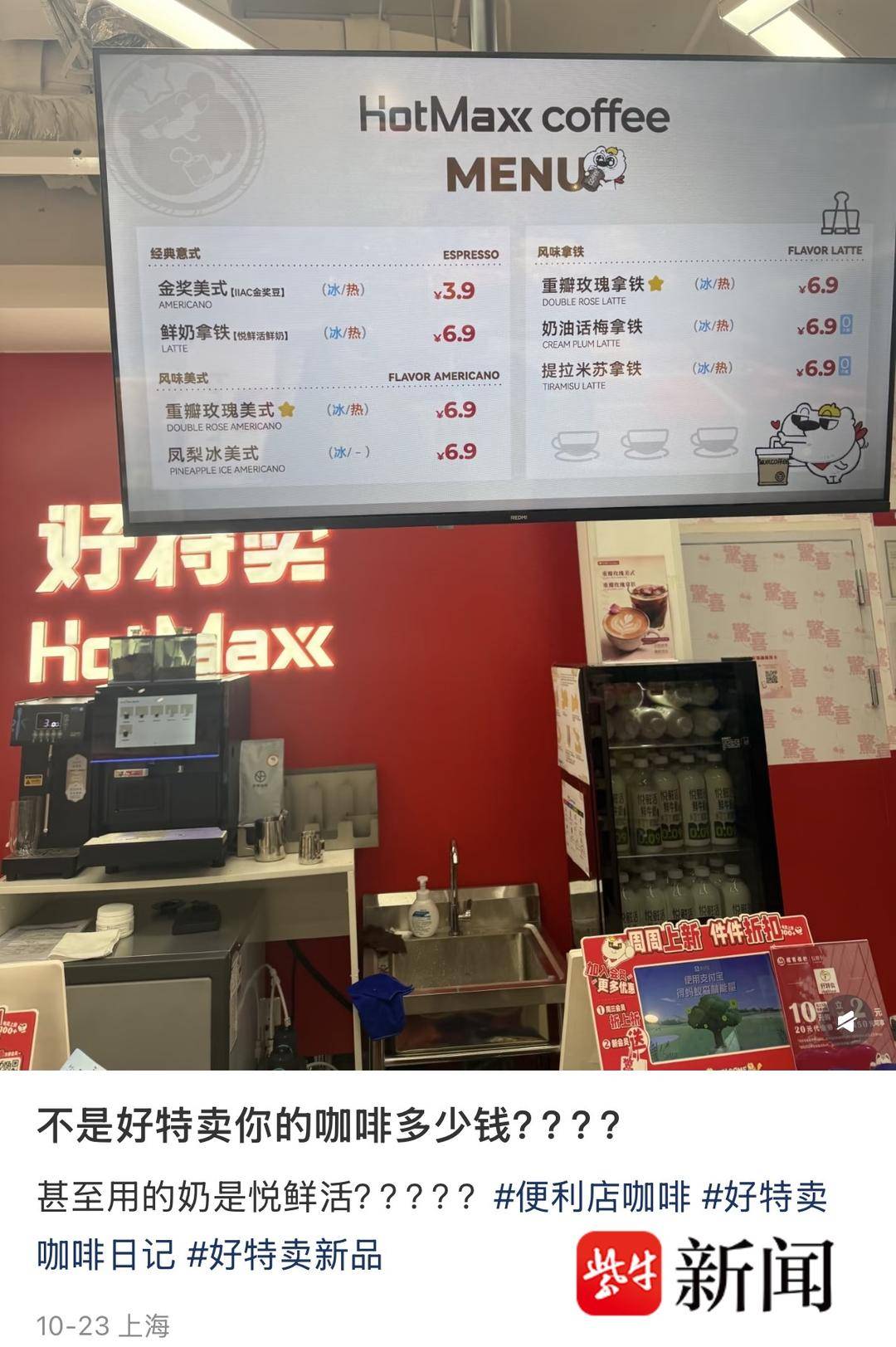
好特卖、老乡鸡跨界入局卖咖啡,一杯美式的价格已经卷到3.9元了?
Yang Zi Wan Bao Wang· 2025-11-06 09:58
Core Insights - Starbucks has officially announced a strategic partnership with Boyu Capital to jointly operate its retail business in China, managing 8,000 stores with plans to expand to 20,000 stores in the future [1] - The Chinese coffee market is experiencing intense price competition, with many brands offering significantly lower prices, raising concerns about Starbucks' competitive edge [1][3] - The number of coffee-related enterprises in China has reached 257,600, with a notable increase in registrations, indicating a growing market [5][6] Group 1: Market Dynamics - The coffee market in China is shifting towards lower prices, with brands like Luckin and CoCo offering coffee at prices as low as 2.9 yuan [1][3] - The average annual coffee consumption per person is projected to rise from 16 cups in 2023 to 22.24 cups in 2024, reflecting a transition of coffee from a luxury item to a daily staple [6] - The coffee industry is expected to reach a market size of 313.3 billion yuan in 2024, growing at a rate of 18.1% [6] Group 2: Competitive Landscape - New entrants from various sectors, including fast food and discount retail, are entering the coffee market, further intensifying competition [3][5] - The current low pricing strategy is attributed to brand subsidies, platform support, and local consumption promotion policies, which may not be sustainable in the long term [6] - Established brands may not feel immediate threats from low-priced competitors, as maintaining market share without engaging in price wars is seen as a safer strategy [6]

星巴克在中国的一场“求生式”合作
Guan Cha Zhe Wang· 2025-11-06 06:45
Core Viewpoint - Starbucks' strategic partnership with local asset management company Boyu Capital is seen as a significant shift in its approach to the Chinese market, reflecting the changing dynamics of consumer behavior and competition in China [1][2]. Group 1: Strategic Partnership - The partnership involves Boyu holding up to 60% of the joint venture, while Starbucks retains 40%, maintaining ownership of the brand and intellectual property [1]. - This move is interpreted as a "defensive collaboration" aimed at addressing the declining influence of foreign brands in China and realizing value amid increasing competition [2][4]. - The collaboration is expected to provide Starbucks with local resources to overcome growth challenges and achieve its ambitious goal of expanding to 20,000 stores in China [2][8]. Group 2: Market Dynamics - The Chinese coffee market has entered a "local brand era," with domestic brands gaining market dominance through superior business models and digital capabilities [2][24]. - Starbucks faces multiple challenges, including product innovation stagnation and difficulties in penetrating lower-tier markets [2][10]. - The partnership with Boyu is seen as a necessary step for Starbucks to adapt to the evolving market landscape and enhance its competitive position [4][24]. Group 3: Operational Challenges - Starbucks' traditional operational model, heavily reliant on direct ownership, is becoming less viable in a saturated market, necessitating a shift towards a franchise model and deeper market penetration [8][16]. - The company has been criticized for its slow product innovation compared to competitors like Luckin Coffee, which has successfully launched popular products through a more agile development process [10][11]. - The need for a comprehensive transformation in product development, digital strategy, and consumer engagement is emphasized for Starbucks to remain relevant in the rapidly changing market [24]. Group 4: Future Outlook - The partnership is viewed as a stabilizing move rather than a disruptive innovation, with Starbucks likely to adopt a gradual approach to optimize its store model and explore new product lines [23]. - The changing landscape indicates that foreign brands must rethink their strategies in China, focusing on local partnerships and adapting to consumer preferences to survive [24]. - The future of Starbucks in China hinges on its ability to innovate and localize effectively, moving beyond superficial adaptations to a deeper cultural and operational integration [24].
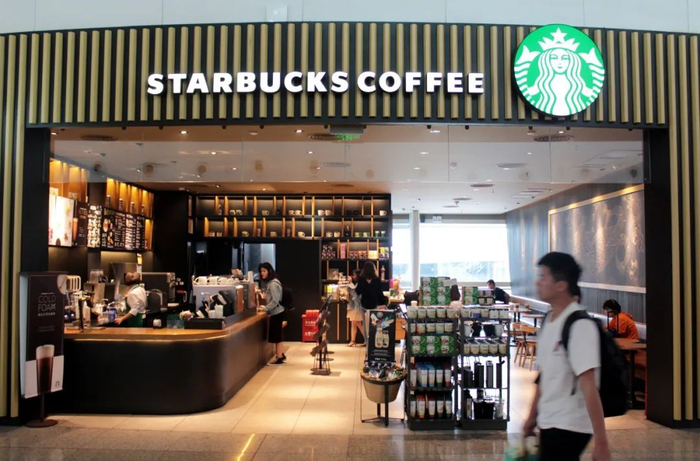
咖啡和空间,谁才是130亿美元星巴克中国的原点
3 6 Ke· 2025-11-06 00:32
Core Insights - Starbucks China has finalized a strategic partnership with Boyu Capital to establish a joint venture, with a valuation of $4 billion, aiming to expand its store count to 20,000 in the future [1][3] - The average store valuation in China is approximately $500,000, significantly lower than the global average of $2.24 million, indicating underutilization of store space value [1][3] - The competitive landscape in China's coffee market has shifted, with local brands like Luckin and Manner outperforming Starbucks in product innovation and cost efficiency [5][6] Group 1: Strategic Partnership and Expansion Plans - The joint venture will see Boyu holding up to 60% equity while Starbucks retains 40%, focusing on retail operations in China [1] - Both parties emphasize the goal of expanding Starbucks' store count in China to 20,000, particularly in smaller cities and emerging regions [3][20] - Starbucks anticipates that its retail business in China will exceed $13 billion in total value [3] Group 2: Market Dynamics and Competitive Landscape - The coffee market in China has evolved into a highly competitive space, with consumers increasingly prioritizing affordability over the premium experience Starbucks traditionally offered [4][5] - Local competitors are leveraging cost control and rapid product innovation, making it challenging for Starbucks to maintain its market position [5][6] - Starbucks' average transaction value has been declining for 12 consecutive quarters, indicating a shift in consumer behavior towards lower-priced options [3][12] Group 3: Brand and Space Strategy - Starbucks' core strength lies in its ability to create a "third space" for consumers, which is more than just a coffee shop but a community gathering place [2][14] - The brand's identity has shifted from being a premium coffee provider to a space-focused business, necessitating a reevaluation of its product offerings and pricing strategies [14][15] - The company is exploring new themes for its stores, such as interest-based community spaces, to enhance customer engagement and redefine its value proposition [21][23]
古茗(01364) - 截至2025年10月31日止之股份发行人的证券变动月报表
2025-11-05 11:15
FF301 股份發行人及根據《上市規則》第十九B章上市的香港預託證券發行人的證券變動月報表 截至月份: 2025年10月31日 狀態: 新提交 致:香港交易及結算所有限公司 公司名稱: 古茗控股有限公司(於開曼群島註冊成立的有限公司) 呈交日期: 2025年11月5日 I. 法定/註冊股本變動 | 1. 股份分類 | 普通股 | 股份類別 | 不適用 | | 於香港聯交所上市 (註1) | | 是 | | | | --- | --- | --- | --- | --- | --- | --- | --- | --- | --- | | 證券代號 (如上市) | 01364 | 說明 | | | | | | | | | | | 法定/註冊股份數目 | | | 面值 | | | 法定/註冊股本 | | | 上月底結存 | | | 5,000,000,000 | USD | | 0.00001 | USD | | 50,000 | | 增加 / 減少 (-) | | | 0 | | | | USD | | 0 | | 本月底結存 | | | 5,000,000,000 | USD | | 0.00001 | USD ...
异动盘点1105 |中国中免逆市涨近4%,蜜雪集团午前涨超3%;热门中概股普跌,比特币概念股走低
贝塔投资智库· 2025-11-05 04:00
Group 1: Stock Movements and Company Announcements - China Duty Free Group (01880) saw a rise of over 3.9% after announcing its first interim dividend plan, proposing a distribution of 2.50 yuan per 10 shares, totaling approximately 517 million yuan, which accounts for 16.95% of its net profit for the first three quarters [1] - Gu Ming Holdings (01364) experienced an early morning increase of nearly 4%, with a current rise of 1.39%, following the announcement of a board meeting scheduled for November 14, 2025, to consider a special dividend [1] - Yuejiang (02432) rose over 4.38% after announcing a strategic partnership with Lens Technology, involving a procurement order of 1,000 robots, marking a new phase in their collaboration [1] - Tianli International Holdings (01773) increased by over 4.4% after a successful event in Chengdu focused on AI in education [1] - Yihua Tong (02402) surged by nearly 8% after reporting a positive cash flow of 4.61 million yuan for the first three quarters, a significant improvement from a loss of 221 million yuan in the same period last year [2] - Home Control (01747) fell over 14% after the Hong Kong Securities and Futures Commission raised concerns about its highly concentrated shareholding structure [2] - XPeng Motors (09868) saw a decline of over 5%, currently down 3.26%, ahead of its AI Technology Day scheduled for November 5 [2] - Shanghai Petrochemical (00338) dropped over 2.2% after reporting a 10.77% decrease in revenue and a net loss of 432 million yuan for the first three quarters [3] - Sanhua Intelligent Control (02050) fell over 2.1% amid speculation regarding Tesla's upcoming annual shareholder meeting [3] - Mixue Group (02097) rose over 3% following a strategic cooperation signing ceremony with Anjun Express in Brazil [4] Group 2: U.S. Market Movements - Palantir (PLTR.US) stock fell over 7.94% despite reporting a 63% year-on-year revenue increase to 1.18 billion USD for the third quarter [5] - The Nasdaq Golden Dragon China Index declined over 2%, with notable drops in several Chinese stocks, including Futu Holdings (FUTU.US) down over 7.57% and XPeng (XPEV.US) down nearly 4% [5] - Metsera (MTSR.US) surged over 20% following increased acquisition bids from Pfizer (PFE.US) and Novo Nordisk (NVO.US) [5] - Yum China (YUMC.US) rose over 1.9% after a positive earnings call highlighted the success of its new business model [5] - Cryptocurrency-related stocks fell, with Coinbase (COIN.US) down over 6.9% and Bitcoin dropping over 1.7% [6] - Tesla (TSLA.US) dropped over 5% due to multiple negative factors, including a lawsuit related to a serious accident and a rejection of a significant compensation proposal for CEO Elon Musk [6] - Baidu (BIDU.US) rose over 3.1% after announcing that its autonomous driving platform surpassed 250,000 weekly orders, marking a significant milestone [6] - Uber (UBER.US) fell over 5% after reporting lower-than-expected operating profit for the third quarter [7] - Philips (PHG.US) increased nearly 3% after reporting a 2% decline in sales but exceeding market expectations for adjusted EBITA [7] - Spotify Technology (SPOT.US) saw fluctuations in its stock price following the release of its third-quarter earnings report, with several key metrics surpassing market expectations [7]