万科A

Search documents
地产及物管行业周报:贸易战下扩内需应对,稳地产重要性再提升-2025-04-06
Shenwan Hongyuan Securities· 2025-04-06 06:15
Investment Rating - The report maintains a "Positive" rating for the real estate and property management sectors [2][3]. Core Insights - The report highlights the importance of stabilizing the real estate market in response to the ongoing trade war, emphasizing the need for domestic demand expansion [2][3]. - It notes a significant decline in both new and second-hand housing transactions, with new home sales in 34 key cities dropping by 23% week-on-week and 26% year-on-year in April [4][7]. - The report indicates that the government is implementing policies to stabilize the market, including the cancellation of housing transfer restrictions in Nanjing and the expansion of housing fund withdrawal policies [32][33]. Industry Data Summary New Housing Transaction Volume - New housing sales in 34 key cities totaled 3.093 million square meters last week, a week-on-week decrease of 23.4% [4]. - Year-on-year, new housing sales in April are down 26%, with first and second-tier cities seeing a 21% decline and third and fourth-tier cities experiencing a 49% drop [7][8]. Second-Hand Housing Transaction Volume - Second-hand housing sales in 13 key cities fell by 26.2% week-on-week, with April sales down 15% year-on-year [13]. - Cumulative sales for the year to date show a 26.5% increase compared to the previous year [13]. New Housing Inventory - In 15 key cities, 710,000 square meters of new housing were launched last week, with a sales-to-launch ratio of 2.08, indicating a continued trend of inventory reduction [21]. - The total available residential area in these cities is 88.71 million square meters, reflecting a 0.9% decrease week-on-week [21]. Policy and News Tracking - The report discusses macroeconomic policies, including the imposition of tariffs on U.S. imports and the rise in manufacturing PMI to 50.5%, indicating a recovery in manufacturing activity [32][33]. - It highlights local government initiatives, such as Nanjing's cancellation of housing transfer restrictions and the expansion of housing fund policies in various cities [32][33]. - The report also notes the active land market in core cities, with significant land sales and project launches reported in the first quarter of 2025 [32][33].






上市公司股票名称相似度文本数据1990-2025
Sou Hu Cai Jing· 2025-04-05 02:48
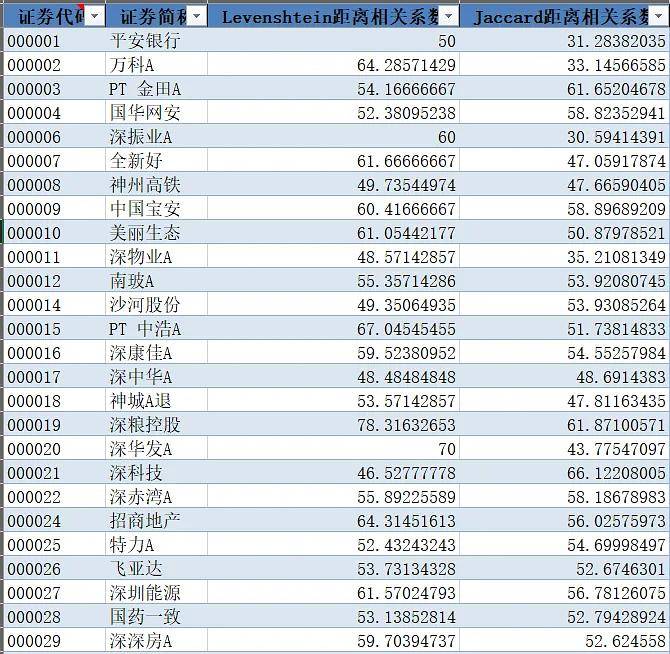
数据简介 数据格式 数据格式为Excel形式 股票名称相似度是指通过量化分析不同股票名称之间的文本相似性,评估它们在名称结构、语义、行业 关联等方面的接近程度。这种相似性不仅体现在字面拼写(如"腾讯控股"与"腾讯音乐"),还可能涉及 行业关键词(如"新能源""科技"等)、地域特征(如"上海""深圳")或企业属性(如"集团""股份")的 关联。股票名称相似度具有丰富的科研价值:一、可以对市场异常行为进行监控,通过分析股票名称相 似度和股价波动的关系识别市场操纵或非理性投资(2015年匹凸匹改名事件);二、可以判断投资者行 为是否存在认知偏差,通过构建名称相似度因子,量化名称对投资者决策的影响;三、可以判断股价是 否合理,通过股票名称相似度,可以判断投资者是否因为相似名称而误判了企业的发展趋势。本数据通 过使用Levenshtein距离和Jaccard距离来构建上、京、深交易所A股非ST的上市公司股票名称相似度,在 计算得到企业与其他所有早于该企业上市且不在同一行业和同一地区的企业之间的Levenshtein和Jaccard 距离均值后,通过将均值映射到[0-100]范围内得到每一个企业的股票名称相似系数。 数据 ...

买爆了!大资金,抄底!
券商中国· 2025-04-03 23:27
Core Viewpoint - Southbound capital significantly increased its net buying in Hong Kong stocks, reaching a historical second-highest net purchase of 287.9 billion HKD on April 3, indicating strong investor confidence despite market volatility [1][2][4]. Market Performance - On April 3, the Hong Kong stock market opened lower, with the Hang Seng Index down 2.43% and the Hang Seng Tech Index down over 3%. However, both indices showed recovery during the day, with the Hang Seng Index closing down 1.52% and the Hang Seng Tech Index down 2.09% [2][5]. - The total market turnover reached 2894.92 billion HKD, an increase of over 700 billion HKD compared to April 2 [1]. Southbound Capital Activity - Southbound capital's net buying included significant purchases in major stocks: 60.72 billion HKD in the Tracker Fund, 48.33 billion HKD in the Hang Seng China Enterprises Index, and 34.87 billion HKD in Alibaba [2][4]. - Since the beginning of the year, southbound capital has accumulated nearly 500 billion HKD in net purchases, compared to 807.9 billion HKD for the entire previous year [4]. Sector Performance - Among the Hang Seng Index constituents, Shenzhou International and Techtronic Industries led the declines, with drops exceeding 14% and 12%, respectively. Conversely, Tingyi Holdings saw a rise of 3.5% [5]. - In the Hang Seng Tech Index, JD.com and Alibaba both fell over 5%, while Xiaomi Group managed a gain of 3.03% [6]. Corporate Actions - Tencent Holdings repurchased 1.011 million shares for 500 million HKD on April 3, with a price range between 492 HKD and 498.8 HKD. Year-to-date, Tencent has repurchased over 18.6 billion HKD worth of shares [7]. Economic and Policy Context - The U.S. announced a 10% "minimum baseline tariff" on trade partners, effective April 5, with additional tariffs on countries with significant trade deficits to follow on April 9 [8][9]. - Analysts suggest that while the tariffs are substantial, the market may have already priced in these risks, indicating potential for marginal improvement in the financial markets [9][10]. Investment Strategy - Analysts recommend focusing on sectors that are relatively resilient and benefit from policy support, such as automotive, electronics, home appliances, and technology. They also highlight the importance of low-valuation state-owned enterprises and local Hong Kong dividend stocks [11].

万科:新建项目连续11年满足绿建评价标准 截至2024年累计公益投入超10亿元
Cai Jing Wang· 2025-04-03 07:56
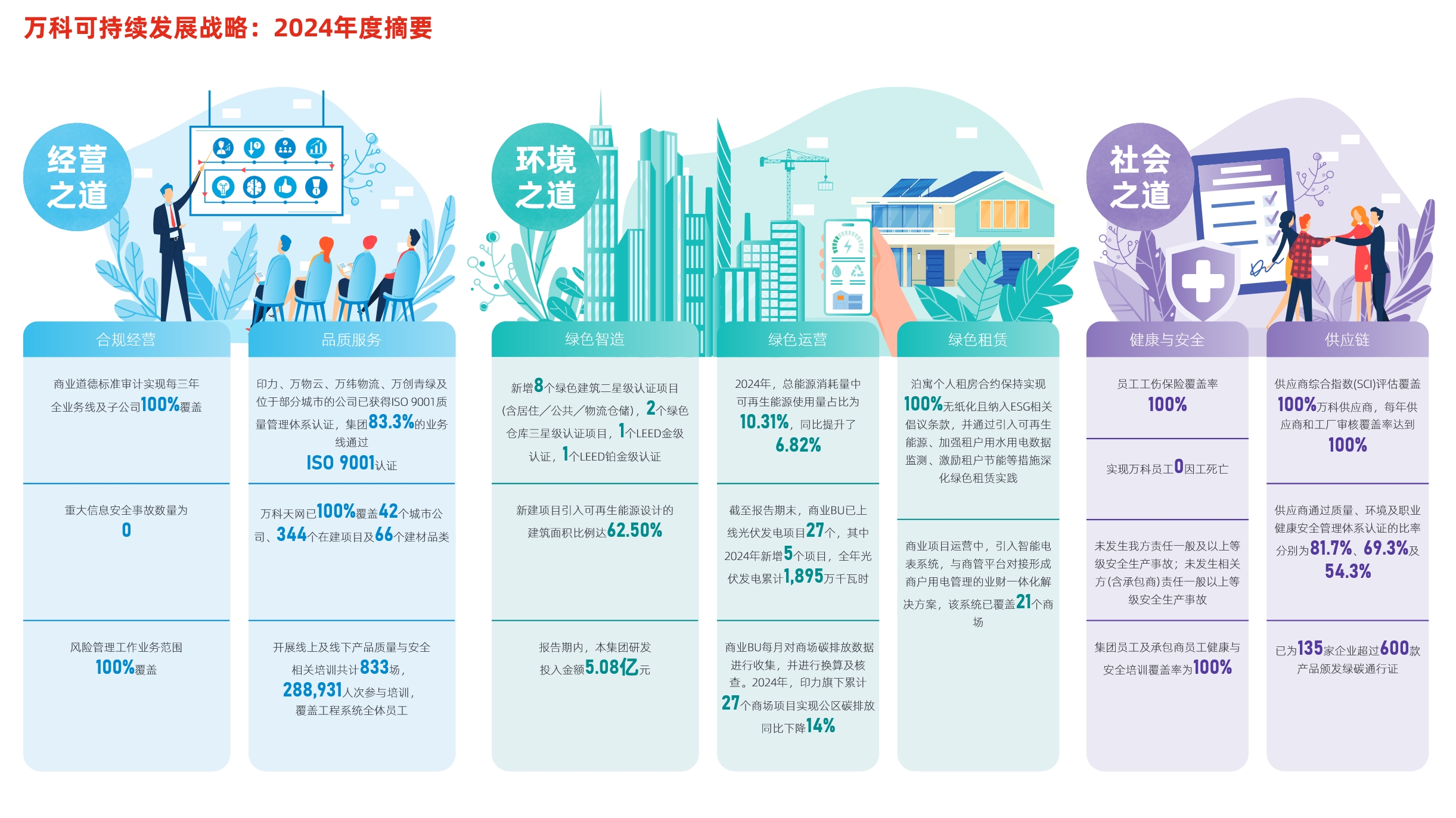
Core Viewpoint - Vanke A's 2024 Social Responsibility Report highlights its strong performance in sustainable development, receiving various domestic and international ESG ratings and recognitions [1] Corporate Governance - Vanke emphasizes compliance in its operations, having established a comprehensive compliance mechanism to respect local tax laws and regulations, while enhancing monitoring of compliance risks and violations [4] - In 2024, 100% of employees, including part-time and outsourced staff, underwent red line training, and a 360-degree review process was implemented for leadership appointments [4] Business Ethics and Auditing - The company achieved 100% coverage of business ethics standard audits across all business lines and subsidiaries every three years, conducting 11 comprehensive audits and one marketing audit in 2024 [5] - Mandatory business ethics training for all board members and employees, including contractors, achieved a 100% attendance rate in 2024 [5] Product Quality and Safety - Vanke conducted 833 training sessions on product quality and safety in 2024, with participation from 288,931 individuals, covering all personnel in the engineering system [5] - The company has met green building evaluation standards for new projects for 11 consecutive years, with a cumulative area exceeding 335 million square meters by the end of 2024 [5][6] Environmental Initiatives - In 2024, Vanke introduced eight new two-star green building certification projects and two three-star projects, with 62.5% of new projects incorporating renewable energy designs [6] - The company achieved a 66.7% coverage rate for ISO 14001 environmental management system certification [6] Social Responsibility - Vanke ensures employee rights and a safe working environment, with 100% coverage of health and safety training for employees and contractors in 2024 [6] - The company’s online learning platform, "LeXue," provided over 8,118 courses, achieving a 100% training rate for employees in 2024 [7] Community Engagement and Philanthropy - Since its establishment in 1998, Vanke's employee mutual aid association has supported 810 members affected by disasters, providing a total of 55.393 million yuan in aid [7] - Vanke has invested over 1 billion yuan in various social welfare initiatives since 2008, focusing on community waste management, green environmental protection, disaster relief, and education [7] - The company has committed 1.175 billion yuan to poverty alleviation efforts across multiple provinces, enhancing rural infrastructure and education [8]
7月:债市走势分化,中短期限信用债收益率下行显著
Guoxin Securities· 2025-04-03 07:15
Report Industry Investment Rating No relevant content provided. Core Viewpoints - Without considering coupon income, in the industry dimension, real estate bonds had a positive alpha with an average price change of 0.09%, leading other industry bonds in gains; transportation bonds had a negative alpha with an average price change of -0.01%, being the only industry bonds with a net price decline. In the term dimension, interest rate bonds with a maturity of over 10 years in March had a certain negative alpha. In the sub - category dimension, commercial bank ordinary bonds had an obvious alpha in March [1][2][11]. Summary by Directory 1. Overview of Yields of Various Bond Types - In March, the bond market showed a divergent trend, with the yields of short - and medium - term credit bonds declining significantly. For interest rate bonds, yields generally increased, with the average yield of treasury bonds rising by 9BP, that of China Development Bank bonds by 5BP, and that of local government bonds by 12BP. For credit bonds, the yields of all credit bond types with a maturity of 3 years or less declined, and the implied AA - rated 1 - year urban investment bonds had the largest decline in yield, with an average decline of 23BP [2][12]. - As of March 31, short - term interest rate bonds had relatively high historical yield percentile levels. Among them, the 1 - year treasury bonds and local government bonds had their three - year historical yield percentiles rising to 22% and 25% respectively. For credit bonds, low - grade long - term financial bonds had relatively high historical yield percentile levels, with the three - year historical yield percentiles of 7 - year AA - rated bank secondary capital bonds and bank perpetual bonds being 19% and 21% respectively [15]. 2. Industry Alpha Tracking - In the industry dimension, most industry credit bonds generally rose in March, with an average net price change of 0.04%. The real estate industry had a positive alpha, with an average bond price change of 0.09%, leading other industries in gains; the transportation industry had a negative alpha, with an average bond price change of -0.01%, being the only industry with a net price decline [2][18]. - In terms of real estate bonds, public enterprise bonds had an obvious negative alpha in March, with an average price change of -0.41% mainly due to the significant decline of several Vanke bonds. The top - gainers in March were 21 Longhu Expansion MTN001 (Project Income), 21 Vanke 04, and 24 Binjiang Real Estate MTN004, with net prices rising by 12%, 1.7%, and 1.5% respectively; the top - losers were H20 CIFI 2 and H21 CIFI 2, with net prices falling by 5.2% and 5.3% respectively [20]. - For urban investment bonds, those in Beijing and Tianjin had an obvious positive alpha in March, while those in Guangxi had a negative alpha. The average price changes of urban investment bonds in Beijing and Tianjin in March were both 0.11%, being the regions with the largest gains; the average price change of urban investment bonds in Guangxi in March was -0.08%, being the region with the largest decline. The overall price change of urban investment bonds in March was 0.03% [28]. - In terms of financial bonds, there was little difference in the net price changes of financial bonds of various ratings and types in March, and no obvious alpha was observed. The top - gainers were 24 Datong C2, 25 Donghai C1, and 25 Yixin Leasing PPN001, with net prices rising by 0.9%, 0.7%, and 0.6% respectively; the top - losers were 24 Kunpeng Investment MTN004B and 24 Kunpeng Investment MTN003, with net prices falling by 1.6% and 1.9% respectively [30]. 3. Term Alpha Tracking - Interest rate bonds with a maturity of over 10 years in March had a certain negative alpha. The price changes of treasury bonds, policy - financial bonds, and local government bonds with a maturity of over 10 years in March were -2.03%, -1.35%, and -1.1% respectively, significantly exceeding the decline of other term interest rate bond varieties. The reasons were that the yield increase of ultra - long - term bonds in March was significantly higher than that of short - term varieties, and the duration leverage of ultra - long - term bonds was relatively high, resulting in a more significant price decline due to the yield increase [2][36]. - Among the representative long - term bonds, the 23 Treasury Bond 07 had the largest decline in March, with a monthly decline of 2.64% [40]. 4. Sub - category Alpha Tracking - Commercial bank ordinary bonds had an obvious alpha in March. Data showed that commercial bank ordinary bonds rose by an average of 0.07% in March, while the average price changes of commercial bank sub - bonds and insurance company bonds were negative. The yields of commercial bank bonds and insurance company bonds in March showed obvious term characteristics, with the yields of short - and medium - term varieties declining and those of long - term varieties rising. Compared with other sub - bond varieties, commercial bank ordinary bonds had a relatively short duration, which was the main reason for their positive alpha in March [3][42]. 5. Ranking of Public Bond Funds in March - Short - term pure bond funds led other types of public bond funds in average price change in March. The average price change of short - term pure bond funds in March was 0.23%, that of medium - and long - term pure bond funds was 0.12%, that of hybrid bond - type secondary funds was 0.08%, and that of hybrid bond - type primary funds was 0.08% [3][47].
万科全年亏损近500亿,新管理层规划未来
YOUNG财经 漾财经· 2025-04-03 07:05
Core Viewpoint - Vanke reported a significant loss of nearly 50 billion yuan in 2024, marking its first annual loss since its listing in 1991, with a new management team outlining future plans to stabilize and recover the business [2][4][15]. Financial Performance - In 2024, Vanke achieved operating revenue of 343.18 billion yuan, a year-on-year decrease of 26.3%, and a net profit loss attributable to shareholders of 49.48 billion yuan, a decline of 506.8% [2][4]. - The basic loss per share was 4.17 yuan, down 504.2% from the previous year, with a diluted return on equity of -24.4%, a drop of 29.26 percentage points from 2023 [5][4]. - The revenue from real estate development and related asset management was 301.03 billion yuan, accounting for 87.7% of total revenue, while property services contributed 33.13 billion yuan, or 9.7% [6]. Loss Drivers - The primary reasons for the losses included a significant decline in the settlement scale and gross margin of development projects, with a total provision for inventory impairment of 8.14 billion yuan and credit impairment of 26.4 billion yuan [7][4]. - The company faced additional losses from non-core financial investments and asset disposals at prices below book value [7][4]. Debt Pressure - As of the end of 2024, Vanke's net debt ratio was 80.6%, an increase of 25.9 percentage points from the previous year, with total interest-bearing liabilities amounting to 361.28 billion yuan [11]. - The proportion of short-term debt rose sharply from 19.5% to 43.8% within a year, indicating increased short-term repayment pressure [11]. - Vanke's cash holdings of 88.16 billion yuan were insufficient to cover short-term debts, with a coverage ratio of only 55.7% [11]. Management Changes - Following a major management overhaul in January 2024, Vanke appointed several new executives from state-owned enterprises to strengthen its leadership [16][17]. - The management expressed confidence that the real estate market has passed its most challenging phase and is expected to stabilize [17]. Future Strategy - Vanke plans to focus on its core business and key urban layouts, accelerate asset disposals, and optimize operations, targeting positive cash flow from operations [17][18]. - The company aims to leverage its diverse asset pool and explore various financing strategies to enhance liquidity and maximize asset value [14][18].

万科A(000002):股东全方位积极支持,多措并举保稳定
Ping An Securities· 2025-04-02 08:13
Investment Rating - The report maintains a "Recommended" investment rating for Vanke A (000002.SZ) with a current stock price of 7.11 yuan [1]. Core Views - The company reported a significant decline in revenue and net profit for 2024, with total revenue of 343.18 billion yuan, down 26.3% year-on-year, and a net loss of 49.48 billion yuan, down 506.8% year-on-year. The loss was slightly higher than the earnings forecast, and the company plans not to distribute dividends or issue bonus shares [5][8]. - The report highlights that the company's profitability is under pressure due to several factors, including a significant decrease in the settlement scale and gross profit margin of development business, which fell to 9.5%, leading to a comprehensive gross margin decline of 5.1 percentage points to 10.2% [8]. - The company is actively working on restructuring and risk mitigation strategies, focusing on core business operations and achieving stable sales and cash recovery [9]. Summary by Sections Financial Performance - In 2024, Vanke A's revenue is projected to be 343.18 billion yuan, with a year-on-year decline of 26.3%. The net profit is expected to be -49.48 billion yuan, reflecting a 506.8% decrease compared to the previous year [5][8]. - The gross margin is expected to remain at 10.2% for 2025, with a slight improvement to 11.3% by 2027 [7]. Operational Strategy - The company aims to deliver over 180,000 high-quality homes in 2024, achieving sales of 246.02 billion yuan, maintaining a sales recovery rate above 100% [8]. - Vanke A has completed 54 major asset transactions, totaling 25.9 billion yuan, and has optimized its capacity to recover over 10 billion yuan in cash [9]. Support from Shareholders - Since the end of 2023, major shareholders, including Shenzhen State-owned Assets and Shenzhen Metro Group, have provided substantial support to the company, assisting in the disposal of illiquid assets and facilitating financing [9]. - In early 2025, the major shareholder provided a total of 7 billion yuan in loans to meet the company's funding needs [9]. Future Earnings Projections - The report has adjusted the EPS forecast for 2025 to -0.80 yuan and for 2026 to -0.33 yuan, with a new projection for 2027 at 0.10 yuan. The current stock price corresponds to P/E ratios of -8.9 for 2025 and -21.7 for 2026 [9][10].
万科A(000002):债务压力阶段性缓释 料全年业绩仍缩量承压
Xin Lang Cai Jing· 2025-04-02 00:32
Core Viewpoint - The company reported a loss of 49.5 billion yuan for 2024, slightly exceeding previous profit warnings, with a revenue decline of 26% to 343.2 billion yuan, primarily due to a 30% drop in development settlement volume [1] Financial Performance - Revenue decreased by 26% to 343.2 billion yuan, with a development settlement volume decline of 30% [1] - Pre-tax gross margin fell by 1.6 percentage points to 12.6%, while post-tax gross margin dropped to 4.8% due to high land appreciation tax from large transactions [1] - The company recognized inventory impairment of 7.2 billion yuan and credit impairment of 26.4 billion yuan on other receivables, alongside an investment loss of 2.9 billion yuan from off-balance sheet projects [1] Debt Management - Interest-bearing debt increased by 13% to 361.3 billion yuan, mainly due to the consolidation of a commercial entity and new operational property loans [2] - The financing structure improved, with bank loans rising to 71.4% of total debt, and new financing costs decreased by 37 basis points to 3.54% [2] - The major shareholder, Shenzhen Metro Group, has provided support totaling 8.3 billion yuan through personnel adjustments and liquidity injections [2] Development Strategy - The company aims to revitalize underperforming assets, with a focus on existing resources, acquiring 13 new projects worth 5.6 billion yuan, primarily in key cities like Shanghai and Chengdu [3] - Sales are expected to decline by 35% in 2024, with a 41% drop in the first quarter [3] - The company plans to deliver 182,000 units in 2024, with 112,000 units expected to be completed this year [3] Profit Forecast and Valuation - The net profit forecasts for 2025 and 2026 have been slightly adjusted to -28.3 billion yuan and -17.2 billion yuan, respectively [4] - The current stock price trades at 0.48 times and 0.54 times the projected price-to-book ratios for 2025 and 2026 [4] - The target price has been reduced by 6% to 8.3 yuan per share, indicating a potential upside of 17% from the current price [4]
万科A(000002):减值形成拖累,关注后续融资支持
HTSC· 2025-04-01 10:57
证券研究报告 万科 A (2202 HK/000002 CH) 港股通 减值形成拖累,关注后续融资支持 | 华泰研究 | | | 年报点评 | | --- | --- | --- | --- | | 2025 年 | 4 月 | 01 日│中国内地/中国香港 | 房地产开发 | 公司 3 月 31 日发布年报,2024 年实现营收 3431.8 亿元,同比-26.3%;归 母净利润-494.8 亿元,同比-506.8%,归母净亏损高于业绩预告(-450 亿)。 公司仍面临较大财务压力,有待市场修复和股东支持助力,维持"持有"。 减值以及以价换量盘活资产,叠加结算收入及毛利率下降导致大额亏损 期内公司出现大额亏损,主要原因为:1)存货以及信用减值合计 336 亿; 2)竣工面积同比-24.2%,导致开发结算收入同比-30.5%至 2791 亿,结算 毛利率-5.5pct 至 9.5%;2)为积极盘活存量产生的资产交易亏损;3)非主 业财务投资形成账面亏损。受行业景气度下行影响,销售规模进一步收缩。 销售金额 2460 亿元,同比-34.6%。严控新增投资,期内权益拿地额 55.6 亿,获取的 13 个项目中,1 ...
基金隐形重仓股浮出水面!葛兰、周蔚文、傅鹏博......
券商中国· 2025-04-01 06:51
Core Viewpoint - The article highlights the investment strategies of prominent fund managers as they reveal their hidden heavy holdings in various sectors, particularly focusing on innovative industries and technologies for 2025 [2][4][6][11]. Group 1: Fund Manager Strategies - Fund manager Ge Lan continues to focus on investment opportunities in the innovative pharmaceutical sector, with significant holdings in stocks like Pian Zai Huang and Renfu Pharmaceutical, which saw price increases of 37.10% and 26.01% respectively in the second half of 2024 [4][5]. - Zhou Weiwen has diversified his investments across multiple industries, including banking, insurance, and gaming, while expressing optimism about the artificial intelligence market in 2025 [2][6]. - Fu Pengbo maintains a high concentration of holdings, emphasizing increased attention to the technology sector and adjusting his portfolio to focus on emerging fields such as AI, AR/VR, and solid-state batteries [11][13]. Group 2: Performance of Hidden Heavy Holdings - Ge Lan's hidden heavy holdings in the healthcare sector, such as Xinyi Pharmaceutical, saw a remarkable increase of 2864.03% from mid-2024 to year-end [4]. - Zhou Weiwen's hidden heavy holdings, including China Pacific Insurance and Vanke, experienced notable price increases of 30.27% and 26.91% respectively in the latter half of 2024 [7]. - Fu Pengbo's hidden heavy holdings, like Quartz Co., saw a significant increase of 1236.93% in the second half of 2024, indicating strong performance in his concentrated portfolio [12]. Group 3: Market Outlook and Trends - The pharmaceutical industry is expected to continue facing volatility, with Ge Lan noting a lack of clear mainline logic for future growth despite supportive policies and improved market sentiment [4][5]. - Zhou Weiwen anticipates a recovery in industries currently at low points, such as chemicals and machinery, over the next two to three years, driven by favorable trends [8][9]. - Fu Pengbo believes that the technology sector will continue to evolve, presenting both challenges and opportunities for industry leaders and newcomers alike, with a focus on companies with solid fundamentals [13].